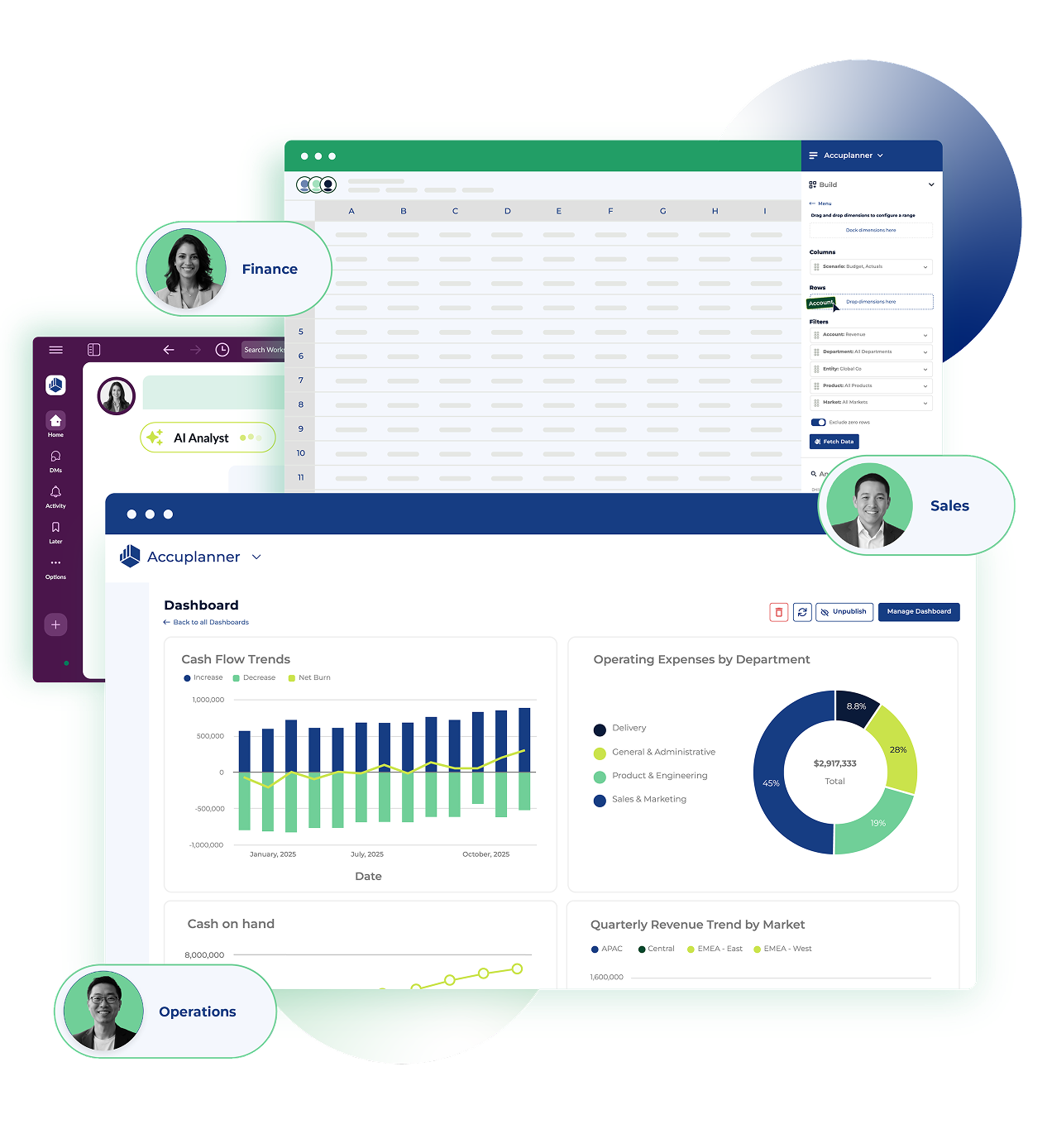
Cube alternatives
12 products compared · Updated November 2, 2026
The short answer
For FP&A teams seeking a Cube alternative, the strongest options are Abacum for collaborative planning with self-service integrations, Pigment for large enterprises needing AI-assisted modeling across multiple functions, and Vena Solutions for teams deeply invested in Excel and Microsoft 365. Each suits different needs: Abacum for continuous planning without systems projects, Pigment for complex multi-department planning, and Vena for Excel-centric workflows.
Your shortlist, at a glance
Read the comparisons ↓ AnaplanContact for quoteLarge enterprises that need integrated planning across finance, supply chain, sales, and workforce on one platform.
- AAdaptive InsightsNot publishedLarge enterprises in regulated industries like healthcare, financial services, or higher education that need comprehensive financial, workforce, and operational planning.
 PlanfulNot publishedFinance teams at mid-sized to large companies that want a single platform for close, consolidation, and planning with AI-driven insights.
 Vena SolutionsCustom quoteFinance teams that are deeply invested in Excel and Microsoft 365 and want an FP&A platform that feels like an extension of those tools.
- PProphixNot publishedMid-market finance teams that want an integrated planning and close platform with AI-assisted variance analysis and multi-currency consolidation.
- JJedoxCustom quoteMid-sized to large enterprises that want a scalable, Excel-friendly FP&A platform with optional add-ons for consolidation, ESG, and AI-assisted planning.
 AbacumNot publishedFP&A teams that need to run continuous budgeting, forecasting, and scenario planning without turning planning into a systems project.
 CashboardSee websiteInventing the solo CFO.
 CausalNot publishedFinance teams in mid-sized to large companies that need integrated financial and operational planning, especially those with complex consolidation or reporting requirements.
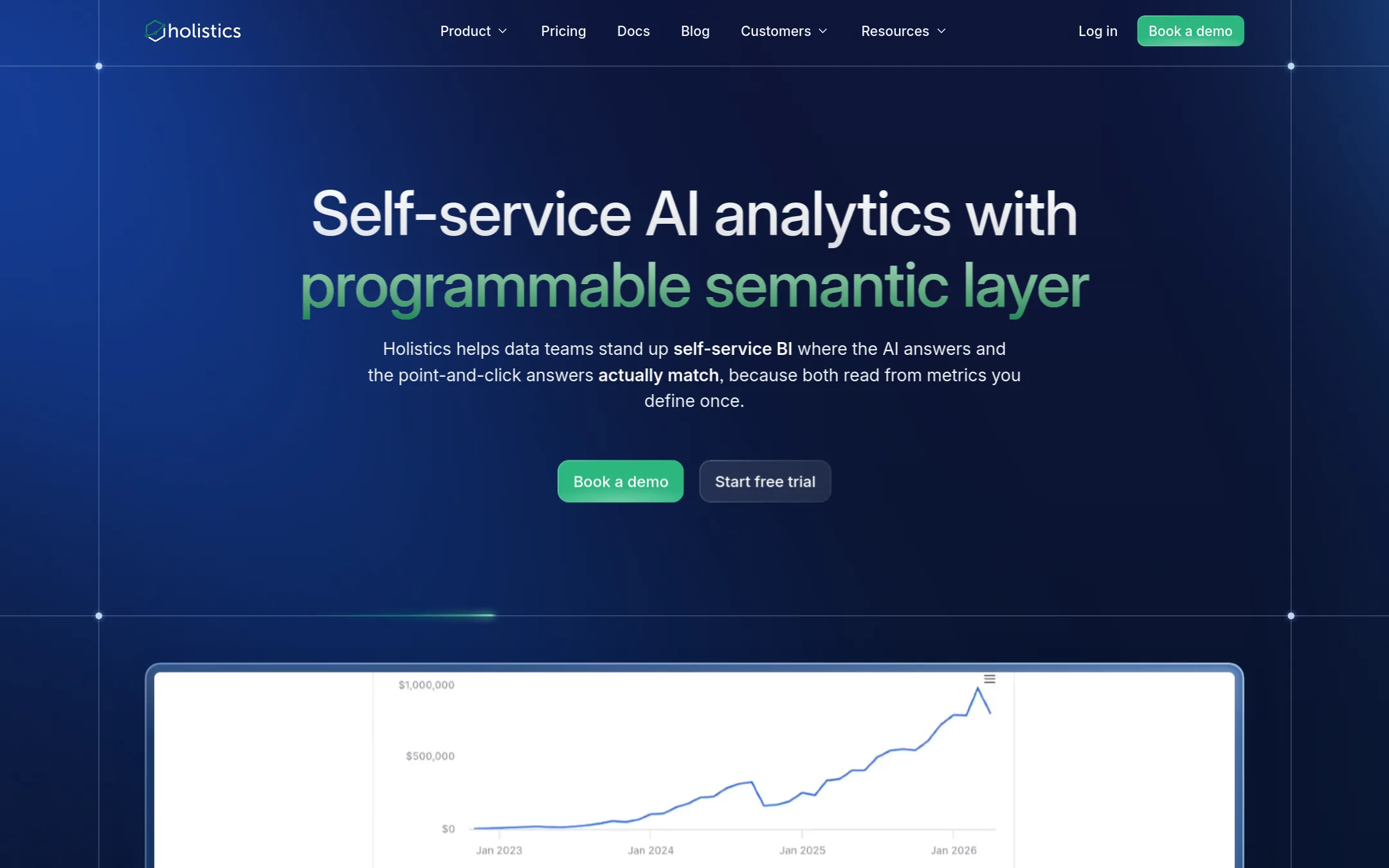
 HolisticsCustom quoteData teams that want to ship self-service BI with Git-based version control and AI answers that match their dashboards.
 RegologySee websiteAI Agents for Regulatory Compliance
 PigmentNot publishedLarge enterprises with complex planning needs across finance, sales, supply chain, and HR that want AI-assisted modeling and scenario analysis in one platform.
About Cube and its alternatives
Cube is an AI-powered financial intelligence platform that unifies business data into a single governed layer, automates FP&A workflows, and delivers insights across spreadsheets, browsers, and chat tools. It is known for its AI agents that handle data pulls, reconciliation, and report assembly, with every insight traceable to the source for audit readiness.
When comparing alternatives, weigh pricing structure (most are custom-quoted), the regions and integrations supported, the level of AI and automation, and the contract terms. Consider whether you need a spreadsheet-first approach, a full enterprise planning suite, or a platform that spans multiple business functions beyond finance.
Explore the alternatives
- Contact for quote
1.Anaplan
Best for: Large enterprises that need integrated planning across finance, supply chain, sales, and workforce on one platform.
- Pricing
- Contact for quote
- Category
- Finance & Accounting
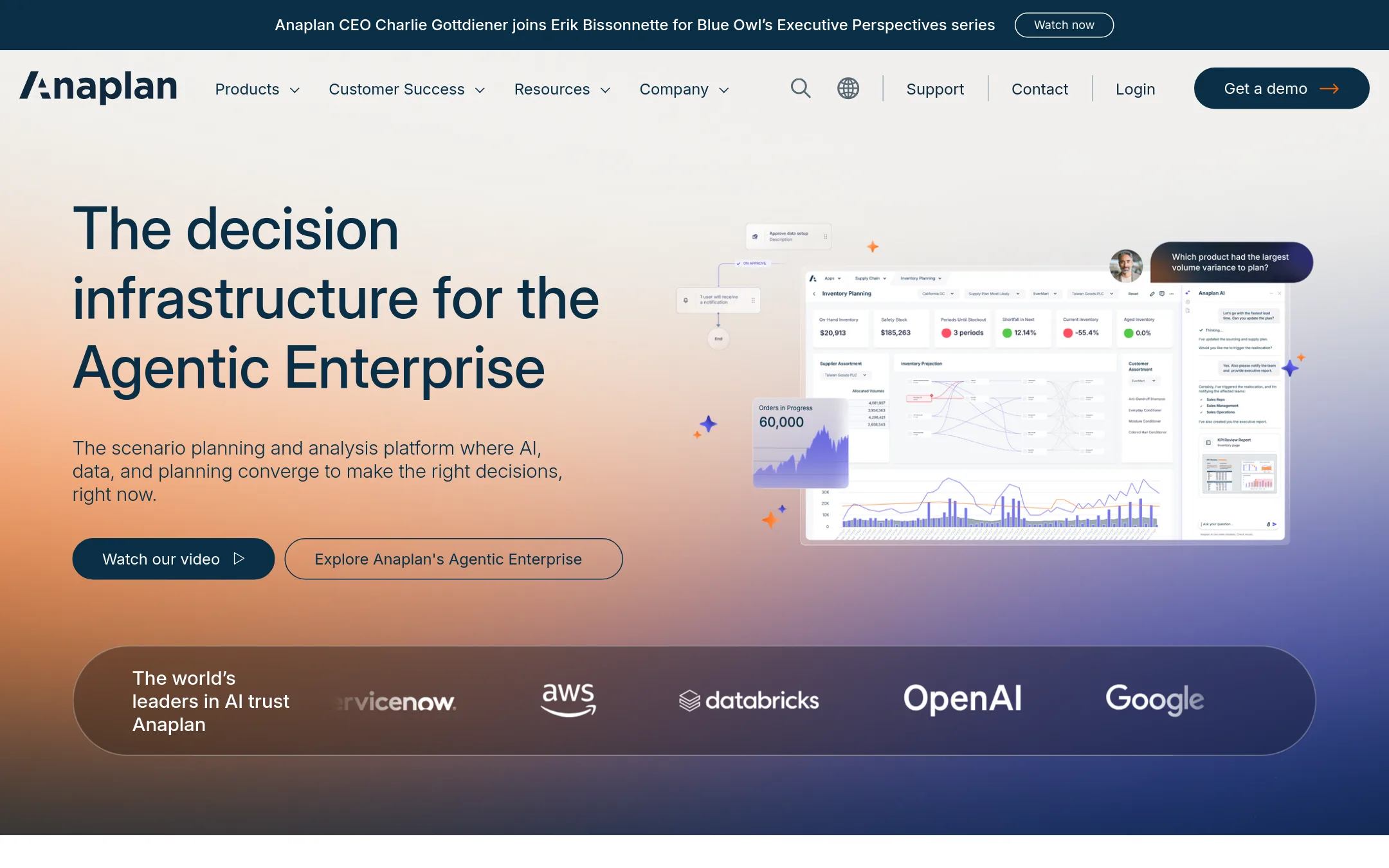
Anaplan is a large enterprise planning platform that covers finance, supply chain, sales, HR, and retail with AI-driven scenario planning. Choose it over Cube when you need a single platform for planning across multiple business functions, not just FP&A, and you operate at a scale where a full enterprise deployment makes sense.
Where it is strong
- Covers finance, supply chain, sales, HR, and retail planning in one platform.
- Combines deterministic calculations with AI for auditable answers.
- Used by over 2,800 large brands, including Coca-Cola and Unilever.
Where it falls short
- Pricing is opaque and likely enterprise-level, not for small teams.
- Heavier implementation than Cube, aimed at large organizations.
- Pricing:
- Pricing is not published on the site. You must contact Anaplan for a quote.
- ANot published
2.Adaptive Insights
Best for: Large enterprises in regulated industries like healthcare, financial services, or higher education that need comprehensive financial, workforce, and operational planning.
Adaptive Insights is a mature FP&A platform from Workday that connects finance, workforce, and operations data for planning and forecasting. Choose it over Cube if you need deep industry-specific modeling (like healthcare or financial services) and prefer a vendor with a long track record in enterprise planning.
Where it is strong
- Strong industry-specific planning models for healthcare, finance, manufacturing, and more.
- Integrates with Workday's broader ecosystem for workforce and operational data.
- AI features built into the same platform, with human-in-the-loop governance.
Where it falls short
- No transparent pricing. Requires contacting sales for a quote.
- May be overkill for small teams that only need simple budgeting and forecasting.
- Pricing:
- Pricing is not published on the site.
- Switching from Cube:
- Moving from Cube to Adaptive Insights involves migrating your models and data connections, and you'll need to learn a new interface and workflow, but the core planning concepts are similar.
- Not published
3.Planful
Best for: Finance teams at mid-sized to large companies that want a single platform for close, consolidation, and planning with AI-driven insights.
- Pricing
- Not published
- Category
- Finance & Accounting
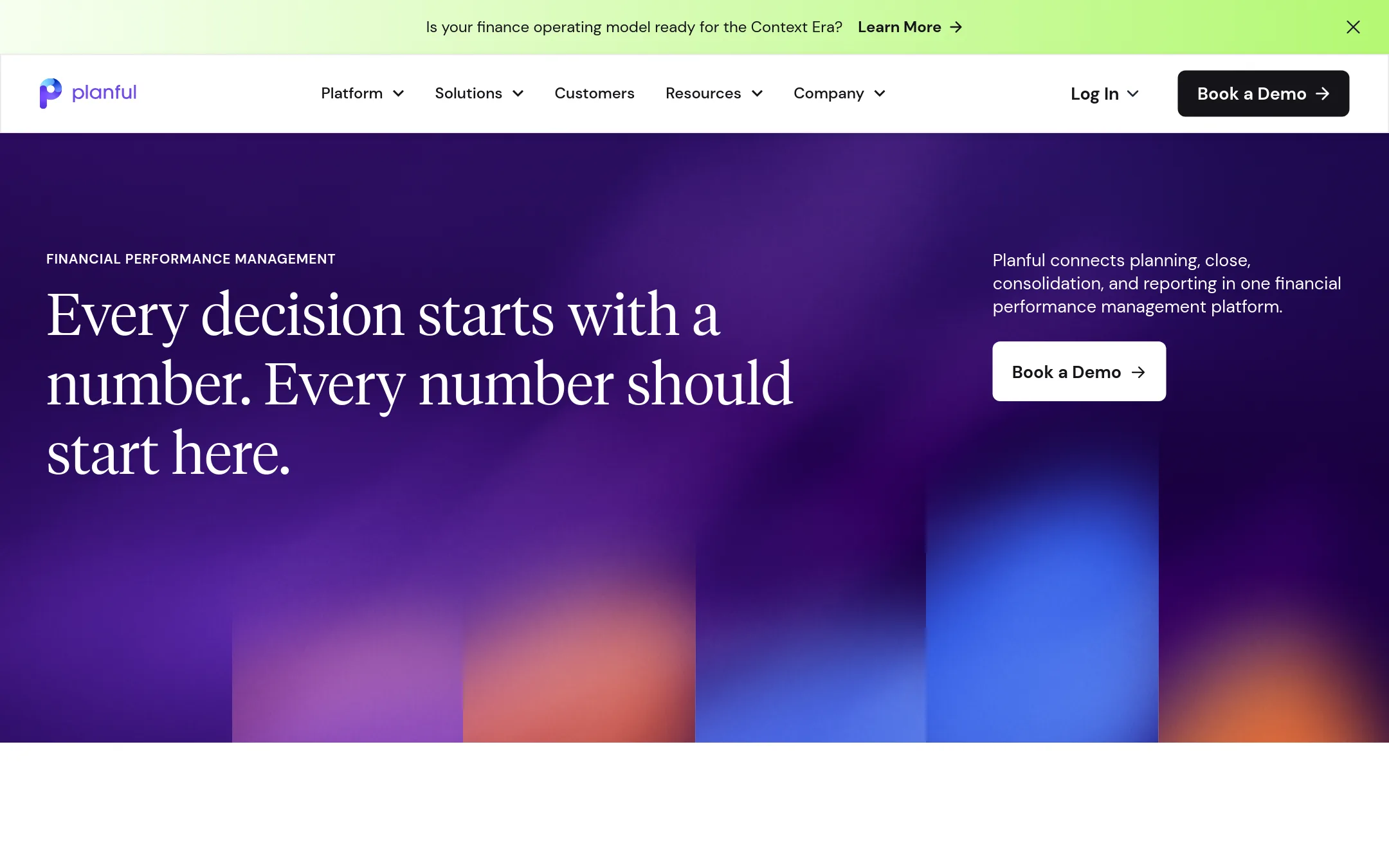
Planful is a financial performance management platform that connects planning, close, consolidation, and reporting in one system. It's a fit for finance teams that need a broad, integrated suite with AI assistance and thousands of connectors, rather than a spreadsheet-first layer like Cube.
Where it is strong
- Combines close, consolidation, planning, and reporting in one platform.
- AI assistants provide explainable answers and scenario modeling.
- Thousands of connectors with no data limits, quick to deploy.
Where it falls short
- Pricing is not transparent. Requires contacting sales.
- May be heavier than Cube for teams that primarily work in spreadsheets.
- Pricing:
- Pricing is not published on the site.
- Custom quote
4.Vena Solutions
Best for: Finance teams that are deeply invested in Excel and Microsoft 365 and want an FP&A platform that feels like an extension of those tools.
- Pricing
- Custom quote
- Category
- Finance & Accounting
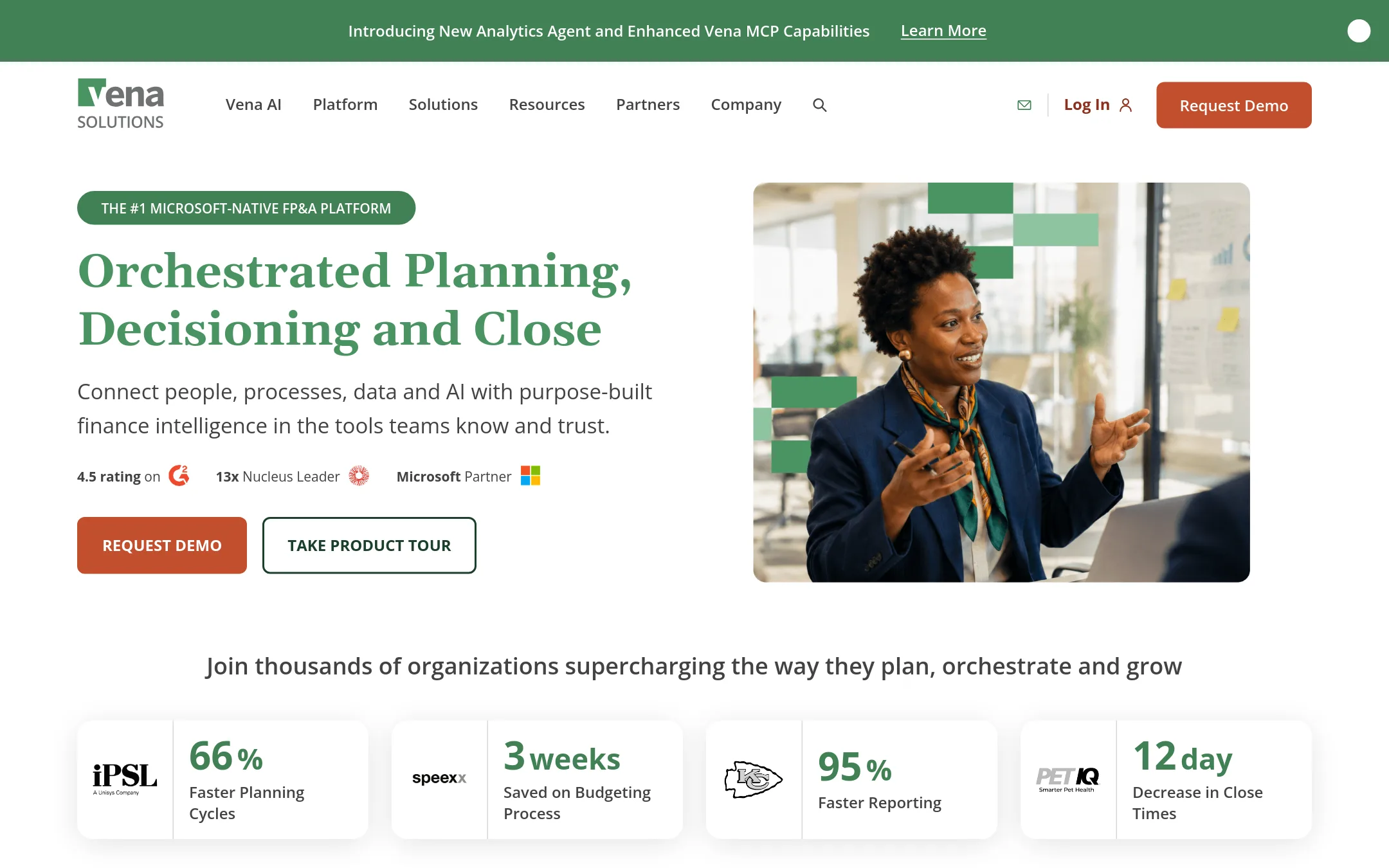
Vena is a Microsoft-native FP&A platform that keeps Excel at the center of planning, budgeting, and reporting. You would choose it over Cube if your team lives in Excel and Microsoft 365 and wants AI agents and workflows built around those tools.
Where it is strong
- Native Excel integration means your team keeps working in the tool they already know.
- AI agents work inside Microsoft Teams and Excel Live, so insights stay in your workflow.
- Flexible licensing with Power User, Contributor, and View Only roles to match how people actually work.
Where it falls short
- Pricing is not transparent. You need to talk to sales for a quote.
- Tied to the Microsoft ecosystem, so it's not ideal for teams that prefer Google Sheets or other non-Microsoft tools.
- Pricing:
- Pricing is not published on the site. Plans are Professional and Complete, with add-ons like Vena Insights and Premium Support available at additional cost.
- PNot published
5.Prophix
Best for: Mid-market finance teams that want an integrated planning and close platform with AI-assisted variance analysis and multi-currency consolidation.
- Pricing
- Not published
- Category
- Other
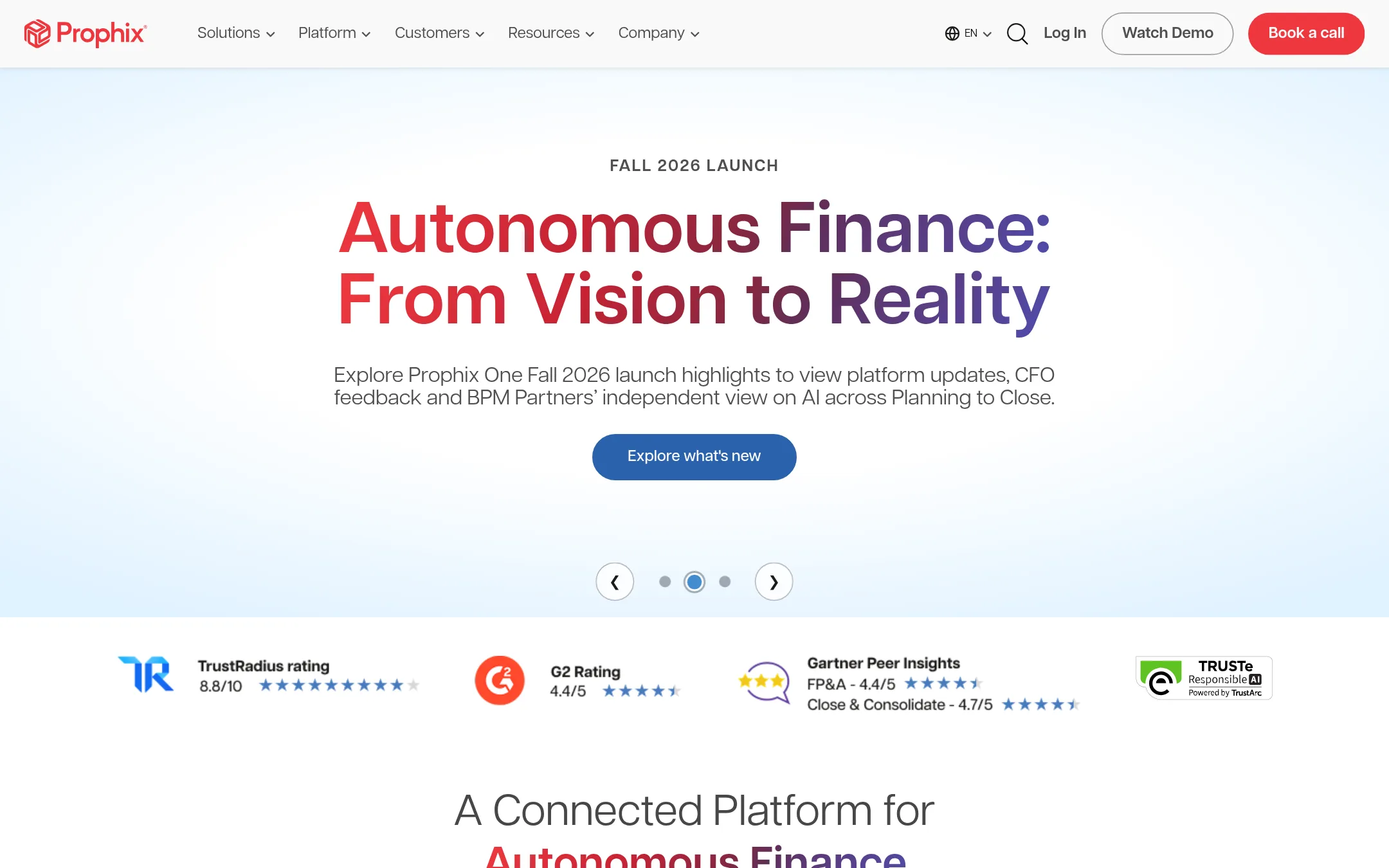
Prophix One is an autonomous financial planning and close platform for mid-market companies, connecting planning, budgeting, forecasting, and consolidation workflows. Choose it over Cube if you need a broader plan-to-close platform with built-in consolidation and intercompany matching, rather than a spreadsheet-first FP&A layer.
Where it is strong
- Covers the full plan-to-close cycle, including consolidation and close
- AI agents automate matching and variance analysis
- Handles multi-currency, multi-language, and multi-GAAP requirements
Where it falls short
- Pricing is not transparent. Requires a demo or quote
- Website is in German by default, which may be a barrier for some teams
- Pricing:
- Pricing is not published on the site. The pricing page only offers guides and a demo request.
- JCustom quote
6.Jedox
Best for: Mid-sized to large enterprises that want a scalable, Excel-friendly FP&A platform with optional add-ons for consolidation, ESG, and AI-assisted planning.
- Pricing
- Custom quote
- Category
- Other
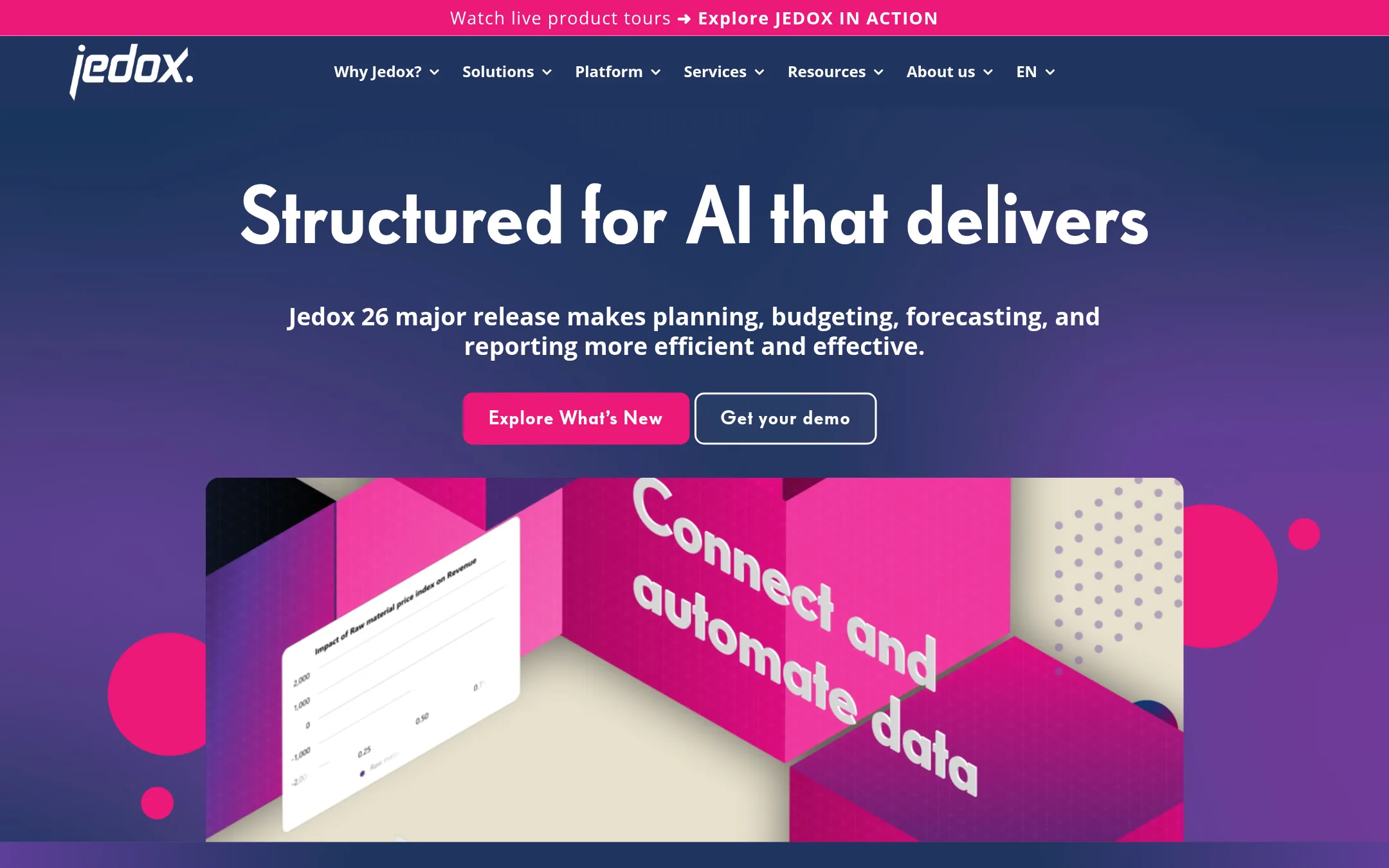
Jedox is an adaptable FP&A and performance management platform with an Excel-like interface, no-code modeling, and AI-assisted planning. Choose it over Cube if you need a broader performance management suite that covers financial and operational planning, consolidation, and ESG reporting, with flexible user types and on-premise or cloud deployment.
Where it is strong
- Excel-like interface and Add-in for Excel 365 speed adoption
- No-code modeling and drag-and-drop dashboards for self-service
- JedoxAI provides explainable forecasts and natural language analysis
Where it falls short
- Pricing is not transparent. Requires contacting sales
- May be more complex than Cube for small finance teams
- Pricing:
- Pricing is not published on the site. You must contact sales for a quote.
- Not published
7.Abacum
Best for: FP&A teams that need to run continuous budgeting, forecasting, and scenario planning without turning planning into a systems project.
- Pricing
- Not published
- Category
- Finance & Accounting
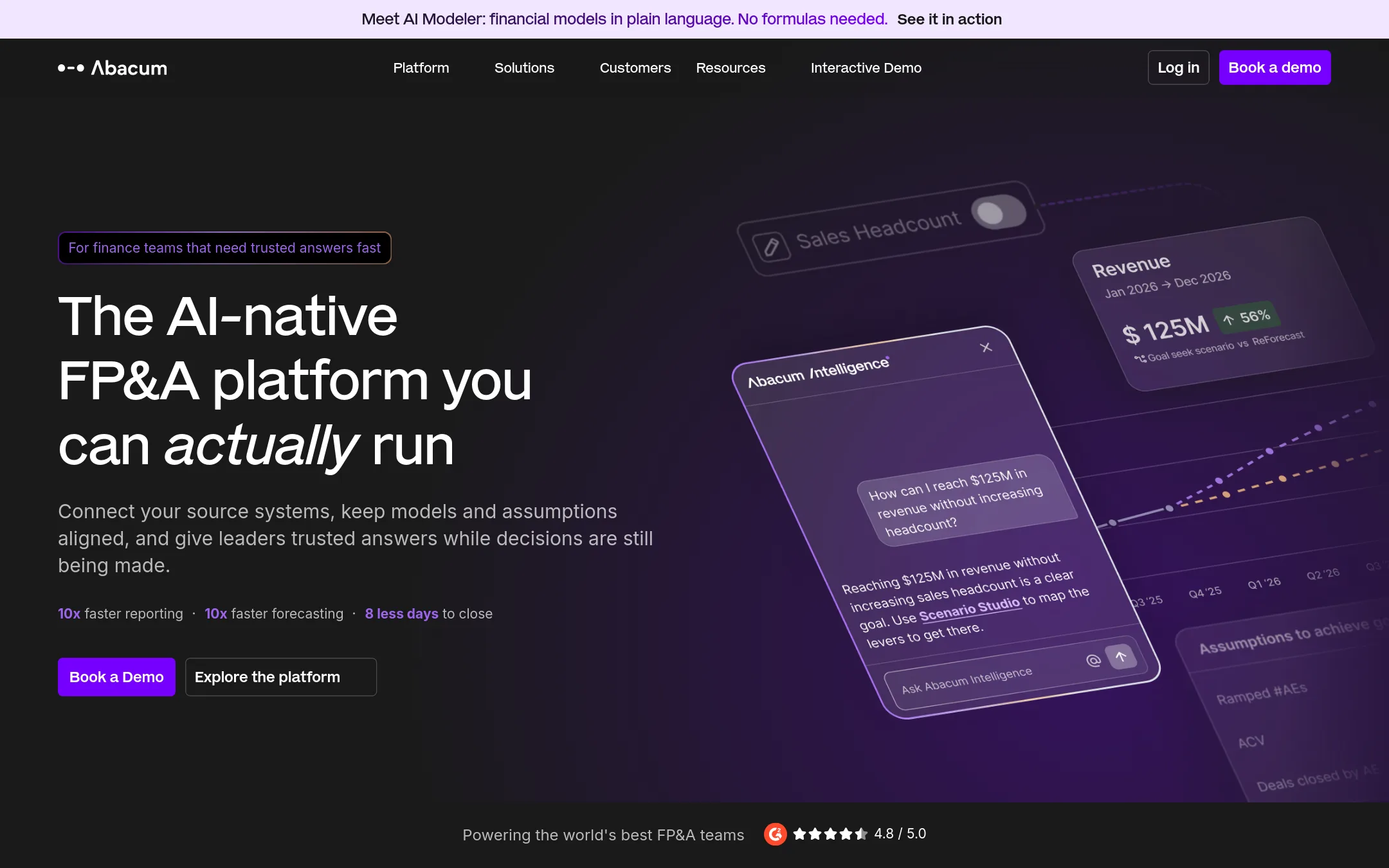
Abacum is an AI-native FP&A platform that connects source systems, models, and assumptions so finance teams can answer what changed and model what comes next. Choose it over Cube if you want a platform that emphasizes collaborative planning workflows and self-service data management with 700+ integrations.
Where it is strong
- AI-native features like back-solving, data cleaning, and anomaly detection reduce manual model maintenance.
- Self-service integrations and ETL let you connect data sources without a technical support ticket.
- Built-in workflows for budgeting, headcount, revenue, and investor reporting keep planning processes in sync.
Where it falls short
- Pricing is not transparent, so you need to book a demo to get a quote.
- No mention of native spreadsheet surfaces like Excel or Google Sheets, which Cube offers.
- Pricing:
- Pricing is not published on the site.
- See website
8.Cashboard
Finance & Accounting
Inventing the solo CFO.
- Not published
9.Causal
Best for: Finance teams in mid-sized to large companies that need integrated financial and operational planning, especially those with complex consolidation or reporting requirements.
- Pricing
- Not published
- Category
- Finance & Accounting
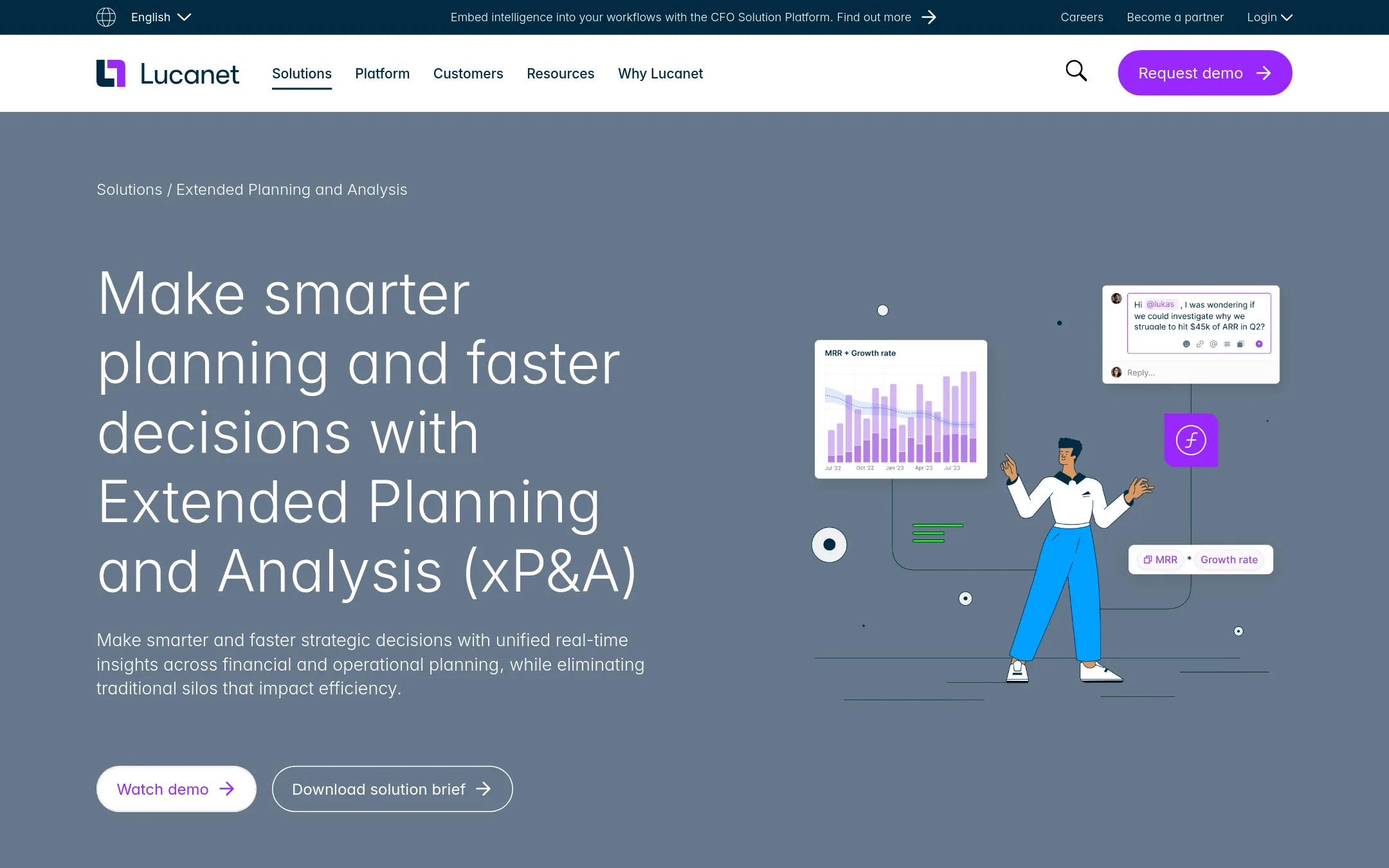
Causal is an extended planning and analysis (xP&A) platform that unifies financial and operational planning, budgeting, and reporting in one tool. Choose it over Cube if you need to connect planning across departments like HR, sales, and operations, and want a single source of truth for both financial and operational data.
Where it is strong
- Unifies financial and operational planning in one platform
- Natural language formulas and AI-assisted model building
- Includes consolidation, reporting, and ESG modules
Where it falls short
- Pricing not transparent. Requires contacting sales
- May be more complex than needed for simple FP&A teams
- Pricing:
- Pricing is not published on the site.
- Custom quote
10.Holistics
Best for: Data teams that want to ship self-service BI with Git-based version control and AI answers that match their dashboards.
- Pricing
- Custom quote
- Category
- Analytics & Data
Holistics is a self-service BI platform with a programmable semantic layer. You define metrics once as code, and both AI answers and point-and-click dashboards read from those definitions. Choose it over Cube when your team needs governed, code-managed analytics for business users, not FP&A planning and reporting.
Where it is strong
- Define metrics once as code. AI and dashboards stay in sync.
- Git version control for models, metrics, and dashboards.
- Embed white-labeled dashboards and AI into your own product.
Where it falls short
- Pricing is not transparent. You must request a quote.
- No FP&A features like planning, forecasting, or variance analysis.
- Pricing:
- Pricing is not published on the site. Plans are custom-quoted.
- See website
11.Regology
AI & Machine Learning
AI Agents for Regulatory Compliance
- Not published
12.Pigment
Best for: Large enterprises with complex planning needs across finance, sales, supply chain, and HR that want AI-assisted modeling and scenario analysis in one platform.
- Pricing
- Not published
- Category
- Finance & Accounting
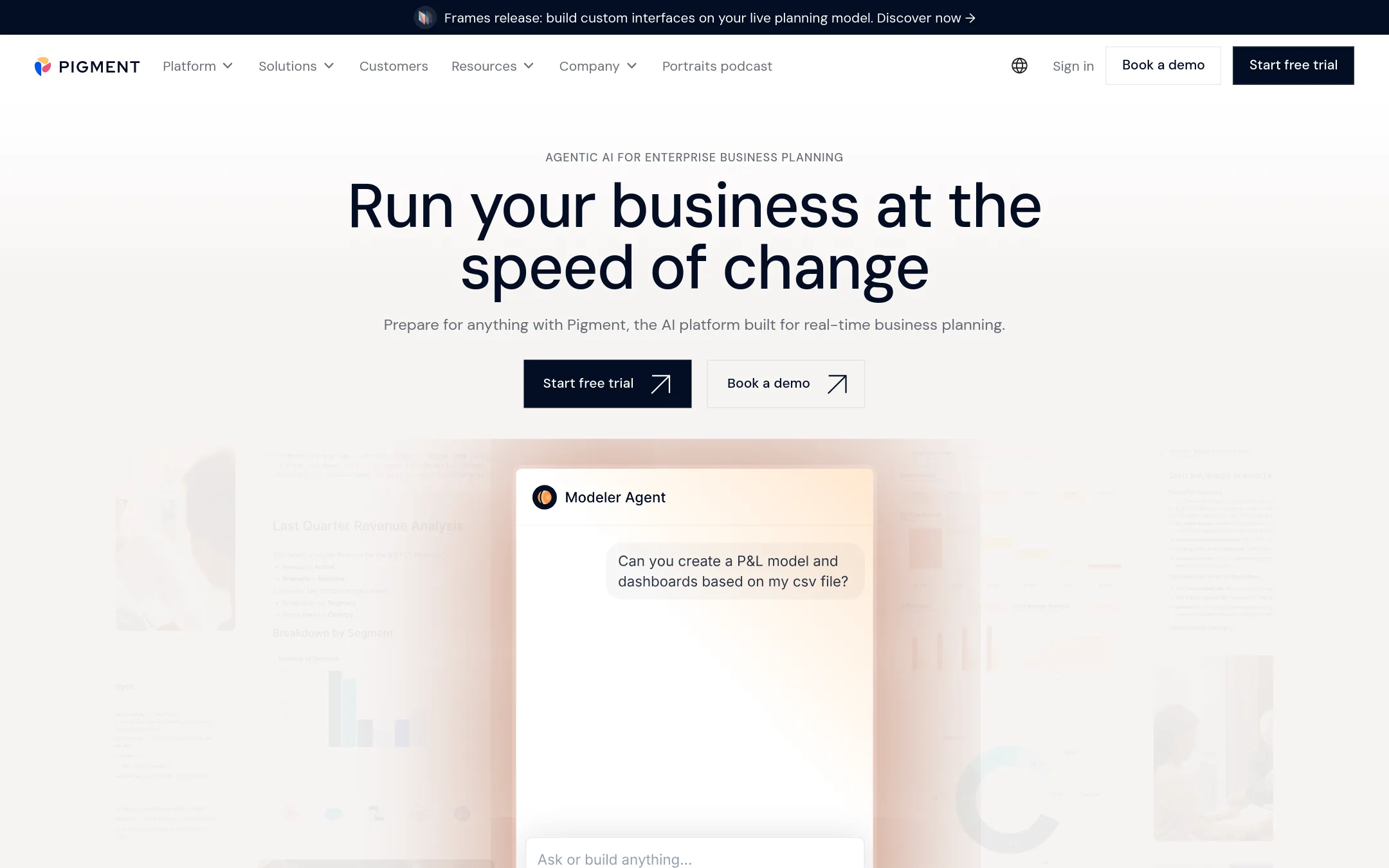
Pigment is an enterprise business planning platform that embeds AI agents directly into the planning model, letting finance, sales, HR, and operations work from one shared set of numbers. Choose Pigment over Cube when you need a highly flexible modeling tool that spans multiple functions beyond FP&A, with agents that can build models, analyze performance, and simulate scenarios in real time.
Where it is strong
- Flexible modeling that adapts to your structure without rebuilding models
- AI agents (Modeler, Analyst, Planner) work directly in the planning environment
- Real-time collaboration across finance, sales, HR, and operations on the same data
Where it falls short
- Pricing is not public, likely enterprise-focused
- May be overkill for smaller teams that only need core FP&A
- Pricing:
- Pricing is not published on the site.
See more comparisons in Finance & Accounting alternatives.
FAQ
Questions about Cube alternatives
What are the main differences between Cube and its alternatives?
Cube focuses on AI agents and a governed data layer that works across spreadsheets and chat tools. Alternatives like Abacum emphasize collaborative planning workflows, Pigment offers flexible modeling across multiple functions, and Vena keeps Excel at the center. The key difference is whether you need a spreadsheet-first layer, a broader planning suite, or a platform for large enterprise deployments.
Are there alternatives with transparent pricing?
Most alternatives, including Abacum, Holistics, Anaplan, Planful, Pigment, Vena, Causal, Adaptive Insights, Jedox, and Prophix, do not publish pricing on their sites. You typically need to contact sales for a quote. Cube also uses custom quotes, so transparency is limited across the category.
Which alternative is best for a team that lives in Excel?
Vena Solutions is the strongest choice for Excel-centric teams, as it is Microsoft-native and keeps Excel at the center of planning, budgeting, and reporting. It integrates with Microsoft 365 and offers AI agents inside Teams and Excel Live, so your team can stay in familiar tools.
Can these alternatives handle multi-entity consolidation?
Yes, several alternatives support multi-entity consolidation. Prophix handles multi-currency, multi-language, and multi-GAAP requirements. Causal includes consolidation modules, and Anaplan supports large enterprise planning across entities. Cube offers multicurrency consolidation as an add-on, so check each product's specifics.
What should I consider when evaluating AI features in these platforms?
Look for AI that is explainable and auditable, like Cube's traceable insights or Planful's explainable answers. Consider whether AI agents are embedded in the planning model (as in Pigment) or work alongside your existing tools (like Vena's AI in Teams). Also assess if AI automates routine tasks like data cleaning and variance analysis, as seen in Abacum and Prophix.
Last updated November 2, 2026.