
cubic alternatives
6 products compared · Updated November 4, 2026
The short answer
For AI-powered code review, the strongest alternatives to cubic are Greptile, Sourcery, and CodeRabbit. Greptile suits teams wanting runtime testing and self-hosting, Sourcery fits teams on GitHub or GitLab with per-seat pricing, and CodeRabbit is for teams needing broader PR triage and security monitoring.
Your shortlist, at a glance
Read the comparisons ↓- CCodeRabbitNot publishedEngineering teams that want AI review plus PR queue prioritization, post-merge automation, and continuous security scanning in one tool.
 GreptileFree tier. $1/creditTeams that want AI code review with runtime testing and support for self-hosting in air-gapped environments.
- SSourceryFrom $12/seat/moTeams on GitHub or GitLab that want per-seat pricing, GitLab merge request reviews, or self-hosted AI code review with their own LLM keys.
- QQodo (formerly CodiumAI)$30/mo + creditsEngineering teams that need AI code review with strong governance, rule enforcement, and enterprise deployment options.
- BBito AICustom quoteEngineering teams using Claude Code, Cursor, or Codex who want to cut agent spend without changing their workflow.
 CodeClimateFree / $20 per contribEngineering leaders who want to ask Claude, ChatGPT, or Copilot questions about their org and get answers before their next meeting.
About cubic and its alternatives
cubic is an AI-powered code review platform that claims to be #1 on independent benchmarks. It reviews pull requests against your whole codebase, learns from your senior engineers' comments, and can auto-approve low-risk PRs. It also offers codebase scans and integrates with GitHub, CLI, and coding agents like Claude Code and Codex.
When comparing alternatives, weigh pricing structure (per-seat vs. credit-based), supported regions and platforms (GitHub, GitLab, self-hosting), integrations with your existing tools, support options, and contract terms like free tiers or trials. Consider whether you need runtime testing, governance features, or cost optimization for coding agents.
Explore the alternatives
- CNot published
1.CodeRabbit
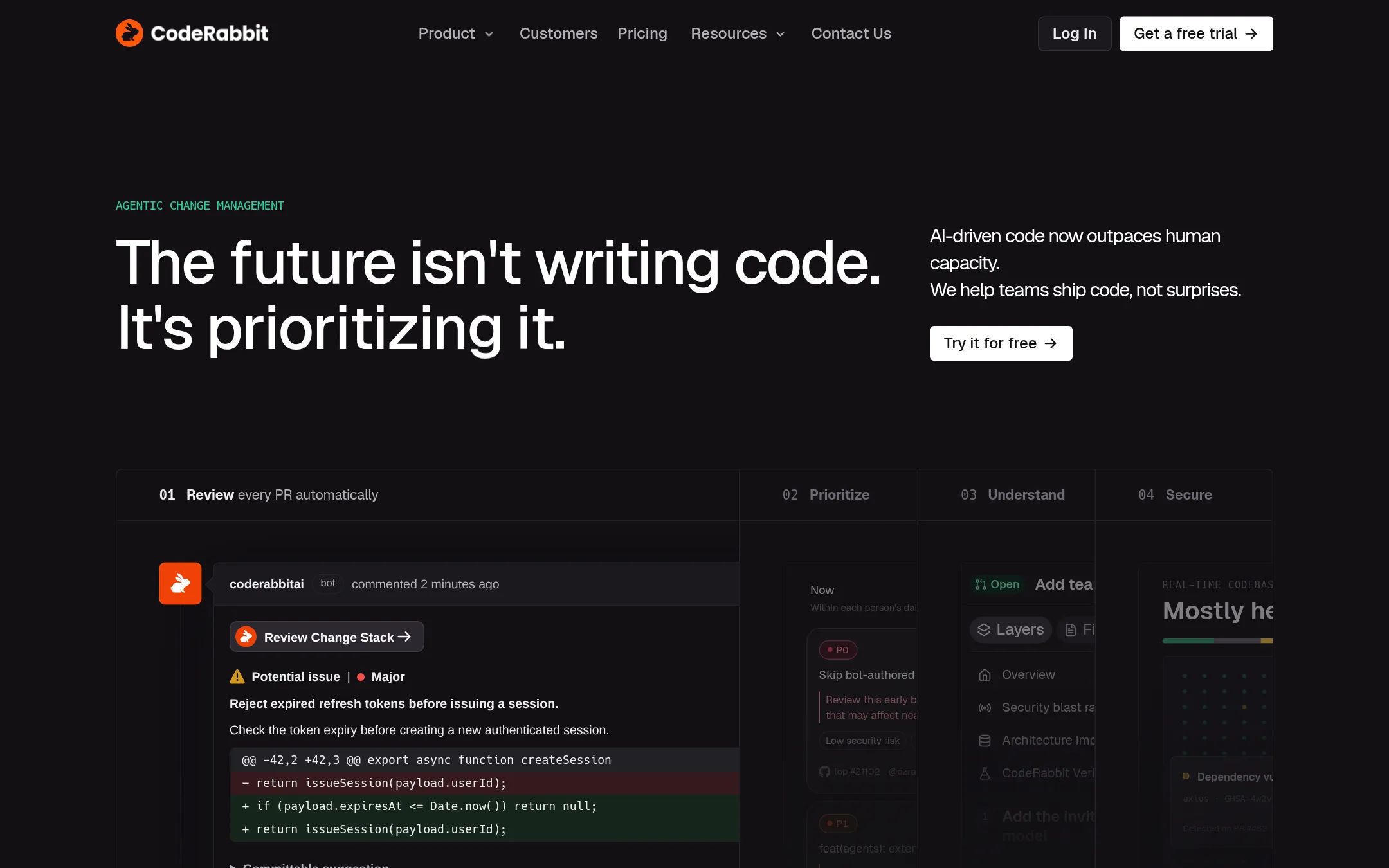
Best for: Engineering teams that want AI review plus PR queue prioritization, post-merge automation, and continuous security scanning in one tool.
- Pricing
- Not published
- Category
- Other
CodeRabbit is an AI code review tool that also handles PR triage, post-merge actions, and continuous security monitoring. Choose it over cubic if you want a broader agentic change management platform that goes beyond pull request reviews to include incident triage and automated follow-up tasks.
Where it is strong
- Learns from your feedback and adapts review style with Quiet, Chill, and Assertive profiles.
- Includes pre-merge checks, post-merge actions, and automated test generation.
- Offers continuous security monitoring with severity and exploitability grading.
Where it falls short
- Pricing details are not public, so you must contact sales for any plan.
- Advanced features like Blast Radius Audit and security monitoring are gated to higher tiers.
- Pricing:
- Pricing is not published on the site. Plans are listed as Essentials, Team, Advanced, and Enterprise with 'Contact Us' for the top tier.
- Free tier. $1/credit
2.Greptile
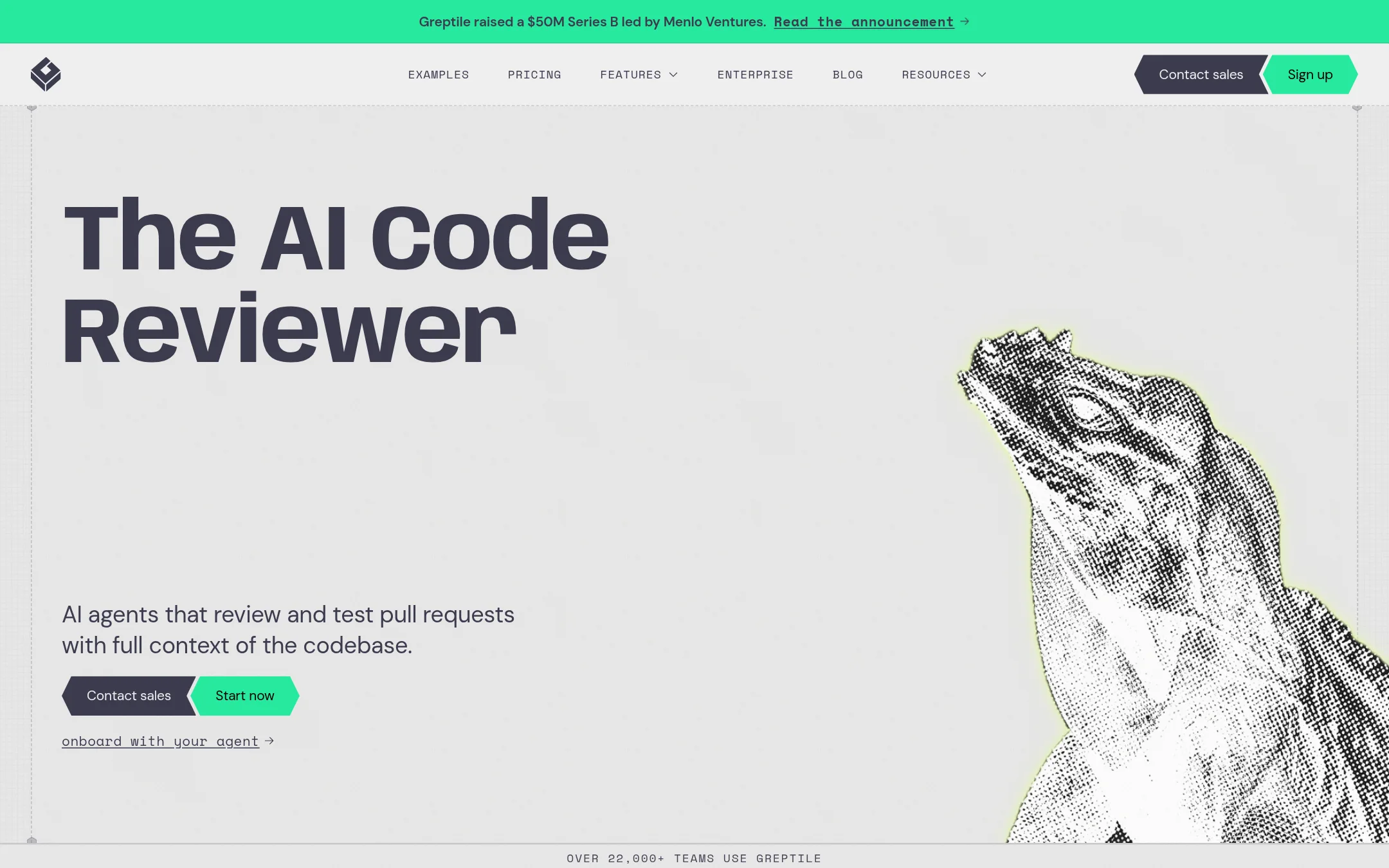
Best for: Teams that want AI code review with runtime testing and support for self-hosting in air-gapped environments.
- Pricing
- Free tier. $1/credit
- Category
- Developer Tools
Greptile is an AI code review agent that builds a graph index of your codebase and uses a swarm of agents to review pull requests. It also runs tests in a sandbox to catch runtime bugs. Choose it if you want a reviewer that goes beyond the diff and can test the PR branch automatically.
Where it is strong
- Graph index of your codebase gives full context for reviews.
- TREX runs PR branches in a sandbox to catch runtime bugs.
- Self-hosted deployment available for air-gapped environments.
Where it falls short
- Credit-based pricing can get expensive for large teams.
- Language support is lower quality for languages outside the listed set.
- Pricing:
- Starter is free for one developer with 50 credits per month. Pro has no seat fees: you pay $1 per credit, shared across your organization. Base review costs 1 credit, Plus review 3 credits, Apex review 10 credits. Enterprise is custom priced.
- SFrom $12/seat/mo
3.Sourcery
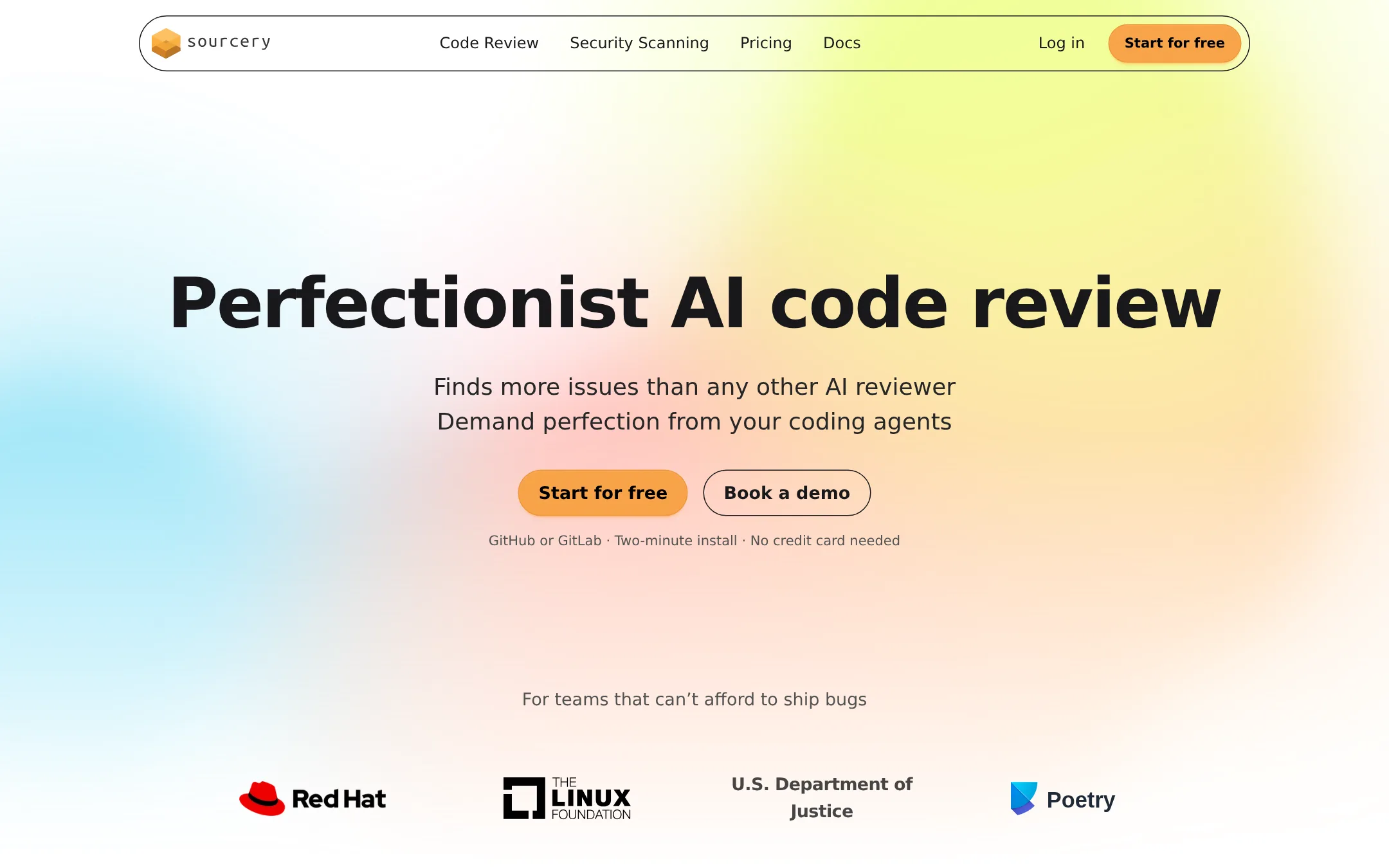
Best for: Teams on GitHub or GitLab that want per-seat pricing, GitLab merge request reviews, or self-hosted AI code review with their own LLM keys.
- Pricing
- From $12/seat/mo
- Category
- Other
Sourcery is an AI code review tool that checks pull requests for bugs, security issues, and edge cases, then posts summaries and one-click fixes. Choose it over cubic if you want a simpler per-seat price, GitLab support on every plan, or the ability to self-host with your own LLM keys on Enterprise.
Where it is strong
- Finds real bugs like misspelled properties and double-encoded paths
- One-click suggested fixes you can commit straight to the PR
- Self-hosting with your own LLM keys on Enterprise
Where it falls short
- No codebase scans on Pro, only on Team and above
- GitHub Enterprise Server support is Enterprise-only
- Pricing:
- Pro is $12 per seat per month and Team is $24, billed annually. Monthly billing is $15 and $30 respectively, and open source is free.
- Switching from cubic:
- Moving from cubic means switching your review workflow to Sourcery's GitHub or GitLab app. Both review PRs and auto-approve low-risk changes, so the transition is mostly reconnecting your repos.
- Q$30/mo + credits
4.Qodo (formerly CodiumAI)
Best for: Engineering teams that need AI code review with strong governance, rule enforcement, and enterprise deployment options.

- Pricing
- $30/mo + credits
- Category
- Other
Qodo is an AI code review and governance platform that reviews every pull request with cross-repo context and enforces your coding standards. Choose it over cubic if you need governance features like rule enforcement tracking, audit trails, and on-premises deployment for enterprise compliance.
Where it is strong
- Cross-repo context in every PR review
- Rules system with enforcement tracking
- On-premises and single-tenant deployment options
Where it falls short
- No permanent free tier, only a 14-day trial
- Credits expire monthly, which may not suit low-volume teams
- Pricing:
- Pro Team starts at $30 per month for 2,500 credits (about 18 reviews per month), with credit packs available. Enterprise pricing is negotiated.
- BCustom quote
5.Bito AI
Best for: Engineering teams using Claude Code, Cursor, or Codex who want to cut agent spend without changing their workflow.

- Pricing
- Custom quote
- Category
- Other
Bito AI is a model router and code context engine that sits between your coding agents and the models they call. It cuts token spend by grounding requests in your codebase and routing each request to the cheapest adequate model. Choose it over cubic if your pain is agent cost, not code review quality.
Where it is strong
- Cuts agent costs by 40-70% via code context and model routing
- Drop-in endpoint: one base URL swap, no workflow changes
- Runs on your own provider keys and existing gateway
Where it falls short
- Pricing is not transparent. Requires sales contact
- No code review features like cubic's auto-approve or codebase scans
- Pricing:
- Pricing is not published on the site. Plans start with a free trial and contact us for details.
- Free / $20 per contrib
6.CodeClimate
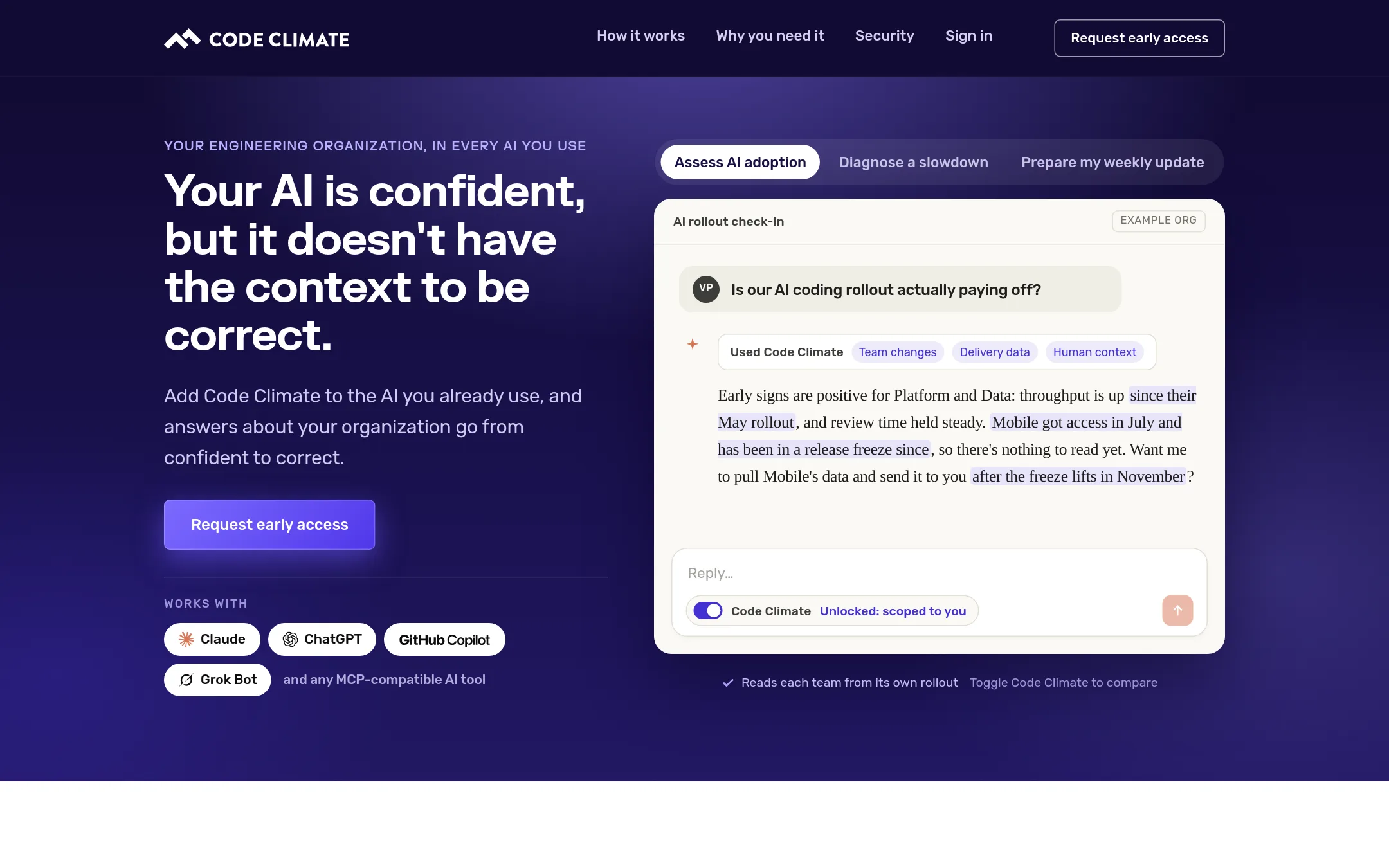
Best for: Engineering leaders who want to ask Claude, ChatGPT, or Copilot questions about their org and get answers before their next meeting.
- Pricing
- Free / $20 per contrib
- Category
- Developer Tools
CodeClimate gives your AI assistants context about your engineering organization, so you can ask questions about teams, work, and delivery and get answers backed by your actual data. Choose it over cubic if your bottleneck is decisions about people and projects, not code review.
Where it is strong
- Gives AI tools context from your engineering data, so answers reflect reality.
- Works with Claude, ChatGPT, GitHub Copilot, and other MCP-supporting tools.
- SOC 2 Type II, SSO, and role-based access included.
Where it falls short
- Pricing for leaders is discussed only during early access, not published.
- Requires an admin to connect your tools and each leader to add Code Climate to their AI.
- Pricing:
- Free for unlimited private contributors, Pro at $20 per contributor per month, Enterprise at $30 per contributor per month.
See more comparisons in Developer Tools alternatives.
FAQ
Questions about cubic alternatives
What is the best alternative to cubic for teams that want runtime testing?
Greptile is the strongest choice if you want AI code review that goes beyond the diff and tests the PR branch in a sandbox. Its TREX feature catches runtime bugs that static review might miss. It also supports self-hosting for air-gapped environments.
Which alternative offers the most transparent pricing?
Sourcery has clear per-seat pricing: $12 per seat per month for Pro and $24 for Team, billed annually. CodeClimate also publishes per-contributor pricing at $20 and $30 per month. Greptile uses a credit system with $1 per credit, which is transparent but can be harder to estimate.
Can I use these alternatives with GitLab?
Sourcery explicitly supports GitLab merge request reviews on every plan. Other tools like Greptile and CodeRabbit focus on GitHub, so check their documentation for GitLab support. If GitLab is a must, Sourcery is the safest pick.
Do any of these alternatives offer self-hosting or on-premises deployment?
Greptile offers self-hosted deployment for air-gapped environments. Qodo provides on-premises and single-tenant deployment options. Sourcery allows self-hosting with your own LLM keys on Enterprise. CodeClimate and CodeRabbit do not mention self-hosting in their public materials.
Which alternative is best for reducing coding agent costs?
Bito AI is designed to cut agent spend by 40-70% through code context and model routing. It works as a drop-in endpoint for Claude Code, Cursor, or Codex. However, it does not offer code review features like cubic's auto-approve or codebase scans.
Last updated November 4, 2026.