
Dagger alternatives
12 products compared · Updated November 3, 2026
The short answer
For teams that want a managed CI/CD service with intelligent testing, CircleCI is the strongest alternative. For enterprises needing end-to-end DevSecOps with compliance, GitLab is the best fit. For teams that want to keep CI on their own infrastructure with fine-grained control, Buildkite is the top choice.
Your shortlist, at a glance
Read the comparisons ↓ GitHub ProjectsNot publishedTeams already using GitHub for code that want basic project tracking without leaving their existing workflow.
 GitLabFrom $12/user/moEnterprises and regulated industries that need end-to-end DevSecOps with strong security and compliance controls.
 CircleCIFree / from $15 per 25Teams that want a fully managed CI/CD service with intelligent test selection and flaky test detection, without managing their own pipeline engine.
 BuildkiteFrom $30/user/moTeams that want to keep CI on their own infrastructure with fine-grained control over pipelines and compute.
JenkinsNot publishedTeams that need a battle-tested, self-hosted CI/CD server with a huge plugin ecosystem and are comfortable managing their own infrastructure.
 DroneNot publishedTeams that want a simple, self-hosted CI server with container-isolated builds and native SCM integrations, without adopting a new pipeline language.
- EEarthlyNot publishedPlatform and SRE teams that need to enforce engineering standards and compliance rules consistently across human and AI-generated code.
- TTektonNot publishedTeams running Kubernetes who want CI/CD pipelines defined and executed natively within their cluster.
 Argo CDNot publishedKubernetes teams that want declarative GitOps with a built-in UI for managing deployments.
 Travis CIFrom 35k credits/moTeams that want a straightforward, hosted CI/CD service with predictable credit-based billing and don't need to run pipelines locally or on their own infrastructure.
Microsoft Azure CycleCloudPay-as-you-goResearch teams and enterprises running HPC or batch workloads on Azure that need automated cluster provisioning and scaling.
 BitbucketNot publishedTeams using Jira that want code hosting, pull requests, and CI/CD with native Atlassian integration.
About Dagger and its alternatives
Dagger is a third-generation CI/CD platform that lets you develop pipelines as code and run them anywhere. It is known for its programmable modules, test-native features, and transparent usage-based pricing that bills only for exact resource consumption.
When comparing alternatives, weigh pricing structure (credit-based vs. usage-based vs. per-user), region availability, integrations with your existing tools, support options, and contract terms. Some tools are self-hosted, others are fully managed, and some are tied to a specific cloud or platform.
Explore the alternatives
- Not published
1.GitHub Projects
Best for: Teams already using GitHub for code that want basic project tracking without leaving their existing workflow.
- Pricing
- Not published
- Category
- Productivity & Project Management
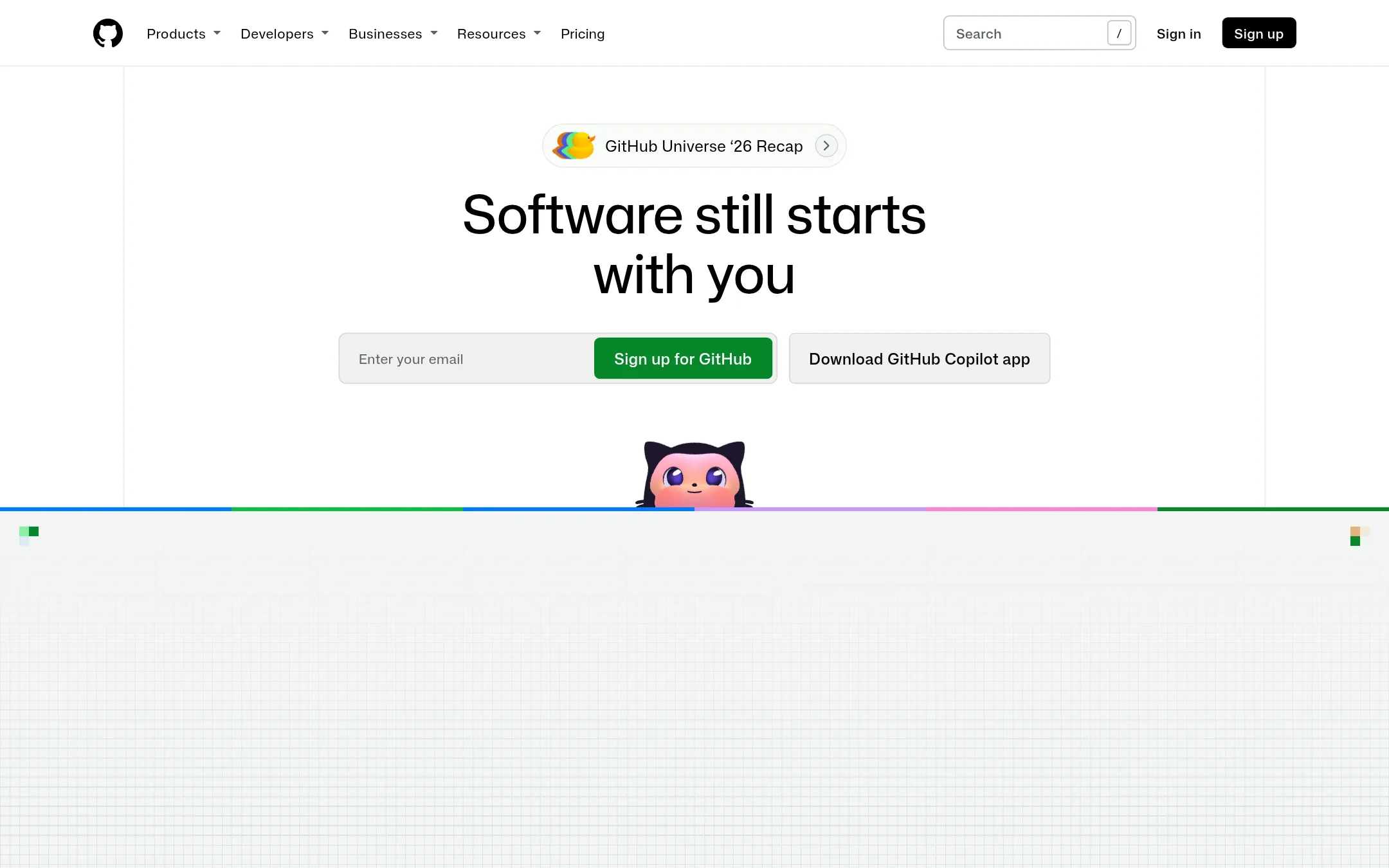
GitHub Projects is a lightweight project management layer built into GitHub, for teams that already live in GitHub and need simple issue tracking and planning. Choose it over Dagger if your focus is organizing work, not building and running CI/CD pipelines as code.
Where it is strong
- Native integration with GitHub repos and issues
- Free for public repositories
- AI-powered features for planning and tracking
Where it falls short
- Not a CI/CD tool, so it can't run pipelines
- Limited to GitHub ecosystem
- Pricing:
- Pricing is not published on the site.
- From $12/user/mo
2.GitLab
Best for: Enterprises and regulated industries that need end-to-end DevSecOps with strong security and compliance controls.
GitLab is a full DevSecOps platform that bundles source control, CI/CD, security scanning, and AI orchestration into one product. Choose it instead of Dagger if you want a single vendor for the entire software lifecycle and need built-in governance, compliance, and audit trails for both human and agent changes.
Where it is strong
- One platform for source control, CI/CD, and security scanning
- Policies and approvals apply to both human and agent changes
- Audit trail for every action, with compliance features for regulated industries
Where it falls short
- CI/CD pipelines are tied to GitLab's platform, not portable
- Advanced security features only on the Ultimate plan
- Pricing:
- Free tier includes 5 users and 400 compute minutes per month. Premium is $12 per user/month with 10,000 compute minutes. Ultimate is $24 per user/month with 50,000 compute minutes. GitLab Dedicated and Flex require custom quotes.
- Switching from Dagger:
- Moving from Dagger means migrating your pipelines to GitLab's YAML-based CI/CD and adopting its native security and governance features.
- Free / from $15 per 25
3.CircleCI
Best for: Teams that want a fully managed CI/CD service with intelligent test selection and flaky test detection, without managing their own pipeline engine.
- Pricing
- Free / from $15 per 25
- Category
- Developer Tools
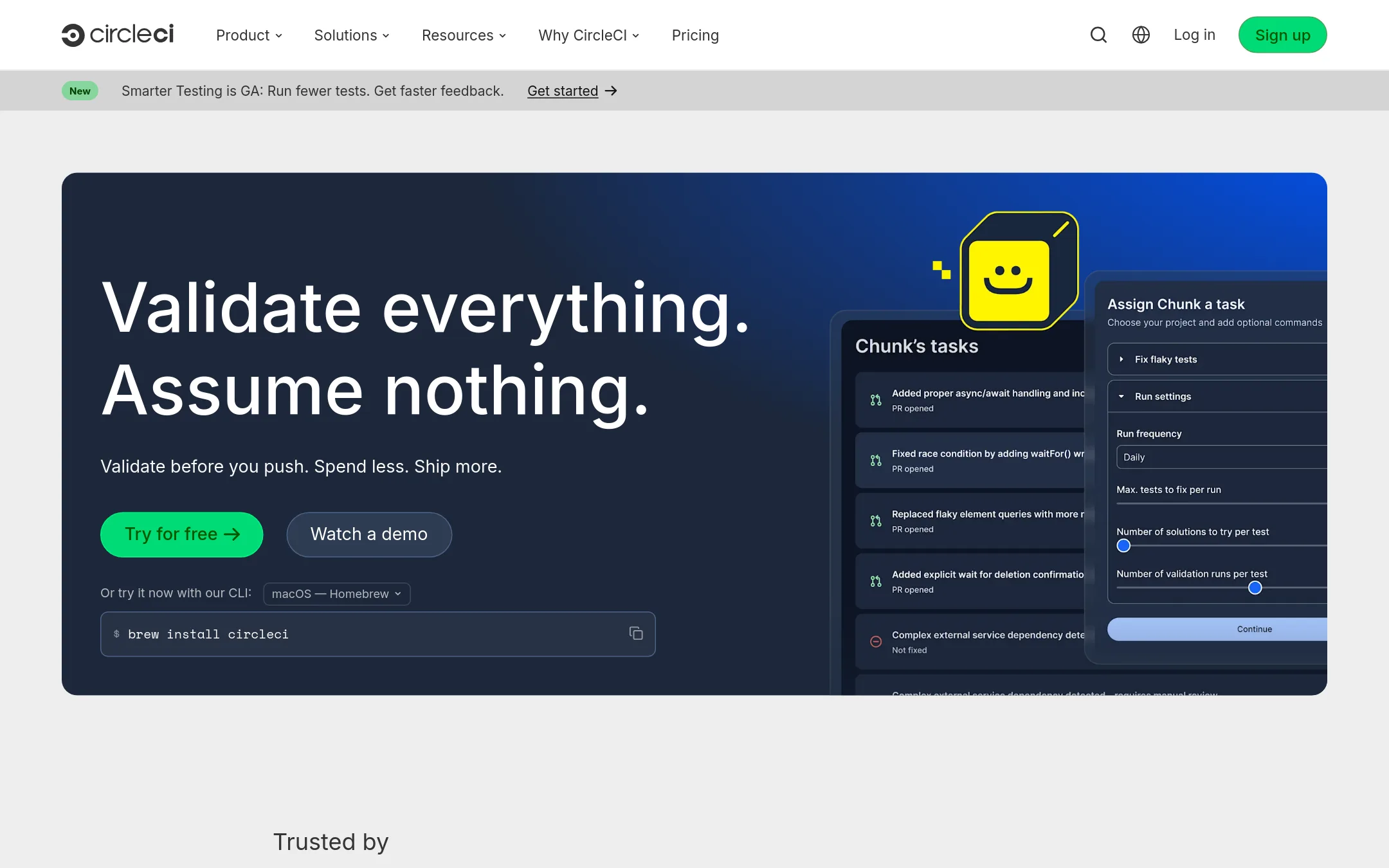
CircleCI is a hosted CI/CD platform that validates and ships code with intelligent automation, including test selection and flaky test detection. Choose it over Dagger if you want a managed, credit-based service with built-in AI-era testing features rather than running your own pipelines as code.
Where it is strong
- Free tier with 6,000 build minutes and 5 users
- Smarter Testing runs only affected tests and detects flaky tests
- Supports Docker, Linux, Arm, macOS, Windows, and GPU resource classes
Where it falls short
- Credits model can be complex to estimate for heavy usage
- Self-hosted runners have network transfer limits (1 GB free, 5 GB performance)
- Pricing:
- Free plan includes up to 6,000 build minutes and 5 active users. Performance plan starts with 30,000 credits included free, then $15 per additional 25,000 credits, and $15/month per additional user.
- From $30/user/mo
4.Buildkite
Best for: Teams that want to keep CI on their own infrastructure with fine-grained control over pipelines and compute.
- Pricing
- From $30/user/mo
- Category
- Other
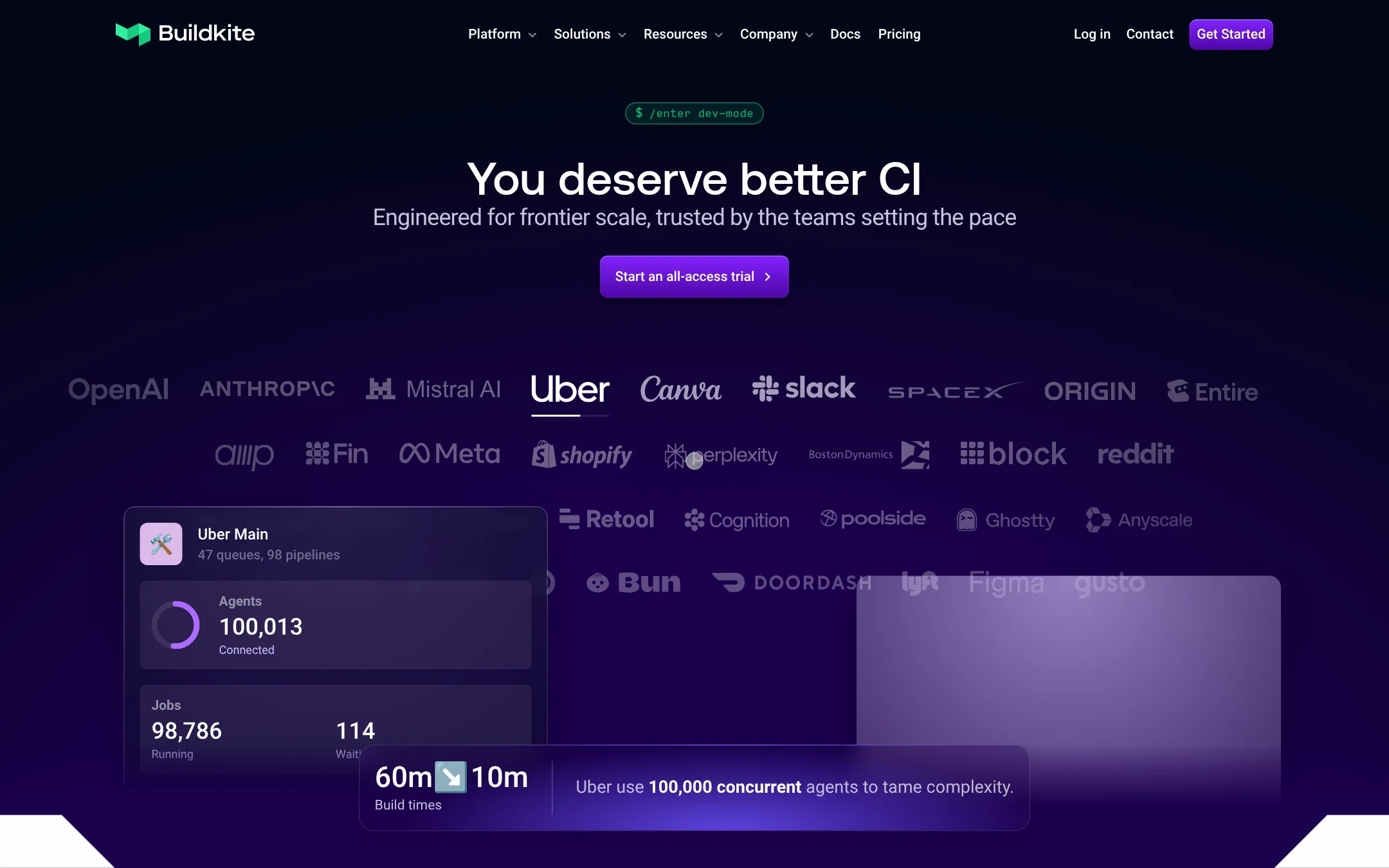
Buildkite is a programmable CI/CD platform that runs on your own infrastructure or on Buildkite-hosted agents. It gives you dynamic pipelines, flexible primitives, and test analytics. Choose it over Dagger if you want a mature, self-hosted CI orchestration tool with a large ecosystem and enterprise support.
Where it is strong
- Dynamic pipelines and flexible primitives for complex workflows
- Self-hosted agents let you run CI on your own hardware
- Test analytics with flaky test detection and AI routing
Where it falls short
- Hosted agents are billed separately, adding cost on top of the platform plan
- Advanced features like SSO and custom retention require the Enterprise plan
- Pricing:
- Free plan includes up to 5 users, 10 concurrent jobs, and 2,000 Linux vCPU minutes per month. Pro is $30 per active user per month with 4,000 Linux vCPU minutes included. Hosted agents are billed per vCPU minute, starting at $0.004 for Linux and $0.02 for Mac.
- Switching from Dagger:
- Moving from Dagger means rewriting pipelines in Buildkite's YAML and step-based model, and setting up agents on your infrastructure.
- Not published
5.Jenkins
Best for: Teams that need a battle-tested, self-hosted CI/CD server with a huge plugin ecosystem and are comfortable managing their own infrastructure.
- Pricing
- Not published
- Category
- Developer Tools
Jenkins is a self-hosted, plugin-based automation server that has been around for years. Choose it when you need maximum control over your CI/CD infrastructure and want to rely on a mature ecosystem of community plugins, rather than Dagger's programmable, container-native approach.
Where it is strong
- 2300+ community plugins for nearly any tool
- Runs on your own servers with full control
- Distributes work across multiple machines
Where it falls short
- Requires manual setup and ongoing maintenance
- Pipeline configuration is code-heavy and can get complex
- Pricing:
- Pricing is not published on the site.
- Not published
6.Drone
Best for: Teams that want a simple, self-hosted CI server with container-isolated builds and native SCM integrations, without adopting a new pipeline language.
- Pricing
- Not published
- Category
- Other
Drone is a self-hosted CI platform that runs each pipeline step in an isolated Docker container and configures pipelines with a simple YAML file committed to your repo. Choose it over Dagger if you want a lightweight, single-binary CI server that integrates with GitHub, Bitbucket, or GitLab and you don't need Dagger's programmable modules or remote execution.
Where it is strong
- Installs from a single binary or Docker image, no sales process.
- Runs every build step in an isolated Docker container, avoiding conflicts.
- Integrates with GitHub, GitHub Enterprise, Bitbucket, and GitLab.
Where it falls short
- Pipelines are YAML-based, not programmable like Dagger's modules.
- No managed cloud offering. You run and scale the server yourself.
- Pricing:
- Pricing is not published on the site.
- ENot published
7.Earthly
Best for: Platform and SRE teams that need to enforce engineering standards and compliance rules consistently across human and AI-generated code.
- Pricing
- Not published
- Category
- Other
Earthly Lunar turns engineering standards, AGENTS.md files, and compliance docs into deterministic guardrails that run as code on every PR and in AI authoring loops. Choose it instead of Dagger when your main problem is enforcing standards across many repos, not building and running CI pipelines.
Where it is strong
- Deterministic enforcement, not prompt-based
- Same guardrails for humans and AI agents
- 300+ built-in guardrails included
Where it falls short
- Pricing not published, so cost is unclear
- Focuses on policy enforcement, not pipeline execution like Dagger
- Pricing:
- Pricing is not published on the site.
- TNot published
8.Tekton
Best for: Teams running Kubernetes who want CI/CD pipelines defined and executed natively within their cluster.
- Pricing
- Not published
- Category
- Other
Tekton is a Kubernetes-native CI/CD framework that lets you build pipelines as Kubernetes custom resources. Choose it over Dagger if you are already invested in Kubernetes and want CI/CD that runs on your existing cluster infrastructure.
Where it is strong
- Runs on Kubernetes, so it fits existing cluster operations
- Open source and vendor-neutral across clouds and on-prem
- Integrates with Jenkins, Skaffold, Knative, and other tools
Where it falls short
- Requires Kubernetes expertise to set up and maintain
- No managed cloud offering or built-in remote execution like Dagger Cloud
- Pricing:
- Pricing is not published on the site.
- Not published
9.Argo CD
Best for: Kubernetes teams that want declarative GitOps with a built-in UI for managing deployments.
- Pricing
- Not published
- Category
- Developer Tools
Argo CD is a declarative GitOps tool for Kubernetes that syncs your cluster state with your Git repo. Choose it over Dagger when your team is already on Kubernetes and wants a fully-loaded UI for continuous delivery, not a programmable CI/CD engine.
Where it is strong
- Declarative GitOps: cluster state is defined in Git, easy to review and rollback.
- Fully-loaded UI for visualizing applications, sync status, and history.
- Open source and Kubernetes-native, integrates with Argo Workflows and Rollouts.
Where it falls short
- Focused on Kubernetes CD, not general-purpose CI/CD pipelines.
- No built-in compute or cache pricing. You manage your own cluster resources.
- Pricing:
- Pricing is not published on the site.
- From 35k credits/mo
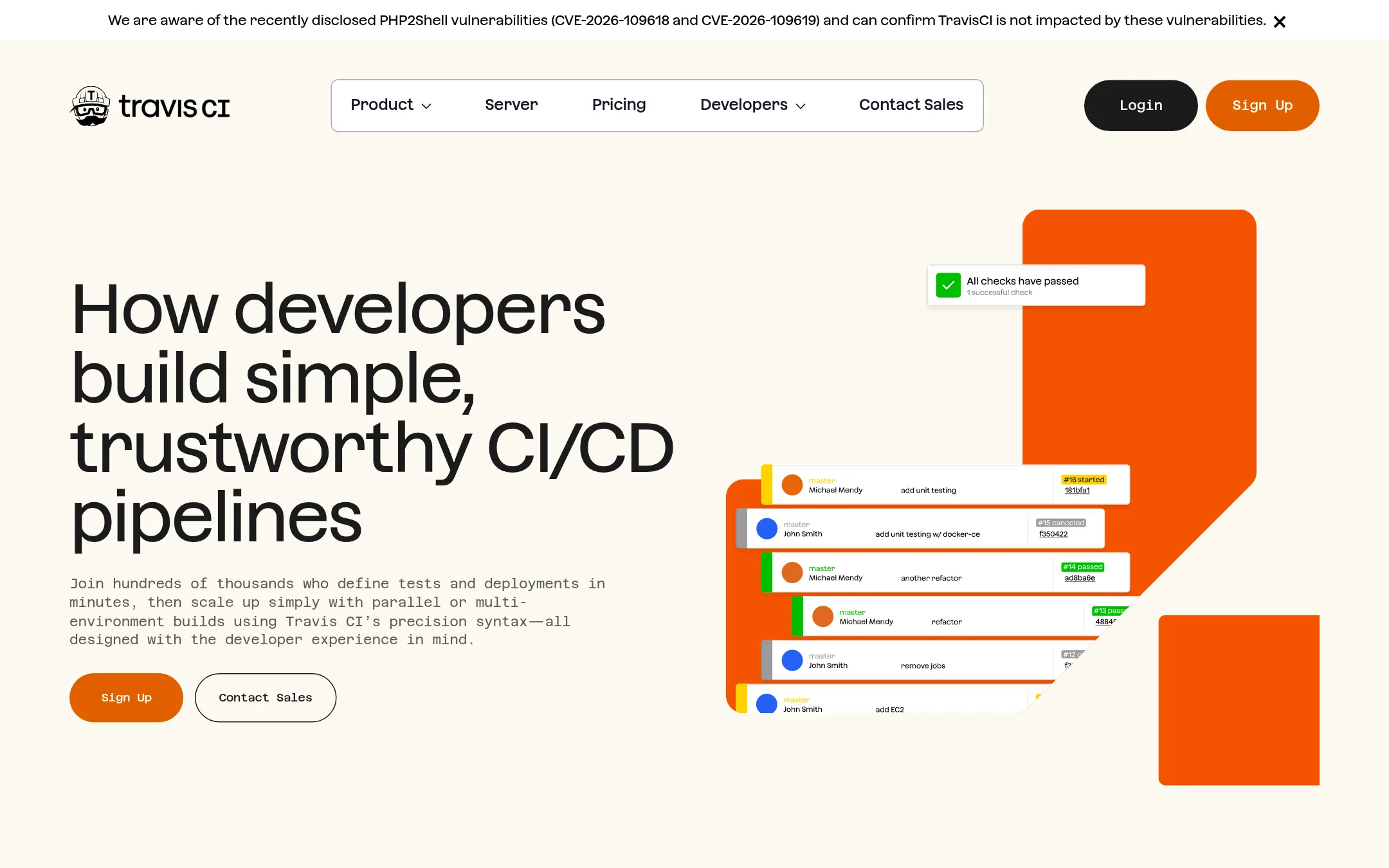
10.Travis CI
Best for: Teams that want a straightforward, hosted CI/CD service with predictable credit-based billing and don't need to run pipelines locally or on their own infrastructure.
- Pricing
- From 35k credits/mo
- Category
- Other
Travis CI is a hosted CI/CD service with a long track record and a simple, credit-based pricing model. Choose it over Dagger if you want a managed, no-setup pipeline without writing code or managing your own engine.
Where it is strong
- Simple credit-based pricing with a free tier of 35,000 Linux build credits per month
- Supports up to 300 concurrent jobs on higher plans
- Offers on-premise or private cloud deployment options
Where it falls short
- No transparent per-resource usage billing like Dagger's CPU/memory metering
- Does not provide a programmable SDK or local execution model like Dagger's engine
- Pricing:
- Pricing starts with 35,000 Linux build credits per month, 80 concurrent jobs, and premium VMs available. Unlimited build credits, collaborators, and repositories are offered on higher tiers, with 420,000 Linux build credits per year for annual plans.
- Pay-as-you-go
11.Microsoft Azure CycleCloud
Best for: Research teams and enterprises running HPC or batch workloads on Azure that need automated cluster provisioning and scaling.
- Pricing
- Pay-as-you-go
- Category
- Developer Tools
Azure CycleCloud is a cluster management tool for running HPC workloads on Azure, not a CI/CD pipeline engine. Choose it when you need to orchestrate large-scale compute clusters for scientific or engineering simulations, and you already live in the Azure ecosystem. It replaces the need to hand-roll cluster provisioning, but it won't give you Dagger's test-native, code-defined pipelines.
Where it is strong
- Integrates natively with Azure HPC services like schedulers and storage.
- Automates cluster creation, scaling, and teardown based on workload.
- Supports a range of schedulers including Slurm, PBS, and Grid Engine.
Where it falls short
- Tied to Azure. No multi-cloud or on-prem orchestration.
- Not a CI/CD tool. No pipeline-as-code or test-native features.
- Pricing:
- In the United States, Azure pricing is consumption-based. You pay only for the cloud resources you use, with commitment discounts available. No specific CycleCloud price is listed.
- Not published
12.Bitbucket
Best for: Teams using Jira that want code hosting, pull requests, and CI/CD with native Atlassian integration.
- Pricing
- Not published
- Category
- Other
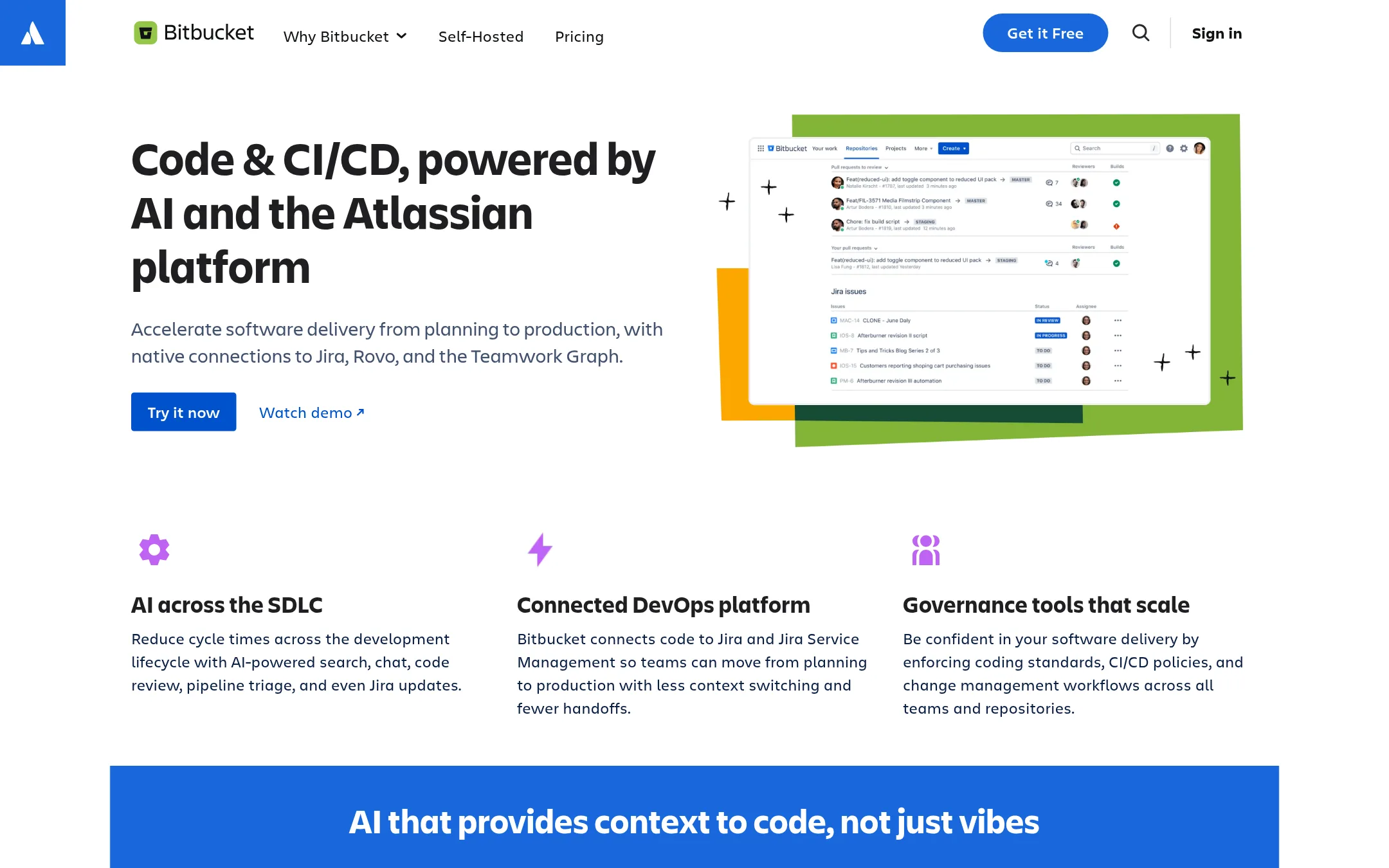
Bitbucket is a Git-based code hosting and CI/CD platform tightly integrated with Jira and the Atlassian ecosystem. Choose it over Dagger if your team already lives in Jira and wants code, reviews, pipelines, and issue tracking in one place, rather than a standalone pipeline engine.
Where it is strong
- Native Jira integration links code changes to issues automatically.
- Built-in CI/CD with Bitbucket Pipelines, plus support for on-prem tools like Bamboo or Jenkins.
- Governance features like merge checks and granular permissions at workspace, project, or repo level.
Where it falls short
- Pricing details are not listed on the site, so you must contact sales.
- Tight coupling to Atlassian tools may not suit teams not using Jira.
- Pricing:
- Pricing is not published on the site.
See more comparisons in Developer Tools alternatives.
FAQ
Questions about Dagger alternatives
What is the best alternative to Dagger for a small team that wants a simple, managed CI/CD service?
CircleCI is a strong choice because it offers a free tier with 6,000 build minutes and 5 users, and it handles test selection and flaky test detection automatically. Travis CI is also simple with a free tier of 35,000 Linux build credits per month, but it lacks Dagger's programmable SDK and local execution model.
Which alternative is best for enterprises that need strong security and compliance controls?
GitLab is the best fit for regulated industries because it bundles source control, CI/CD, and security scanning into one platform. It offers audit trails, policies that apply to both human and agent changes, and compliance features, though advanced security features require the Ultimate plan.
Can I run CI/CD on my own infrastructure with any of these alternatives?
Yes. Buildkite lets you run CI on your own hardware with self-hosted agents, and it offers dynamic pipelines and test analytics. Jenkins is also self-hosted with a large plugin ecosystem, but it requires manual setup and maintenance. Drone is a lightweight self-hosted option that runs each step in a Docker container.
Which alternatives are tied to a specific cloud or platform?
Azure CycleCloud is tied to Azure and is for HPC workloads, not CI/CD. GitHub Projects is limited to the GitHub ecosystem. Bitbucket is tightly coupled to Atlassian tools like Jira. If you need multi-cloud or on-prem flexibility, consider Buildkite or Tekton, which are more vendor-neutral.
How do pricing models compare among the alternatives?
CircleCI uses a credit-based model with a free tier and additional credits for $15 per 25,000. Travis CI also uses credits, with a free tier of 35,000 Linux build credits per month. Buildkite charges per active user per month plus separate vCPU minutes for hosted agents. GitLab has per-user tiers starting at $12 per user/month. Azure CycleCloud is consumption-based, paying only for cloud resources used.
Last updated November 3, 2026.