
Databricks alternatives
12 products compared · 2026
Your shortlist, at a glance
Read the comparisons ↓ JupyterSee websiteOpen-source interactive notebooks for code, data and visualizations across 40+ languages.
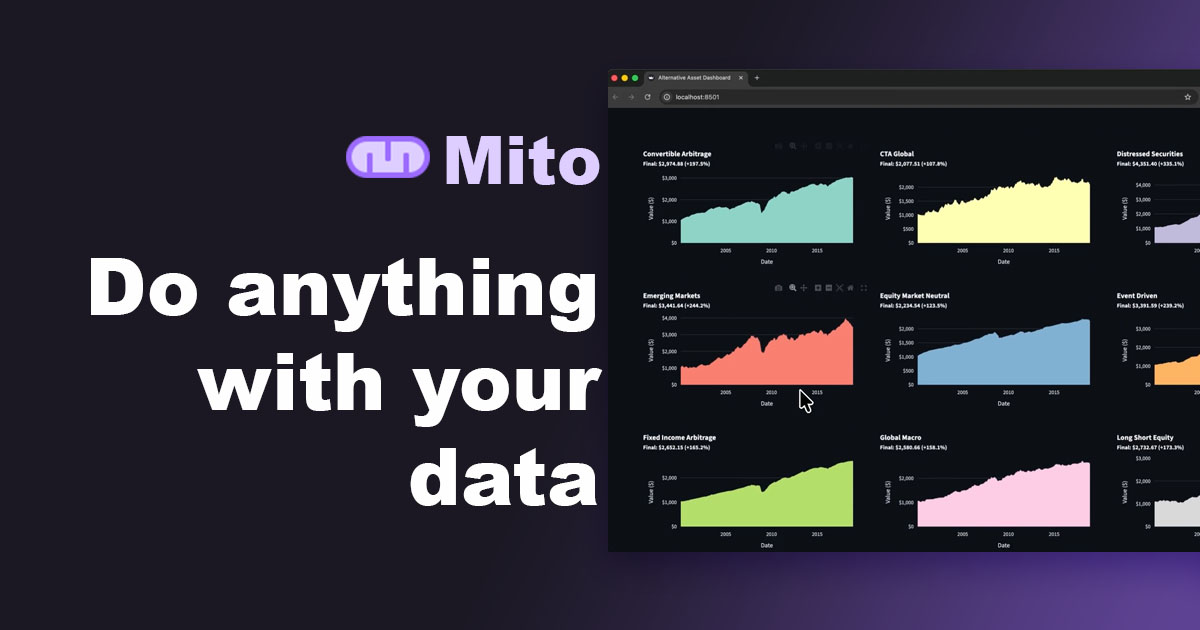 MitoSee websiteCursor for data analysis
 QueryPie AISee websiteQueryPie AIP - Enterprise Ready Agentic AI Platform
 SingleStoreSee websiteThe cloud-native, operational database built for speed and scale.
 AlteryxSee websiteAutomate data workflows and deliver AI-powered insights faster
 Apache AirflowSee websiteCommunity platform to programmatically author, schedule and monitor workflows.
 ClickHouseSee websiteFast open-source OLAP database for real-time analytics at petabyte scale.
 CockroachDBSee websiteAnalytics & Data
 DeepnoteSee websiteA better data science notebook.
 HexSee websiteAI Analytics Platform for Your Whole Team
 KNIMESee websiteAnalytics made intuitive, AI made reliable
 MongoDBSee websiteThe world’s leading modern data platform for AI-ready apps and flexible data work.
About Databricks and its alternatives
Teams evaluating Databricks alternatives often seek platforms that match its unified lakehouse capabilities for data engineering, warehousing, governance, and AI without the same enterprise complexity or costs. Databricks combines open lake data with serverless SQL analytics, Unity Catalog governance across data and models, Lakeflow pipelines for batch and streaming, and tools like Agent Bricks and Genie for production AI agents. Searchers comparing options typically need simpler SQL-focused warehouses, stronger multi-cloud separation, or lower entry pricing for analytics teams. Common motivations include migrating from legacy systems, reducing DBU-based spend, or finding easier BI and app development on governed data. This page highlights well-known alternatives that address specific gaps in scalability, openness, or AI integration while noting where Databricks leads in unified data-AI workflows.
Explore the alternatives
- See website
1.Jupyter
Developer Tools
Open-source interactive notebooks for code, data and visualizations across 40+ languages.
- See website
2.Mito
Analytics & Data
Cursor for data analysis
- See website
3.QueryPie AI
AI & Machine Learning
QueryPie AIP - Enterprise Ready Agentic AI Platform
- See website
4.SingleStore
Analytics & Data
The cloud-native, operational database built for speed and scale.
- See website
5.Alteryx
Analytics & Data
Automate data workflows and deliver AI-powered insights faster
- See website
6.Apache Airflow
Analytics & Data
Community platform to programmatically author, schedule and monitor workflows.
- See website
7.ClickHouse
Analytics & Data
Fast open-source OLAP database for real-time analytics at petabyte scale.
- See website
8.CockroachDB
Analytics & Data
- See website
9.Deepnote
Analytics & Data
A better data science notebook.
- See website
10.Hex
Analytics & Data
AI Analytics Platform for Your Whole Team
- See website
11.KNIME
Analytics & Data
Analytics made intuitive, AI made reliable
- See website
12.MongoDB
Analytics & Data
The world’s leading modern data platform for AI-ready apps and flexible data work.
See more comparisons in Analytics & Data alternatives.
FAQ
Questions about Databricks alternatives
What are the best Databricks alternatives for teams focused only on SQL analytics?
For pure SQL workloads, Snowflake and Google BigQuery offer serverless warehouses with strong separation of storage and compute, often at lower management overhead than Databricks Lakehouse. They lack native Spark-based ETL but integrate easily with external orchestration tools.
How does Databricks governance compare to alternatives like Snowflake or Synapse?
Databricks Unity Catalog provides unified governance across data, models, dashboards and agents on the lakehouse. Snowflake uses its own governance layer while Azure Synapse relies on Microsoft Purview, each with different strengths in multi-engine support and AI asset tracking.
Are there cheaper Databricks alternatives for startups building AI agents?
Startups may prefer BigQuery or Redshift for lower entry costs and simpler scaling when agent use cases are early-stage. These options trade off some of Databricks integrated Agent Bricks and Lakebase Postgres capabilities for faster setup and predictable billing.
Which Databricks alternatives support open lakehouse formats best?
Dremio and Starburst emphasize open formats like Iceberg and Delta with strong query federation. They provide lakehouse analytics without full Databricks platform lock-in but require additional tools for governance and AI model management.
What alternatives work well if I need both data warehousing and streaming ETL?
Cloudera and Azure Synapse combine warehousing with streaming pipelines similar to Lakeflow. They suit organizations already invested in Hadoop ecosystems or Microsoft stacks while offering comparable batch and real-time data movement features.