
Decisional AI alternatives
5 products compared · Updated November 21, 2026
The short answer
The three strongest alternatives to Decisional AI are Zapier, Make and n8n. Zapier suits ops and sales teams that need reliable app-to-app automation across many SaaS tools without custom engineering. Make suits ops and no-code teams that want to build and govern their own automations across 3,500+ apps. n8n suits technical teams that want to build and self-host their own AI and integration workflows.
Your shortlist, at a glance
Read the comparisons ↓ ZapierFree plan. Paid per taOps and sales teams that need reliable app-to-app automation across many SaaS tools without custom engineering
 n8nStarter tier + Pro plaTechnical teams that want to build and self-host their own AI and integration workflows, with control over the code and data
 MakeNot publishedOps and no-code teams that want to build and govern their own automations across 3,500+ apps
WorkatoCustom quoteEnterprise IT and operations teams that need governed AI agents and workflows across many internal systems and on-premise applications
- TTinesNot publishedIT and security teams at larger enterprises that want many departments building automations under central governance
About Decisional AI and its alternatives
Decisional AI is a set of autonomous AI agents for commercial contractors. According to its site, it runs back-office work such as expense reconciliation, preventive maintenance and field service management by working inside a company's existing software. Its Dex agent handles one-off tasks, and its Automation Agents build, run and repair full workflows with a transparent run history.
When comparing alternatives in this category, weigh the pricing structure first, since some tools charge per task, per credit or by tier and others publish no prices at all. Check which regions are supported and whether data can stay in a chosen location. Look closely at the integrations you need, the support level on each plan, and the contract terms, including whether the vendor signs a DPA or custom agreement.
Explore the alternatives
- Free plan. Paid per ta
1.Zapier
Best for: Ops and sales teams that need reliable app-to-app automation across many SaaS tools without custom engineering
- Pricing
- Free plan. Paid per ta
- Category
- Productivity & Project Management
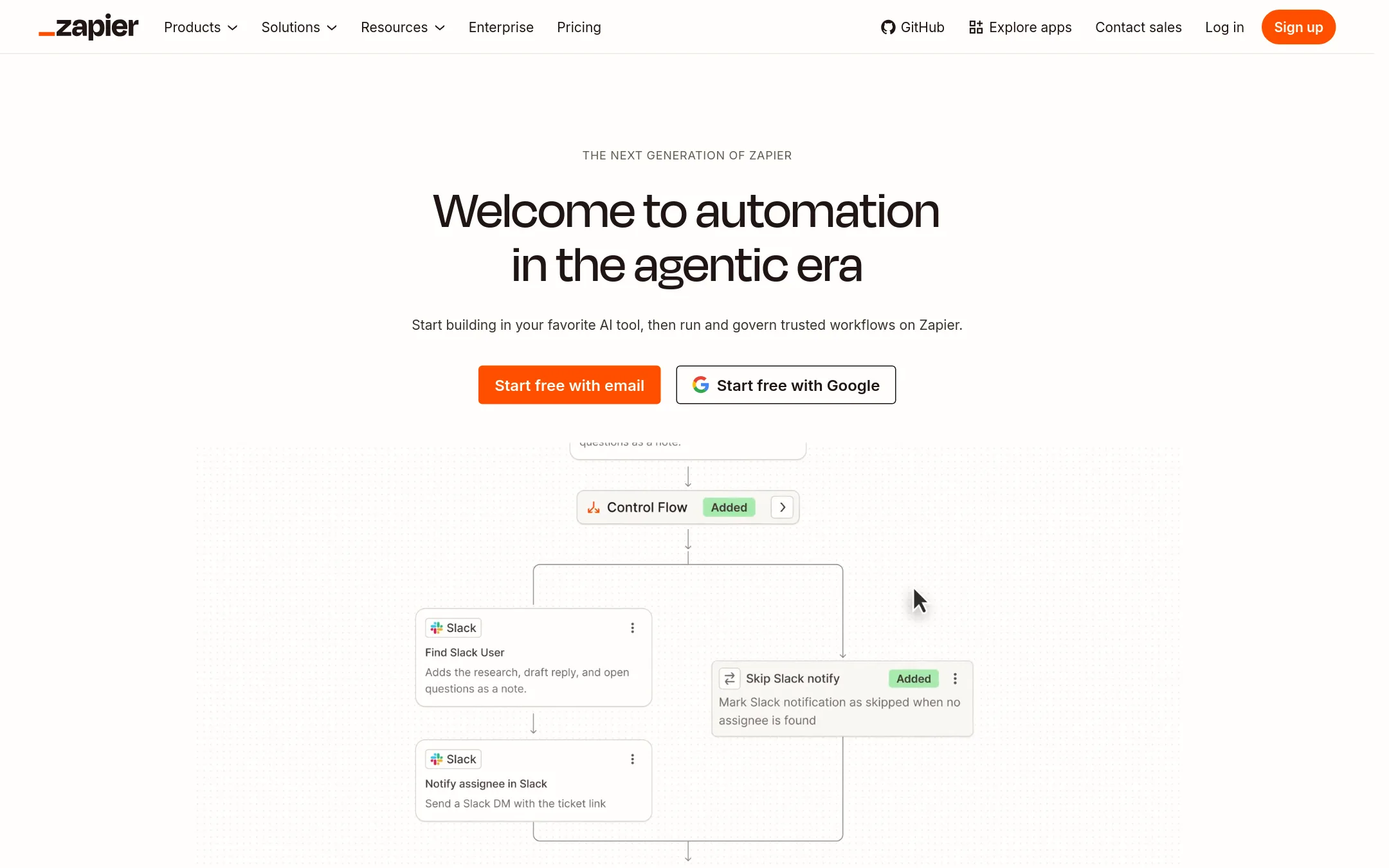
Zapier connects thousands of business apps so a trigger in one tool can start an action in another, with the steps fixed in advance. Someone would pick it over Decisional AI when they want predictable, rule-based app-to-app automation across many tools and do not need an agent to plan multi-step work or repair failed runs on its own.
Where it is strong
- Connects to 9,000+ apps, according to the site
- Lets you mix fixed steps with AI steps in one workflow
- Offers SOC 2 Type II, SAML SSO and SCIM on Enterprise
Where it falls short
- Workflows run on fixed steps you set, so they do not plan or adapt on their own the way Decisional's agents are described to
- Team and Enterprise tiers carry the controls, and the published excerpt does not show exact prices for them
- Pricing:
- Zapier's Free plan includes 100 tasks per month, Professional and Team are priced per task, and Enterprise is custom. The site lists plan features but the page excerpt here does not give dollar amounts.
- Starter tier + Pro pla
2.n8n
Best for: Technical teams that want to build and self-host their own AI and integration workflows, with control over the code and data
- Pricing
- Starter tier + Pro pla
- Category
- AI & Machine Learning
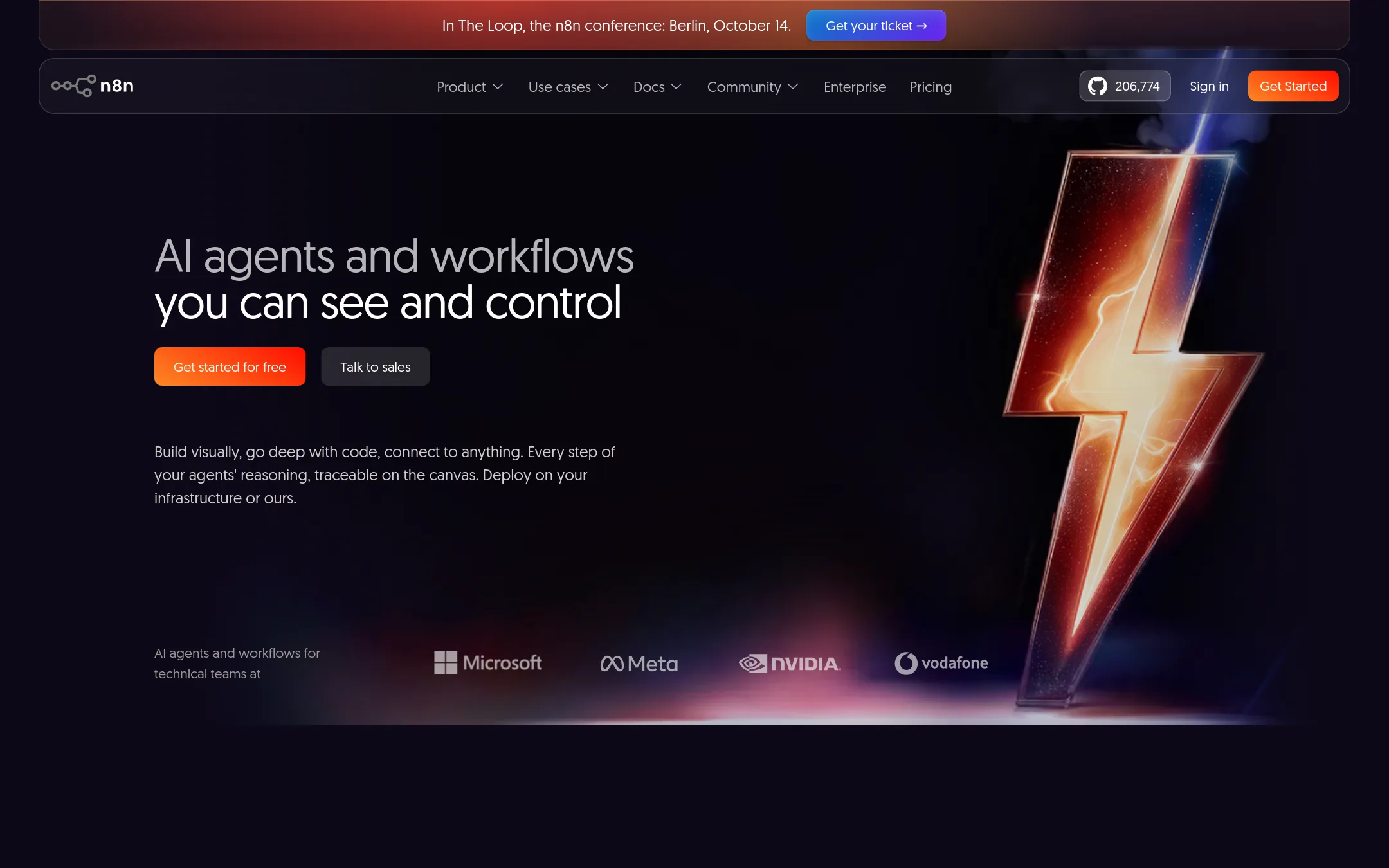
n8n is a workflow automation platform where technical teams build workflows with a visual editor and drop into code when needed. It adds AI steps, agents and human approval inside the same workflow, and it can be self-hosted. Choose it over Decisional AI if you want to own and maintain the workflows yourself and need on-prem deployment.
Where it is strong
- Visual workflow builder with the option to write JavaScript or Python code steps
- Self-hosted option with Docker and on-prem deployment, plus a GitHub source version
- Human approval for tool calls and rule-based controls around AI actions
Where it falls short
- Workflows are built and maintained by your team, unlike Decisional AI's agents that build and repair their own workflows
- Self-hosting is limited to the Business plan and above according to the pricing page
- Pricing:
- Pricing is published on a usage basis: Starter has 5 concurrent executions and 1,600 Assistant credits per month, Pro has up to 50 concurrent executions and 9,600 Assistant credits per month, and Business and Enterprise are custom tiers, with Business availabl
- Switching from Decisional AI:
- Moving from Decisional AI would mean rebuilding your agent workflows as node graphs in n8n, since the facts supplied do not describe a migration path between the two.
- Not published
3.Make
Best for: Ops and no-code teams that want to build and govern their own automations across 3,500+ apps
- Pricing
- Not published
- Category
- Productivity & Project Management
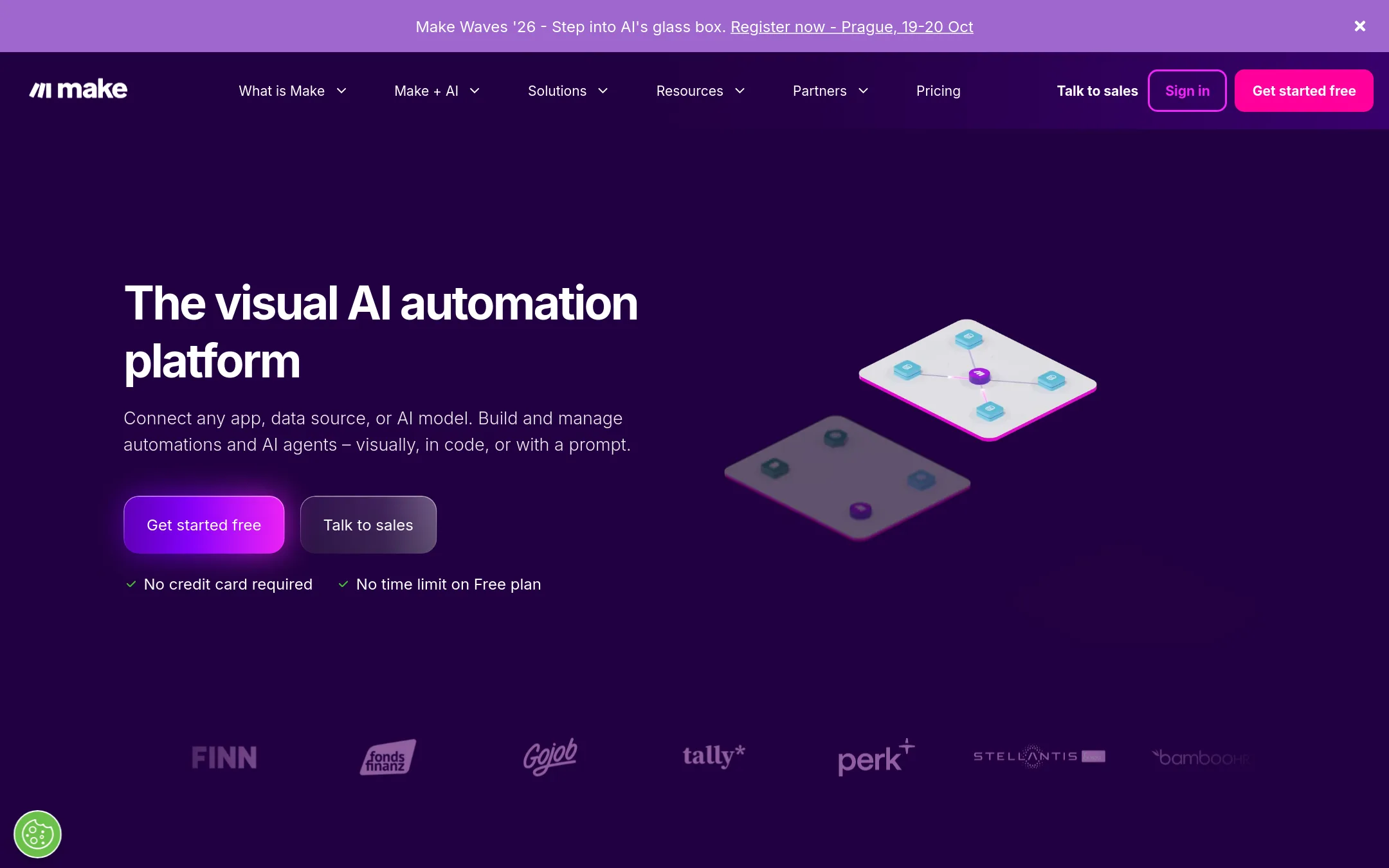
Make is a visual automation platform that connects thousands of apps and AI models through drag-and-drop, prompts, or code. Teams choose it over Decisional AI when they want to build and own their own workflows across many tools, with full visibility into every scenario and run.
Where it is strong
- Visual builder lets non-developers map workflows by dragging steps or describing them in a prompt
- Connects to 3,500+ apps out of the box, with custom integrations for anything with an API
- Ships with observability, role-based access and audit logs for managing many workflows at once
Where it falls short
- Its agents are set up to run within defined goals and tools, rather than the spreadsheet-driven, self-repairing Dex approach Decisional desc
- Pricing is credit-based and the page does not state the per-credit cost in the supplied text
- Pricing:
- Pricing is not published on the site.
- Custom quote
4.Workato
Best for: Enterprise IT and operations teams that need governed AI agents and workflows across many internal systems and on-premise applications
- Pricing
- Custom quote
- Category
- AI & Machine Learning
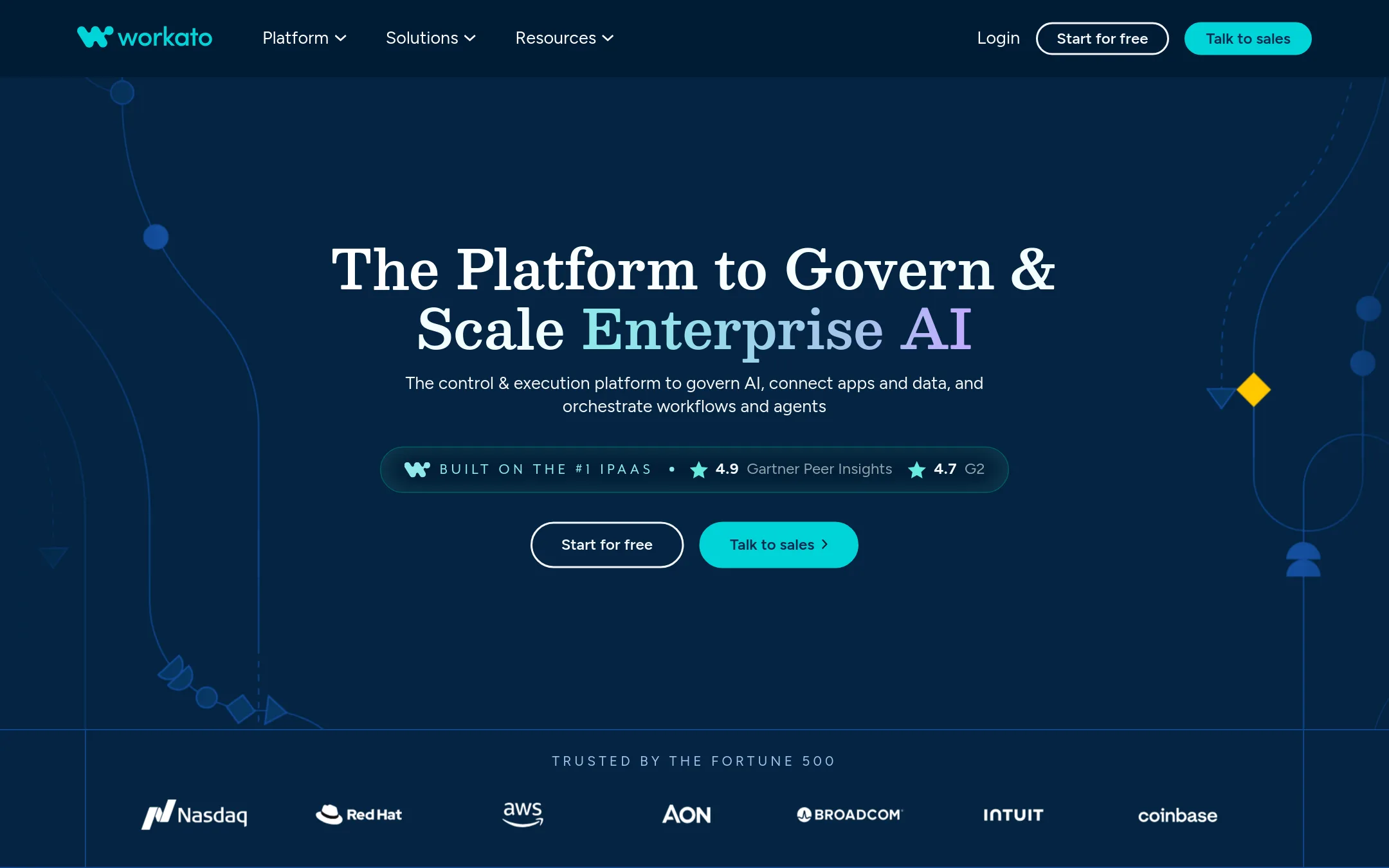
Workato is an enterprise integration and automation platform that connects thousands of apps, APIs and databases, and now adds AI agent building, MCP servers and governance on top. Teams choose it over Decisional AI when they need to govern many agents, models and workflows centrally across a large, mixed-system IT estate, with on-premise connectivity and enterprise security controls.
Where it is strong
- Connects to 17,000+ apps, APIs, databases, files and MCP servers, according to the site.
- Central governance covers identity, policy, approvals, security, observability and cost controls for agents and workflows.
- Offers on-premise connectivity through OPA agents, with options for private link and virtual private deployment.
Where it falls short
- Pricing is tied to editions, task consumption and concurrency, which makes costs harder to predict for a small team.
- Built for enterprise scale, so the feature set goes well beyond a spreadsheet-based back-office workflow.
- Pricing:
- Workato publishes four editions (Standard, Business MCP, Enterprise MCP and Workato ONE) and add-ons, but the page does not list dollar figures, and it says contract terms can change what you pay.
- TNot published
5.Tines
Best for: IT and security teams at larger enterprises that want many departments building automations under central governance
- Pricing
- Not published
- Category
- Other
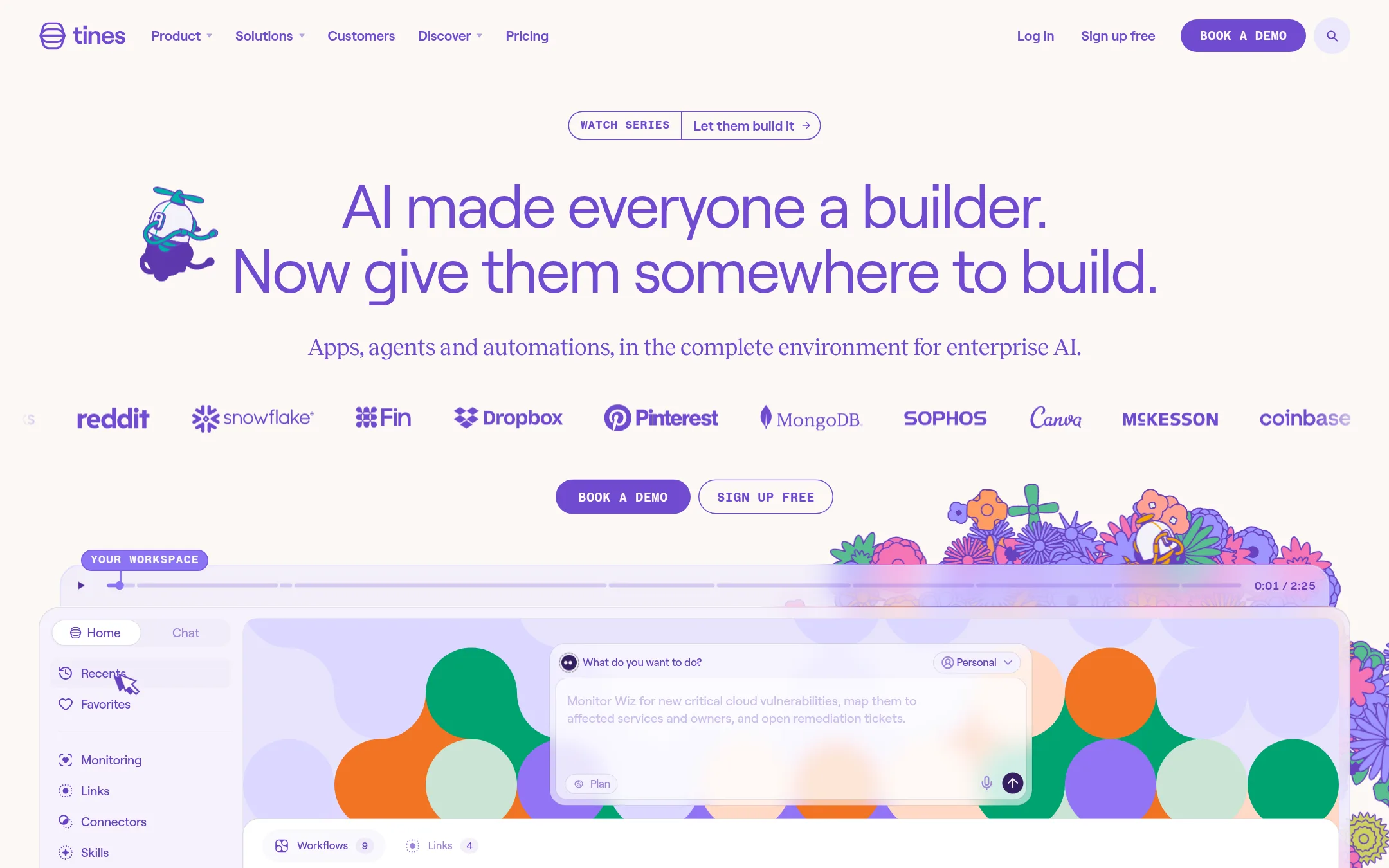
Tines is an environment for building, deploying and governing agents, apps and automations, with IT and security keeping visibility and control over what runs. A company would pick it over Decisional AI when the work is to let many teams build internal software safely, under central IT governance, rather than to have agents run back-office tasks for a contractor-style business.
Where it is strong
- Unlimited users, spaces and connectors on the listed plan
- IT keeps permissions, credentials and oversight while teams build
- Bring your own AI model and flexible deployment options
Where it falls short
- The public free tier caps live workflows at three
- The homepage focuses on enterprise governance, so small teams may find it heavy for simple back-office tasks
- Pricing:
- Pricing is not published on the site beyond a plan that includes unlimited users, spaces and connectors, 3 live workflows, a one-time $50 AI allowance, and an unlimited workflows tier with flexible deploy options.
See more comparisons in AI & Machine Learning alternatives.
FAQ
Questions about Decisional AI alternatives
What is Decisional AI best known for?
According to its site, Decisional AI is known for autonomous AI agents built for commercial contractors that automate back-office operations. Its Dex agent handles one-off tasks, while Automation Agents build and repair full business workflows. The agents work within a company's existing software and processes.
Which alternative is closest to Decisional AI for simple app-to-app automation?
Zapier is the closest fit for teams that want app-to-app automation across many SaaS tools. Its Free plan includes 100 tasks per month, and the site lists connections to 9,000+ apps. Its workflows run on steps you set in advance rather than on agents that plan their own work.
Which alternative is best if we want to own and self-host our workflows?
n8n is the strongest choice for teams that want to build and self-host their own workflows. It offers a visual editor with code steps, a self-hosted option with Docker and on-prem deployment, and human approval inside workflows. Self-hosting is limited to the Business plan and above, according to its pricing page.
Which alternative suits a large enterprise with many internal systems?
Workato suits enterprise IT and operations teams that need governed AI agents across many internal systems and on-premise applications. It connects to 17,000+ apps, APIs and databases, and offers central governance and on-premise connectivity. Its pricing depends on editions, task consumption and concurrency, and the page does not list dollar figures.
How should I think about pricing when comparing these tools?
Pricing models differ a lot across the alternatives. Zapier bills per task on its Professional and Team plans, Make uses credits, and n8n publishes usage-based tiers with concurrency limits. Make's and Workato's prices are not given in the supplied text, so request a quote before comparing costs directly.
Last updated November 21, 2026.