
Dench.com alternatives
6 products compared · Updated November 21, 2026
The short answer
The three strongest alternatives to Dench.com are HubSpot CRM, Attio and Clay. HubSpot CRM suits growing sales and marketing teams that want a mature CRM with over 2,000 integrations and marketing, sales and service tools in one suite. Attio suits revenue teams of five or more that want a flexible CRM with agent automation and a free tier to start. Clay suits GTM engineers and RevOps teams that want to build custom enrichment and outbound workflows on top of their existing CRM.
Your shortlist, at a glance
Read the comparisons ↓ HubSpot CRMFrom $20/seat/moGrowing sales and marketing teams that want a mature CRM with a wide integration marketplace and marketing, sales and service tools in one suite.
 SalesforceNot publishedEnterprises with several business units that need one governed system of record for sales, service, marketing and data
- AAttioFrom $0 / $40 per moRevenue teams of five or more that want a flexible CRM with agent automation and no fixed sales process to start with
- CClayFrom $54/moGTM engineers and RevOps teams that want to build custom enrichment, scoring and outbound workflows on top of their existing CRM
 GongCustom quoteSales organisations of 50 or more reps that need call recording, coaching and forecasting grounded in real customer conversations
- LLindyFrom $29.99/mo per seaAgencies and small teams that want an AI employee to handle lead replies, client reporting and invoice follow-up across tools like Slack and email
About Dench.com and its alternatives
Dench.com is an AI revenue engine that its site describes as a way to find, reach and close customers autonomously. The site says it replaces legacy CRM systems and separate go-to-market tools, with agents that enrich leads, send follow-ups, record meetings and file deal details into the pipeline. Its pricing is per seat, with separate monthly allowances for AI actions and enrichment credits, and optional outbound campaigns on the Grow tier.
When comparing alternatives in this category, weigh how each product prices its seats and usage, since some charge per seat, some charge per credit and some quote custom amounts. Check which regions and data sources the enrichment covers, which integrations are included, how much support and onboarding come with the plan, and what the contract terms require, such as monthly versus annual billing and whether add-ons roll over.
Explore the alternatives
- From $20/seat/mo
1.HubSpot CRM
Best for: Growing sales and marketing teams that want a mature CRM with a wide integration marketplace and marketing, sales and service tools in one suite.
- Pricing
- From $20/seat/mo
- Category
- Customer Support
HubSpot CRM is a broad suite covering marketing, sales, service, content, data and revenue, with a large marketplace of over 2,000 integrations. Teams choose it over Dench.com when they want a mature, widely supported platform that already connects to most of the tools they use, and when they need marketing and service tools alongside the CRM.
Where it is strong
- Over 2,000 integrations listed on the site, so it fits into existing stacks.
- A free tier covers basic marketing, sales, service and data tools for up to 2 users.
- Covers marketing, sales, service, content, data and revenue in one platform, with AI agents built in.
Where it falls short
- Advanced tiers carry a one-time onboarding fee, $3,000 for Professional and $7,000 for Enterprise, on top of monthly costs.
- Credits are used when AI features take action, so spend has to be tracked against the HubSpot Credits allowance.
- Pricing:
- Marketing Hub Starter is $20 per seat per month, Professional is $890 per month including 3 Core Seats, and Enterprise is $3,600 per month with 5 Core Seats, while the Free tier covers up to 2 users.
- Switching from Dench.com:
- Moving from Dench.com to HubSpot is not described in the supplied facts, so no migration steps can be confirmed.
- Not published
2.Salesforce
Best for: Enterprises with several business units that need one governed system of record for sales, service, marketing and data
- Pricing
- Not published
- Category
- Customer Support
Salesforce is a large enterprise CRM that now sells agent tooling on top of its core records, data and workflows. Teams with several departments, complex integrations or compliance demands tend to choose it over Dench.com, which is a lighter, AI-first revenue engine that claims to replace CRM and GTM tools in one workspace.
Where it is strong
- Broad product range covering sales, service, marketing, commerce and analytics
- AgentExchange marketplace for finding and deploying agents and apps
- Lists support for many industries and a large customer roster on its homepage
Where it falls short
- The homepage material gives no published per-seat figures to compare with Dench.com
- Its product catalogue is wide, so a small team may only use a fraction of it
- Pricing:
- Pricing is not published on the site.
- AFrom $0 / $40 per mo
3.Attio
Best for: Revenue teams of five or more that want a flexible CRM with agent automation and no fixed sales process to start with
- Pricing
- From $0 / $40 per mo
- Category
- Other
Attio is a CRM that logs emails and calls automatically, builds its own data model from your inbox and calendar, and runs AI agents for prospecting, enrichment and account health. Teams pick it when they want a CRM that grows around how they already sell, with a free tier to start. Dench.com leans harder into autonomous outbound and meeting-driven pipeline, so teams focused on that may prefer it.
Where it is strong
- Records and emails sync automatically, so reps spend less time on manual logging.
- A free plan covers up to 3 users with agents and automations included.
- Custom objects and a SQL query option let teams model their data their way.
Where it falls short
- Outbound sequences and call intelligence sit only on the Pro tier and above.
- The Ultra plan is priced for large organisations, with no published mid-market option between Pro and Ultra.
- Pricing:
- Pricing is published in USD per month: Free for up to 3 users, Plus at $40 per workspace per month on annual billing ($50 monthly), Pro at $100 ($125 monthly), and Ultra at $1,000 per month, with extra users priced separately.
- Switching from Dench.com:
- Attio's site says it maps existing deal history during onboarding and provides a migration checklist, so moving from Dench.com looks like a guided import rather than a manual rebuild.
- CFrom $54/mo
4.Clay
Best for: GTM engineers and RevOps teams that want to build custom enrichment, scoring and outbound workflows on top of their existing CRM
- Pricing
- From $54/mo
- Category
- AI & Machine Learning
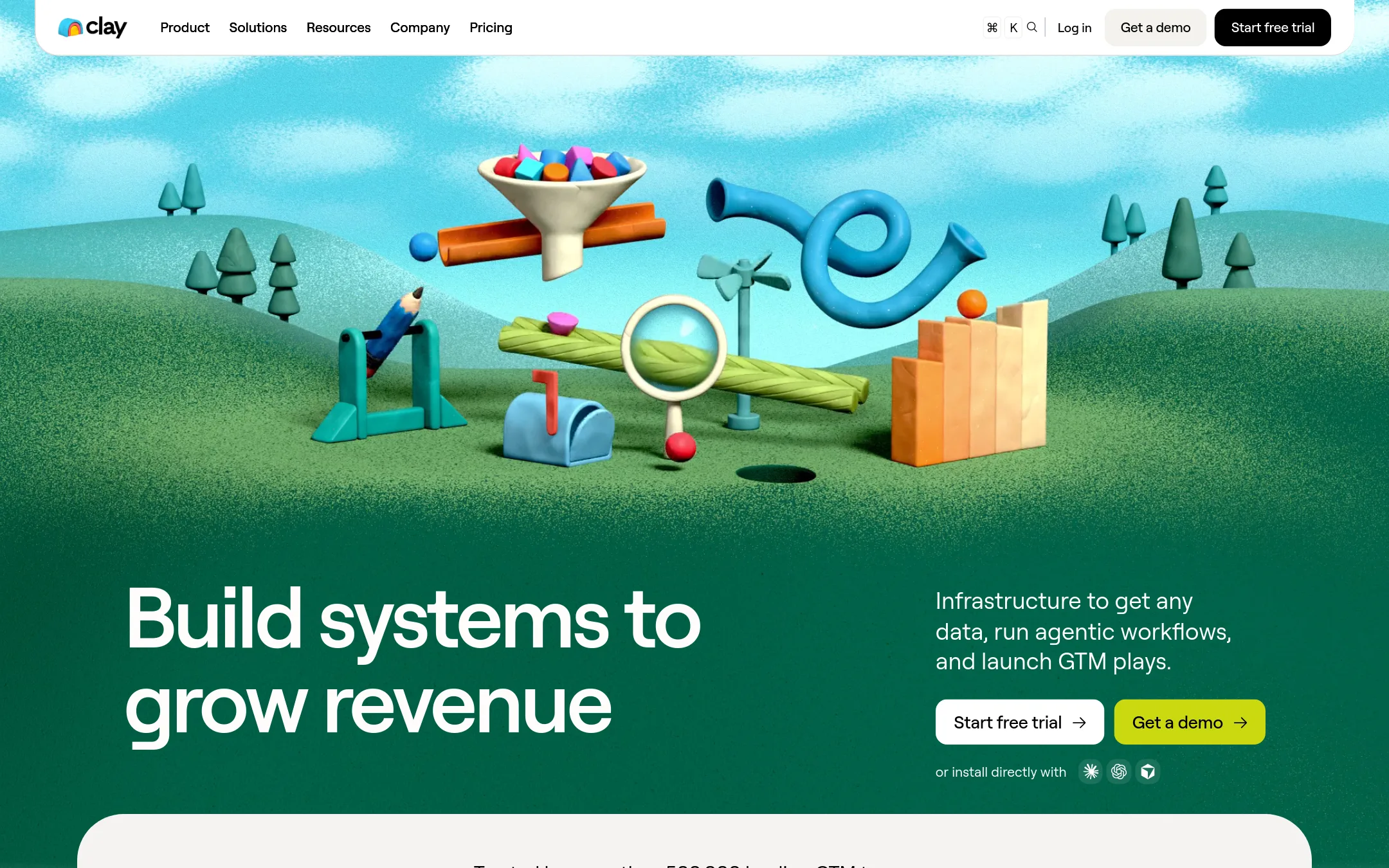
Clay is a GTM data and workflow platform built around a visual canvas, where teams pull contact and company data from many providers, run AI research agents, and push results into their CRM, email tools and ad platforms. Someone would choose Clay over Dench.com if they want to build their own outbound and enrichment systems from a large data marketplace rather than use a CRM with AI agents built in.
Where it is strong
- Access to a marketplace of 150+ or 200+ data and AI vendors under one contract
- Visual canvas for building and troubleshooting GTM workflows, with clicks, code or chat
- Connects to HTTP APIs, data warehouses like Snowflake and BigQuery, and CRMs
Where it falls short
- Dench.com includes a CRM, inbox and meeting recording, which Clay does not position as its core product
- Enterprise features such as SSO, SCIM and dedicated success managers sit behind custom pricing
- Pricing:
- Clay has a Free plan with 200 rows per table, paid plans starting at $54/mo (Launch), $185/mo (Growth) and custom Enterprise pricing, with the page listing prices in USD.
- Custom quote
5.Gong
Best for: Sales organisations of 50 or more reps that need call recording, coaching and forecasting grounded in real customer conversations
- Pricing
- Custom quote
- Category
- Customer Support
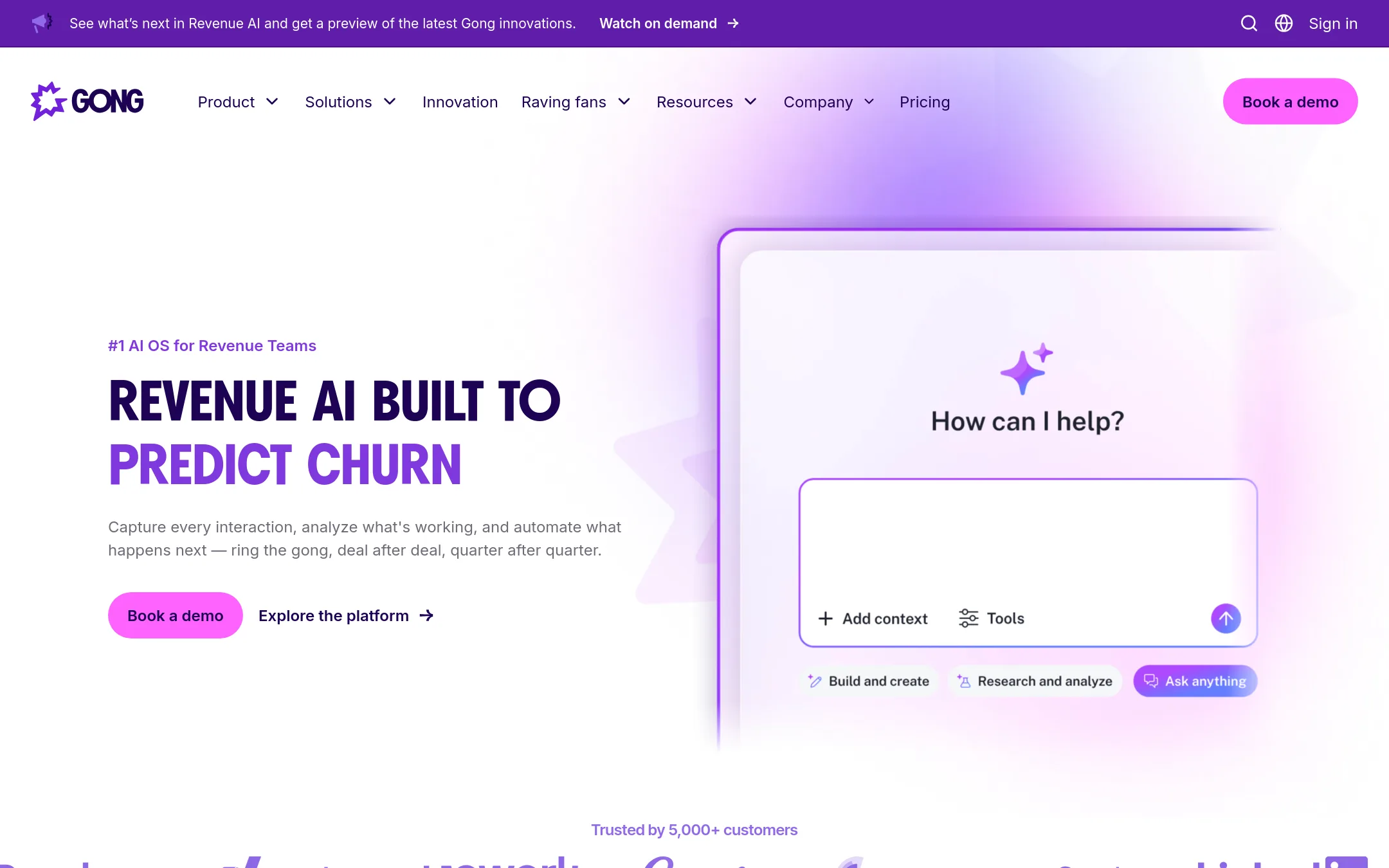
Gong records and analyses sales calls, emails and meetings, then uses that data for coaching, forecasting and deal intelligence across the revenue team. A founder would pick Gong over Dench.com when the priority is learning from conversations and improving how reps sell, rather than running the pipeline itself with AI agents that find and contact prospects.
Where it is strong
- Analyses calls, emails and meetings to surface what wins deals
- Includes coaching and enablement tools built on real customer interactions
- Integrates with an existing tech stack
Where it falls short
- Pricing requires a custom quote, so budgeting takes a sales conversation
- Its focus is conversation intelligence rather than finding new prospects and running outbound, which Dench.com covers
- Pricing:
- Pricing is not published on the site. Gong quotes per user with a platform fee based on the number of users supported.
- LFrom $29.99/mo per sea
6.Lindy
Best for: Agencies and small teams that want an AI employee to handle lead replies, client reporting and invoice follow-up across tools like Slack and email
- Pricing
- From $29.99/mo per sea
- Category
- Other
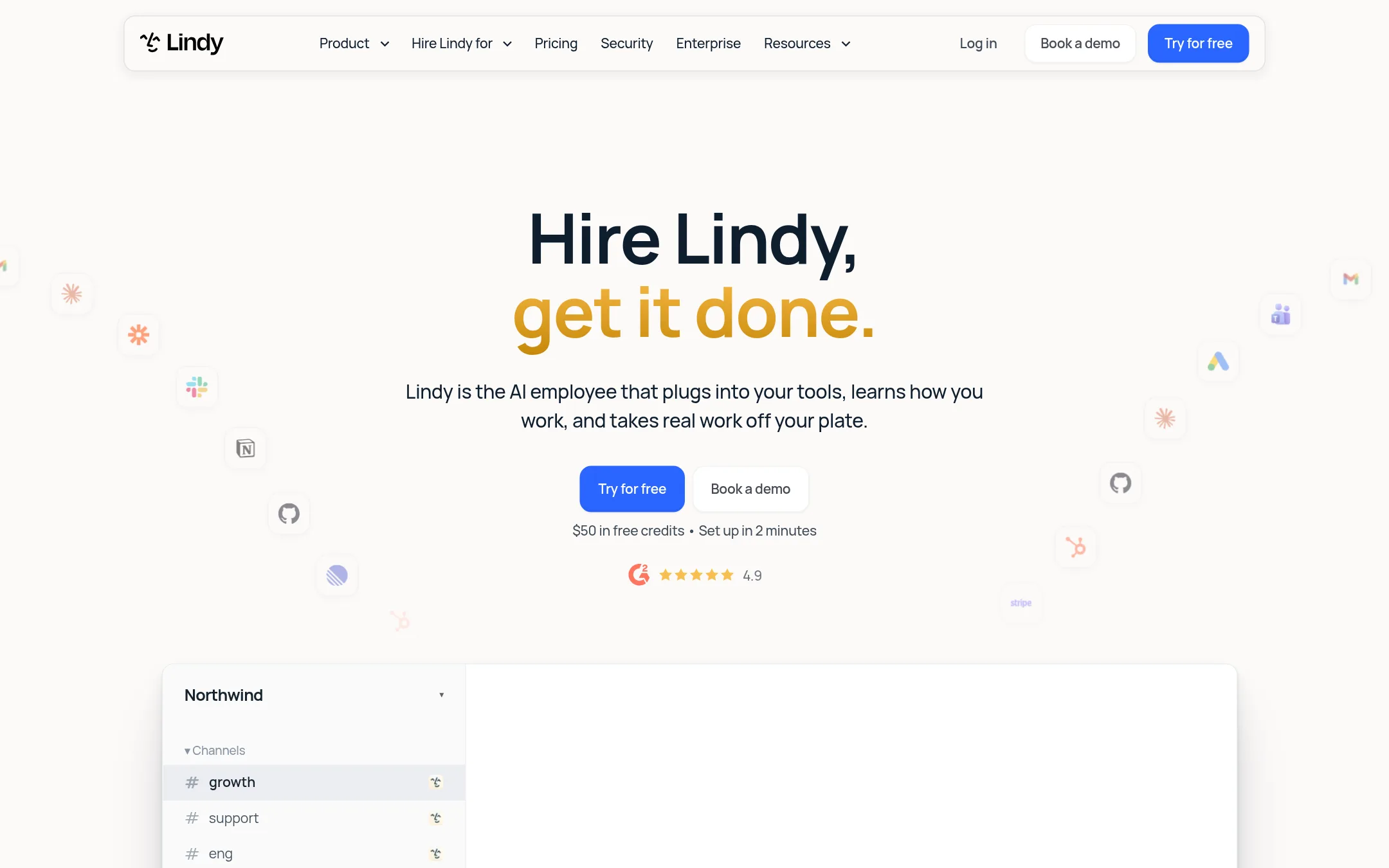
Lindy is an AI employee that connects to a company's existing tools and handles work like answering leads overnight, building client reports, and chasing overdue invoices. Someone would pick Lindy over Dench.com if they want a general-purpose AI teammate for agency-style operations rather than a revenue engine built around CRM, outbound and pipeline management.
Where it is strong
- Plugs into 3,000+ integrations and works through Slack, email, text and calendar
- Credits are pooled across the whole team, so one shared allowance covers everyone
- Offers a free starting credit allowance before any payment is required
Where it falls short
- Its emphasis is general operations work, so it lacks Dench.com's built-in CRM, outbound campaigns and signal-based lead finding
- Credit-based usage means heavier workflows can pause until credits reset or are topped up
- Pricing:
- Lindy starts with $50 in free credits, then the Team plan begins at $29.99 a month for 3,000 credits per seat, with top-ups at $10 per 1,000 credits, and Enterprise pricing is custom.
See more comparisons in AI & Machine Learning alternatives.
FAQ
Questions about Dench.com alternatives
What is the best Dench.com alternative for a team that wants a mature CRM with many integrations?
HubSpot CRM is the strongest fit for that need, according to its site, which lists over 2,000 integrations and a free tier for up to 2 users. It also covers marketing, sales, service and data in one platform. Advanced tiers carry a one-time onboarding fee, so factor that in alongside the monthly cost.
Which alternative is good for a small revenue team that wants to start free?
Attio offers a Free plan for up to 3 users, with agents and automations included, and its site says it suits revenue teams of five or more that want a flexible CRM. Outbound sequences and call intelligence only appear on the Pro tier and above. Teams that need outbound on day one should check that tier before committing.
Which option should a GTM engineering team consider if it wants to build its own outbound workflows?
Clay is built around a visual canvas where teams pull data from a marketplace of 150+ or 200+ vendors and push results into their CRM and other tools. It has a Free plan with 200 rows per table and paid plans starting at $54 a month. Dench.com includes a CRM and meeting recording, which Clay does not position as its core product.
Is Gong a replacement for Dench.com?
Not directly. Gong focuses on recording and analysing sales calls, emails and meetings to coach reps and forecast deals, and its pricing requires a custom quote. Dench.com is positioned around finding, reaching and closing prospects with agents, so the two serve different parts of the revenue process.
How should buyers compare pricing across these alternatives?
Pricing models differ: HubSpot charges per seat and per tier with onboarding fees, Attio publishes flat workspace prices with a free tier, Clay uses row and plan based pricing, and Dench.com separates AI actions from enrichment credits. Because allowances and what they cover vary, compare the monthly total for your expected team size and usage rather than the headline price alone.
Last updated November 21, 2026.