Dioxus Labs alternatives
12 products compared · Updated November 4, 2026
The short answer
For teams that want to keep their existing web stack, Tauri is the strongest alternative, offering desktop and mobile support with small binaries. Flutter suits teams building mobile-first apps who prefer Dart and want a mature, Google-backed framework. Leptos is the best choice for Rust teams focused on full-stack web apps who want fine-grained reactivity and server functions.
Your shortlist, at a glance
Read the comparisons ↓- RReactNot publishedTeams that want a mature, community-driven UI library for web and native apps and are comfortable assembling their own stack with additional frameworks.
- SSvelteFree (MIT)Web development teams that want a simple, compiler-driven framework with a friendly community and don't need Rust or native mobile/desktop targets.
- VVue.jsNot publishedWeb teams building user interfaces in JavaScript who want a framework that can start small and grow into a full-featured app without a language change.
 FlutterNot publishedTeams building cross-platform mobile-first apps who want a mature, Google-supported framework with a rich widget library and hot reload.
 TauriNot publishedTeams that already have a web frontend and want to ship desktop and mobile apps without rewriting in Rust, prioritizing small app size and security.
- LLeptosNot publishedRust teams building interactive full-stack web apps who want fine-grained reactivity and minimal configuration.
- YYewNot publishedRust developers building interactive web applications who want a React-like component model and server-side rendering without cross-platform needs.
- SSolidJSNot publishedTeams building high-performance web frontends in JavaScript or TypeScript who want React-like ergonomics without a virtual DOM.
- EElmNot publishedTeams building web front-ends who value compiler-enforced correctness and fearless refactoring over multi-platform reach.
- AAngularNot publishedTeams building large, scalable web applications with TypeScript who prefer a structured, component-based framework.
- PPreactNot publishedTeams that want React-like development with a tiny footprint, such as widget builders or performance-sensitive web apps.
- IInfernoNot publishedTeams building high-performance web UIs in JavaScript who want a React-like API without React's overhead.
About Dioxus Labs and its alternatives
Dioxus Labs is a Rust framework for building fullstack web, desktop, and mobile apps from one codebase. It is known for its cross-platform support, live hotreloading, and server functions that let you deploy quickly.
When comparing alternatives, weigh the programming language you want to use, the platforms you need to target, and the maturity of the ecosystem. Consider pricing structure, though most tools here do not publish pricing. Look at integrations with your existing stack, support options, and contract terms if you choose a commercial product.
Explore the alternatives
- RNot published
1.React
Best for: Teams that want a mature, community-driven UI library for web and native apps and are comfortable assembling their own stack with additional frameworks.
- Pricing
- Not published
- Category
- Other
React is a JavaScript library for building user interfaces out of components. It works for web and native apps, but it does not provide routing, data fetching, or a fullstack framework on its own. Choose React when you want a widely adopted UI library and are willing to pair it with a framework like Next.js or React Router.
Where it is strong
- Huge community and ecosystem, with millions of developers.
- Component-based model that works for both web and native via React Native.
- Can be added incrementally to existing HTML pages.
Where it falls short
- Requires pairing with a framework for routing and data fetching.
- Not a Rust solution, so no shared codebase with Rust backends.
- Pricing:
- Pricing is not published on the site.
- SFree (MIT)
2.Svelte
Best for: Web development teams that want a simple, compiler-driven framework with a friendly community and don't need Rust or native mobile/desktop targets.
- Pricing
- Free (MIT)
- Category
- Other
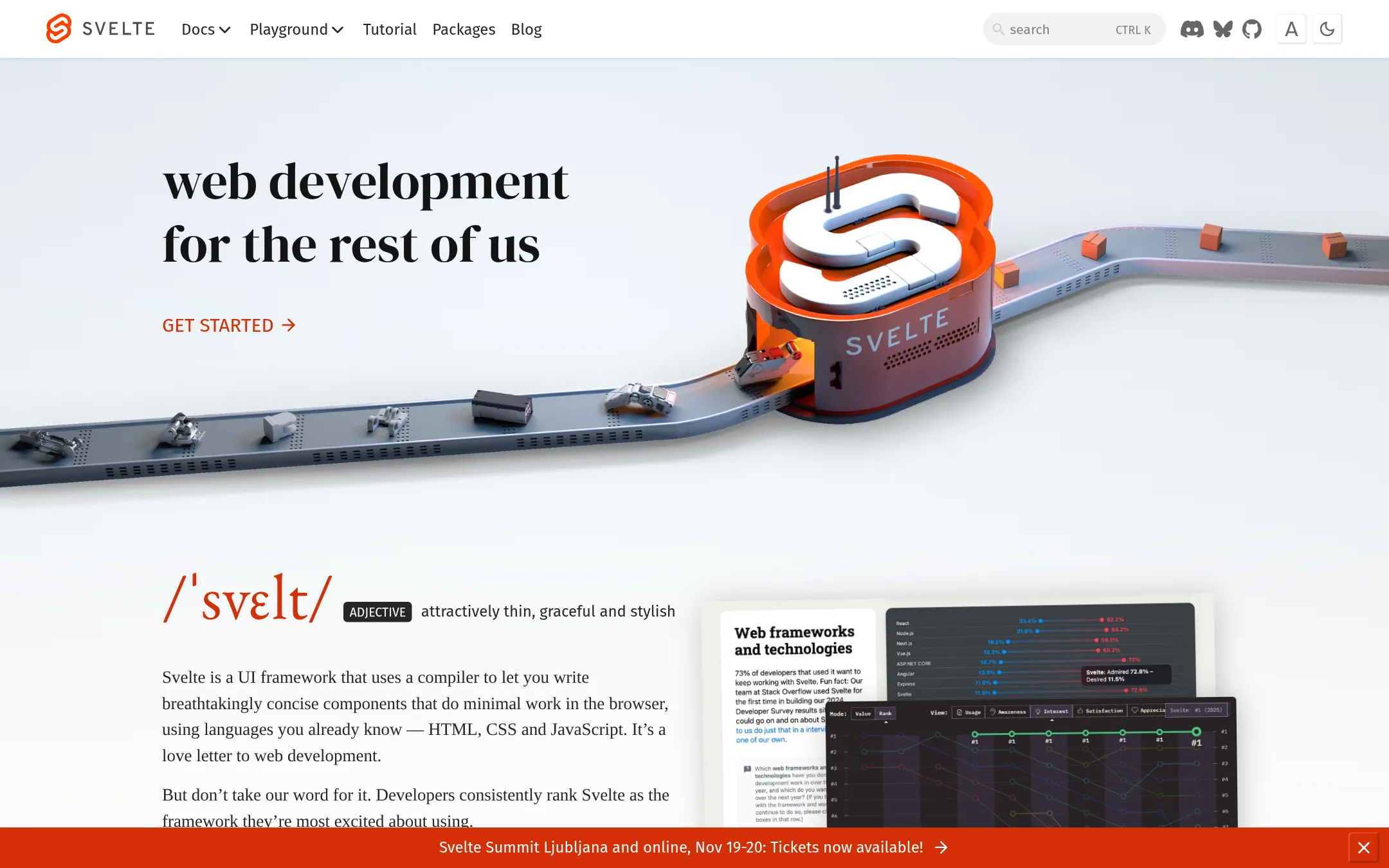
Svelte is a UI framework that compiles components into efficient JavaScript, using HTML, CSS, and JavaScript you already know. Choose it when you want a lightweight, compiler-based approach for web apps and don't need Dioxus's Rust-based cross-platform desktop or mobile support. It's backed by Vercel and a large community, making it a safe bet for web-focused teams.
Where it is strong
- Compiler-based approach keeps bundle sizes small
- Uses standard HTML, CSS, and JavaScript, lowering the learning curve
- Backed by Vercel and a large, active community
Where it falls short
- No built-in support for desktop or mobile apps, unlike Dioxus
- Not Rust-based, so no shared logic with Rust backends
- Pricing:
- Pricing is not published on the site.
- Switching from Dioxus Labs:
- Moving from Dioxus means rewriting your UI in JavaScript and losing Rust-based cross-platform targets. Expect to rebuild components and state management.
- VNot published
3.Vue.js
Best for: Web teams building user interfaces in JavaScript who want a framework that can start small and grow into a full-featured app without a language change.
- Pricing
- Not published
- Category
- Other
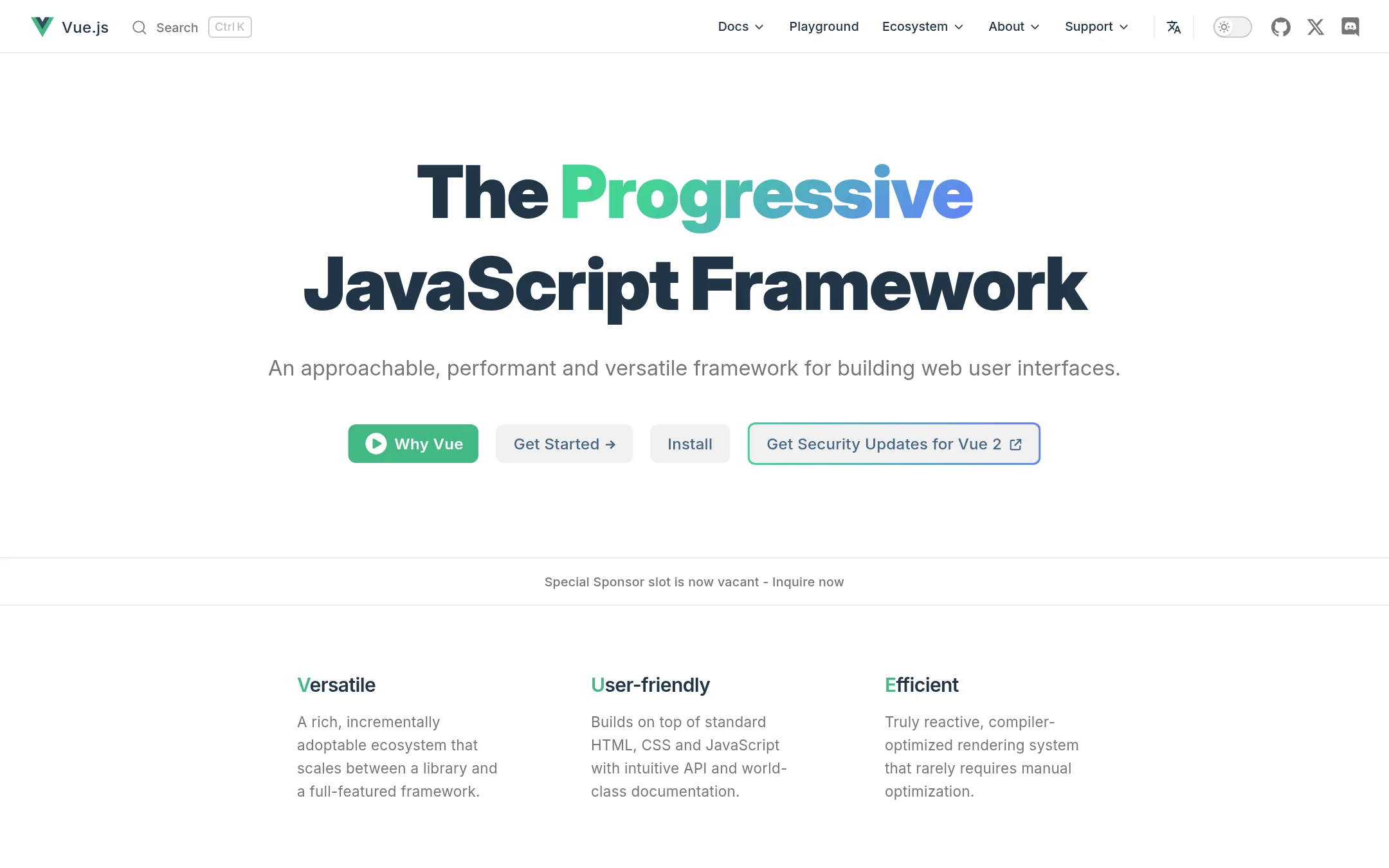
Vue.js is a progressive JavaScript framework for building web user interfaces, with an ecosystem that scales from a simple library to a full-featured framework. Choose it over Dioxus Labs if you want a mature, widely adopted JavaScript-based approach with incremental adoption, rather than committing to Rust for cross-platform apps. It is a strong fit for teams already working in standard HTML, CSS, and JavaScript who need a reactive, compiler-optimized rendering system without learning a new language.
Where it is strong
- Builds on standard HTML, CSS, and JavaScript, so the learning curve is low for web developers.
- Incrementally adoptable: you can use it as a library for one component or as a full framework.
- Truly reactive, compiler-optimized rendering system that rarely needs manual tuning.
Where it falls short
- No built-in support for desktop or mobile apps. You would need separate tooling for those platforms.
- The ecosystem is JavaScript-centric, so it does not offer Rust's memory safety or performance guarantees.
- Pricing:
- Pricing is not published on the site.
- Not published
4.Flutter
Best for: Teams building cross-platform mobile-first apps who want a mature, Google-supported framework with a rich widget library and hot reload.
- Pricing
- Not published
- Category
- Developer Tools
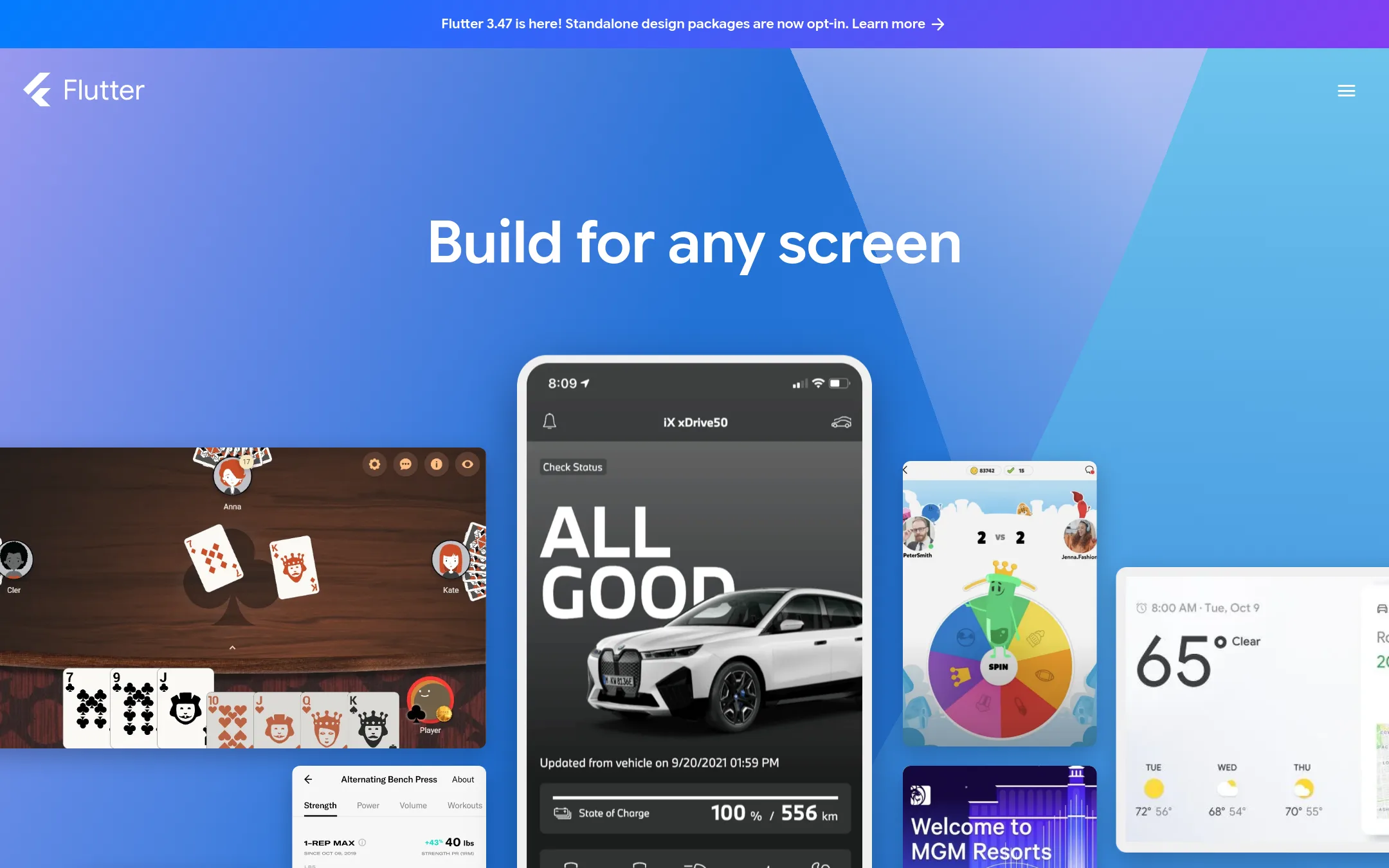
Flutter is an open-source framework from Google for building natively compiled apps for mobile, web, desktop, and embedded devices from a single Dart codebase. Choose Flutter over Dioxus Labs if your team prefers Dart and wants a mature ecosystem with strong Google backing and a large community.
Where it is strong
- Compiles to native machine code for fast performance on mobile and desktop.
- Hot Reload lets you see changes instantly without losing app state.
- Backed by Google with a large community and extensive package ecosystem on pub.dev.
Where it falls short
- Uses Dart, not Rust, so you cannot reuse existing Rust logic.
- Web support is less mature than mobile, and desktop support is still evolving.
- Pricing:
- Pricing is not published on the site.
- Not published
5.Tauri
Best for: Teams that already have a web frontend and want to ship desktop and mobile apps without rewriting in Rust, prioritizing small app size and security.
- Pricing
- Not published
- Category
- Developer Tools
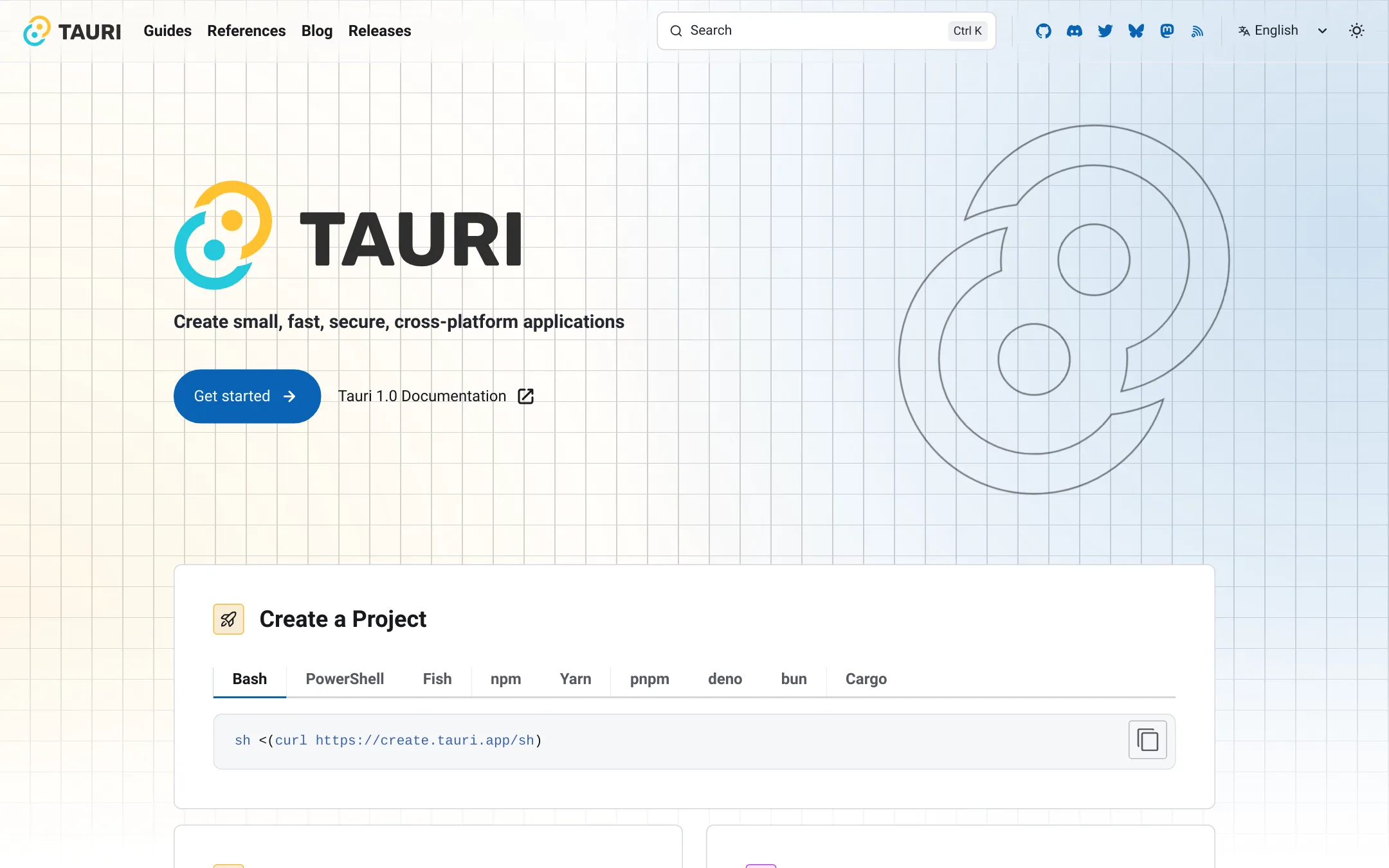
Tauri is a cross-platform app toolkit that lets you build desktop and mobile apps using your existing web frontend with Rust for the backend logic. Choose Tauri over Dioxus Labs if you want to keep your current JavaScript/HTML/CSS stack and need very small binaries by using the OS's native web renderer.
Where it is strong
- Supports any frontend framework, so you don't change your web stack.
- Builds for Linux, macOS, Windows, Android, and iOS from one codebase.
- App size can be as little as 600KB by using the OS's native web renderer.
Where it falls short
- No built-in fullstack server functions like Dioxus's Liveview or SSR.
- Requires writing app logic in Rust, which may be a learning curve for JS-only teams.
- Pricing:
- Pricing is not published on the site.
- LNot published
6.Leptos
Best for: Rust teams building interactive full-stack web apps who want fine-grained reactivity and minimal configuration.
- Pricing
- Not published
- Category
- Other
Leptos is a Rust web framework for building full-stack applications with fine-grained reactive signals and server functions. Choose it over Dioxus Labs if you want a web-first framework that leans heavily on Rust's type safety and integrates closely with tools like Tailwind, rather than Dioxus's cross-platform desktop and mobile focus.
Where it is strong
- Fine-grained reactive signals update only the parts of the DOM that change
- Server functions let you cross the client-server boundary without setting up API endpoints
- Hot-reloading template updates plus a dedicated language server and VSCode extension
Where it falls short
- No support for desktop or mobile targets, unlike Dioxus's one-codebase approach
- Smaller ecosystem and fewer third-party integrations than more established frameworks
- Pricing:
- Pricing is not published on the site.
- Switching from Dioxus Labs:
- Moving from Dioxus Labs means rewriting your UI components and state management to Leptos's reactive signals, and giving up desktop and mobile targets.
- YNot published
7.Yew
Best for: Rust developers building interactive web applications who want a React-like component model and server-side rendering without cross-platform needs.
- Pricing
- Not published
- Category
- Other
Yew is a Rust frontend framework for building web apps with a component model and HTML macro, similar to React. Choose it over Dioxus Labs if you need a web-only framework with server-side rendering and don't require desktop or mobile support from the same codebase.
Where it is strong
- Component-based architecture familiar to React developers
- HTML macro with Rust expressions for type-safe UI
- Server-side rendering for SEO and SPA-like feel
Where it falls short
- Web-only, no desktop or mobile support
- Smaller ecosystem and community compared to Dioxus Labs
- Pricing:
- Pricing is not published on the site.
- SNot published
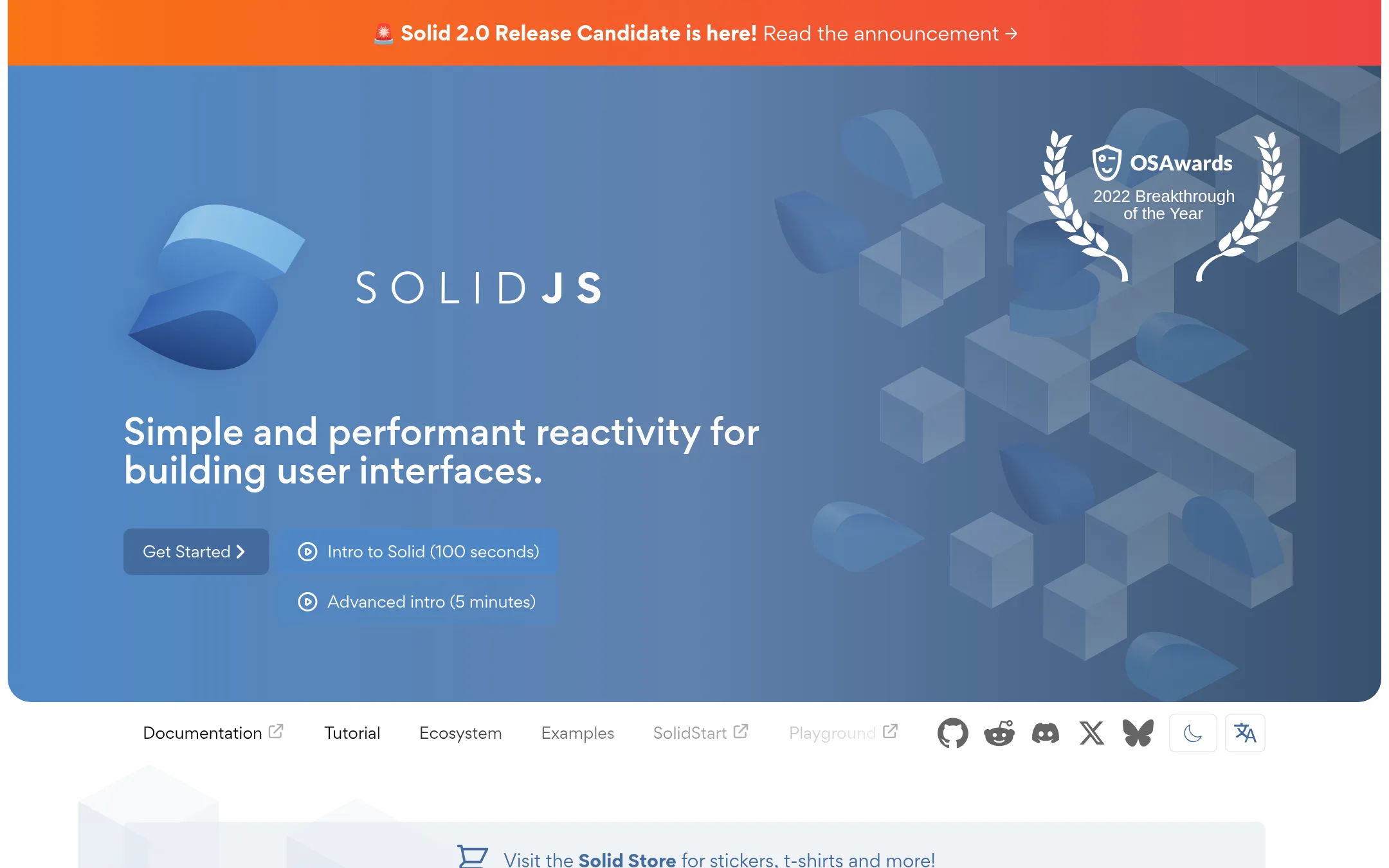
8.SolidJS
Best for: Teams building high-performance web frontends in JavaScript or TypeScript who want React-like ergonomics without a virtual DOM.
- Pricing
- Not published
- Category
- Other
SolidJS is a JavaScript library for building user interfaces with fine-grained reactivity and no virtual DOM. Choose it over Dioxus Labs if you want a mature, lightweight frontend framework in JavaScript or TypeScript rather than Rust, and you value top benchmark performance with a React-like API.
Where it is strong
- Consistently tops UI performance benchmarks
- No hook rules. Components execute once with fine-grained updates
- Small bundle size at 7kb minified and gzipped
Where it falls short
- JavaScript only, so no shared code with desktop or mobile apps
- Smaller ecosystem and community than React or Vue
- Pricing:
- Pricing is not published on the site.
- ENot published
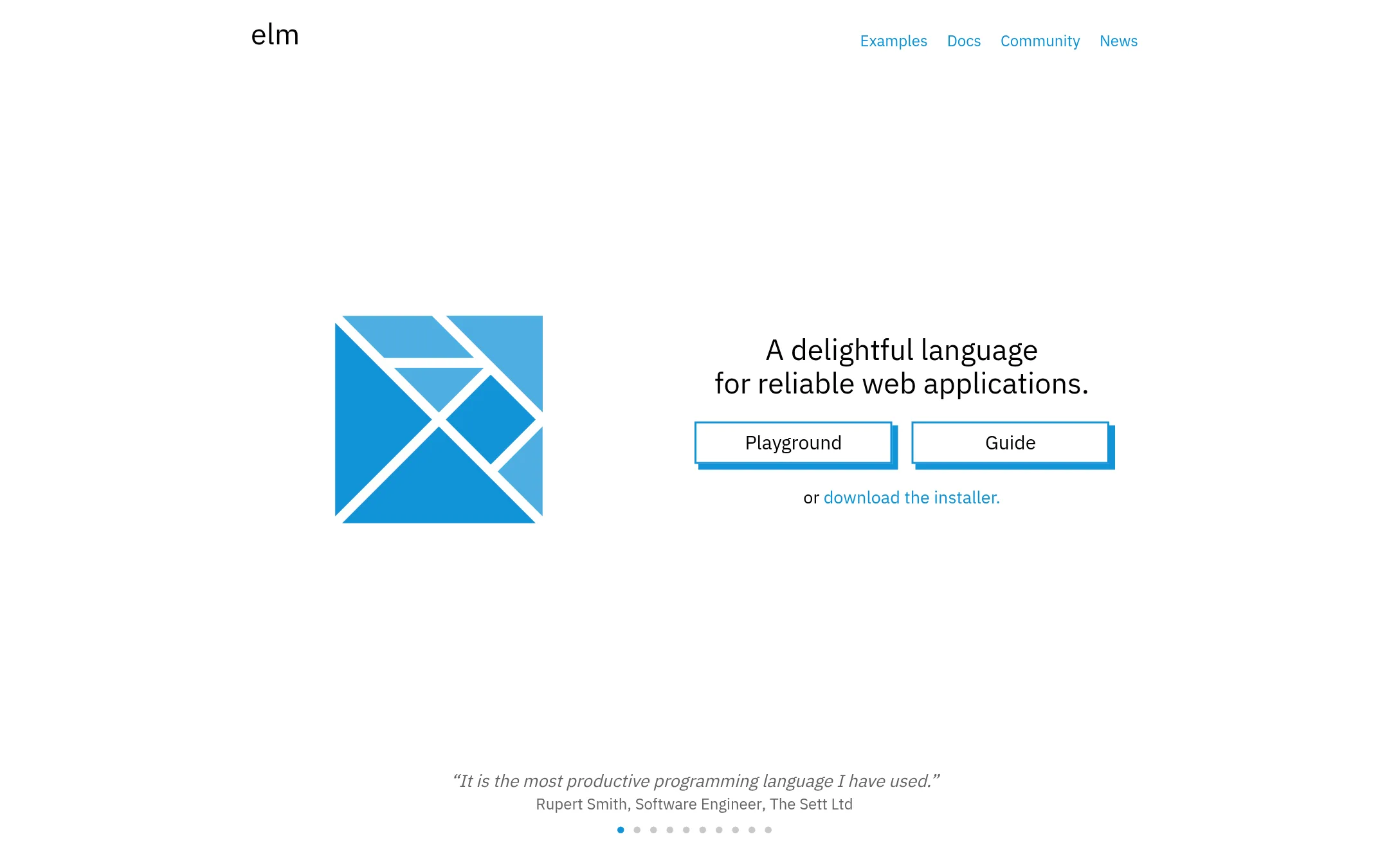
9.Elm
Best for: Teams building web front-ends who value compiler-enforced correctness and fearless refactoring over multi-platform reach.
- Pricing
- Not published
- Category
- Other
Elm is a functional language that compiles to JavaScript and focuses on web applications with no runtime exceptions. Choose Elm when you want a strongly typed, compiler-guided environment for reliable front-end code, rather than Dioxus's Rust-based cross-platform approach.
Where it is strong
- No runtime exceptions in production, thanks to type inference and compiler checks.
- Compiler provides friendly error messages and guides refactoring safely.
- Small asset sizes with the --optimize flag, no complex setup.
Where it falls short
- Limited to web. No desktop or mobile support like Dioxus.
- JavaScript interop is possible but requires explicit ports, which adds complexity.
- Pricing:
- Pricing is not published on the site.
- ANot published
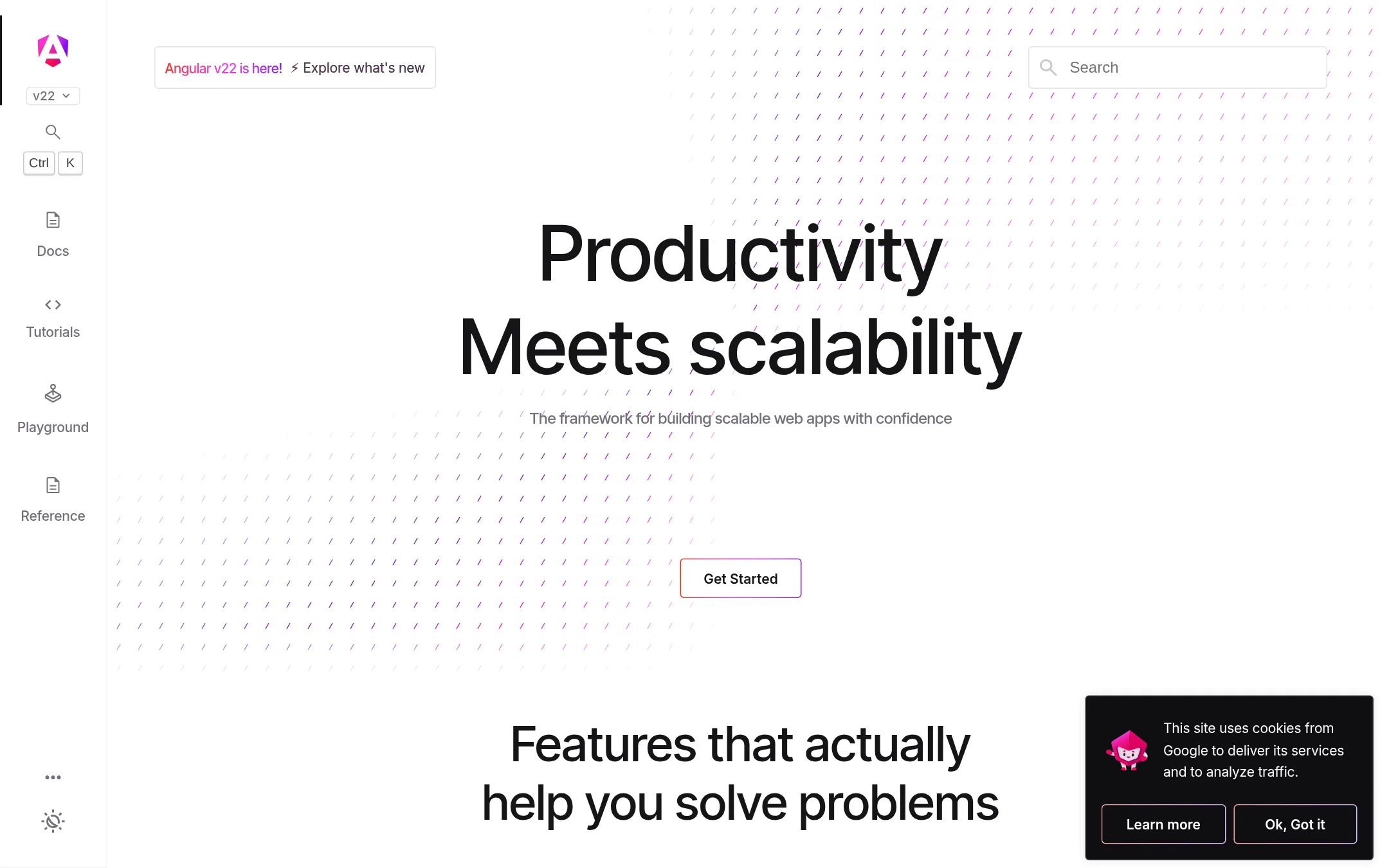
10.Angular
Best for: Teams building large, scalable web applications with TypeScript who prefer a structured, component-based framework.
- Pricing
- Not published
- Category
- Other
Angular is a TypeScript-based web framework for building single-page and enterprise-scale applications. Choose it over Dioxus Labs if your team is already invested in the JavaScript/TypeScript ecosystem and needs a mature, opinionated framework with strong tooling and a large community.
Where it is strong
- First-party modules for forms, routing, and state management
- Fine-grained reactivity with Angular Signals
- Large ecosystem and trusted by millions
Where it falls short
- Steeper learning curve compared to Dioxus's Rust-based approach
- No native desktop or mobile support out of the box
- Pricing:
- Pricing is not published on the site.
- PNot published
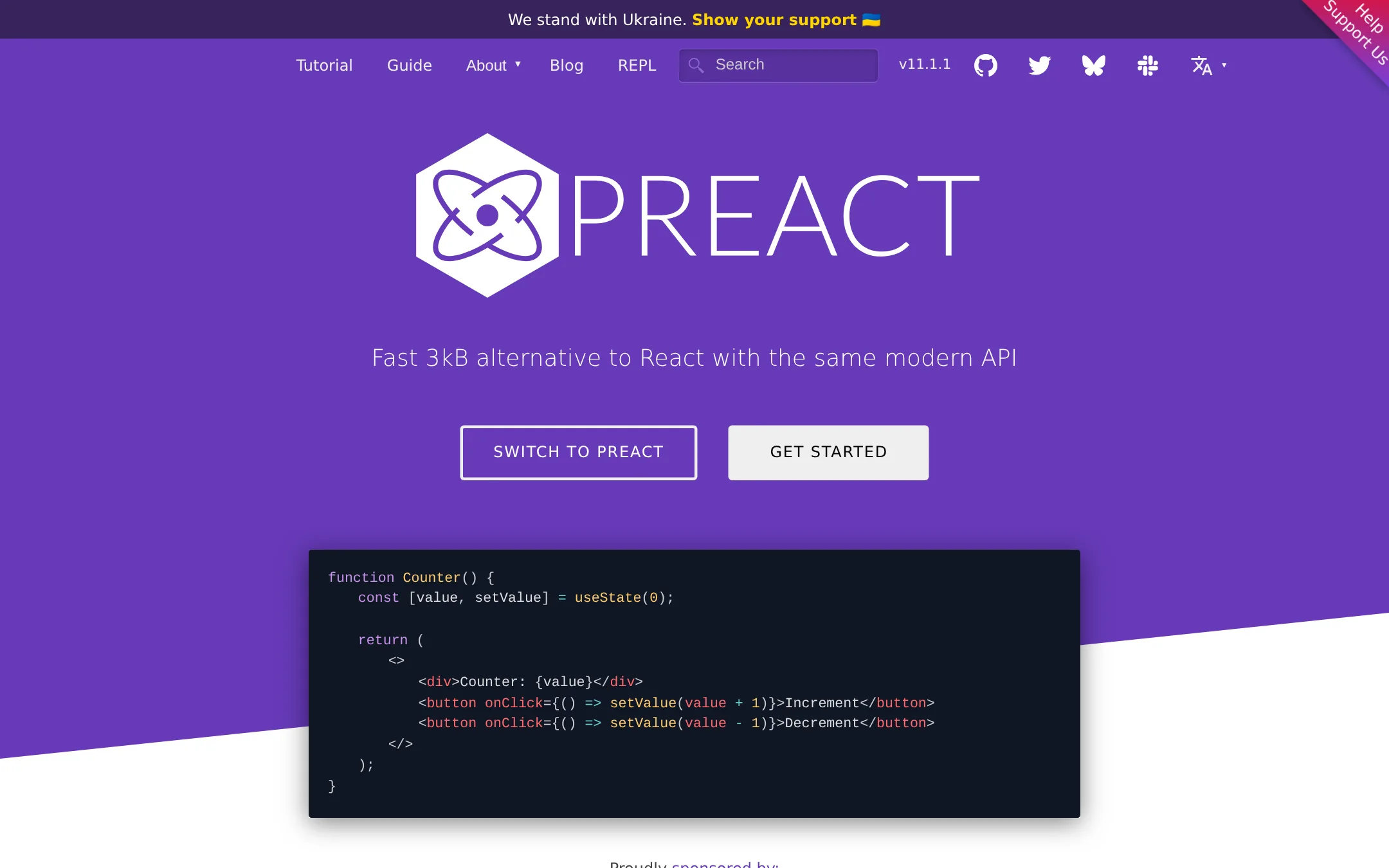
11.Preact
Best for: Teams that want React-like development with a tiny footprint, such as widget builders or performance-sensitive web apps.
- Pricing
- Not published
- Category
- Other
Preact is a 3kB React alternative that renders to the DOM with a thin Virtual DOM abstraction. Choose it when you want React's component model and ecosystem in a smaller package, especially for embedding widgets or building parts of an app without a full framework.
Where it is strong
- 3kB size reduces JavaScript load and parse time
- Works directly in the browser without transpilation
- Use React components via preact/compat alias
Where it falls short
- No built-in support for desktop or mobile targets
- Smaller ecosystem than React or Dioxus
- Pricing:
- Pricing is not published on the site.
- INot published
12.Inferno
Best for: Teams building high-performance web UIs in JavaScript who want a React-like API without React's overhead.
- Pricing
- Not published
- Category
- Other
Inferno is a fast, React-like JavaScript library for building browser and server-rendered user interfaces. Choose it over Dioxus Labs if you need a lightweight, high-performance DOM rendering library with a familiar React API and don't require Rust or cross-platform mobile support.
Where it is strong
- One of the fastest front-end frameworks for DOM rendering, enabling 60 FPS on mobile.
- React-like API and lifecycle events, with inferno-compat for easy switching from React.
- Isomorphic rendering on client and server with fast boot from server-side renders.
Where it falls short
- No support for React Native or mobile apps. Browser and server only.
- Partially synthetic event system, not fully like React's.
- Pricing:
- Pricing is not published on the site.
See more comparisons in Developer Tools alternatives.
FAQ
Questions about Dioxus Labs alternatives
Which alternative is best for teams already using JavaScript or TypeScript?
Tauri is a strong choice because it lets you keep your existing web frontend and add Rust for backend logic. React and Vue are also good if you want a mature JavaScript ecosystem, but they do not provide desktop or mobile support out of the box.
Which alternative is best for Rust developers who want full-stack web apps?
Leptos is the top pick for Rust teams building interactive full-stack web apps. It offers fine-grained reactive signals and server functions, and it integrates well with tools like Tailwind. Yew is another Rust option, but it is web-only and has a smaller ecosystem.
Which alternative supports desktop and mobile apps?
Tauri and Flutter both support desktop and mobile. Tauri uses your existing web frontend with Rust for logic, while Flutter uses Dart and compiles to native code. Dioxus itself supports these platforms, so these are the closest alternatives for cross-platform needs.
Which alternative has the smallest app size?
Tauri can produce apps as small as 600KB by using the OS's native web renderer. Preact is also tiny at 3kB, but it is for web only and does not build desktop or mobile apps. SolidJS is small at 7kB minified and gzipped, but again, it is web-only.
Which alternative has the most mature ecosystem and community?
React has the largest community and ecosystem, with millions of developers. Flutter is backed by Google and has a large package ecosystem on pub.dev. Angular is also mature and trusted by millions, but it has a steeper learning curve.
Last updated November 4, 2026.