Docker alternatives
12 products compared · Updated October 15, 2026
The short answer
For teams seeking Docker alternatives, Podman suits developers wanting a daemonless, open-source container engine. Kubernetes fits production-scale orchestration needs. And OpenShift is best for enterprises requiring a full platform with integrated security and support.
Your shortlist, at a glance
Read the comparisons ↓PodmanNot publishedDevelopers and teams that prefer open source, daemonless container tooling and want to run containers without a central service.
 KubernetesNot publishedTeams running production workloads at scale that need self-healing, load balancing, and automated rollouts across clusters.
 OpenShiftCustom quoteEnterprises running containerized workloads across hybrid cloud who need integrated security, multi-cluster management, and vendor support.
 RancherCustom quoteOperations teams running many Kubernetes clusters who need a single management plane with enterprise security and support.
- ccontainerdNot publishedPlatform teams building Kubernetes distributions or custom container runtimes that need a minimal, CNCF-graduated runtime layer.
 LXDNot publishedLinux infrastructure teams that want to run system containers and VMs with Canonical support and Ubuntu integration.
 HashiCorp NomadNot publishedTeams running mixed workloads of containers and binaries that need a lightweight, multi-cloud scheduler without the complexity of a full Kubernetes platform.
 SingularitySee websiteSecure, portable containers for HPC, AI/ML and edge workloads
 BuildahNot publishedTeams running Kubernetes or CI pipelines that need to build container images without a daemon or root privileges.
 CRI-ONot publishedKubernetes clusters that need a minimal, OCI-compliant runtime without Docker's overhead.
 DiversionSee websiteA scalable, cloud-native Perforce and Git alternative
 WasmerSee websiteThe Operating System for Edge Computing
About Docker and its alternatives
Docker is a software development platform that provides trusted sandboxes, governance, and a secure supply chain for modern software. It is known for containerization, Docker Hub, and a large developer ecosystem.
When comparing alternatives, weigh pricing structure (per-user vs. per-cluster), deployment regions, integrations with existing CI/CD and cloud tools, support availability, and contract terms. Consider whether you need a simple container runtime, a full orchestrator, or an enterprise platform with vendor backing.
Explore the alternatives
- Not published
1.Podman
Best for: Developers and teams that prefer open source, daemonless container tooling and want to run containers without a central service.
- Pricing
- Not published
- Category
- Developer Tools
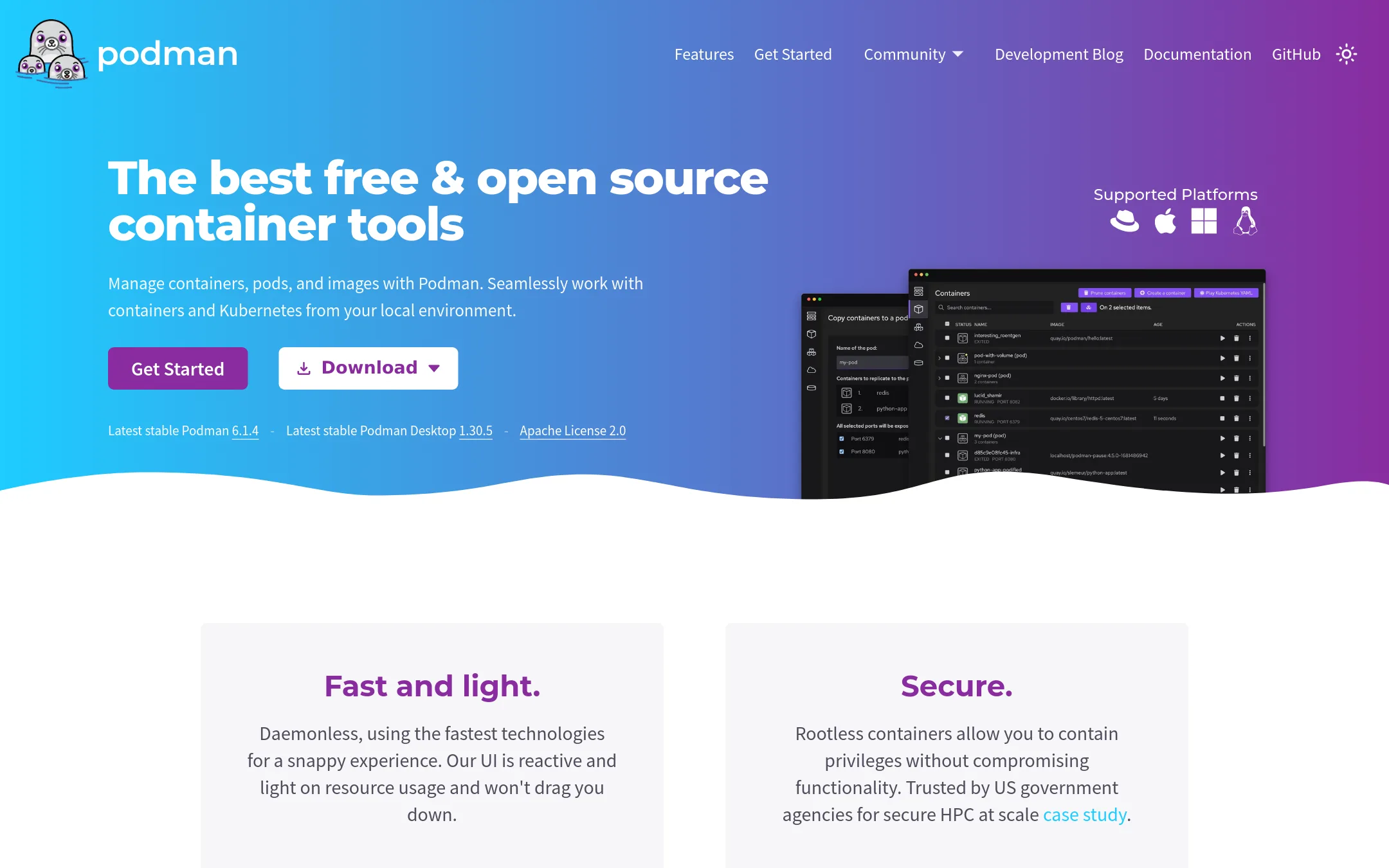
Podman is a daemonless, open source container engine that runs OCI-compliant containers and pods. It is a good choice when you want a Docker-compatible workflow without a central daemon, especially in rootless or Kubernetes-oriented environments.
Where it is strong
- Daemonless architecture improves security and simplifies troubleshooting.
- Rootless mode lets you run containers without elevated privileges.
- Compatible with Docker CLI commands, easing migration.
Where it falls short
- Smaller ecosystem and fewer third-party integrations than Docker.
- Some Docker-specific features, like Docker Desktop extensions, are not available.
- Pricing:
- Pricing is not published on the site.
- Switching from Docker:
- Moving from Docker is straightforward because Podman supports Docker-compatible CLI commands and OCI images, so most workflows carry over with minimal changes.
- Not published
2.Kubernetes
Best for: Teams running production workloads at scale that need self-healing, load balancing, and automated rollouts across clusters.
- Pricing
- Not published
- Category
- Developer Tools
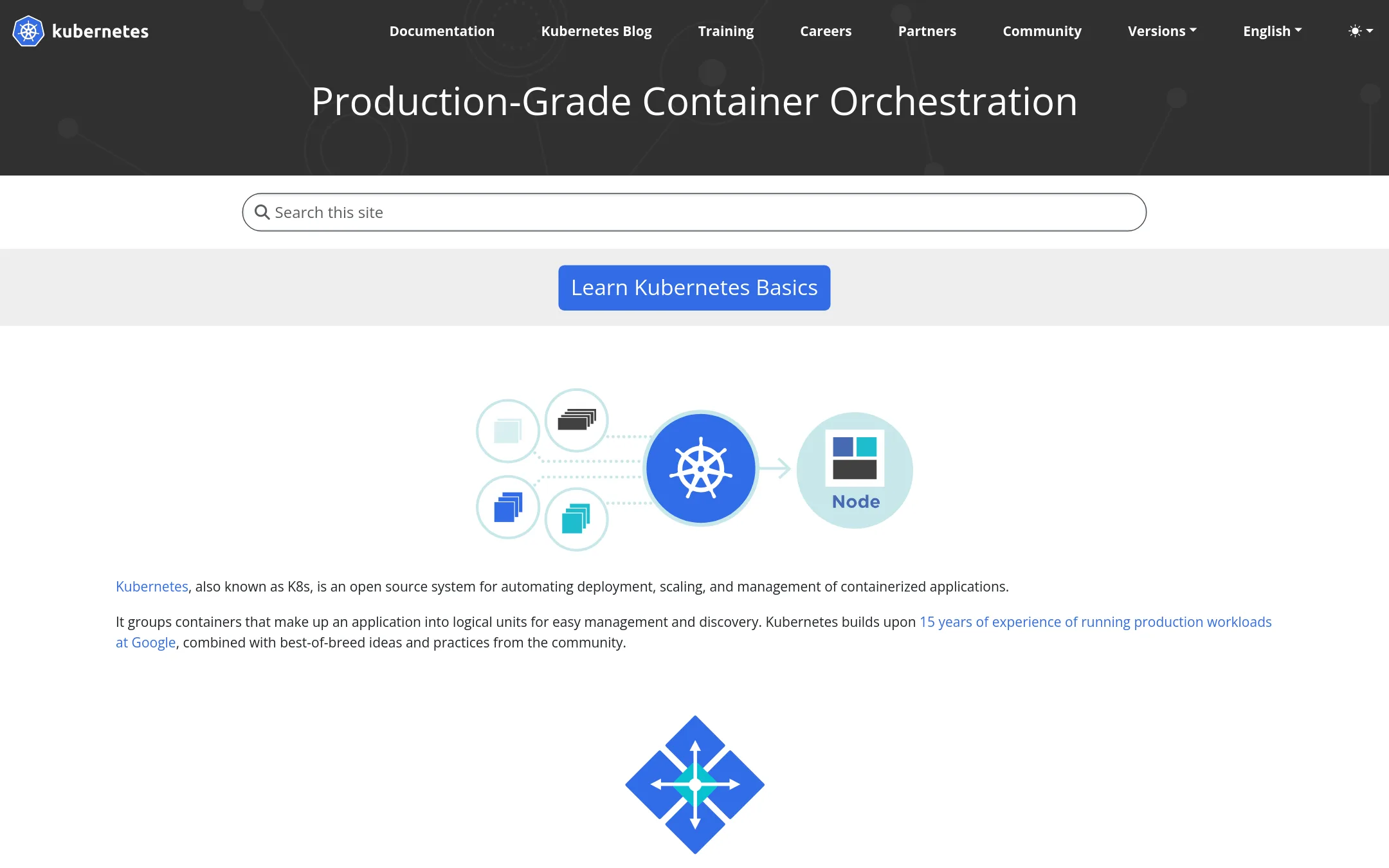
Kubernetes is an open source orchestrator for containerized applications. You choose it over Docker when you need automated deployment, scaling, and management across many machines, not just running containers on a single host.
Where it is strong
- Automated rollouts and rollbacks
- Self-healing and horizontal scaling
- Works on-premises, hybrid, or public cloud
Where it falls short
- Steep learning curve compared to Docker
- Requires significant operational overhead to manage
- Pricing:
- Pricing is not published on the site.
- Switching from Docker:
- Moving from Docker to Kubernetes means adopting a new orchestration layer. You can reuse your container images, but you need to define deployments, services, and other resources.
- Custom quote
3.OpenShift
Best for: Enterprises running containerized workloads across hybrid cloud who need integrated security, multi-cluster management, and vendor support.
- Pricing
- Custom quote
- Category
- Developer Tools
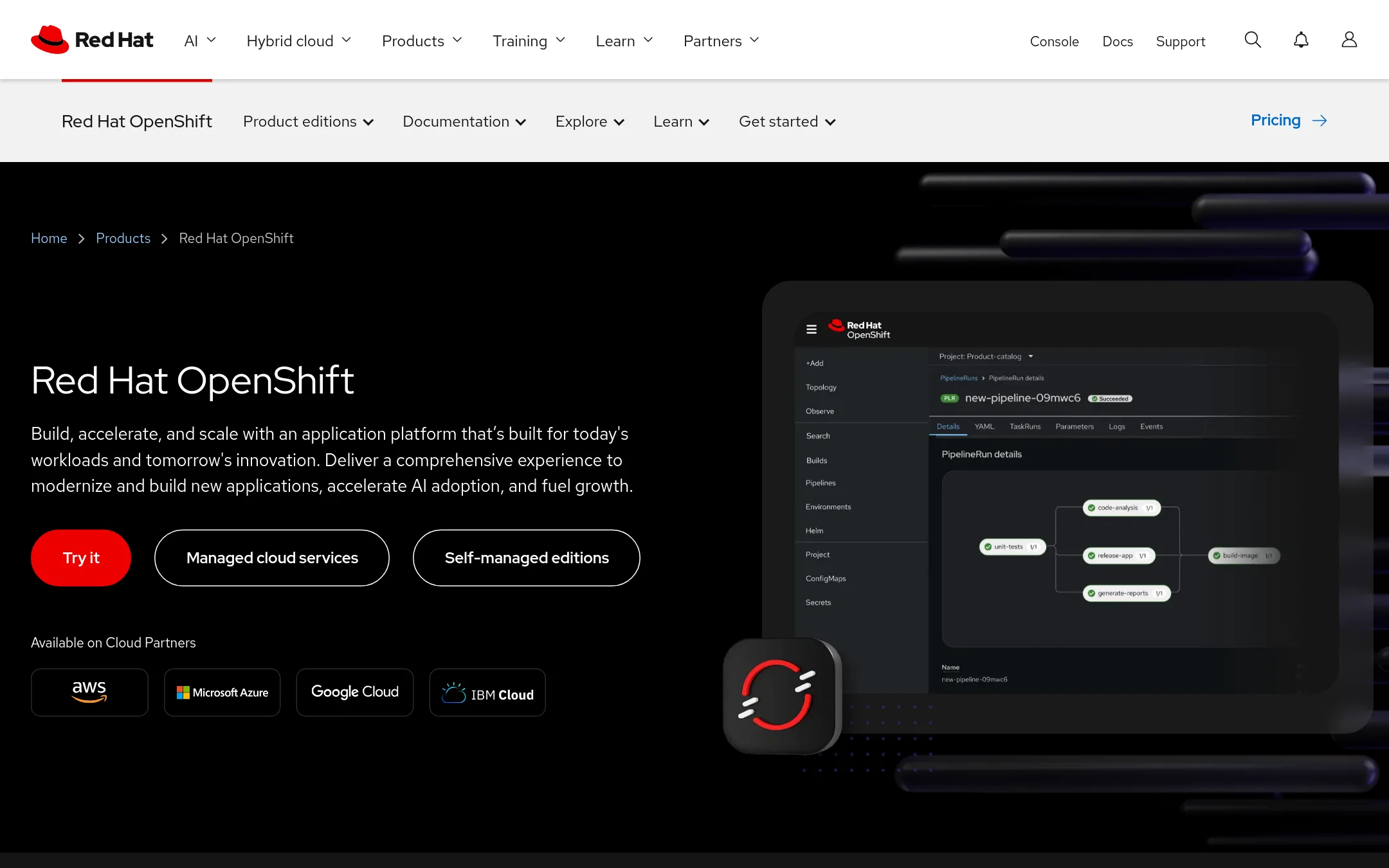
OpenShift is a Kubernetes-based application platform that adds enterprise features like built-in CI/CD, security, and multi-cloud management on top of container orchestration. Choose it over Docker when you need a full platform for running containers at scale across hybrid cloud, with governance and support from Red Hat.
Where it is strong
- Built-in CI/CD and GitOps support
- Multi-cloud and hybrid deployment options
- Enterprise security and compliance features
Where it falls short
- Heavier and more complex than Docker for local development
- Requires Kubernetes expertise to operate
- Pricing:
- Pricing is not published on the site.
- Custom quote
4.Rancher
Best for: Operations teams running many Kubernetes clusters who need a single management plane with enterprise security and support.
- Pricing
- Custom quote
- Category
- Developer Tools
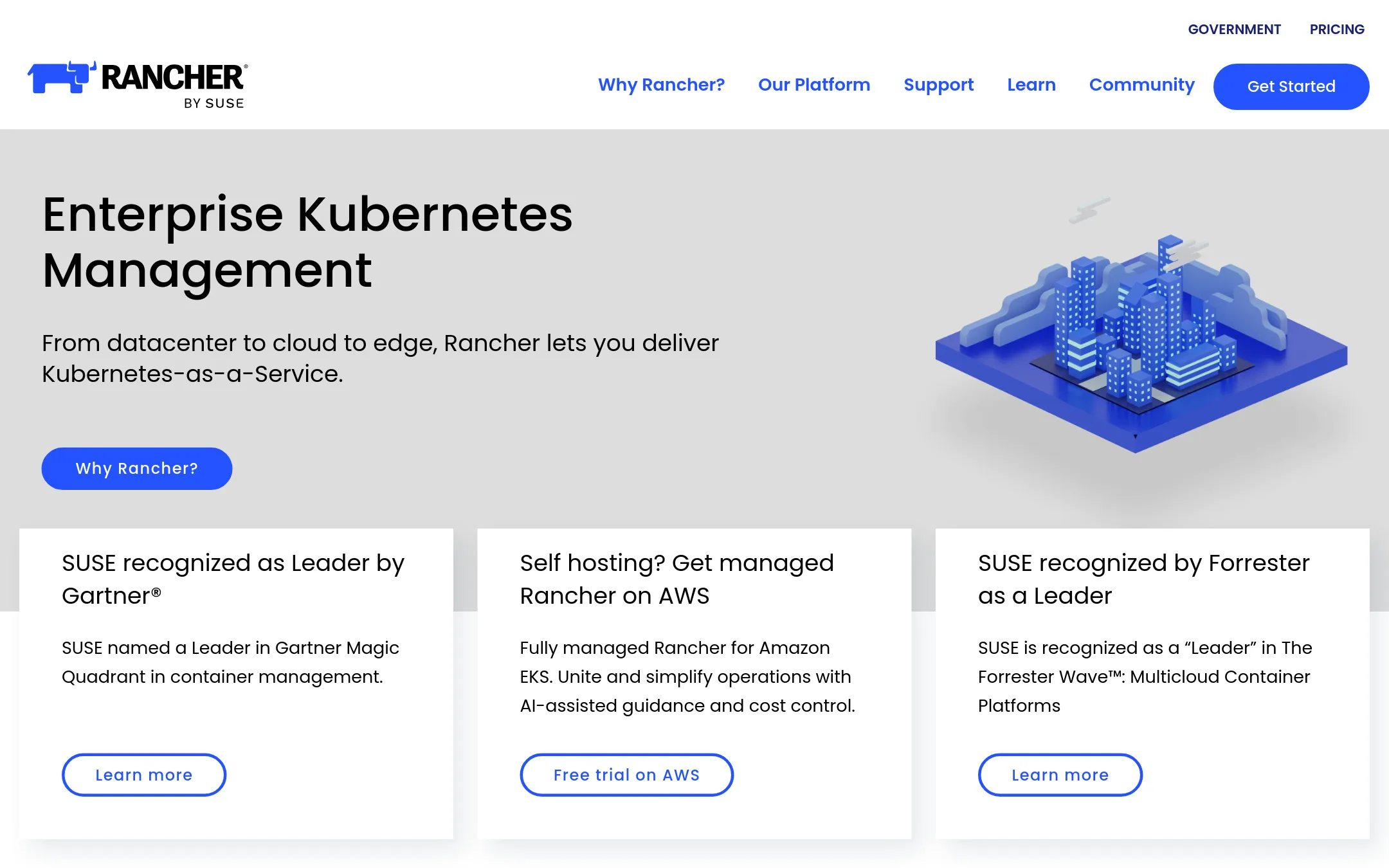
Rancher is a platform for managing multiple Kubernetes clusters across datacenter, cloud, and edge. Choose it over Docker when you need centralized control, security, and Kubernetes-as-a-Service for enterprise operations, not just local container development.
Where it is strong
- Manages multiple clusters from one console
- Open source with a large community
- Recognized as a leader in container management
Where it falls short
- Pricing requires contacting sales
- More complex than Docker for local development
- Pricing:
- Pricing is not published on the site. You must request a quote from the regional sales team.
- Switching from Docker:
- Moving from Docker involves adopting Kubernetes orchestration and Rancher's management layer, which is a significant shift from single-container workflows.
- cNot published
5.containerd
Best for: Platform teams building Kubernetes distributions or custom container runtimes that need a minimal, CNCF-graduated runtime layer.
- Pricing
- Not published
- Category
- Developer Tools
containerd is the core container runtime that Docker itself uses under the hood. Choose it when you need a lightweight, embeddable runtime for Kubernetes nodes or custom container platforms, without Docker's developer-facing tooling and desktop app.
Where it is strong
- Graduated CNCF project with a stable, production-proven runtime
- Small footprint and simple architecture compared to Docker Engine
- Supports OCI images and runC, so it works with standard container formats
Where it falls short
- No Docker CLI, Compose, or GUI. You need additional tools for building and orchestrating
- No Docker Desktop or built-in developer workflow features
- Pricing:
- Pricing is not published on the site.
- Switching from Docker:
- Moving from Docker to containerd means replacing the Docker CLI and daemon with lower-level tools like ctr or nerdctl, and managing images and containers directly.
- Not published
6.LXD
Best for: Linux infrastructure teams that want to run system containers and VMs with Canonical support and Ubuntu integration.
- Pricing
- Not published
- Category
- Developer Tools
LXD is a system container and VM manager from Canonical that runs on a single Linux host. Choose it over Docker when you need full operating system containers or virtual machines for infrastructure workloads, not just application containers.
Where it is strong
- Runs both system containers and VMs from one tool
- Backed by Canonical with enterprise support options
- Deep integration with Ubuntu and its ecosystem
Where it falls short
- No Docker Hub or similar public image registry
- Primarily Linux-focused, no native macOS or Windows desktop app
- Pricing:
- Pricing is not published on the site.
- Not published
7.HashiCorp Nomad
Best for: Teams running mixed workloads of containers and binaries that need a lightweight, multi-cloud scheduler without the complexity of a full Kubernetes platform.
- Pricing
- Not published
- Category
- Developer Tools
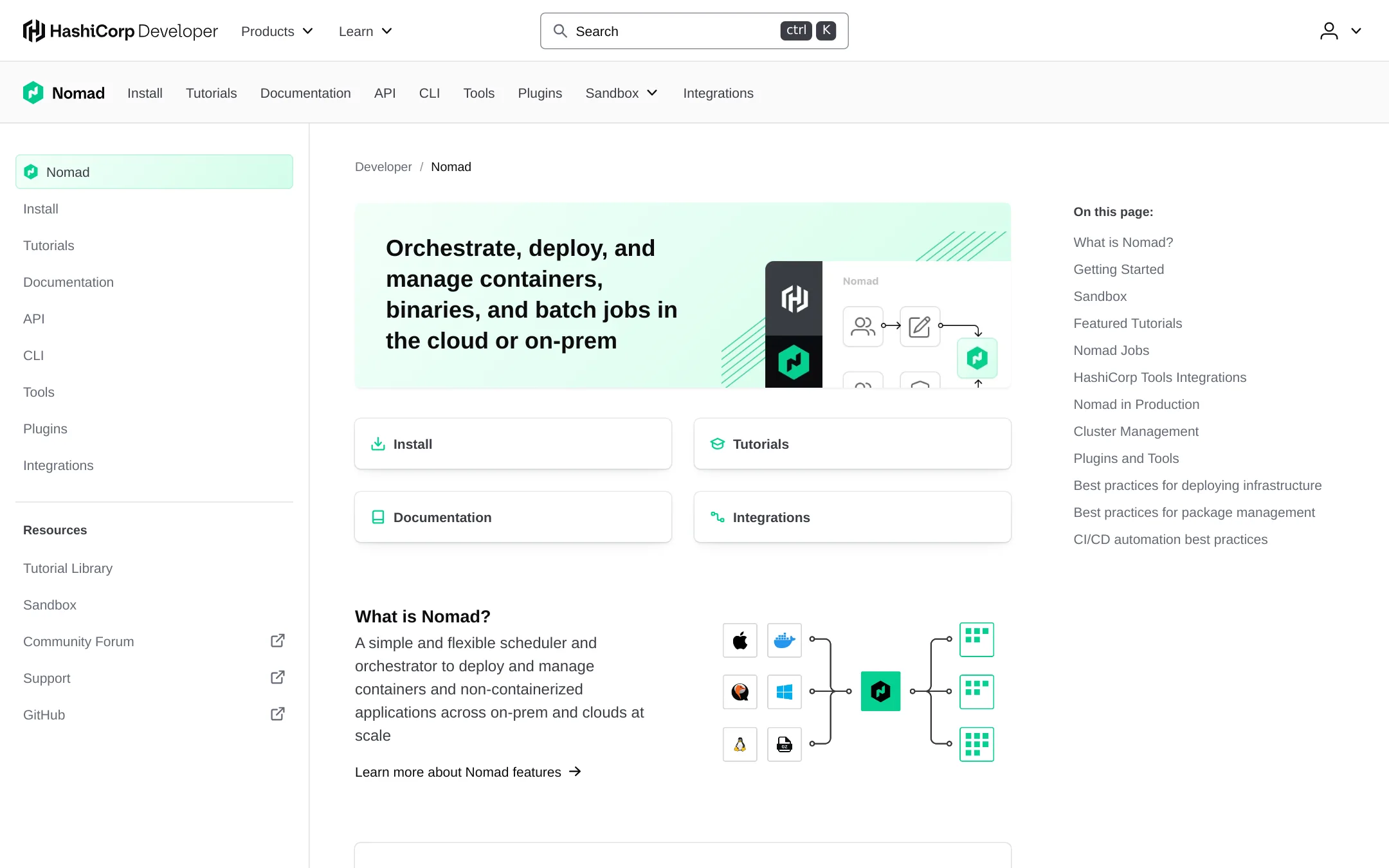
HashiCorp Nomad is a scheduler and orchestrator for containers, binaries, and batch jobs across cloud and on-prem. Choose it over Docker when you need to run non-containerized workloads alongside containers, or when you want a simpler, more flexible scheduler than Docker's built-in orchestration.
Where it is strong
- Schedules containers, binaries, and batch jobs from one system
- Works on-prem and across clouds with a single job spec
- Integrates with Consul for service discovery and Vault for secrets
Where it falls short
- No built-in image building or registry. You still need Docker or another tool for that
- Enterprise features like multi-team governance require a paid tier
- Pricing:
- Pricing is not published on the site.
- Switching from Docker:
- Moving from Docker involves adopting Nomad job files for scheduling, but you can keep using Docker images and registries as-is.
- See website
8.Singularity
Developer Tools
Singularity specializes in scientific and HPC container workflows with strong emphasis on reproducibility and security. It uses immutable images and user-namespace isolation, differing from Docker's mutable layers. Popular in research computing, it avoids Docker daemon requirements entirely. While free for core use, it targets specialized domains rather than general web or enterprise application development served by Docker Hub and Desktop.
- Not published
9.Buildah
Best for: Teams running Kubernetes or CI pipelines that need to build container images without a daemon or root privileges.
- Pricing
- Not published
- Category
- Developer Tools
Buildah builds OCI container images without a full container runtime or daemon. Choose it when you need a lightweight, daemonless image builder, especially in Kubernetes or CI environments where Docker-in-Docker is impractical.
Where it is strong
- No daemon or full runtime required, reducing overhead and attack surface.
- Builds images as non-root, improving security in CI/CD.
- Works directly with OCI-compliant registries and images.
Where it falls short
- No built-in image registry or management console like Docker Hub.
- Requires separate tools like Podman or Skopeo for running and managing containers.
- Pricing:
- Pricing is not published on the site.
- Switching from Docker:
- Moving from Docker involves replacing the build step with Buildah commands and adapting your CI scripts, but your existing OCI images and registries remain compatible.
- Not published
10.CRI-O
Best for: Kubernetes clusters that need a minimal, OCI-compliant runtime without Docker's overhead.
- Pricing
- Not published
- Category
- Developer Tools
CRI-O is a lightweight container runtime built specifically for Kubernetes, implementing the CRI to run OCI-compliant containers. Choose it instead of Docker when you run Kubernetes and want a runtime that is more direct and less feature-heavy than Docker, with no need for Docker's daemon or its extra tooling.
Where it is strong
- Lightweight and purpose-built for Kubernetes, reducing moving parts.
- Supports any OCI-compliant runtime, including runc and Kata Containers.
- Pulls images from any compliant registry, not just Docker Hub.
Where it falls short
- Requires Kubernetes. Not a standalone container tool for developers.
- No Docker CLI or Compose. You must use Kubernetes-native tools.
- Pricing:
- Pricing is not published on the site.
- Switching from Docker:
- Moving from Docker to CRI-O means reconfiguring your Kubernetes nodes to use CRI-O as the runtime, and adapting workflows to Kubernetes-native commands instead of Docker CLI.
- See website
11.Diversion
Developer Tools
A scalable, cloud-native Perforce and Git alternative
- See website
12.Wasmer
Developer Tools
The Operating System for Edge Computing
See more comparisons in Developer Tools alternatives.
FAQ
Questions about Docker alternatives
What is the best Docker alternative for local development?
Podman is a strong choice for local development because it is daemonless and rootless, improving security and simplifying troubleshooting. It is compatible with Docker CLI commands, easing migration.
Which alternative is best for running containers at scale in production?
Kubernetes is the leading orchestrator for production workloads, offering automated deployment, scaling, and self-healing. It requires more operational overhead but is ideal for large-scale deployments.
Are there enterprise-grade Docker alternatives with vendor support?
OpenShift from Red Hat provides a Kubernetes-based platform with built-in CI/CD, security, and multi-cloud management, backed by enterprise support. Rancher also offers multi-cluster management with a sales-led pricing model.
Can I use Docker alternatives without paying for a license?
Yes, many alternatives are open source and free to use, such as Podman, Kubernetes, containerd, and Buildah. However, some offer paid enterprise tiers with additional features and support.
What is the simplest Docker alternative for Kubernetes clusters?
CRI-O is a lightweight runtime built specifically for Kubernetes, reducing moving parts and supporting any OCI-compliant runtime. It is not a standalone tool but works well within Kubernetes environments.
Last updated October 15, 2026.