
Elementary alternatives
8 products compared · Updated November 7, 2026
The short answer
The three strongest alternatives to Elementary depend on the team. Monte Carlo suits enterprise data and AI teams that need agent observability, incident triage and enterprise security controls across a large stack. Great Expectations suits Python-first data teams that want a free, open source library they can run inside their own pipelines. Soda suits data teams where business users need to define and approve data contracts alongside engineers.
Your shortlist, at a glance
Read the comparisons ↓ dbt CloudNot publishedAnalytics engineering teams that want to build, test and schedule SQL transformations with governed metrics and column-level lineage
 MonteCarloNot publishedEnterprise data and AI teams that need agent observability, incident triage and enterprise security controls across a large stack
- GGreat ExpectationsNot publishedPython-first data teams that want open source data validation they can run inside their own pipelines and orchestrators
- SSodaFrom $750/moData teams where business users need to define and approve data contracts alongside engineers
- MMetaplaneNot publishedData teams that want no-code monitors and PR-level regression checks on dbt and warehouse pipelines
- BBigeyeNot publishedLarge enterprises that need data observability, sensitive data classification and AI access policies in one governed platform
- SSiffletNot publishedData teams that want anomaly detection and incident triage across the full stack, including BI, without managing monitors in code
- AAnomaloNot publishedEnterprise data teams in regulated industries that want autonomous monitoring with no code and deployment inside their own VPC
About Elementary and its alternatives
Elementary is an open-source data observability product for data teams. Its site describes a control plane that brings together observability, quality, governance and discovery, with tests, rules and metadata managed in code and a cloud product that reads only a metadata schema.
When comparing alternatives in this category, weigh the pricing structure first, since many vendors do not publish prices and quote costs only through sales. Check which regions and deployment models are supported, including whether a self-hosted or VPC option exists. Look at which integrations cover your warehouse, orchestrator and BI tools, and what level of support and contract terms come with each plan.
Explore the alternatives
- Not published
1.dbt Cloud
Best for: Analytics engineering teams that want to build, test and schedule SQL transformations with governed metrics and column-level lineage
- Pricing
- Not published
- Category
- Analytics & Data
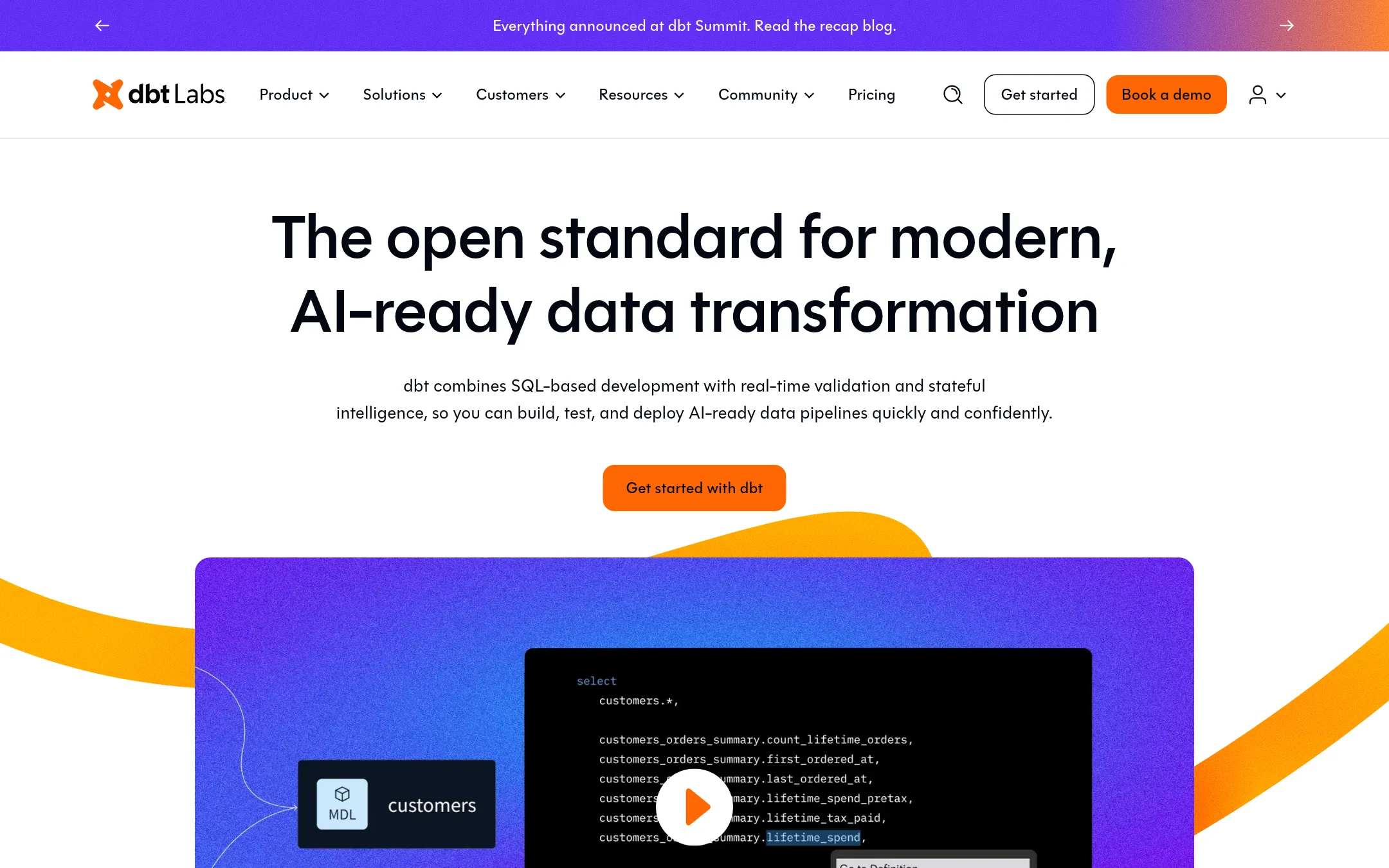
dbt Cloud is a transformation tool that builds SQL data models with version control, testing, and lineage, plus orchestration and a semantic layer for metrics. Teams pick it over Elementary when their main need is building and deploying the pipeline itself, not observing data quality and incidents after the fact.
Where it is strong
- Builds models in SQL with testing and version control, so changes are reviewed before they ship
- Column-level lineage and automatic renaming of downstream references when a model or column changes
- Offers a free Developer plan for one seat, and Starter has a per-seat price shown on the page
Where it falls short
- Its focus is transformation and orchestration, so it does not replace Elementary's observability and incident monitoring on its own
- Advanced governance such as SSO, RBAC, PrivateLink and column-level lineage sits behind Enterprise, which is custom priced
- Pricing:
- Pricing is not published on the site.
- Not published
2.MonteCarlo
Best for: Enterprise data and AI teams that need agent observability, incident triage and enterprise security controls across a large stack

- Pricing
- Not published
- Category
- Analytics & Data
Monte Carlo is a data and AI observability platform aimed at enterprise teams. It covers agent observability, ML observability, data observability and an agent fleet that triages incidents and runs root cause analysis with lineage. Teams pick it over Elementary when they want agent monitoring and enterprise-grade governance rather than an open-source, code-first setup.
Where it is strong
- Covers agent, ML and data observability in one platform
- Automated root cause analysis and incident triage with lineage
- Enterprise security options such as SSO, SCIM, audit logging and PII filtering
Where it falls short
- Pricing is credit-based and is not published, so costs are hard to estimate upfront
- Focused on enterprise deployments, with the highest tiers requiring sales contact
- Pricing:
- Pricing is not published on the site.
- GNot published
3.Great Expectations
Best for: Python-first data teams that want open source data validation they can run inside their own pipelines and orchestrators
- Pricing
- Not published
- Category
- Other
Great Expectations is a Python framework for writing and running data quality tests, with HTML Data Docs that show results in plain language. Teams pick it over Elementary when they want a free, Apache 2.0 licensed library that runs inside their own code and orchestrator, with GX Cloud as an optional hosted layer.
Where it is strong
- GX Core is open source under Apache 2.0 and free to use.
- Tests are written in Python and Jupyter, which suits engineers who already work there.
- Data Docs turn test results into readable reports for non-engineers.
Where it falls short
- The site describes GX Core as a data quality framework and does not mention lineage, incident management, or BI integrations the way Element
- GX Cloud pricing is only available through a workshop sign-up or a sales conversation, so costs are hard to estimate.
- Pricing:
- Pricing is not published on the site.
- SFrom $750/mo
4.Soda
Best for: Data teams where business users need to define and approve data contracts alongside engineers
- Pricing
- From $750/mo
- Category
- Other
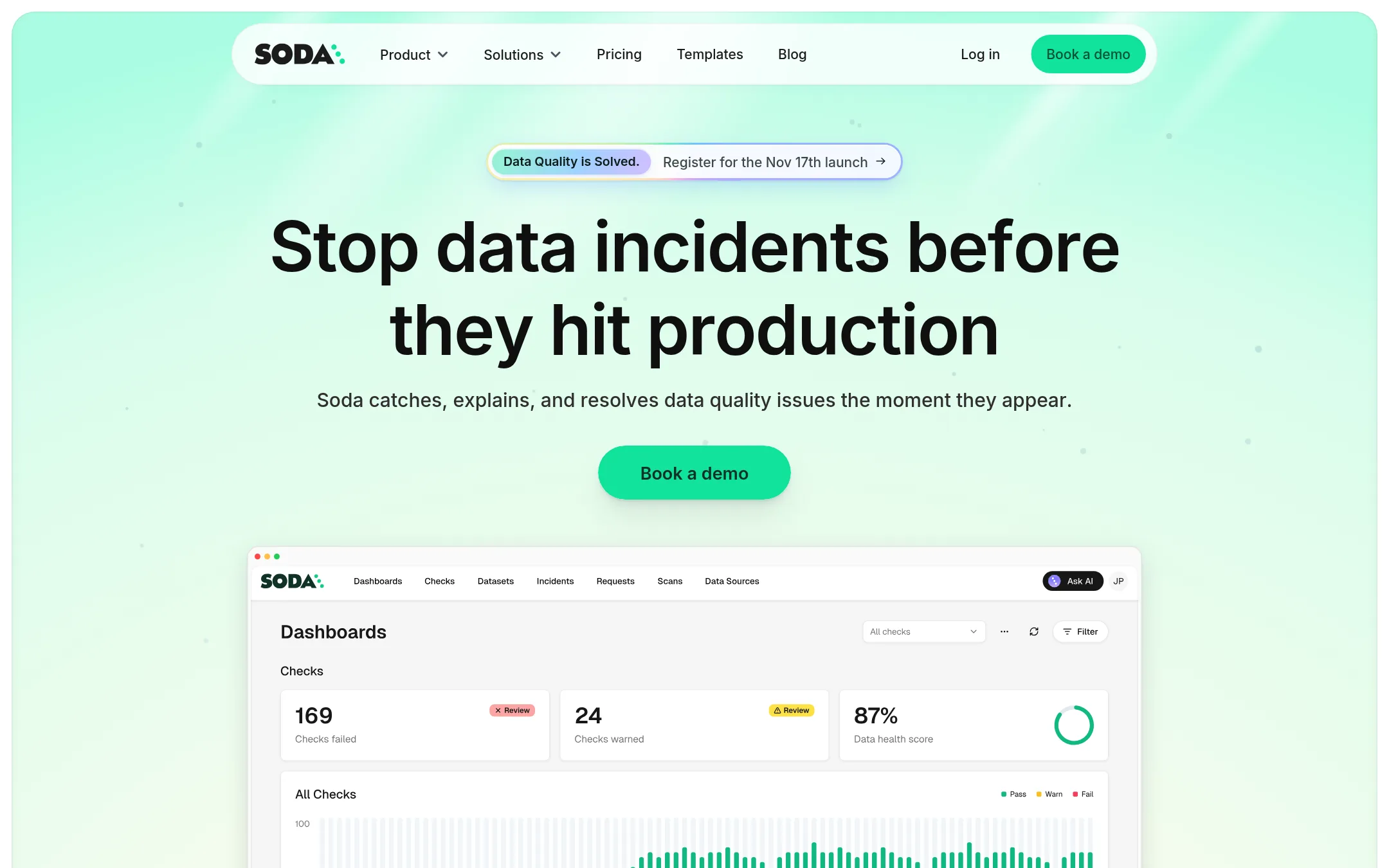
Soda is a data quality platform that finds, explains and helps resolve data issues, from whole tables down to individual records. Teams pick it over Elementary when they want business users and data engineers working in one shared workflow, with data contracts that can be written in code or in a UI. It also fits teams that want record-level diagnostics stored in their own warehouse.
Where it is strong
- Engineers work in Git and business users work in a UI, with every change versioned
- Record-level diagnostics are stored in your own data warehouse for traceability
- Anomaly detection uses adaptive thresholds and learns from feedback on flagged results
Where it falls short
- The site does not show which connectors or integrations are supported, so check fit with your stack
- AI remediation of bad records in source systems is marked as coming soon
- Pricing:
- Pricing is not published on the site, though the pricing page lists a $750 per month plan for small projects and custom pricing for data engineering and business collaboration teams.
- MNot published
5.Metaplane
Best for: Data teams that want no-code monitors and PR-level regression checks on dbt and warehouse pipelines
- Pricing
- Not published
- Category
- Other
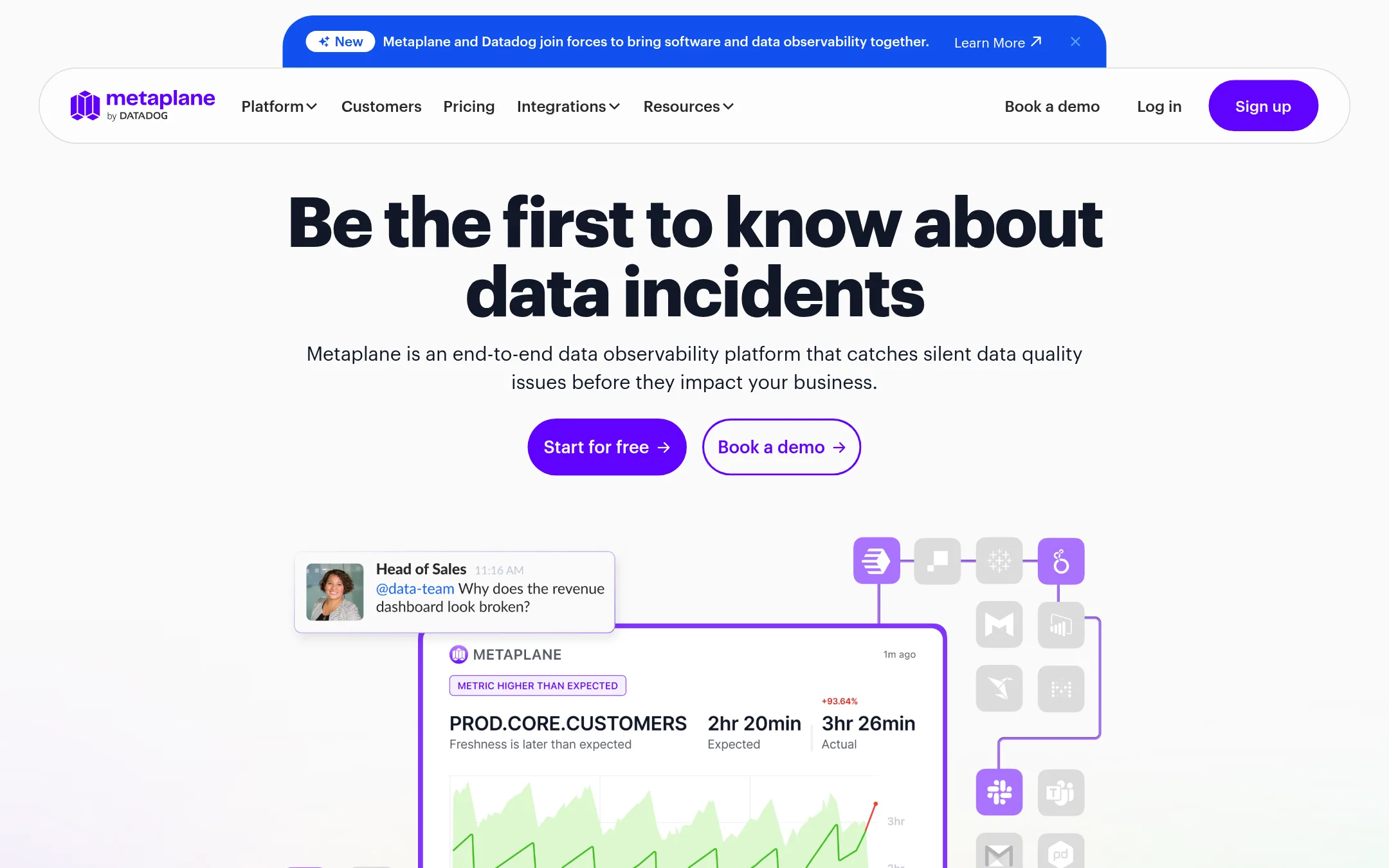
Metaplane is an end-to-end data observability platform that catches silent data quality issues, with column-level lineage and CI/CD checks for pull requests. A team would pick it over Elementary if they want monitors set up without writing code and want to pay mainly for the tables they monitor.
Where it is strong
- Monitors can be added without writing code, and setup is quick
- Pricing is based on monitored tables, so unmonitored tables cost nothing
- Available as a native app inside Snowflake, so data stays in the warehouse
Where it falls short
- Elementary's open-source option has no equivalent on this page
- The site describes no self-hosted or open-source core for the main product
- Pricing:
- Pricing is not published on the site.
- BNot published
6.Bigeye
Best for: Large enterprises that need data observability, sensitive data classification and AI access policies in one governed platform
- Pricing
- Not published
- Category
- Other
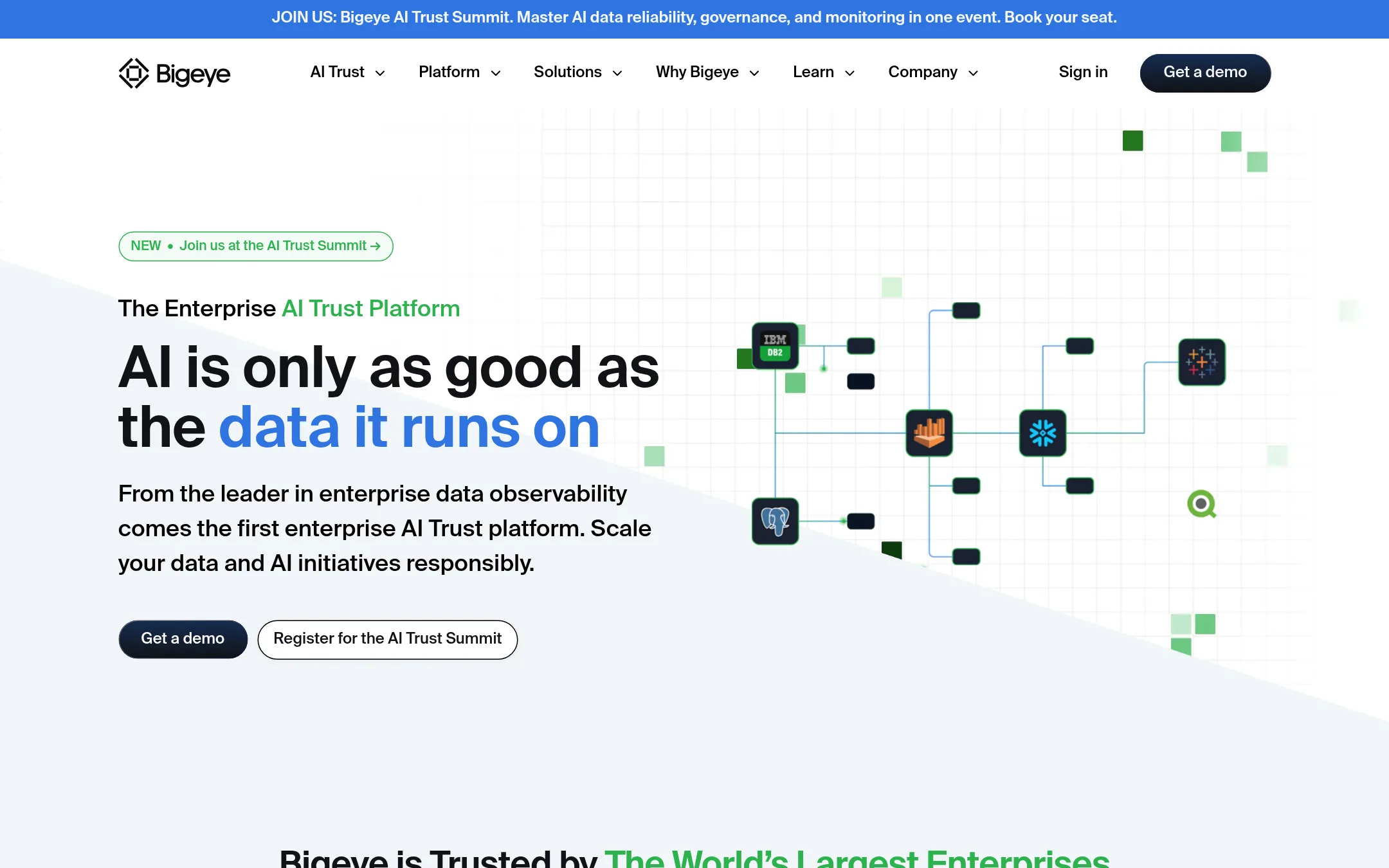
Bigeye is an enterprise data observability and AI trust platform. It covers anomaly detection, lineage, sensitive data classification, data cataloging and runtime enforcement of data access policies for AI applications. Someone would pick it over Elementary when they need governance and sensitive-data scanning across structured and unstructured sources, or lineage support for legacy systems, rather than a code-first, open-source approach.
Where it is strong
- Covers observability, lineage, sensitive data scanning and AI policy enforcement in one platform
- Lineage support for both modern and legacy data stacks
- Anomaly detection and monitoring aimed at catching outages before they reach the business
Where it falls short
- Pricing is not published, so cost has to come from a sales conversation
- The site is built around large enterprise buyers, which may be more than a small team needs
- Pricing:
- Pricing is not published on the site.
- SNot published
7.Sifflet
Best for: Data teams that want anomaly detection and incident triage across the full stack, including BI, without managing monitors in code
- Pricing
- Not published
- Category
- Other
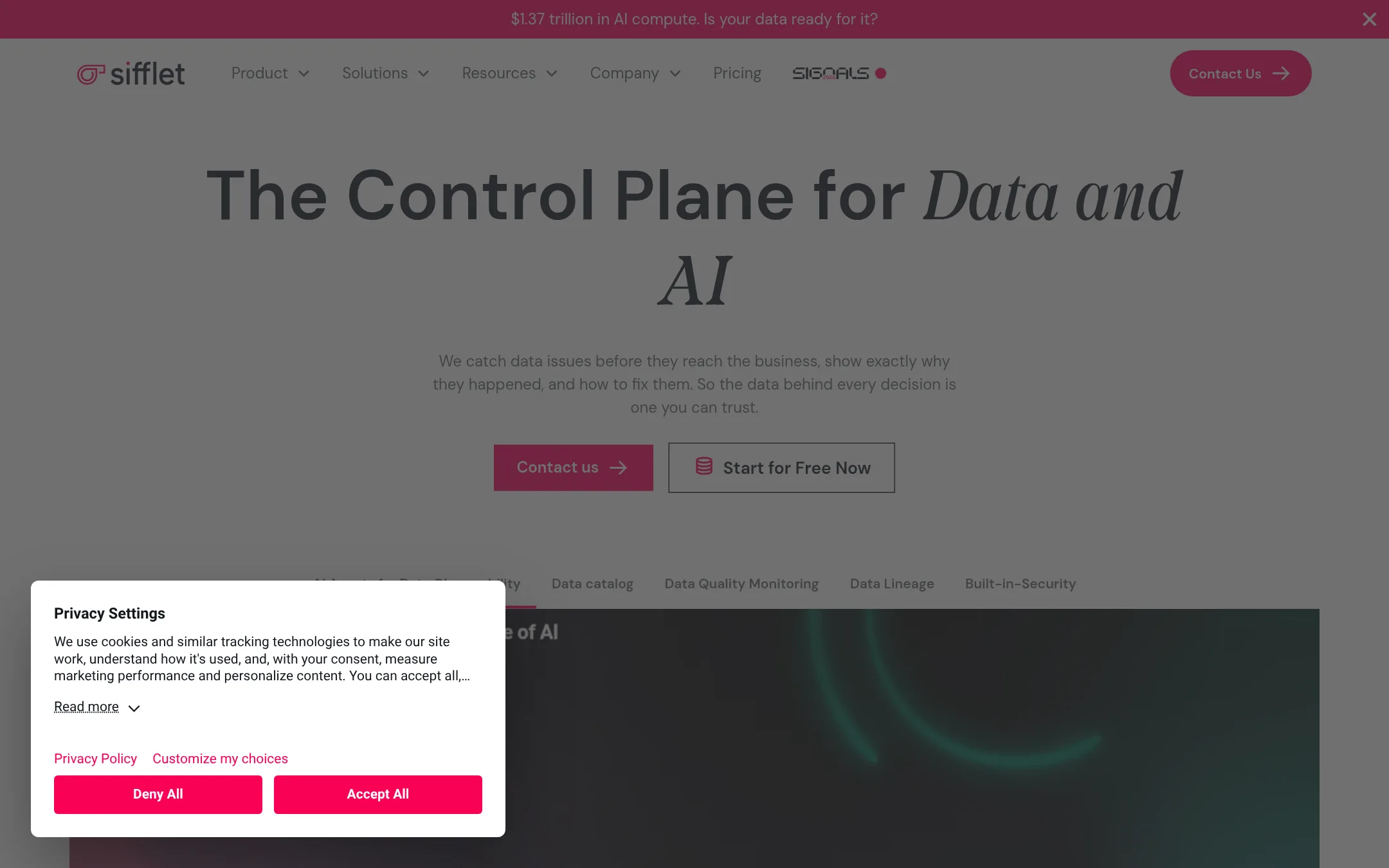
Sifflet is a data observability platform that catches data issues before they reach the business, then shows lineage, downstream usage, and ownership so teams can find the root cause and fix it. Choose it over Elementary when you want incident context and cross-tool visibility across warehouses, orchestrators, and BI in one control layer, rather than a code-first approach managed in dbt.
Where it is strong
- Enriches alerts with lineage, downstream usage, and ownership so teams can rank issues by business impact
- Covers warehouses, orchestrators, and BI in one layer, not only dbt-based pipelines
- AI-powered anomaly detection that learns patterns without much manual tuning
Where it falls short
- Pricing is not published, so cost needs a sales conversation to compare
- Several reviews note it is useful but not plug and play, which can mean setup effort
- Pricing:
- Pricing is not published on the site.
- ANot published
8.Anomalo
Best for: Enterprise data teams in regulated industries that want autonomous monitoring with no code and deployment inside their own VPC
- Pricing
- Not published
- Category
- Other
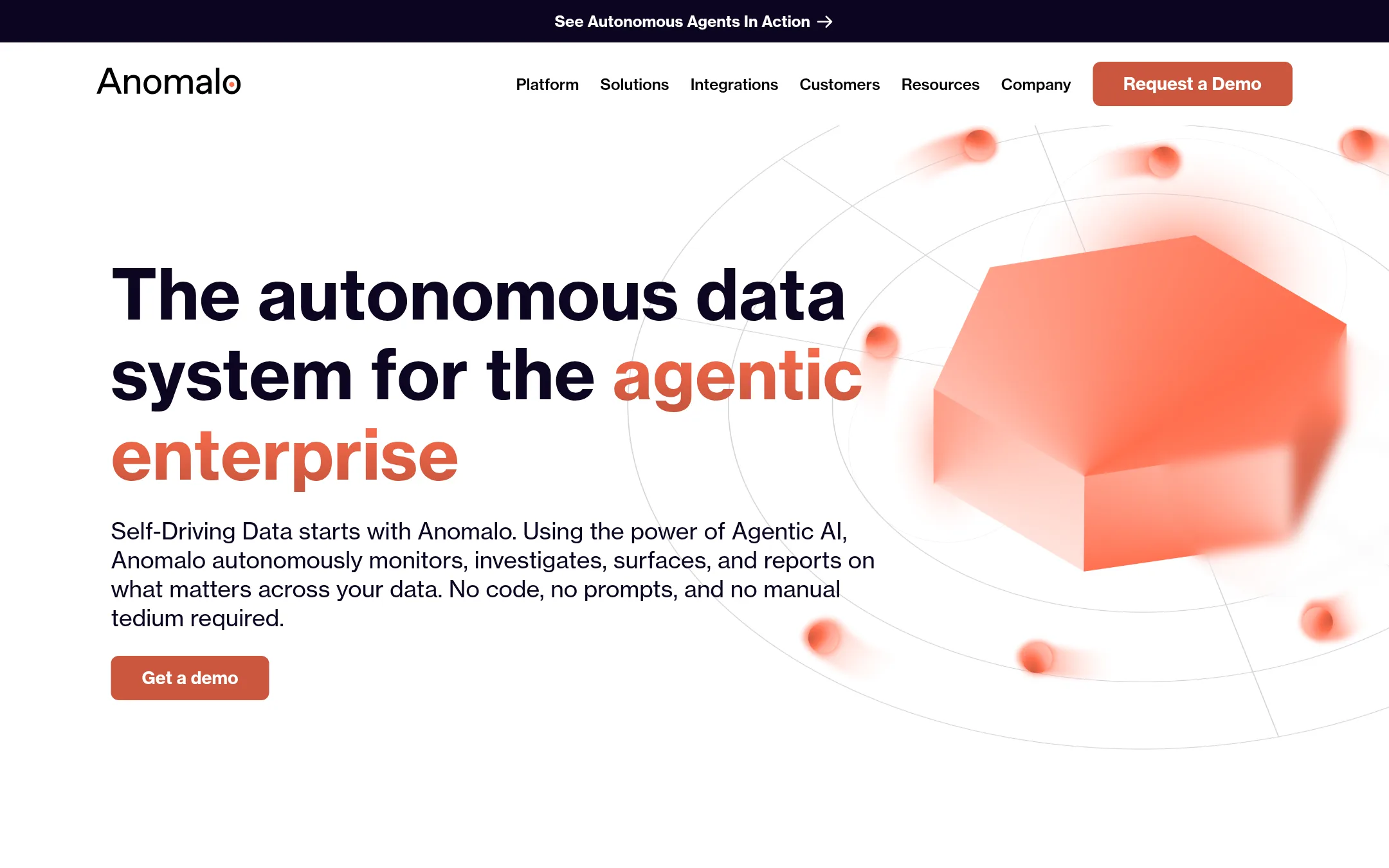
Anomalo is an autonomous data monitoring platform with agents that watch tables for freshness, schema changes and quality issues, then investigate and report on them. A team would pick it over Elementary when they want a no-code, agent-driven system that handles investigation and reporting, rather than code-first tests and rules managed in a repository.
Where it is strong
- Agents monitor, investigate and report without requiring SQL or code
- Deploys fully in your VPC or as SaaS, so data can stay in your environment
- Lists SOC 2 Type II, GDPR and HIPAA compliance and SAML-based SSO
Where it falls short
- Pricing is not published, so cost has to be confirmed through sales
- Its code-first approach is less central than Elementary's, which manages tests and rules in code
- Pricing:
- Pricing is not published on the site.
See more comparisons in Analytics & Data alternatives.
FAQ
Questions about Elementary alternatives
Which alternative is best if I want a free, open source option?
Great Expectations offers GX Core, an open source framework under Apache 2.0 that is free to use. It is written in Python and Jupyter, so it suits engineers who already work in those tools. Its hosted GX Cloud pricing is not published.
Which alternative is best for enterprise AI and agent observability?
Monte Carlo covers agent, ML and data observability in one platform, with automated root cause analysis and incident triage using lineage. Its enterprise security options include SSO, SCIM and audit logging. Pricing is credit-based and not published, so costs are hard to estimate upfront.
Which alternative lets business users take part in data quality work?
Soda is built so engineers work in Git while business users work in a UI, with every change versioned. Teams can define data contracts in code or in the UI. Its pricing page lists a $750 per month plan for small projects and custom pricing for larger collaboration teams.
Which alternative is best for no-code monitors that only cost for monitored tables?
Metaplane lets teams add monitors without writing code and bases pricing on monitored tables, so unmonitored tables cost nothing. It is available as a native app inside Snowflake. Its site does not describe a self-hosted or open-source core.
What should I check before choosing an alternative to Elementary?
Confirm which warehouses, orchestrators and BI tools each product supports, since several sites do not list connectors clearly. Ask for pricing early, because many vendors publish no prices. Also check deployment options, such as self-hosting or VPC deployment, against your security requirements.
Last updated November 7, 2026.