
Emergent alternatives
6 products compared · Updated November 11, 2026
The short answer
The three strongest alternatives to Emergent are Replit, Softr and Glide. Replit suits product managers and enterprise teams that want several builders working in one codebase with built-in auth, database and hosting. Softr suits operations and IT teams that need client portals or internal tools on top of Airtable or Google Sheets data. Glide suits operations and back-office teams that run on spreadsheets and need field-ready internal apps without writing code.
Your shortlist, at a glance
Read the comparisons ↓- LLovableNot publishedNon-technical founders and internal teams that need full-stack business tools built and hosted without writing integration code
 BoltNot publishedTeams and commuters in European cities who need rides, deliveries or scooter rental through one app
 ReplitNot publishedProduct managers and enterprise teams that want multiple builders working on one codebase with built-in auth, database, and hosting
- vv0.devFree tier. Plus planFrontend and full-stack developers already on Vercel who want AI-generated web apps synced to GitHub
SoftrNot publishedOperations and IT teams that need client portals or internal tools on top of Airtable or Sheets data
GlideFrom $25/moOperations and back-office teams that run on spreadsheets and need field-ready internal apps for inventory, work orders or project tracking
About Emergent and its alternatives
Emergent is an AI-powered development platform that turns a plain-language description into a working application. According to its site, it handles coding, design and deployment for web apps, mobile apps, dashboards, e-commerce sites and SaaS tools, and users own the code it generates. Its published plans start at $17 per month on annual billing for individual builders, $167 per month for power users and $250 per month for teams, each with monthly build credits.
When comparing alternatives in this category, look at how the pricing is structured, since some tools publish plan prices and others ask you to request a quote. Check which regions and data sources a tool supports, and whether it connects to the systems your team already uses. Also weigh integrations, support levels and contract terms, especially if you need single sign-on, audit logs or a self-hosted database.
Explore the alternatives
- LNot published
1.Lovable
Best for: Non-technical founders and internal teams that need full-stack business tools built and hosted without writing integration code
- Pricing
- Not published
- Category
- Other
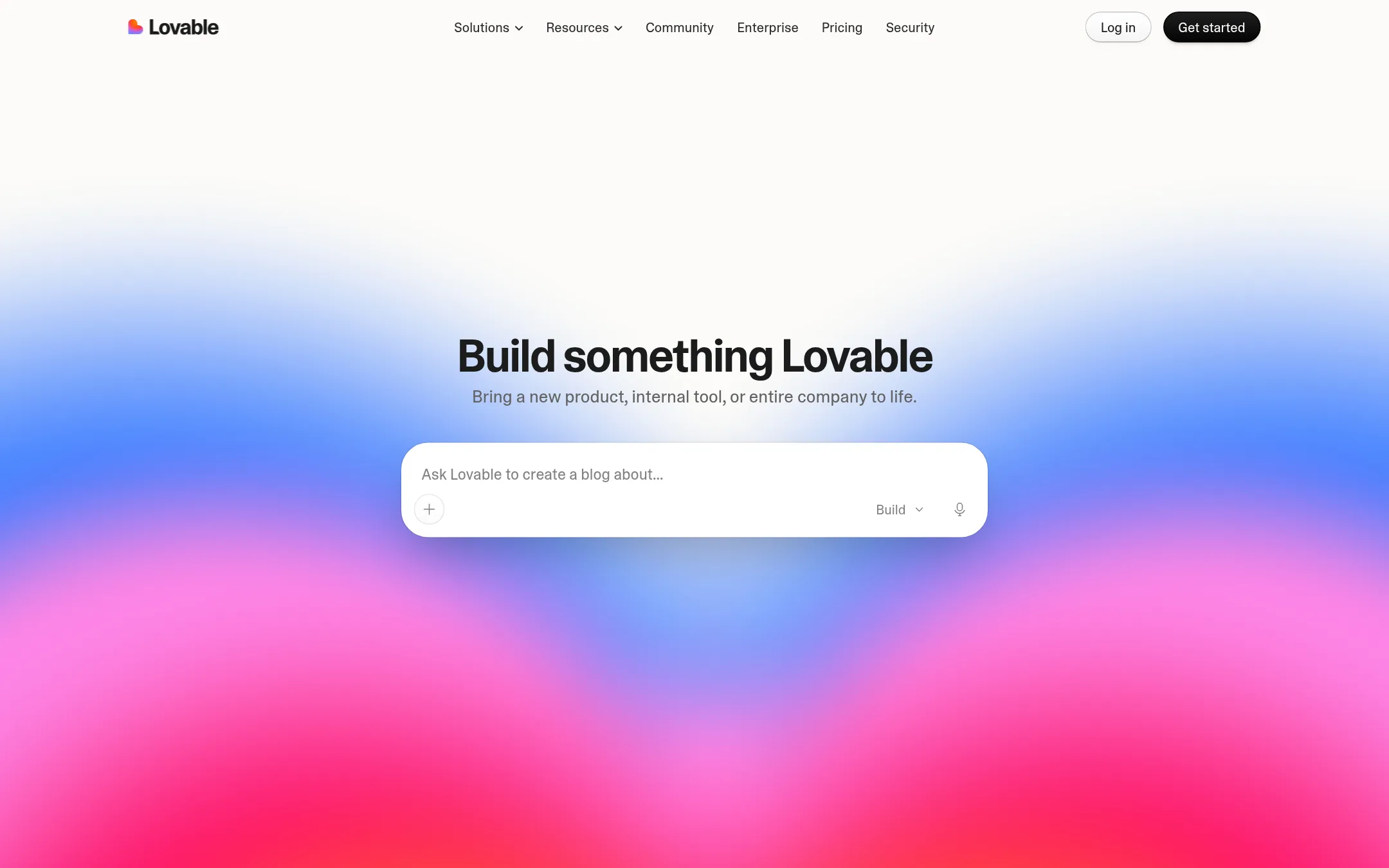
Lovable turns a plain-language description into full-stack apps, websites and internal tools. It handles hosting, SSL, authentication, payments and integrations, so you do not wire those up yourself. Choose it over Emergent when you want the infrastructure side covered by the platform and you plan to connect to the other tools your team already uses.
Where it is strong
- Handles hosting, SSL and backend infrastructure for you
- Connects to the tools you already use without integration code
- Lists automatic security scans and audit logs as standard
Where it falls short
- The site does not show pricing, so you must check costs before committing
- The homepage does not name specific plans or limits to compare against Emergent's credit model
- Pricing:
- Pricing is not published on the site.
- Switching from Emergent:
- Moving from Emergent to Lovable is not covered by the supplied facts, so check with Lovable on how to bring existing projects across.
- Not published
2.Bolt
Best for: Teams and commuters in European cities who need rides, deliveries or scooter rental through one app

- Pricing
- Not published
- Category
- Other
Bolt is a European mobility app that covers rides, food and grocery delivery, car-sharing, scooters and business travel in one place. Someone would pick it over Emergent if they need a ready-made service for getting around or getting things delivered, not software to build their own app. Bolt is a consumer and partner platform, so it does not replace a tool for building software.
Where it is strong
- Covers rides, delivery, car-sharing, groceries and scooters in one app
- Operates in 850+ cities and 50+ countries, according to the site
- Has a business option for managing team and client travel
Where it falls short
- It is a mobility service, so it cannot build or host software like Emergent does
- Features vary by country, and some listed services may not appear in every app
- Pricing:
- Pricing is not published on the site.
- Not published
3.Replit
Best for: Product managers and enterprise teams that want multiple builders working on one codebase with built-in auth, database, and hosting
- Pricing
- Not published
- Category
- Developer Tools
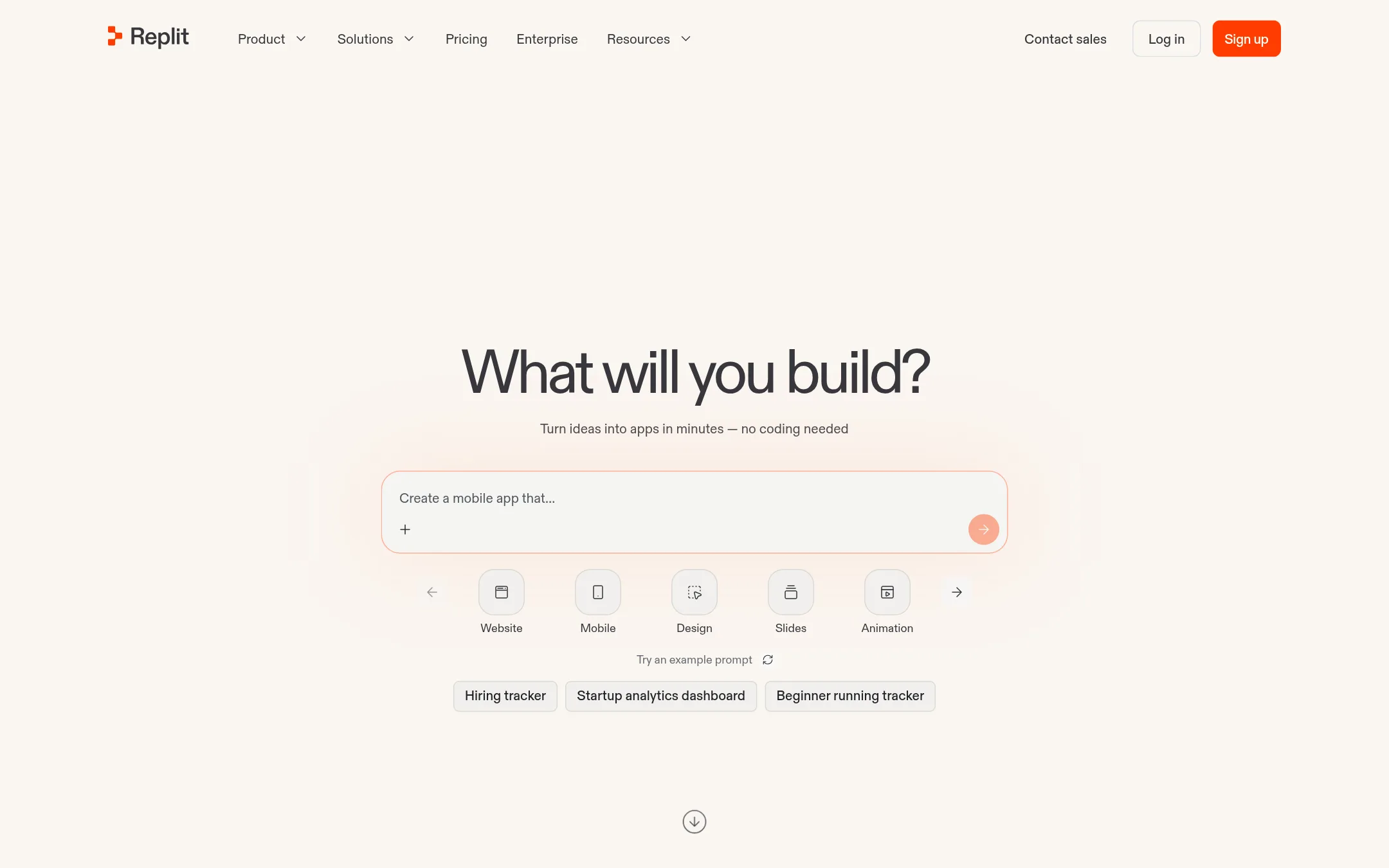
Replit is an AI app and website builder with a collaborative browser-based IDE. Teams pick it over Emergent when they want to work across the full stack in a real coding environment, with built-in authentication, database, hosting, and monitoring, plus 100+ integrations. Its free mode is also a draw for brainstorming without token costs.
Where it is strong
- Free mode lets you brainstorm and create without token costs.
- Built-in authentication, database, hosting, and monitoring need no setup.
- Connects to 100+ integrations, including OpenAI, Stripe, and Google Workspace.
Where it falls short
- Pricing details are not published in the material available here, so cost comparison needs a direct check.
- Enterprise controls such as SSO/SAML and SOC 2 point to a bigger buying process for smaller teams.
- Pricing:
- Pricing is not published on the site.
- vFree tier. Plus plan
4.v0.dev
Best for: Frontend and full-stack developers already on Vercel who want AI-generated web apps synced to GitHub
- Pricing
- Free tier. Plus plan
- Category
- Other
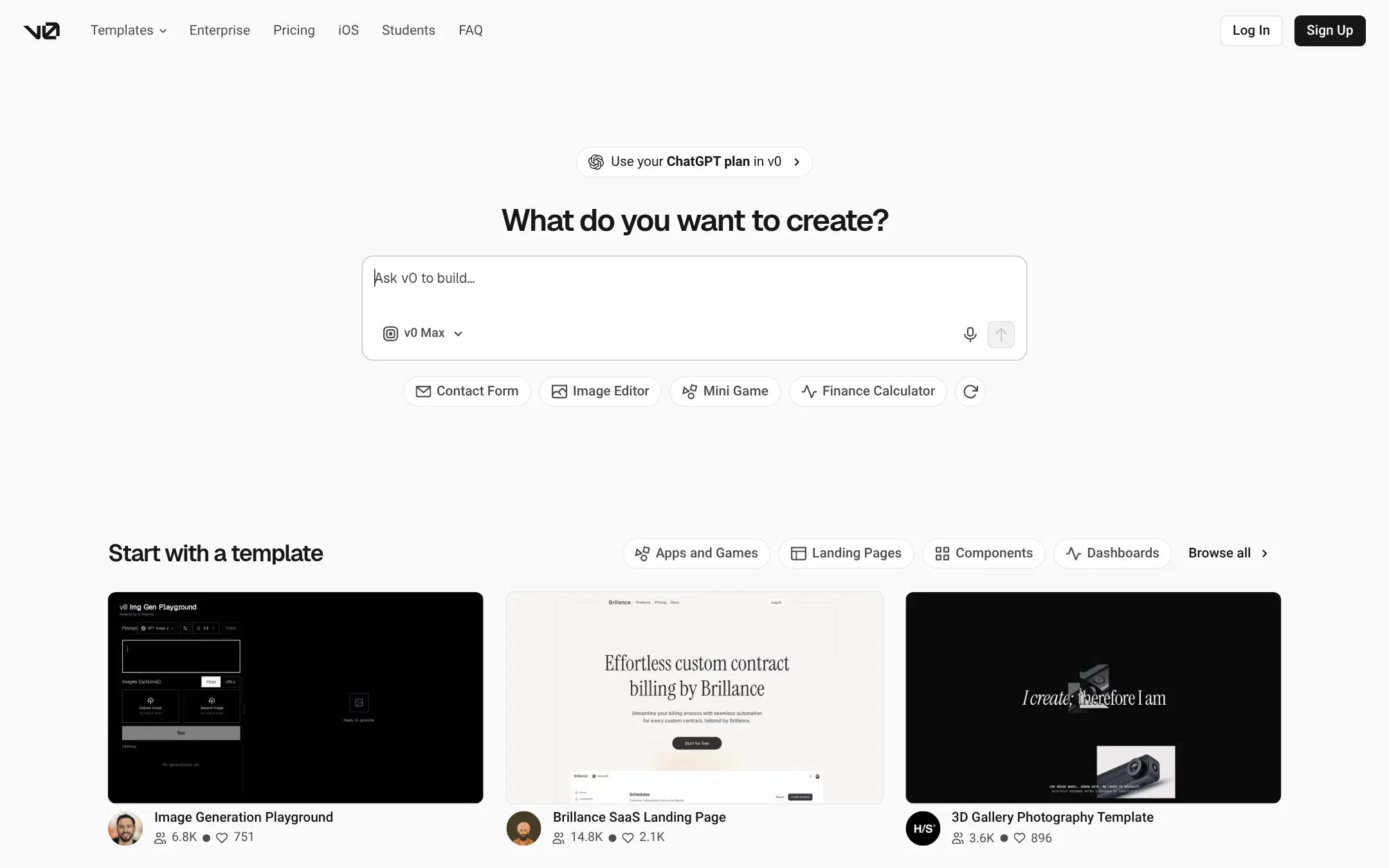
v0 is an AI tool from Vercel that generates full-stack web apps from a prompt and publishes them through Vercel's hosting. Pick it over Emergent if you already work in Vercel or Next.js, want the output synced to your own GitHub repo, or want to design visually with live preview and reusable design systems.
Where it is strong
- Syncs generated code directly to GitHub
- One-click deployment to Vercel
- Visual Design Mode and reusable design systems for fine-tuning
Where it falls short
- Free plan is capped at 7 messages per day
- Mobile app building is limited to a companion iOS app for designing on the go, with no mention of native mobile output
- Pricing:
- Pricing is not published on the site in a way that gives a single starting figure, but the Plus plan includes $30 of monthly credits per user and a free tier is available with a 7 message per day limit.
- Not published
5.Softr
Best for: Operations and IT teams that need client portals or internal tools on top of Airtable or Sheets data
- Pricing
- Not published
- Category
- AI & Machine Learning
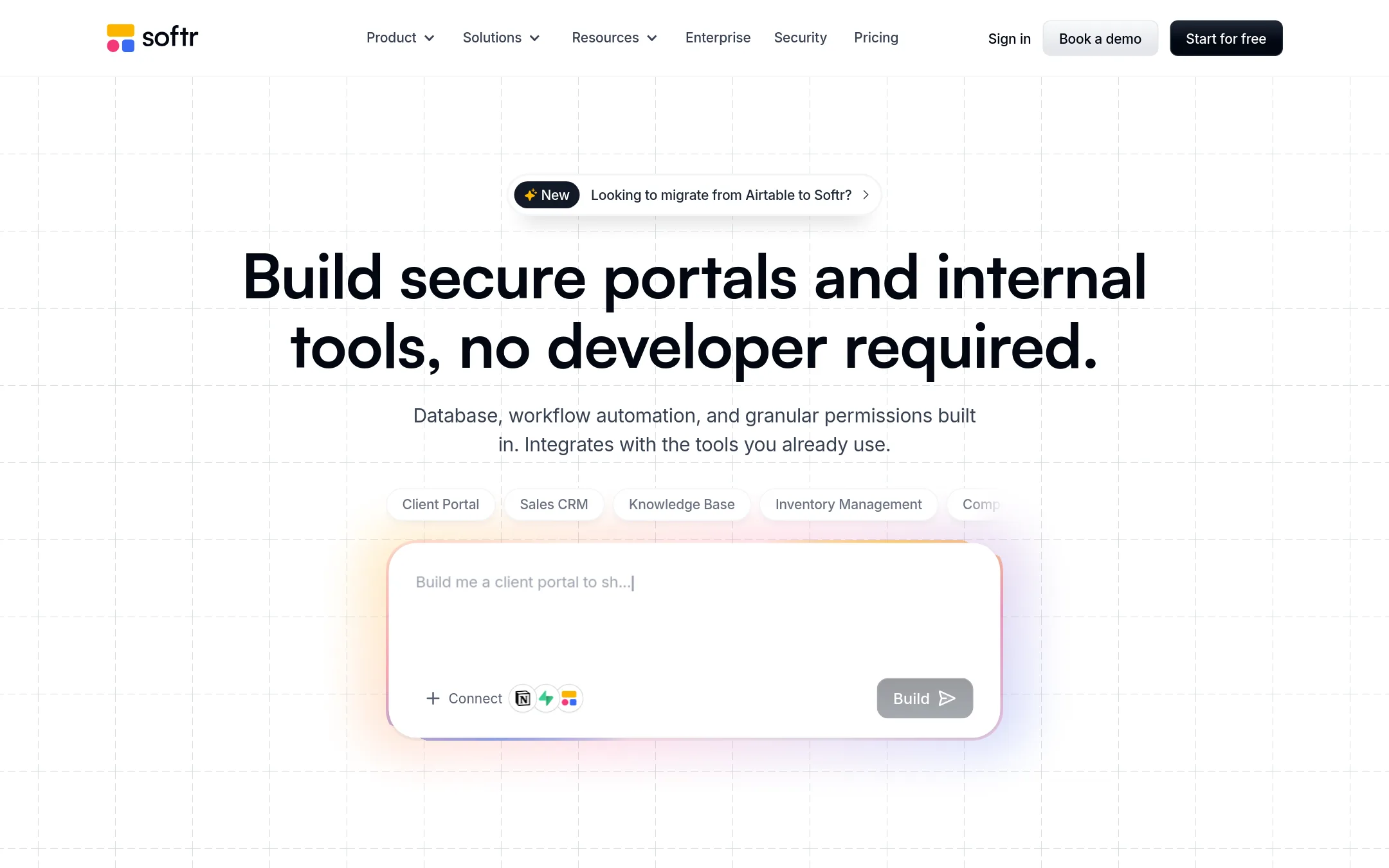
Softr builds business apps like client portals, internal tools, CRMs and dashboards on top of existing data sources such as Airtable, Google Sheets and Notion, or on its own Softr Databases. Teams choose it over Emergent when the app is an operational tool for staff or clients that needs access control, and when they want to connect to the spreadsheets and databases they already run the business on.
Where it is strong
- Connects to 21+ data sources, including Airtable, Notion and Google Sheets, on every plan including Free
- Role-based access controls and per-role previews help keep each client or team member to their own data
- Claims SOC 2 Type II compliance and EU hosting by default, which matters to IT reviewers
Where it falls short
- Built for business operations apps, so it is a weaker fit than Emergent for consumer-facing products or custom mobile apps
- Some integrations and SSO features are limited to higher tiers, such as Okta-style SSO and Salesforce, which are gated to Enterprise
- Pricing:
- Pricing is not published on the site.
- From $25/mo
6.Glide
Best for: Operations and back-office teams that run on spreadsheets and need field-ready internal apps for inventory, work orders or project tracking
- Pricing
- From $25/mo
- Category
- Productivity & Project Management
Glide turns spreadsheets, prompts, PDFs or screenshots into internal business apps that run on your company's data. Choose it over Emergent when your work already lives in Excel or Google Sheets and you want operations staff to build and share apps without writing code.
Where it is strong
- Builds apps directly from a spreadsheet, so existing data carries over without rebuilding it
- Governance controls include SSO, role-based access down to the row, and an audit log
- Apps work on desktop and phone, with field updates syncing to the back office
Where it falls short
- Built mainly for internal business apps, so it is less of a general tool for public-facing consumer products than Emergent
- Enterprise pricing is not published, so larger buyers must request a quote
- Pricing:
- Pricing is not published on the site for Enterprise, while the other plans are Free, Basic, Plus and Pro, and the FAQ says GlideOS plans start at $25 per month.
- Switching from Emergent:
- GlideOS runs in a separate account from Glide Classic and cannot share data with it, and there is no tool for migrating apps, so moving from Emergent means starting new builds.
See more comparisons in Developer Tools alternatives.
FAQ
Questions about Emergent alternatives
What is Emergent best known for?
According to its site, Emergent is an AI app builder that lets people describe an app in natural language and have agents design, code and deploy it. It is aimed at both beginners and experienced developers who want production-ready code they can modify and host themselves.
Which alternative is best for operations teams working in spreadsheets?
Glide is built for this case. It turns spreadsheets, prompts, PDFs or screenshots into internal business apps that run on your company's data, and its governance controls include SSO, row-level access and an audit log. Softr is another option if you need client portals on top of Airtable or Google Sheets.
Which alternative should a team choose if several people need to build in one codebase?
Replit fits this need. Its entry describes a collaborative browser-based IDE with built-in authentication, database, hosting and monitoring, plus 100+ integrations. Its pricing is not published on the site, so you will need to check costs directly before comparing it with Emergent's plans.
Do these alternatives publish their pricing?
Pricing varies. Glide lists Free, Basic, Plus and Pro plans with GlideOS starting at $25 per month, while Enterprise pricing is not published. Replit, Softr and Lovable do not publish pricing on their sites as described in these entries, and v0.dev's Plus plan includes $30 of monthly credits per user. Check each vendor's pricing page before deciding.
Is Bolt a substitute for a software building tool like Emergent?
No. Bolt is a European mobility app covering rides, food and grocery delivery, car-sharing and scooters. It is a ready-made consumer and business service rather than a tool for building software, so it is only relevant if your need is getting around or getting deliveries.
Last updated November 11, 2026.