Escape alternatives
6 products compared · Updated November 9, 2026
The short answer
Salt Security suits enterprises whose AI agents and MCP servers call internal APIs and need discovery and runtime protection along that path. Snyk suits engineering teams that want code, dependency and container scanning inside their IDE, CI pipeline and AI coding assistants. Checkmarx suits enterprises that want one AppSec suite covering code, open source, containers and AI components across the software lifecycle.
Your shortlist, at a glance
Read the comparisons ↓- BBurp SuiteNot publishedPentesters and hands-on security professionals who want a proven manual web testing toolkit
- IInvictiNot publishedEnterprise AppSec teams in regulated sectors that want DAST, SAST, SCA and vulnerability management consolidated in one platform
 SnykNot publishedEngineering teams that want SCA, SAST and container scanning inside their IDE and CI pipeline, especially teams using AI coding assistants
 CheckmarxCustom quoteEngineering-led enterprises that need one AppSec platform covering code, open source, containers and AI components across the SDLC
- AAktoNot publishedSecurity teams at large companies that need to find and control AI agents and MCP tools employees run on their laptops and in production.
 Salt SecurityNot publishedGlobal enterprises whose AI agents and MCP servers call internal APIs and need discovery and runtime protection across that path
About Escape and its alternatives
Escape is an AI-powered offensive security platform. Its site says it is the only DAST that works with modern stacks and tests business logic. It also offers continuous AI pentesting, external network pentesting and attack surface management.
When comparing alternatives in this category, weigh what each tool actually tests. Some focus on code and dependencies, others on running applications, APIs or the AI agent layer. Also check pricing structure, since several vendors do not publish prices and use tiers, credits or quotes. Consider regional deployment, integrations with your CI and gateways, the level of support, and contract terms.
Explore the alternatives
- BNot published
1.Burp Suite
Best for: Pentesters and hands-on security professionals who want a proven manual web testing toolkit
- Pricing
- Not published
- Category
- Other
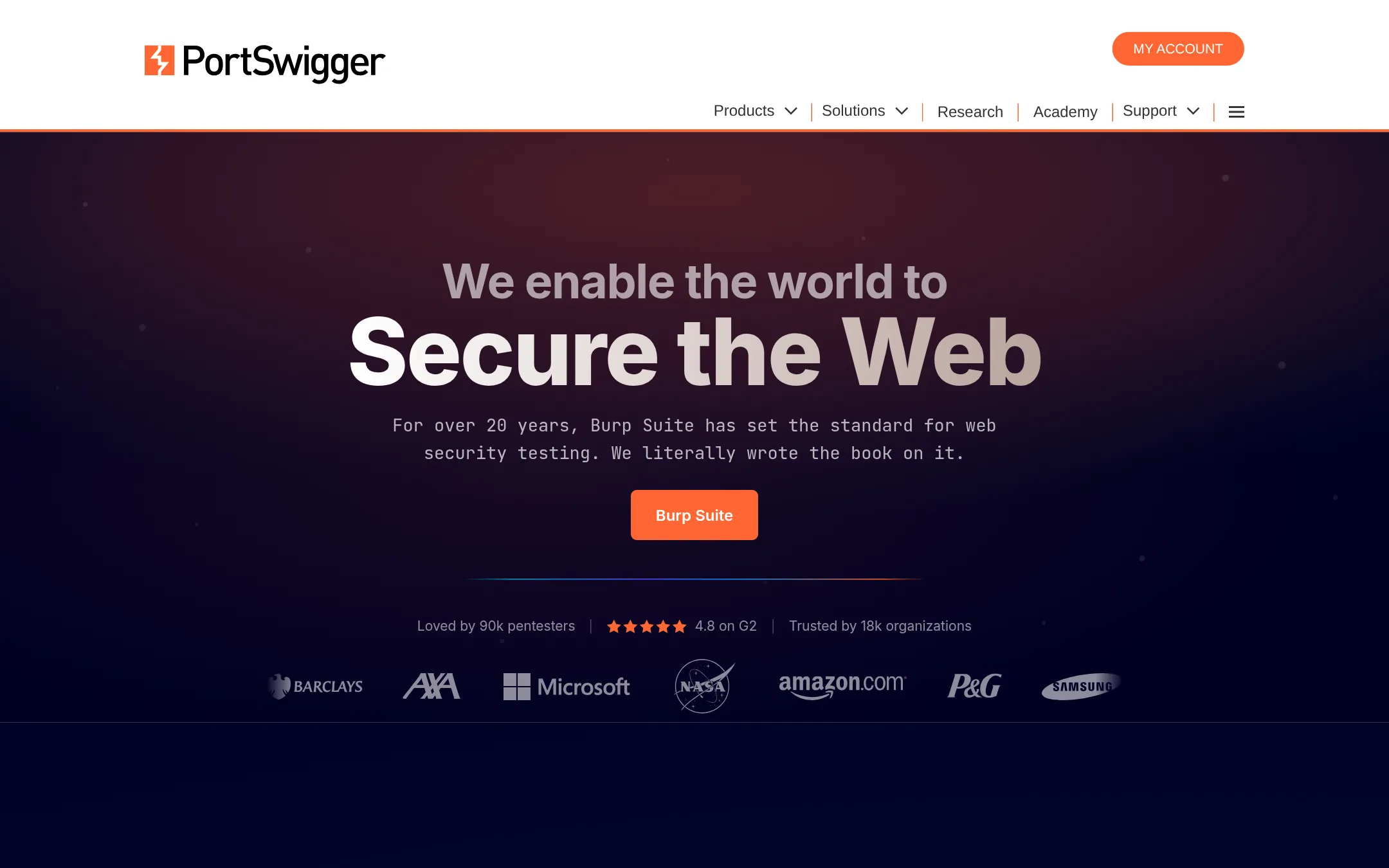
Burp Suite is a long-standing toolkit for web security testing, used mainly by pentesters and hands-on security professionals. Teams pick it over Escape when they want manual, hands-on testing with a mature extension ecosystem, or when they need scalable automated scanning that runs in CI for AppSec and DevOps teams.
Where it is strong
- Long track record, with over 20 years on the market and wide use across security teams
- Extensible through a community of extensions and tooling
- Free web security training through the Web Security Academy
Where it falls short
- Its core strength is hands-on testing, so it is less of an always-on, business-logic-aware platform than Escape
- The site does not show clear pricing, so cost has to be checked with the vendor
- Pricing:
- Pricing is not published on the site.
- Switching from Escape:
- The site does not describe the migration steps from Escape, so the effort involved is unclear from the available facts.
- INot published
2.Invicti
Best for: Enterprise AppSec teams in regulated sectors that want DAST, SAST, SCA and vulnerability management consolidated in one platform
- Pricing
- Not published
- Category
- Other
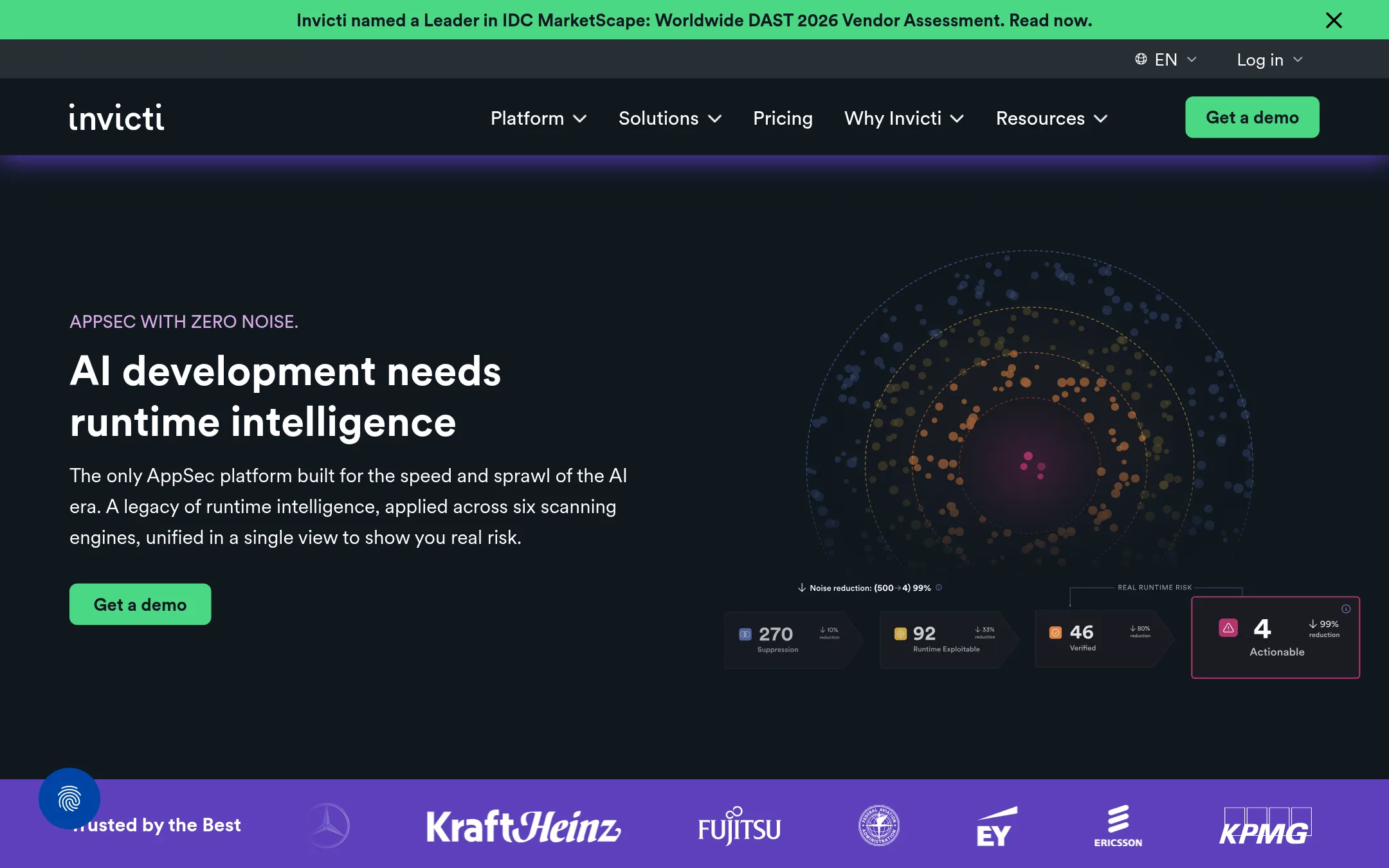
Invicti is an application security platform built around a DAST engine that scans running web apps and APIs and checks findings with proof-based validation. It adds SAST, SCA, secrets, IaC and container scanning, and an agentic pentest option for a single application. A team would pick Invicti over Escape when it wants one vendor covering code, runtime and supply chain security, or a fixed-scope agentic pentest of one app delivered in about a day.
Where it is strong
- Agentic Pentest is listed at up to $500 per pentest with audit-ready PDF reports and delivery within 24 hours
- Covers code, runtime, supply chain, secrets and IaC in one platform through the AppSec Core package
- Offers proof-of-concept licenses so a team can evaluate it in its own environment before buying
Where it falls short
- Escape's focus on business-logic-aware DAST is not described as a headline capability here, so teams chasing that specific feature should co
- The site lists a broader package set with several tiers, which makes the buying decision heavier than a single-product purchase
- Pricing:
- Pricing is not published on the site.
- Not published
3.Snyk
Best for: Engineering teams that want SCA, SAST and container scanning inside their IDE and CI pipeline, especially teams using AI coding assistants

- Pricing
- Not published
- Category
- Security & Privacy
Snyk is a developer security platform that scans source code, open source dependencies, containers and infrastructure as code, and now adds agent governance and AI pentesting. Teams choose it over Escape when they want security checks built into IDEs, CI pipelines and AI coding assistants, mainly to catch issues in dependencies and code before release. Escape focuses on dynamic testing of running applications and business logic, so Snyk is the better fit when code and supply chain coverage matter most.
Where it is strong
- Scans code, dependencies, containers and infrastructure as code in one platform
- Free tier for individuals and small teams, with a Team plan at $25 per month
- Integrates with IDEs, CLIs, source code managers, CI/CD pipelines and AI coding assistants such as Claude Code, Cursor and Codex
Where it falls short
- Evo capabilities such as AI Pentesting are not available on the Free or Team plans and need an Enterprise subscription
- Enterprise pricing uses a credit system that is harder to estimate than a flat rate
- Pricing:
- Pricing is not published on the site.
- Custom quote
4.Checkmarx
Best for: Engineering-led enterprises that need one AppSec platform covering code, open source, containers and AI components across the SDLC
- Pricing
- Custom quote
- Category
- Security & Privacy
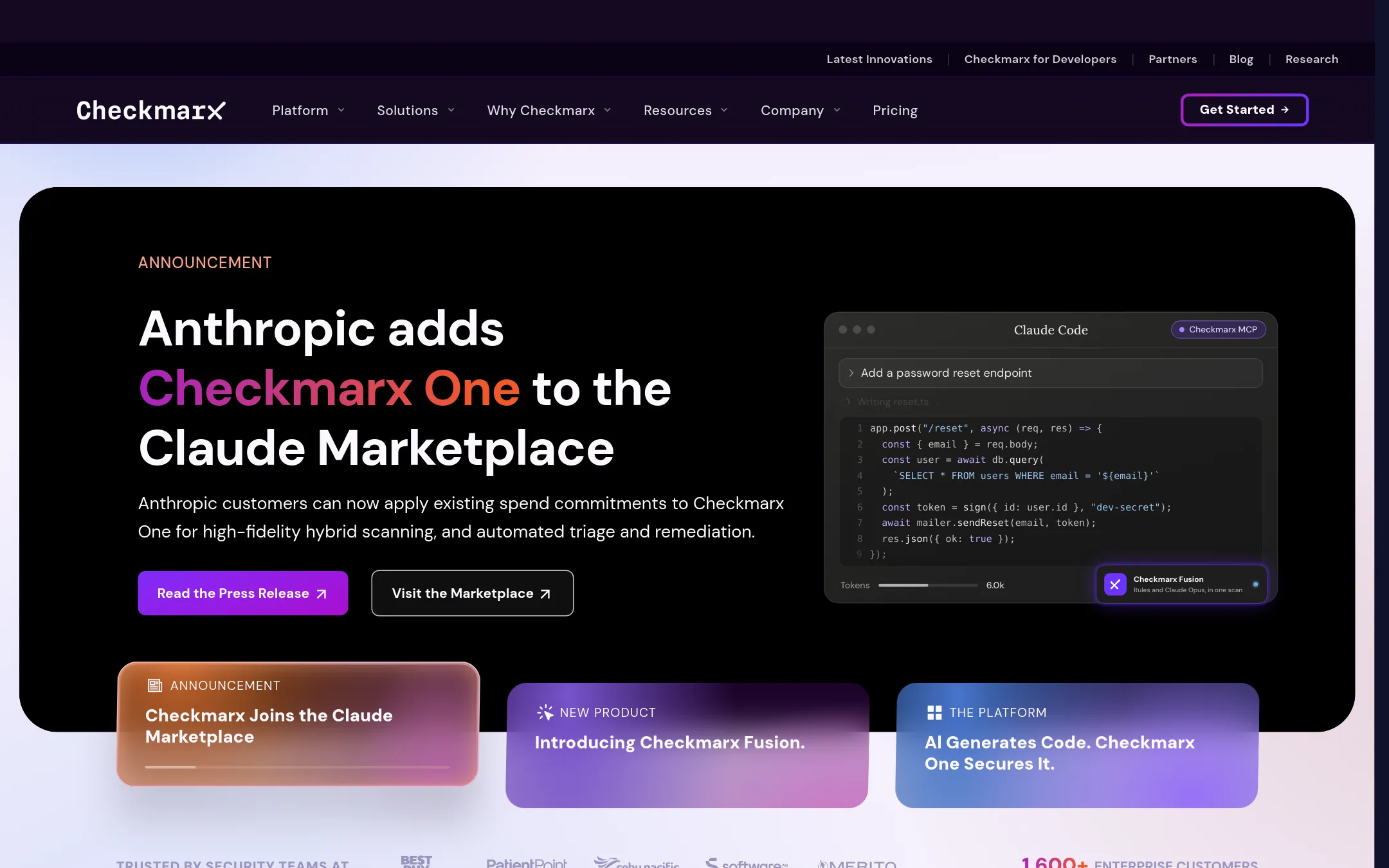
Checkmarx is a unified application security platform that combines static analysis (SAST), software composition analysis, secrets detection, IaC and API security, and AI supply chain governance in one product. It also offers DAST that tests running apps and APIs. Teams pick it over Escape when they want a broad AppSec suite covering code, dependencies, containers and AI components rather than a focused business-logic DAST.
Where it is strong
- Covers SAST, SCA, secrets, IaC, API security and container scanning in one platform
- Packages are tiered from Essentials to Enterprise, so teams can start with core coverage
- Includes an AI inventory and governance layer for models, MCP servers and agents
Where it falls short
- Pricing depends on modules, deployment model and developer count, so budgeting takes a sales conversation
- Its DAST is one module within a broad suite, not a focus on business-logic testing as Escape is
- Pricing:
- Pricing is not published on the site.
- Switching from Escape:
- Moving from Escape to Checkmarx would mean setting up a new platform and quoting modules around your environment, since the site does not publish migration steps.
- ANot published
5.Akto
Best for: Security teams at large companies that need to find and control AI agents and MCP tools employees run on their laptops and in production.
- Pricing
- Not published
- Category
- Other
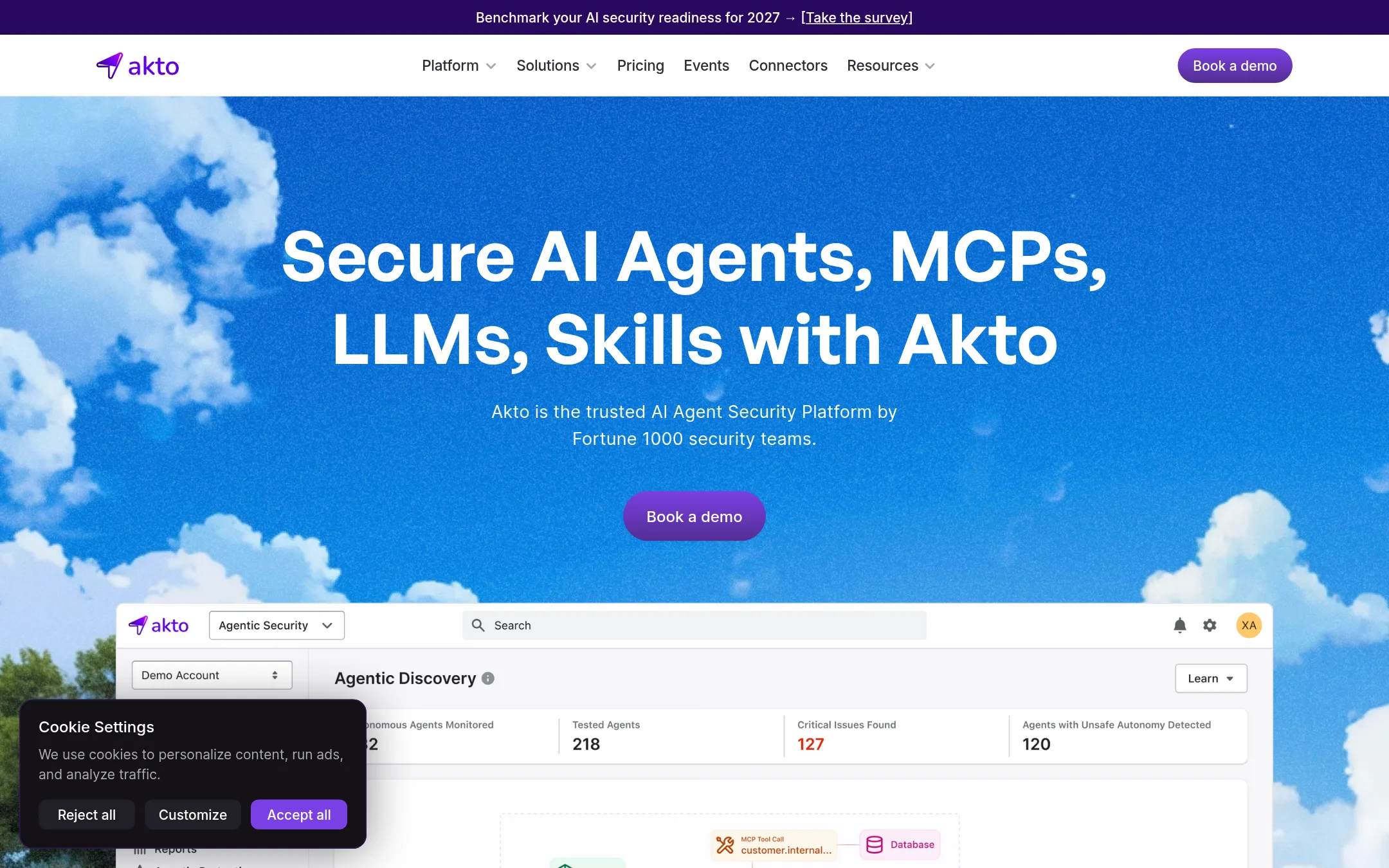
Akto discovers and inventories AI agents, MCP servers and tools across cloud infrastructure and employee devices, then runs red teaming and enforces guardrails on them. Teams pick it over Escape when their main concern is AI agent and MCP exposure rather than classic web application testing. Escape focuses on business-logic-aware DAST for applications and APIs, so Akto fits better when the attack surface is the AI layer itself.
Where it is strong
- Discovers MCP servers, AI agents and tools across infrastructure, cloud and employee laptops.
- Enforces guardrails on AI tool use at the endpoint, with options to block, redact or warn in real time.
- Maps compliance records to frameworks such as the EU AI Act, OWASP and MITRE ATLAS.
Where it falls short
- Its public material centres on AI agent security, so it covers less of the classic web and API DAST work Escape is built for.
- The site lists pricing only as usage-based with a contact-sales path, so budgeting needs a quote.
- Pricing:
- Pricing is not published on the site.
- Not published
6.Salt Security
Best for: Global enterprises whose AI agents and MCP servers call internal APIs and need discovery and runtime protection across that path
- Pricing
- Not published
- Category
- Security & Privacy
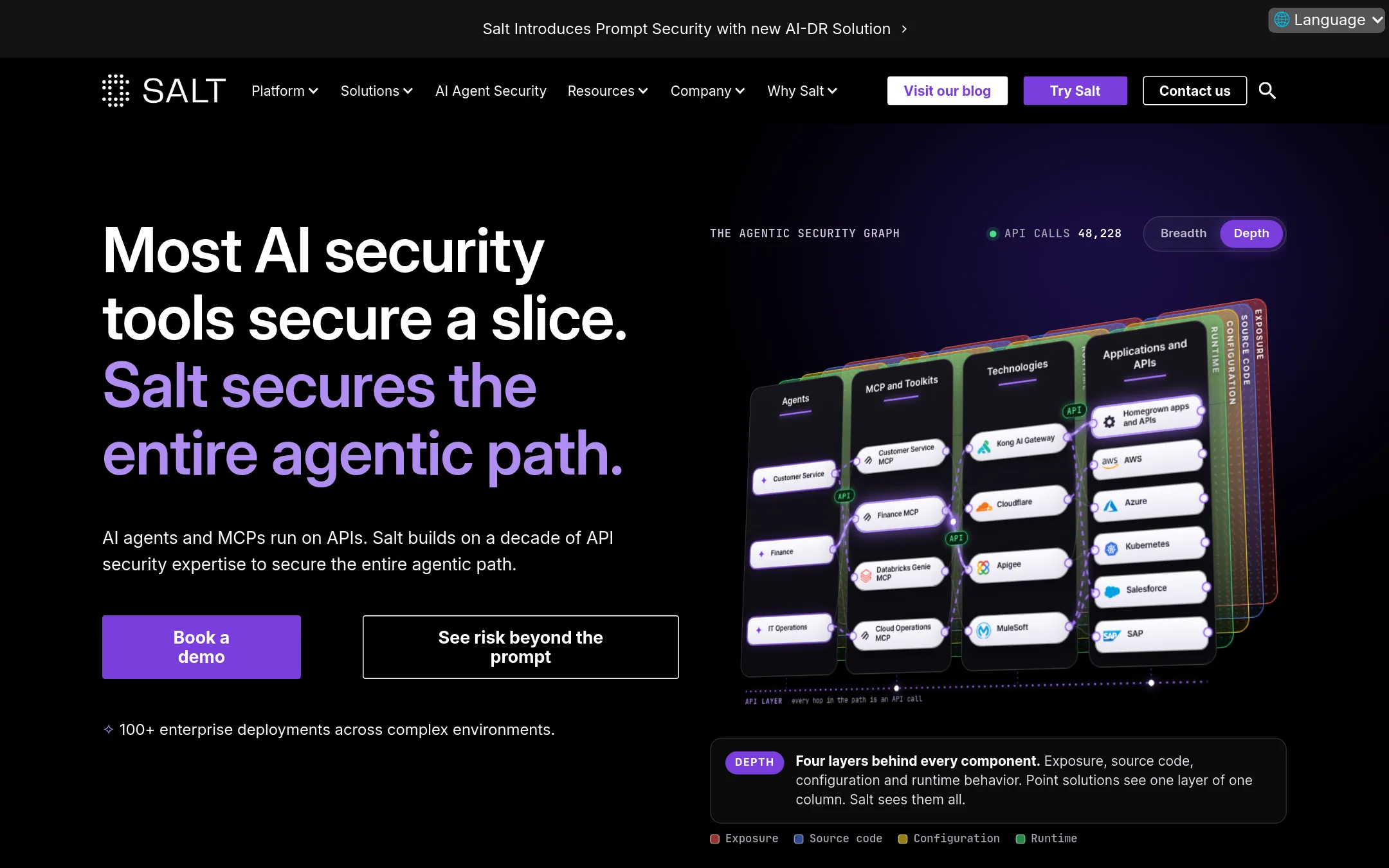
Salt Security secures APIs and now AI agents and MCP servers that call them. It discovers agents, MCP servers and APIs, maps how risk moves across the path from prompt to backend system, and blocks abuse at runtime. A team would pick Salt over Escape when its main worry is the API and agent layer, such as unknown MCP servers or agents reaching internal APIs, rather than offensive testing of business logic.
Where it is strong
- Agentless discovery finds agents, MCP servers and APIs that teams may not have inventoried
- Works through gateways, WAFs and SOC tools already in place, with 40+ listed integrations
- Covers the full agentic path, from prompt and MCP layer down to the downstream API and data
Where it falls short
- Focused on APIs and agent traffic, so it does not position itself as a business logic pentesting tool like Escape
- Aimed at enterprise deployments, with 100+ enterprise customers cited and no self-serve option shown
- Pricing:
- Pricing is not published on the site.
See more comparisons in Security & Privacy alternatives.
FAQ
Questions about Escape alternatives
Which alternative is best if my main concern is AI agents and MCP servers?
Salt Security and Akto both focus on this area. Salt Security discovers agents, MCP servers and APIs and blocks abuse at runtime, and it is aimed at global enterprises. Akto inventories AI agents and MCP tools across cloud and employee devices and enforces guardrails on them.
Which option fits a team that wants security checks inside its IDE and CI pipeline?
Snyk fits this case best. It scans source code, open source dependencies, containers and infrastructure as code, and integrates with IDEs, CI/CD pipelines and AI coding assistants. It offers a free tier for individuals and small teams, with a Team plan at $25 per month.
Which alternative covers the widest range of application security in one platform?
Checkmarx and Invicti both cover broad ground. Checkmarx combines SAST, software composition analysis, secrets detection, IaC, API security and AI governance. Invicti combines DAST, SAST, SCA, secrets, IaC and container scanning, and adds an agentic pentest option.
Is there a low-cost way to try a pentest before committing to a platform?
Invicti lists its Agentic Pentest at up to $500 per pentest, with audit-ready PDF reports and delivery within 24 hours. It also offers proof-of-concept licenses for evaluation in your own environment. Burp Suite is a long-established option for hands-on manual testing, though its site does not show clear pricing.
Why would someone choose a tool other than Escape for business-logic testing?
Business-logic testing is Escape's stated focus, and none of the alternatives present it as their headline capability. Teams that need code, dependency or AI-layer coverage more than running-application logic tests may prefer Snyk, Checkmarx, Salt Security or Akto. Pricing for most of these is not published, so the choice may also depend on what a quote shows.
Last updated November 9, 2026.