
Firebase alternatives
12 products compared · Updated October 30, 2026
The short answer
The strongest Firebase alternatives are Supabase for teams that want a Postgres database with SQL and open-source flexibility, SuperTokens for those needing self-hostable authentication with predictable pricing, and Appwrite for teams that want a self-hostable backend with dedicated database tiers. Each suits different priorities: Supabase for relational data, SuperTokens for auth control, and Appwrite for bundled backend services.
Your shortlist, at a glance
Read the comparisons ↓ SupabaseFrom $25/mo + usageTeams building Postgres-backed apps who want auth, storage, and realtime without assembling separate services.
 Amazon BusinessNot publishedCompanies that need to manage purchasing of office supplies, MRO items, and other business goods with approval controls and spend reporting.
 Back4appNot publishedTeams building apps quickly with Parse or wanting a low-code backend with MongoDB and auto-generated APIs.
 Parse PlatformNot publishedStartups that want an open-source, self-hosted backend with MongoDB or PostgreSQL and complete data ownership.
 AppwriteNot publishedTeams that want an open-source, self-hostable backend with predictable dedicated database pricing and built-in AI agent tooling.
NhostFree / $25/mo / $599/mTeams building production apps that need a Postgres database, real-time GraphQL, and serverless functions without managing infrastructure.
 Heroic LabsFrom $600/mo (Satori)Game studios building social or multiplayer games on mobile, console, PC, or VR who need a dedicated game backend and LiveOps platform.
 OneSignalFree. From $19/moMobile and web app teams that need advanced push and messaging automation without building their own engagement infrastructure.
 RunwayNot publishedMobile engineering teams that want to automate release workflows and get full visibility into every step of the release process.
SuperTokensFrom $100/moStartups and enterprises that want open-source, self-hostable authentication with predictable pricing and advanced features like multi-tenancy.
 AWS ParallelClusterPay-as-you-goResearch teams and engineers running HPC workloads like molecular dynamics, weather modeling, or financial risk simulations on AWS.
 BitriseNot publishedMobile engineering teams that need fast, reliable CI/CD pipelines for iOS and Android apps.
About Firebase and its alternatives
Firebase is Google's mobile and web app development platform for building scalable apps and games. It is known for its managed backend services including authentication, Firestore database, cloud functions, hosting, and analytics, all integrated with Google Cloud and AI tools.
When comparing alternatives, weigh pricing structure (free tiers, per-MAU costs, overages), regions and data residency, integrations with your existing tools, support options, and contract terms like minimums or self-hosting options. These factors determine total cost and fit for your team.
Explore the alternatives
- From $25/mo + usage
1.Supabase
Best for: Teams building Postgres-backed apps who want auth, storage, and realtime without assembling separate services.
- Pricing
- From $25/mo + usage
- Category
- Developer Tools
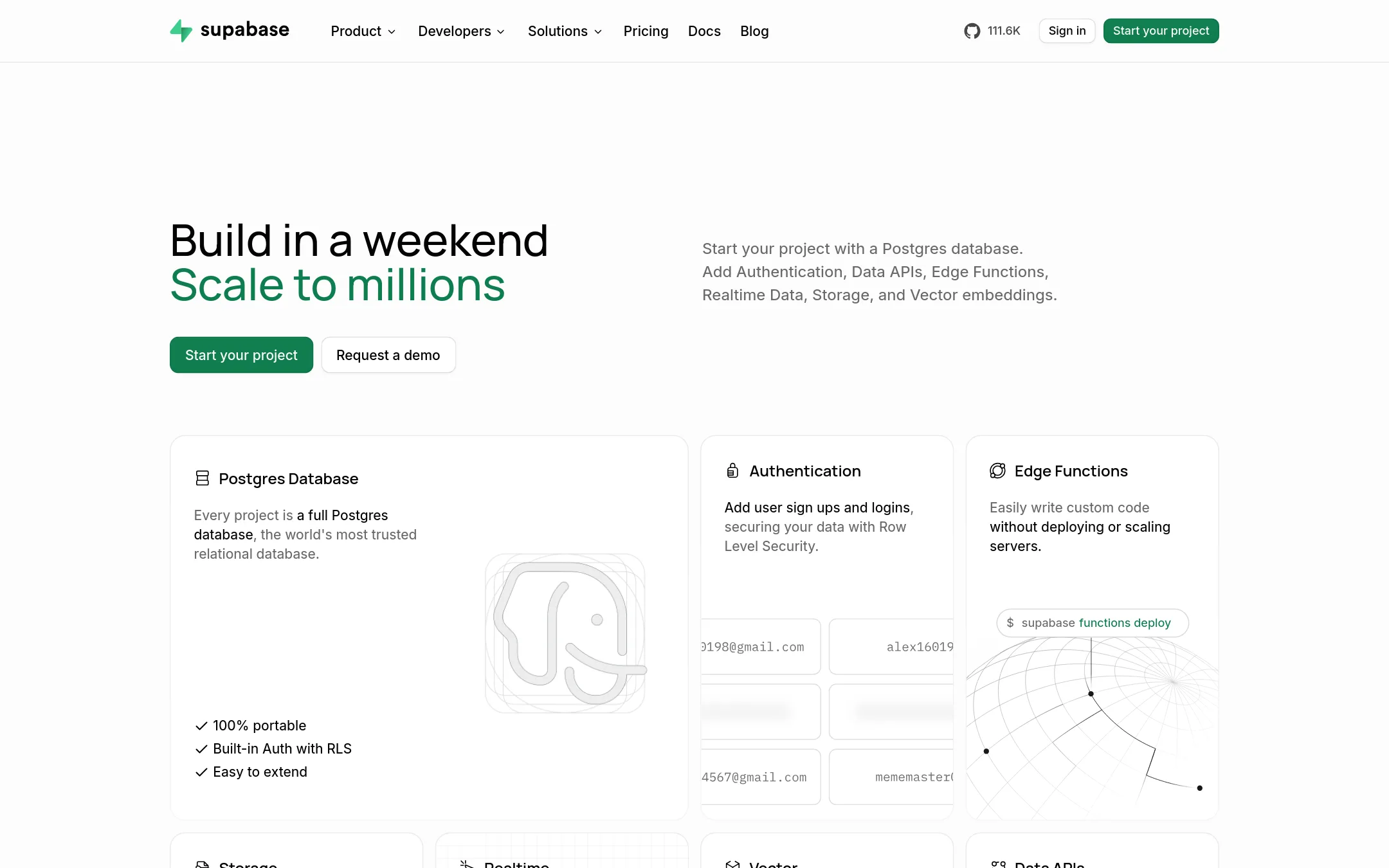
Supabase is a Postgres-based platform that bundles database, auth, storage, and realtime into one product. Choose it over Firebase when you want a relational database and SQL from the start, or when you prefer open-source tools you can self-host.
Where it is strong
- Full Postgres database with SQL and Row Level Security
- Generous free tier with 50K MAUs and 500 MB storage
- Open-source and can be self-hosted
Where it falls short
- No built-in analytics or crash reporting like Firebase
- Free projects pause after 1 week of inactivity
- Pricing:
- Free plan includes 500 MB database and 50,000 monthly active users. Pro starts at $25/month with 100,000 MAUs and 8 GB disk. Team is $599/month. Enterprise is custom.
- Switching from Firebase:
- Moving from Firebase means migrating data to Postgres and rewriting queries, but Supabase offers a Firebase-to-Supabase migration guide.
- Not published
2.Amazon Business
Best for: Companies that need to manage purchasing of office supplies, MRO items, and other business goods with approval controls and spend reporting.

- Pricing
- Not published
- Category
- E-commerce
Amazon Business is a procurement platform for buying supplies and equipment, not a backend for building apps. You would choose it instead of Firebase if you are purchasing goods for your company and need approval workflows, spend analytics, and bulk discounts, not if you are developing software.
Where it is strong
- Wide product selection with quantity discounts and case packs.
- Approval workflows and centralized purchasing controls.
- Spend analytics with pre-built and custom reports.
Where it falls short
- Not a development platform. No APIs for app logic or data storage.
- Pricing details are not publicly listed. Requires contacting sales.
- Pricing:
- Pricing is not published on the site.
- Not published
3.Back4app
Best for: Teams building apps quickly with Parse or wanting a low-code backend with MongoDB and auto-generated APIs.
- Pricing
- Not published
- Category
- Other
Back4app is a low-code backend platform that provides managed MongoDB, authentication, cloud functions, and real-time sync. You might choose it over Firebase if you want a Parse-based backend with a spreadsheet-like data UI and easy web deployment from GitHub.
Where it is strong
- Managed MongoDB with real-time sync and geo-queries
- Auto-generated REST and GraphQL APIs for every class
- Web deployment with CI/CD from GitHub
Where it falls short
- Pricing details are not transparent on the site
- Tied to Parse ecosystem, which may limit flexibility compared to Firebase
- Pricing:
- Pricing is not published on the site. It says plans range from free for prototyping to dedicated for production, but no numbers are shown.
- Switching from Firebase:
- Moving from Firebase involves migrating data models and rewriting backend logic to Parse, since Back4app uses Parse Server and MongoDB instead of Firestore.
- Not published
4.Parse Platform
Best for: Startups that want an open-source, self-hosted backend with MongoDB or PostgreSQL and complete data ownership.
- Pricing
- Not published
- Category
- Other
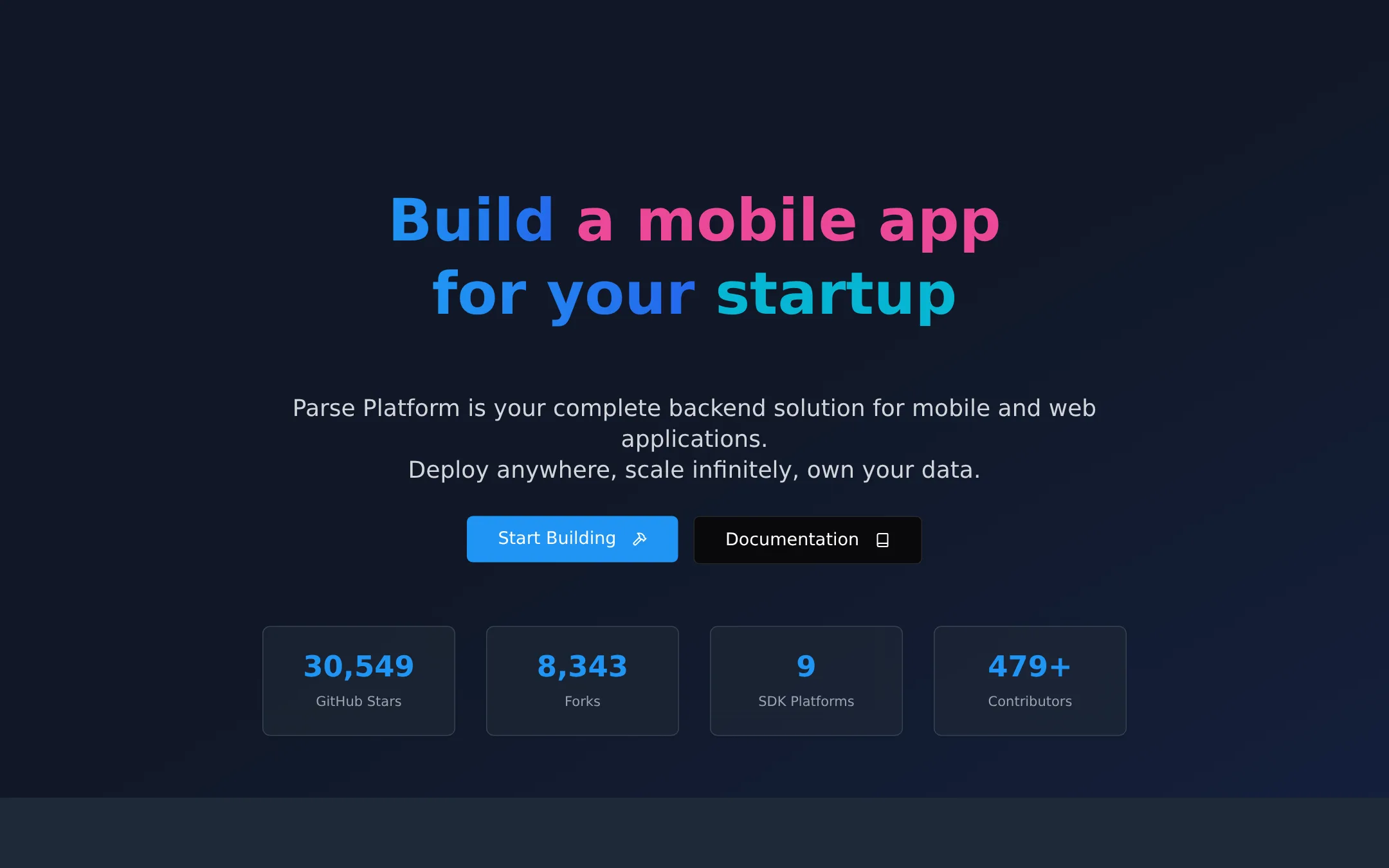
Parse Platform is an open-source backend that you self-host on any Node.js infrastructure, giving you full control over your data and deployment. Choose it over Firebase if you want to avoid vendor lock-in, need to run the backend on your own servers, or want MongoDB or PostgreSQL instead of Firestore.
Where it is strong
- Self-host on any Node.js infrastructure, so no vendor lock-in.
- Supports MongoDB and PostgreSQL with flexible file storage (S3, GCS, local).
- Includes REST and GraphQL APIs, live queries, push notifications, and a dashboard.
Where it falls short
- You handle hosting, scaling, and maintenance yourself.
- No managed infrastructure like Firebase's, so more operational work.
- Pricing:
- Pricing is not published on the site.
- Switching from Firebase:
- Moving from Firebase means rewriting data models and API calls, since Parse uses its own schema and SDKs, and you must set up and maintain your own server.
- Not published
5.Appwrite
Best for: Teams that want an open-source, self-hostable backend with predictable dedicated database pricing and built-in AI agent tooling.
- Pricing
- Not published
- Category
- Developer Tools
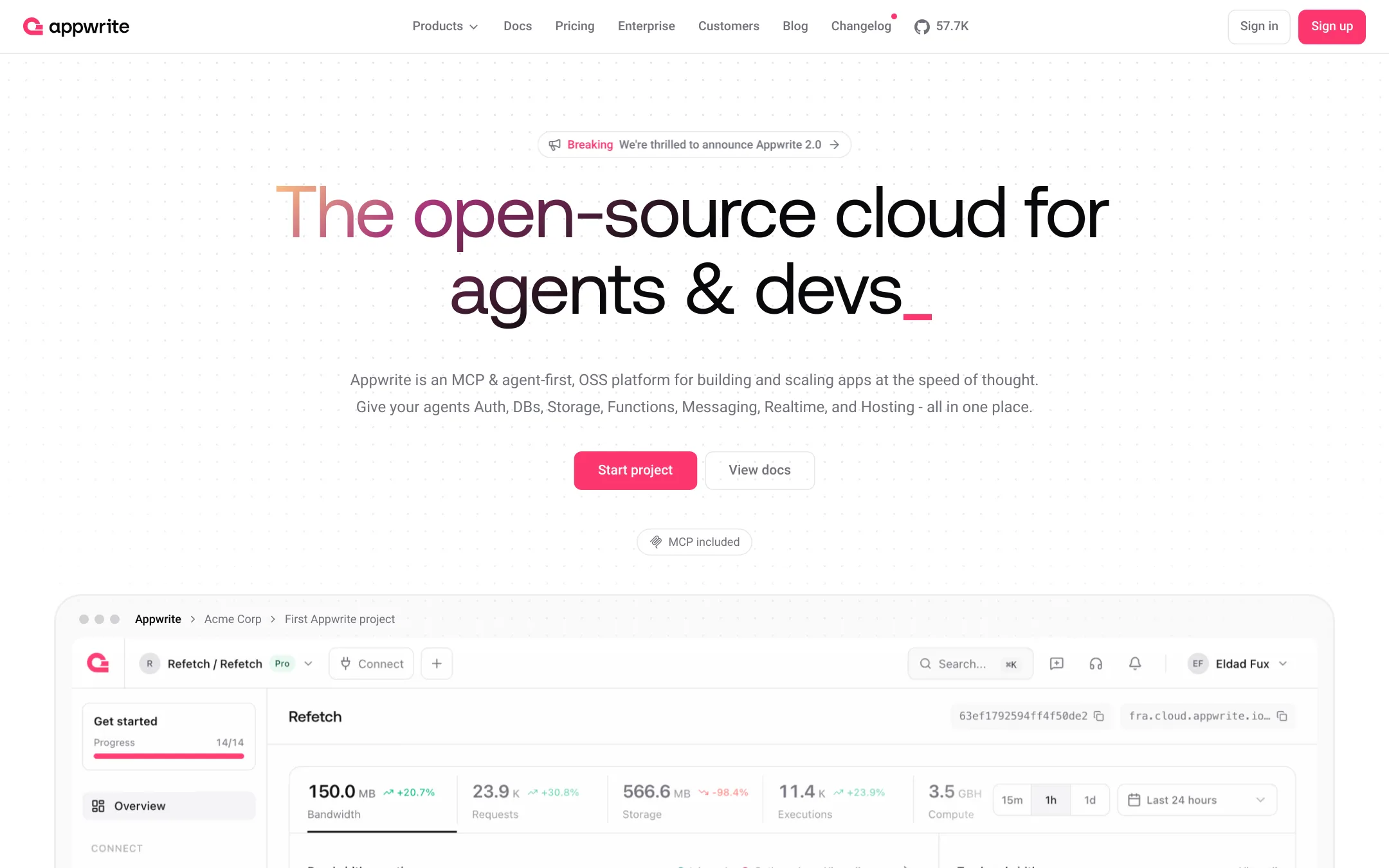
Appwrite is an open-source backend platform that bundles Auth, Databases, Storage, Functions, Messaging, and Hosting into one subscription. Choose it over Firebase if you want a self-hostable option with dedicated database compute tiers and a strong focus on AI agent integrations.
Where it is strong
- Open-source and self-hostable
- Dedicated database tiers from $10/mo
- Includes Auth, DB, Storage, Functions, Messaging, and Hosting
Where it falls short
- Pricing details not fully public
- Smaller ecosystem than Firebase
- Pricing:
- Pricing is not published on the site.
- Free / $25/mo / $599/m
6.Nhost
Best for: Teams building production apps that need a Postgres database, real-time GraphQL, and serverless functions without managing infrastructure.
- Pricing
- Free / $25/mo / $599/m
- Category
- Other
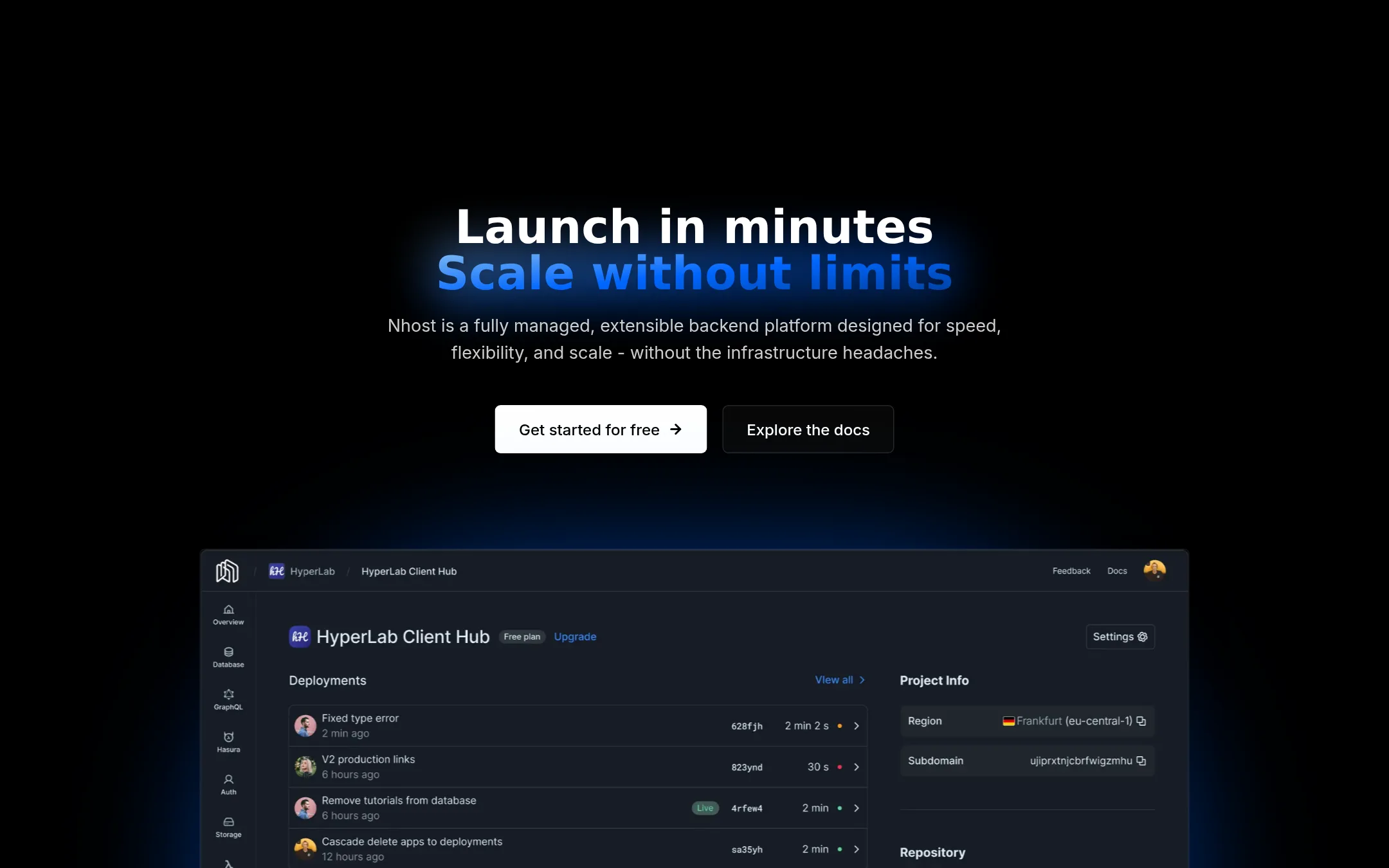
Nhost is a managed backend platform built on Postgres, GraphQL, Auth, Storage, and serverless Functions. Choose it over Firebase if you want a SQL database with a GraphQL API and prefer to avoid Google Cloud's ecosystem.
Where it is strong
- Uses Postgres, so you get a familiar SQL database with full relational power.
- GraphQL API with realtime subscriptions and event triggers built in.
- Includes auth, storage, and serverless functions in one platform.
Where it falls short
- No native mobile SDKs for iOS/Android. You build your own client layer.
- Free tier limits you to one active project and 1 GB database size.
- Pricing:
- Starter is free forever, Pro starts at $25/month, Team is $599/month, and Enterprise is custom.
- Switching from Firebase:
- Moving from Firebase means rewriting data access to SQL/GraphQL and re-implementing auth and storage logic, since Nhost uses different APIs and schemas.
- From $600/mo (Satori)
7.Heroic Labs
Best for: Game studios building social or multiplayer games on mobile, console, PC, or VR who need a dedicated game backend and LiveOps platform.
- Pricing
- From $600/mo (Satori)
- Category
- Media & Entertainment
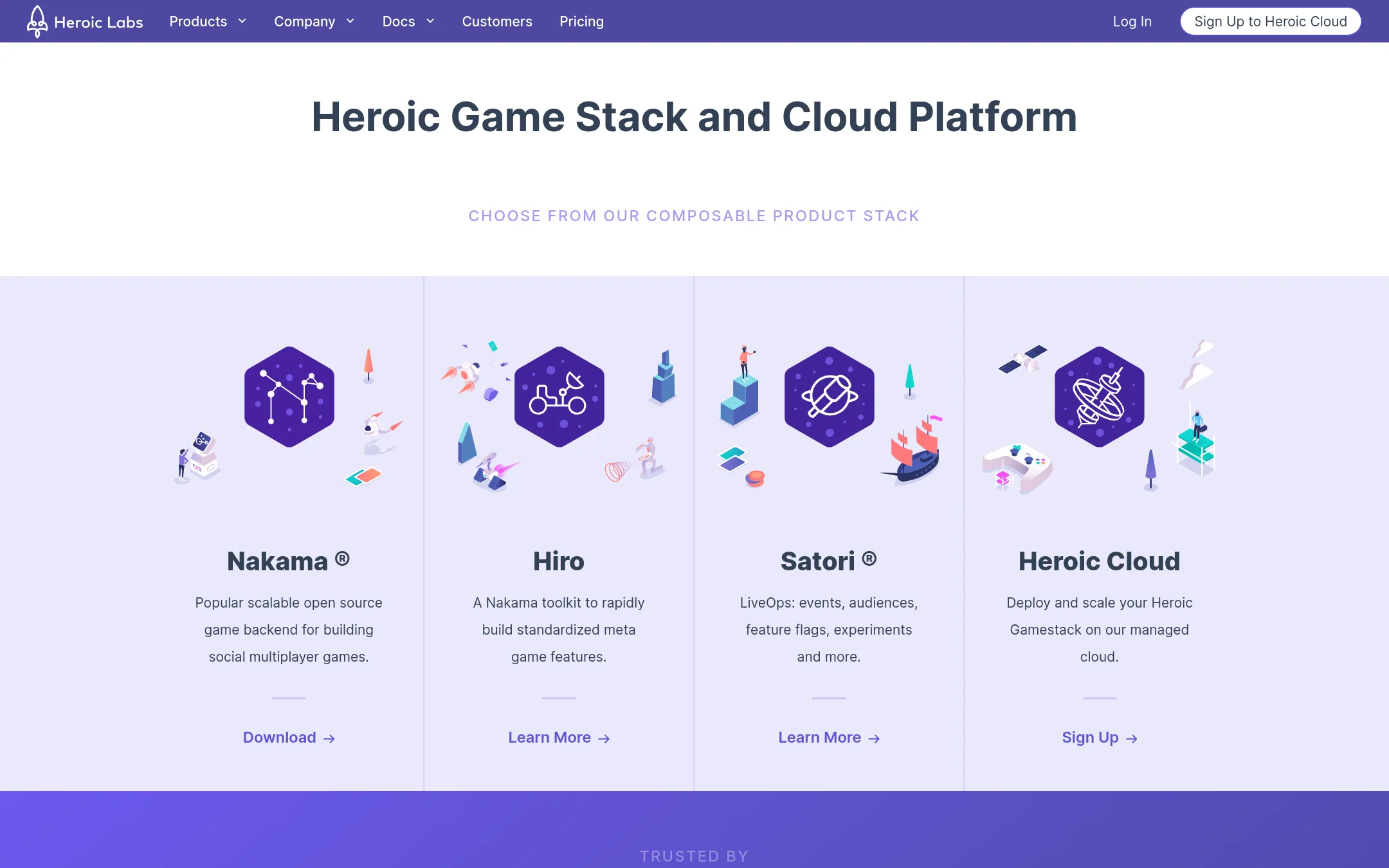
Heroic Labs builds backend infrastructure specifically for multiplayer games, with Nakama as an open-source game server and Satori for LiveOps. Choose it over Firebase when you need server-authoritative gameplay, real-time multiplayer, and game-specific features like economies and LiveOps events that Firebase doesn't provide.
Where it is strong
- Open-source Nakama backend with no DAU/MAU/CCU limits on Heroic Cloud
- SOC 2 Type II certified with enterprise security controls
- Composable stack: Nakama, Satori, Hiro, and Heroic Cloud
Where it falls short
- Pricing for Nakama on Heroic Cloud is not published. Requires contacting sales
- Designed for games, not general app development like Firebase
- Pricing:
- Satori on Heroic Cloud starts from $600/month. Nakama on Heroic Cloud pricing is not published on the site.
- Switching from Firebase:
- Moving from Firebase to Heroic Labs means rearchitecting your backend around Nakama's game-specific APIs and runtime, which is a significant migration for non-game apps.
- Free. From $19/mo
8.OneSignal
Best for: Mobile and web app teams that need advanced push and messaging automation without building their own engagement infrastructure.
- Pricing
- Free. From $19/mo
- Category
- Marketing & Sales
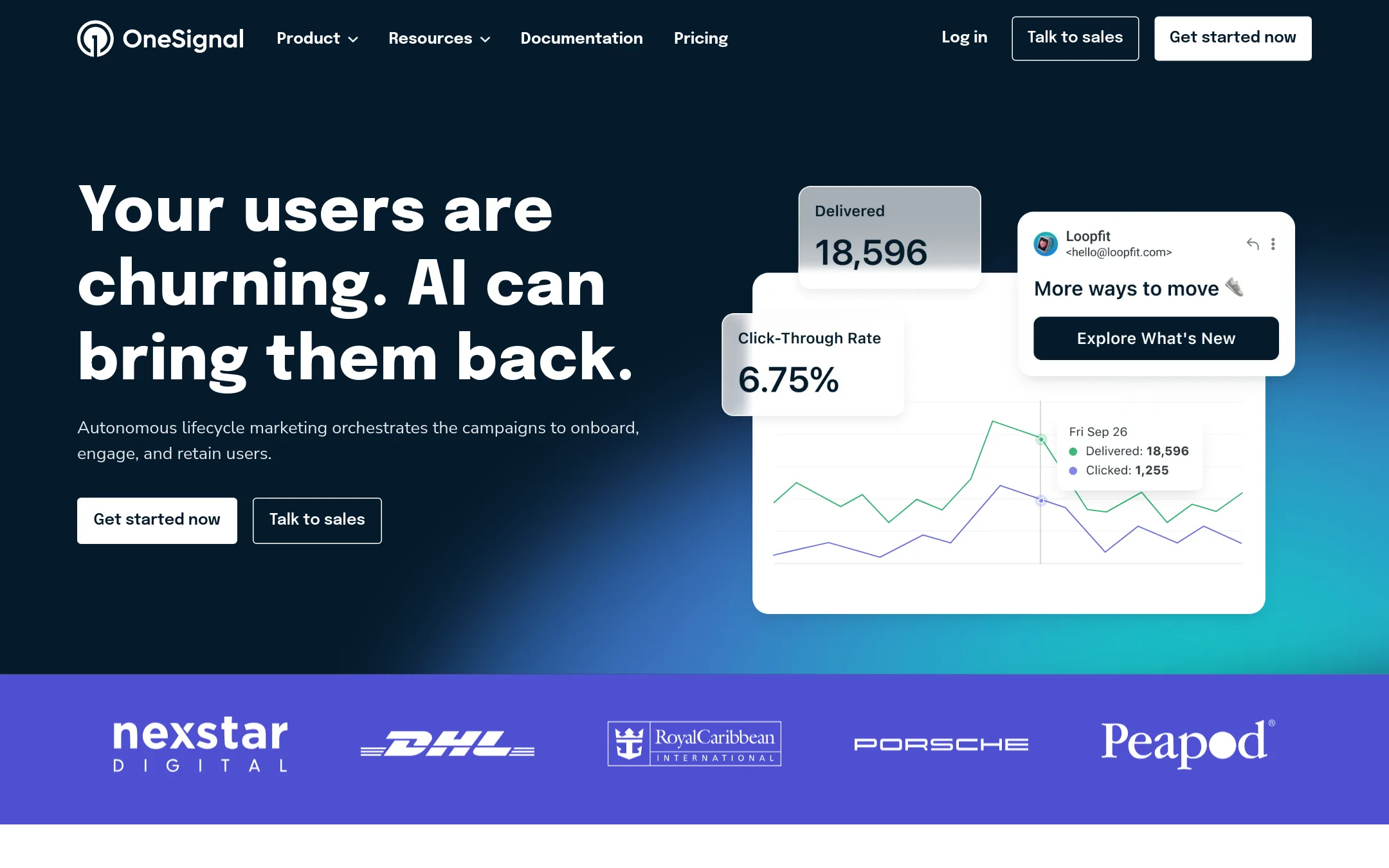
OneSignal is a customer engagement platform for push notifications, email, SMS, and in-app messaging, with AI-driven lifecycle marketing. Choose it over Firebase when your primary need is cross-channel user engagement and retention, not app backend services.
Where it is strong
- AI-powered lifecycle marketing automates onboarding, engagement, and retention campaigns.
- Supports push, email, SMS, and in-app messaging from one SDK.
- Free tier includes 10,000 email sends and 1,000 MAUs for push.
Where it falls short
- Not a backend platform. You still need Firebase or similar for auth, database, and hosting.
- SMS/RCS pricing requires contacting sales, and advanced features like dedicated IPs are volume-based.
- Pricing:
- Free plan includes 10,000 email sends/month and mobile push for up to 1,000 monthly active users. Growth starts at $19/mo with 500k emails and $0.012 per MAU for push. Professional and Enterprise are custom-priced.
- Switching from Firebase:
- Moving from Firebase Cloud Messaging to OneSignal involves replacing FCM calls with OneSignal SDKs and migrating your audience segments and message templates.
- Not published
9.Runway
Best for: Mobile engineering teams that want to automate release workflows and get full visibility into every step of the release process.
- Pricing
- Not published
- Category
- Developer Tools
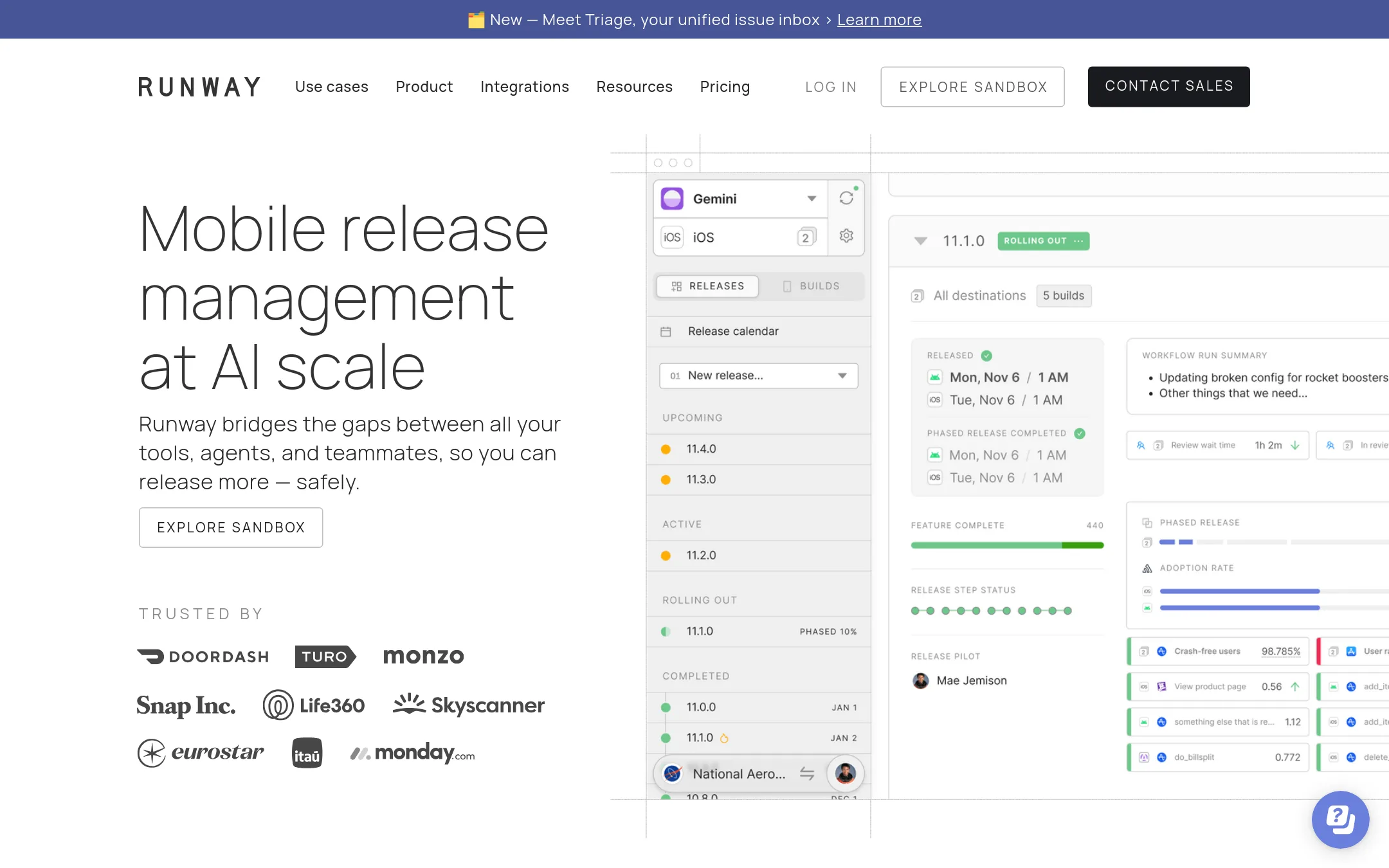
Runway is a mobile release management platform that automates and tracks the entire release cycle, from build to rollout. Choose it over Firebase when your team's bottleneck is shipping iOS and Android apps reliably, not building backend features.
Where it is strong
- Automates release steps so anyone on the team can run a release
- Tracks release health and catches issues before they reach users
- Integrates with your existing cloud tools and automations
Where it falls short
- No public pricing, so you must contact sales for a quote
- Focused only on mobile releases, not broader app development like Firebase
- Pricing:
- Pricing is not published on the site.
- From $100/mo
10.SuperTokens
Best for: Startups and enterprises that want open-source, self-hostable authentication with predictable pricing and advanced features like multi-tenancy.
- Pricing
- From $100/mo
- Category
- Security & Privacy
SuperTokens is an open-source authentication provider that you can self-host for free or use as a managed service. Choose it over Firebase Auth when you need full control over your auth infrastructure, want to avoid per-MAU costs at scale, or require features like multi-tenancy and M2M auth that Firebase lacks.
Where it is strong
- Self-hostable open source core, free at any scale
- Predictable per-MAU pricing with no surprise overages
- Includes MFA, RBAC, and multi-tenancy as paid add-ons
Where it falls short
- Managed service has a $100/month minimum, not ideal for tiny projects
- No built-in analytics or crash reporting like Firebase
- Pricing:
- Self-hosting the open source features is free without limits. Managed service starts at $100/month for up to 4,999 MAUs, then $0.02 per MAU plus $0.005 per MAU for account linking. MFA is $0.01 per MAU with a $100/month minimum. Dashboard users beyond 3 free a
- Switching from Firebase:
- Migrating from Firebase Auth involves re-implementing your auth flows and session handling, but SuperTokens provides prebuilt UI and SDKs to speed up the process.
- Pay-as-you-go
11.AWS ParallelCluster
Best for: Research teams and engineers running HPC workloads like molecular dynamics, weather modeling, or financial risk simulations on AWS.
- Pricing
- Pay-as-you-go
- Category
- Developer Tools
AWS ParallelCluster is a managed service for building and running high-performance computing clusters on AWS. You would choose it over Firebase when you need to run large-scale scientific or engineering simulations that require tightly coupled compute nodes, not when you're building a typical mobile or web app.
Where it is strong
- Scales to thousands of compute nodes for parallel workloads
- Integrates with AWS services like EC2, S3, and Batch
- Supports common schedulers like Slurm and SGE
Where it falls short
- No built-in mobile or web SDKs, unlike Firebase
- Requires AWS expertise to set up and manage the cluster
- Pricing:
- Pricing is not published on the site. You pay only for the underlying AWS resources you use, such as EC2 instances and storage.
- Not published
12.Bitrise
Best for: Mobile engineering teams that need fast, reliable CI/CD pipelines for iOS and Android apps.
- Pricing
- Not published
- Category
- Developer Tools
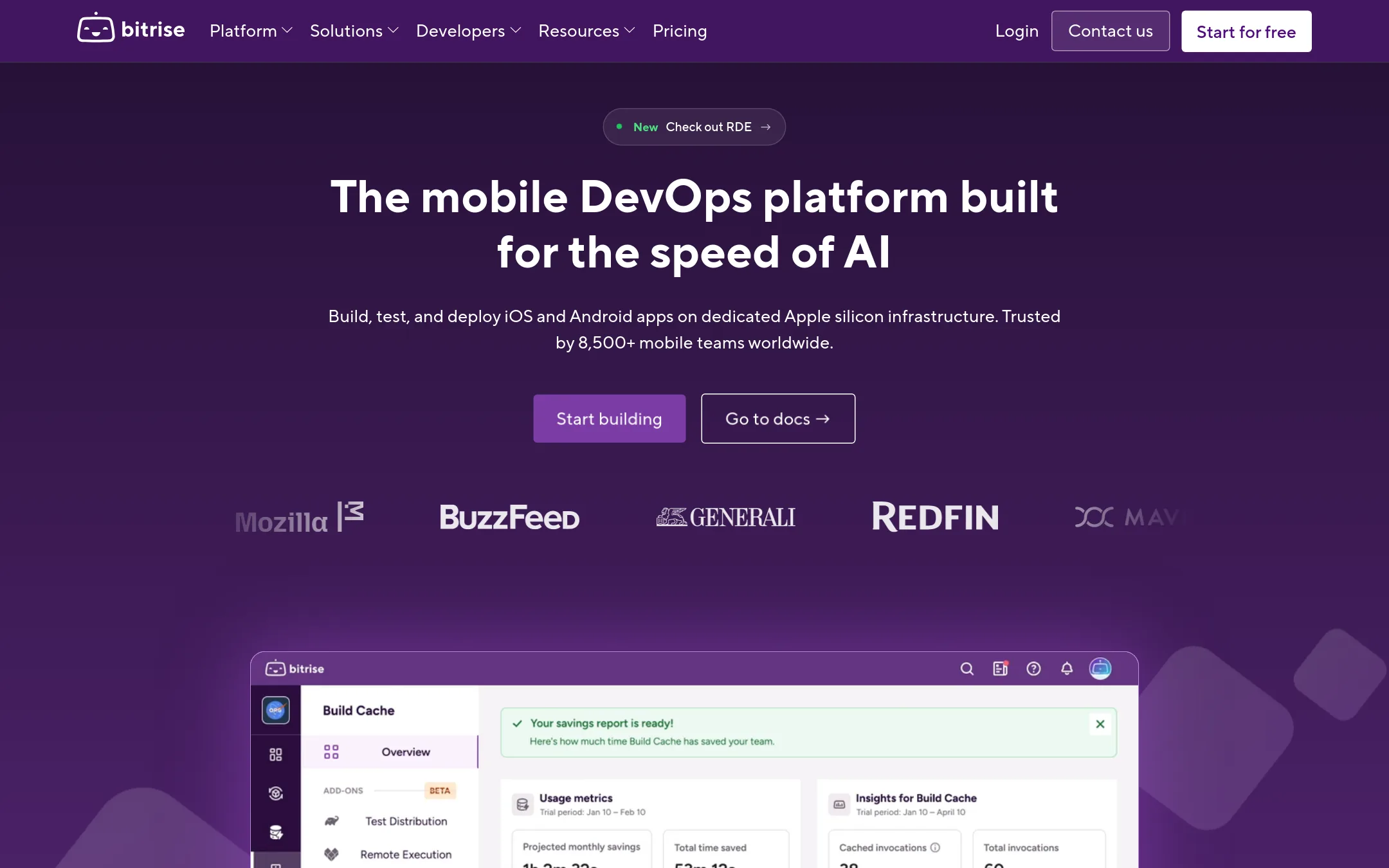
Bitrise is a hosted CI/CD platform built specifically for mobile app development. Choose it over Firebase when your main need is automating builds, tests, and releases for iOS and Android, rather than Firebase's backend services like databases and authentication.
Where it is strong
- Fully managed macOS and Linux build infrastructure
- Up to 4 concurrent builds on the free plan
- Elastic scaling with 10 concurrent builds on paid plans
Where it falls short
- No backend services like Firebase's database or authentication
- Pricing details are not publicly listed
- Pricing:
- Pricing is not published on the site.
See more comparisons in Developer Tools alternatives.
FAQ
Questions about Firebase alternatives
What is the best Firebase alternative for a team that wants a relational database?
Supabase is the strongest choice because it gives you a full Postgres database with SQL and Row Level Security. It also bundles auth, storage, and realtime, so you get a complete backend without assembling separate services.
Which alternative is best for controlling authentication costs at scale?
SuperTokens is best because you can self-host the open source core for free at any scale, avoiding per-MAU fees. If you use the managed service, pricing is predictable at $0.02 per MAU after a $100 monthly minimum, with no surprise overages.
Can I self-host a Firebase alternative to avoid vendor lock-in?
Yes, Appwrite and Parse Platform are both open-source and self-hostable. Appwrite bundles Auth, Databases, Storage, Functions, and Messaging, while Parse Platform lets you run on any Node.js infrastructure with MongoDB or PostgreSQL.
Are there Firebase alternatives with transparent pricing?
Supabase and Nhost publish clear pricing: Supabase starts at $25/month for Pro, and Nhost also starts at $25/month. SuperTokens publishes per-MAU rates, while others like Bitrise and Runway do not list pricing publicly.
Which alternative is best for mobile app CI/CD rather than backend services?
Bitrise is a hosted CI/CD platform for iOS and Android, with up to 4 concurrent builds on the free plan. Runway focuses on mobile release management, automating the release cycle from build to rollout. Both are better than Firebase for build and release automation.
Last updated October 30, 2026.