Glasskube alternatives
5 products compared · Updated November 21, 2026
The short answer
The three strongest Glasskube alternatives for most buyers are Replicated, Argo CD and Helm. Replicated suits enterprise software vendors shipping into air-gapped, on-prem or VPC customer environments that need licensing and compatibility testing. Argo CD suits platform and DevOps teams running their own Kubernetes clusters who want Git-driven deployments with a visual UI. Helm suits platform engineering teams already on Kubernetes who want a free, standard way to package and deploy their own applications.
Your shortlist, at a glance
Read the comparisons ↓- RReplicatedNot publishedEnterprise software vendors shipping into air-gapped, on-prem or VPC customer environments that need licensing and compatibility testing
- HHelmFree (open source)Platform engineering teams already running Kubernetes who want a standard, free way to package and deploy their own applications
- KKotsNot publishedKubernetes-first software vendors who want an admin console for installing and updating apps in customer clusters
 Argo CDNot publishedPlatform and DevOps teams running their own Kubernetes clusters who want Git-driven deployments with a visual UI.
 FluxNot publishedRetail merchants in Mexico that want to offer their buyers installment credit at checkout
About Glasskube and its alternatives
Glasskube is a software distribution platform, and its site describes Distr as an open-source platform for shipping self-hosted software. It is known for packaging the operational work around self-hosted deployments, including customer portals, updates, access, observability and support workflows across VPC, on-prem, GovCloud and air-gapped environments.
When comparing alternatives in this category, weigh the pricing structure, such as per-user and per-customer fees versus flat or usage-based plans. Check which deployment targets are covered, whether that is Docker Compose, Kubernetes, air-gapped or bring-your-own-cloud. Look at integrations, support levels, and contract terms, since enterprise procurement often depends on them.
Explore the alternatives
- RNot published
1.Replicated
Best for: Enterprise software vendors shipping into air-gapped, on-prem or VPC customer environments that need licensing and compatibility testing
- Pricing
- Not published
- Category
- Other
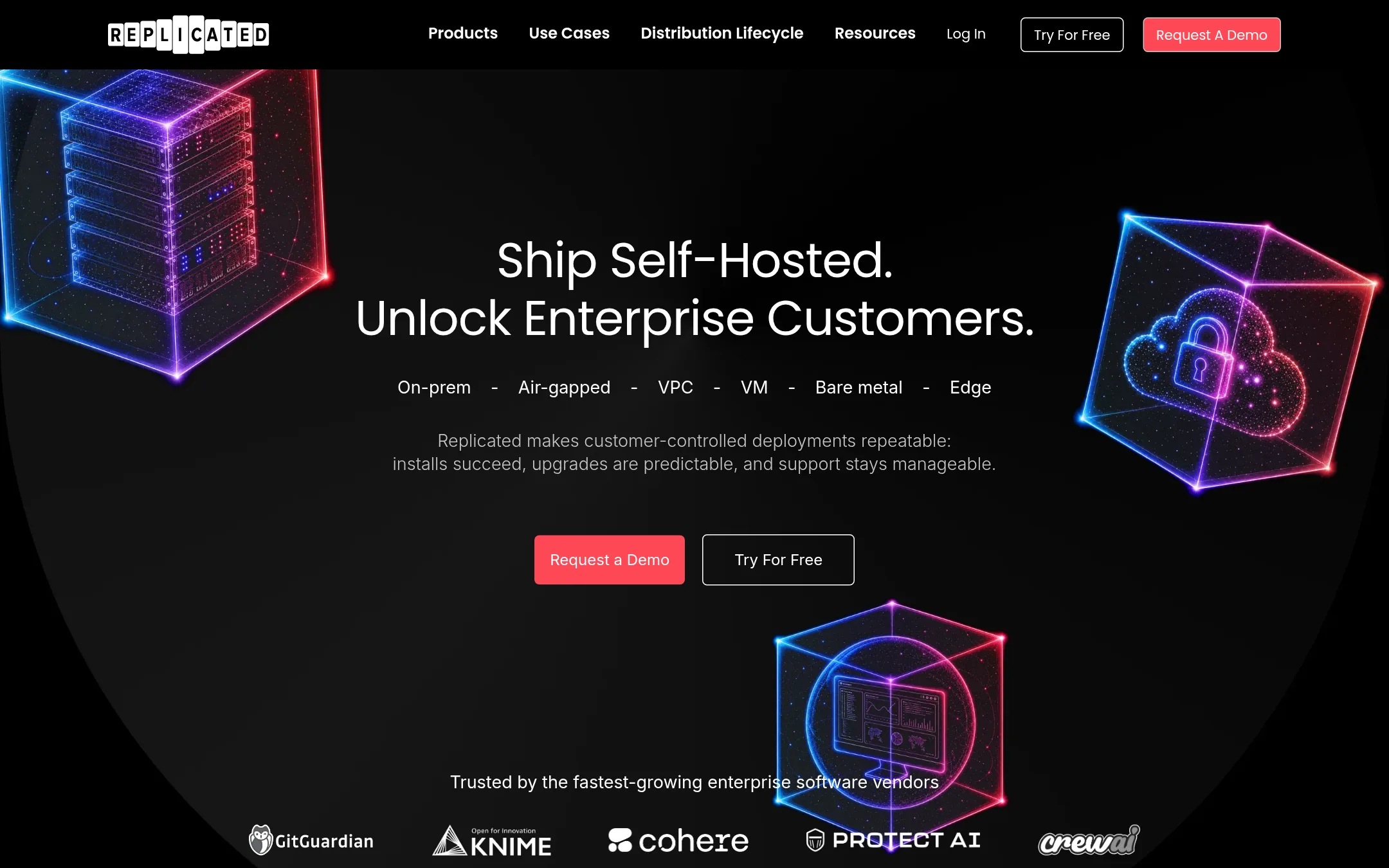
Replicated is a distribution platform for shipping commercial software into customer-controlled environments, including on-prem, air-gapped, VPC, VM and bare metal. It covers licensing, compatibility testing across many customer configurations, install options, and customer support bundles. Choose it over Glasskube when you need to deliver a bundled Kubernetes install or ship to air-gapped customers at scale with per-license pricing controls.
Where it is strong
- Compatibility Matrix tests releases across tens of thousands of customer-representative configurations
- Covers air-gapped and disconnected installs, with bundled Kubernetes for VM deployments
- Built-in licensing, entitlements, and support bundles for troubleshooting customer instances
Where it falls short
- The site lists per-license fees and monthly base charges, but the full cost model depends on the plan you pick
- Some capabilities, such as configure and distribute, are marked coming soon
- Pricing:
- Pricing is not published on the site.
- HFree (open source)
2.Helm
Best for: Platform engineering teams already running Kubernetes who want a standard, free way to package and deploy their own applications
- Pricing
- Free (open source)
- Category
- Other
Helm is an open source package manager for Kubernetes. It lets you define, install, upgrade, version, share and roll back complex Kubernetes applications using charts. Someone would choose Helm instead of Glasskube when they want a standard Kubernetes packaging tool they run themselves, rather than a platform that also handles customer portals, licensing and updates for self-hosted software.
Where it is strong
- Free and open source, backed by the CNCF as a graduated project
- Charts can be versioned, shared and published to public or private servers
- Supports in-place upgrades and rollbacks with helm rollback
Where it falls short
- Covers Kubernetes packaging only, with no customer portal, licensing or support tooling of its own
- Applies only to Kubernetes, so it does not help with Docker Compose or other non-Kubernetes deployments
- Pricing:
- Helm is open source and free to use, and the site does not list any paid plans.
- KNot published
3.Kots
Best for: Kubernetes-first software vendors who want an admin console for installing and updating apps in customer clusters
- Pricing
- Not published
- Category
- Other
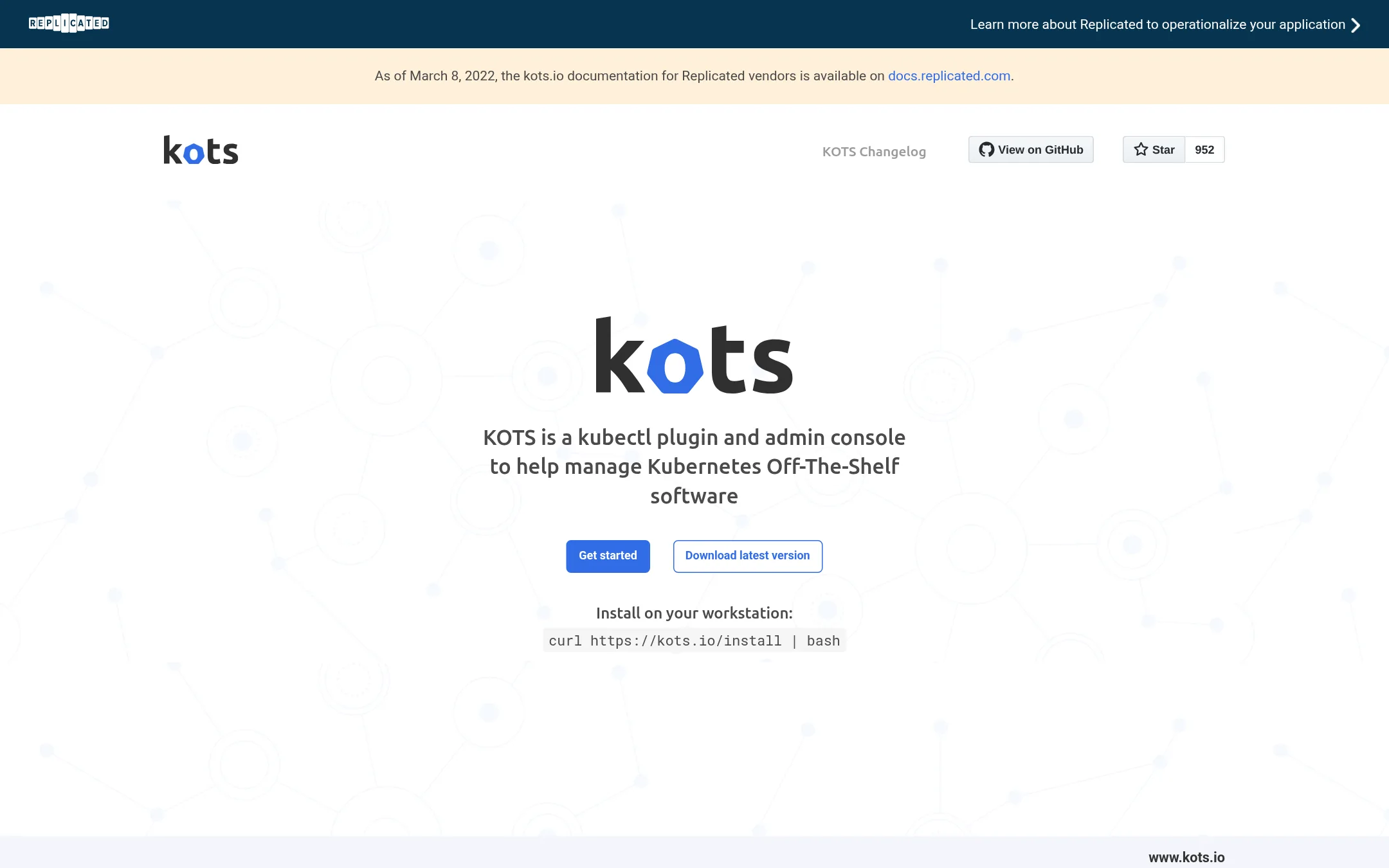
Kots is a kubectl plugin and admin console for managing Kubernetes off-the-shelf software, so customers can install and update an application in their own cluster. Choose it over Glasskube when your delivery is built around Kubernetes and you want a plugin plus admin console, rather than a platform that also covers Docker Compose, on-prem, and air-gapped delivery.
Where it is strong
- Built as a kubectl plugin, so it fits existing Kubernetes workflows
- Provides an admin console that customers use to manage their installs
- Free to install and start with from the command line
Where it falls short
- The site describes only Kubernetes, with no mention of Docker Compose or air-gapped delivery
- Pricing and commercial terms are not listed on the site, so cost is hard to compare
- Pricing:
- Pricing is not published on the site.
- Not published
4.Argo CD
Best for: Platform and DevOps teams running their own Kubernetes clusters who want Git-driven deployments with a visual UI.
- Pricing
- Not published
- Category
- Developer Tools
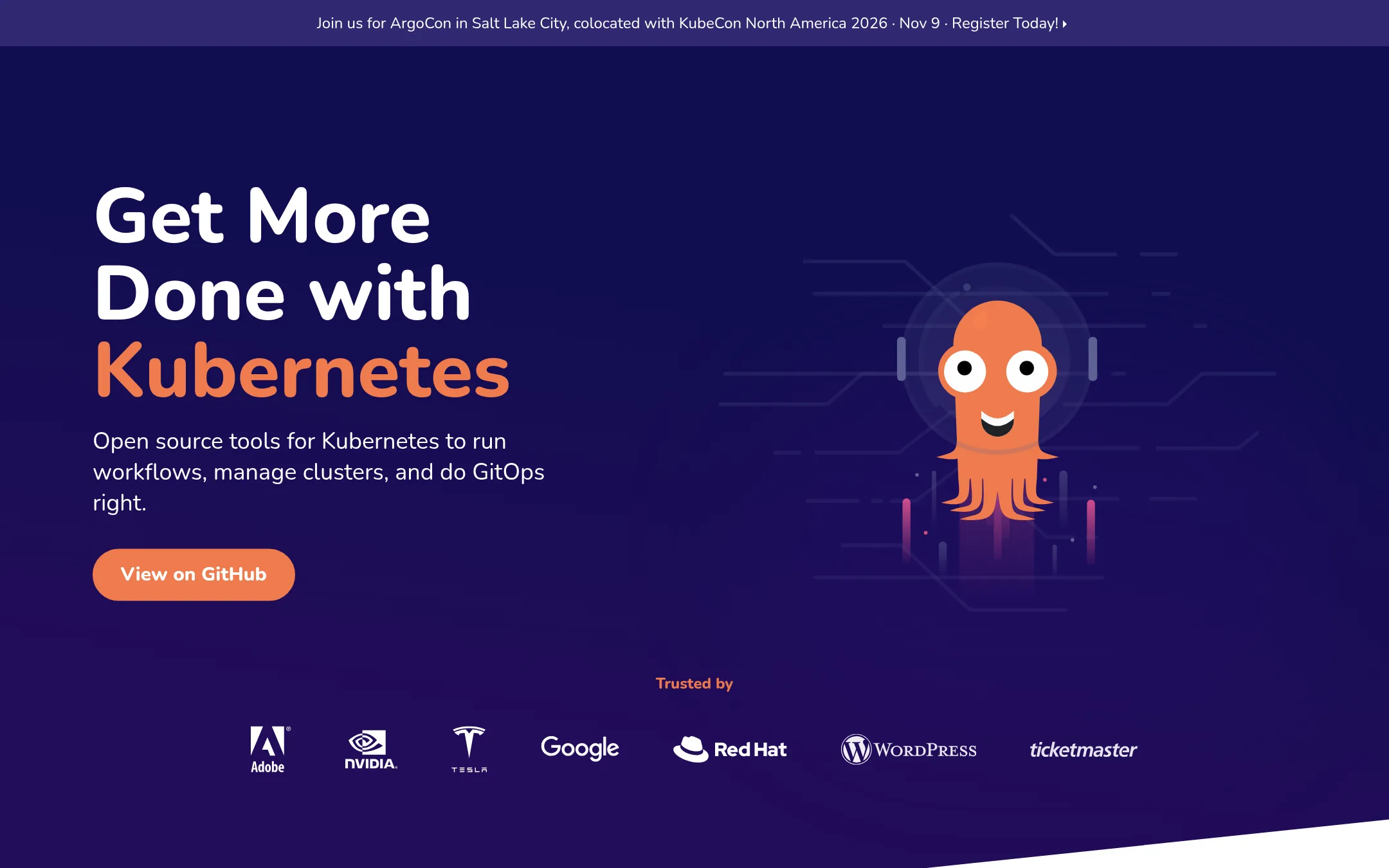
Argo CD is an open source, declarative continuous delivery tool for Kubernetes that uses GitOps, with a full web UI for managing deployments. Pick it over Glasskube when your targets are Kubernetes clusters you run and your team already keeps manifests in Git. It is a deployment controller for your own clusters, not a way to ship software to customers' environments.
Where it is strong
- Open source and part of the Argo project family alongside Workflows, Rollouts and Events
- Declarative GitOps workflow where the Git repository is the source of truth
- Full UI for viewing and managing application deployments
Where it falls short
- Built for delivering into Kubernetes clusters, so it does not cover Docker Compose or air-gapped customer installs in the way Distr does
- Does not offer a customer portal, license management or entitlements, as far as the supplied site content shows
- Pricing:
- Pricing is not published on the site.
- Not published
5.Flux
Best for: Retail merchants in Mexico that want to offer their buyers installment credit at checkout

- Pricing
- Not published
- Category
- Finance & Accounting
Flux is a Mexican-facing platform, pitched in Spanish, that lets a merchant offer its customers installment credit from a phone app and get paid upfront. It is a payments and credit product, not a software distribution tool, so it only fits a business that wants to sell on credit, not one shipping self-hosted software to enterprise customers. Choose Flux instead of Glasskube if the problem is customer payment terms, not how you deliver and update software.
Where it is strong
- Customers apply for credit from their phone and choose a payment term
- Merchants receive their money in their bank account shortly after each sale
- Signup is free and the merchant app is available on iOS and Android
Where it falls short
- Built for consumer and retail credit, so it does not help ship or update self-hosted software
- The site is in Spanish and the homepage describes a Mexican market, so coverage elsewhere is unclear
- Pricing:
- Pricing is not published on the site.
See more comparisons in Developer Tools alternatives.
FAQ
Questions about Glasskube alternatives
What is the main difference between Glasskube and Helm?
Helm is an open source package manager for Kubernetes that handles install, upgrade and rollback of applications. Glasskube, through its Distr platform, also covers customer portals, licensing, entitlements and support tooling for self-hosted software. Helm suits teams that only need Kubernetes packaging, while Glasskube suits vendors shipping to customers.
Is Argo CD a good replacement for Glasskube?
Argo CD can replace Glasskube when your deployment targets are Kubernetes clusters you operate and your team manages manifests in Git. It does not cover customer portals, license management or air-gapped customer installs as the Distr platform does. It is a better fit for internal deployment than for delivering software to third-party customers.
Which Glasskube alternative handles air-gapped customer deployments?
Replicated is the alternative that explicitly covers air-gapped and disconnected installs, including bundled Kubernetes for VM deployments. It also offers built-in licensing and support bundles for troubleshooting customer instances. Its full cost depends on the plan chosen, and some capabilities are marked coming soon.
Is any Glasskube alternative free to use?
Helm is open source and free to use, and the site does not list any paid plans. It covers Kubernetes packaging only, so it lacks the customer portal and licensing features of Glasskube. Kots also lists a free start from the command line, but its commercial terms are not published.
How should I compare pricing across these alternatives?
Glasskube lists per-user and per-customer pricing with plan tiers. Replicated's pricing is not fully published, and it charges per-license fees and monthly base charges. Helm is free, while Argo CD and Kots do not publish pricing on their sites, so request a quote from each vendor before comparing totals.
Last updated November 21, 2026.