Alternatives to Gotify — A simple server for sending and receiving messages
Users searching for Gotify alternatives are typically looking for lightweight self-hosted options to handle push notifications and real-time messaging without depending on external cloud providers. Gotify delivers exactly that through its open-source server that exposes a REST API for sending alerts, WebSocket endpoints for clients to subscribe, and a clean WebUI for managing apps and users. Its Android client turns incoming messages into native push notifications while the optional CLI makes scripting simple. People often evaluate replacements when they need broader platform support, easier scaling, or different authentication flows, yet many still want to avoid vendor lock-in and recurring fees. Comparing alternatives involves checking self-hosting ease, client availability, API simplicity, and whether the solution stays free for personal or small-team use cases like monitoring servers or internal alerts.
JoinJoin by joaoapps is a lightweight Android-focused tool that mirrors Pushbullet's core goal of making devices work better together. It excels at sending notifications, files, and commands between phones and computers with minimal setup. Strengths include Tasker integration and local network options that reduce cloud reliance. Compared with Pushbullet, Join stays cheaper with a one-time purchase model and avoids recurring fees, though it offers fewer polished web interfaces. It suits users who primarily need Android-to-PC syncing rather than broad multi-platform support.
Join by joaoapps is a lightweight Android-focused tool that mirrors Pushbullet's core goal of making devices work better together. It excels at sending notifications, files, and commands between phones and computers with minimal setup. Strengths include Tasker integration and local network options that reduce cloud reliance. Compared with Pushbullet, Join stays cheaper with a one-time purchase model and avoids recurring fees, though it offers fewer polished web interfaces. It suits users who primarily need Android-to-PC syncing rather than broad multi-platform support.
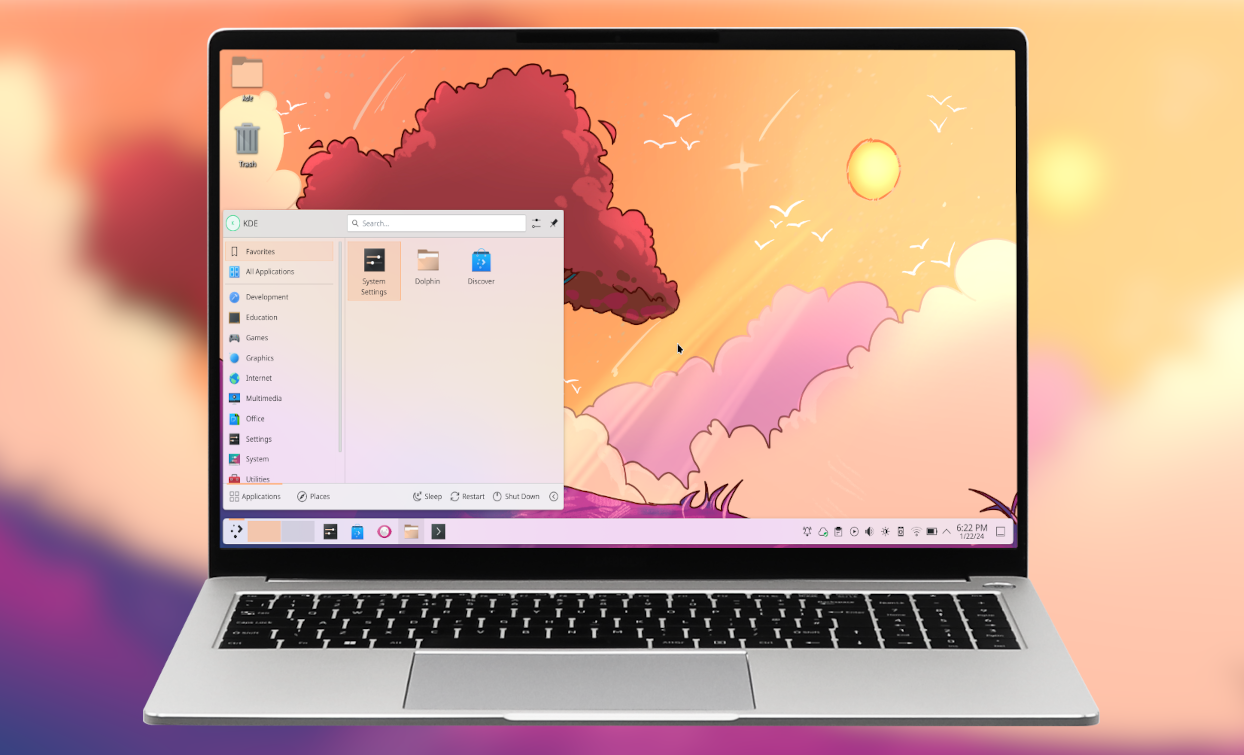
KDE ConnectKDE Connect is an open-source solution focused on seamless phone-to-computer integration, directly addressing the "devices working better together" need. It supports notifications, file sharing, remote input, and media control with strong encryption. Strengths lie in its free, local-first approach and deep Linux desktop integration. Compared to Pushbullet it lacks a hosted web app and requires more initial setup, but it delivers superior privacy and zero cost for unlimited devices, making it ideal for open-source enthusiasts.
Microsoft Your Phone links Android devices to Windows PCs for notifications, photos, and messaging. It directly targets the same device-cooperation use case as Pushbullet within the Microsoft ecosystem. Strengths include deep Windows integration and recent expansion to more phone features. Compared with Pushbullet it is free for basic use yet limited to Windows and Android, lacking cross-platform flexibility for Mac or Linux users who need broader device syncing.
AirDroidAirDroid provides device linking features similar to Pushbullet but adds remote camera access and app management. It helps phones and computers cooperate through both web and desktop clients. Strengths include a mature interface and strong file transfer speeds. Versus Pushbullet, AirDroid includes more remote-control tools yet requires an account and pushes premium upgrades more aggressively for advanced features. It fits users wanting extra management capabilities beyond simple notifications.
ntfy is a lightweight, self-hostable notification service that lets users push messages between any devices or scripts. It replicates the core connectivity goal of Pushbullet in a minimal, open-source package. Strengths include easy HTTP API access and no mandatory accounts. Against Pushbullet it offers greater customization and zero cost but requires users to handle their own server or accept a public instance, suiting developers who prefer simplicity over polished apps.
Pushover specializes in reliable push notifications across devices, serving as a simpler alternative to Pushbullet's broader feature set. It emphasizes dependable delivery and custom scripting. Strengths include excellent API support and minimal interface. Relative to Pushbullet, Pushover is narrower in scope, focusing purely on alerts rather than file sync or universal clipboard, yet it remains cheaper with a one-time per-platform fee and strong uptime reputation for critical notifications.
TelegramTelegram offers cloud-synced chats and file sharing that can substitute for Pushbullet's notification and transfer functions. Users create dedicated channels or bots to push content across devices. Strengths include end-to-end encryption options and massive file size support. Versus Pushbullet, Telegram is more general-purpose and requires workarounds for quick device actions, but it remains completely free with strong multi-platform apps and no separate subscription for core syncing features.