
Greptile alternatives
10 products compared · Updated November 10, 2026
The short answer
The three strongest Greptile alternatives are Qodo, cubic, and Sourcery. Qodo suits engineering teams with many repositories that want shared coding rules enforced across every pull request and IDE. cubic suits GitHub teams that want automatic approval of low-risk pull requests and scheduled codebase bug scans. Sourcery suits teams on GitHub or GitLab that want AI review plus continuous security scanning of existing repositories.
Your shortlist, at a glance
Read the comparisons ↓- CCodeRabbitNot publishedEngineering teams with many open pull requests across several repositories that want a prioritized review queue alongside AI review
- QQodo (formerly CodiumAI)$30/mo + $0.015/creditEngineering teams with many repositories that want shared coding rules enforced across every pull request and IDE
- SSourcery$12/seat/mo (annual)Engineering teams on GitHub or GitLab that want AI review plus continuous security scanning of existing repositories
- GGraphite DiamondNot publishedGitHub-based engineering teams that want stacked PRs, a merge queue, and AI review in one tool.
 EllipsisTokens + 10%Engineering teams that want to run their own Claude Code or Codex agents in the cloud with spending limits and a full audit trail
 CodacyNot publishedEngineering leaders at mid-sized teams who need one tool for code quality, security scanning and audit-ready reports across many repositories
- TTuskSee websiteAI agent that generates unit and integration tests
 cubicPer developer, by lineEngineering teams on GitHub that want automatic approval of low-risk pull requests and scheduled codebase bug scans
 CodeClimateSee websiteData, context, and playbooks to turn AI tooling into real organizational change.
- SSweepSee websiteThe best AI coding assistant for JetBrains
About Greptile and its alternatives
Greptile is an AI code review agent. Its site says it builds a graph index of a repository, then uses parallel agents to review pull requests with context beyond the diff. It highlights catching multi-file logical bugs, learning a team's standards from past PR comments, runtime testing in a sandbox, and self-hosted or air-gapped deployment for regulated industries.
When comparing alternatives in this category, weigh how each tool prices its usage, such as per seat, per credit, or per line reviewed. Check which code providers and regions it supports, including self-hosted options for GitHub Enterprise Server, GitLab Self-Managed, or on-premises setups. Look at integrations with IDEs and coding agents, the support and compliance documentation offered, and the terms of any enterprise contract.
Explore the alternatives
- CNot published
1.CodeRabbit
Best for: Engineering teams with many open pull requests across several repositories that want a prioritized review queue alongside AI review
- Pricing
- Not published
- Category
- Other
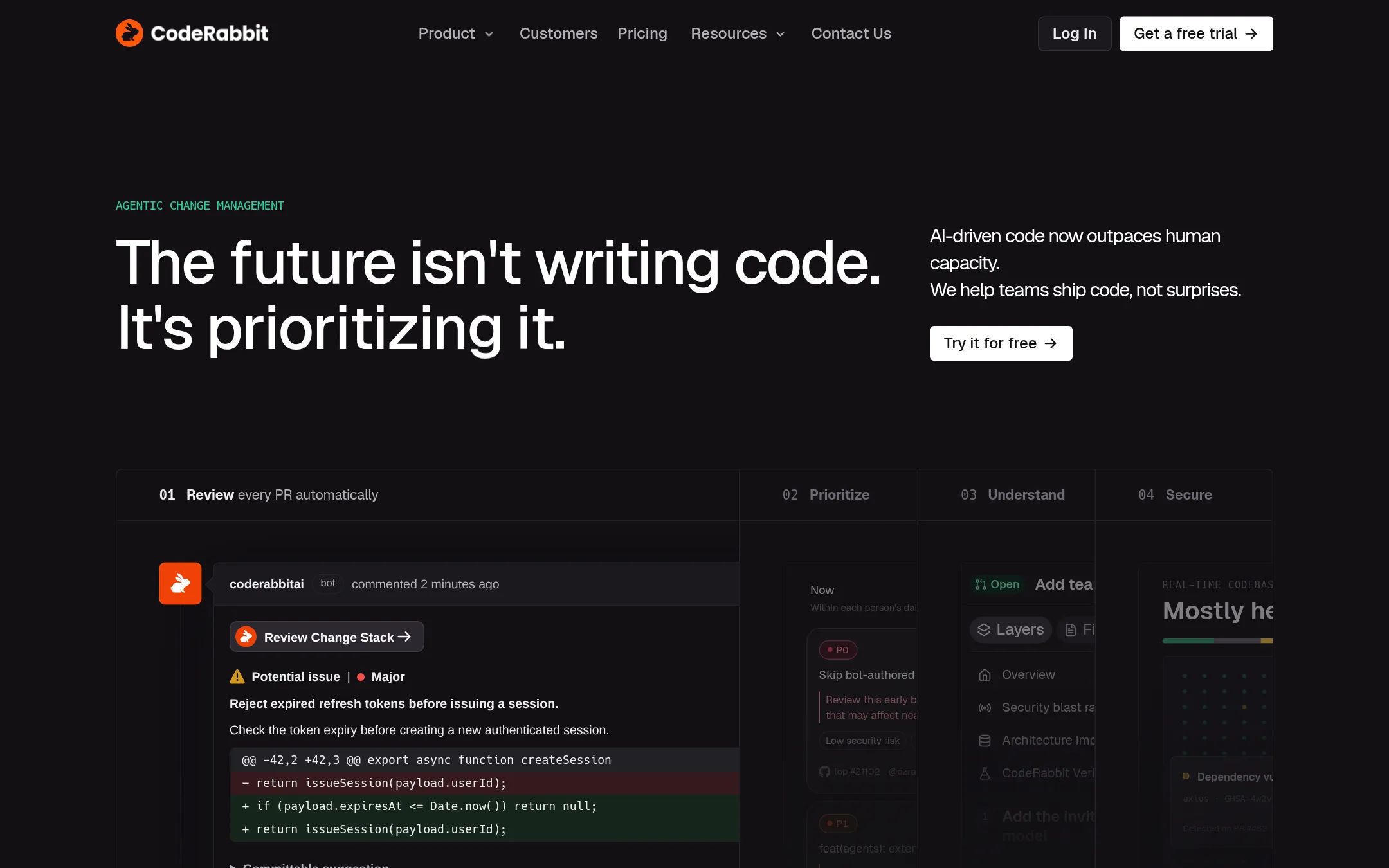
CodeRabbit is an AI code reviewer that runs on pull requests, in the CLI, in the IDE, and inside coding-agent loops. It adds PR triage, a prioritized review queue, and continuous security scanning on top of review. Teams would pick it over Greptile when they want review plus a queue view of open PRs and scheduled security scans across repos.
Where it is strong
- Prioritized PR queue ranks open pull requests by value, urgency, and risk across repositories.
- Pre-merge checks and post-merge actions such as changelog updates and notifications.
- Learns from prior PRs and feedback, and lets you view and edit those learnings.
Where it falls short
- Several advanced features, including Deep Scan and Engineer, are sold as on-demand products on top of the base plans.
- Per-developer review velocity is capped in the plan, with extra reviews on consumption, so heavy usage needs budget planning.
- Pricing:
- Pricing is not published on the site.
- Q$30/mo + $0.015/credit
2.Qodo (formerly CodiumAI)
Best for: Engineering teams with many repositories that want shared coding rules enforced across every pull request and IDE
- Pricing
- $30/mo + $0.015/credit
- Category
- Other
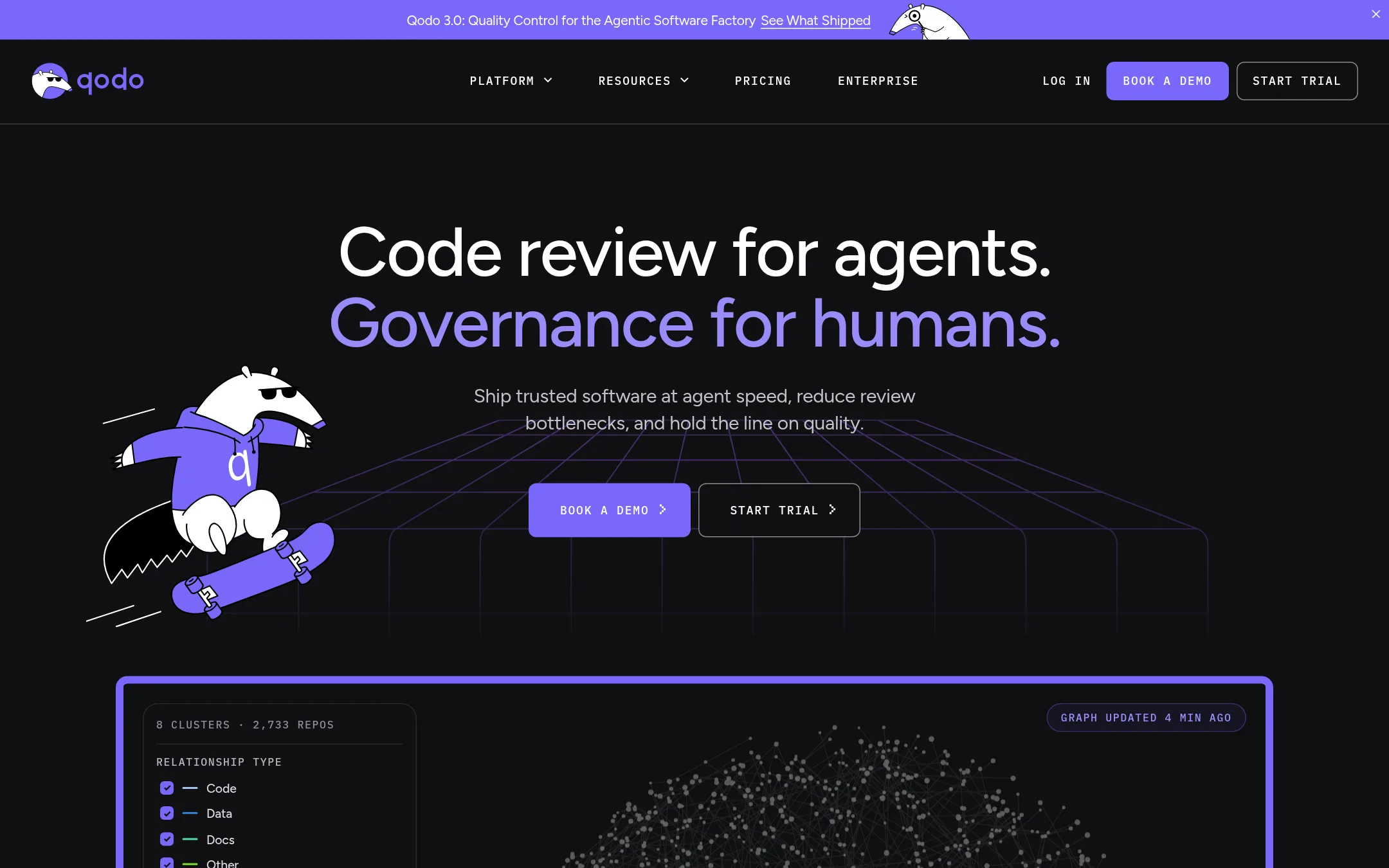
Qodo is an AI code review and governance platform. It reviews pull requests with context across repos, enforces a shared set of coding rules, and runs review agents inside the IDE. A team would pick Qodo over Greptile if they want rule management and governance across many repositories, or if they need to put review into their coding agents' loop before code reaches a PR.
Where it is strong
- Rules system turns scattered standards into rules the agents enforce, and tracks how often they are followed
- Cross-repo software map and governance dashboard show risk and resolution rates across teams
- Zero data retention and SOC 2 Type II certification are listed on the site, with on-prem deployment available
Where it falls short
- There is no permanent free tier, only a 14-day trial, while Greptile offers a free Starter plan
- Credit-based metering means review costs vary with PR size and complexity, which makes budgeting less predictable
- Pricing:
- Pro Team is $30 per month with pooled credits priced at $0.015 each, and the site also lists an Enterprise plan with custom pricing.
- S$12/seat/mo (annual)
3.Sourcery
Best for: Engineering teams on GitHub or GitLab that want AI review plus continuous security scanning of existing repositories
- Pricing
- $12/seat/mo (annual)
- Category
- Other
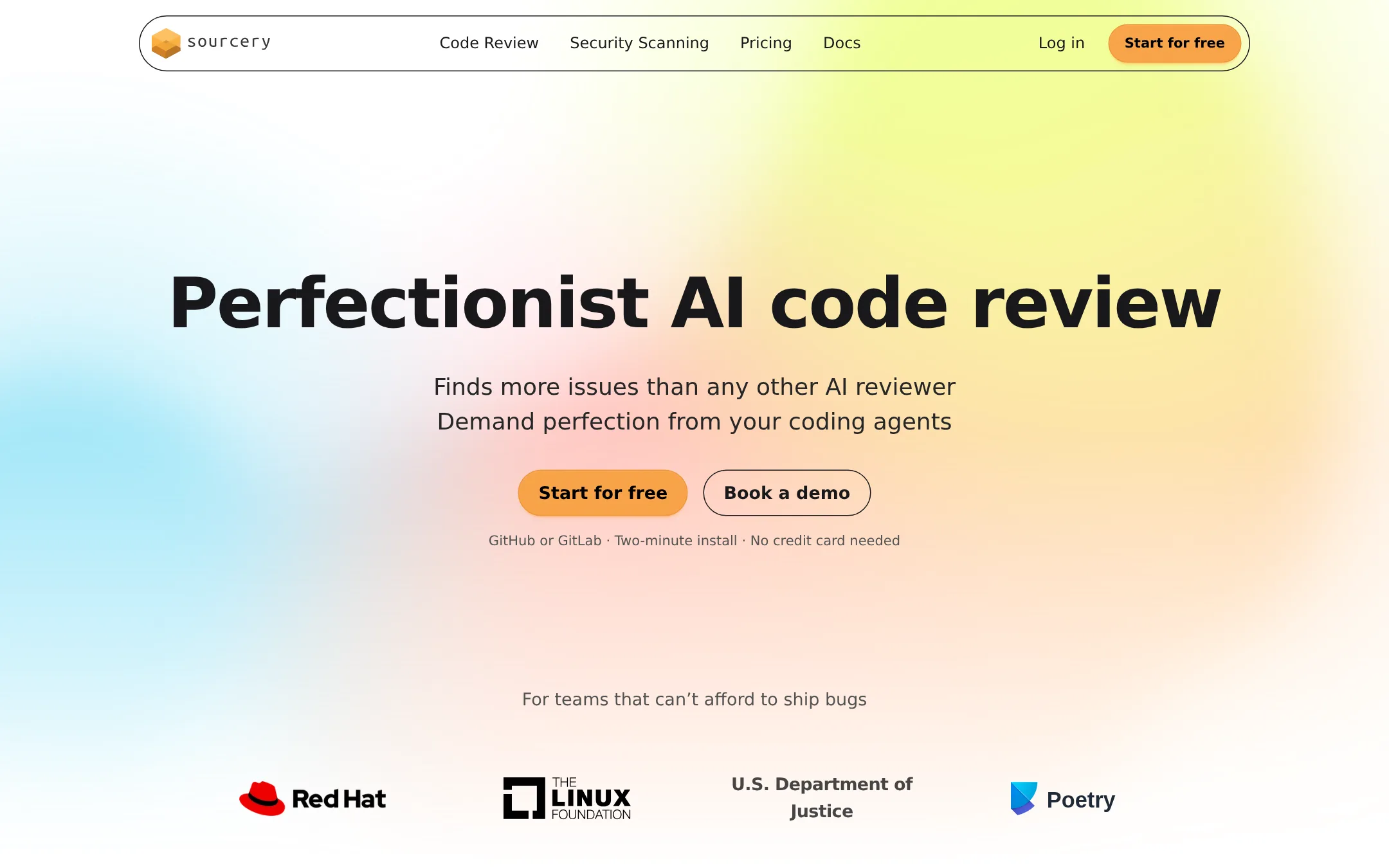
Sourcery is an AI code reviewer that posts PR summaries, review comments and one-click suggested fixes on GitHub or GitLab. It also runs scheduled security scans across a whole codebase, not just changed code. Teams pick it over Greptile when they want security scanning of existing repos and a self-hosted option on GitLab or GitHub Enterprise Server.
Where it is strong
- Posts a PR summary and review comments within minutes of opening a pull request.
- Scheduled scans flag exposed secrets, vulnerable code, misconfigured infrastructure and dependencies with known CVEs.
- Supports GitLab.com and self-managed GitLab on every plan, not only on Enterprise.
Where it falls short
- Pricing is per seat, so cost grows with team size, while Greptile charges per credit shared across the organization.
- The site does not describe a code graph of repository dependencies or a runtime test sandbox like Greptile's TREX.
- Pricing:
- Pro is $12 per seat per month and Team is $24 per seat per month, billed annually, with a free Open Source tier for public repos and a 14-day free trial.
- GNot published
4.Graphite Diamond
Best for: GitHub-based engineering teams that want stacked PRs, a merge queue, and AI review in one tool.
- Pricing
- Not published
- Category
- Other
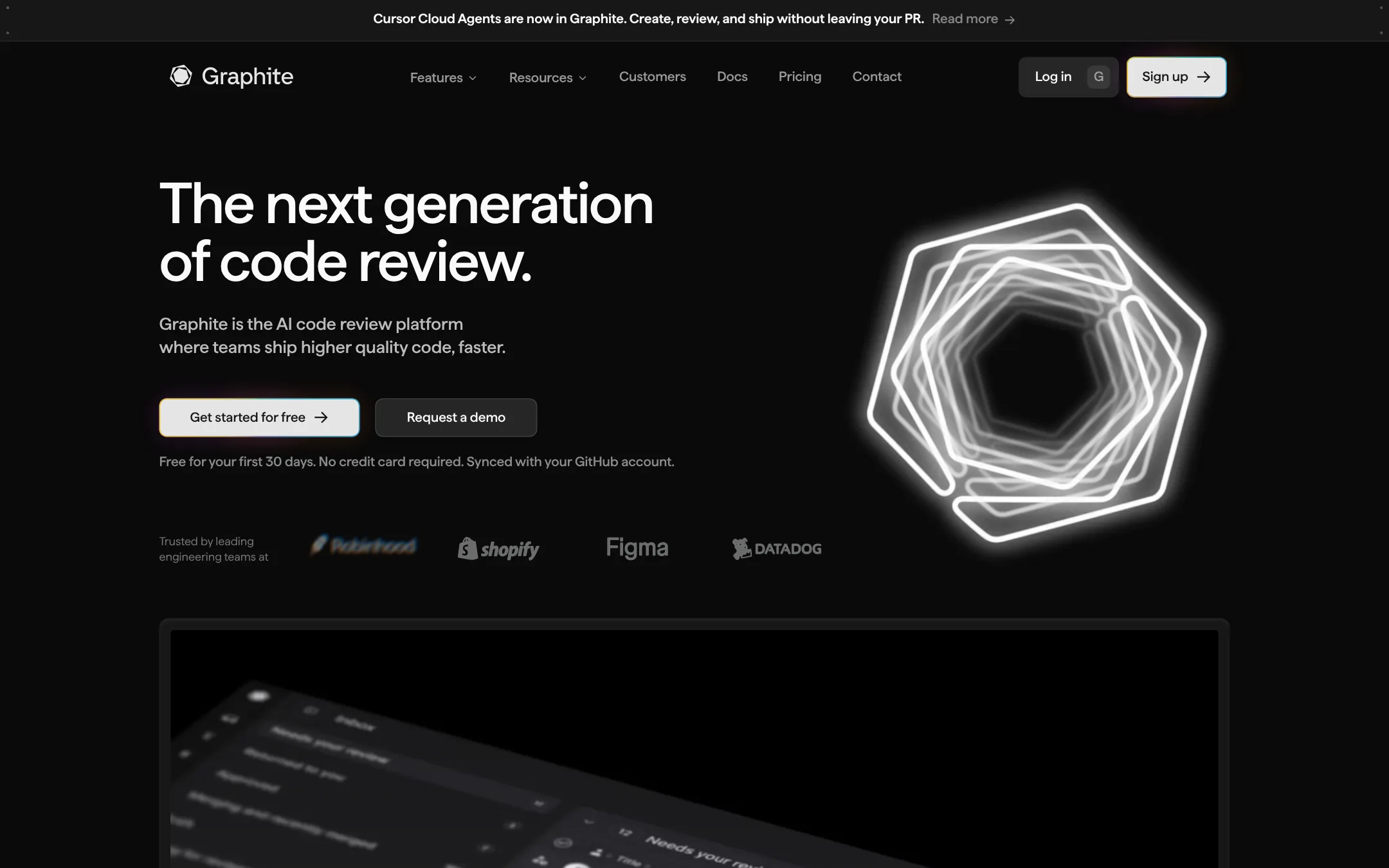
Graphite Diamond is a GitHub-based code review platform built around stacked pull requests, a merge queue, and an AI reviewer that works on each PR. Teams pick it over Greptile when their main pain is PR size and merge flow rather than deep codebase-wide analysis. Greptile's pitch is a graph index of the whole repo and runtime testing, so Graphite fits better when stacking and merge ordering matter more.
Where it is strong
- Stacked PRs split large changes into smaller, sequenced reviews.
- Stack-aware merge queue lands PRs in order and keeps branches green.
- Graphite Chat lets you fix CI failures and apply suggested changes on the PR page.
Where it falls short
- The site does not document a codebase-wide index or runtime testing like Greptile offers.
- Self-hosting and air-gapped deployment are not mentioned on the site.
- Pricing:
- Pricing is not published on the site.
- Tokens + 10%
5.Ellipsis
Best for: Engineering teams that want to run their own Claude Code or Codex agents in the cloud with spending limits and a full audit trail
- Pricing
- Tokens + 10%
- Category
- Developer Tools
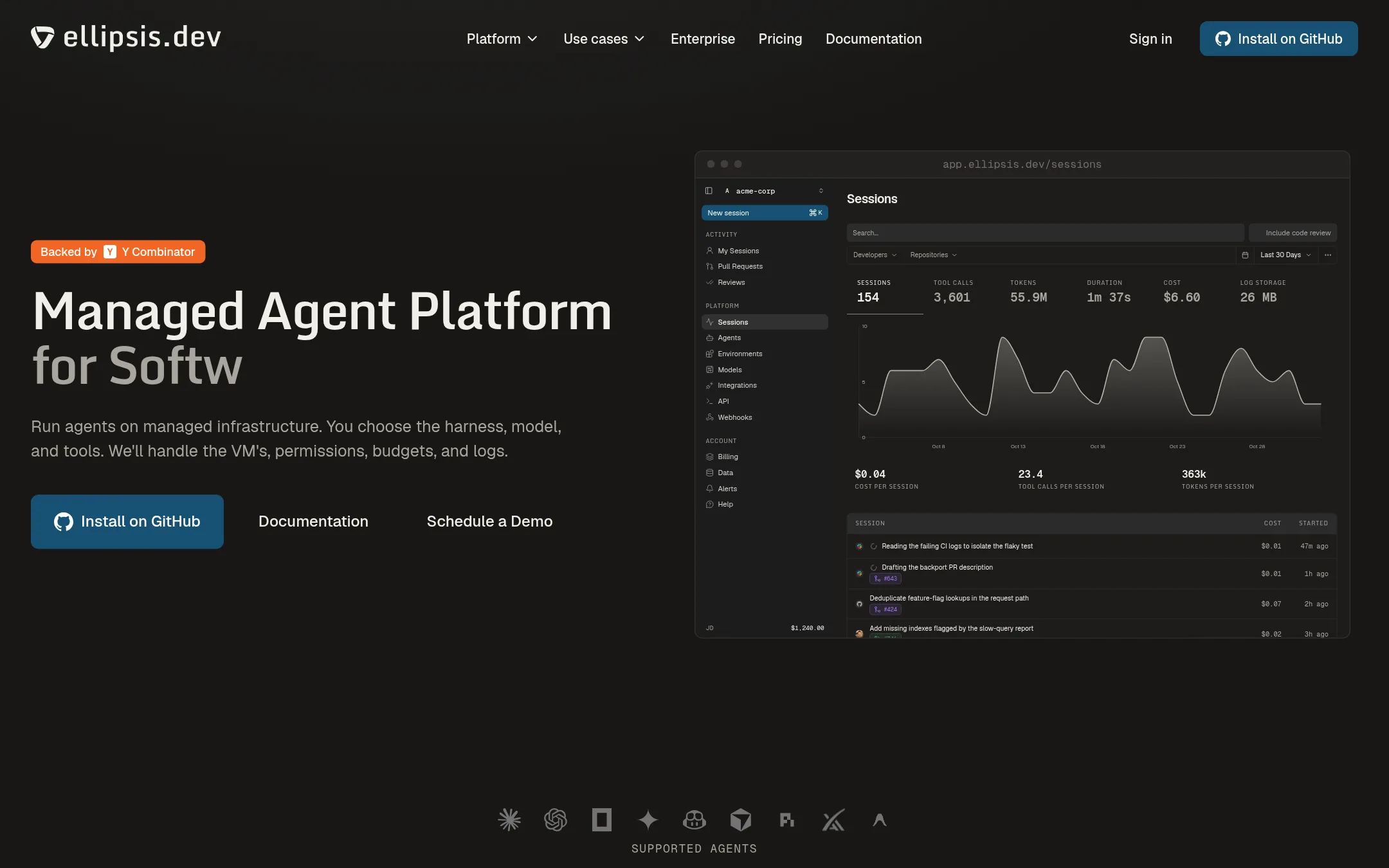
Ellipsis is a managed cloud platform for running Claude Code and Codex agents, defined as YAML config files in your repo. It covers coding agents, code review, and background agents, with per-session sandboxes and spending limits. Choose it over Greptile if you want to run general coding agents on managed infrastructure rather than a dedicated PR review tool.
Where it is strong
- Agents are defined as YAML files in your repo and can switch between Claude Code and Codex by changing one block.
- Spending limits apply per session, day, week, and month.
- Every command, file change, and tool call is kept in a full audit trail after the sandbox is gone.
Where it falls short
- Greptile's dedicated code review features, such as its codebase graph index and self-hosted review, are not described for Ellipsis on its si
- Pricing is usage-based, so total cost depends on how many agent sessions your team runs.
- Pricing:
- Agents cost tokens plus a 10% platform fee with no per-seat or idle fees, and the BYOC option bills CPU at $0.142 per vCPU-hour and memory at $0.024 per GB-hour.
- Not published
6.Codacy
Best for: Engineering leaders at mid-sized teams who need one tool for code quality, security scanning and audit-ready reports across many repositories
- Pricing
- Not published
- Category
- Developer Tools
Codacy is a broad code quality and security platform. It covers SAST, secret scanning, dependency and container scanning, DAST, test coverage and AI policy enforcement across IDE, Git and agents. Teams pick it over Greptile when the main concern is security and compliance posture across many repos, not contextual AI review of pull requests.
Where it is strong
- Covers SAST, secrets, dependencies, containers, IaC and runtime testing in one platform
- Free forever for open-source projects, with GitHub, Bitbucket and GitLab integrations
- Exportable SBOM reports and daily CVE re-scans support audit work
Where it falls short
- Its AI review focuses on quality and policy rules, not the full-codebase graph context Greptile describes
- The site does not list self-hosting, air-gapped deployment or SOC 2 details the way Greptile does
- Pricing:
- Pricing is not published on the site.
- TSee website
7.Tusk
Developer Tools
AI agent that generates unit and integration tests
- Per developer, by line
8.cubic
Best for: Engineering teams on GitHub that want automatic approval of low-risk pull requests and scheduled codebase bug scans
- Pricing
- Per developer, by line
- Category
- Developer Tools
cubic is an AI code reviewer that checks each pull request against your whole codebase and your team's rules, and it also scans the repository for bugs on a schedule. Pick it over Greptile if you want reviews that can approve low-risk PRs automatically and get a merge-safety score on each one. It also reviews in a desktop app and turns senior engineers' past comments into rules.
Where it is strong
- Auto-approves low-risk PRs and scores every PR from 1 to 5 for merge safety.
- Runs scheduled scans across the repository to find bugs and security issues.
- Lets coding agents like Claude Code, Codex and Cursor pick up and fix its comments.
Where it falls short
- Pro and Max require a seat for every developer who opens 15 or more PRs in 30 days.
- Self-hosting and on-premises deployment are not mentioned on the site, unlike Greptile's Enterprise offering.
- Pricing:
- Pricing is set by reviewed lines per developer: Team includes 40,000 lines, Pro includes 80,000, Max includes 160,000, and a free Starter plan allows 20 PR reviews a month.
- See website
9.CodeClimate
Developer Tools
Data, context, and playbooks to turn AI tooling into real organizational change.
- SSee website
10.Sweep
Developer Tools
The best AI coding assistant for JetBrains
See more comparisons in Developer Tools alternatives.
FAQ
Questions about Greptile alternatives
Which Greptile alternative is best for a team with many repositories?
Qodo is the strongest fit for this case. Its entry describes a cross-repo software map, a governance dashboard, and shared rules that agents enforce across repositories and IDEs. Its pricing is credit-based, so review costs vary with PR size.
Is there a Greptile alternative that approves pull requests automatically?
cubic can auto-approve low-risk pull requests and gives each PR a merge-safety score from 1 to 5. It also runs scheduled scans of the whole repository for bugs and security issues. Its Pro and Max plans require a seat for each developer who opens 15 or more PRs in 30 days.
Which alternative supports self-managed GitLab on a free or low tier?
Sourcery supports GitLab.com and self-managed GitLab on every plan, not only on Enterprise. Its Pro plan is $12 per seat per month and it has a free Open Source tier for public repositories. Its pricing is per seat, so cost grows with team size.
Which alternatives can run code in a sandbox to find runtime bugs?
Greptile's own TREX sandbox is the runtime testing feature described on its site, and none of the alternatives in this list describe an equivalent. Ellipsis instead runs Claude Code and Codex agents in per-session sandboxes with spending limits and a full audit trail. Its entry does not describe PR review features like Greptile's.
Does any alternative offer self-hosting like Greptile does?
Qodo's entry says on-prem deployment is available, and Sourcery's entry lists a self-hosted option on GitLab or GitHub Enterprise Server. Codacy and CodeRabbit entries do not mention self-hosting on their sites. Confirm deployment options directly with each vendor before deciding.
Last updated November 10, 2026.