HashiCorp Vault alternatives
12 products compared · Updated November 1, 2026
The short answer
For teams seeking a HashiCorp Vault alternative, the strongest options are Akeyless for a fully managed or hybrid SaaS platform with zero-knowledge encryption, Teleport for identity-based access control to infrastructure, and 1Password Secrets Automation for unified human and machine credential management. Akeyless suits teams wanting to replace self-managed Vault, Teleport fits engineering teams needing auditable access without standing credentials, and 1Password is ideal for those wanting one platform for employee passwords and AI agent credentials.
Your shortlist, at a glance
Read the comparisons ↓ Amazon BusinessNot publishedTeams that want to centralize purchasing of business supplies with approval flows and spend reporting.
Microsoft Azure CycleCloudUsage-basedTeams running HPC workloads on Azure that need automated cluster orchestration and scaling, and already use Azure's security services for secrets.
- RRecordBookNot publishedSmall business owners who want a simple, mobile-friendly way to track inventory, customers, or projects without infrastructure overhead.
 CyberArkNot publishedLarge enterprises that need a unified platform for privileged access, secrets, and identity governance across hybrid cloud environments.
- 11Password Secrets AutomationCustom quoteTeams that want one platform for employee passwords, machine credentials, and AI agent access with just-in-time privileged access.
- AAkeylessCustom quoteTeams that want to replace self-managed Vault with a fully managed or hybrid SaaS platform, especially those with AI agents or compliance-heavy environments needing on-premise gateways.
- KKeeper Secrets ManagerCustom quoteTeams that already use Keeper for password management and want a zero-knowledge, cloud-hosted secrets vault without operating their own infrastructure.
 DopplerNot publishedTeams that want a managed secrets platform with per-seat pricing and free access for AI agents and automated workflows.
- OOpenBaoNot publishedTeams that already use Vault and want a drop-in open source alternative with community governance.
- VVault by Ansible (community)Not publishedTeams already using Ansible for configuration management who want to automate the deployment and rotation of secrets across servers.
InfisicalSee websiteUnified platform for secrets, certs, and privileged access management
 KubernetesOpen sourceTeams already on Kubernetes that need basic secret storage for containerized workloads and want to keep their stack simple.
About HashiCorp Vault and its alternatives
HashiCorp Vault is a secrets management tool that stores and controls access to tokens, passwords, certificates, and encryption keys. It is known for identity-based access controls, dynamic secrets, and data encryption, but it requires self-managing infrastructure unless you use the enterprise version.
When comparing alternatives, weigh pricing structure (per-seat vs. per-usage vs. custom quotes), deployment options (SaaS, self-hosted, hybrid), integrations with your existing stack, support and contract terms, and whether the tool covers just secrets or also privileged access and identity governance.
Explore the alternatives
- Not published
1.Amazon Business
Best for: Teams that want to centralize purchasing of business supplies with approval flows and spend reporting.
- Pricing
- Not published
- Category
- E-commerce
Amazon Business is a procurement platform for buying supplies and managing spend, not a secrets manager. Choose it over HashiCorp Vault if your need is purchasing control, approval workflows, and spend analytics rather than storing API keys or encrypting data.
Where it is strong
- Approval flows and centralized purchasing controls
- Spend analytics with pre-built and custom reports
- Quantity discounts and bulk buying options
Where it falls short
- Not a secrets management or encryption tool
- Pricing details are not listed publicly
- Pricing:
- Pricing is not published on the site.
- Usage-based
2.Microsoft Azure CycleCloud
Best for: Teams running HPC workloads on Azure that need automated cluster orchestration and scaling, and already use Azure's security services for secrets.
- Pricing
- Usage-based
- Category
- Developer Tools
Microsoft Azure CycleCloud is an HPC orchestration tool for managing and scaling compute clusters on Azure, not a secrets manager. Choose it over HashiCorp Vault only if your primary need is cluster lifecycle management for high-performance computing workloads, and you plan to handle secrets separately with Azure Key Vault or another tool.
Where it is strong
- Native integration with Azure HPC services and schedulers like Slurm and PBS.
- Automates cluster setup, scaling, and teardown for compute-intensive jobs.
- Part of the broader Azure ecosystem, so it pairs with Azure security tools.
Where it falls short
- Not a secrets management tool. Lacks Vault's encryption and access control features.
- Requires Azure expertise and is tied to the Azure platform, limiting portability.
- Pricing:
- Pricing is not published on the site. Azure products are billed per usage, and CycleCloud itself is a free orchestration layer, but compute and storage costs apply.
- RNot published
3.RecordBook
Best for: Small business owners who want a simple, mobile-friendly way to track inventory, customers, or projects without infrastructure overhead.
- Pricing
- Not published
- Category
- Productivity & Project Management
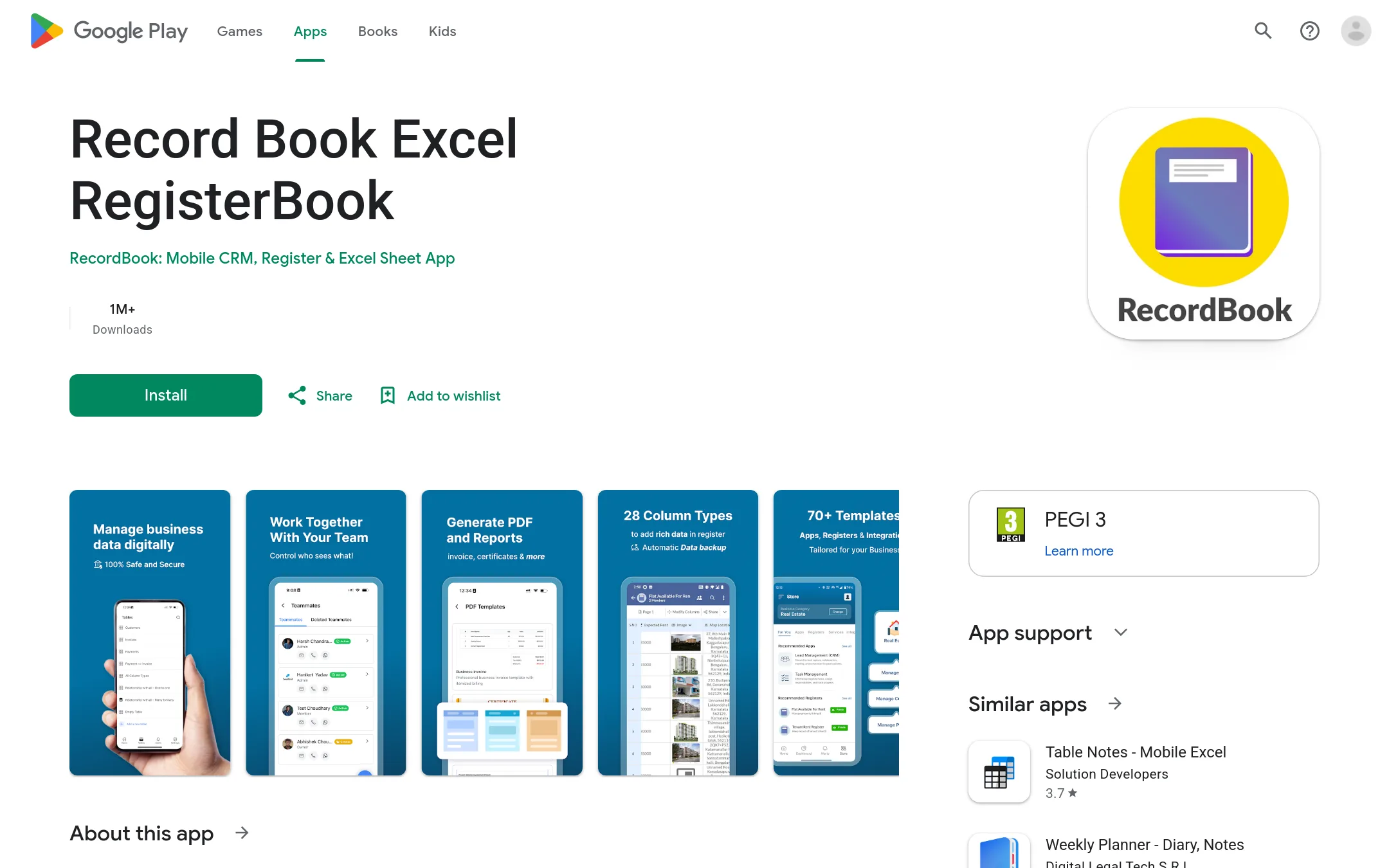
RecordBook is a mobile-first database app aimed at small businesses, often described as an Airtable alternative. Choose it over HashiCorp Vault if you need to organize business records and workflows, not manage secrets or encryption.
Where it is strong
- Mobile-first design for on-the-go record keeping
- Aimed at SMBs with simple data organization needs
- Free to install from the Google Play Store
Where it falls short
- No secret management or encryption features
- Android-only, no web or iOS version mentioned
- Pricing:
- Pricing is not published on the site.
- Not published
4.CyberArk
Best for: Large enterprises that need a unified platform for privileged access, secrets, and identity governance across hybrid cloud environments.

- Pricing
- Not published
- Category
- Security & Privacy
CyberArk, now branded Idira under Palo Alto Networks, is an enterprise identity security platform that covers privileged access management, secrets management, and identity governance. You would choose it over HashiCorp Vault if you need a broader identity security suite that also manages human, machine, and AI agent identities, not just secrets.
Where it is strong
- Covers PAM, secrets, and identity governance in one platform
- Recognized as a leader in multiple analyst reports
- Designed for enterprise scale with machine and agentic identity support
Where it falls short
- Pricing is not transparent and likely enterprise-only
- Heavier and more complex than Vault for simple secrets management
- Pricing:
- Pricing is not published on the site.
- 1Custom quote
5.1Password Secrets Automation
Best for: Teams that want one platform for employee passwords, machine credentials, and AI agent access with just-in-time privileged access.
- Pricing
- Custom quote
- Category
- Other
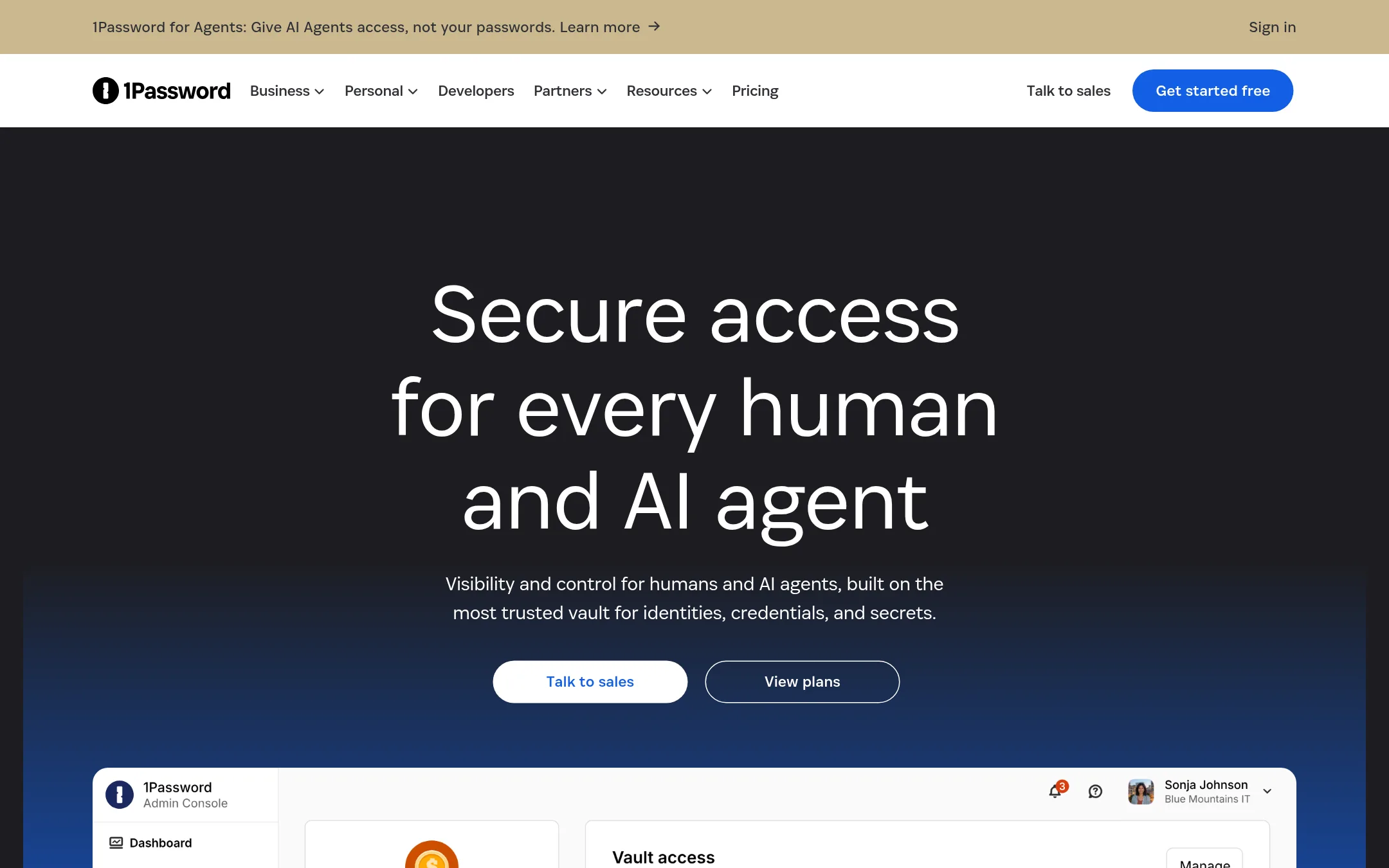
1Password Secrets Automation is a credential and access management platform that covers human passwords, machine secrets, and AI agent credentials. Choose it over HashiCorp Vault if you want a unified, easier-to-adopt platform that also manages SaaS access and privileged sessions, rather than a dedicated secrets engine.
Where it is strong
- Covers human, machine, and AI agent credentials in one platform
- Just-in-time privileged access with zero standing privileges
- SaaS and AI discovery with 400+ integrations
Where it falls short
- Pricing is not transparent, requires contacting sales
- Not a dedicated secrets engine like Vault, so advanced secrets management features may be limited
- Pricing:
- Pricing is not published on the site. Unified Access and individual products are quoted by the sales team.
- ACustom quote
6.Akeyless
Best for: Teams that want to replace self-managed Vault with a fully managed or hybrid SaaS platform, especially those with AI agents or compliance-heavy environments needing on-premise gateways.
- Pricing
- Custom quote
- Category
- Other
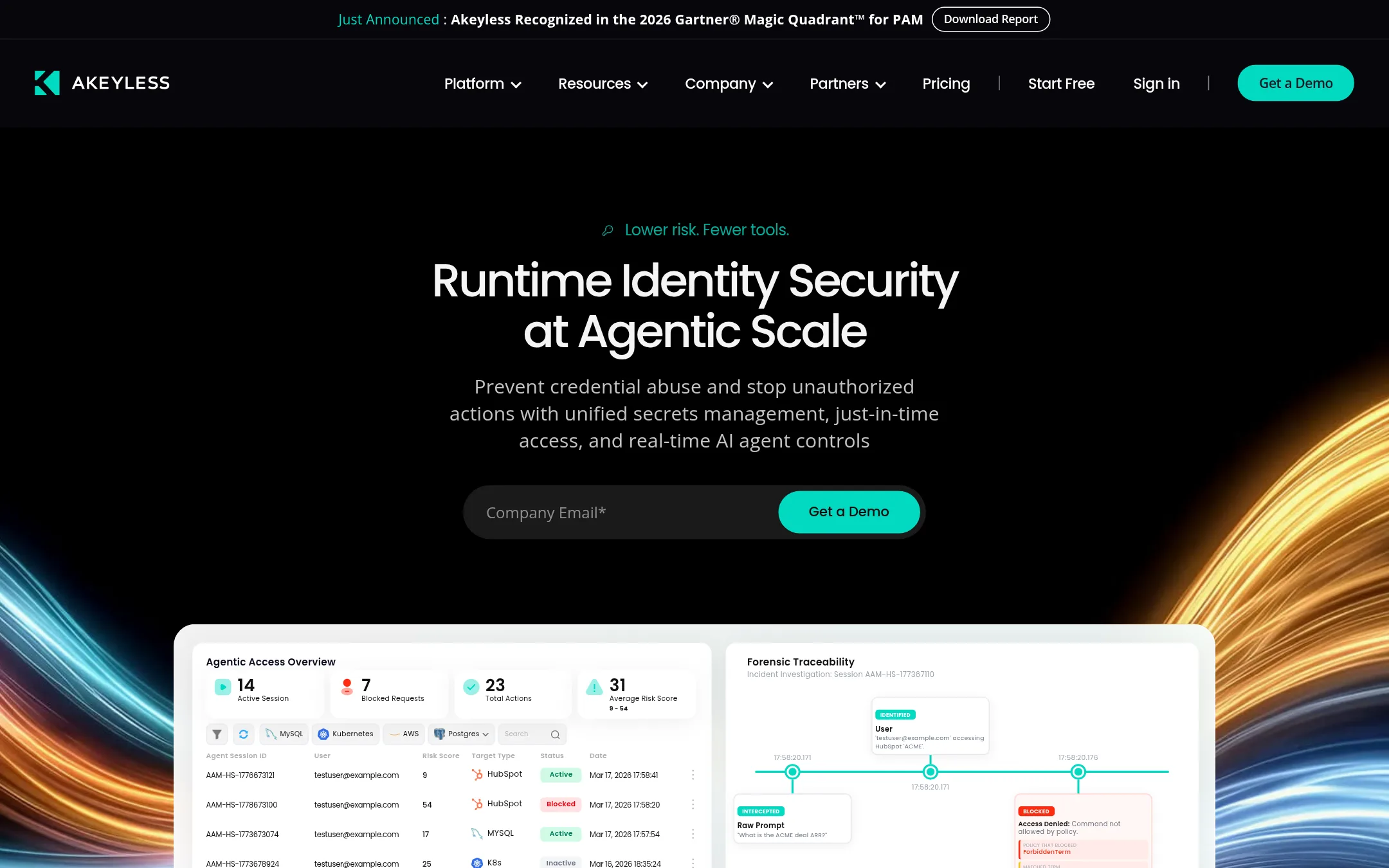
Akeyless is a cloud-native secrets management and identity security platform that also covers PAM, certificates, and multi-cloud KMS. You would choose it over HashiCorp Vault if you want a SaaS or hybrid SaaS deployment with zero-knowledge encryption and a single policy engine for machines, AI agents, and humans.
Where it is strong
- Pure SaaS or hybrid SaaS with on-premise gateways for compliance
- Unified secrets, PAM, certificates, and KMS in one platform
- Zero-knowledge and post-quantum encryption built in
Where it falls short
- Pricing requires contacting sales. No public numbers
- May be overkill if you only need basic secrets management
- Pricing:
- Pricing is not published on the site. It offers a free starter tier and custom enterprise solutions.
- Switching from HashiCorp Vault:
- The site includes a customer quote about ripping and replacing Hashi Vault, but no migration steps are detailed.
- KCustom quote
7.Keeper Secrets Manager
Best for: Teams that already use Keeper for password management and want a zero-knowledge, cloud-hosted secrets vault without operating their own infrastructure.
- Pricing
- Custom quote
- Category
- Other
Keeper Secrets Manager is a cloud-based secrets management tool that stores API keys, database credentials, and other secrets in an encrypted vault. It fits teams already using Keeper's password manager who want a simpler, SaaS-hosted alternative to running Vault themselves.
Where it is strong
- Zero-knowledge encryption means Keeper cannot access your secrets
- FedRAMP High and FIPS 140-3 validated for government and regulated industries
- Integrates with Keeper's broader PAM platform for unified identity security
Where it falls short
- No self-hosted option. Requires trusting Keeper's cloud
- Pricing is not transparent, so budgeting is harder than Vault's open-source tier
- Pricing:
- Pricing is not published on the site. You must contact sales for a quote.
- Switching from HashiCorp Vault:
- Moving from Vault to Keeper means re-creating your secret policies and updating applications to use Keeper's API, since it does not support Vault's protocol.
- Not published
8.Doppler
Best for: Teams that want a managed secrets platform with per-seat pricing and free access for AI agents and automated workflows.
- Pricing
- Not published
- Category
- Security & Privacy
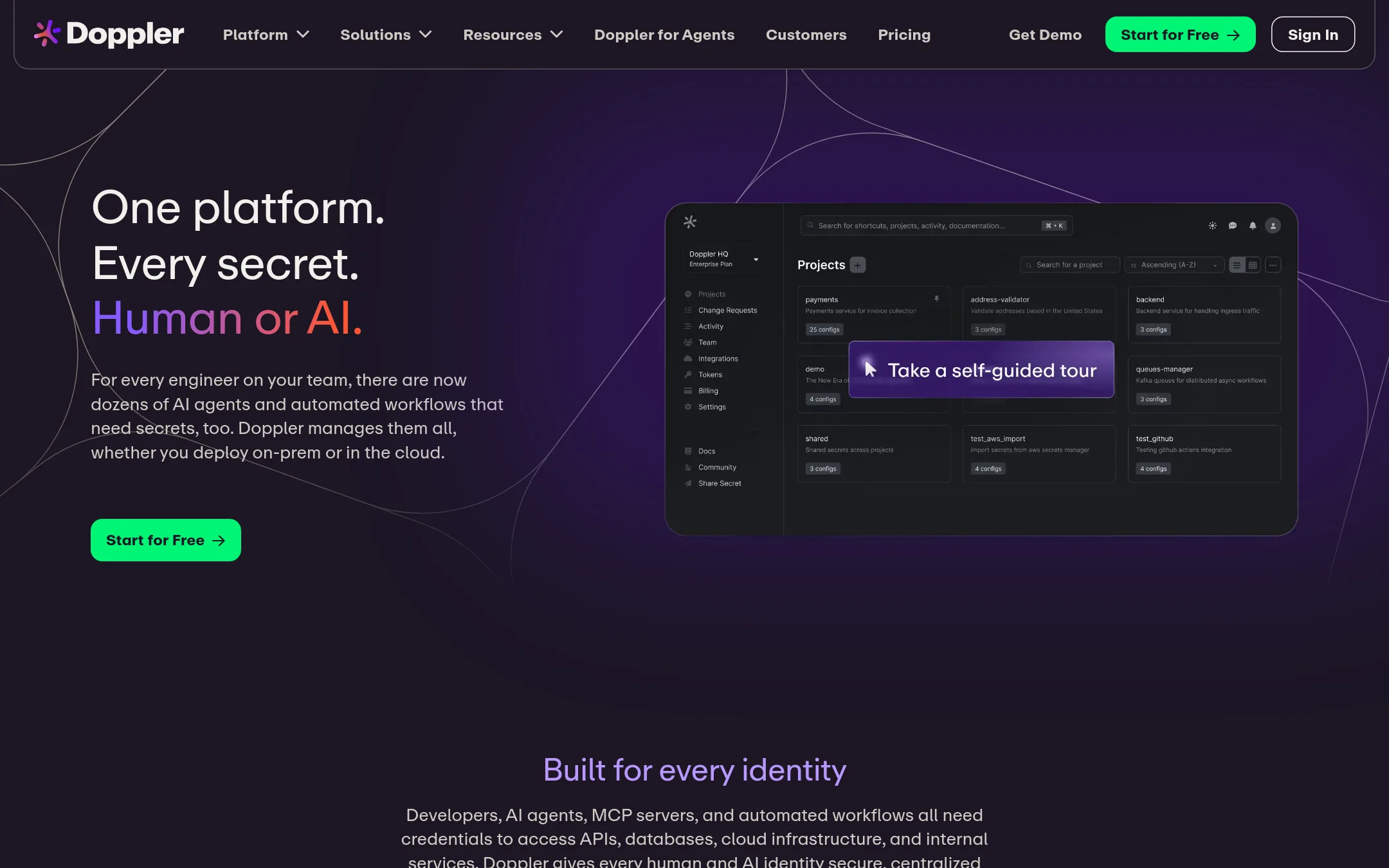
Doppler is a cloud-first secrets manager that centralizes API keys, database credentials, and other secrets across environments, with user-based pricing that doesn't charge extra for AI agents or non-human identities. Choose it over HashiCorp Vault if you want a managed SaaS platform with built-in integrations for CI/CD, Kubernetes, and cloud providers, and don't need to run or operate your own infrastructure.
Where it is strong
- User-based pricing with no extra cost for non-human identities like AI agents
- Dynamic secrets issue fresh credentials per deploy and revoke them automatically
- Native integrations with cloud platforms, Kubernetes, CI/CD, webhooks, and SDKs
Where it falls short
- No self-hosted option on lower tiers. On-prem deployment is Enterprise-only
- Activity logs are limited to 3 days on Developer and 90 days on Team plans
- Pricing:
- Pricing is not published on the site. Plans are Developer, Team, and Enterprise with custom contracts for Enterprise.
- Switching from HashiCorp Vault:
- Moving from HashiCorp Vault to Doppler involves migrating your secrets into Doppler's environment and reconfiguring your apps and pipelines to use Doppler's CLI, API, or SDKs instead of Vault's.
- ONot published
9.OpenBao
Best for: Teams that already use Vault and want a drop-in open source alternative with community governance.
- Pricing
- Not published
- Category
- Other
OpenBao is a community-driven fork of HashiCorp Vault, so it covers the same core secret storage, dynamic secrets, data encryption, and identity-based access. Choose it if you want an open source Vault-compatible tool without HashiCorp's license restrictions or if you prefer a project governed by a neutral foundation.
Where it is strong
- Fork of Vault, so most existing workflows and APIs carry over
- Open source with a neutral governance model
- Covers secret storage, dynamic secrets, encryption, and revocation
Where it falls short
- No commercial support or enterprise features
- Project is younger than Vault, so the ecosystem and integrations are less mature
- Pricing:
- Pricing is not published on the site.
- Switching from HashiCorp Vault:
- Since OpenBao is a fork of Vault, migrating usually means pointing your existing Vault clients at the OpenBao API and checking for any version-specific differences.
- VNot published
10.Vault by Ansible (community)
Best for: Teams already using Ansible for configuration management who want to automate the deployment and rotation of secrets across servers.
- Pricing
- Not published
- Category
- Other
Vault by Ansible (community) is not a secrets manager. It is the open source Ansible automation engine, which can be used to deploy and configure tools like HashiCorp Vault. Choose it instead of Vault if your primary need is automating infrastructure and you want to manage secrets as part of playbooks, not as a dedicated vault service.
Where it is strong
- Free and open source with a large community
- Tight integration with Ansible playbooks for automation
- Can manage secrets across many servers at once
Where it falls short
- Not a dedicated secrets manager, so lacks Vault's built-in encryption and access policies
- Requires you to build and maintain your own secret-handling logic
- Pricing:
- Pricing is not published on the site.
- See website
11.Infisical
Security & Privacy
Unified platform for secrets, certs, and privileged access management
- Open source
12.Kubernetes
Best for: Teams already on Kubernetes that need basic secret storage for containerized workloads and want to keep their stack simple.
- Pricing
- Open source
- Category
- Developer Tools
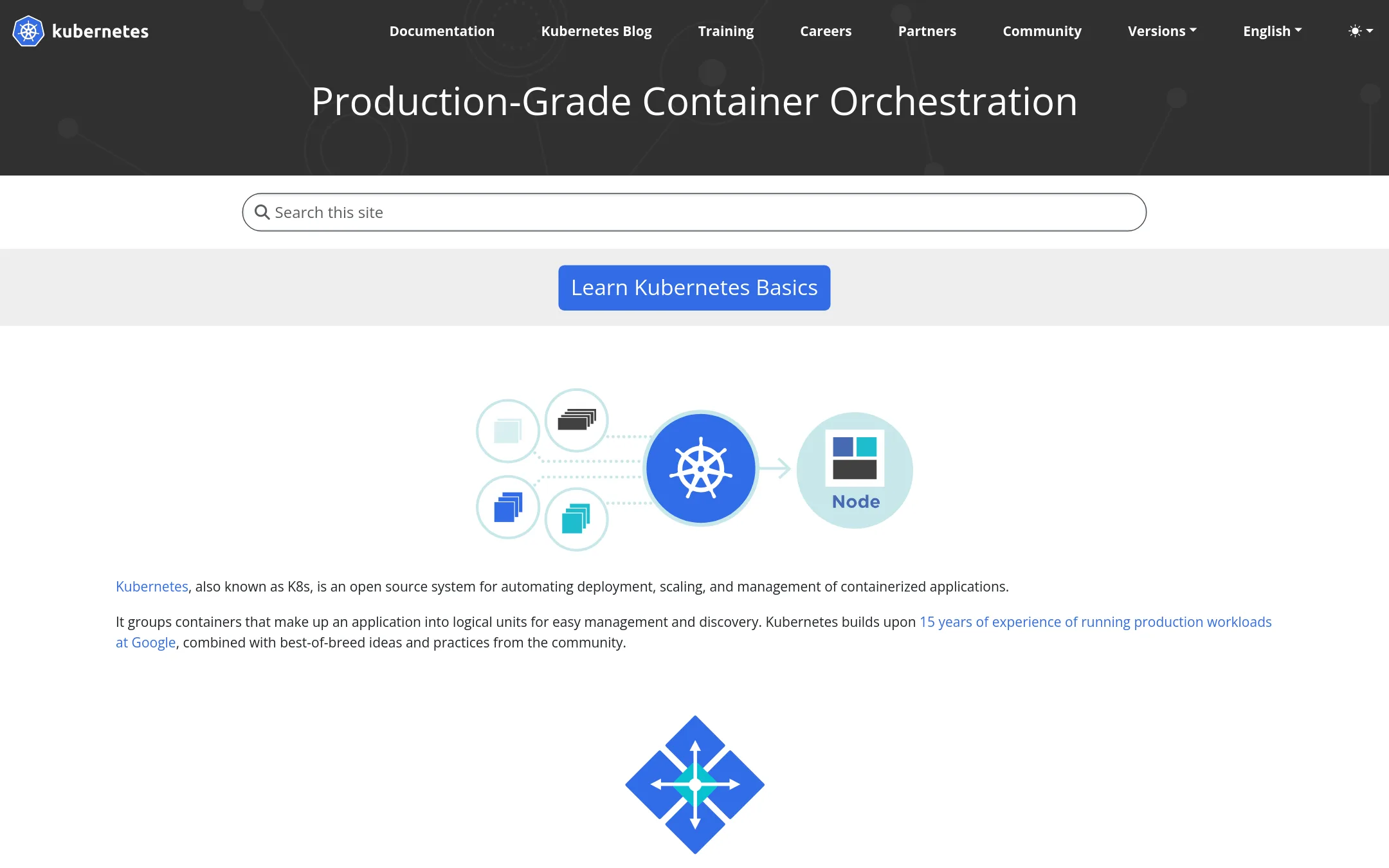
Kubernetes is a container orchestration platform, not a secrets manager. It includes basic secret and configuration management as part of its workload automation, so teams already running Kubernetes can store simple secrets without adding a separate tool. Choose it over HashiCorp Vault only if your secret needs are minimal and you want to avoid running another service, not for fine-grained access control or dynamic secrets.
Where it is strong
- Open source and free to run on your own infrastructure
- Secrets are stored as native Kubernetes objects, so they integrate with existing deployments
- Automated rollouts and rollbacks apply to secret changes, reducing manual steps
Where it falls short
- Secrets are stored in etcd, not encrypted at rest by default
- No dynamic secrets, rotation policies, or identity-based access controls like Vault
- Pricing:
- Pricing is not published on the site.
See more comparisons in Security & Privacy alternatives.
FAQ
Questions about HashiCorp Vault alternatives
Which alternative is best for a small team that wants a simple, cloud-hosted secrets manager?
Keeper Secrets Manager is a good fit if you already use Keeper's password manager, as it offers a zero-knowledge, cloud-hosted vault. Doppler is also cloud-first with per-seat pricing and free access for AI agents, but its pricing is not public. Both require contacting sales for quotes.
Can I get a Vault-compatible open source alternative?
OpenBao is a community-driven fork of HashiCorp Vault, so most workflows and APIs carry over. It is open source with neutral governance, but lacks commercial support and has a younger ecosystem. It is a drop-in replacement for teams already using Vault.
Which alternative is best for managing access to servers and databases, not just secrets?
Teleport focuses on identity-based access to SSH, Kubernetes, and databases with short-lived certificates and just-in-time privileges. It eliminates standing credentials and includes audit logging, but pricing requires a sales conversation. It is ideal for engineering teams needing unified access control.
Are there alternatives that cover both secrets and privileged access management?
CyberArk (now Idira) and Akeyless both offer unified platforms for secrets, PAM, and identity governance. CyberArk is enterprise-focused with a broader suite, while Akeyless provides SaaS or hybrid deployment with zero-knowledge encryption. Both have non-public pricing and are suited for large enterprises.
What should I consider about pricing when switching from Vault?
Most alternatives do not publish pricing, so you will need to contact sales for quotes. Doppler uses per-seat pricing with free access for non-human identities, while Akeyless offers a free starter tier. Consider whether you need self-hosted options, as some tools like Keeper are cloud-only, and check activity log retention limits on lower tiers.
Last updated November 1, 2026.