
Health Gorilla alternatives
12 products compared · Updated November 2, 2026
The short answer
For digital health startups needing fast API access to patient records, Particle Health is the strongest alternative. For health plans focused on payer interoperability and CMS compliance, 1upHealth is the best fit. For organizations that need a broad national network with transparent tiered fees, eHealth Exchange is the most direct substitute.
Your shortlist, at a glance
Read the comparisons ↓- eeHealth Exchange$5k, $41k/yrProviders and non-profit health information exchanges in the US that need broad national data exchange with federal agency connectivity and TEFCA participation.
- CCommonWell Health AllianceNot publishedHealthcare organizations and IT vendors seeking a non-profit, community-governed health data exchange network.
- CCarequalityNot publishedHealth information networks and providers in the U.S. that need a framework for cross-network data sharing without building individual contracts.
 1upHealthCustom quoteHealth plans (Medicare, Medicaid, commercial) that need payer interoperability and CMS compliance tools like prior authorization and provider directory management.
 RedoxFrom $15k/yearDigital health startups and vendors that need to integrate with multiple EHRs and cloud environments without building point-to-point connections.
- MMuleSoftSee websiteEnterprise integration and API platform
 JunctionFrom $300/moVirtual-first clinics, digital health platforms, and consumer diagnostics companies that want to launch lab testing and wearable integrations quickly without building their own operations team.
 MetriportSee websiteOpen-Source Platform for Healthcare Data Intelligence
 ValidicNot publishedHealth systems and digital health teams that need device data normalized into one API and integrated with EHRs like Epic or Cerner.
- CCernerNot publishedHospitals and large health systems that need a full enterprise EHR platform rather than a data exchange layer.
 EpicNot publishedHospitals and large health systems that need an integrated EHR with built-in patient portal and network connectivity.
 Human APINot publishedLife insurance carriers in the U.S. that want purpose-built EHR outputs for underwriting at scale.
About Health Gorilla and its alternatives
Health Gorilla is a national health data exchange network and API platform. It is known for its dual QHIN and QHIO designations, which enable participation in TEFCA and California's Data Exchange Framework. The platform provides patient record retrieval, clinical alerts, and data normalization for EHRs, payviders, and digital health companies.
When comparing alternatives, weigh your primary use case: clinical record exchange, payer compliance, or device data. Check pricing structure, since some vendors publish transparent tiers while others require sales quotes. Consider regional coverage, especially for lab networks and state-specific regulations. Evaluate integration depth with your existing EHR or cloud stack. Review support and contract terms, as annual billing and custom quotes are common.
Explore the alternatives
- e$5k, $41k/yr
1.eHealth Exchange
Best for: Providers and non-profit health information exchanges in the US that need broad national data exchange with federal agency connectivity and TEFCA participation.
- Pricing
- $5k, $41k/yr
- Category
- Other
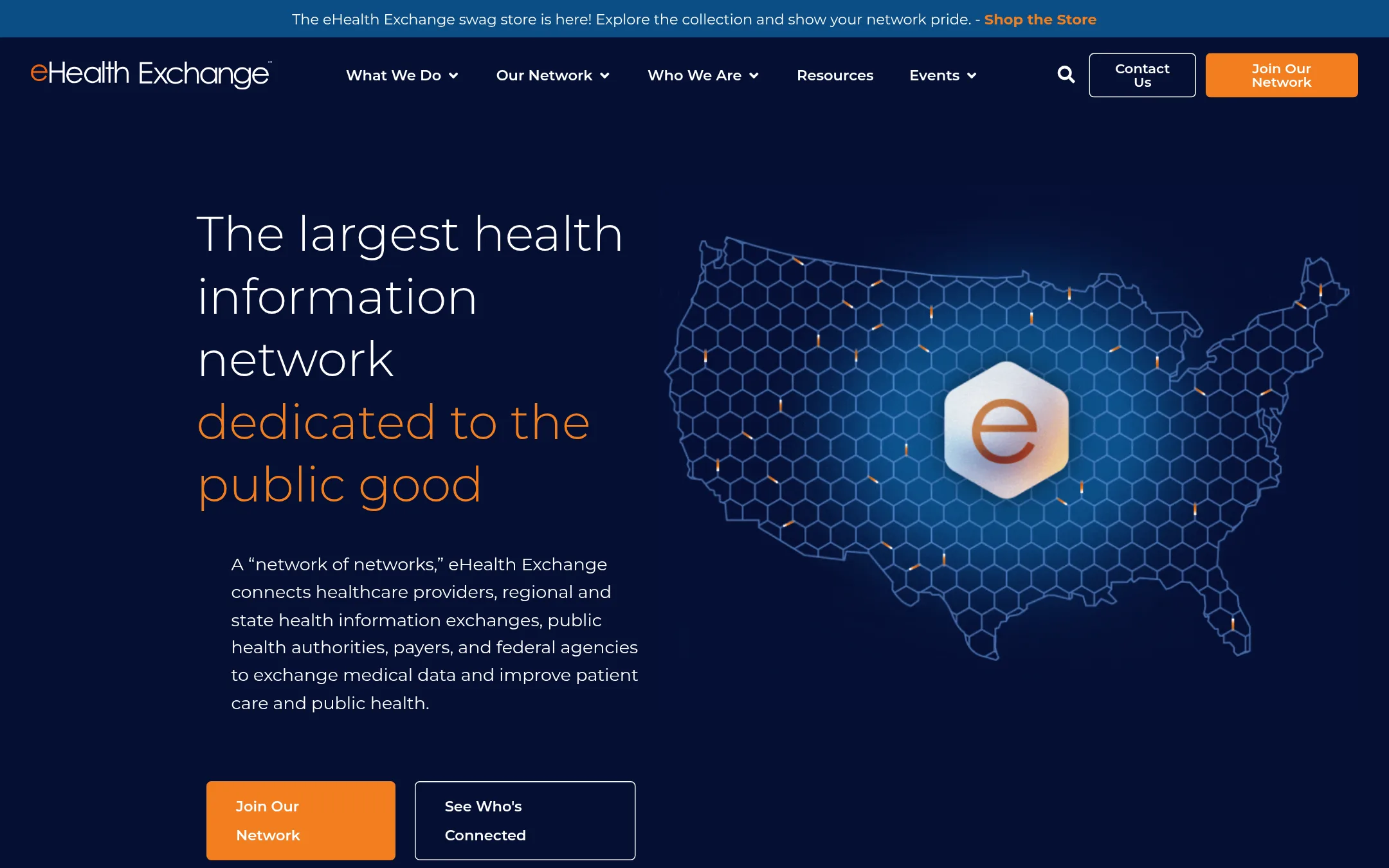
eHealth Exchange is a large national health information network that connects providers, HIEs, payers, and federal agencies. Choose it over Health Gorilla if you want a network-of-networks approach with a single legal agreement and connection, especially if you're a provider or non-profit HIE looking for tiered participation fees.
Where it is strong
- One legal agreement (DURSA) and one connection to reach many participants
- Includes Carequality and TEFCA exchange at no extra subscription fee
- Vendor agnostic with HITRUST and NIST security certifications
Where it falls short
- Pricing for non-provider or for-profit organizations requires emailing for a quote
- No built-in patient record viewer or clinical alerts like Health Gorilla offers
- Pricing:
- Core participation fees range from $5,000 for organizations under $1 million in adjusted revenue to $41,000 for those at $5 billion or greater, with no additional fees for Carequality exchange.
- Switching from Health Gorilla:
- Moving from Health Gorilla means replacing its dual QHIN/QHIO status and API-driven record access with eHealth Exchange's network participation model, which may require renegotiating legal agreements and testing your technology platform.
- CNot published
2.CommonWell Health Alliance
Best for: Healthcare organizations and IT vendors seeking a non-profit, community-governed health data exchange network.

- Pricing
- Not published
- Category
- Other
CommonWell Health Alliance is a national network that connects health IT systems for data sharing, similar to Health Gorilla. If you need a vendor-neutral, non-profit interoperability network and the website is currently down, you might consider it for its broad provider participation. Choose it when you want a community-governed alternative to a commercial QHIN.
Where it is strong
- Non-profit, community-governed model
- National network with broad provider participation
- Focus on vendor-neutral interoperability
Where it falls short
- Website currently unreachable, limiting access to details
- May lack the dual QHIN/QHIO designation that Health Gorilla holds
- Pricing:
- Pricing is not published on the site.
- CNot published
3.Carequality
Best for: Health information networks and providers in the U.S. that need a framework for cross-network data sharing without building individual contracts.

- Pricing
- Not published
- Category
- Other
Carequality is an interoperability framework that connects health information networks across the U.S., letting participants exchange data without one-off legal agreements. Choose it over Health Gorilla if you're a network or provider already in a health data exchange and want a governance layer for nationwide connectivity, not a full data pipeline or API service.
Where it is strong
- Eliminates the need for individual data sharing agreements between networks.
- Public-private, multi-stakeholder collaborative with broad industry participation.
- Focuses on governance and connectivity, not just data access.
Where it falls short
- No data processing, de-duplication, or record reconciliation like Health Gorilla offers.
- Requires you to already be part of a participating network or build your own interoperability.
- Pricing:
- Pricing is not published on the site.
- Custom quote
4.1upHealth
Best for: Health plans (Medicare, Medicaid, commercial) that need payer interoperability and CMS compliance tools like prior authorization and provider directory management.
- Pricing
- Custom quote
- Category
- Healthcare
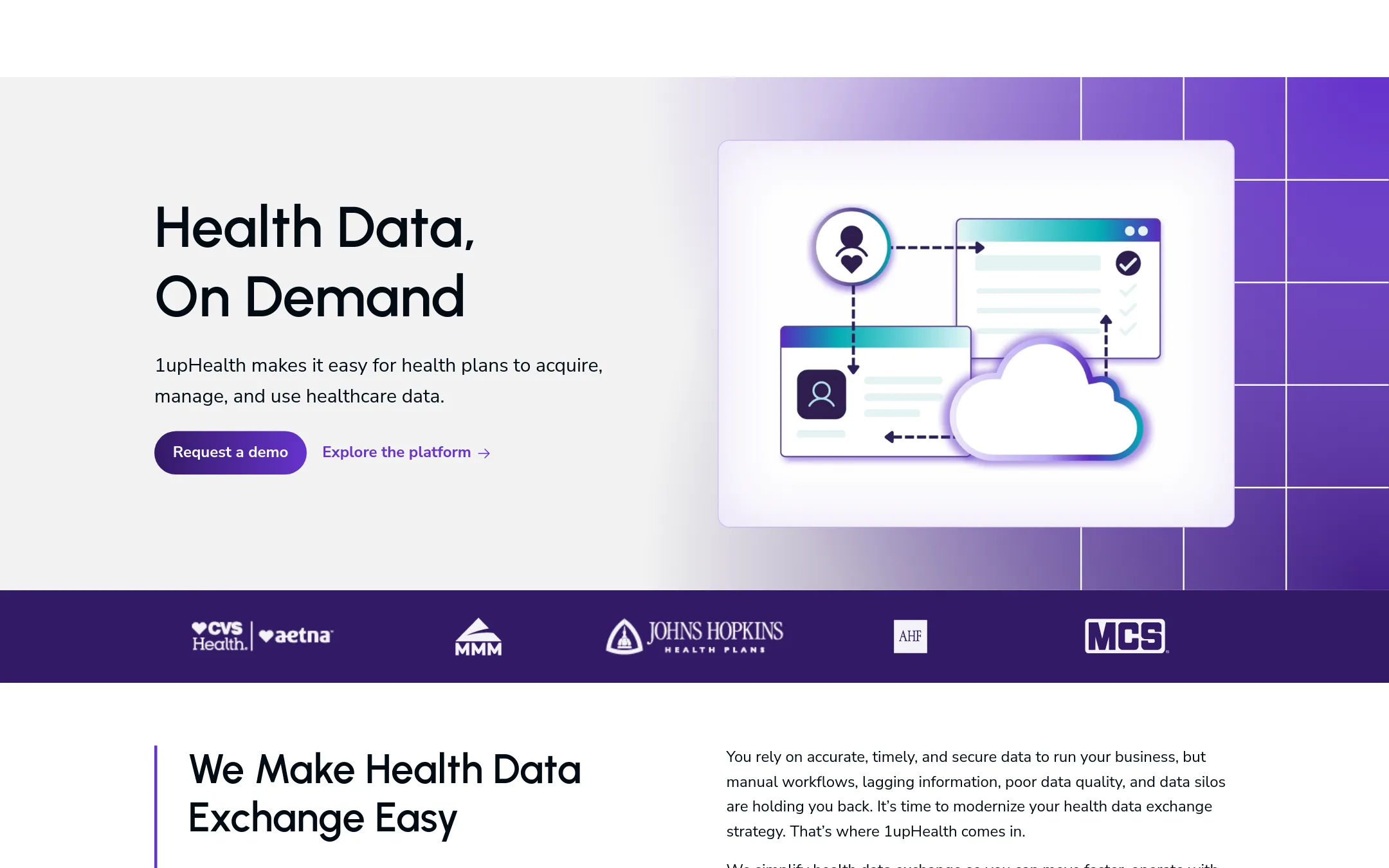
1upHealth is a FHIR-first platform built for health plans to manage payer interoperability, including prior authorization, payer-to-payer exchange, and CMS compliance. Choose it over Health Gorilla if you are a health plan focused on payer-side regulatory requirements and modular solutions rather than a national clinical data network.
Where it is strong
- FHIR-first platform with lakehouse architecture for scalable data exchange
- Modular solutions that work independently or end-to-end
- Dedicated support and regulatory expertise for CMS-9115-F and CMS-0057-F
Where it falls short
- Pricing not transparent, requires contacting sales
- Primarily payer-focused, less suited for EHRs or labs needing a national clinical network
- Pricing:
- Pricing is not published on the site. Contact sales for a quote.
- Switching from Health Gorilla:
- Moving from Health Gorilla to 1upHealth involves reconfiguring your interoperability workflows to a payer-centric FHIR platform, which may require new integrations and compliance alignment.
- From $15k/year
5.Redox
Best for: Digital health startups and vendors that need to integrate with multiple EHRs and cloud environments without building point-to-point connections.
- Pricing
- From $15k/year
- Category
- Healthcare
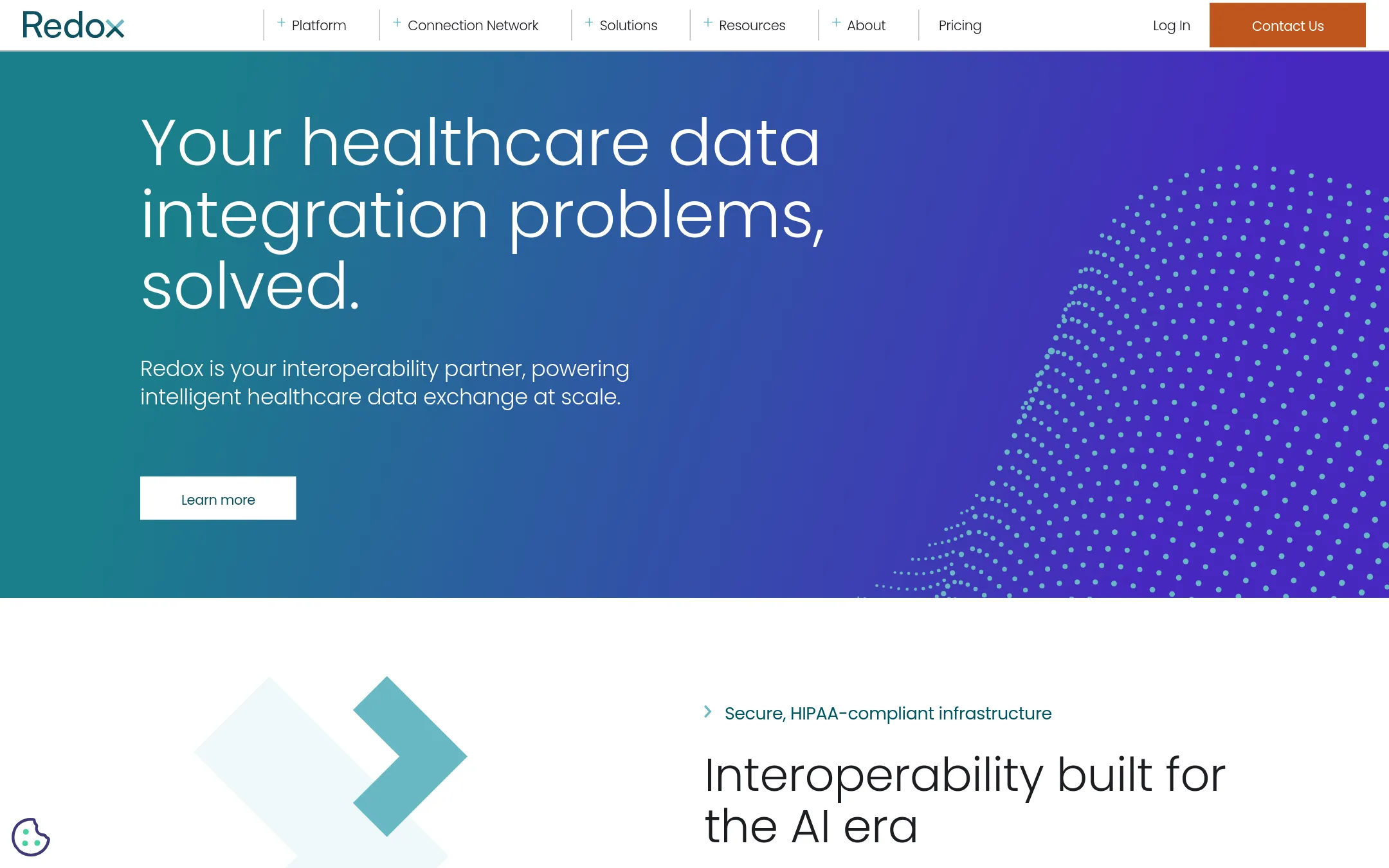
Redox is a healthcare data integration platform that connects vendors, providers, and payers to EHRs and other systems via a single API. Choose it over Health Gorilla if you need a flexible, cloud-native integration hub with transparent tiered pricing and strong support for AI workflows and cloud data platforms.
Where it is strong
- Transparent tiered pricing with a low-cost Sandbox for startups.
- Strong cloud integrations with Azure, GCP, AWS, Databricks, and Snowflake.
- HITRUST and SOC 2 certifications across hosting environments.
Where it falls short
- Sandbox tier not available for providers, payers, or enterprises.
- No mention of TEFCA or QHIN designation, unlike Health Gorilla.
- Pricing:
- Pricing starts at $15k/year for the Sandbox tier (for companies under 500 employees), and $35k/year for Core. Advanced is custom quote.
- Switching from Health Gorilla:
- Moving from Health Gorilla to Redox involves reconfiguring your integration endpoints and data mappings, but Redox's standardized API may simplify multi-EHR connectivity.
- MSee website
6.MuleSoft
Developer Tools
A general integration platform with healthcare-specific accelerators, enabling similar data aggregation and interoperability workflows.
- From $300/mo
7.Junction
Best for: Virtual-first clinics, digital health platforms, and consumer diagnostics companies that want to launch lab testing and wearable integrations quickly without building their own operations team.
- Pricing
- From $300/mo
- Category
- Healthcare
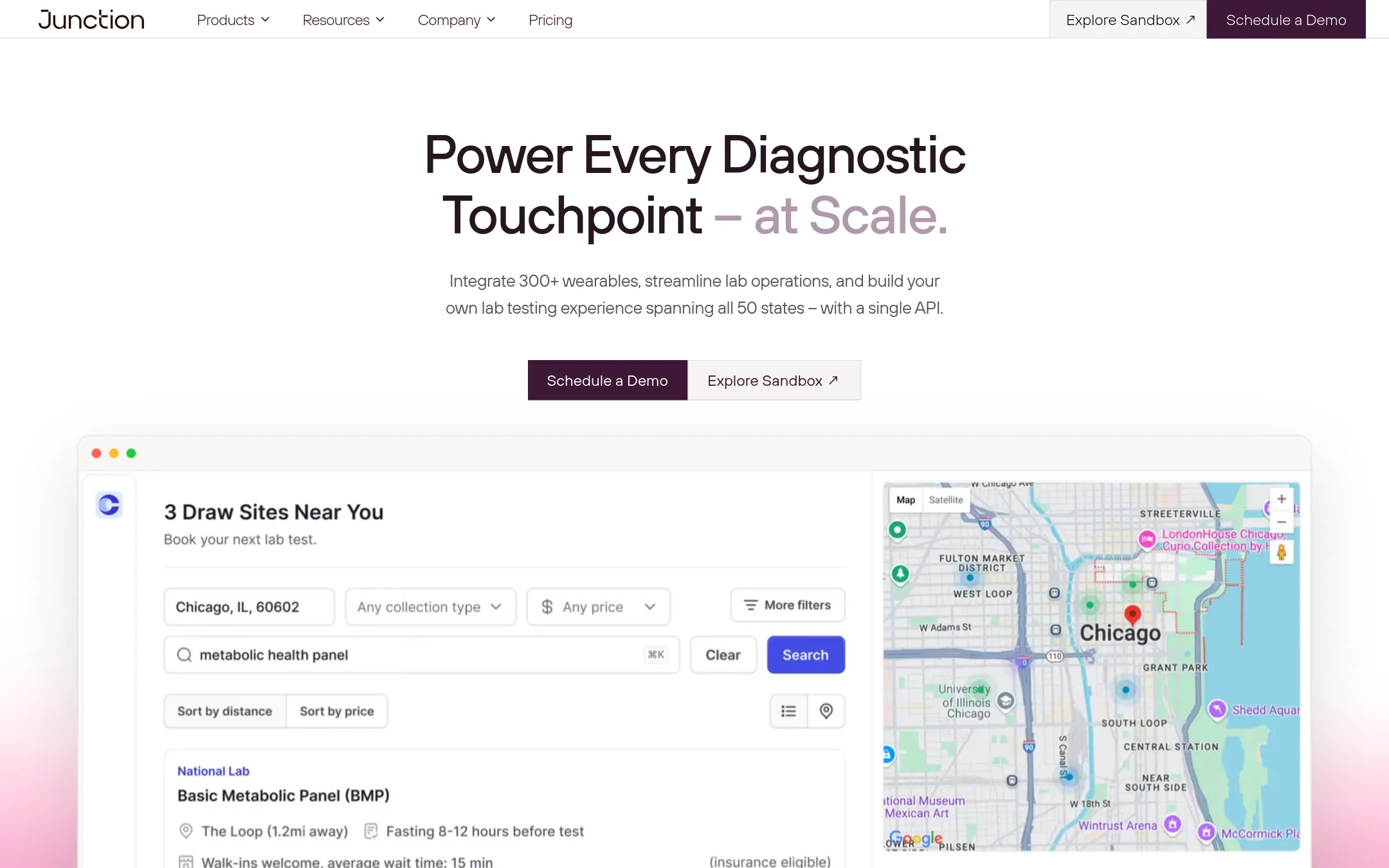
Junction is an API that connects to 300+ wearables and a nationwide lab network, handling lab ordering, at-home kits, and results delivery. Choose it instead of Health Gorilla when your product needs consumer-facing diagnostics and device data, not just clinical record exchange.
Where it is strong
- Single API for 300+ devices and nationwide lab network, including NY, NJ, and RI.
- Operations team handles result tracking, patient reminders, and exceptions.
- No upcharges on lab tests. Transparent pricing on Launch plan.
Where it falls short
- Lab testing is only available on Enterprise, which requires annual billing and custom quote.
- No physician consults or result interpretations. You need to provide your own clinical oversight.
- Pricing:
- Launch plan is $300 per month, billed monthly, for up to 500 connected users. Enterprise is custom, billed annually, and includes lab testing API, SLAs, and volume discounts.
- Switching from Health Gorilla:
- Moving from Health Gorilla means shifting from clinical record exchange to a device and lab-focused API, so you'll need to rework your data ingestion and patient workflows.
- See website
8.Metriport
Healthcare
Open-Source Platform for Healthcare Data Intelligence
- Not published
9.Validic
Best for: Health systems and digital health teams that need device data normalized into one API and integrated with EHRs like Epic or Cerner.
- Pricing
- Not published
- Category
- Healthcare
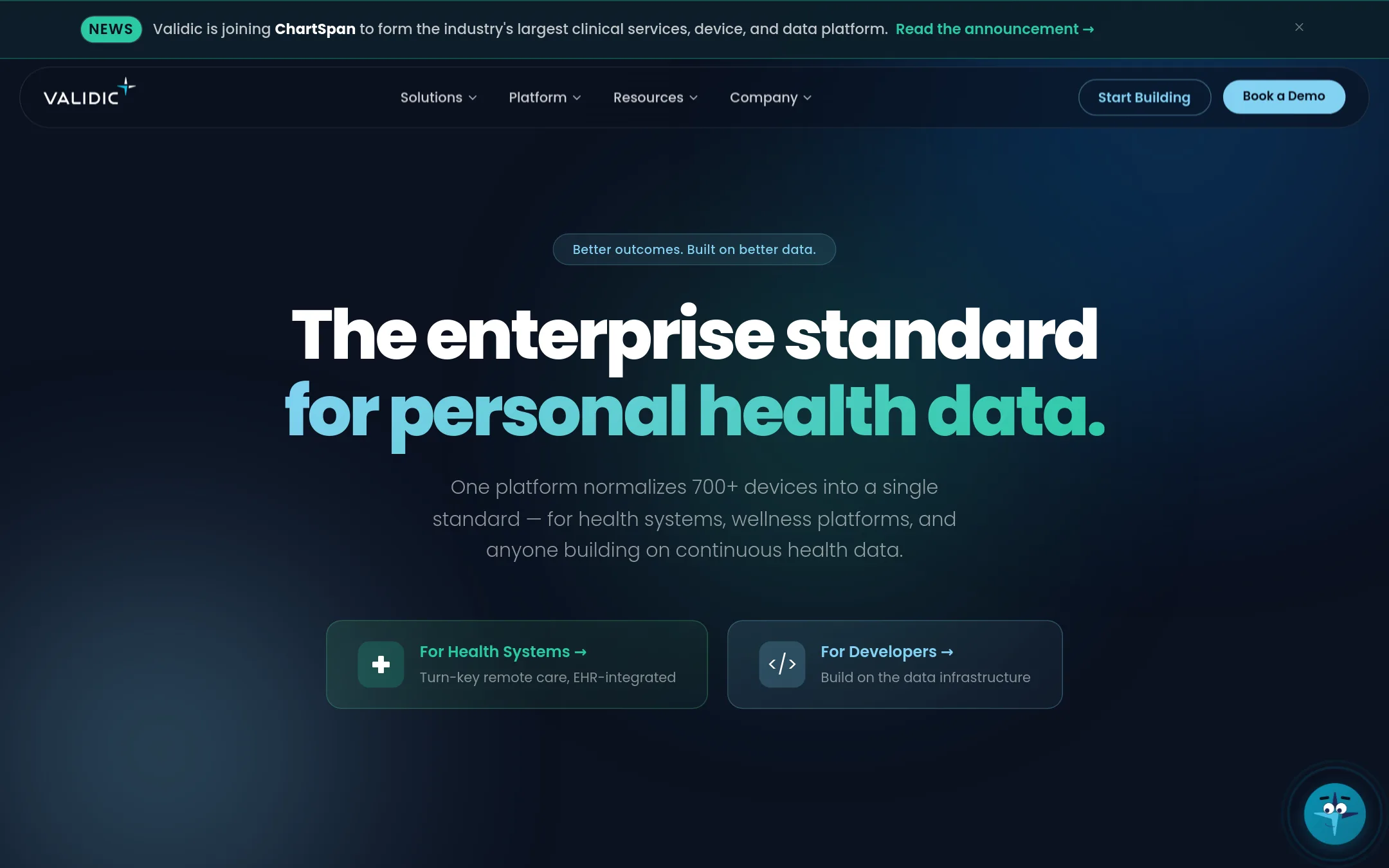
Validic normalizes data from 700+ connected devices into a single standard, which is useful if you're building on continuous patient-generated health data rather than clinical records. Choose it over Health Gorilla when your focus is remote patient monitoring, wellness programs, or device integrations, not national health information exchange.
Where it is strong
- 700+ device integrations normalized into one data standard
- Managed remote care programs that write directly to Epic, Cerner, and other EHRs
- One infrastructure layer reusable across cardiology, population health, and digital front door
Where it falls short
- No mention of TEFCA or QHIN designation, so not for national data exchange compliance
- Focus is on patient-generated health data, not clinical records from hospitals and clinics
- Pricing:
- Pricing is not published on the site.
- CNot published
10.Cerner
Best for: Hospitals and large health systems that need a full enterprise EHR platform rather than a data exchange layer.

- Pricing
- Not published
- Category
- Healthcare
Cerner is a large enterprise EHR vendor, not a data exchange network like Health Gorilla. You would choose Cerner if you are a hospital or health system looking to replace or upgrade your core clinical information system, not if you need to connect to other networks or comply with TEFCA.
Where it is strong
- Mature, widely deployed EHR with deep clinical workflows
- Strong inpatient and outpatient functionality
- Large ecosystem of third-party integrations
Where it falls short
- Not a health data exchange network, so it doesn't replace Health Gorilla's interoperability role
- Implementation is heavy and costly, typically requiring years and significant IT resources
- Pricing:
- Pricing is not published on the site.
- Not published
11.Epic
Best for: Hospitals and large health systems that need an integrated EHR with built-in patient portal and network connectivity.
- Pricing
- Not published
- Category
- Healthcare
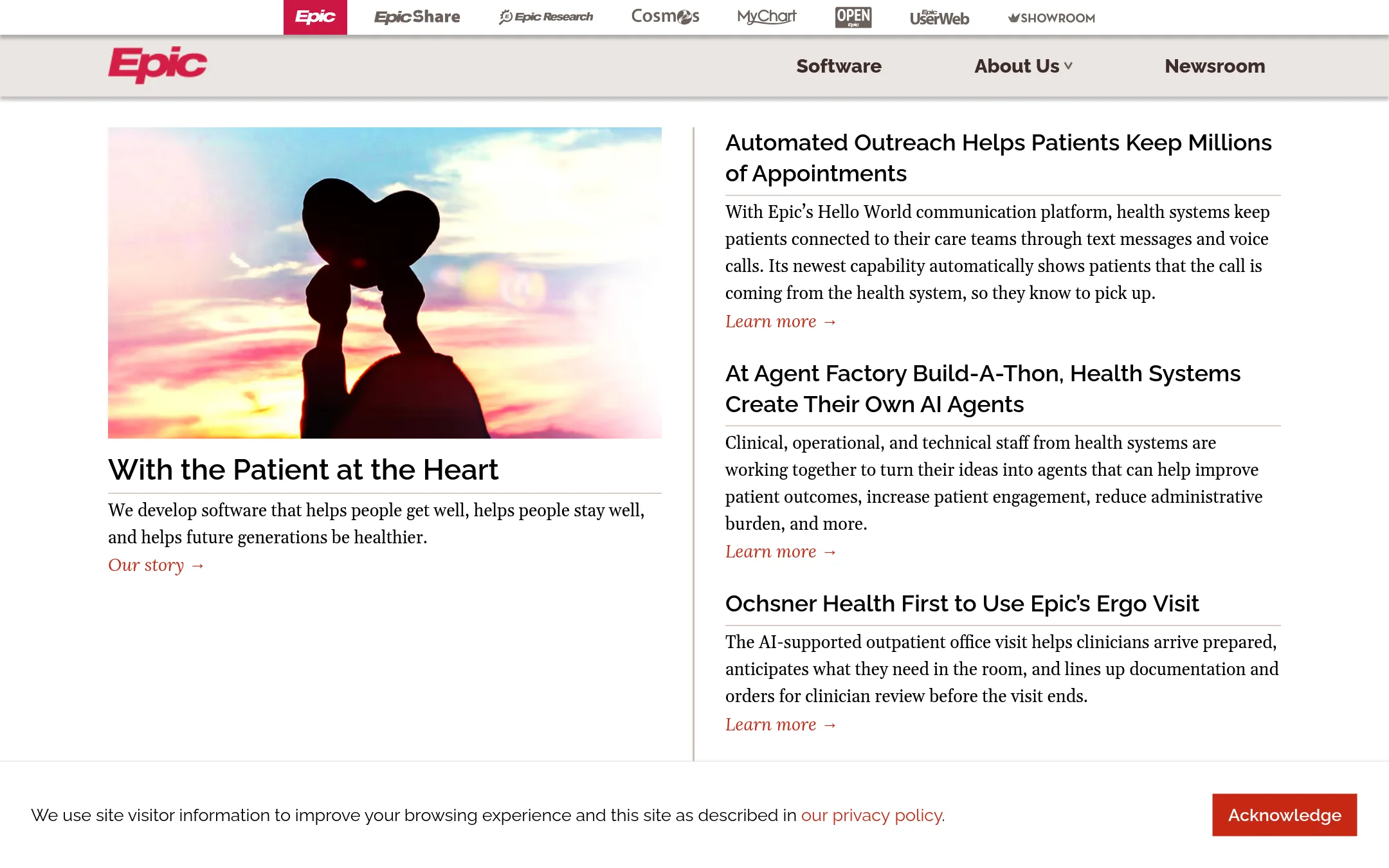
Epic is a full EHR platform that also runs a large health information network, so it suits organizations that want both clinical workflows and data exchange in one system. Choose Epic over Health Gorilla if you are a hospital or large health system that needs an integrated EHR, not just an interoperability layer.
Where it is strong
- Widely adopted across major US health systems, easing data sharing with partners.
- Includes patient portal (MyChart) and telehealth features.
- Strong focus on patient privacy and legal defense of data.
Where it falls short
- Typically requires significant investment and IT resources to deploy and maintain.
- May be overkill for smaller practices or digital health companies that only need data exchange APIs.
- Pricing:
- Pricing is not published on the site.
- Switching from Health Gorilla:
- Moving from Health Gorilla to Epic would mean adopting a full EHR platform, which is a major operational change beyond just swapping an interoperability vendor.
- Not published
12.Human API
Best for: Life insurance carriers in the U.S. that want purpose-built EHR outputs for underwriting at scale.
- Pricing
- Not published
- Category
- Healthcare
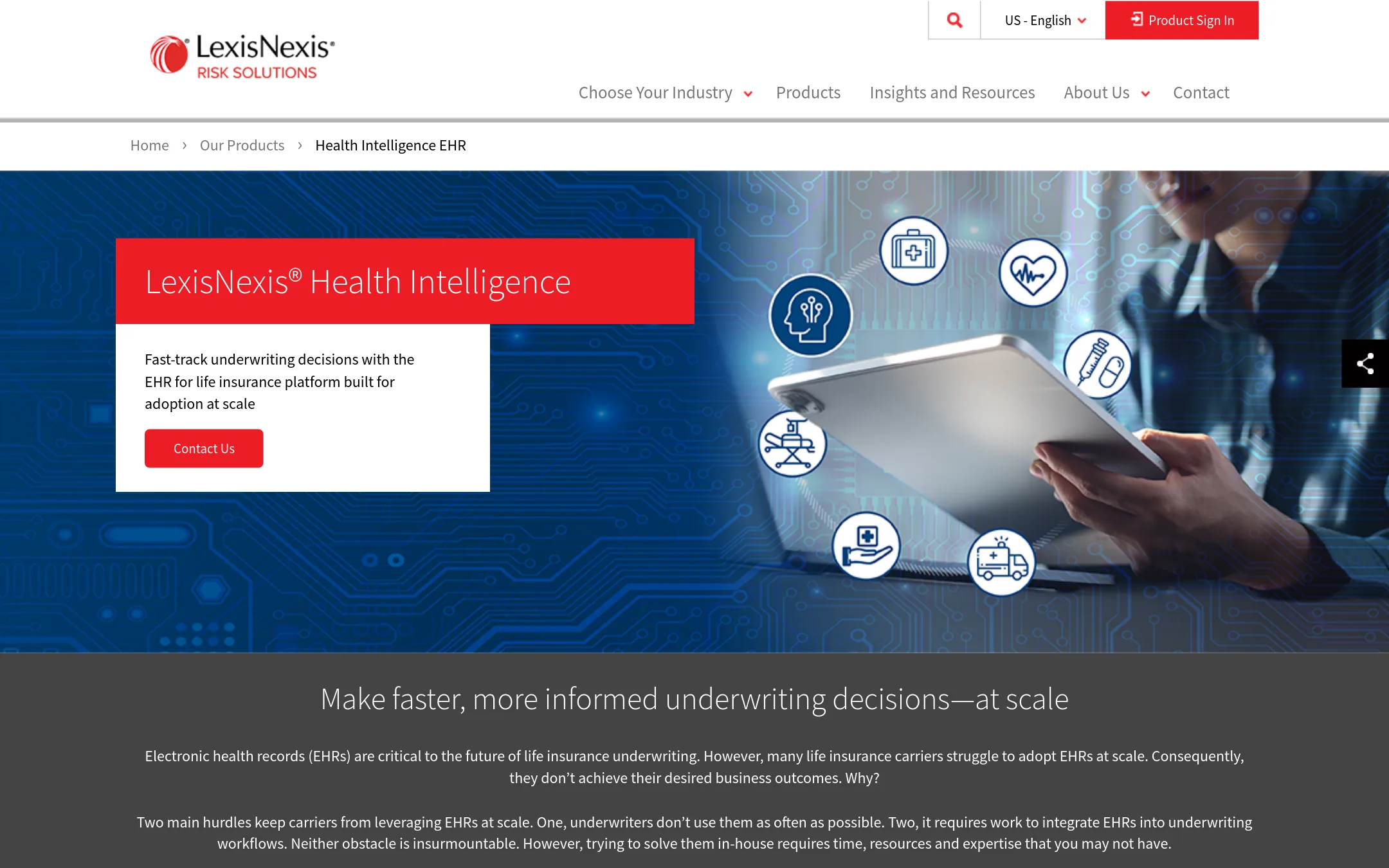
Human API, now part of LexisNexis Health Intelligence, is built specifically for life insurance underwriting, not general healthcare data exchange. You would choose it over Health Gorilla if you are a life insurance carrier that needs fast, underwriting-ready EHRs with high hit rates and automatic APS fallback.
Where it is strong
- EHRs are up to 30% shorter, with reverse-chronological ordering and date filtering for quick risk decisions.
- Connects to over 30,000 U.S. data sources, including HIPAA and consumer-mediated networks, for hit rates up to 76%.
- Automatically orders an APS through Human API, Inc. when an EHR isn't available, saving underwriter time.
Where it falls short
- Focused on life insurance underwriting, not general healthcare interoperability or TEFCA compliance.
- Pricing is not public, and access likely requires a carrier contract.
- Pricing:
- Pricing is not published on the site.
- Switching from Health Gorilla:
- Moving from Health Gorilla to Human API would mean shifting from a general health data exchange network to a life-insurance-specific EHR service, so you'd need to rework your underwriting data workflows and consent paths.
See more comparisons in Healthcare alternatives.
FAQ
Questions about Health Gorilla alternatives
What is the main difference between Health Gorilla and a full EHR like Epic or Cerner?
Health Gorilla is a data exchange network and API layer, not a clinical workflow system. Epic and Cerner are complete EHR platforms that include documentation, ordering, and billing. Choose an EHR if you need to run a hospital or large practice. Choose Health Gorilla or an API vendor if you only need data access and interoperability.
Which alternative is best for a startup that needs lab testing and wearable data?
Junction is the best fit. It offers a single API for 300+ wearables and a nationwide lab network, with transparent pricing starting at $300 per month. Lab testing is only on the Enterprise plan, which requires annual billing, so factor that into your budget.
Do any of these alternatives have published pricing?
Yes. Redox starts at $15k/year for Sandbox and $35k/year for Core. eHealth Exchange has tiered fees from $5,000 to $41,000 based on revenue. Junction charges $300 per month for Launch. Most others, including Epic, Cerner, 1upHealth, Validic, Particle Health, and Human API, require contacting sales for a quote.
Which alternative is best for a health plan needing payer interoperability and CMS compliance?
1upHealth is purpose-built for health plans. It covers prior authorization, payer-to-payer exchange, and CMS-9115-F and CMS-0057-F compliance. It is FHIR-first and modular, but pricing is not public, so you will need to contact sales.
Is there a non-profit or community-governed alternative to Health Gorilla?
CommonWell Health Alliance is a non-profit, community-governed network with broad provider participation. However, its website is currently unreachable, and it may lack the dual QHIN/QHIO designation. eHealth Exchange is another network-of-networks option with transparent provider fees and TEFCA participation.
Last updated November 2, 2026.