
HeroUI alternatives
6 products compared · Updated November 11, 2026
The short answer
The three strongest alternatives to HeroUI are shadcn/ui, Mantine, and Radix UI. shadcn/ui suits React and Next.js teams that want to own and edit component source code, because its components are copied into the codebase. Mantine suits React web teams that want a large free component set with a built-in form library and easy style overrides. Radix UI suits React teams with an existing design system that need accessible, unstyled building blocks.
Your shortlist, at a glance
Read the comparisons ↓- sshadcn/uiFree (open source)React and Next.js teams that want to own and edit their component source code instead of depending on a versioned UI package
- CChakra UINot publishedReact product teams that want to build a custom design system on a mature, widely adopted component library
- MMantineNot publishedReact web teams that want a large free component library with a built-in form library and easy style overrides
- MMaterial UIFree (MIT) + paid X tiReact teams that want Material Design or a deeply customizable component library with complex components like autocomplete and data grids
- RRadix UINot publishedReact teams with an existing design system that need accessible, unstyled building blocks
- AAnt DesignNot publishedEnterprise teams building data-heavy web dashboards and internal tools in React who want a broad, established component set.
About HeroUI and its alternatives
HeroUI is an open-source component library for React and React Native. According to its site, it offers free components, premium templates, theme packs, and an embeddable AI agent, and it is known for providing one theme that works across web and mobile.
When comparing alternatives in this category, weigh how each product is priced, which platforms it covers, and how well it integrates with your existing stack. Also check what support is offered and what the contract terms are, since some options are free to use while others publish paid tiers and others publish no pricing at all.
Explore the alternatives
- sFree (open source)
1.shadcn/ui
Best for: React and Next.js teams that want to own and edit their component source code instead of depending on a versioned UI package
- Pricing
- Free (open source)
- Category
- Other
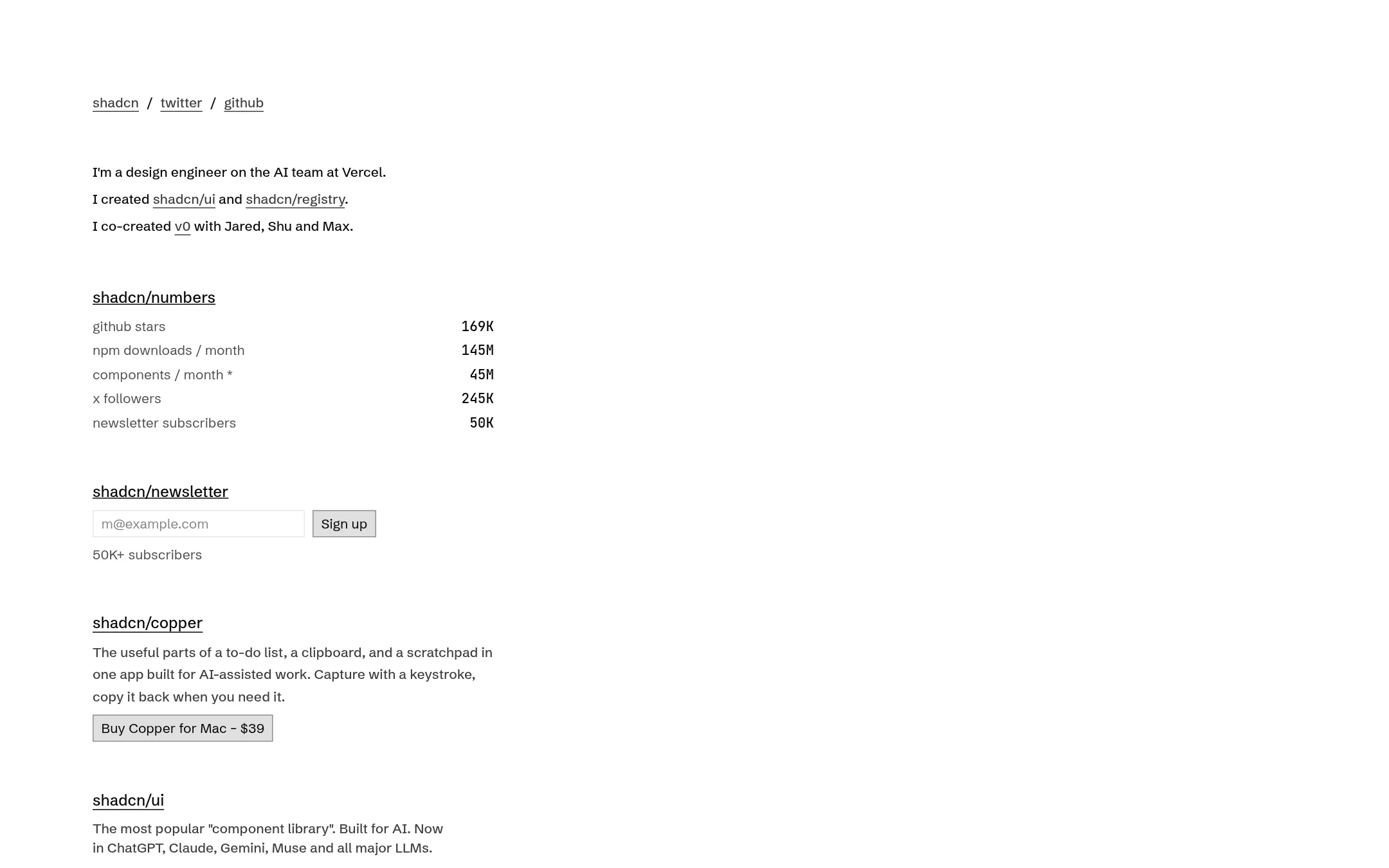
shadcn/ui is a copy-paste component library for React built on Tailwind, with components you own in your own codebase rather than installing as a package. Teams pick it over HeroUI when they want full control over component source code and a design that stays close to their own styling. Its distribution through a public registry also means AI tools can pull components into projects easily.
Where it is strong
- Components are copied into your codebase, so you can edit them freely without waiting on upstream releases
- Large community with about 169K GitHub stars and roughly 145M npm downloads per month
- Works with AI coding tools and is available through a public registry for quick installs
Where it falls short
- Covers React only, while HeroUI also offers React Native components
- Does not include premium templates, theme packs, or an embeddable AI agent like the HeroUI ecosystem offers
- Pricing:
- The shadcn/ui library is free to use, and pricing is not published on the site for any paid tier.
- CNot published
2.Chakra UI
Best for: React product teams that want to build a custom design system on a mature, widely adopted component library
- Pricing
- Not published
- Category
- Other
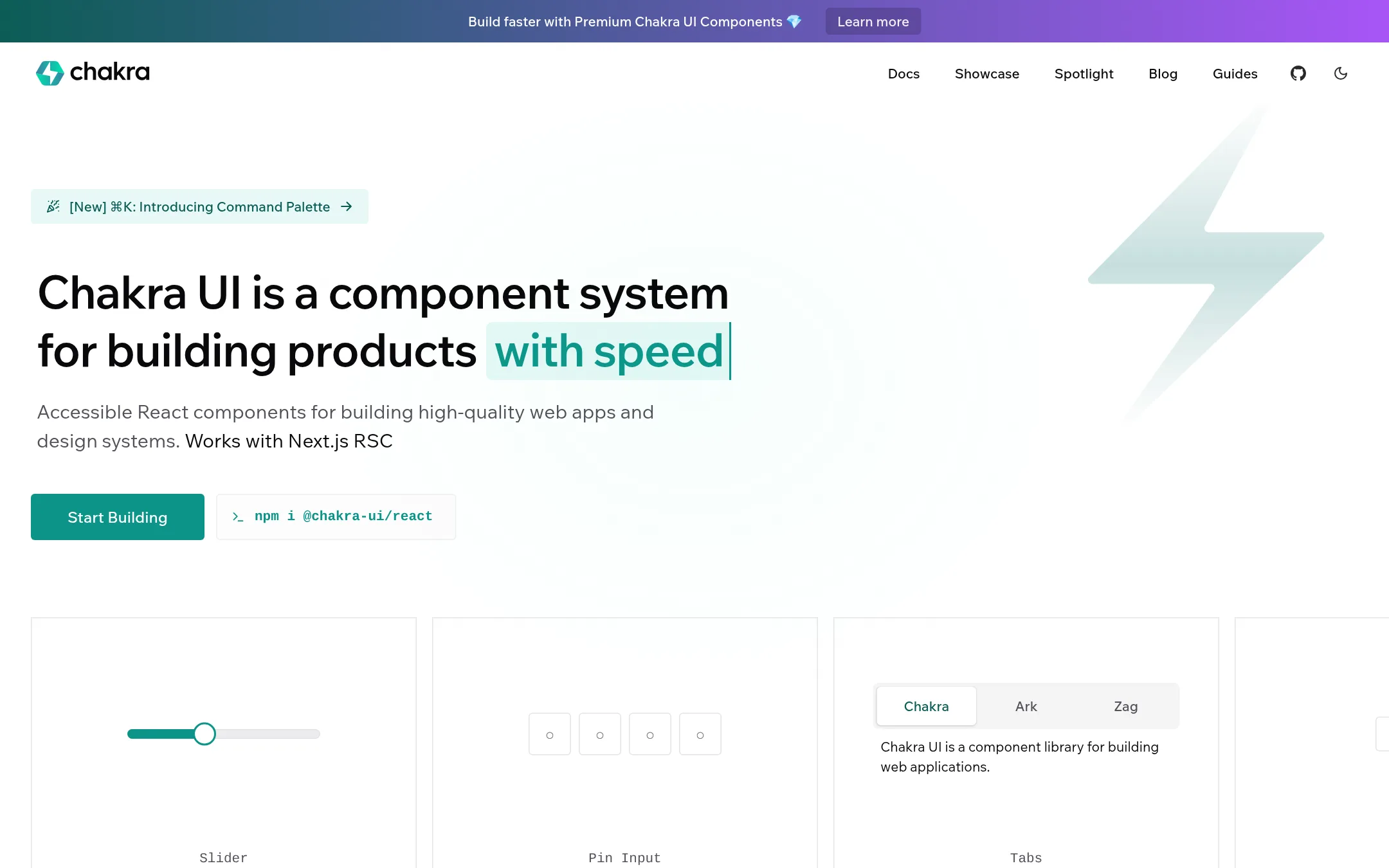
Chakra UI is an open-source React component library with accessible, modular components and semantic design tokens for building your own design system. A team would pick it over HeroUI when they want to build a custom design system on a long-established, widely used base, with strong accessibility defaults and Next.js server component support.
Where it is strong
- Semantic tokens and recipes make it easy to build a custom design system
- Accessibility is a stated core principle, with built-in focus styling and dark mode
- Works with Next.js RSC and other modern React frameworks
Where it falls short
- The site lists no mobile or React Native component set, unlike HeroUI
- Chakra Pro is mentioned for premade pages and templates, but no pricing or details are published on the site
- Pricing:
- Pricing is not published on the site.
- MNot published
3.Mantine
Best for: React web teams that want a large free component library with a built-in form library and easy style overrides
- Pricing
- Not published
- Category
- Other
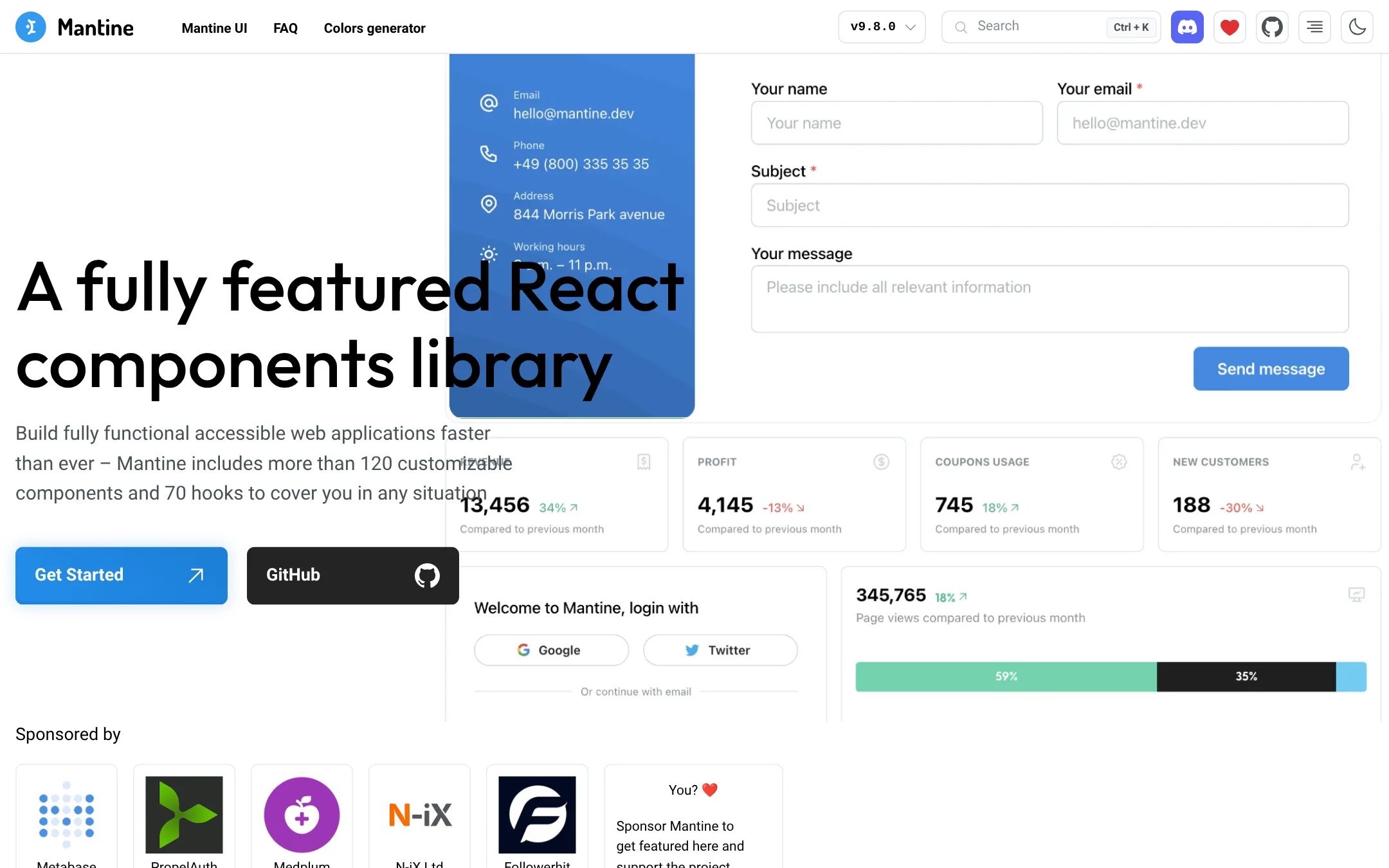
Mantine is an open-source React library with more than 120 customizable components and 70 hooks, covering things like date pickers, modals, notifications, and a combobox for custom selects. Choose it over HeroUI when you want a broad built-in component set with native CSS and a form library, and you need to style or override parts of components through its Styles API.
Where it is strong
- Over 120 components and 70 hooks, including date pickers, modals, and notifications
- Built-in @mantine/form library that works with Mantine inputs and supports zod schemas
- Styles API and native CSS let you override any part of a component
Where it falls short
- Covers React web apps only, with no React Native components like HeroUI offers
- Does not include premium templates or a Figma-to-code workflow like HeroUI Pro
- Pricing:
- Pricing is not published on the site.
- MFree (MIT) + paid X ti
4.Material UI
Best for: React teams that want Material Design or a deeply customizable component library with complex components like autocomplete and data grids
- Pricing
- Free (MIT) + paid X ti
- Category
- Other
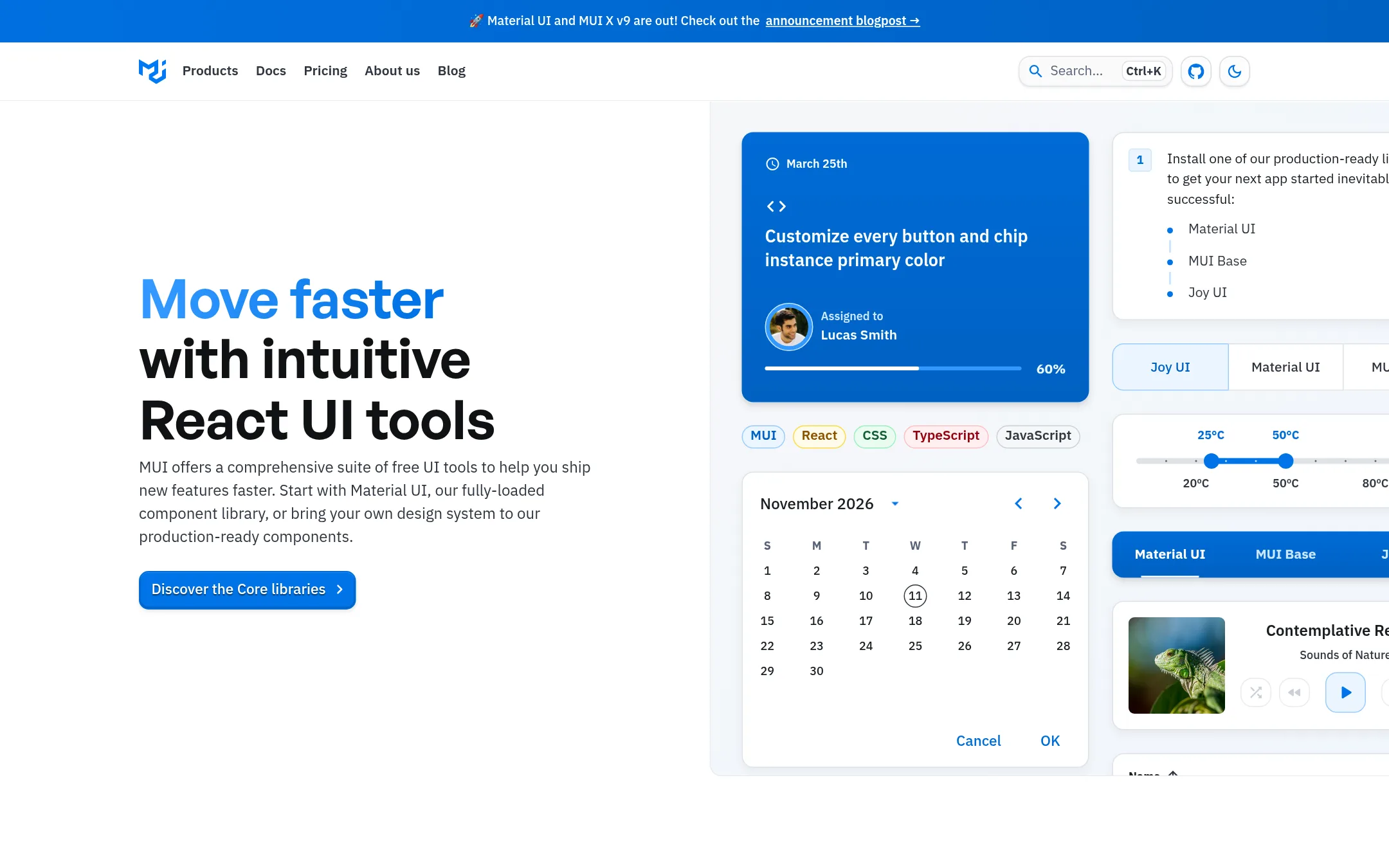
Material UI is a React component library built on Google's Material Design, with a large set of components including data-heavy ones like Autocomplete and a data grid. Teams pick it over HeroUI when they want a mature, widely adopted library with deep documentation and a theming system they can override in detail. HeroUI is the better fit when you want React Native support in the same system.
Where it is strong
- Free MIT-licensed core library with over 40 free components
- Extensive documentation and a large community of contributors
- Strong accessibility focus across components
Where it falls short
- Focused on React web, so there is no React Native counterpart in the same ecosystem
- Advanced data components such as the Pro and Premium features require a paid license
- Pricing:
- The core library is free and MIT-licensed, while commercial plans for MUI X Pro and Premium are priced per developer per year, with Pro listed at $24.92 per month per developer on an annual basis.
- RNot published
5.Radix UI
Best for: React teams with an existing design system that need accessible, unstyled building blocks
- Pricing
- Not published
- Category
- Other
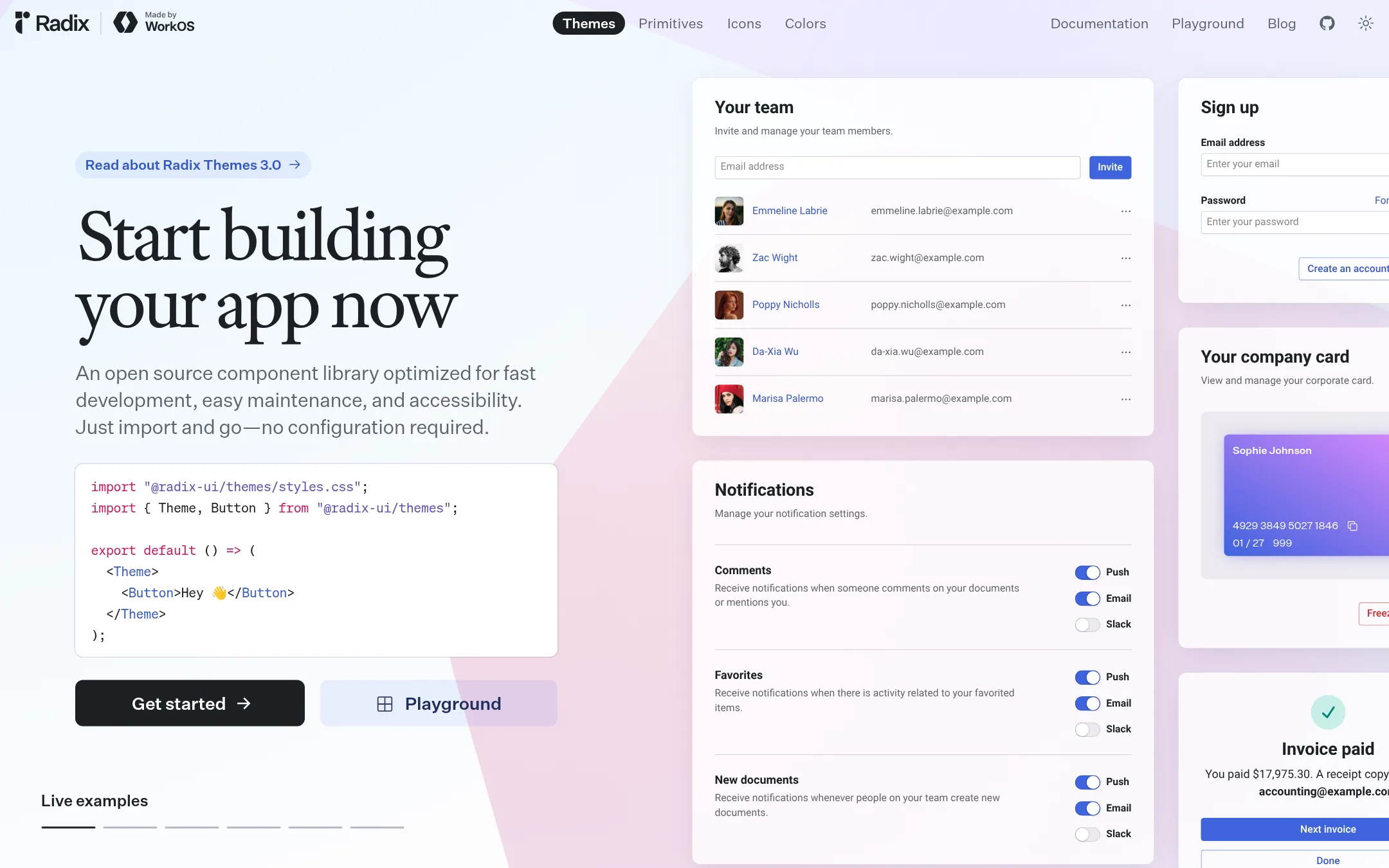
Radix UI is an open source library of unstyled, accessible React components, plus icons and colors. Teams pick it when they want full control over the look of their interface and still need keyboard support, focus handling, and screen reader behavior done correctly. HeroUI ships with a visual design out of the box, so Radix suits a team that already has its own design system or wants to style everything from scratch.
Where it is strong
- Free and open source, with no paid tier listed on the site
- Built for accessibility, so keyboard and screen reader support comes with the components
- Imports and runs with no configuration needed to start
Where it falls short
- Components come unstyled, so you must build the visual layer yourself
- The site lists no premium templates or prebuilt app screens like HeroUI Pro offers
- Pricing:
- Pricing is not published on the site.
- Switching from HeroUI:
- Moving from HeroUI means rebuilding styling on top of Radix primitives, since HeroUI's themes and visual components will not carry over.
- ANot published
6.Ant Design
Best for: Enterprise teams building data-heavy web dashboards and internal tools in React who want a broad, established component set.
- Pricing
- Not published
- Category
- Other
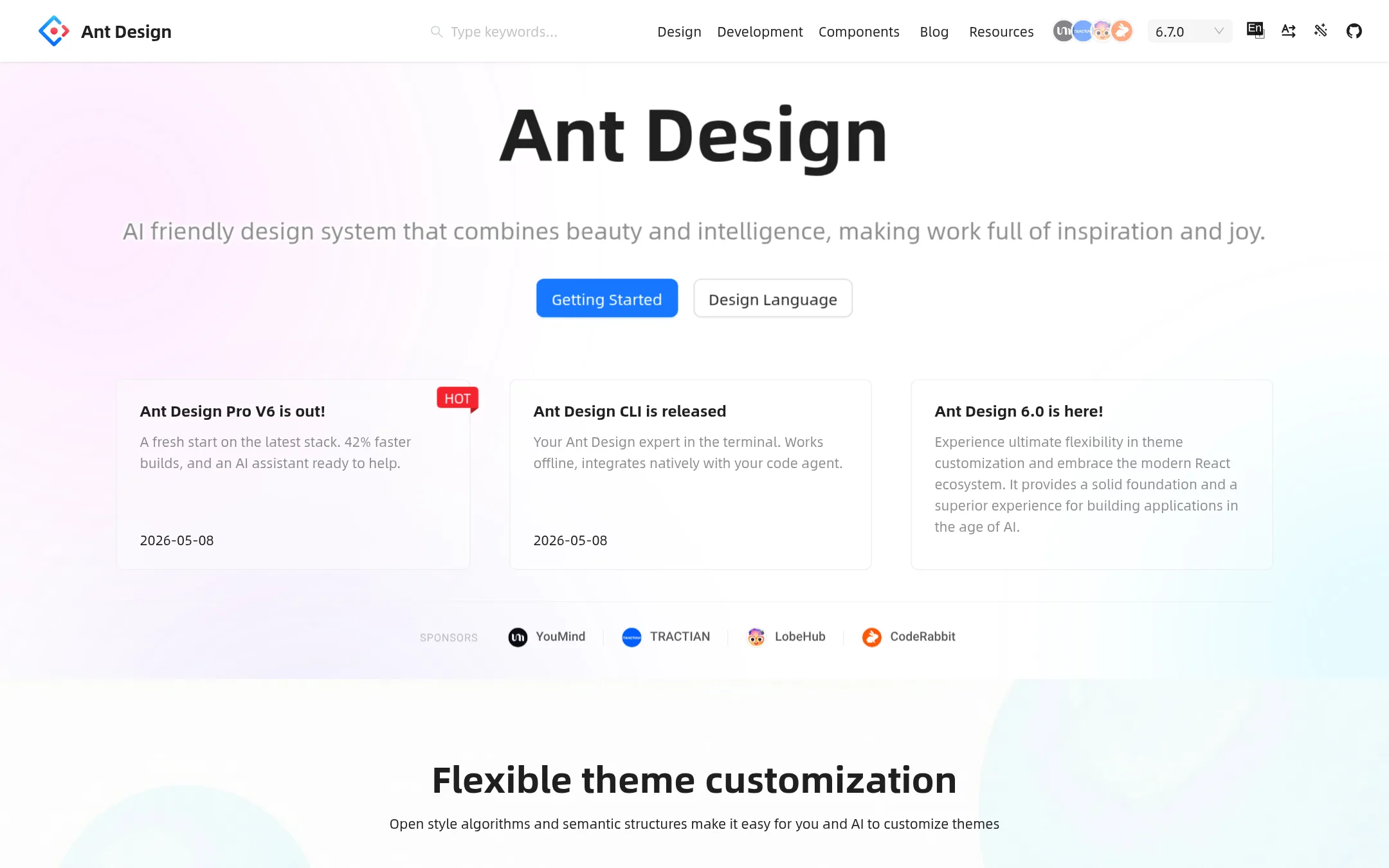
Ant Design is a React UI library and design language built for enterprise-style products, with a large set of components such as tables, date pickers, tours and splitters. Teams choose it over HeroUI when they need a heavy, well-documented component set for dashboards and internal tools, along with a design system and companion libraries for mobile and data visualisation. The homepage also points to theme customisation through style algorithms and semantic tokens.
Where it is strong
- Wide component library, including tables, date pickers, tours and splitters
- Ships companion libraries for mobile, Angular and Vue, plus AntV for data visualisation
- Theme customisation through style algorithms and CSS-in-JS
Where it falls short
- Its look is strongly opinionated, so heavy restyling takes more effort than with HeroUI
- The site does not mention a free starter template library or a paid tier of premium templates like HeroUI Pro
- Pricing:
- Pricing is not published on the site.
See more comparisons in Design & Creative alternatives.
FAQ
Questions about HeroUI alternatives
What is HeroUI best known for?
According to its site, HeroUI is known for open-source components for React and React Native that share one theme across web and mobile. It also offers premium templates, theme packs, and agents that work inside a product.
Which HeroUI alternative should I choose if I want to own my component code?
shadcn/ui is a copy-paste component library, so its components are copied into your codebase and you can edit them freely. Its site describes this as a key difference from installing a versioned package.
Is there a free alternative to HeroUI for React web apps?
Mantine, Radix UI, and Material UI all offer free core libraries. Mantine lists over 120 components and 70 hooks, and Material UI's core library is free and MIT-licensed.
Do any alternatives support React Native like HeroUI does?
The entries reviewed here cover React web only. shadcn/ui, Chakra UI, Mantine, Material UI, Radix UI, and Ant Design do not list a React Native component set on their sites, so HeroUI remains the option for shared web and mobile theming.
How should I compare pricing across these alternatives?
Several alternatives publish no pricing for paid tiers, so the cost may not be clear from the site alone. Material UI is the exception with a published example, where its paid MUI X Pro tier is listed at $24.92 per month per developer on an annual basis.
Last updated November 11, 2026.