Hex Security alternatives
6 products compared · Updated November 4, 2026
The short answer
For continuous, agent-based pentesting like Hex Security, Snyk is the strongest alternative for small development teams needing integrated vulnerability scanning, while Checkmarx and Veracode suit larger enterprises seeking a traditional, code-to-cloud AppSec platform. SonarQube is best for teams that want security gates inside their CI/CD pipeline. Choose based on your team size, need for runtime testing, and whether you prefer self-serve pricing or enterprise quotes.
Your shortlist, at a glance
Read the comparisons ↓ SnykFree. Team $25/moDevelopment teams up to 10 developers who want fast, integrated vulnerability scanning across their code and dependencies without a dedicated pentesting engagement.
- GGitGuardianNot publishedSecurity teams that need to detect and remediate leaked credentials across GitHub, Slack, Jira, and developer endpoints, with a focus on secrets lifecycle management.
 CheckmarxCustom quoteEnterprises and security teams that need a unified AppSec platform spanning code, supply chain, and runtime, with AI-assisted remediation and audit-ready compliance.
- VVeracodeCustom quoteLarge enterprises that need unified application security risk management across code, dependencies, and containers, with governance and compliance features.
 SonarQubeFrom $34/mo per 100k LDevelopment teams that want automated code quality and security gates inside their CI/CD pipeline, with support for self-managed or cloud deployment.
- FFortifyNot publishedTeams that already have Fortify in their stack and need a static or dynamic analysis tool, though its current site outage makes it hard to recommend.
About Hex Security and its alternatives
Hex Security, also known as Parameter, is an agentic offensive security platform that uses autonomous AI agents to continuously pentest web apps, APIs, and cloud infrastructure. It is known for finding real, proven vulnerabilities with working proof-of-concepts, low false positives, and 24/7 coverage, replacing traditional annual pentests.
When comparing alternatives, weigh pricing structure (self-serve vs. quote-based), regions supported, integrations with your CI/CD and developer tools, support options, and contract terms. Some tools focus on static analysis, others on secrets detection, and a few offer continuous pentesting. Consider whether you need runtime testing, compliance evidence, or just pre-merge code checks.
Explore the alternatives
- Free. Team $25/mo
1.Snyk
Best for: Development teams up to 10 developers who want fast, integrated vulnerability scanning across their code and dependencies without a dedicated pentesting engagement.

- Pricing
- Free. Team $25/mo
- Category
- Security & Privacy
Snyk is a developer-first security platform that scans code, dependencies, containers, and infrastructure as code, with a free tier and a $25/month team plan. Choose it over Hex Security if you want broad, continuous scanning integrated into your IDE and CI/CD, rather than autonomous pentesting agents that prove vulnerabilities with working exploits.
Where it is strong
- Free tier covers SCA, SAST, IaC, and Container scanning
- Integrates with IDEs, CLI, and source code managers
- Credits-based enterprise model lets you mix capabilities
Where it falls short
- AI pentesting (Evo COS) is enterprise-only, not in free or team plans
- Test limits per product on free and team plans may require upgrades
- Pricing:
- Free plan at $0/month. Team plan starts at $25/month for up to 10 developers. Enterprise pricing is contact sales with a credit-based rate card (1 credit = $1).
- Switching from Hex Security:
- Moving from Hex Security to Snyk means shifting from autonomous pentesting with proof-of-concept exploits to continuous developer-focused scanning, so you lose the working exploit validation unless you buy the enterprise AI pentesting add-on.
- GNot published
2.GitGuardian
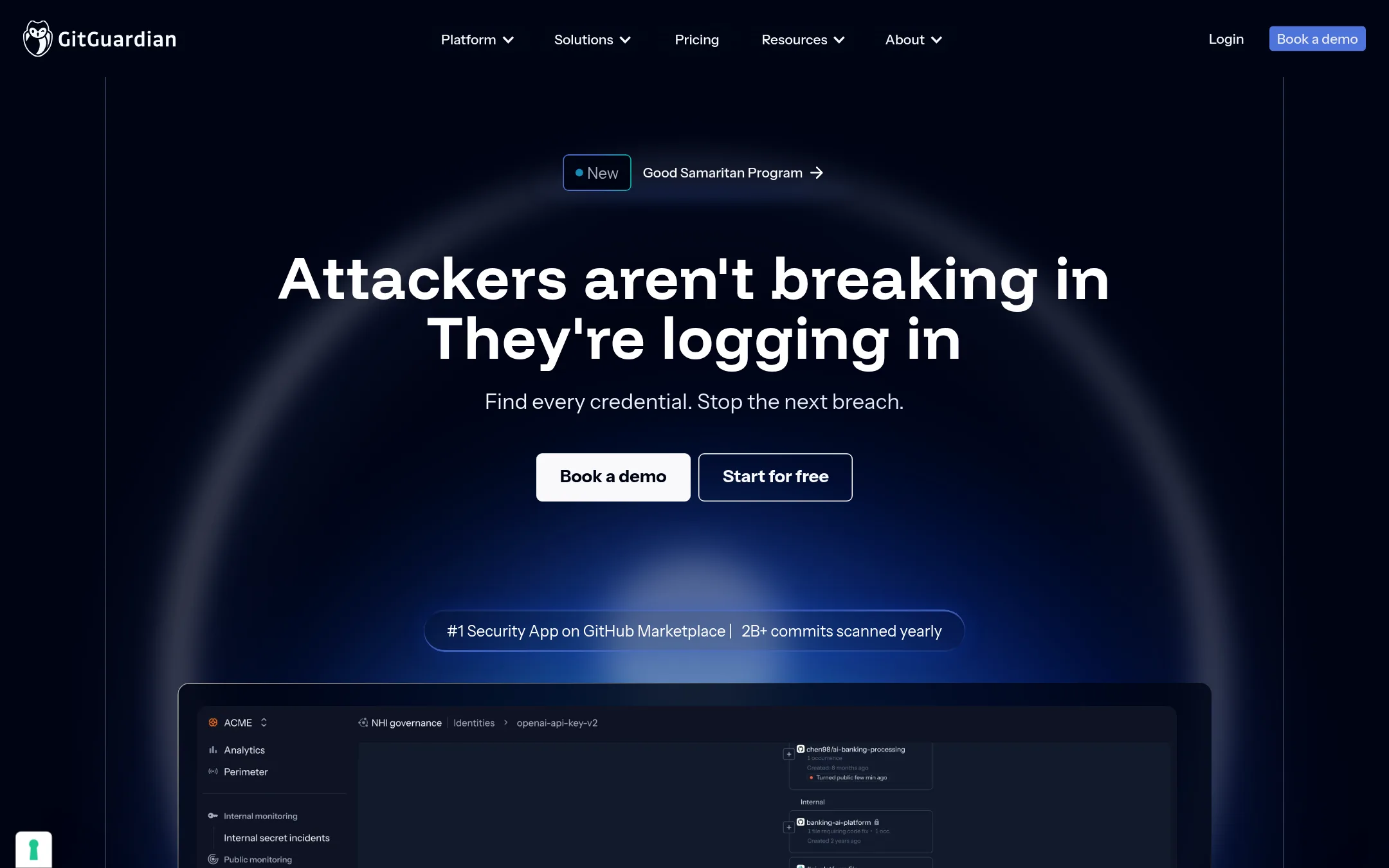
Best for: Security teams that need to detect and remediate leaked credentials across GitHub, Slack, Jira, and developer endpoints, with a focus on secrets lifecycle management.
- Pricing
- Not published
- Category
- Other
GitGuardian is a credential security platform that finds leaked secrets across code, CI/CD, collaboration tools, and developer machines, then helps rotate or kill them. Choose it over Hex Security if your main concern is secrets sprawl and machine identities, not continuous pentesting of your application logic.
Where it is strong
- Detects 550+ secret types with validity and presence checks
- Agentic prioritization and auto-routing to the right developer
- Integrates with Slack, Jira, ServiceNow, and AI coding tools
Where it falls short
- Pricing requires a sales conversation for paid plans
- Focuses on credentials, not general web app or cloud pentesting
- Pricing:
- Pricing is not published on the site. Plans are listed as free, Teams (Let's Talk), Growth, and Enterprise (Custom), with no dollar amounts shown.
- Switching from Hex Security:
- Moving from Hex Security means shifting from continuous pentesting to secrets-focused monitoring. You'd need to keep a separate pentest tool for application vulnerabilities.
- Custom quote
3.Checkmarx
Best for: Enterprises and security teams that need a unified AppSec platform spanning code, supply chain, and runtime, with AI-assisted remediation and audit-ready compliance.
- Pricing
- Custom quote
- Category
- Security & Privacy
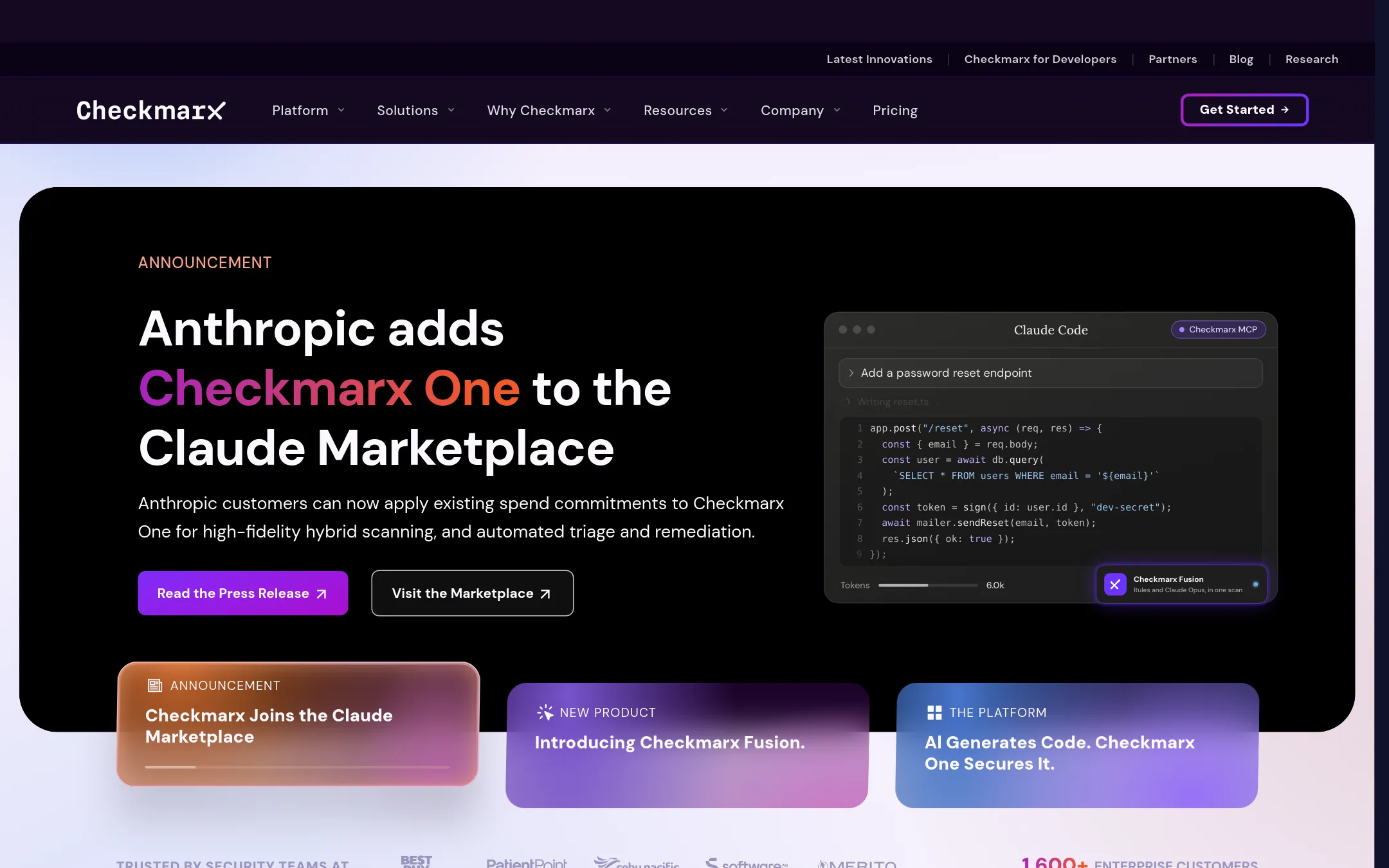
Checkmarx One is a broad application security platform covering SAST, SCA, DAST, API security, and AI-specific scanning, with AI-assisted triage and remediation. Choose it over Hex Security if you need a traditional, code-to-cloud AppSec program with deep static analysis and compliance features, rather than continuous autonomous pentesting.
Where it is strong
- Covers SAST, SCA, DAST, API security, and AI inventory in one platform
- AI-generated, merge-ready fixes speed up remediation
- Audit-ready records for compliance (NIS2, DORA, CRA)
Where it falls short
- No continuous autonomous pentesting like Hex Security's agents
- Pricing requires a consultation. No self-serve signup
- Pricing:
- Pricing is not published on the site. Quotes are tailored to your environment and modules.
- Switching from Hex Security:
- Moving from Hex Security means shifting from continuous autonomous pentesting to scheduled or CI/CD-integrated scans, so you'll need to map your existing findings and workflows into Checkmarx One's platform.
- VCustom quote
4.Veracode
Best for: Large enterprises that need unified application security risk management across code, dependencies, and containers, with governance and compliance features.
- Pricing
- Custom quote
- Category
- Other
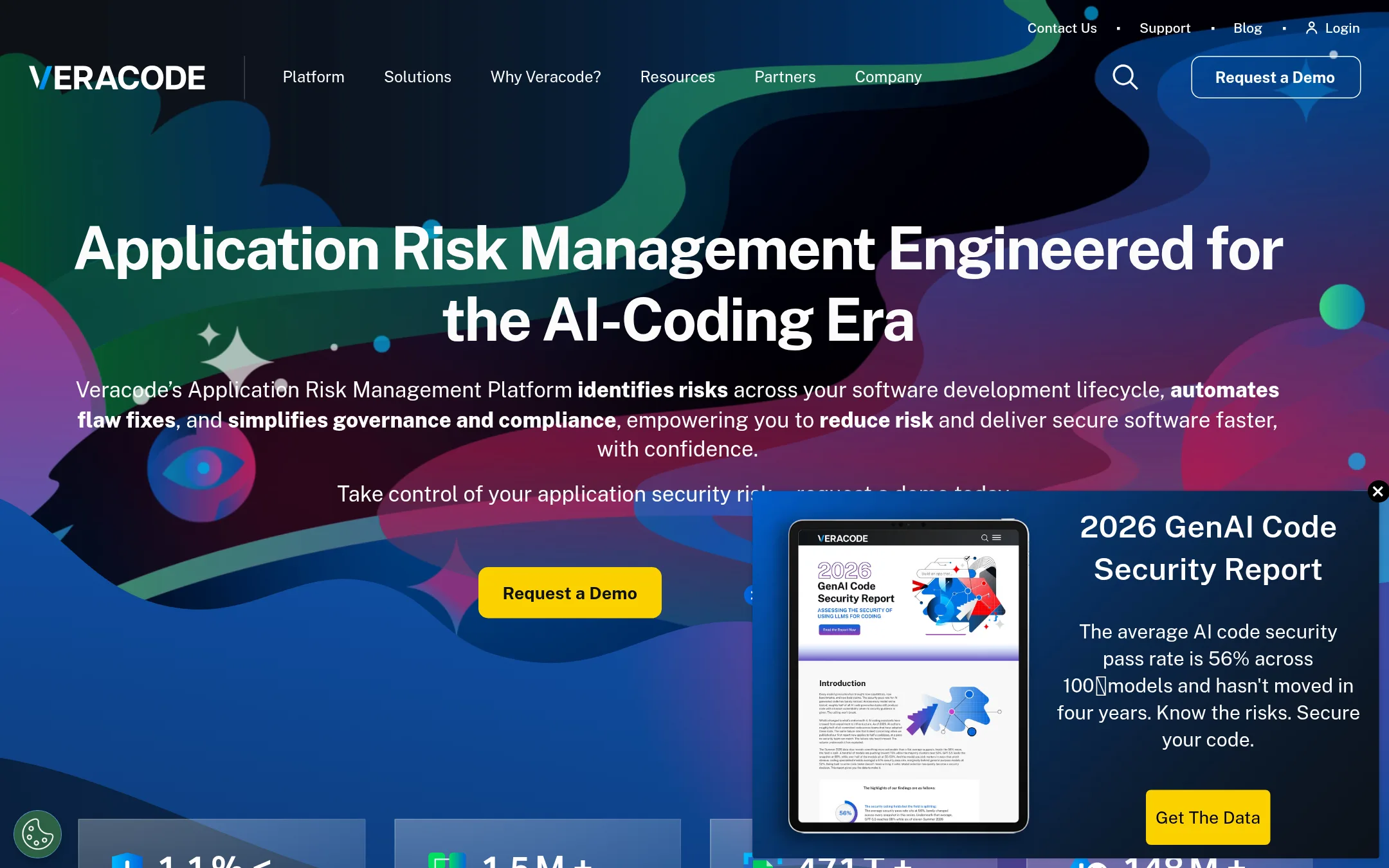
Veracode is a broad application risk management platform that scans code, dependencies, and containers across the SDLC, with a focus on enterprise governance and compliance. Choose it over Hex Security if you need a traditional, full-spectrum AppSec program with policy control and audit-ready reporting, rather than continuous autonomous pentesting.
Where it is strong
- Scans code, dependencies, and containers in one platform
- AI-driven remediation guidance inside developer workflows
- Strong governance and compliance reporting for audits
Where it falls short
- Pricing is not public. Requires a demo for a quote
- Not focused on continuous, autonomous pentesting like Hex Security
- Pricing:
- Pricing is not published on the site.
- From $34/mo per 100k L
5.SonarQube
Best for: Development teams that want automated code quality and security gates inside their CI/CD pipeline, with support for self-managed or cloud deployment.
- Pricing
- From $34/mo per 100k L
- Category
- Developer Tools
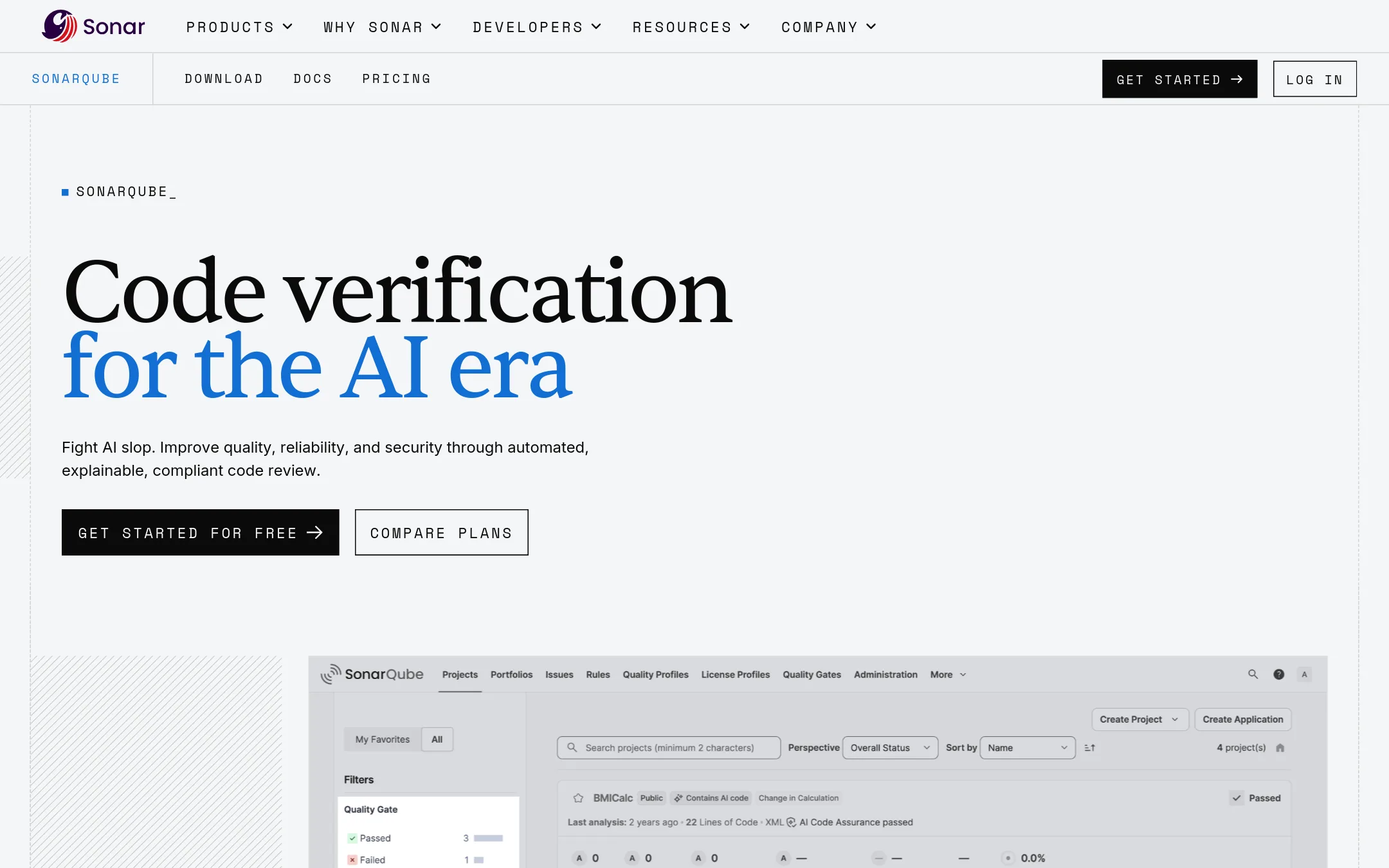
SonarQube is a static analysis and code review platform that checks every pull request for bugs, security vulnerabilities, and maintainability issues across 45+ languages. Choose it over Hex Security if you want security checks embedded in your development workflow, catching issues before merge, rather than continuous external pentesting of running applications.
Where it is strong
- Catches vulnerabilities before merge with SAST and taint analysis
- Works in IDEs, CI/CD, and coding agents like Claude Code and Cursor
- Provides auditable quality-gate evidence for compliance
Where it falls short
- Focused on static code analysis, not runtime or cloud misconfiguration testing
- Advanced security features like SCA require the Enterprise edition
- Pricing:
- Pricing starts at $34 monthly for analysis of up to 100k lines of code, with a free tier for private projects up to 50k LOC.
- Switching from Hex Security:
- Moving from Hex Security to SonarQube means shifting from continuous external pentesting to in-repo static analysis, so you'll need to set up quality gates and rules to match your security standards.
- FNot published
6.Fortify
Best for: Teams that already have Fortify in their stack and need a static or dynamic analysis tool, though its current site outage makes it hard to recommend.

- Pricing
- Not published
- Category
- Other
Fortify is a security testing platform, but its site is currently unreachable, so I can't verify what it does or how it compares to Hex Security. Choose it only if you already know Fortify's capabilities from other sources and need a specific legacy or enterprise testing tool. Otherwise, Hex Security's continuous, agent-based pentesting is a more modern and verifiable option.
Where it is strong
- Established name in application security testing
- Likely integrates with enterprise SDLC tools
- Can handle large codebases and compliance needs
Where it falls short
- Website is down, so no current product details or pricing
- No evidence of continuous, agent-based testing like Hex Security
- Pricing:
- Pricing is not published on the site.
See more comparisons in Security & Privacy alternatives.
FAQ
Questions about Hex Security alternatives
What is the main difference between Hex Security and these alternatives?
Hex Security uses autonomous agents to continuously pentest running applications, proving each finding with a working exploit. Most alternatives focus on static analysis, dependency scanning, or secrets detection, which catch issues before merge but don't test runtime behavior. Checkmarx and Veracode offer broader AppSec platforms but lack continuous autonomous pentesting.
Which alternative is best for a small startup with a small security budget?
Snyk is the strongest choice for small teams, with a free tier and a $25/month team plan for up to 10 developers. It covers code, dependencies, and containers with IDE and CI/CD integration. SonarQube also has a free tier for private projects up to 50k lines of code, but its advanced security features require the paid Enterprise edition.
Do any of these alternatives offer continuous pentesting like Hex Security?
No, none of the listed alternatives offer continuous autonomous pentesting with working proof-of-concepts. Snyk has an AI pentesting feature (Evo COS) but it is enterprise-only and not in the free or team plans. Checkmarx and Veracode focus on traditional AppSec scanning, not runtime pentesting.
Which tools provide compliance evidence for audits?
Checkmarx and Veracode both provide audit-ready records for compliance, with Checkmarx covering NIS2, DORA, and CRA, and Veracode offering strong governance and compliance reporting. SonarQube provides auditable quality-gate evidence. Hex Security itself offers evidence for SOC 2, ISO 27001, PCI DSS, and FedRAMP, but none of the alternatives replicate that specific compliance focus.
Are there any alternatives with transparent, self-serve pricing?
Yes, Snyk and SonarQube publish their pricing. Snyk starts at $25/month for teams up to 10 developers, and SonarQube starts at $34/month for up to 100k lines of code. Checkmarx, Veracode, and GitGuardian require a sales conversation for quotes, and Fortify's site is currently unreachable.
Last updated November 4, 2026.