
HitPay alternatives
6 products compared · Updated November 3, 2026
The short answer
For most businesses, Stripe is the strongest alternative to HitPay if you need a developer-friendly platform with global reach. Razorpay suits Indian and US-based businesses wanting volume discounts and built-in invoicing. Square is best for US-based retail and restaurant businesses that need a complete point-of-sale system.
Your shortlist, at a glance
Read the comparisons ↓ StripeFrom 3.4% + $0.50Businesses that need a flexible, developer-friendly payments platform with global reach and extensive integrations.
 PayPalNot publishedBusinesses selling internationally that want a widely recognized checkout and access to PayPal's large buyer network.
Square2.6% + 10¢ in-personUS-based retail, restaurant, and service businesses that need a complete point-of-sale and payments stack.
 AdyenCustom quoteLarge enterprises and global platforms that need unified payments, data insights, and financial products across many countries.
 PayoneerUp to 3.99% + $0.49Marketplaces, e-commerce sellers, and freelancers that operate across many countries and need to pay and get paid internationally.
 RazorpayFrom 2.70% + $0.30Indian and US-based businesses that want a single payments provider with volume-based discounts and built-in invoicing and tax automation.
About HitPay and its alternatives
HitPay is a payments platform built for businesses scaling in APAC. It lets you accept online and in-person payments, manage payouts and invoices, and offers zero monthly fees with pay-per-transaction pricing. It supports local payment methods like PayNow in Singapore and cross-border payments across the region.
When comparing alternatives, weigh pricing structure, regions served, integrations, support, and contract terms. Some providers publish transparent per-transaction fees, while others require a sales call. Consider whether you need local payment methods, in-person hardware, or global reach, and whether the platform integrates with your existing tools.
Explore the alternatives
- From 3.4% + $0.50
1.Stripe
Best for: Businesses that need a flexible, developer-friendly payments platform with global reach and extensive integrations.
- Pricing
- From 3.4% + $0.50
- Category
- Finance & Accounting
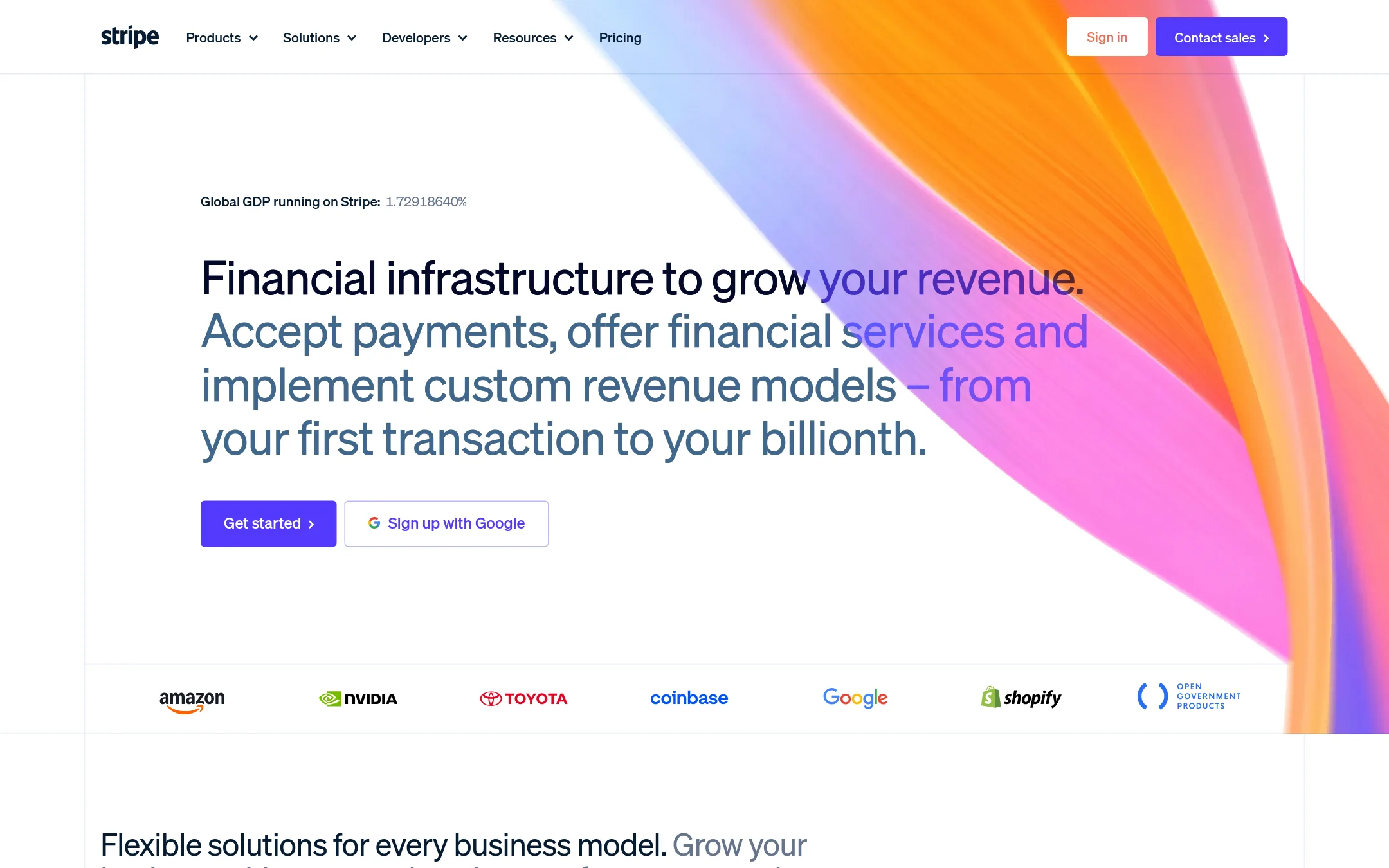
Stripe is a global payments platform that handles online and in-person transactions, subscriptions, and payouts. Choose it over HitPay if you need a broader set of tools, deeper developer resources, or a platform that scales to large transaction volumes.
Where it is strong
- Supports 135+ currencies and payment methods globally
- Extensive APIs, SDKs, and pre-built integrations
- High reliability with 99.999% historical uptime
Where it falls short
- Higher standard card fee than HitPay's 2.8% + S$0.50
- PayNow transfers are not included in the standard pricing shown
- Pricing:
- In Singapore, domestic cards are 3.4% + $0.50 per successful transaction, with custom pricing available for high-volume businesses.
- Switching from HitPay:
- Moving from HitPay to Stripe involves re-integrating payment flows and migrating customer data, but Stripe offers migration support and consulting partners.
- Not published
2.PayPal
Best for: Businesses selling internationally that want a widely recognized checkout and access to PayPal's large buyer network.

- Pricing
- Not published
- Category
- Finance & Accounting
PayPal is a global payments platform that lets you accept payments from customers in 200+ markets and 130+ currencies, with tools like invoicing, payouts, and recurring billing. You would choose it over HitPay if you need a well-known brand that customers already trust and a broader international reach, especially for cross-border e-commerce.
Where it is strong
- Accepts payments from 200+ markets in 130+ currencies.
- Access to 400 million active PayPal accounts globally.
- Includes invoicing, payouts, and recurring payments in one platform.
Where it falls short
- Pricing is not transparent on the site. You need to contact sales.
- May have higher fees for cross-border transactions compared to HitPay's local APAC rates.
- Pricing:
- Pricing is not published on the site.
- 2.6% + 10¢ in-person
3.Square
Best for: US-based retail, restaurant, and service businesses that need a complete point-of-sale and payments stack.

- Pricing
- 2.6% + 10¢ in-person
- Category
- Finance & Accounting
Square is a full payments and point-of-sale platform for businesses that sell in person, online, or both. Choose it over HitPay if you operate mainly in the US and want a widely recognized system with hardware, inventory, and staff management built in.
Where it is strong
- Free basic plan with no monthly fees
- Integrated hardware for in-person sales
- Strong ecosystem for inventory and staff management
Where it falls short
- Pricing and features are US-centric. Less suited for APAC cross-border needs
- No built-in support for local APAC payment methods like PayNow
- Pricing:
- In the United States, Square charges 2.6% + 10¢ for in-person card payments, 2.9% + 30¢ for online payments, and 3.5% + 15¢ for manually entered cards. No monthly fees for the basic plan.
- Switching from HitPay:
- Moving from HitPay means setting up a new payment processor and, if you use in-person hardware, replacing your point-of-sale devices.
- Custom quote
4.Adyen
Best for: Large enterprises and global platforms that need unified payments, data insights, and financial products across many countries.
- Pricing
- Custom quote
- Category
- Finance & Accounting
Adyen is a global enterprise payments platform that handles payments, data, and financial products in one stack. Choose it over HitPay if you are a large business with complex multi-channel and cross-border needs that require bank-grade compliance and 99.999% uptime.
Where it is strong
- Interchange++ pricing gives full transparency into card fees.
- Supports 150+ currencies and 200+ local payment methods.
- Backed by US, UK, and EU banking licenses for compliance.
Where it falls short
- Pricing is not transparent. Requires a sales conversation.
- Built for enterprises, so smaller businesses may find it overkill.
- Pricing:
- Pricing is not published on the site. Fees are per transaction with Interchange++ pass-through and no setup or monthly fees, but you must contact sales for details.
- Up to 3.99% + $0.49
5.Payoneer
Best for: Marketplaces, e-commerce sellers, and freelancers that operate across many countries and need to pay and get paid internationally.
- Pricing
- Up to 3.99% + $0.49
- Category
- Finance & Accounting
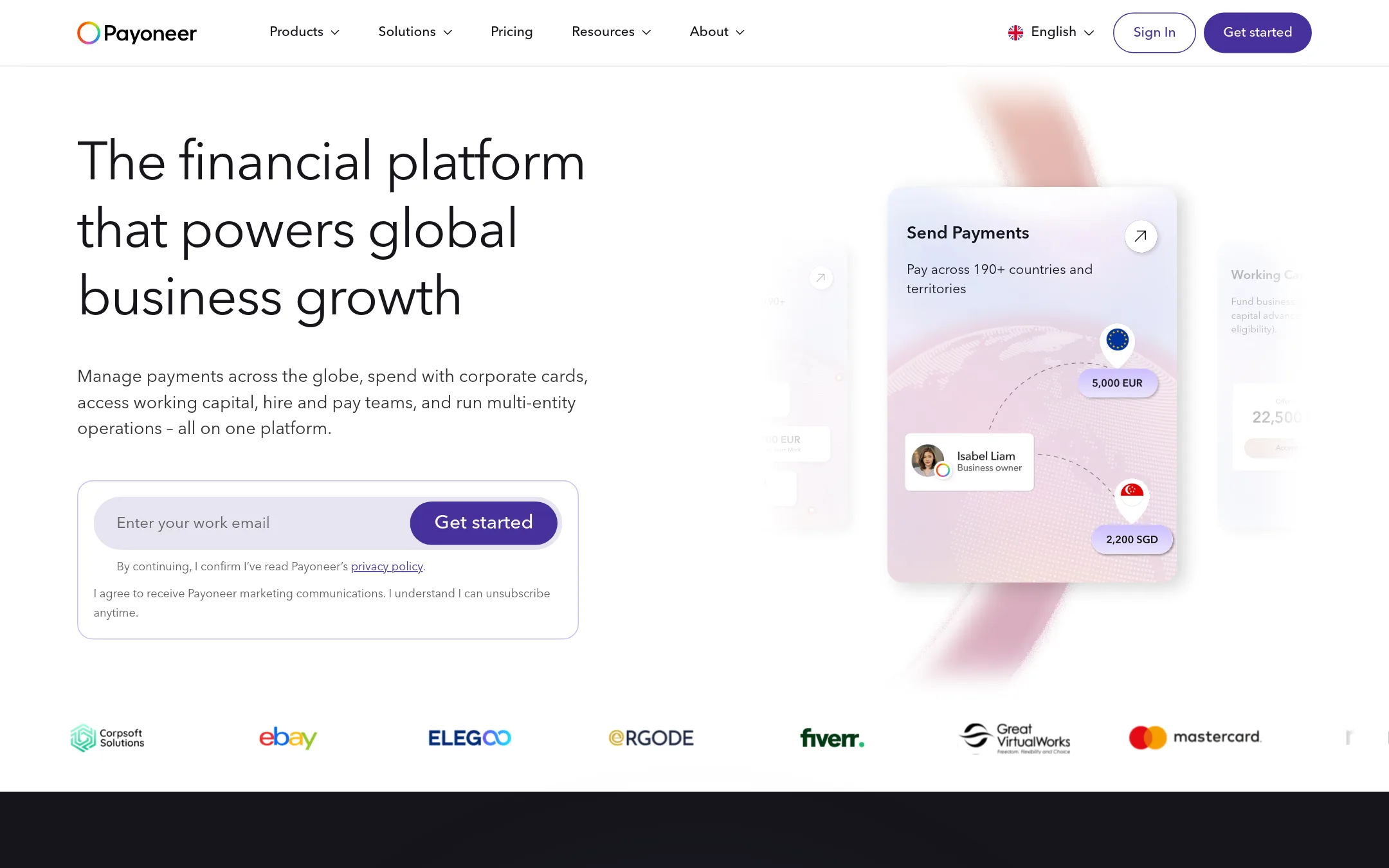
Payoneer is a global payments platform for receiving, sending, and managing cross-border money across 190+ countries and 70+ currencies. Choose it over HitPay when your business needs mass payouts, multi-currency balances, and global team payments rather than APAC-focused payment processing.
Where it is strong
- Mass payouts to 190+ countries and 70+ currencies
- Multi-currency balances with local receiving accounts
- Corporate cards and working capital advances available
Where it falls short
- Complex fee structure with many variables
- Annual account fee if activity is low
- Pricing:
- Pricing varies by transaction type: receiving from a credit card costs up to 3.99% + $0.49, sending to a bank in the same country costs $1.50, and currency conversion costs 1.2%–4%. An annual account fee applies if you receive less than $6,000 in 12 months.
- Switching from HitPay:
- Moving from HitPay means setting up a Payoneer account and connecting your bank accounts, then reconfiguring your payout flows to use Payoneer's receiving accounts and mass payout tools.
- From 2.70% + $0.30
6.Razorpay
Best for: Indian and US-based businesses that want a single payments provider with volume-based discounts and built-in invoicing and tax automation.
- Pricing
- From 2.70% + $0.30
- Category
- Finance & Accounting
Razorpay is a full-stack payments and financial services platform built for businesses in India and the US. You would choose it over HitPay if you operate primarily in India or the US and need a broad set of payment methods, subscriptions, and tax tools beyond HitPay's APAC focus.
Where it is strong
- Pay-as-you-go with no setup fees
- Volume-based discounts and custom enterprise plans
- Includes subscriptions, invoicing, and tax tools
Where it falls short
- Pricing shown is for the US. India pricing may differ
- No mention of in-person POS or QR code payments on the pricing page
- Pricing:
- In the United States, cards are 2.70% + $0.30 per transaction, international cards add 1.2%, and ACH direct debit is 0.5% capped at $5.
- Switching from HitPay:
- Moving from HitPay means setting up a new merchant account with Razorpay and reconfiguring your payment integrations, since the two platforms are not directly compatible.
See more comparisons in Finance & Accounting alternatives.
FAQ
Questions about HitPay alternatives
Which alternative has the lowest transaction fees?
Among the alternatives with published pricing, Square charges 2.6% + 10¢ for in-person card payments in the US, which is lower than Stripe's 3.4% + $0.50 for domestic cards in Singapore. Razorpay charges 2.70% + $0.30 for US cards. HitPay's 2.8% + S$0.50 for domestic cards is competitive, but your actual cost depends on your region and payment methods.
Do any alternatives support local APAC payment methods like PayNow?
HitPay supports PayNow in Singapore, but among the alternatives, only Stripe mentions support for 135+ currencies and global payment methods, though PayNow is not explicitly listed. Square and Razorpay do not mention PayNow. If you need local APAC methods, you may need to check Stripe's full list or consider HitPay itself.
Which alternative is best for a small business with no technical team?
Square is the easiest for US-based retail or service businesses because it offers a free basic plan, integrated hardware, and a complete point-of-sale system. PayPal is also user-friendly with a well-known checkout and no technical setup required. Stripe is more developer-focused and may require technical resources.
Are there any alternatives with no monthly fees?
Yes, Stripe, Razorpay, and Square all have no monthly fees for their basic plans. HitPay also has zero monthly fees. PayPal and Adyen do not publish pricing, so you need to contact sales to confirm. Payoneer has an annual account fee if you receive less than $6,000 in 12 months.
Which alternative is best for cross-border payments?
PayPal supports 200+ markets and 130+ currencies, making it strong for international e-commerce. Adyen supports 150+ currencies and 200+ local payment methods, but is enterprise-focused. Payoneer is designed for cross-border payouts to 190+ countries. Stripe also supports 135+ currencies and is a solid choice for global reach.
Last updated November 3, 2026.