
infra.new alternatives
6 products compared · Updated November 9, 2026
The short answer
infra.new shut down on June 30, 2026, so buyers are choosing a replacement. Supabase suits developers and small product teams who want a managed Postgres backend with auth and APIs for an app they are building. Railway suits developer teams that want to deploy web apps, servers and databases from a repo without managing their own infrastructure. Render suits startups and product teams that need to run APIs, databases and background jobs in production without hiring an ops engineer.
Your shortlist, at a glance
Read the comparisons ↓ SupabaseFrom $0 / monthDevelopers and small product teams building web or mobile apps that need a Postgres database with auth and APIs out of the box
 Vercel Image OptimizationFrom $0.05 per 1KWeb app teams already deploying on Vercel that need optimized images served from a global CDN
 Netlify FormsNot publishedWeb teams already hosting marketing sites or fullstack apps on Netlify who need forms and deploy previews on the same platform
 RenderFrom $0 (free tier)Startups and product teams that need to run web apps, APIs, databases and background jobs in production without hiring an ops engineer
 RailwayNot publishedDeveloper teams that want to deploy web apps, servers and databases from a repo without managing their own infrastructure
- RRecordBookNot publishedSmall businesses that want a simple app for tracking records and data in place of infrastructure tooling
About infra.new and its alternatives
infra.new was a developer tool in the cloud infrastructure category. According to its site, LaunchFlow shut it down on June 30, 2026, and the company is now focusing on custom software and AI agents for government and enterprise operations teams. Anyone who built on infra.new will need a new home for their infrastructure.
When comparing alternatives in this category, weigh the pricing structure first, including base plan costs and how compute, storage and bandwidth are billed. Check which regions are available, which integrations and frameworks are supported, what support levels come with each tier, and what the contract terms say about data export and cancellation.
Explore the alternatives
- From $0 / month
1.Supabase
Best for: Developers and small product teams building web or mobile apps that need a Postgres database with auth and APIs out of the box
- Pricing
- From $0 / month
- Category
- Developer Tools
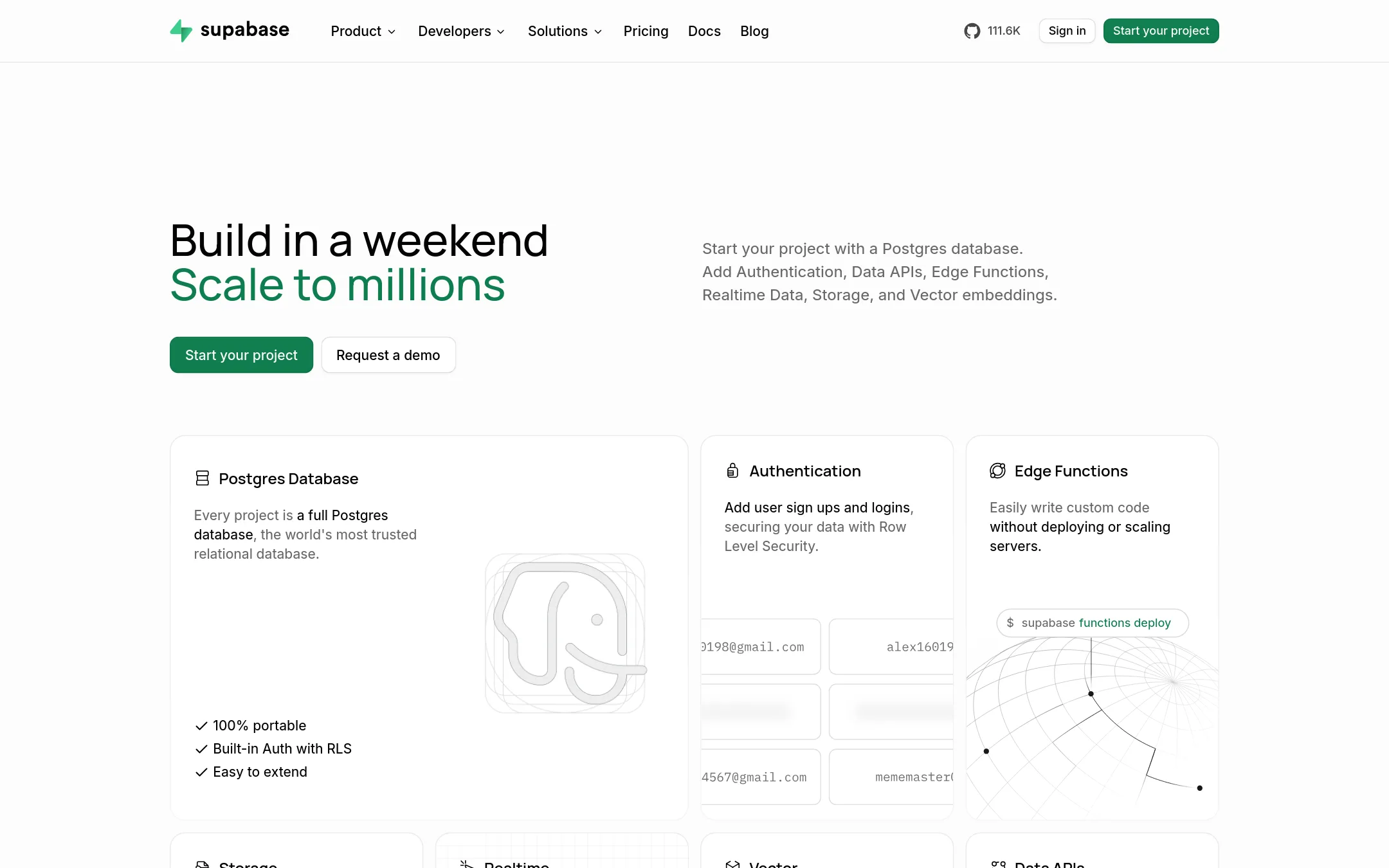
Supabase gives you a full Postgres database with built-in auth, storage, realtime, edge functions and vector search, all in one project. Choose it over infra.new when you want a managed backend for an app you are building yourself, especially if you need a standard Postgres database you can take with you.
Where it is strong
- Every project is a standard Postgres database, so your data stays portable.
- Auth, row level security, storage, realtime and edge functions come in one platform.
- A free tier exists for side projects and early prototypes.
Where it falls short
- Free projects pause after one week of inactivity and are limited to two active projects.
- Compute, disk and bandwidth costs add up beyond the base plan price.
- Pricing:
- The Free plan costs $0 per month with 500 MB of database and 50,000 monthly active users, the Pro plan starts at $25 per month, the Team plan is $599 per month, and Enterprise is custom quoted.
- Switching from infra.new:
- Infra.new is shutting down on June 30, 2026, and the site offers an email address for help exporting your data, so you would need to pull your data out first and then set it up in a new Supabase project.
- From $0.05 per 1K
2.Vercel Image Optimization
Best for: Web app teams already deploying on Vercel that need optimized images served from a global CDN
- Pricing
- From $0.05 per 1K
- Category
- Media & Entertainment
Vercel Image Optimization is a piece of Vercel's hosting platform that resizes and serves images through its global CDN. Teams pick it over infra.new when they already host a web app on Vercel and want image delivery handled in the same place. The site lists Image Optimization Transformation and cache usage as metered items under the broader Vercel platform.
Where it is strong
- Image transformations and caching sit inside the same Vercel project as the app
- Global CDN delivery with automatic HTTPS and routing is listed on the pricing page
- Spend limits and usage alerts are available to cap costs
Where it falls short
- Image optimization is metered per transformation, so costs grow with image volume
- It is tied to Vercel hosting, so it does not help if you deploy elsewhere
- Pricing:
- Vercel's default pricing page lists 5K image transformations per month included, then from $0.05 per 1K, with 300K cache reads and 100K cache writes included monthly.
- Switching from infra.new:
- Moving from infra.new would mean rebuilding your deployment on Vercel, since the image service is part of its platform.
- Not published
3.Netlify Forms
Best for: Web teams already hosting marketing sites or fullstack apps on Netlify who need forms and deploy previews on the same platform
- Pricing
- Not published
- Category
- Developer Tools
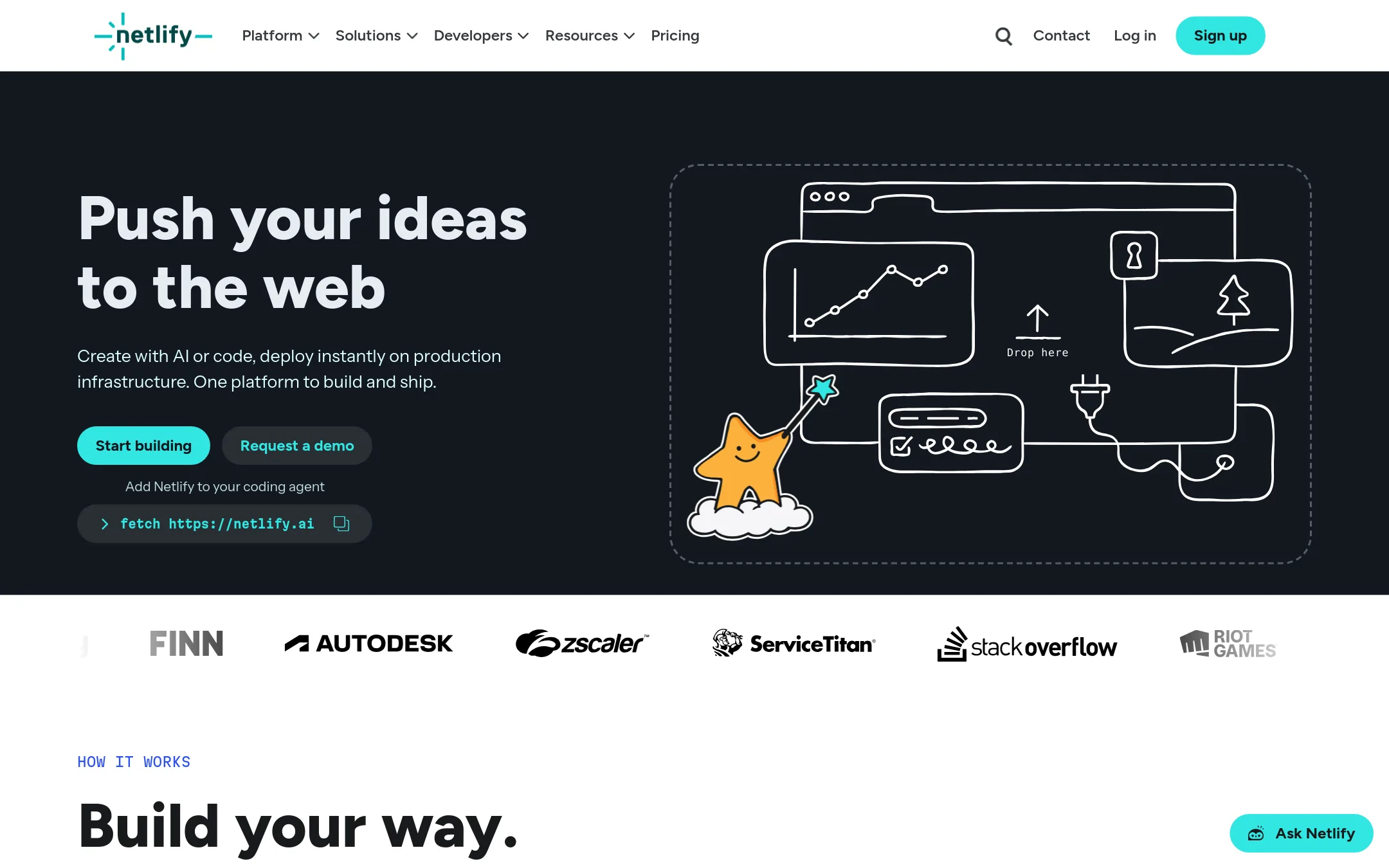
Netlify Forms is a built-in way to collect form submissions on a Netlify-hosted site, with no backend code needed. The wider Netlify platform handles builds, deploys, previews, functions and databases for web apps. Someone would choose it over infra.new if they want a full hosting and deployment platform for their website or app, since infra.new has shut down and this is a different kind of product.
Where it is strong
- Forms work without writing a backend
- Every change gets a private deploy preview before going live
- Deploys run on a global CDN with rollback in one click
Where it falls short
- It is a website and app hosting platform, so it does not cover the cloud infrastructure provisioning that infra.new offered
- Pricing depends on credits and tiers that are not fully shown in the supplied text
- Pricing:
- Pricing is not published on the site.
- From $0 (free tier)
4.Render
Best for: Startups and product teams that need to run web apps, APIs, databases and background jobs in production without hiring an ops engineer
- Pricing
- From $0 (free tier)
- Category
- Other
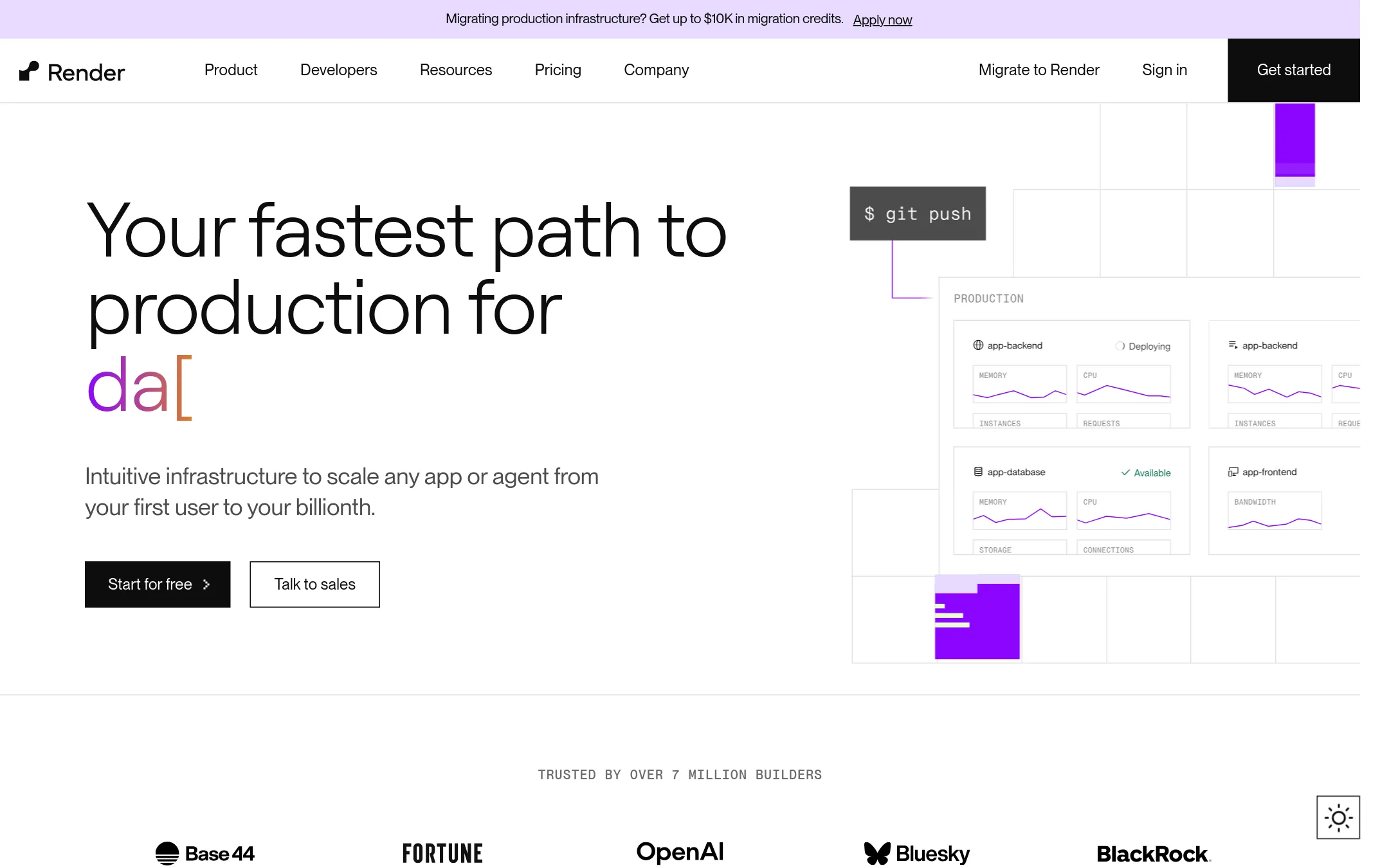
Render is a cloud platform where you connect a Git repo and it deploys web services, Postgres, Redis-compatible storage, cron jobs, workflows and sandboxes for agents. Teams choose it over infra.new when they need to run real production workloads, such as APIs, background workers and databases, with autoscaling, previews and managed compliance.
Where it is strong
- Connect a repo and it detects the framework and deploys it.
- Covers apps, Postgres, Redis-compatible storage, cron jobs and workflows in one place.
- Offers previews for every pull request, autoscaling, and managed TLS and DDoS protection.
Where it falls short
- Costs rise quickly at larger instance sizes, with the top database tier at $11,000/month.
- Compliance features like HIPAA workspaces and SAML SSO sit on the higher-tier plans.
- Pricing:
- Pricing is published by plan and resource, with a free tier, paid workspace plans, and compute priced per instance size, such as $7/month for a 0.5 CPU, 512 MB web service and $25/month for 1 CPU and 2 GB RAM.
- Switching from infra.new:
- Moving from infra.new means connecting your repository to Render and recreating your services there, and infra.new's shutdown on June 30, 2026 means you should start before that date.
- Not published
5.Railway
Best for: Developer teams that want to deploy web apps, servers and databases from a repo without managing their own infrastructure
- Pricing
- Not published
- Category
- Developer Tools
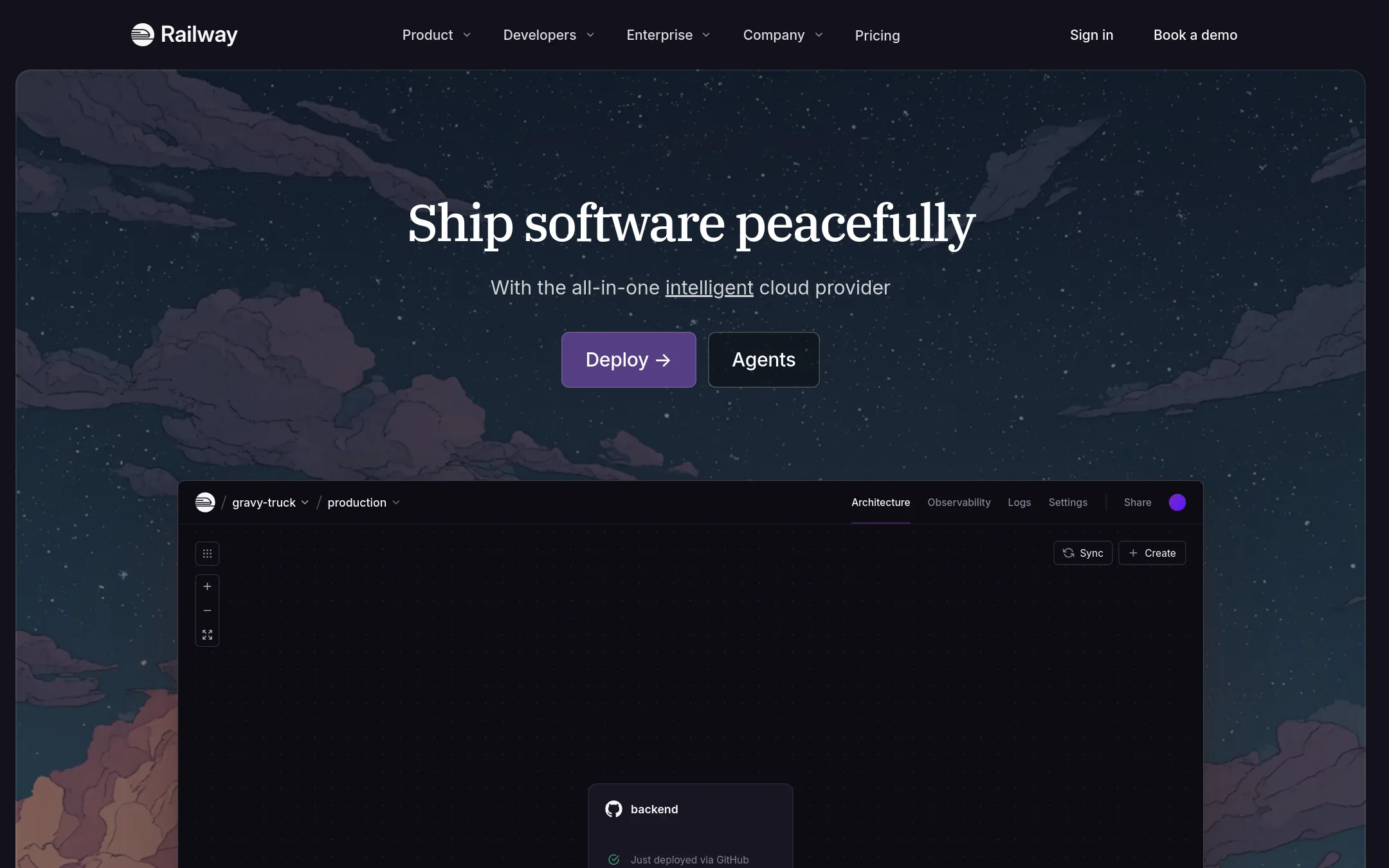
Railway is a full-stack cloud where you connect a repo and it handles deployment, networking, scaling, logs and metrics. Someone would choose it over infra.new because infra.new is shutting down on June 30, 2026, and Railway offers a managed platform for deploying web apps, servers and databases with preview environments per pull request.
Where it is strong
- Connect a repo and Railway handles auto-config, networking, SSL and load balancing
- Preview environments for every pull request, with one-click rollbacks
- Built-in logs, metrics, traces and custom alerts in one place
Where it falls short
- Pricing details were not available in the source material, so costs are hard to estimate in advance
- Compliance features such as HIPAA agreements and SSO sit in higher tiers
- Pricing:
- Pricing is not published on the site.
- RNot published
6.RecordBook
Best for: Small businesses that want a simple app for tracking records and data in place of infrastructure tooling
- Pricing
- Not published
- Category
- Productivity & Project Management
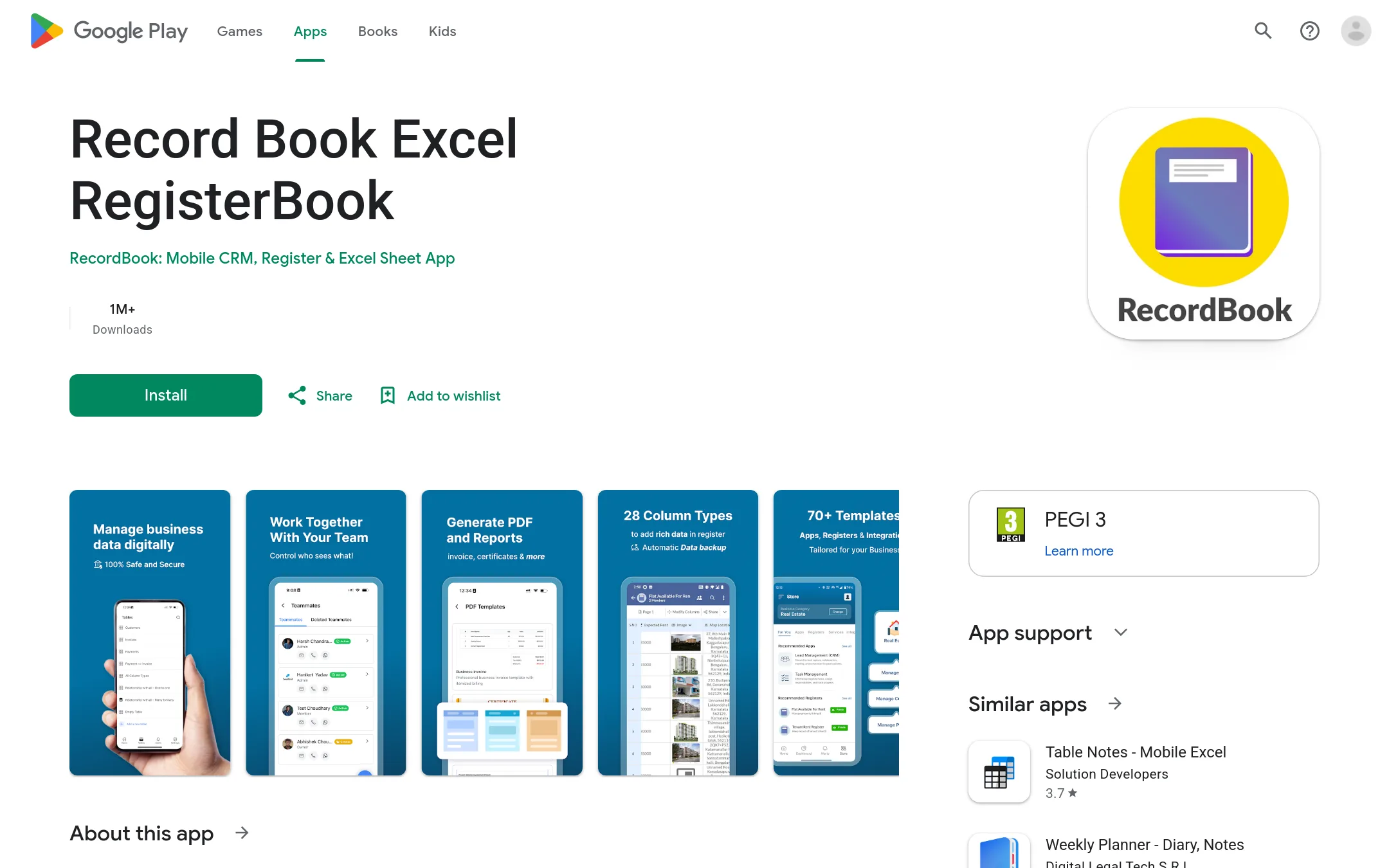
RecordBook is a Google Play app from the Rekord team, pitched as a record-keeping tool for small businesses, with its listing describing it as an Airtable-style alternative. Its homepage text is mostly page styling, so I can't confirm details beyond the app listing. Someone leaving infra.new, which shut down on June 30, 2026, would consider it if they want a general-purpose tool for tracking records rather than cloud infrastructure.
Where it is strong
- Available as a mobile app on Google Play
- Aimed at small and medium businesses
- Positioned as a flexible database-style tool
Where it falls short
- It is a general productivity app, not a cloud infrastructure tool like infra.new
- Pricing details were not available to confirm
- Pricing:
- Pricing is not published on the site.
- Switching from infra.new:
- Moving from infra.new to RecordBook would mean replacing infrastructure management with record-keeping, so it is a different kind of tool and not a direct swap.
See more comparisons in Developer Tools alternatives.
FAQ
Questions about infra.new alternatives
What happened to infra.new?
According to its site, infra.new shut down on June 30, 2026. LaunchFlow says it is redirecting the team toward custom software and AI agents for operations teams in government and enterprise. Users who need help exporting their data can email josh@launchflow.com.
Which alternative is best for building an app with a database and user login?
Supabase is the strongest fit for this. It provides a full Postgres database with built-in auth, storage, realtime and edge functions in one project. Every project is a standard Postgres database, so your data stays portable.
Which option should I pick if I want to deploy from a Git repo without managing servers?
Railway and Render both let you connect a repo and have the platform handle deployment, networking and scaling. Railway adds preview environments for every pull request and built-in logs and metrics. Render covers web services, Postgres, cron jobs and workflows, and detects the framework automatically.
How do the costs of these platforms compare?
Supabase has a free tier and a Pro plan starting at $25 per month. Render publishes per-instance pricing, such as $7 per month for a small web service, though costs rise quickly at larger sizes. Railway's pricing is not published on its site, so you will need to request a quote to estimate costs.
Is RecordBook a replacement for infra.new?
Not really. RecordBook is a general record-keeping app listed on Google Play and aimed at small businesses, and it is not a cloud infrastructure tool. Pricing details were not available to confirm, so check its listing before deciding.
Last updated November 9, 2026.