Infracost alternatives
6 products compared · Updated November 3, 2026
The short answer
For teams that need a full FinOps platform with deep cost analytics across AWS, Azure, and GCP, CloudHealth by VMware and Cloudability are strong choices. Vantage offers a self-service platform with transparent pricing and AI features. Kubecost is best for Kubernetes-focused cost allocation, while Microsoft Azure CycleCloud suits HPC cluster orchestration, not cost governance.
Your shortlist, at a glance
Read the comparisons ↓- CCloudHealth by VMwareNot publishedEnterprises with significant multi-cloud spend that need detailed cost analytics and governance across AWS, Azure, and GCP.
- CCloudabilityNot publishedLarge enterprises with multi-cloud and AI spend that need finance-grade cost allocation, chargeback, and forecasting.
- VVantageFree / $30 / $200 /moTeams that want a complete cloud cost management platform with deep visibility, automation, and AI features beyond just CI/CD cost checks.
- KKubecostNot publishedPlatform teams running Kubernetes who need detailed cost breakdowns by team, namespace, or workload and want to reconcile those costs with their cloud bill.
 Amazon BusinessNot publishedTeams that need to manage purchasing of office supplies, equipment, and other physical goods with approval controls and spend reporting.
Microsoft Azure CycleCloudPay-as-you-goResearch teams and enterprises running HPC workloads on Azure that need cluster orchestration, not cost guardrails.
About Infracost and its alternatives
Infracost is a FinOps governance tool that integrates cost estimates and policies into Infrastructure as Code (IaC) pipelines. It is known for shifting FinOps left by preventing cloud waste before deployment, with support for Terraform, CloudFormation, and CDK, and pricing from free to enterprise tiers.
When comparing alternatives, weigh pricing structure (per seat, per cloud spend, or consumption-based), supported cloud regions, integrations with your IaC and CI/CD tools, and the level of support and contract terms. Some tools focus on pre-deploy guardrails, while others offer broader cost management, forecasting, or Kubernetes-specific features.
Explore the alternatives
- CNot published
1.CloudHealth by VMware
Best for: Enterprises with significant multi-cloud spend that need detailed cost analytics and governance across AWS, Azure, and GCP.

- Pricing
- Not published
- Category
- Other
CloudHealth by VMware is a mature cloud cost management platform for AWS, Azure, and GCP. It offers deep reporting, rightsizing, and governance features. Choose it over Infracost if you need a broader, multi-cloud FinOps tool with a long track record, rather than a CI/CD-focused IaC cost guardrail.
Where it is strong
- Mature platform with extensive multi-cloud support.
- Strong reporting and rightsizing capabilities.
- Governance and policy features for large teams.
Where it falls short
- Pricing is not transparent and likely enterprise-focused.
- Website is currently unreachable, which may signal transition issues.
- Pricing:
- Pricing is not published on the site.
- CNot published
2.Cloudability
Best for: Large enterprises with multi-cloud and AI spend that need finance-grade cost allocation, chargeback, and forecasting.
- Pricing
- Not published
- Category
- Other
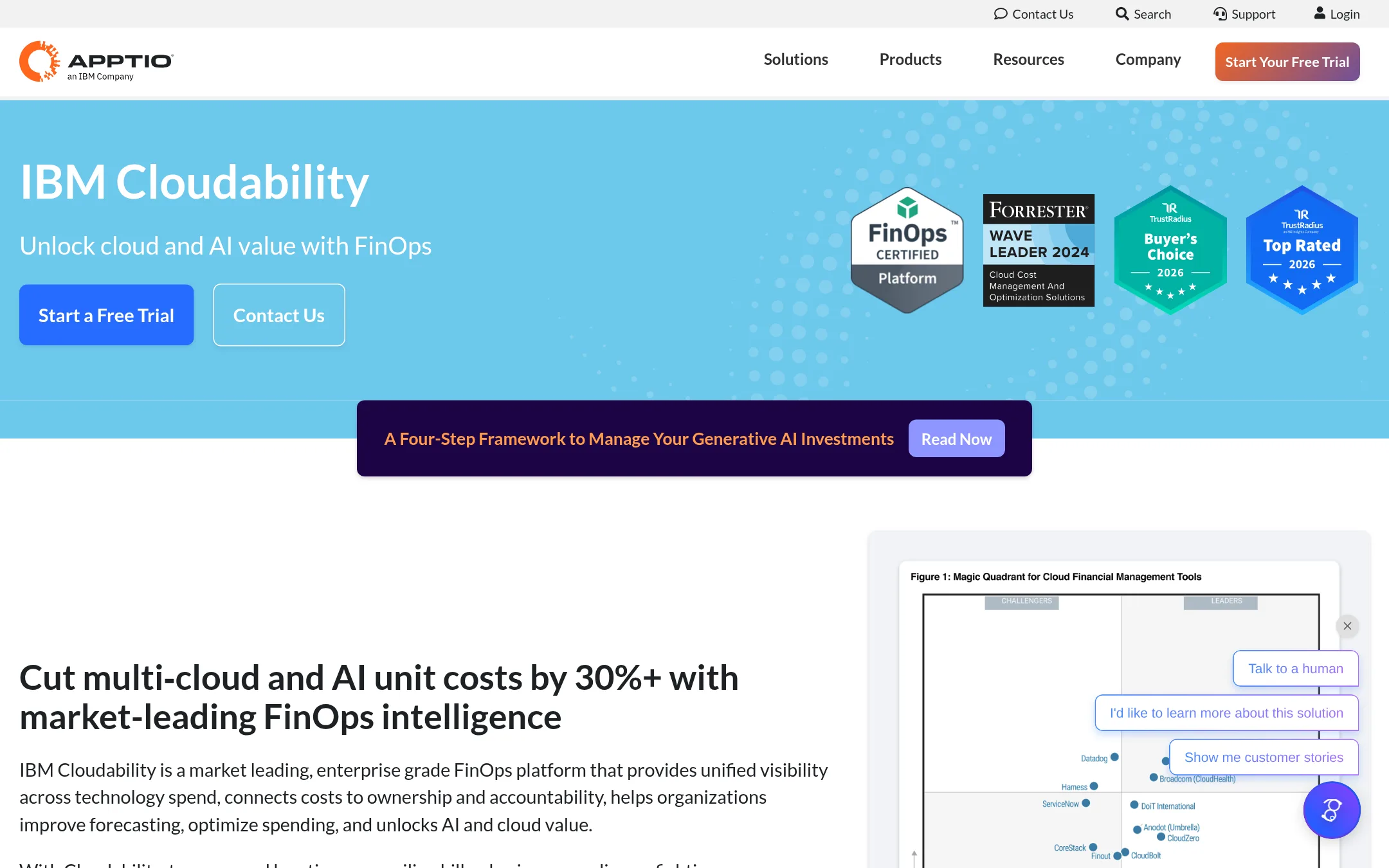
Cloudability is an enterprise FinOps platform that gives finance, engineering, and product teams a single view of cloud and AI spend. Choose it over Infracost when you need deep cost allocation, chargeback, and forecasting across multi-cloud environments, not just pre-deploy cost estimates in CI/CD.
Where it is strong
- 100% cost allocation with business mapping and cost-sharing tools
- AI-backed forecasting and budgeting workflows
- Automated rightsizing and orphaned resource termination
Where it falls short
- Pricing not public. Likely requires a sales conversation
- Heavier than Infracost for teams that just want CI/CD cost estimates
- Pricing:
- Pricing is not published on the site.
- Switching from Infracost:
- Moving from Infracost means adopting a broader FinOps platform with manual setup of cost allocation and governance, rather than just adding a CI/CD step.
- VFree / $30 / $200 /mo
3.Vantage
Best for: Teams that want a complete cloud cost management platform with deep visibility, automation, and AI features beyond just CI/CD cost checks.
- Pricing
- Free / $30 / $200 /mo
- Category
- Other
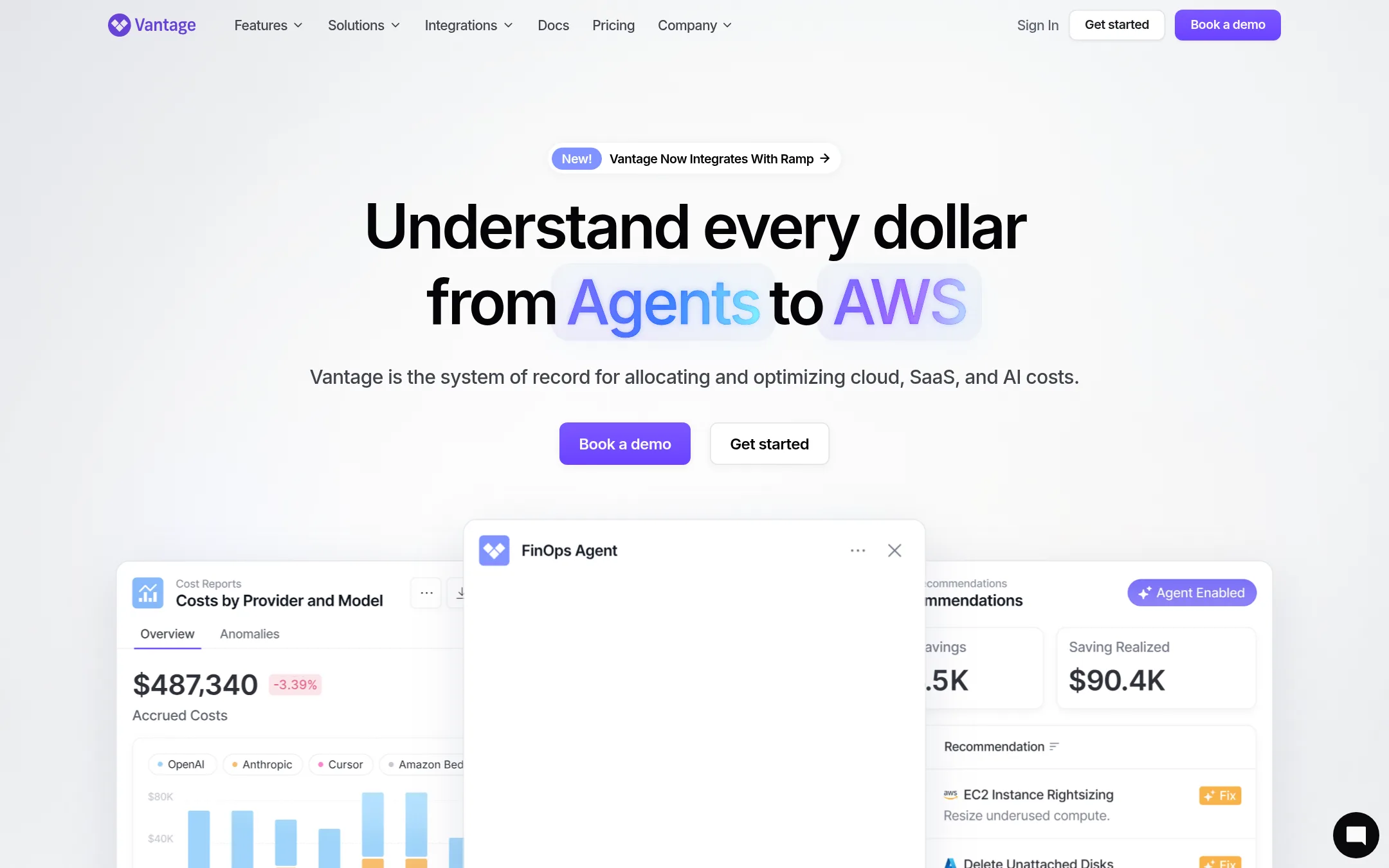
Vantage is a self-service cloud cost platform for AWS, Azure, and GCP that focuses on analysis, reporting, and optimization. You would choose it over Infracost if you need a full FinOps platform with features like anomaly detection, Kubernetes rightsizing, and AI-powered cost interaction, rather than just pre-deploy cost guardrails.
Where it is strong
- 40+ native integrations for cloud providers and tools.
- Virtual tagging for precise cost allocation without changing tags.
- AI-enabled FinOps via MCP server for ChatGPT, Claude, or Cursor.
Where it falls short
- Paid tiers have cloud spend limits, which may not suit large enterprises.
- No IaC cost estimation in CI/CD pipelines like Infracost offers.
- Pricing:
- Starter is free for up to $2,500 of cloud spend, Pro is $30/month for up to $7,500, Business is $200/month for up to $20,000, and Enterprise is custom.
- Switching from Infracost:
- Moving from Infracost means adopting a broader platform with a different focus, so you would need to set up Vantage's integrations and dashboards from scratch.
- KNot published
4.Kubecost
Best for: Platform teams running Kubernetes who need detailed cost breakdowns by team, namespace, or workload and want to reconcile those costs with their cloud bill.
- Pricing
- Not published
- Category
- Other
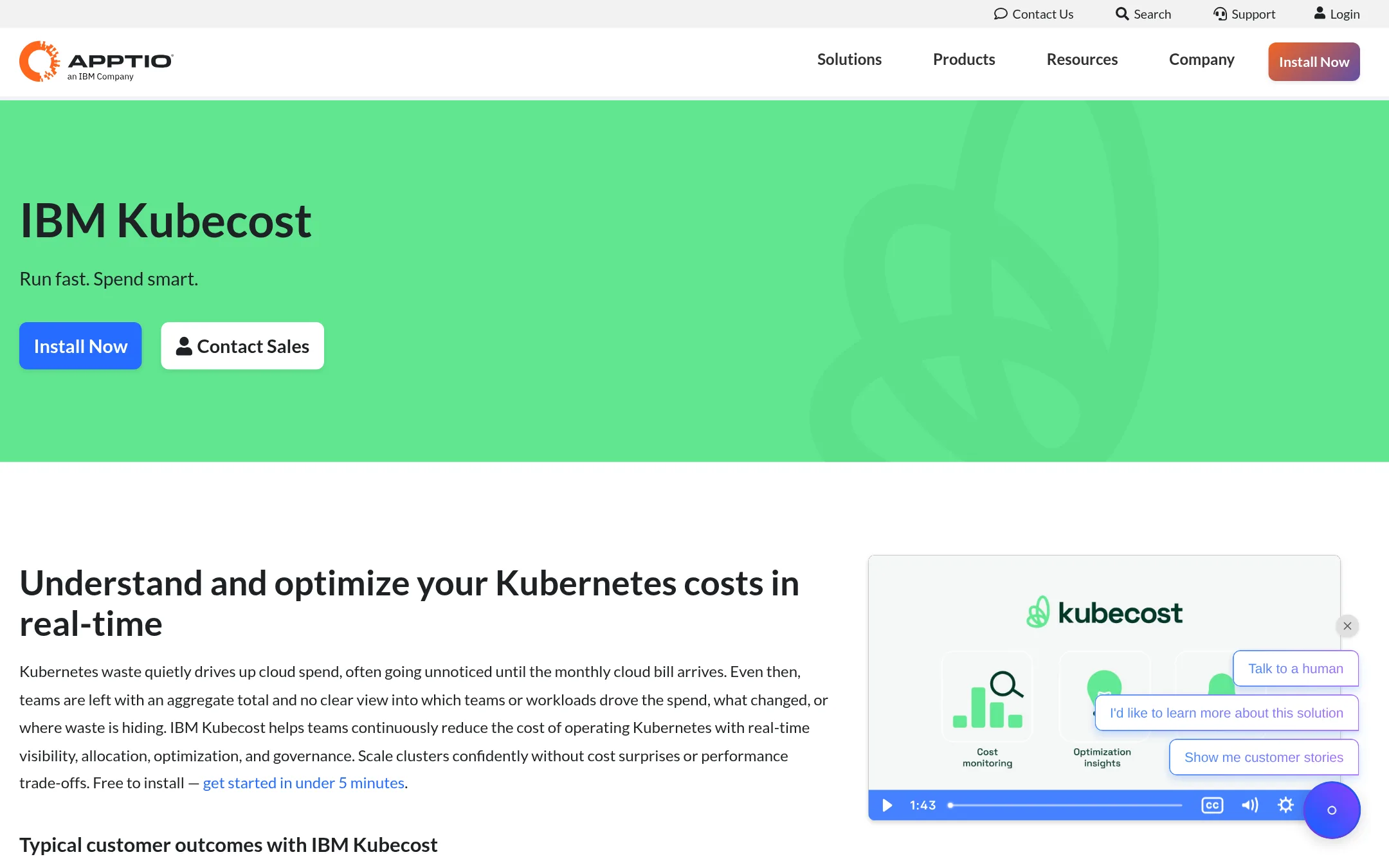
Kubecost is a Kubernetes-native cost monitoring tool that gives real-time visibility into spend across clusters, namespaces, and workloads. Choose it over Infracost if your focus is Kubernetes cost allocation and optimization rather than Infrastructure as Code cost guardrails in CI/CD pipelines.
Where it is strong
- Free tier includes unlimited clusters up to 250 cores and 15-day metric retention.
- Designed specifically for Kubernetes, with support for EKS, AKS, GKE, and on-prem.
- Offers cost optimization insights and automation, including request sizing and namespace turndown.
Where it falls short
- No published pricing for paid tiers. You must contact the vendor.
- Does not integrate with Infrastructure as Code workflows like Terraform or CloudFormation.
- Pricing:
- Pricing is not published on the site.
- Not published
5.Amazon Business
Best for: Teams that need to manage purchasing of office supplies, equipment, and other physical goods with approval controls and spend reporting.

- Pricing
- Not published
- Category
- E-commerce
Amazon Business is a procurement platform for buying supplies and equipment, not a cloud cost tool. It helps you control purchasing with approval workflows, spend analytics, and bulk discounts. Choose it instead of Infracost if your focus is on physical goods and vendor management, not cloud infrastructure costs.
Where it is strong
- Approval workflows and purchasing guardrails
- Spend analytics and custom reports
- Bulk discounts and quantity pricing
Where it falls short
- No cloud cost estimation or IaC integration
- Limited to Amazon's catalog and regions
- Pricing:
- Pricing is not published on the site.
- Pay-as-you-go
6.Microsoft Azure CycleCloud
Best for: Research teams and enterprises running HPC workloads on Azure that need cluster orchestration, not cost guardrails.
- Pricing
- Pay-as-you-go
- Category
- Developer Tools
Microsoft Azure CycleCloud is an orchestration tool for creating and managing HPC clusters on Azure. Choose it instead of Infracost if you need to provision and scale compute clusters for high-performance computing workloads, not FinOps governance for cloud costs.
Where it is strong
- Native integration with Azure HPC services and schedulers
- Supports dynamic scaling of clusters based on workload
- Part of the broader Azure ecosystem for hybrid and multicloud
Where it falls short
- No built-in cost estimation or FinOps policy features
- Requires Azure subscription and management overhead
- Pricing:
- In the United States, Azure pricing is consumption-based. You pay only for the resources you use, with no upfront cost for CycleCloud itself.
See more comparisons in Analytics & Data alternatives.
FAQ
Questions about Infracost alternatives
Which alternative is best for a team that only needs CI/CD cost checks?
Infracost itself is the most direct fit for CI/CD cost estimates, but among the alternatives, Vantage offers a broader platform without IaC integration. If you need pre-deploy guardrails specifically, none of the listed alternatives match Infracost's IaC focus, so consider sticking with Infracost or using Vantage for post-deploy visibility.
What is the most transparent pricing among these alternatives?
Vantage publishes clear pricing: Starter is free for up to $2,500 of cloud spend, Pro is $30/month, Business is $200/month, and Enterprise is custom. Infracost also lists prices, but most other alternatives like CloudHealth, Cloudability, and Kubecost do not publish pricing and require contacting sales.
Which tool is best for Kubernetes cost management?
Kubecost is designed specifically for Kubernetes, offering cost breakdowns by namespace, workload, and team, with a free tier for clusters up to 250 cores. It supports EKS, AKS, GKE, and on-prem, but does not integrate with IaC workflows like Terraform.
Are there alternatives that support multi-cloud environments?
CloudHealth by VMware, Cloudability, and Vantage all support AWS, Azure, and GCP. CloudHealth and Cloudability are mature enterprise platforms with deep reporting and governance, while Vantage offers a self-service option with 40+ integrations and virtual tagging.
What should I consider for enterprise-scale FinOps needs?
Cloudability and CloudHealth are built for large enterprises with finance-grade cost allocation, chargeback, and forecasting. Both have unpublished pricing and likely require sales conversations. Infracost's Enterprise tier offers SSO, custom policies, and SLAs, but focuses on IaC guardrails rather than full cost management.
Last updated November 3, 2026.