
Instant alternatives
6 products compared · Updated November 8, 2026
The short answer
Supabase suits teams that want a standard Postgres database with built-in auth, storage and realtime, and the freedom to leave later. Convex suits TypeScript teams that need server-side functions, background jobs and compliance options such as SOC 2 and HIPAA. Appwrite suits teams that want an open-source backend they can self-host or run on managed Postgres or MySQL.
Your shortlist, at a glance
Read the comparisons ↓- RRecordBookNot publishedSmall businesses that want a simple mobile record-keeping app without writing any code
 SupabaseFrom $25/mo + computeTeams that want a standard Postgres database with built-in auth, storage and realtime, and need the option to leave the platform
- CConvex$25/dev/mo + usageTeams building TypeScript apps that need server-side functions, background jobs, and enterprise compliance such as SOC 2 or HIPAA
 PocketBaseNot publishedSolo developers and small teams who want a self-hosted backend in one file with a built-in admin dashboard
 AppwriteFrom $10/moTeams that want an open-source backend they can self-host or run on managed Postgres and MySQL, including regulated or security-focused products
 PlanetScaleFrom $5/moEngineering teams with high-traffic MySQL or Postgres workloads that need horizontal sharding and near-zero-downtime schema changes
About Instant and its alternatives
Instant is a real-time database for frontend code. Its site says it gives apps auth, permissions, storage, presence, streams and offline sync, and it is built to be operated from the command line, with undo for destructive schema changes. Customers on the site credit it with removing manual optimistic updates and sync work.
When comparing alternatives, look at how each product prices its plans, including whether costs are flat or metered by users, compute, storage or seats. Check which regions and database types are available, what integrations ship with the platform, how support is offered, and what the contract terms are for self-hosting or moving data out later.
Explore the alternatives
- RNot published
1.RecordBook
Best for: Small businesses that want a simple mobile record-keeping app without writing any code
- Pricing
- Not published
- Category
- Productivity & Project Management
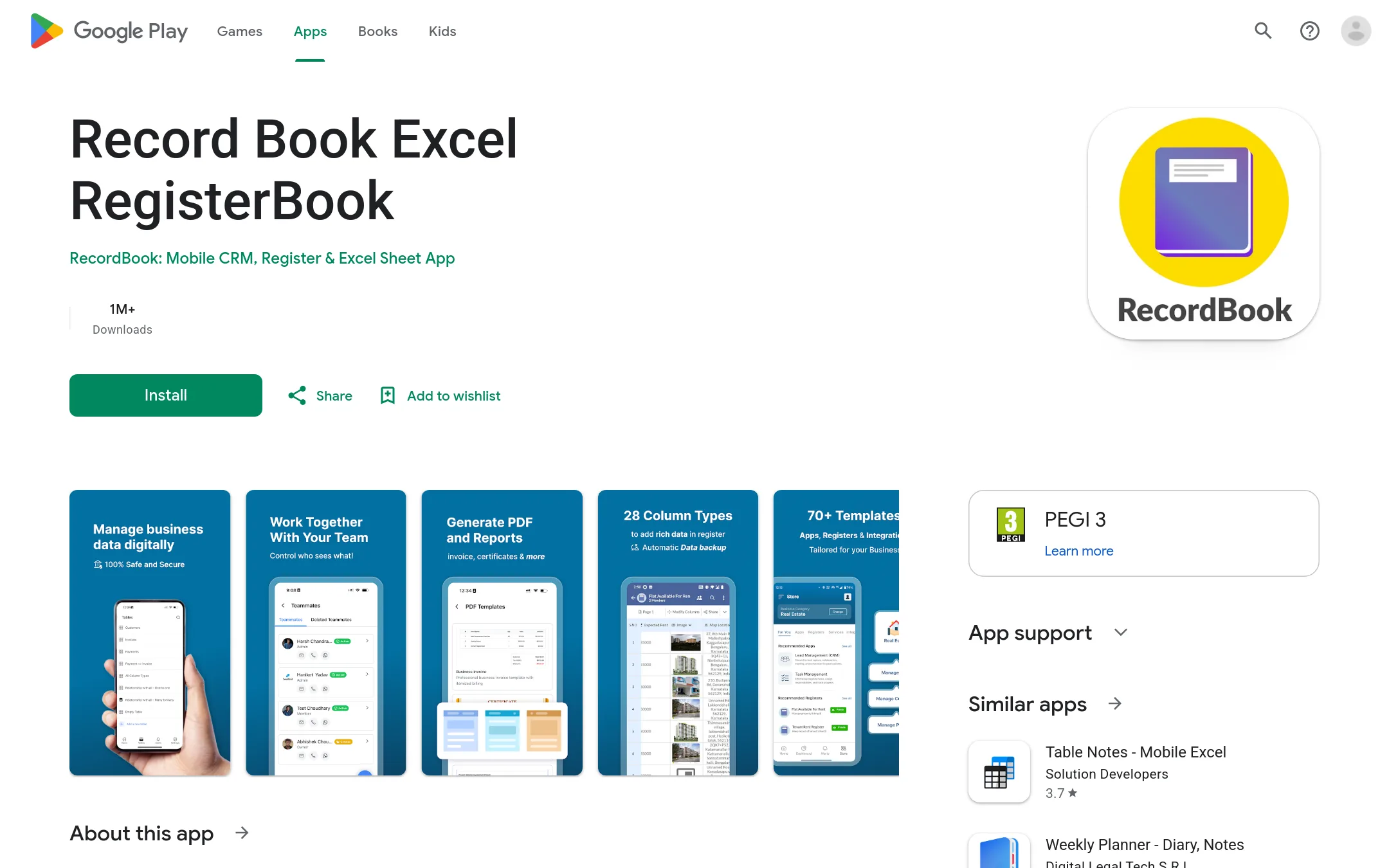
RecordBook is a Google Play app that tries to be a database-style tool for small businesses, positioned as an Airtable-like option for SMBs. Someone would pick it over Instant if they are a non-developer small business owner who wants to track records on a phone, not build a real-time backend for an app.
Where it is strong
- Runs as an Android app from Google Play
- Aimed at non-technical owners of small businesses
- No code or terminal setup needed
Where it falls short
- Not a developer backend, so no auth, permissions or real-time sync APIs for building your own app
- No pricing information is available from the supplied material
- Pricing:
- Pricing is not published on the site.
- From $25/mo + compute
2.Supabase
Best for: Teams that want a standard Postgres database with built-in auth, storage and realtime, and need the option to leave the platform
- Pricing
- From $25/mo + compute
- Category
- Developer Tools
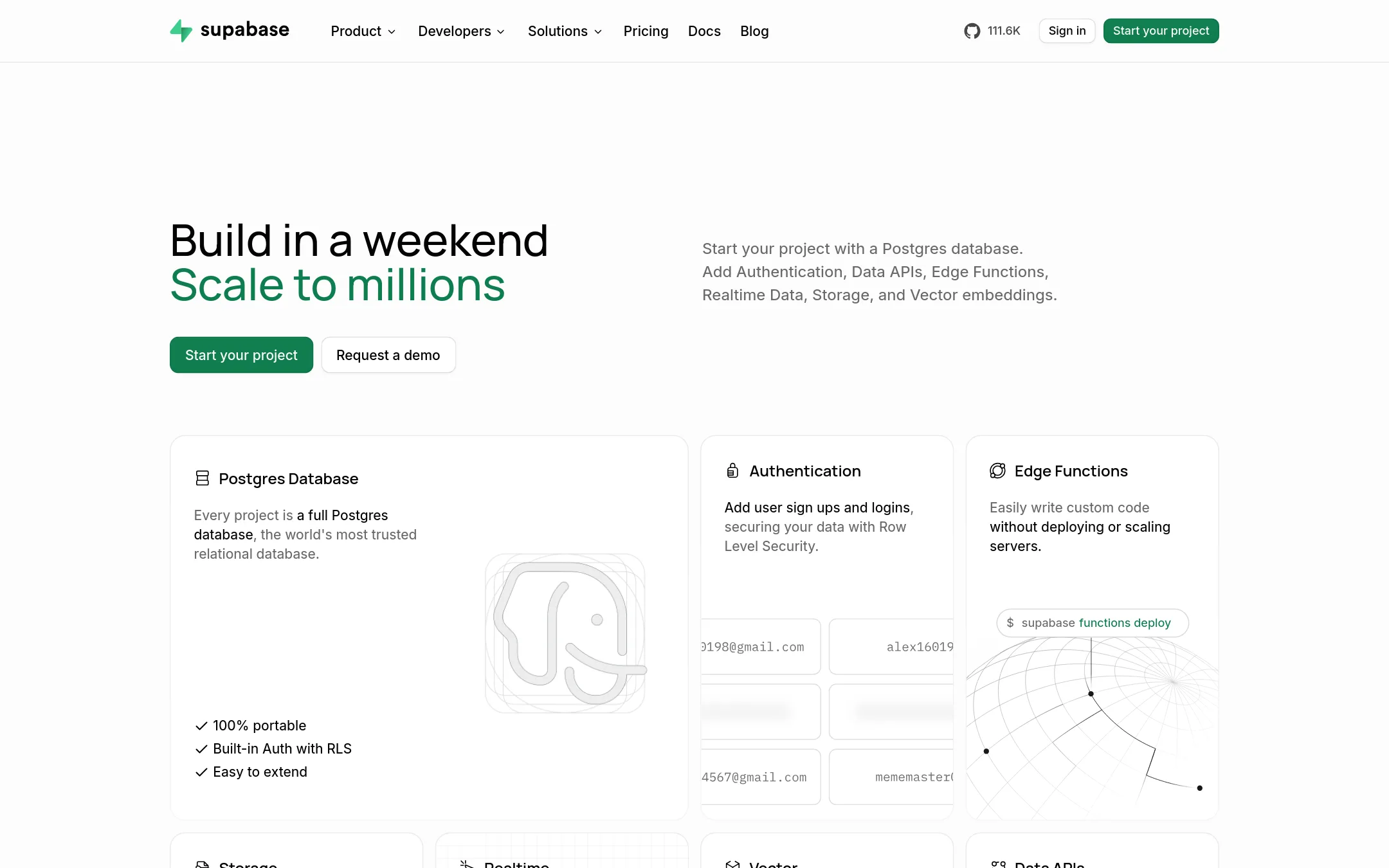
Supabase is a hosted Postgres platform with auth, row-level security, storage, realtime, edge functions and vector search bundled together. Teams choose it over Instant when they want a standard SQL database they can move off later, or when they need the wider set of services and the template ecosystem that comes with it.
Where it is strong
- Every project is a full Postgres database, so the data stays portable
- Row Level Security is built in and tied to the auth system
- The free tier includes unlimited API requests and 50,000 monthly active users
Where it falls short
- It has no built-in presence, streams or offline sync like Instant offers
- Realtime sync needs more manual work to keep client state consistent, according to the Instant customer quotes
- Pricing:
- The Pro plan starts at $25 per month with 100,000 monthly active users included, and compute instances start at $10 per month for a Micro instance on paid plans.
- Switching from Instant:
- Moving from Instant would mean rebuilding the data layer on Postgres, since Instant's relational queries and permission rules do not map directly to Supabase's SQL and RLS policies.
- C$25/dev/mo + usage
3.Convex
Best for: Teams building TypeScript apps that need server-side functions, background jobs, and enterprise compliance such as SOC 2 or HIPAA
- Pricing
- $25/dev/mo + usage
- Category
- Other
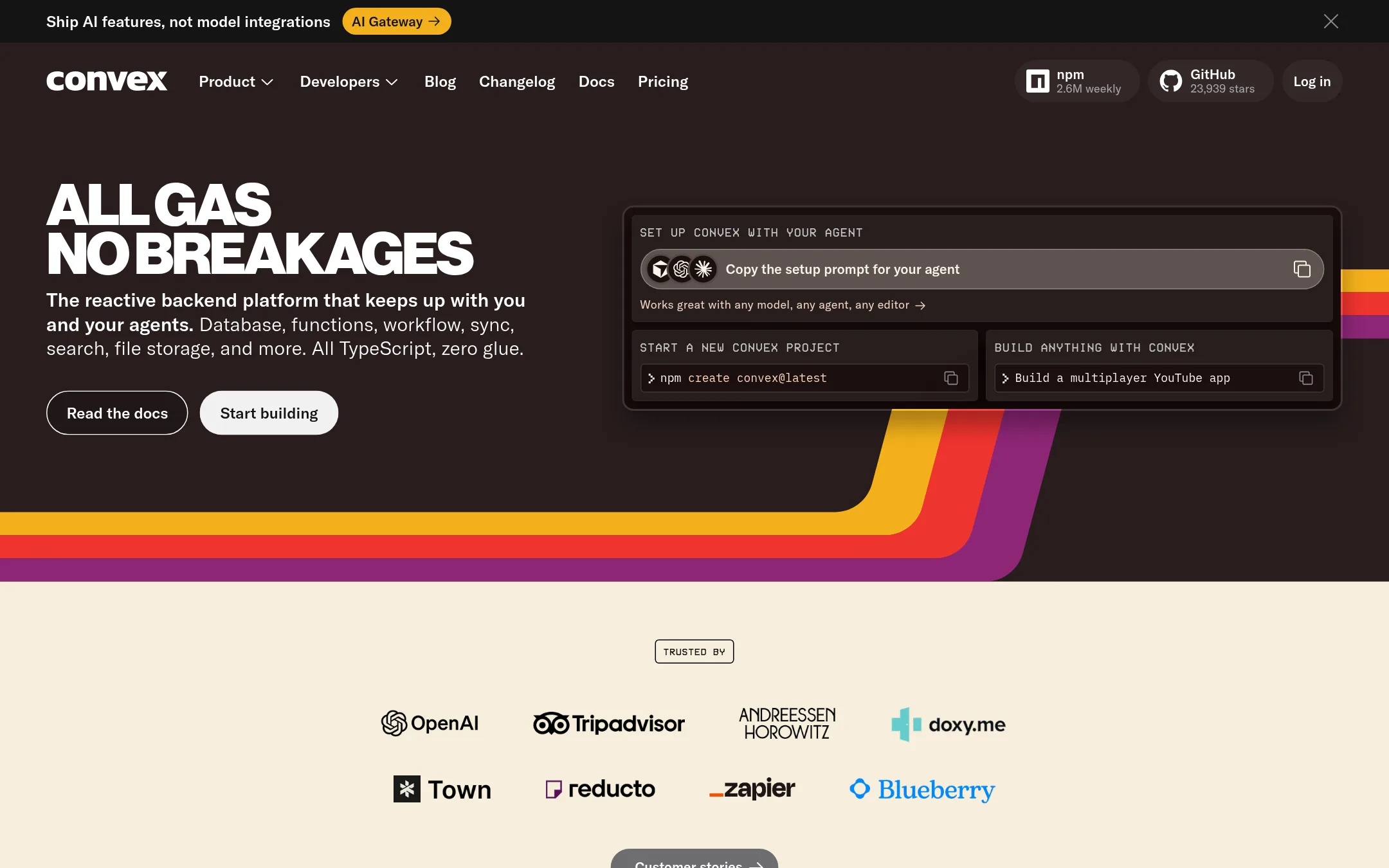
Convex is a reactive backend platform with a database, serverless functions, real-time sync, file storage, search, and scheduled jobs, all written in TypeScript. Someone would pick it over Instant when they want server-side functions and background jobs with retries, or when they need enterprise features such as SOC 2 and HIPAA reports, SAML/SSO, and an option to run in their own VPC.
Where it is strong
- Ships with server-side functions, scheduled jobs, and workflows with retries, so you don't need a separate job service.
- Includes file storage, text search, and vector search in the same platform.
- Offers SOC 2 Type 2 and HIPAA options, plus RBAC and SSO on higher tiers.
Where it falls short
- Pricing combines seats with metered compute, storage, and I/O, so costs can be harder to predict than a flat plan.
- Advanced enterprise features like SAML/SSO and dedicated deployments are reserved for Business and Enterprise plans.
- Pricing:
- The Free plan includes 300 deployments and the Starter plan starts at $0/month with pay as you go, the Professional plan is $25 per developer per month, and Business and Enterprise pricing is custom with a $2,500 monthly minimum.
- Switching from Instant:
- Moving from Instant would mean rewriting your permissions and real-time queries into Convex's functions and data model, since the two products use different APIs.
- Not published
4.PocketBase
Best for: Solo developers and small teams who want a self-hosted backend in one file with a built-in admin dashboard
- Pricing
- Not published
- Category
- Developer Tools
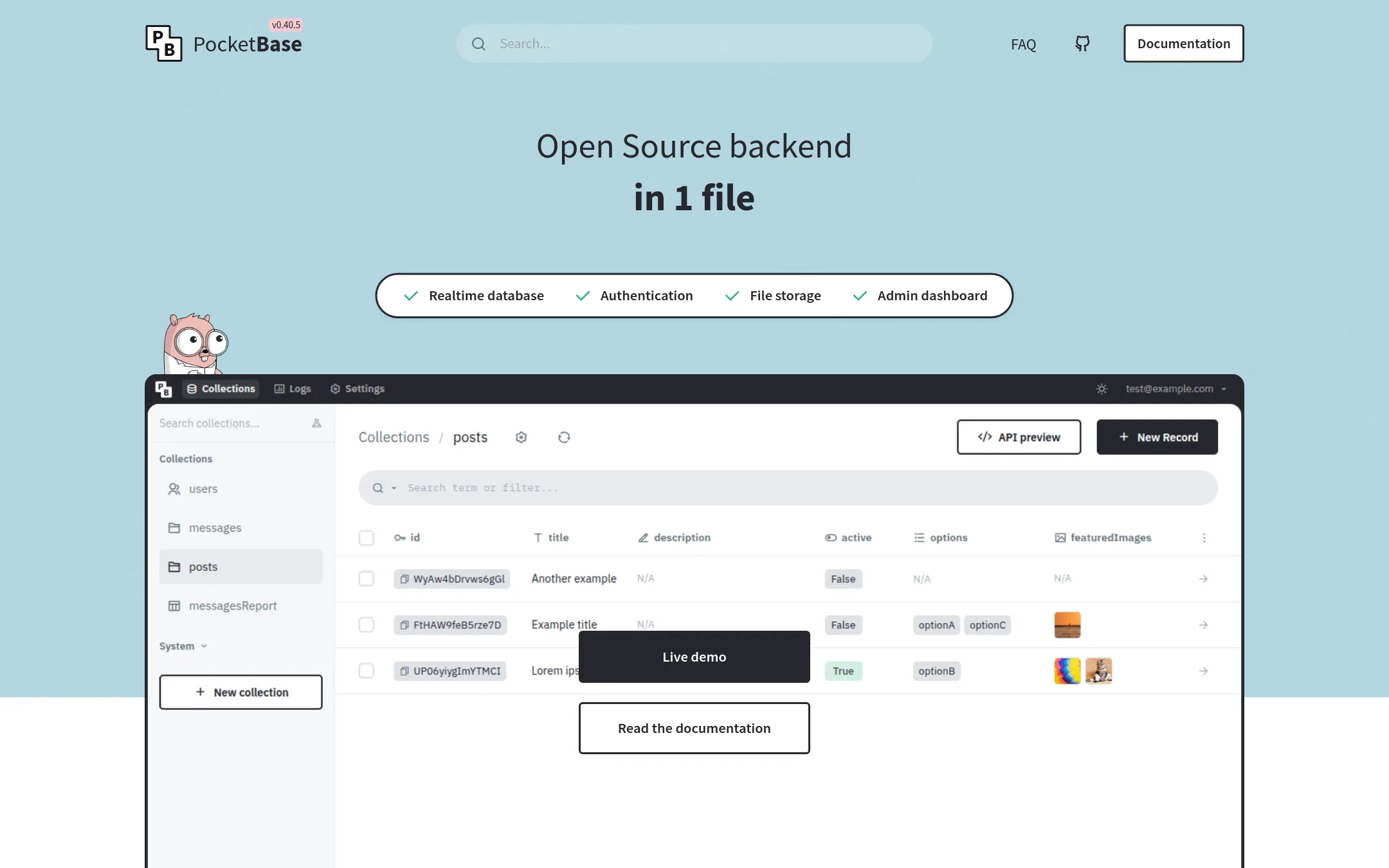
PocketBase is an open source backend that ships as a single file, with a realtime database, authentication, file storage and an admin dashboard. Someone would pick it over Instant when they want to self-host a backend they fully control and run it on their own server. It suits teams that prefer a simple binary they can deploy anywhere over a managed service.
Where it is strong
- Ships as one file, so setup and deployment stay simple
- Includes realtime database, auth, file storage and an admin dashboard
- Open source, so you can self-host and inspect the code
Where it falls short
- Its feature set is narrower than Instant, which also covers permissions, presence and streams on the site
- Does not mention the built-in undo, CLI-first workflow or AI-oriented tooling that Instant highlights
- Pricing:
- Pricing is not published on the site.
- From $10/mo
5.Appwrite
Best for: Teams that want an open-source backend they can self-host or run on managed Postgres and MySQL, including regulated or security-focused products
- Pricing
- From $10/mo
- Category
- Developer Tools
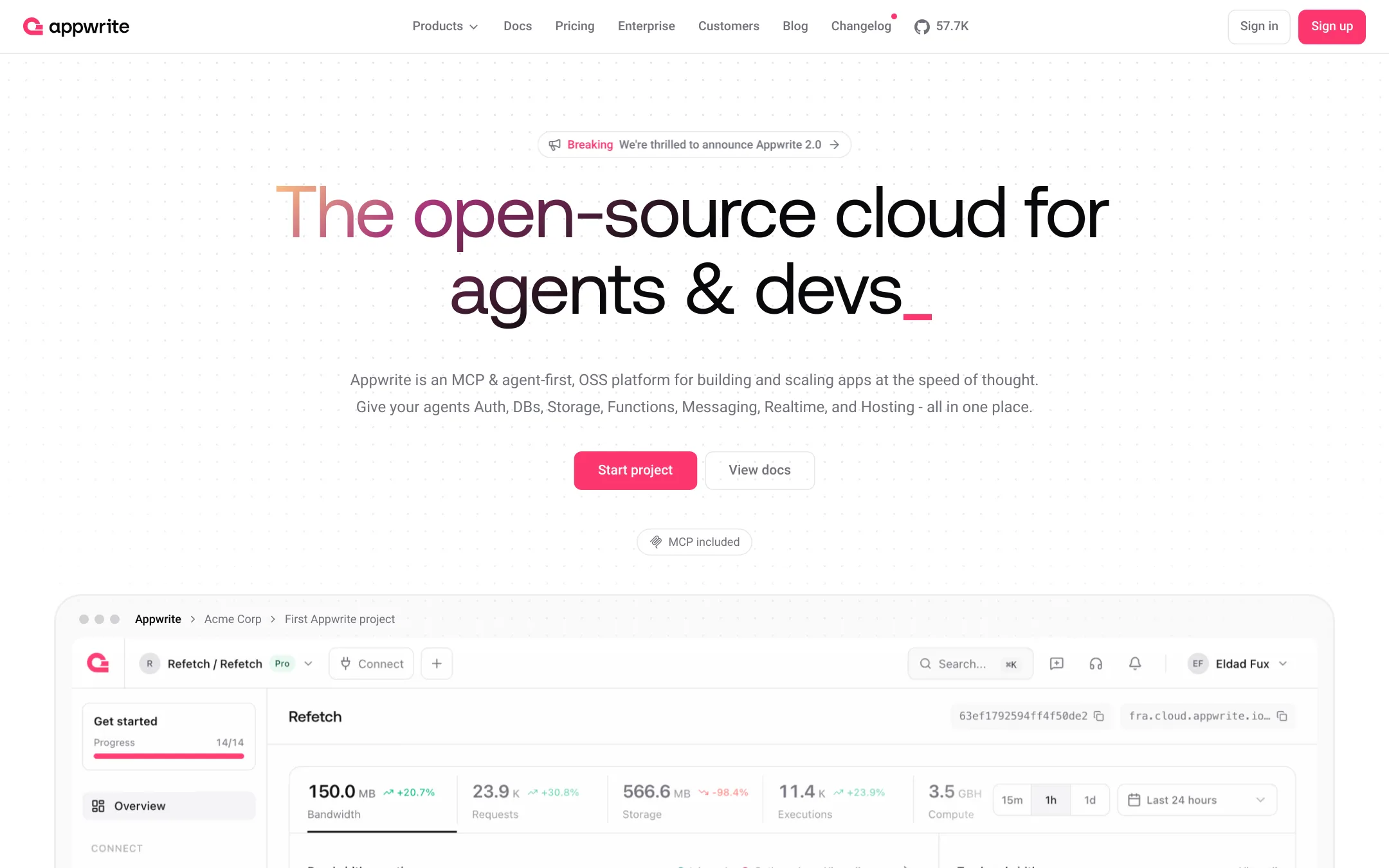
Appwrite is an open-source backend platform with Auth, Databases, Storage, Functions, Messaging, Sites, Realtime and a firewall, all under one subscription. Teams pick it over Instant when they want to self-host, need a choice of database types including managed PostgreSQL or MySQL, or want a backend with built-in security and compliance controls such as HIPAA and SOC 2 support.
Where it is strong
- Open source, with the option to self-host
- Choice of database types, including managed PostgreSQL and MySQL
- Built-in security features such as DDoS protection, encryption and abuse controls
Where it falls short
- Real-time sync and offline-first behavior are not described on the page the way Instant describes them
- Pricing depends on serverless quotas and tiers, which takes more work to estimate than a flat fee
- Pricing:
- Pricing is published with serverless databases that include $10 of monthly compute credits, dedicated compute tiers from $10/mo for 1 core and 1 GB up to $4,099/mo for 256 GB, and overage rates on the plans page.
- From $5/mo
6.PlanetScale
Best for: Engineering teams with high-traffic MySQL or Postgres workloads that need horizontal sharding and near-zero-downtime schema changes
- Pricing
- From $5/mo
- Category
- Developer Tools
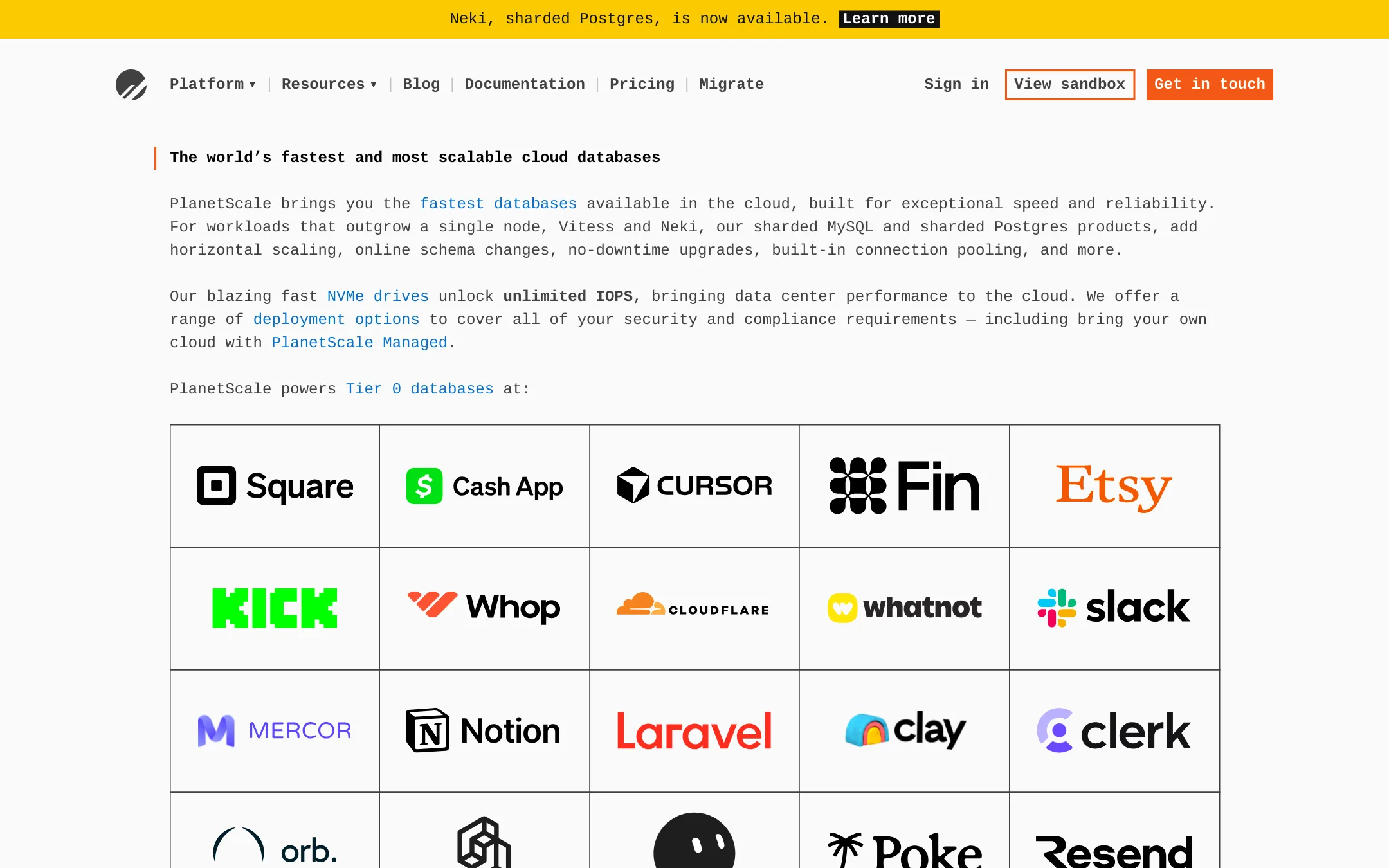
PlanetScale is a managed database service for teams that need MySQL or Postgres to scale well past a single server. It offers Vitess for horizontally sharded MySQL, Neki for sharded Postgres, and fast NVMe-backed hosting, with online schema changes and high availability. Someone would pick it over Instant when they want a conventional relational database their own backend talks to, at large scale, rather than a real-time database that runs in the frontend.
Where it is strong
- Horizontal sharding for MySQL through Vitess and for Postgres through Neki, built by the team behind Vitess.
- Schema changes and version upgrades can run online without downtime.
- Branching lets teams develop schema changes in isolated environments before merging them.
Where it falls short
- It is a database, not a full backend, so real-time sync, auth, and permissions must be built or assembled separately.
- Large-scale features and Enterprise support sit behind custom quotes and sales contact.
- Pricing:
- Postgres starts at $5 per month for a single node and $50 per month for Metal with NVMe storage, while Vitess and Neki pricing depends on cluster size, shards, replicas, and storage, with custom quotes for larger workloads.
See more comparisons in Developer Tools alternatives.
FAQ
Questions about Instant alternatives
What is the closest alternative to Instant for a team that wants a standard SQL database?
Supabase is a hosted Postgres platform with auth, row-level security, storage and realtime bundled together. Every project is a full Postgres database, so the data stays portable. Its Pro plan starts at $25 per month with 100,000 monthly active users included.
Which alternative offers server-side functions and background jobs alongside real-time sync?
Convex is a reactive backend with a database, serverless functions, real-time sync, file storage, search and scheduled jobs, all written in TypeScript. It also offers SOC 2 Type 2 and HIPAA options. Its pricing combines seats with metered compute, storage and I/O.
Can I self-host my backend instead of using a managed service?
Appwrite is open source and can be self-hosted, and it also supports managed PostgreSQL and MySQL. PocketBase ships as a single file with a realtime database, auth, storage and an admin dashboard that you can run on your own server. Instant's site does not describe a self-hosting option.
Is there an alternative for a small business owner who does not write code?
RecordBook is an Android app from Google Play aimed at non-technical small business owners who want to track records on a phone. It is not a developer backend, so it has no auth, permissions or real-time sync APIs. Pricing is not published.
Which option is built for very large relational workloads rather than frontend apps?
PlanetScale is a managed database service for MySQL through Vitess and Postgres through Neki, with horizontal sharding and online schema changes. Postgres starts at $5 per month for a single node, while larger Vitess and Neki clusters are priced by custom quote. It is a database rather than a full backend, so auth and real-time features must be added separately.
Last updated November 8, 2026.