Intel 471 alternatives
11 products compared · Updated November 2, 2026
The short answer
For a broader, AI-driven platform that combines threat intelligence with endpoint defense, Cyble is the strongest alternative to Intel 471. Recorded Future suits enterprises needing cross-domain intelligence with automation and many integrations. Flashpoint is best for teams that want cyber, fraud, and physical security intelligence in one platform.
Your shortlist, at a glance
Read the comparisons ↓ Recorded FutureCustom quoteSecurity teams at enterprises or government agencies that need cross-domain threat intelligence with automated defense and 100+ integrations.
 CrowdStrikePer endpoint, customSecurity teams that want a unified platform for endpoint protection, cloud security, and threat hunting with integrated intelligence.
 FlashpointCustom quoteSecurity teams that need a single platform for cyber threat, fraud, and physical security intelligence with flexible packaging.
- DDigital ShadowsNot publishedSecurity teams that need external threat exposure monitoring and brand protection across web, dark web, and social media.
 AnomaliNot publishedEnterprise security teams and public-sector organizations that want to reduce alert noise and automate Tier 1/2 triage with auditable AI agents.
 CybleNot publishedEnterprise security teams that want a unified, AI-driven platform covering threat intelligence, dark web monitoring, attack surface management, and endpoint defense in one product.
 Group-IBNot publishedSecurity and fraud teams in banks, e-commerce, and telecoms that want a unified platform covering threat intel, fraud, and attack surface management.
 Proofpoint Security AwarenessNot publishedSecurity teams that want to reduce phishing susceptibility and build a security-aware culture through targeted training and simulated attacks.
 Rapid7Custom quoteSecurity teams that want a unified platform for detection, response, and vulnerability management with 24/7 MDR coverage.
 TenableCustom quoteSecurity teams that want continuous asset discovery, vulnerability scanning, and risk-based prioritization across hybrid environments.
 ThreatConnectNot publishedLarge enterprises and government agencies that need real-time alerts on events, physical security risks, and cyber threats across many data sources.
About Intel 471 and its alternatives
Intel 471 is a cyber threat intelligence platform known for its HUMINT-centric approach. It goes into criminal underground communities to extract adversary tradecraft and provides pre-attack intelligence through its Verity471 platform, which includes threat exposure, intelligence, and hunting capabilities.
When comparing alternatives, weigh the breadth of coverage versus depth of underground access. Consider pricing structure, whether it is published or requires a sales call, and the regions and integrations each product supports. Also evaluate contract terms, such as monthly versus annual billing, and the level of support offered, including managed services or 24/7 incident response.
Explore the alternatives
- Custom quote
1.Recorded Future
Best for: Security teams at enterprises or government agencies that need cross-domain threat intelligence with automated defense and 100+ integrations.
- Pricing
- Custom quote
- Category
- Security & Privacy
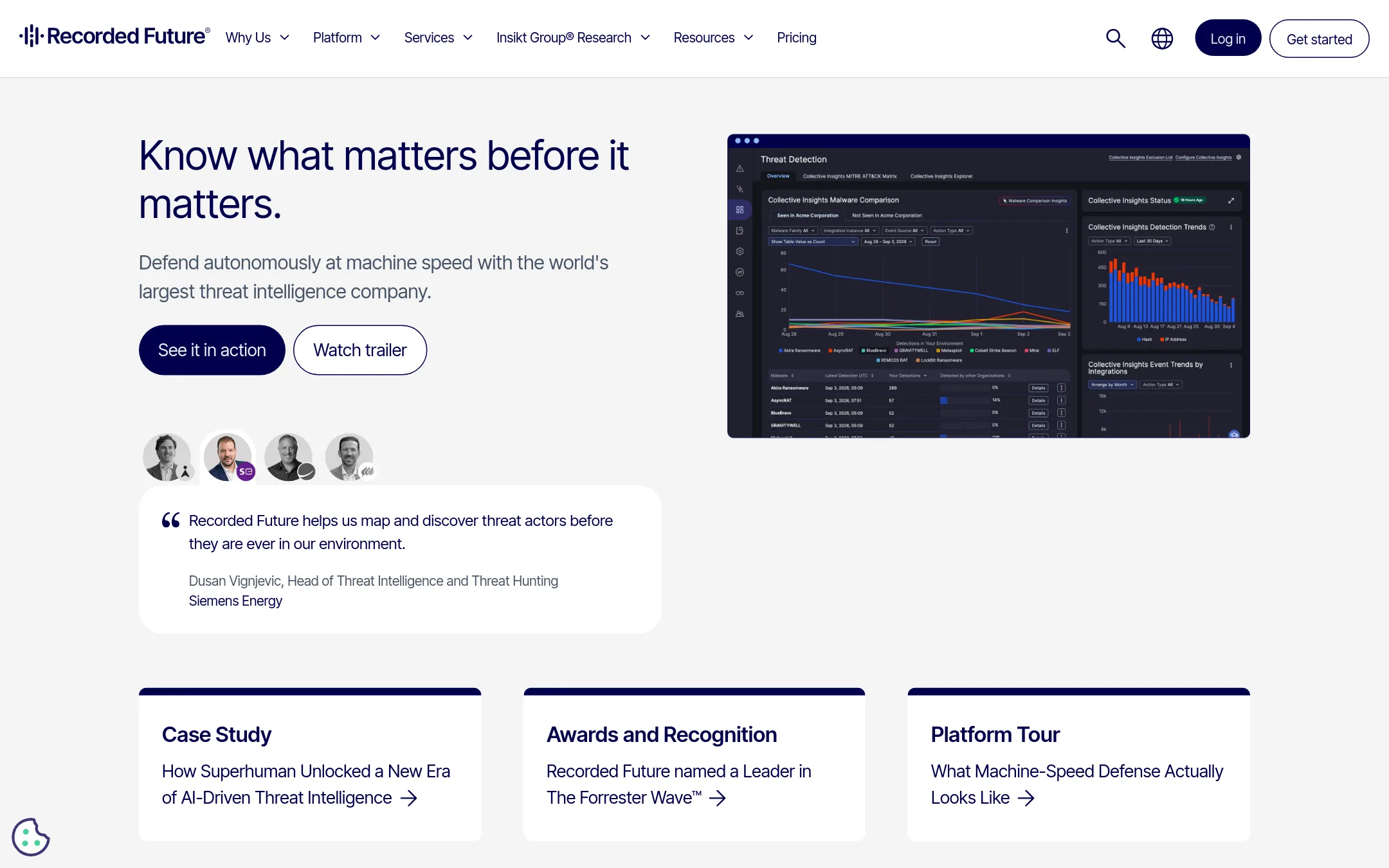
Recorded Future is a large threat intelligence platform that combines technical data, dark web monitoring, and human analysis from its Insikt Group. It suits teams that want broad coverage across cyber operations, digital risk, third-party risk, and payment fraud, with automation and many integrations. Choose it over Intel 471 if you need a wider set of intelligence domains and machine-speed defense, not just HUMINT-centric underground intel.
Where it is strong
- Covers four domains: cyber ops, digital risk, third-party risk, and payment fraud.
- Intelligence Graph correlates data from technical, dark web, and open web sources.
- Autonomous Threat Operations deploys intelligence across your stack in minutes.
Where it falls short
- Pricing is not transparent and requires a sales conversation.
- May be overkill for smaller teams that only need underground-focused intel like Intel 471 provides.
- Pricing:
- Pricing is not published on the site. It depends on package, organization size, add-ons, and capacity, so you must contact sales for a quote.
- Per endpoint, custom
2.CrowdStrike
Best for: Security teams that want a unified platform for endpoint protection, cloud security, and threat hunting with integrated intelligence.

- Pricing
- Per endpoint, custom
- Category
- Security & Privacy
CrowdStrike is a broad AI-native security platform that covers endpoints, cloud, identity, and data, with threat intelligence and hunting built in. Choose it over Intel 471 if you want prevention and response across your whole environment, not just intelligence feeds. It suits teams that need one platform for detection, investigation, and action.
Where it is strong
- Unified platform covering endpoints, cloud, identity, and data
- AI-native detection and response with real-time threat intelligence
- Flexible monthly or annual billing with a 15-day free trial
Where it falls short
- Pricing is not transparent on the site. You must contact sales
- Broader platform may be overkill if you only need threat intelligence
- Pricing:
- In the United States, pricing is per endpoint per year or per month, with Falcon Go, Pro, and Enterprise tiers. Exact figures are not listed on the page.
- Switching from Intel 471:
- Moving from Intel 471 to CrowdStrike means shifting from a pure intelligence feed to a full security platform, so you'll need to deploy agents and configure detection rules.
- Custom quote
3.Flashpoint
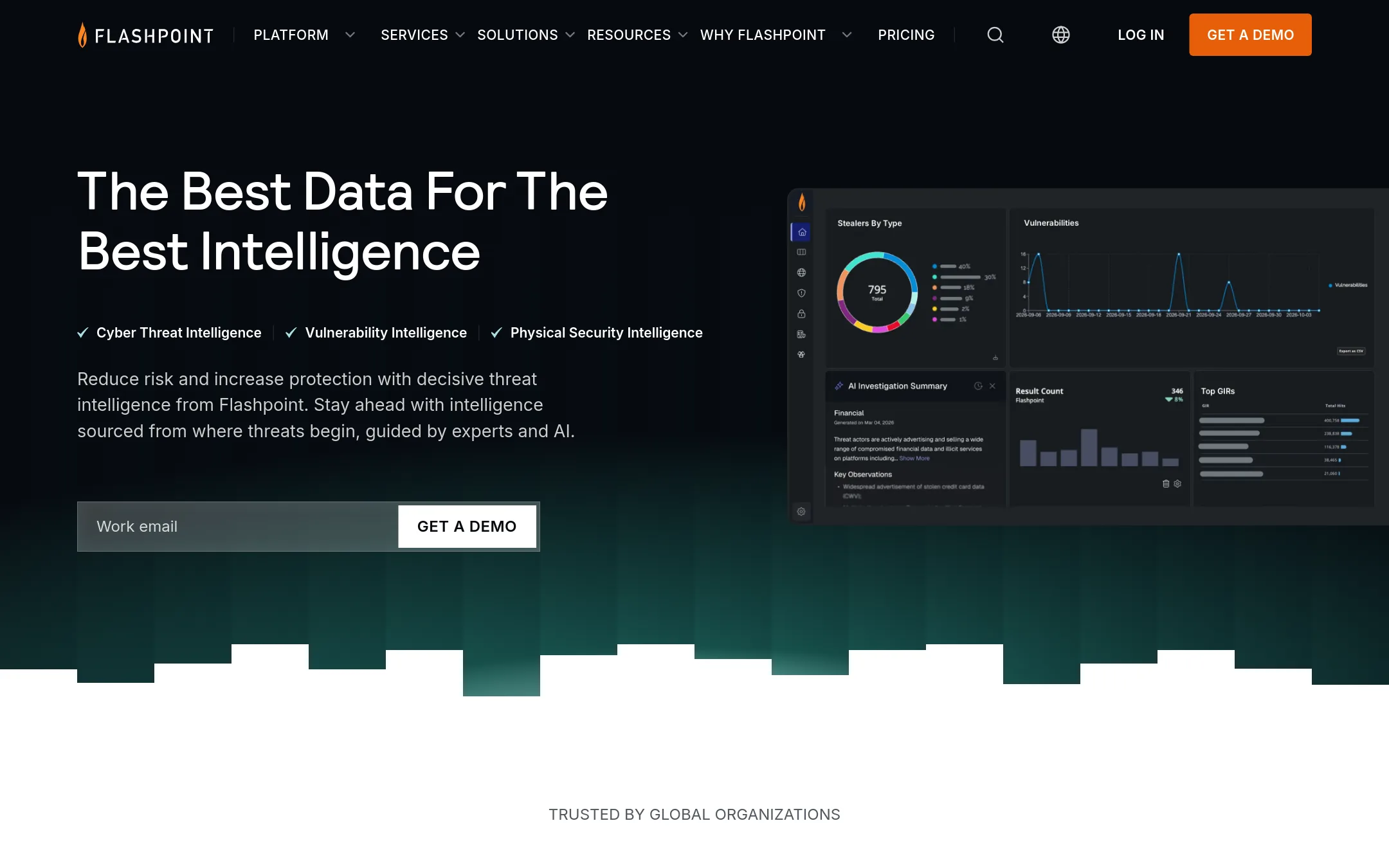
Best for: Security teams that need a single platform for cyber threat, fraud, and physical security intelligence with flexible packaging.
- Pricing
- Custom quote
- Category
- Security & Privacy
Flashpoint is a threat intelligence platform that pulls from open and dark web sources, with analyst validation and AI-assisted analysis. Choose it over Intel 471 if you need broader coverage that includes fraud, physical security, and vulnerability intelligence, not just cyber threat tracking.
Where it is strong
- Covers cyber, fraud, physical security, and vulnerabilities in one platform.
- Analysts validate and prioritize threats based on your requirements.
- Integrates with AI workflows via MCP server and APIs.
Where it falls short
- Pricing requires a sales conversation. No self-serve tiers.
- May be more than needed if you only want cyber threat intel.
- Pricing:
- Pricing is not published on the site. It offers core packages and add-ons tailored to your security program.
- Switching from Intel 471:
- Moving from Intel 471 involves evaluating Flashpoint's broader data sources and analyst services against your current intel workflows, then migrating any automated feeds or integrations.
- DNot published
4.Digital Shadows
Best for: Security teams that need external threat exposure monitoring and brand protection across web, dark web, and social media.

- Pricing
- Not published
- Category
- Other
Digital Shadows monitors your digital footprint for exposed data, brand abuse, and cyber threats across the open, deep, and dark web. Choose it over Intel 471 if you need broader external risk monitoring rather than deep criminal underground intelligence. It suits teams that want continuous attack surface visibility and takedown support, not just adversary tracking.
Where it is strong
- Tracks exposed credentials and leaked data across the web
- Monitors brand impersonation and phishing domains
- Provides takedown assistance for malicious content
Where it falls short
- Site was unreachable during review, so details are limited
- Less focus on deep criminal underground actor intelligence than Intel 471
- Pricing:
- Pricing is not published on the site.
- Not published
5.Anomali
Best for: Enterprise security teams and public-sector organizations that want to reduce alert noise and automate Tier 1/2 triage with auditable AI agents.
- Pricing
- Not published
- Category
- Other
Anomali is an agentic SOC platform that unifies security telemetry, threat intelligence, and AI agents into governed decisions. Choose it over Intel 471 if you need to operationalize threat intel across your existing SIEM, EDR, and cloud tools with automated triage and approval-based response, rather than just consuming intelligence feeds.
Where it is strong
- Works with the SIEM, EDR, cloud, identity, and email tools you already own
- AURA agents triage and investigate, with human approval for consequential actions
- Decision Intelligence Graph fuses telemetry with threat intel and MITRE ATT&CK mapping
Where it falls short
- No pricing details are available, so budgeting requires a sales conversation
- Heavy focus on AI agents may be overkill for teams that only need threat intelligence feeds
- Pricing:
- Pricing is not published on the site.
- Switching from Intel 471:
- Moving from Intel 471 means replacing a HUMINT-centric intelligence feed with a broader SOC platform, so you'll need to map your existing intel workflows to Anomali's enrichment and response features.
- Not published
6.Cyble
Best for: Enterprise security teams that want a unified, AI-driven platform covering threat intelligence, dark web monitoring, attack surface management, and endpoint defense in one product.
- Pricing
- Not published
- Category
- Security & Privacy
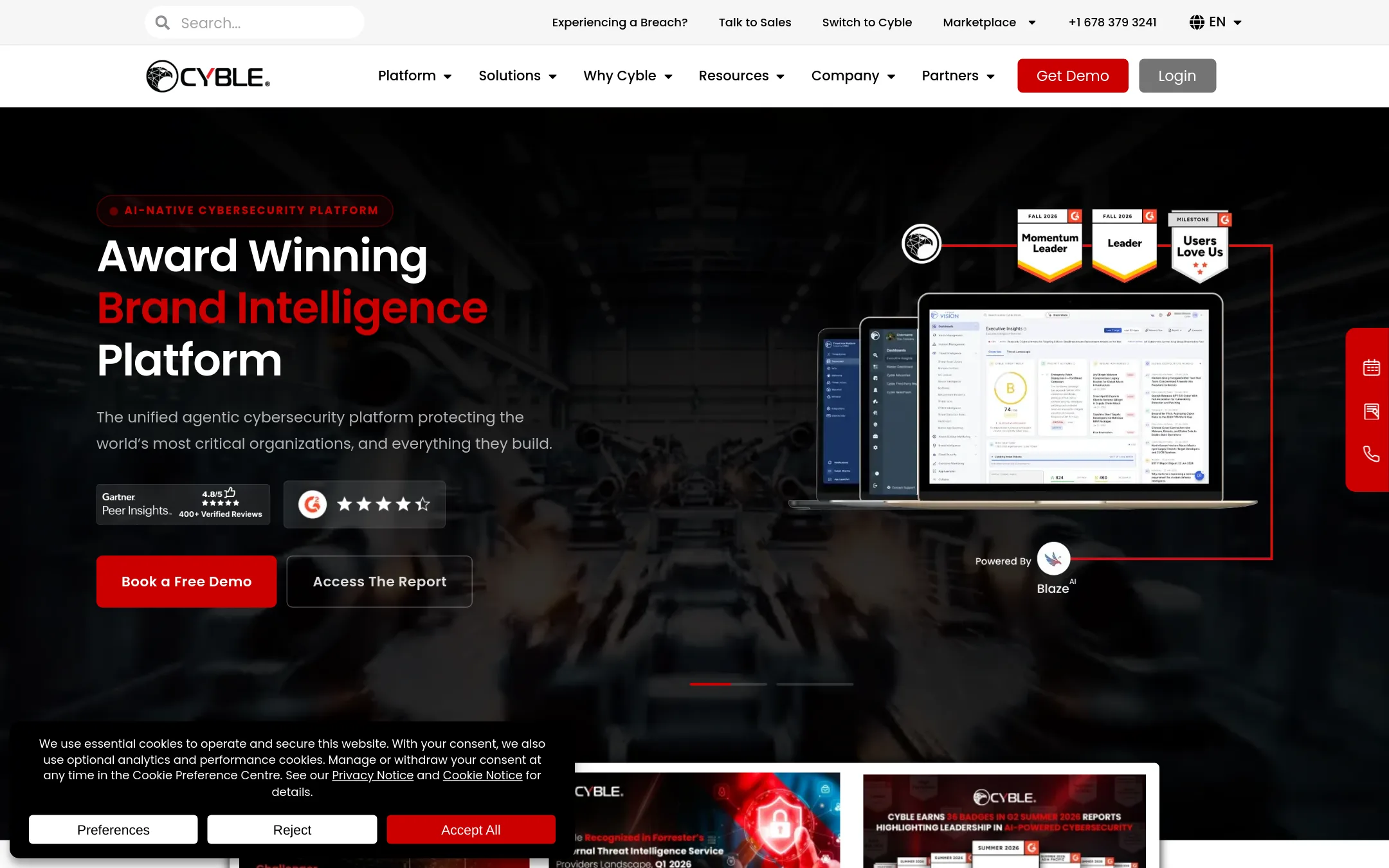
Cyble is an AI-native threat intelligence platform that monitors the dark web, deep web, and surface web, and correlates that with endpoint and cloud telemetry. It also includes attack surface management, brand protection, and autonomous response capabilities. You would choose Cyble over Intel 471 if you want a broader, more automated platform that combines threat intel with endpoint security and AI-driven analysis, rather than Intel 471's HUMINT-centric approach focused on criminal underground access.
Where it is strong
- AI-native platform correlates dark web, deep web, and surface web sources in real time.
- Includes endpoint security (Cyble Titan) and autonomous response, not just threat intel.
- Recognized as a Challenger in the 2026 Gartner Magic Quadrant for Cyberthreat Intelligence.
Where it falls short
- No pricing published, so budgeting requires a sales call.
- May be overkill if you only need deep criminal underground intelligence like Intel 471's HUMINT access.
- Pricing:
- Pricing is not published on the site.
- Not published
7.Group-IB
Best for: Security and fraud teams in banks, e-commerce, and telecoms that want a unified platform covering threat intel, fraud, and attack surface management.
- Pricing
- Not published
- Category
- Security & Privacy
Group-IB is a broader cybersecurity platform that combines threat intelligence with fraud protection, attack surface management, and managed XDR. Choose it over Intel 471 if you need more than intelligence feeds, like real-time fraud prevention and incident response services, all on one platform.
Where it is strong
- Combines threat intel with fraud protection and managed XDR on one platform
- Includes attack surface management and digital risk protection
- Offers 24/7 incident response and digital forensics services
Where it falls short
- Pricing is not transparent, requires sales contact
- Platform breadth may be overkill for teams needing only threat intelligence
- Pricing:
- Pricing is not published on the site.
- Not published
8.Proofpoint Security Awareness
Best for: Security teams that want to reduce phishing susceptibility and build a security-aware culture through targeted training and simulated attacks.
- Pricing
- Not published
- Category
- Security & Privacy
Proofpoint Security Awareness focuses on training employees to recognize and resist phishing and other social engineering attacks, rather than providing threat intelligence from the criminal underground. Choose it if your priority is reducing human risk through targeted, behavior-changing security awareness programs, not tracking adversary campaigns. It suits organizations that already have a threat intelligence feed and need to strengthen their last line of defense: people.
Where it is strong
- Targeted training that changes employee behavior, not just compliance.
- Backed by Proofpoint's threat intelligence on 2.3 trillion interactions.
- Integrates with the broader Proofpoint platform for email security and DLP.
Where it falls short
- No visibility into criminal underground forums or adversary tradecraft.
- Focuses on human risk, not technical threat hunting or exposure management.
- Pricing:
- Pricing is not published on the site.
- Custom quote
9.Rapid7
Best for: Security teams that want a unified platform for detection, response, and vulnerability management with 24/7 MDR coverage.
- Pricing
- Custom quote
- Category
- Security & Privacy
Rapid7 is a broad cybersecurity platform covering MDR, SIEM, vulnerability management, and exposure management. Choose it over Intel 471 if you need a full security operations stack with managed detection and response, not just threat intelligence feeds.
Where it is strong
- Unified platform from endpoint to cloud
- 24/7 MDR with unlimited incident response
- Recognized as a leader by Gartner and IDC
Where it falls short
- Pricing requires contacting sales
- Threat intelligence is not the core focus, unlike Intel 471
- Pricing:
- Pricing is not published on the site. You must contact sales for quotes on each product.
- Switching from Intel 471:
- Moving from Intel 471 to Rapid7 means shifting from a threat-intel-centric feed to a broader security platform, so you'll need to evaluate how to integrate or replace your existing intel workflows.
- Custom quote
10.Tenable
Best for: Security teams that want continuous asset discovery, vulnerability scanning, and risk-based prioritization across hybrid environments.
- Pricing
- Custom quote
- Category
- Security & Privacy
Tenable is an exposure management platform that finds and prioritizes vulnerabilities across IT, cloud, OT, and AI. Choose it over Intel 471 if your team needs to fix known weaknesses in your own environment rather than track adversary activity in the criminal underground.
Where it is strong
- Unifies visibility across IT, cloud, OT, and web apps in one platform
- Risk-based scoring helps prioritize the vulnerabilities that matter most
- Includes AI discovery and cloud workload protection in the base package
Where it falls short
- No direct access to criminal underground intelligence like Intel 471
- Pricing requires contacting sales, no self-serve tiers
- Pricing:
- Pricing is not published on the site.
- Not published
11.ThreatConnect
Best for: Large enterprises and government agencies that need real-time alerts on events, physical security risks, and cyber threats across many data sources.

- Pricing
- Not published
- Category
- Security & Privacy
ThreatConnect (now part of Dataminr) is a real-time event and threat intelligence platform that monitors over 1 million public data sources using AI. Choose it over Intel 471 if you need broad situational awareness across physical and cyber threats, not just deep criminal underground intel.
Where it is strong
- Monitors 1M+ public data sources for real-time alerts
- Covers physical security, executive protection, and cyber threats
- Trusted by 100+ US government agencies and two-thirds of Fortune 50
Where it falls short
- Pricing not public, likely enterprise-only
- Less focus on deep criminal underground HUMINT than Intel 471
- Pricing:
- Pricing is not published on the site.
See more comparisons in Security & Privacy alternatives.
FAQ
Questions about Intel 471 alternatives
Which alternative is best if I need deep criminal underground intelligence like Intel 471?
Flashpoint is the closest match because it pulls from open and dark web sources with analyst validation. It covers cyber, fraud, and physical security, but its focus is broader than Intel 471's HUMINT-centric underground access. If you need that specific depth, Intel 471 may still be your best choice.
Which alternative has transparent pricing?
None of the alternatives publish exact pricing on their sites. CrowdStrike lists per-endpoint tiers and a free trial, but exact figures require contacting sales. Most others, like Cyble and Recorded Future, require a sales conversation for quotes.
Which alternative is best for a small team that only needs threat intelligence feeds?
Flashpoint offers flexible packaging with core packages and add-ons, which may suit smaller teams. However, its pricing is not public. If you need a simpler, broader platform, Cyble or Recorded Future could work, but they may be overkill for just feeds.
Which alternative provides the most integrations with existing security tools?
Recorded Future has 100+ integrations and deploys intelligence across your stack in minutes. Anomali works with the SIEM, EDR, cloud, identity, and email tools you already own. Both are strong if you need to operationalize intelligence across your environment.
Which alternative is best for fraud prevention and physical security, not just cyber threats?
Flashpoint covers cyber, fraud, and physical security in one platform. Group-IB also combines threat intel with fraud protection, which suits banks and e-commerce. ThreatConnect monitors physical security risks and cyber threats across many data sources, making it a good fit for large enterprises.
Last updated November 2, 2026.