
IOMETE alternatives
5 products compared · Updated November 7, 2026
The short answer
The three strongest alternatives to IOMETE are Snowflake, Databricks and Cloudera. Snowflake suits teams that want a fully managed AI Data Cloud on public clouds with little to maintain. Databricks suits enterprise data and AI teams that want a fully hosted platform and accept vendor-controlled infrastructure. Cloudera suits large enterprises with mixed estates that need one hybrid platform spanning clouds, data centers and the edge.
Your shortlist, at a glance
Read the comparisons ↓ DatabricksNot publishedEnterprise data and AI teams that want a fully managed platform on a public cloud and accept SaaS-hosted infrastructure.
 SnowflakeConsumption-basedAnalytics and data teams that want a fully managed cloud platform and are comfortable with public-cloud hosting
- SStarburstFrom $0.50 per creditEnterprises with data spread across many cloud and on-premises systems that want to query it in place without copying it
- DDremioNot publishedEnterprise analytics teams that want Iceberg-based querying and AI agent access without running their own infrastructure
- CClouderaNot publishedLarge enterprises with mixed data estates that need one hybrid platform spanning clouds, data centers and the edge
About IOMETE and its alternatives
IOMETE is a self-hosted data lakehouse platform. According to its site, it runs on-premises, in a customer's private cloud, in a public cloud, or across all of these in a hybrid setup. The company says this keeps data inside the customer's trust perimeter, reduces data movement, and avoids vendor lock-in. It also offers forward-deployed engineers, Spark Connect, Jupyter notebooks, SQL tooling, and data masking and row-level access controls.
When comparing alternatives, weigh how each product is priced, since IOMETE charges a per-vCPU licence and some competitors meter by compute credits or consumption. Check which regions and deployment models are supported, especially if you need on-premises or hybrid hosting. Look at which integrations you already depend on, how support is tiered and what response times apply, and what the contract terms and minimum commitments are.
Explore the alternatives
- Not published
1.Databricks
Best for: Enterprise data and AI teams that want a fully managed platform on a public cloud and accept SaaS-hosted infrastructure.
- Pricing
- Not published
- Category
- Analytics & Data
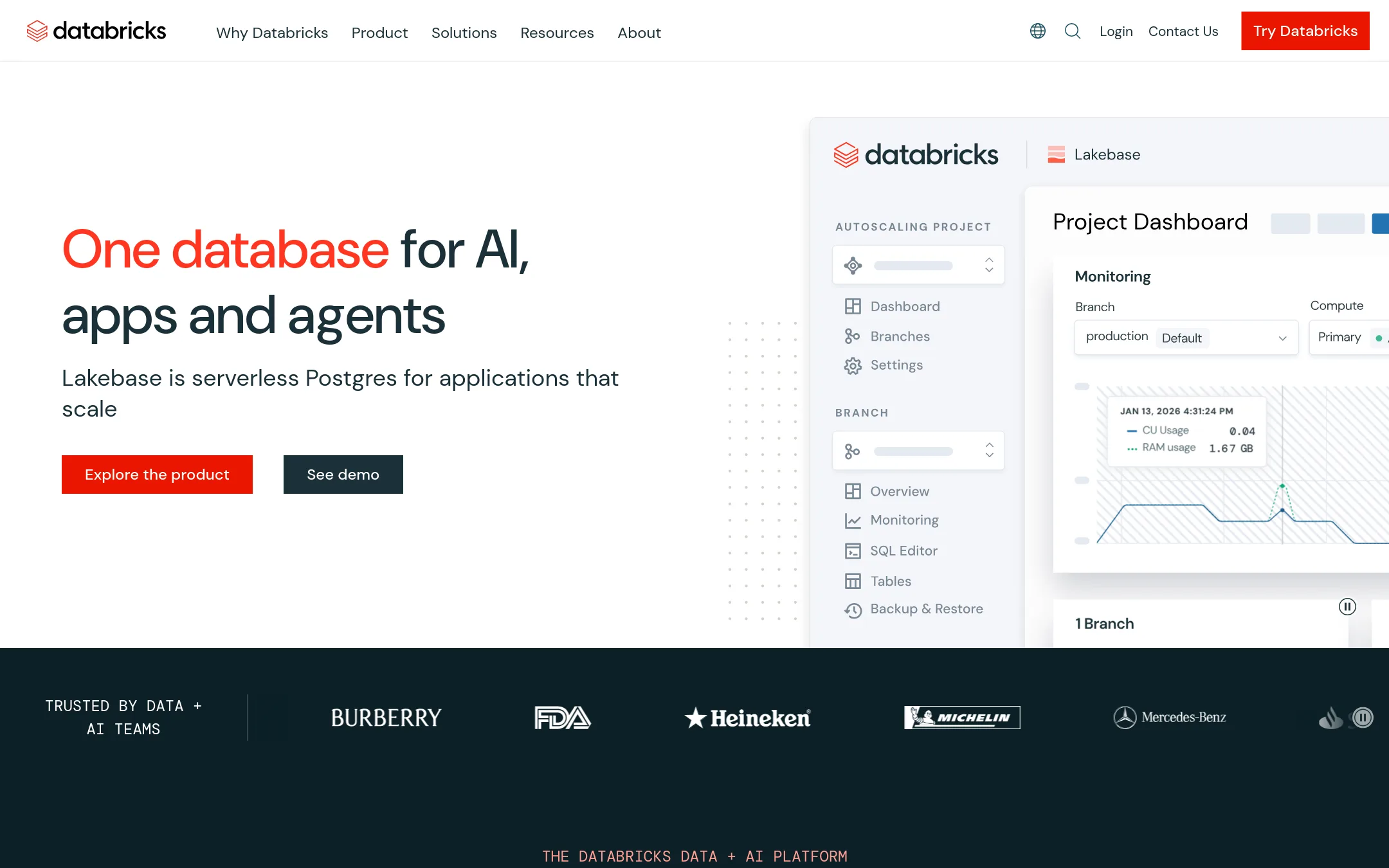
Databricks is a managed Data and AI platform that runs on the major public clouds. Teams pick it over IOMETE when they want a fully hosted service and are comfortable keeping their data inside a SaaS vendor's infrastructure.
Where it is strong
- Fully managed service, so the vendor runs the infrastructure
- Unified platform for data, analytics and AI
- Offered on the major public clouds
Where it falls short
- Runs on public cloud infrastructure only, not on-premises
- Infrastructure, software and hardware are controlled by the vendor, which can create lock-in
- Pricing:
- Pricing is not published on the site.
- Consumption-based
2.Snowflake
Best for: Analytics and data teams that want a fully managed cloud platform and are comfortable with public-cloud hosting
- Pricing
- Consumption-based
- Category
- Analytics & Data
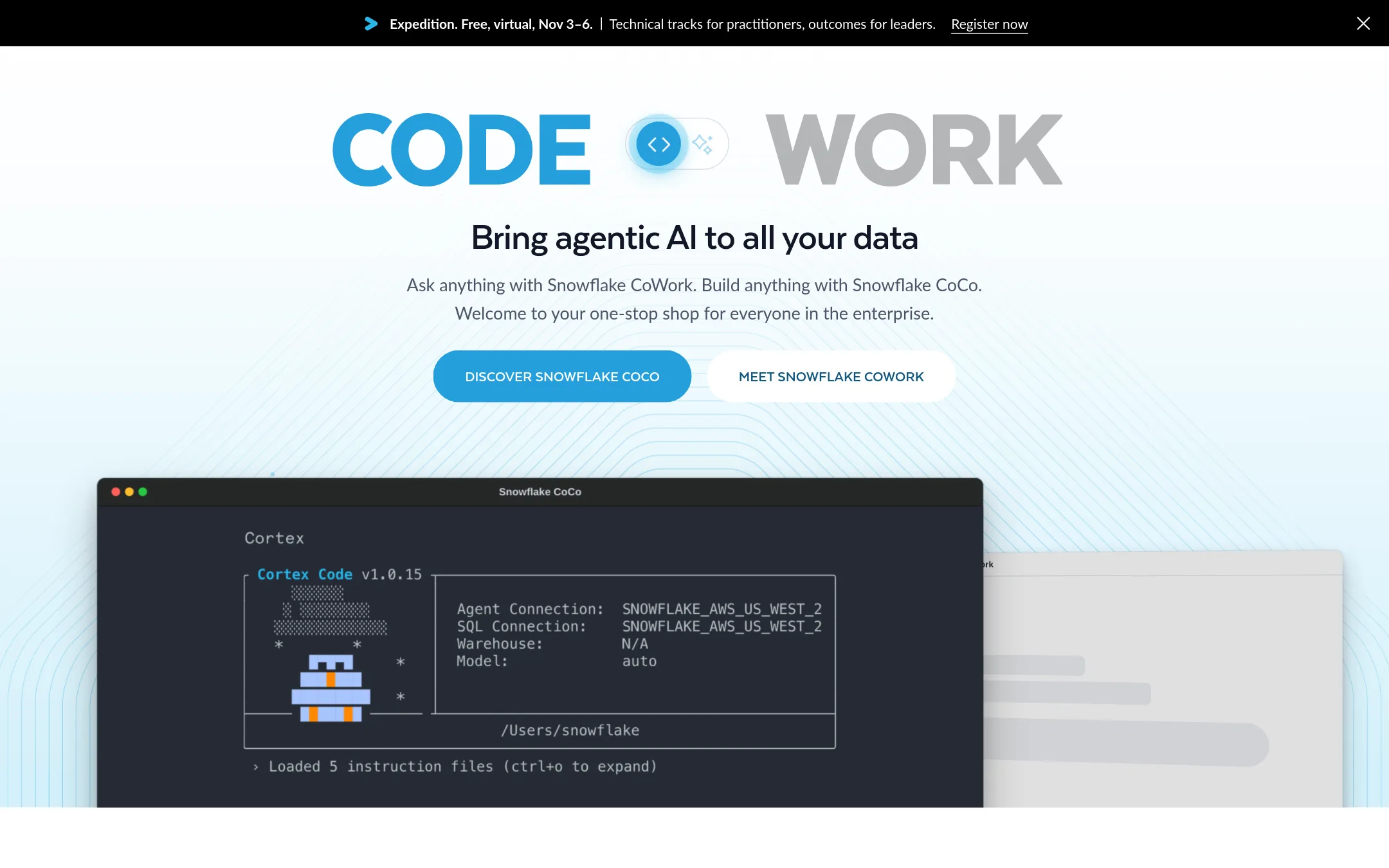
Snowflake is a fully managed AI Data Cloud for analytics, data engineering, and AI applications, running on the major public clouds with no infrastructure to tune. Teams pick it over IOMETE when they want a hosted service with near-zero maintenance and sharing of live data across clouds and organizations, rather than running a lakehouse inside their own data centers.
Where it is strong
- Fully managed service with little infrastructure to configure or tune
- Live data sharing across clouds and organizations without copying data
- Governance, disaster recovery and cross-region failover built into higher editions
Where it falls short
- Runs on public clouds only, unlike IOMETE's on-premises and hybrid deployment
- Consumption pricing makes long-term costs harder to predict at petabyte scale
- Pricing:
- Pricing is consumption-based with On-demand and pre-paid capacity options, storage is billed monthly on compressed data, and the site does not publish specific dollar figures on this page.
- SFrom $0.50 per credit
3.Starburst
Best for: Enterprises with data spread across many cloud and on-premises systems that want to query it in place without copying it
- Pricing
- From $0.50 per credit
- Category
- Other
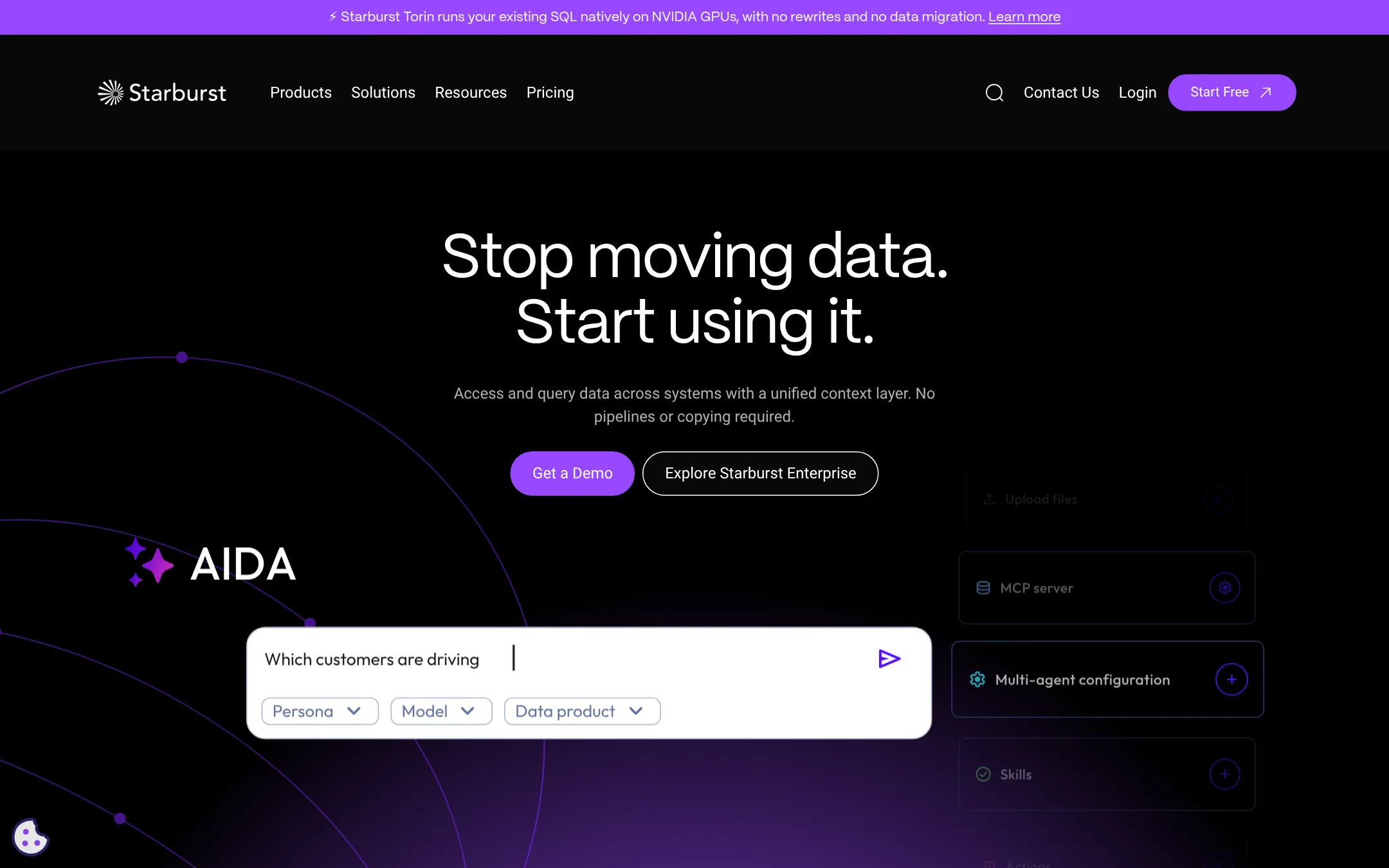
Starburst lets teams query data where it already lives across 50+ sources with one SQL statement, so no pipelines or copies are needed. Choose it over IOMETE when the main problem is federating many existing systems, such as Snowflake, Databricks and PostgreSQL, rather than hosting one self-run lakehouse.
Where it is strong
- Queries 50+ sources, including Snowflake, Databricks and Redshift, in one SQL statement
- Built on Trino and Apache Iceberg, so the approach is open
- Runs in cloud, hybrid or on-premises deployments
Where it falls short
- Pricing is metered by compute credits, which makes total cost harder to predict than IOMETE's per-vCPU licence
- The Free tier is limited to 3 clusters and standard execution mode, and advanced governance features sit in the higher tiers
- Pricing:
- Pricing is based on credits consumed, starting at $0.50 per credit on Pro, $0.75 on Enterprise and $1.00 on Mission-Critical, with annual discounts available on request.
- DNot published
4.Dremio
Best for: Enterprise analytics teams that want Iceberg-based querying and AI agent access without running their own infrastructure
- Pricing
- Not published
- Category
- Other
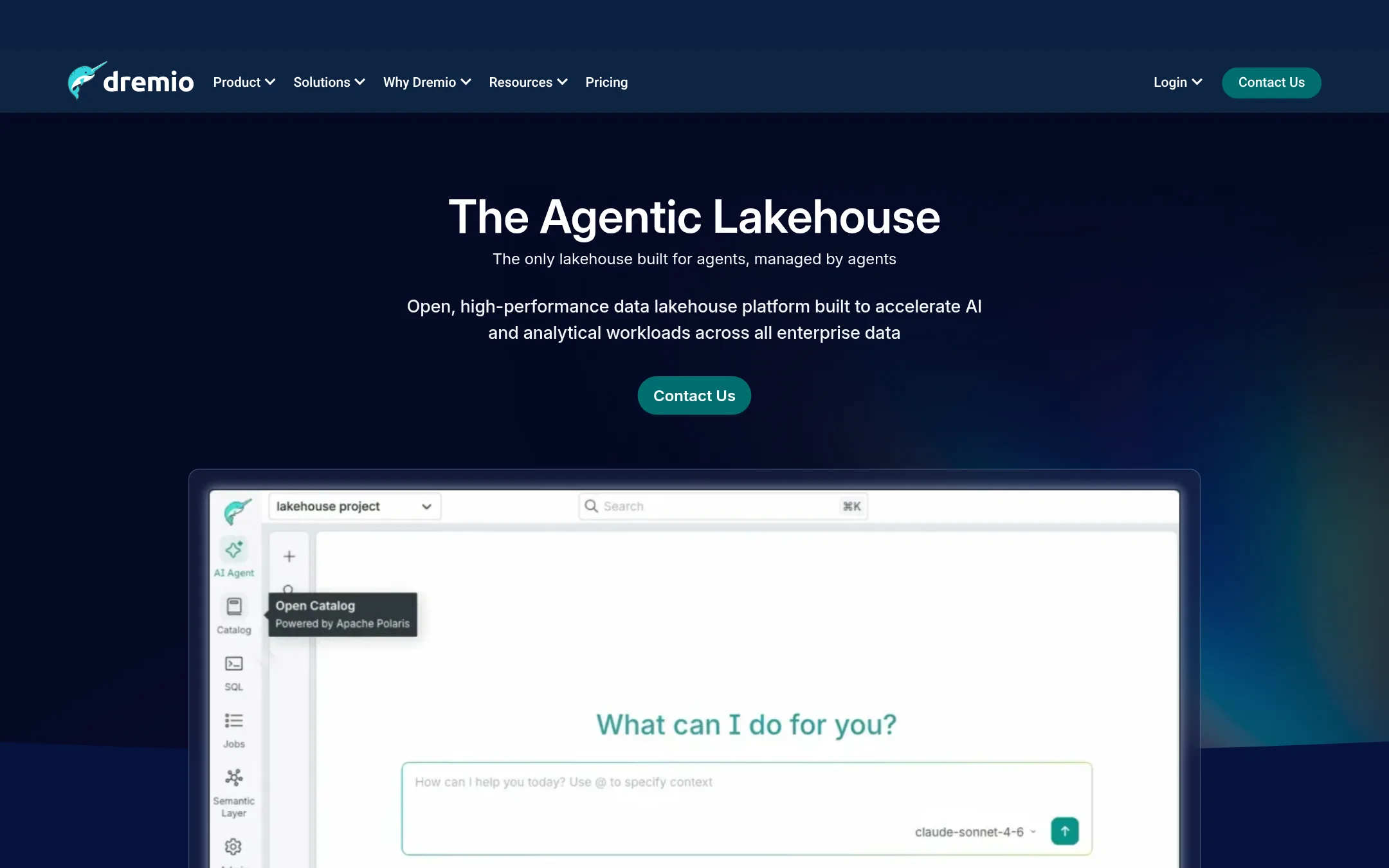
Dremio is a lakehouse platform built around an Arrow-based query engine that reads Apache Iceberg tables natively, with a semantic layer and an open catalog. Teams pick it when they want to query data across many sources without moving it, and when AI agents need governed access to business metrics. It runs as a managed, serverless service rather than software you host yourself.
Where it is strong
- Queries Iceberg data natively, with no format conversion step
- Connects AI assistants such as Claude and ChatGPT through MCP
- Automatic query acceleration and Iceberg table optimization with no manual tuning
Where it falls short
- Serverless and managed, so it is not a self-hosted option like IOMETE
- Pricing is not published, so cost has to be assessed through a sales conversation
- Pricing:
- Pricing is not published on the site.
- CNot published
5.Cloudera
Best for: Large enterprises with mixed data estates that need one hybrid platform spanning clouds, data centers and the edge

- Pricing
- Not published
- Category
- Other
Cloudera runs a hybrid data and AI platform across public clouds, data centers and the edge, with an open data lakehouse built on Apache Iceberg. A team would pick it over IOMETE when it already runs a large estate of data centers and wants one vendor that spans clouds, on-premises and edge workloads under one governance model.
Where it is strong
- Covers public clouds, data centers and edge under a single platform
- Open data lakehouse built on Apache Iceberg
- Includes real-time data movement alongside analytics and AI workloads
Where it falls short
- Pricing is not published, so cost comparison requires a sales conversation
- The site focuses on large enterprise customers and does not describe a self-serve entry tier
- Pricing:
- Pricing is not published on the site.
See more comparisons in Analytics & Data alternatives.
FAQ
Questions about IOMETE alternatives
What is IOMETE best known for?
According to its site, IOMETE is known for a self-hosted data lakehouse that can run on-premises, in a private cloud, in a public cloud or in a hybrid setup. The company emphasises data sovereignty, lower cost at large data volumes and no vendor lock-in. Its pricing starts with a free tier limited to 100 vCPUs.
Which alternative is the closest to a fully managed service?
Snowflake and Databricks are both described as managed platforms, with the vendor running the infrastructure. Snowflake runs on the major public clouds and bills by consumption. Databricks is also offered on the major public clouds, and its site does not publish pricing.
Which alternative fits a company with data spread across many systems?
Starburst is built to query data where it already lives across more than 50 sources, using one SQL statement and without copying data. Its pricing is based on credits, starting at $0.50 per credit on Pro. It is a better fit for federation than for hosting one self-run lakehouse.
How do the alternatives compare on pricing transparency?
Starburst publishes per-credit starting prices, and Snowflake describes its consumption and capacity models without giving specific dollar figures on the page. Databricks, Cloudera and Dremio do not publish pricing on their sites, so cost comparison with those vendors requires a sales conversation. IOMETE's Enterprise plan lists $500 per vCPU per year.
Which alternative is best for a large enterprise running hybrid infrastructure?
Cloudera is positioned for large enterprises with mixed data estates, covering public clouds, data centers and the edge under one governance model and an open data lakehouse built on Apache Iceberg. It does not describe a self-serve entry tier, so it suits organisations with the scale to justify an enterprise engagement.
Last updated November 7, 2026.