
Jenkins alternatives
12 products to explore · 2026
Your shortlist, at a glance.
Read the comparisons ↓

Check each product’s website for current pricing and features. A verified badge indicates a verified listing, not a ranking.
About Jenkins and its alternatives
Users searching for Jenkins alternatives often want to understand trade-offs between the battle-tested open source automation server and newer or hosted options. Jenkins excels with its massive plugin ecosystem, self-contained Java distribution, on-the-fly configuration, and ability to scale builds across machines for any CI/CD pipeline. However teams sometimes explore alternatives when they need tighter cloud-native integrations, simpler maintenance without managing Java infrastructure, or different licensing and support models. This page compares popular Jenkins alternatives across features like plugin availability, distributed execution, ease of setup, and total cost of ownership so you can decide whether to stick with Jenkins or migrate based on your scale, team skills, and deployment preferences.
Explore the alternatives
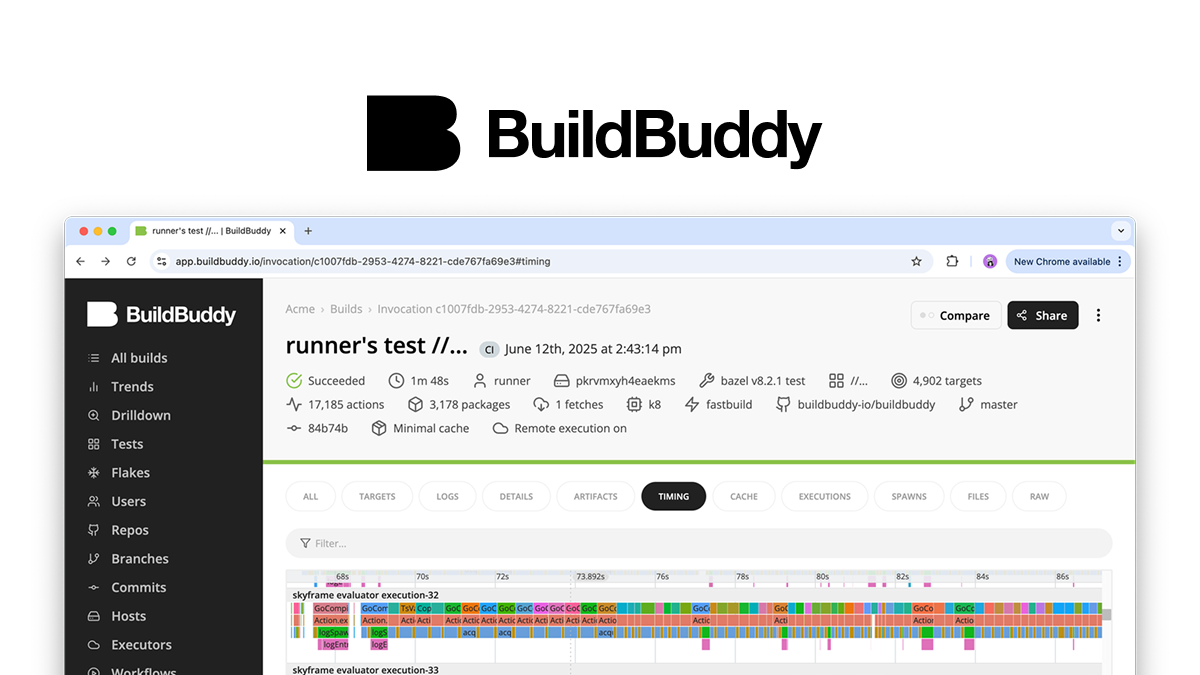
1.BuildBuddy
Developer ToolsBuildBuddy provides enterprise features for Bazel — the open source…

2.CodeNow
Developer ToolsOur mission is to diversify the talent pipeline of students who…
- R
3.Runway
Developer ToolsEasier and more reliable mobile app releases for teams.

4.AWS ParallelCluster
Developer ToolsReliable, scalable cloud computing services from startups to enterprises.

5.Argo CD
Developer ToolsDeclarative continuous delivery with a fully-loaded UI for Kubernetes GitOps.
6.Azure DevOps
Developer ToolsAzure. Your intelligent cloud for DevOps and application development.

7.Bitrise
Developer ToolsHosted Continuous Integration and Delivery for mobile apps

8.CircleCI
Developer ToolsAutonomous validation for the AI era - ship trusted code at AI speed.

9.Codemagic
Developer ToolsCI/CD for Flutter, React Native, iOS and Android apps
10.Fastlane
Developer ToolsApp automation done right: the easiest way to build and release mobile apps.

11.Firebase
Developer ToolsGoogle’s mobile and web app development platform for building scalable apps and games

12.GitHub Projects
Developer ToolsPlan and track work seamlessly next to your code with AI-powered tools.
See more comparisons in Developer Tools alternatives.
Questions about Jenkins alternatives
What are the best Jenkins alternatives for small teams avoiding server management?
Teams avoiding self-hosted Java servers often choose fully managed SaaS options like GitHub Actions or GitLab CI that eliminate infrastructure overhead while still supporting pipelines and plugins via marketplace integrations.
How do Jenkins plugins compare to native integrations in alternatives?
Jenkins offers hundreds of community plugins for nearly any tool while alternatives like CircleCI or Azure DevOps provide curated native actions that may require less configuration but offer fewer edge-case extensions.
Is Jenkins still the best choice for complex distributed builds?
Jenkins remains strong for large-scale distributed workloads thanks to its built-in agent architecture, though some alternatives now match this with cloud runners or Kubernetes-native scaling.
Are there free Jenkins alternatives with similar plugin ecosystems?
GitLab CI and GitHub Actions are free for public and many private projects and provide growing marketplaces, yet neither matches the sheer volume of Jenkins plugins developed over two decades.
When should companies move from Jenkins to a commercial CI platform?
Companies often migrate when they need official support, simpler UI, or compliance features not easily added via Jenkins plugins, such as advanced audit logs or enterprise SSO without custom configuration.
Does Jenkins require Java expertise compared to alternatives?
Yes, Jenkins runs as a Java application and benefits from JVM tuning knowledge, whereas many alternatives abstract the runtime completely and only require YAML pipeline definitions.