
Khoj alternatives
8 products compared · Updated November 10, 2026
The short answer
For a personal AI second brain across your own documents and the web, Notion suits growing businesses in the US that want one shared workspace with AI agents on top. Obsidian suits individuals and small teams who want a private, offline note system with linked notes. For a research workbench focused on papers, Elicit suits researchers and evidence teams running literature reviews, with published plans from a free tier to custom enterprise pricing.
Your shortlist, at a glance
Read the comparisons ↓ NotionFree to $10/1k creditsGrowing businesses in the US that want one shared workspace for docs, tasks and team knowledge, with AI agents on top
 ObsidianFree. Sync from $4/useIndividuals and small teams who want a private, offline note system with linked notes, a knowledge base, or a public wiki.
- PPerplexity AINot publishedIndividuals and teams who need fast, sourced web answers and do not need agents over private documents
 ChatGPTNot publishedIndividual users and teams who want a general-purpose AI chat tool for writing, research questions, images, and coding in one place
- EElicitFrom $11/user/moResearchers and evidence teams running literature reviews or systematic reviews
- ZZoteroFreeStudents, academics and research teams that need free citation management and shared libraries
- SSemantic ScholarNot publishedResearchers and students who need to search broad scientific literature across all fields
- CConsensusNot publishedStudents, academics and clinicians who need to run literature reviews against peer-reviewed papers
About Khoj and its alternatives
Khoj is an applied artificial intelligence company, according to its site, that builds open, safe and useful AI software for people. Its products are Open Paper, a research workbench for reading and organizing papers with verifiable citations, Pipali Beta, an AI co-worker that runs tasks on your computer, and the Khoj app, a personal AI second brain that builds agents and searches your docs and the web.
When comparing alternatives in this category, weigh the pricing structure first, since some tools are free, some charge per user, and some do not publish prices at all. Check which regions the pricing applies to, whether the tool connects to the apps your team already uses, how support is provided, and what the contract terms are for teams and enterprise use.
Explore the alternatives
- Free to $10/1k credits
1.Notion
Best for: Growing businesses in the US that want one shared workspace for docs, tasks and team knowledge, with AI agents on top
- Pricing
- Free to $10/1k credits
- Category
- Productivity & Project Management
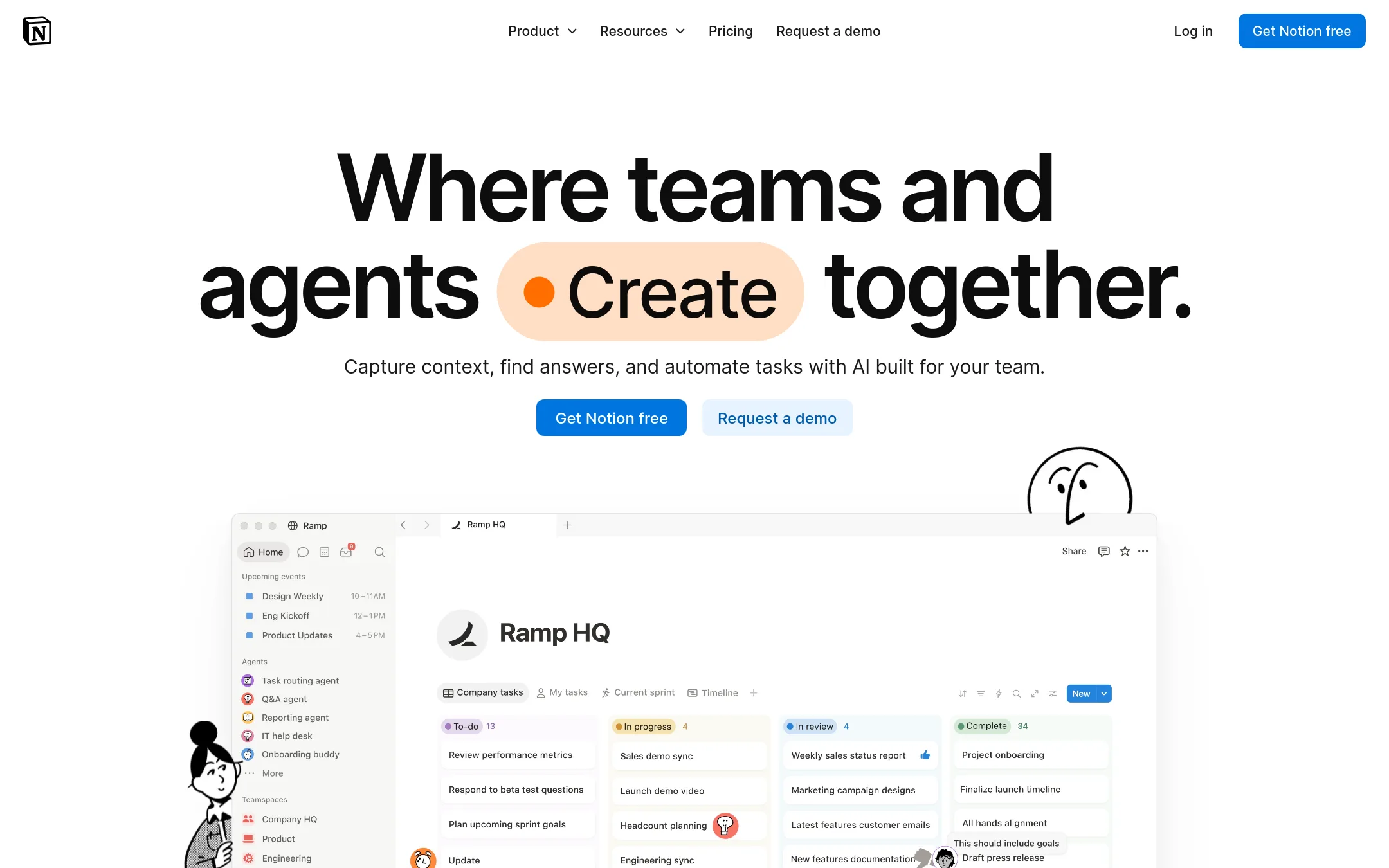
Notion is a general workspace for docs, databases, wikis and project tracking, with AI features that search connected apps and run agents over your workspace. A team would pick it over Khoj when the main need is a shared company workspace rather than a personal AI assistant or a research tool for papers.
Where it is strong
- Covers docs, databases, wikis and project tracking in one tool
- Business plan includes AI meeting notes and search across connected apps like Slack and GitHub
- Enterprise plan adds audit logs, SCIM user provisioning and zero data retention with LLM providers
Where it falls short
- Its AI agents work inside the Notion workspace and connected apps, so it is not a personal research tool for reading papers the way Open Pap
- Pricing shown is for the US edition and may differ elsewhere
- Pricing:
- In the United States, the Free plan covers individuals, Plus is for small teams, Business adds Notion Agent and SAML SSO, and Enterprise adds audit logs and SCIM provisioning, with Custom Agents billed at $10 per 1,000 monthly credits after a free trial.
- Free. Sync from $4/use
2.Obsidian
Best for: Individuals and small teams who want a private, offline note system with linked notes, a knowledge base, or a public wiki.
- Pricing
- Free. Sync from $4/use
- Category
- Productivity & Project Management
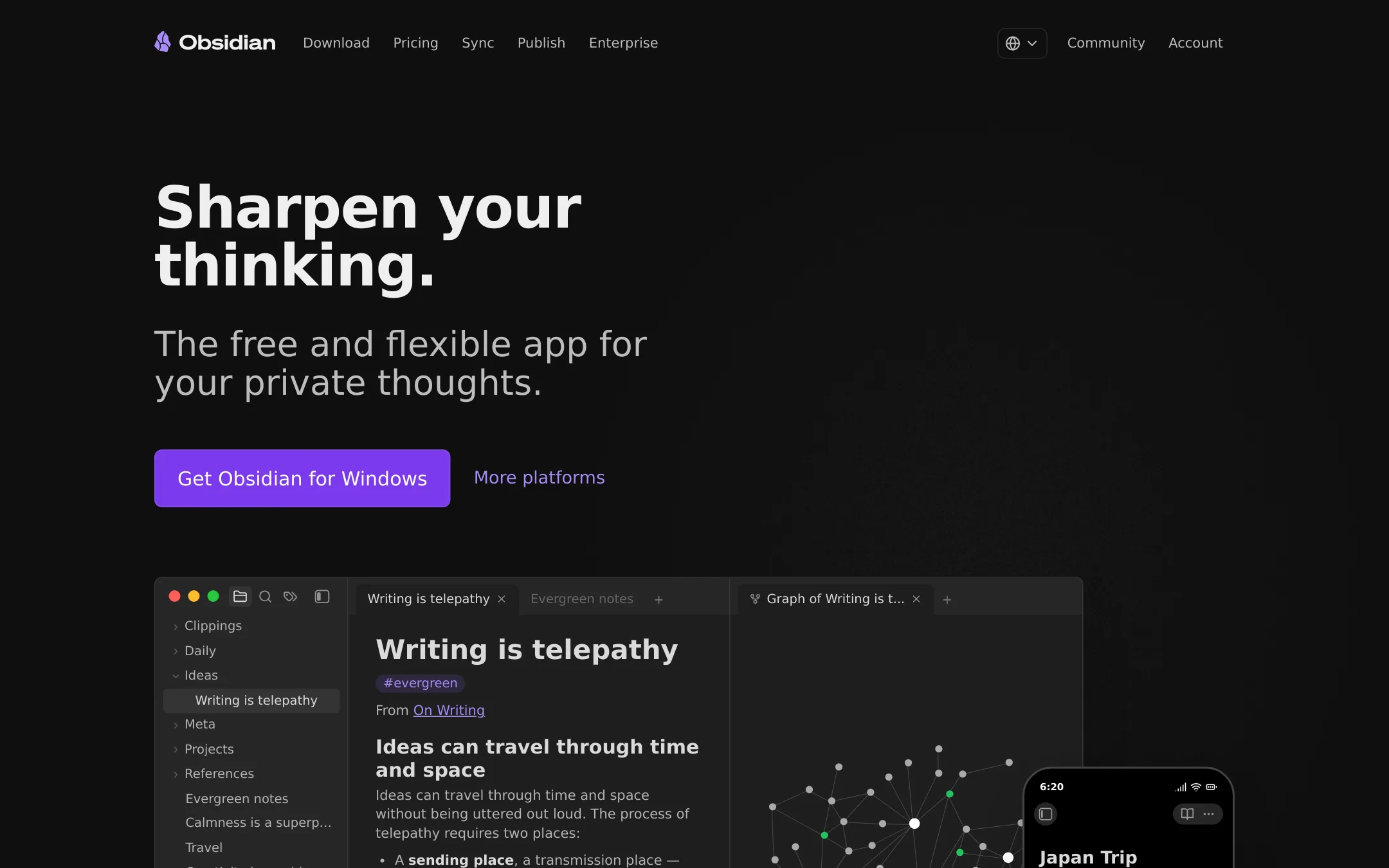
Obsidian is a note app that stores your notes as local files on your device, so they work offline and stay private. People choose it over Khoj when they want to own and organize their own notes, linking ideas together in a graph, rather than having an AI assistant search across documents and the web. Its open file formats mean you are not locked in.
Where it is strong
- Notes are stored locally on your device and remain accessible offline.
- Open file formats mean you keep your data and are never locked in.
- Thousands of plugins and an open API let you shape the app to your workflow.
Where it falls short
- It is a note app rather than an AI assistant, so it does not research or automate tasks for you.
- Sync and Publish are paid add-ons for cross-device syncing and publishing notes online.
- Pricing:
- The app itself is free without limits, Sync costs $4 per user per month billed annually or $5 billed monthly, Publish costs $8 per site per month billed annually or $10 billed monthly, and Catalyst is a one-time $25 payment.
- PNot published
3.Perplexity AI
Best for: Individuals and teams who need fast, sourced web answers and do not need agents over private documents
- Pricing
- Not published
- Category
- Other
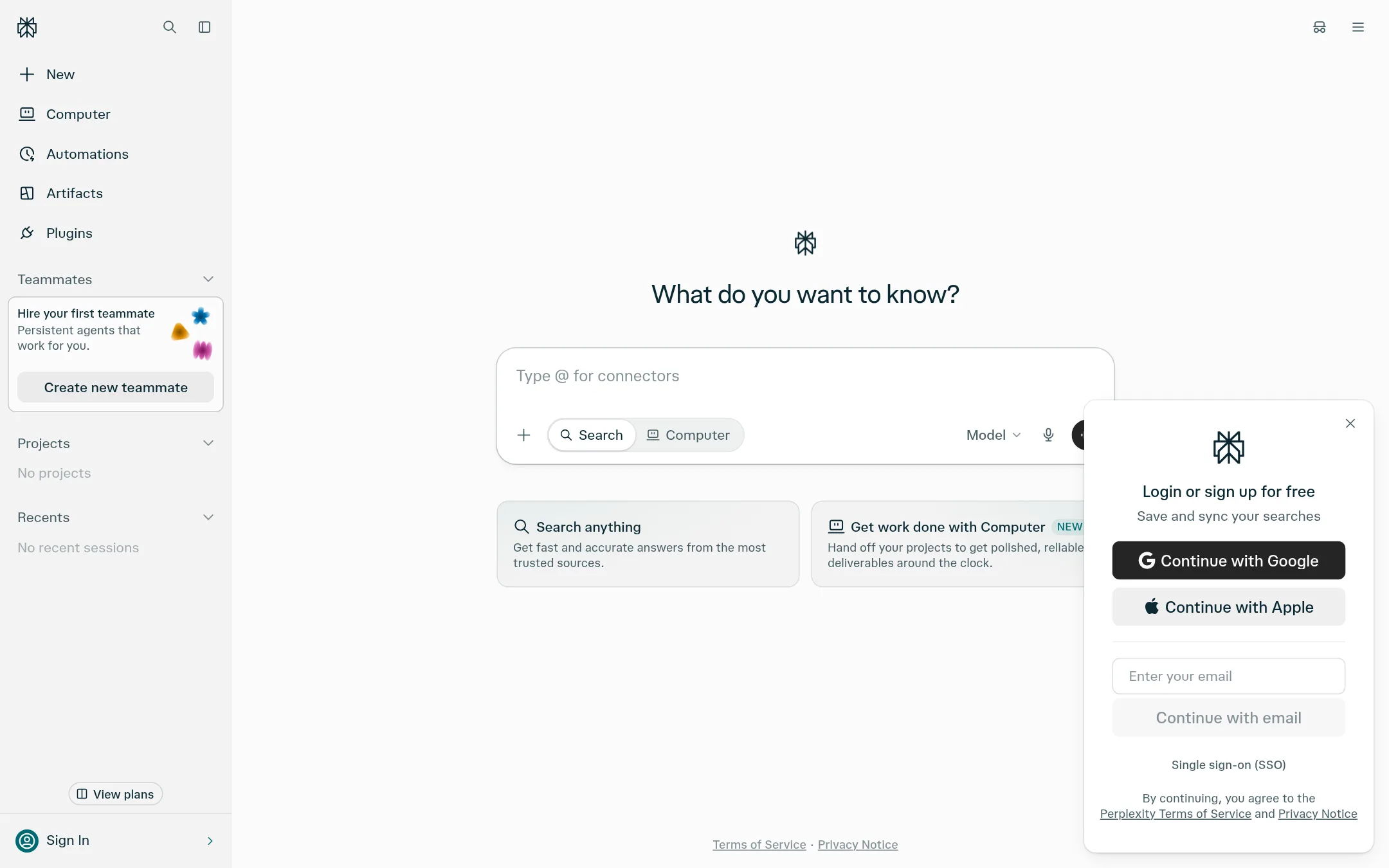
Perplexity is a free AI answer engine. You ask a question and it returns a sourced, real-time answer, and it now also offers Computer for handing off longer tasks. Someone would pick it over Khoj if they mainly want quick, cited answers from the web without building a personal knowledge base or agents over their own documents.
Where it is strong
- Answers come with sources from the web in real time
- Sign-up is free and supports Google, Apple or email login
- Adds Computer for handing off projects to get deliverables
Where it falls short
- The site does not show what it is built on or how it handles private data in the content provided
- Its homepage focuses on web search, not on research across your own docs as Khoj does
- Pricing:
- Pricing is not published on the site.
- Not published
4.ChatGPT
Best for: Individual users and teams who want a general-purpose AI chat tool for writing, research questions, images, and coding in one place

- Pricing
- Not published
- Category
- AI & Machine Learning
ChatGPT is a general AI chatbot for questions, writing, image creation, file uploads, and coding help. Someone would pick it over Khoj when they want a single, broadly capable assistant they can use right away, without building their own agents or wiring up a personal knowledge base across their documents.
Where it is strong
- Handles questions, writing, image creation, file uploads, and coding in one interface.
- Offers a free way to start, with the option to sign up and save chats.
- Gives answers tailored to saved chats once you log in.
Where it falls short
- Chats may be reviewed and used to improve its AI models, according to the site.
- Its focus is a general assistant, not a personal second brain built on your own docs.
- Pricing:
- Pricing is not published in the page text supplied, and the pricing page was not captured.
- EFrom $11/user/mo
5.Elicit
Best for: Researchers and evidence teams running literature reviews or systematic reviews
- Pricing
- From $11/user/mo
- Category
- Other
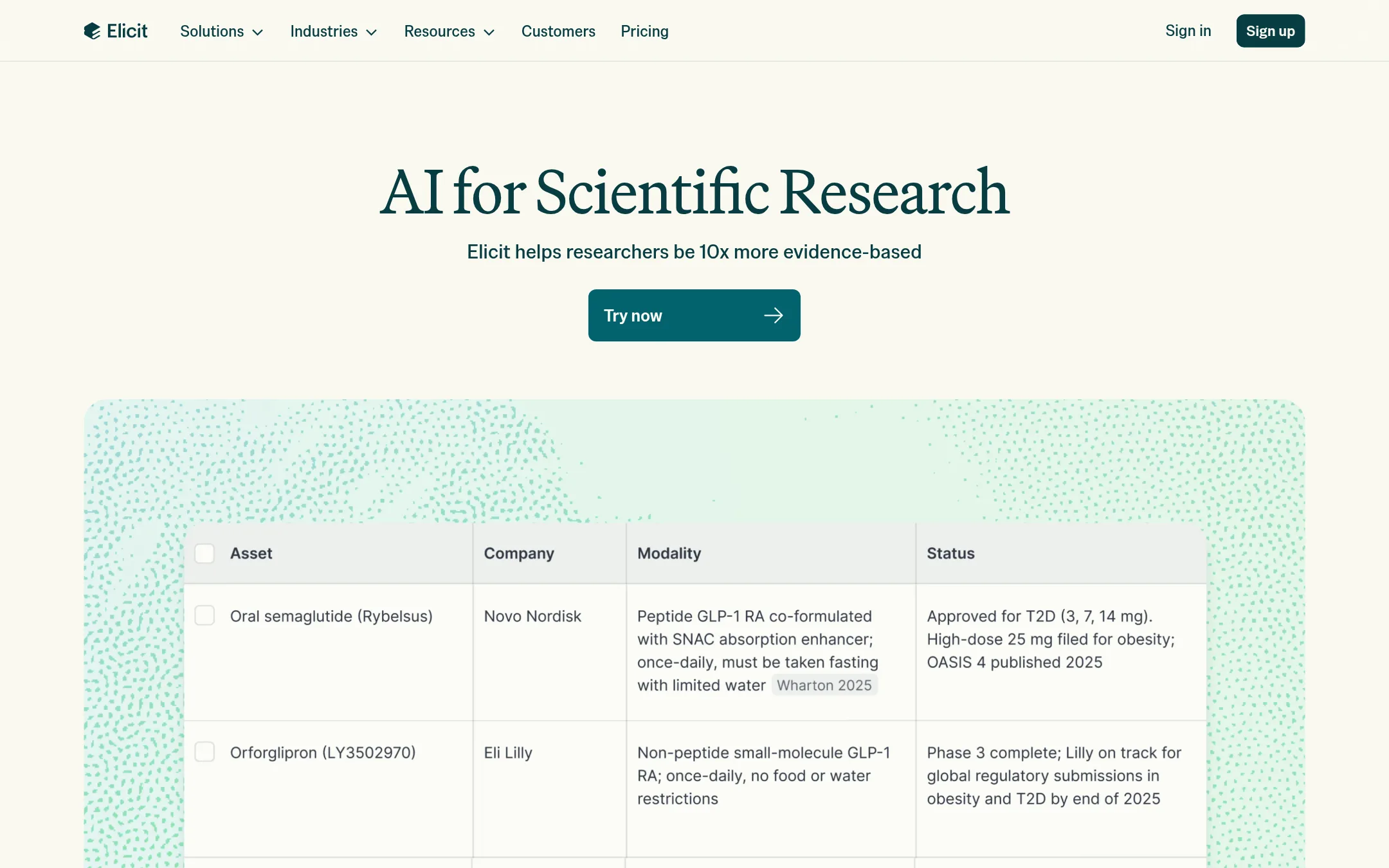
Elicit is an AI research assistant for finding, summarizing and extracting data from academic papers, with a focus on systematic reviews and evidence synthesis. It suits people whose core job is reading literature, such as researchers, clinicians and analysts. Pick it over Khoj when you need paper search across a large corpus with structured extraction into tables rather than a personal assistant across your own documents.
Where it is strong
- Searches more than 138 million papers with unlimited search on the free tier
- Lets you add extraction columns to tables, with up to 30 at a time on Scale
- Exports to RIS, CSV, BIB, PDF and DOCX on paid plans
Where it falls short
- Built around academic literature, so it is a poor fit for general personal knowledge work over your own files
- Full systematic review workflows and higher usage limits sit on the Pro tier and above
- Pricing:
- Elicit has published plans: a free Basic tier, Plus at $11 per user per month billed annually, Pro at $39 per user per month billed annually, Scale at $89 per user per month billed annually, and a custom Enterprise plan.
- ZFree
6.Zotero
Best for: Students, academics and research teams that need free citation management and shared libraries
- Pricing
- Free
- Category
- Other
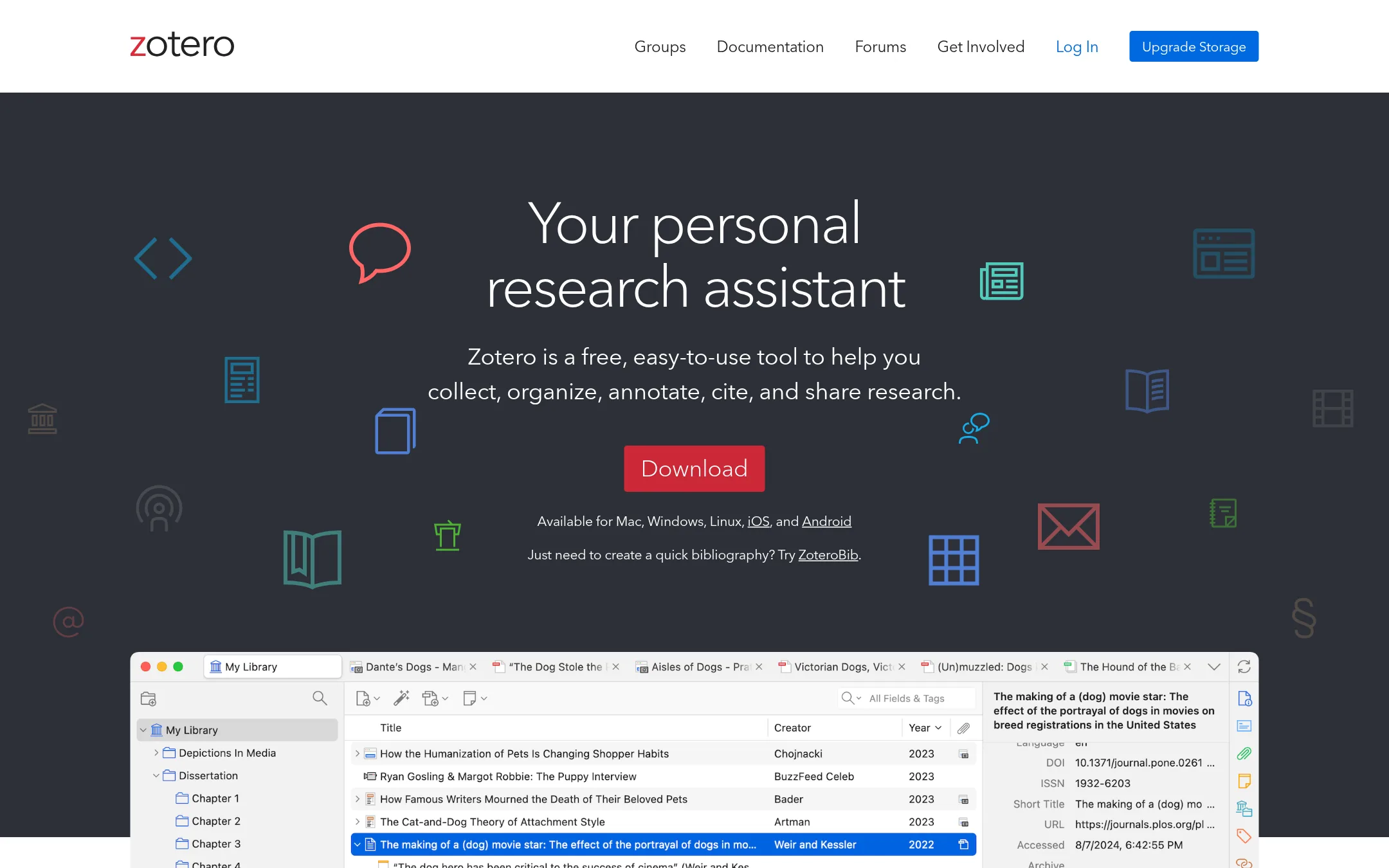
Zotero is a free reference manager for collecting, organizing, annotating and citing research. It captures sources from the browser with one click and inserts citations into Word, LibreOffice and Google Docs. Pick Zotero over Khoj when your core need is managing a bibliography and citations, not AI-driven research or agents.
Where it is strong
- Free to use, with shared libraries at no cost
- Supports over 9,000 citation styles in Word, LibreOffice and Google Docs
- Open source and run by a nonprofit with no interest in your data
Where it falls short
- Focused on references and citations rather than AI research or automation
- Syncing and extra storage depend on the paid plans, whose details are not published in the supplied text
- Pricing:
- Zotero is free to use, and the site lists paid storage plans on its plans page, but the pricing text supplied for this entry is empty, so the storage tier figures are not published here.
- SNot published
7.Semantic Scholar
Best for: Researchers and students who need to search broad scientific literature across all fields
- Pricing
- Not published
- Category
- Other
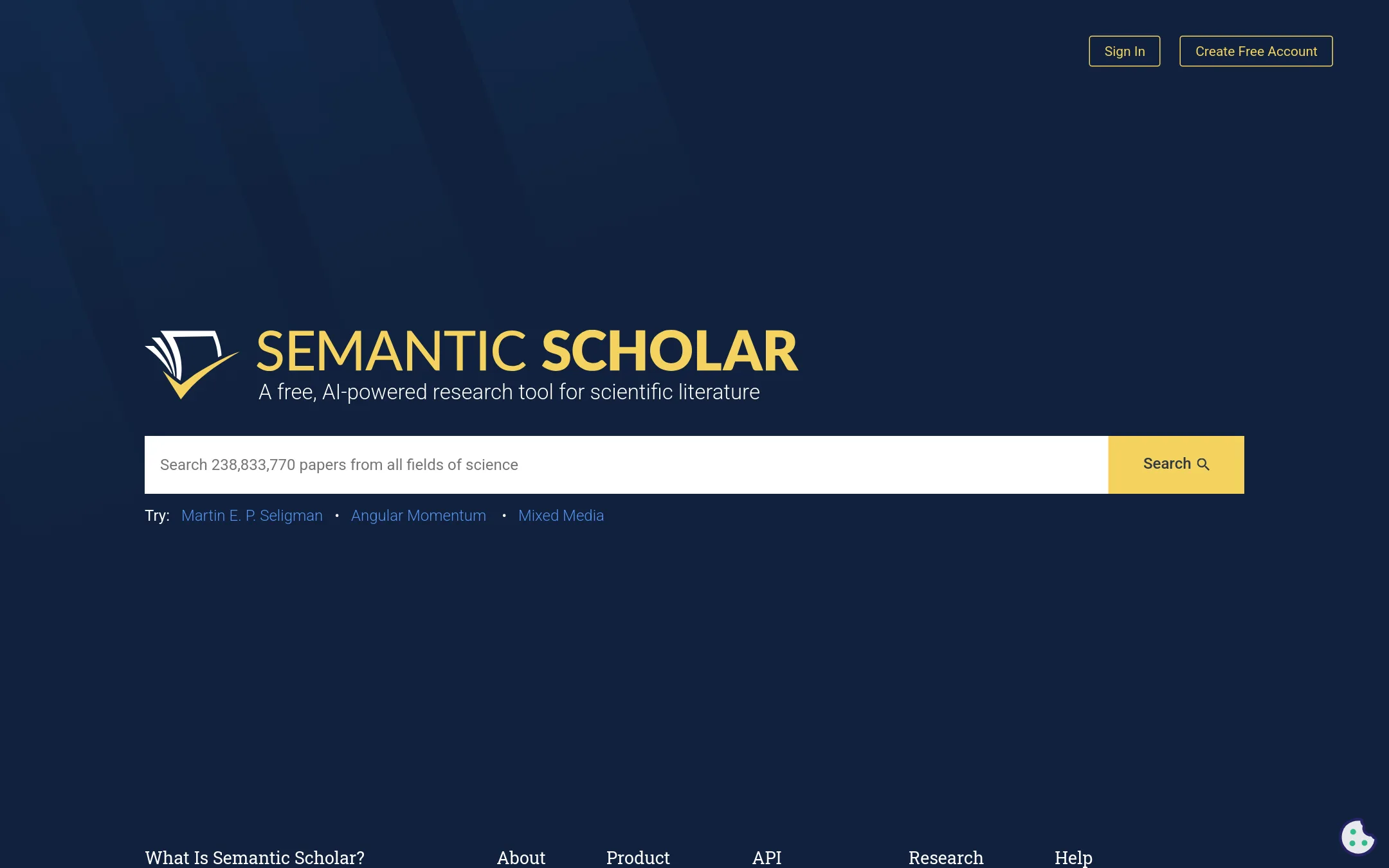
Semantic Scholar is a free, AI-powered search engine over scientific literature, with 241 million papers indexed across all fields of science. Someone would pick it over Khoj when the main need is finding and discovering papers, since Open Paper is built around reading, organizing and understanding papers you already have. It also offers a public API for developers building scholarly apps.
Where it is strong
- Indexes 241 million papers across all fields of science
- Free to use for searching literature
- Public API for developers, with paper search and documentation
Where it falls short
- Its focus is discovery of papers, not an assistant that runs tasks or automations for you
- The augmented reader, Semantic Reader, is still in beta and only covers select papers
- Pricing:
- Pricing is not published on the site.
- CNot published
8.Consensus
Best for: Students, academics and clinicians who need to run literature reviews against peer-reviewed papers
- Pricing
- Not published
- Category
- Other
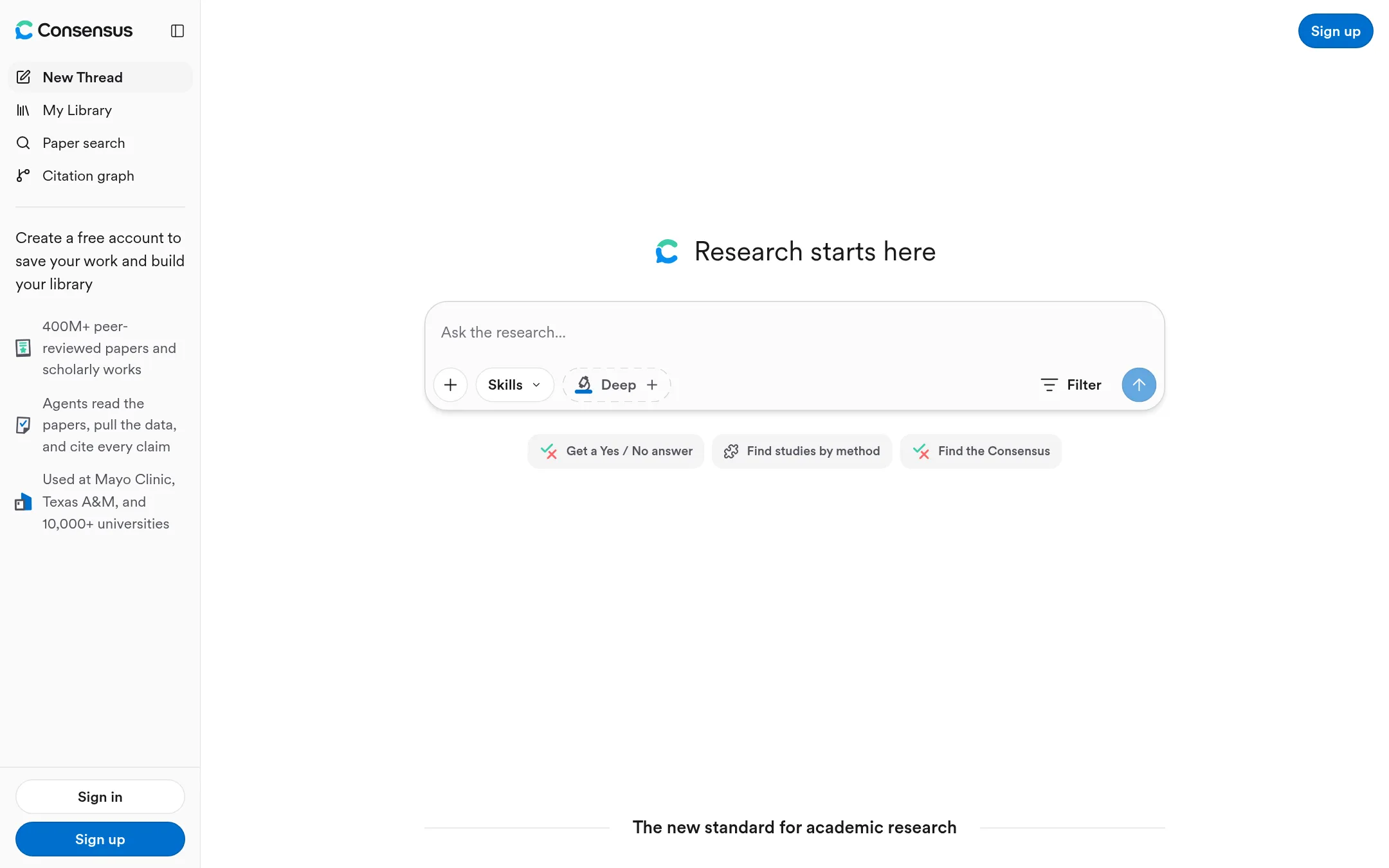
Consensus is an AI search engine for peer-reviewed research. It pulls from a large index of academic papers and shows how much the evidence agrees on a yes-or-no question. Someone would pick it over Khoj when the job is finding and weighing scientific literature rather than working across their own documents and notes.
Where it is strong
- Searches a large index of peer-reviewed papers, with 250M+ papers cited on the site
- Medical mode narrows results to clinical guidelines and articles from top medical journals
- The Consensus Meter gives a quick visual read on whether research agrees
Where it falls short
- Built for scientific literature, so it does not work across your own docs or personal notes like Khoj does
- Pricing is not published, so you need to request a quote or check the pricing page for current options
- Pricing:
- Pricing is not published on the site.
See more comparisons in AI & Machine Learning alternatives.
FAQ
Questions about Khoj alternatives
What is the best alternative if I want a shared workspace for my team?
Notion fits growing businesses in the US that want one workspace for docs, databases, wikis and project tracking. Its Business plan adds AI meeting notes and search across connected apps such as Slack and GitHub, and its Enterprise plan adds audit logs and SCIM provisioning.
Which tool is best if I want my notes to stay private and work offline?
Obsidian stores your notes as local files on your device, so they remain accessible offline. The app itself is free, while Sync and Publish are paid add-ons for syncing across devices and publishing notes online.
Can I use these alternatives to research and read academic papers?
Yes. Elicit searches more than 138 million papers and can extract data into tables, with published plans from a free Basic tier up to custom Enterprise pricing. Semantic Scholar offers free search across 241 million papers and a public API, and Consensus summarizes how much peer-reviewed evidence agrees on a question.
Which option is free for citation management?
Zotero is free to use and supports over 9,000 citation styles in Word, LibreOffice and Google Docs. It is open source, but syncing and extra storage depend on paid plans whose details are not published in the supplied text.
Is there a general AI assistant I can use instead of building my own agents?
ChatGPT handles questions, writing, image creation, file uploads and coding help in one interface, and it offers a free way to start. Perplexity AI returns sourced, real-time web answers for free, though its focus is web search rather than research across your own documents.
Last updated November 10, 2026.