KubeSail alternatives
6 products compared · Updated November 15, 2026
The short answer
KubeSail is shutting down its hosted services, so teams and individuals need a replacement. Rancher suits operations teams running several Kubernetes clusters across datacenters, clouds and edge sites. Coolify suits small teams and solo developers who want a Heroku-style deploy workflow on their own servers. Portainer suits platform teams running multiple clusters or mixed Docker and Swarm estates that need centralized access control.
Your shortlist, at a glance
Read the comparisons ↓- PPortainerTiered by node countPlatform teams running multiple Kubernetes clusters or mixed Docker and Swarm estates that want centralized RBAC, SSO and GitOps without building the stack themselves
 RancherCustom quoteOperations teams running several Kubernetes clusters across datacenters, clouds and edge sites that need one management layer
- CCasaOSNot publishedHobbyists and home users who want a personal cloud on a Raspberry Pi, NUC or similar hardware with Docker apps
- UUmbrelNot publishedHouseholds and hobbyists who want a private home cloud for files, photos, media or a Bitcoin node, without building it from scratch.
- CCloudronNot publishedSmall teams and individuals who want to self-host ready-made web apps on their own server without managing system administration themselves
- CCoolify$5/mo + $3/serverSmall teams and solo developers who want a Heroku-style deploy workflow on their own servers
About KubeSail and its alternatives
KubeSail offered hosted Kubernetes namespaces and Raspberry Pi kits that let people run their own apps on hardware they controlled. According to its site, KubeSail is now shutting down its hosted services after six years, and the team points users to its open-source code and to tools that now cover the same ground.
When comparing alternatives, look at how each product is priced, which regions and hardware it supports, which integrations it offers, what support looks like, and what the contract terms require. Some options are free to self-host but leave updates and backups to you, while others charge per node or per server. Check whether a product is built around Kubernetes or Docker, since that changes the workflow your team has to learn.
Explore the alternatives
- PTiered by node count
1.Portainer
Best for: Platform teams running multiple Kubernetes clusters or mixed Docker and Swarm estates that want centralized RBAC, SSO and GitOps without building the stack themselves
- Pricing
- Tiered by node count
- Category
- Other
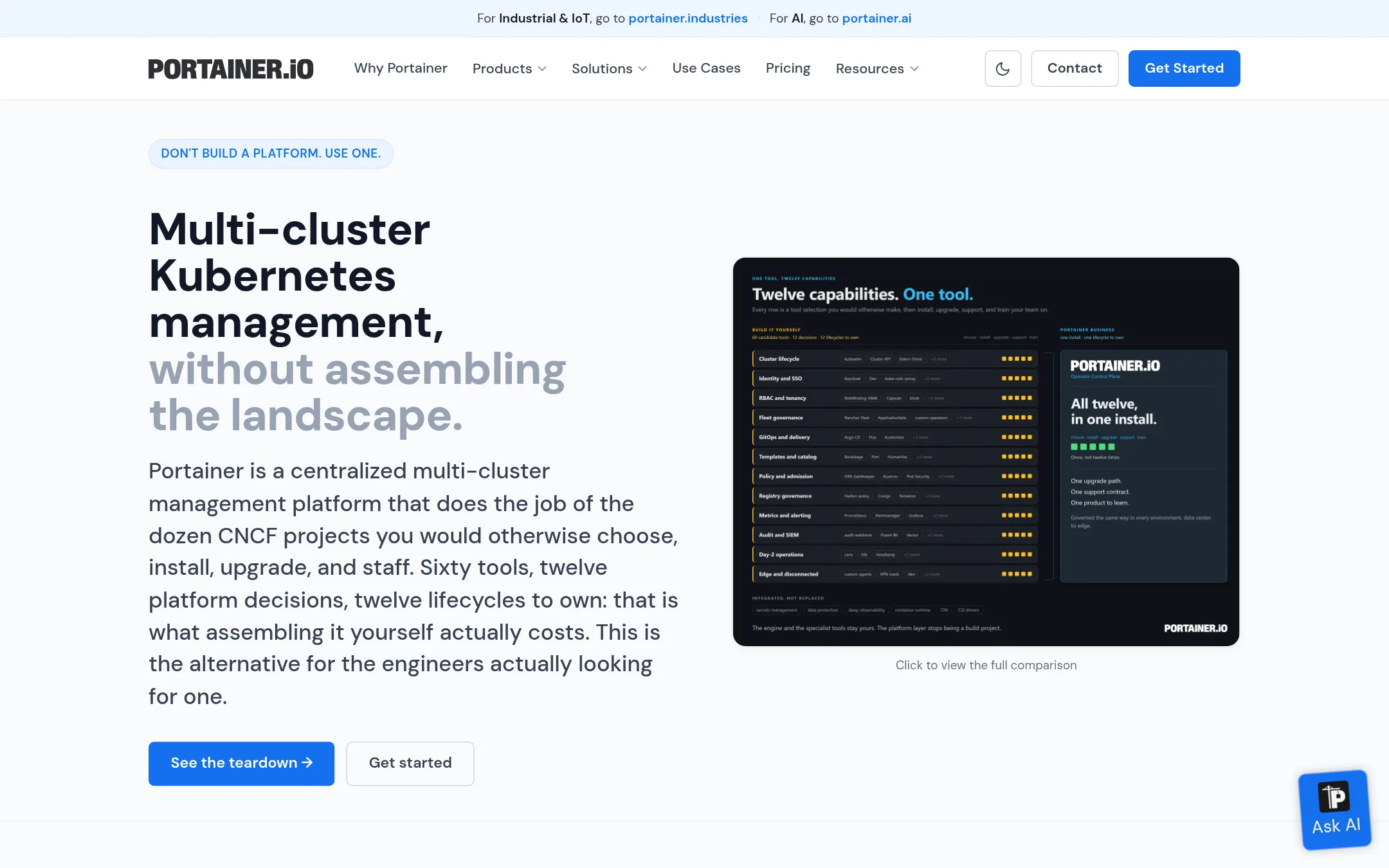
Portainer is a single console for running Docker, Swarm, Podman and Kubernetes clusters, from one cluster to thousands of edge nodes. Teams pick it over KubeSail when they want an owned, governed platform layer for many clusters and runtimes rather than a hosted app-hosting service, which KubeSail's shutdown leaves them needing to replace.
Where it is strong
- One console covers Kubernetes, Docker, Swarm and Podman, so you do not run a second tool for older hosts.
- GitOps runs from the Portainer server, so you avoid installing Argo or Flux in every cluster.
- Includes SSO, LDAP and OIDC, plus audit logging and SIEM export for operational teams.
Where it falls short
- Costs money per node, while KubeSail's hosted service is ending, so this is a paid replacement rather than a free one.
- Enterprise pricing is quote-based and the Enterprise tier requires talking to sales.
- Pricing:
- Pricing is published by node tier: Starter covers 5, 10 or 15 nodes with up to 16 vCPUs per node, Scale covers 5 to 25 nodes with up to 24 vCPUs per node, and Enterprise covers 32 or more vCPUs per node with custom terms.
- Switching from KubeSail:
- Moving from KubeSail to Portainer is not covered by the facts supplied, so no specific migration steps are stated.
- Custom quote
2.Rancher
Best for: Operations teams running several Kubernetes clusters across datacenters, clouds and edge sites that need one management layer
- Pricing
- Custom quote
- Category
- Developer Tools
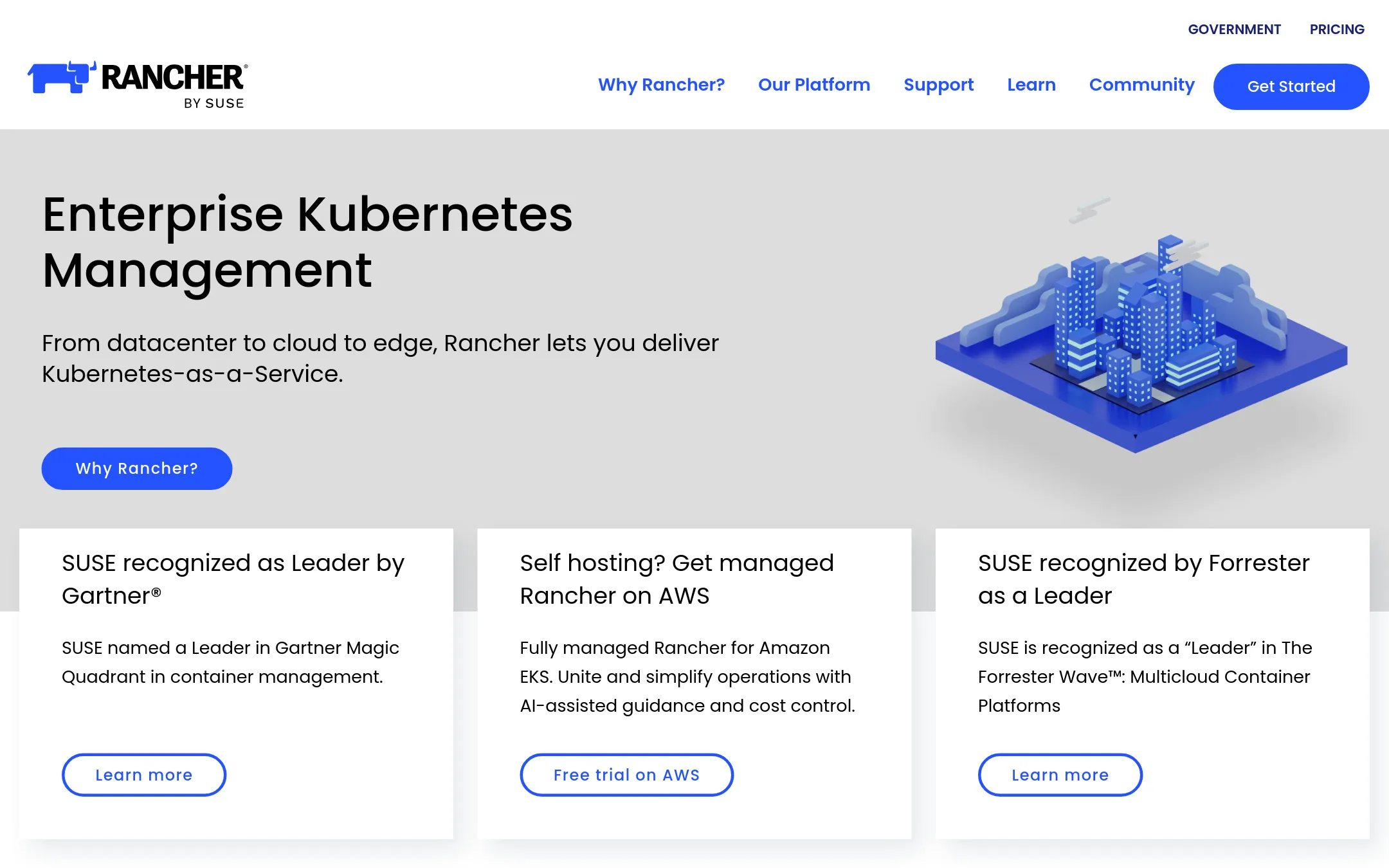
Rancher is an open-source platform for managing several Kubernetes clusters at once, whether they run in a datacenter, a public cloud or at the edge. Teams pick it when they need to run many clusters with shared security controls, which KubeSail's hosted namespaces and Raspberry Pi kits did not cover. Since KubeSail is shutting down, Rancher is one of the larger options for teams that want to keep running Kubernetes themselves.
Where it is strong
- Manages clusters across datacenter, cloud and edge from one platform
- Open source, with a large user community and 19.7k+ GitHub stars
- Offers a fully managed version for Amazon EKS
Where it falls short
- Pricing requires a sales conversation, so costs are not visible upfront
- Aimed at enterprise operations teams, which can be more than a small self-hosting setup needs
- Pricing:
- Pricing is not published on the site. You request a quote from a regional sales team.
- Switching from KubeSail:
- Moving from KubeSail involves taking your workloads off KubeSail's hosted clusters and redeploying them onto clusters that Rancher manages.
- CNot published
3.CasaOS
Best for: Hobbyists and home users who want a personal cloud on a Raspberry Pi, NUC or similar hardware with Docker apps

- Pricing
- Not published
- Category
- Other
CasaOS is an open-source personal cloud operating system built around Docker. It gives you a web interface to install self-hosted apps, sync files across devices, and reach your data from outside your home network. Someone would choose it over KubeSail if they want a home server with a simple app store rather than a Kubernetes-based hosting service, especially since KubeSail is shutting down its hosted services.
Where it is strong
- Free and open source under Apache 2.0
- Runs on Raspberry Pi and x86 hardware, including ZimaBoard and Intel NUC
- Large catalogue of Docker apps such as Nextcloud, Plex, Jellyfin and Syncthing
Where it falls short
- Built for a single home server, so it does not offer the managed, multi-cluster hosting KubeSail provided
- Some apps may carry paid add-on services, and the site says automatic app updates are not built in
- Pricing:
- Pricing is not published on the site.
- Switching from KubeSail:
- CasaOS runs apps through Docker on your own hardware, so moving from KubeSail means installing CasaOS on a machine you control and redeploying your apps there, as the site describes for importing custom Docker configurations.
- UNot published
4.Umbrel
Best for: Households and hobbyists who want a private home cloud for files, photos, media or a Bitcoin node, without building it from scratch.

- Pricing
- Not published
- Category
- Other
Umbrel is a home server OS that runs on hardware you own. It installs apps like Nextcloud, Jellyfin, Immich and a Bitcoin node with one click, and you reach it from a browser at umbrel.local. Pick it instead of KubeSail if you want to keep your files, photos and media at home rather than in a hosted service, and if you would rather have a physical box in the house than a Kubernetes cluster to manage.
Where it is strong
- Installs hundreds of self-hosted apps in one click from its app store.
- Runs from a plug-in home device with up to 4TB, or a 4-slot Pro model with up to 32TB.
- Works from any web browser on phone, tablet or computer, with no keyboard or display needed.
Where it falls short
- Its focus is a home box, so it is a poor fit for teams that need hosted Kubernetes namespaces like KubeSail offered.
- The site shows no pricing, so you cannot compare cost before buying hardware.
- Pricing:
- Pricing is not published on the site.
- Switching from KubeSail:
- KubeSail's hosted services are closing, so moving over means rebuilding your apps on new hardware at home rather than migrating a hosted deployment. The site does not describe a migration path.
- CNot published
5.Cloudron
Best for: Small teams and individuals who want to self-host ready-made web apps on their own server without managing system administration themselves
- Pricing
- Not published
- Category
- Other
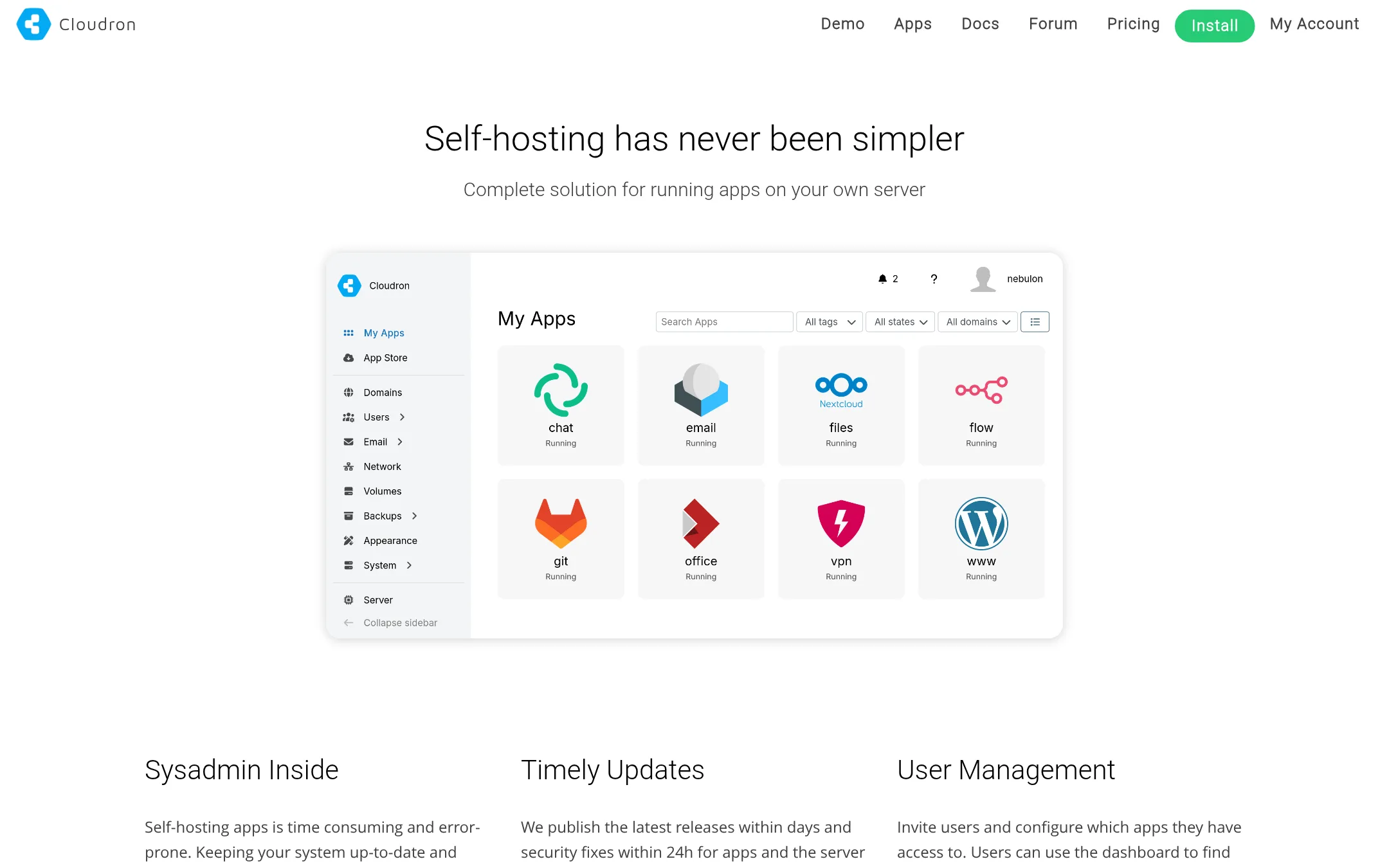
Cloudron is a self-hosting platform that runs web apps on your own server and handles system administration, updates and backups for you. Someone leaving KubeSail would choose it if they want to keep running apps on their own hardware or a VPS, with an app store that publishes updates and security fixes, plus central user management and a built-in mail server.
Where it is strong
- Ships a curated App Store with apps installed in a few clicks
- Publishes app and server security fixes through the App Store
- Includes central user management and a built-in mail server with automated DKIM, SPF and DMARC setup
Where it falls short
- The site does not publish pricing, so cost is unclear up front
- It is a platform you run on your own server, so you still need hardware or a VPS to host it
- Pricing:
- Pricing is not published on the site.
- C$5/mo + $3/server
6.Coolify
Best for: Small teams and solo developers who want a Heroku-style deploy workflow on their own servers
- Pricing
- $5/mo + $3/server
- Category
- Other
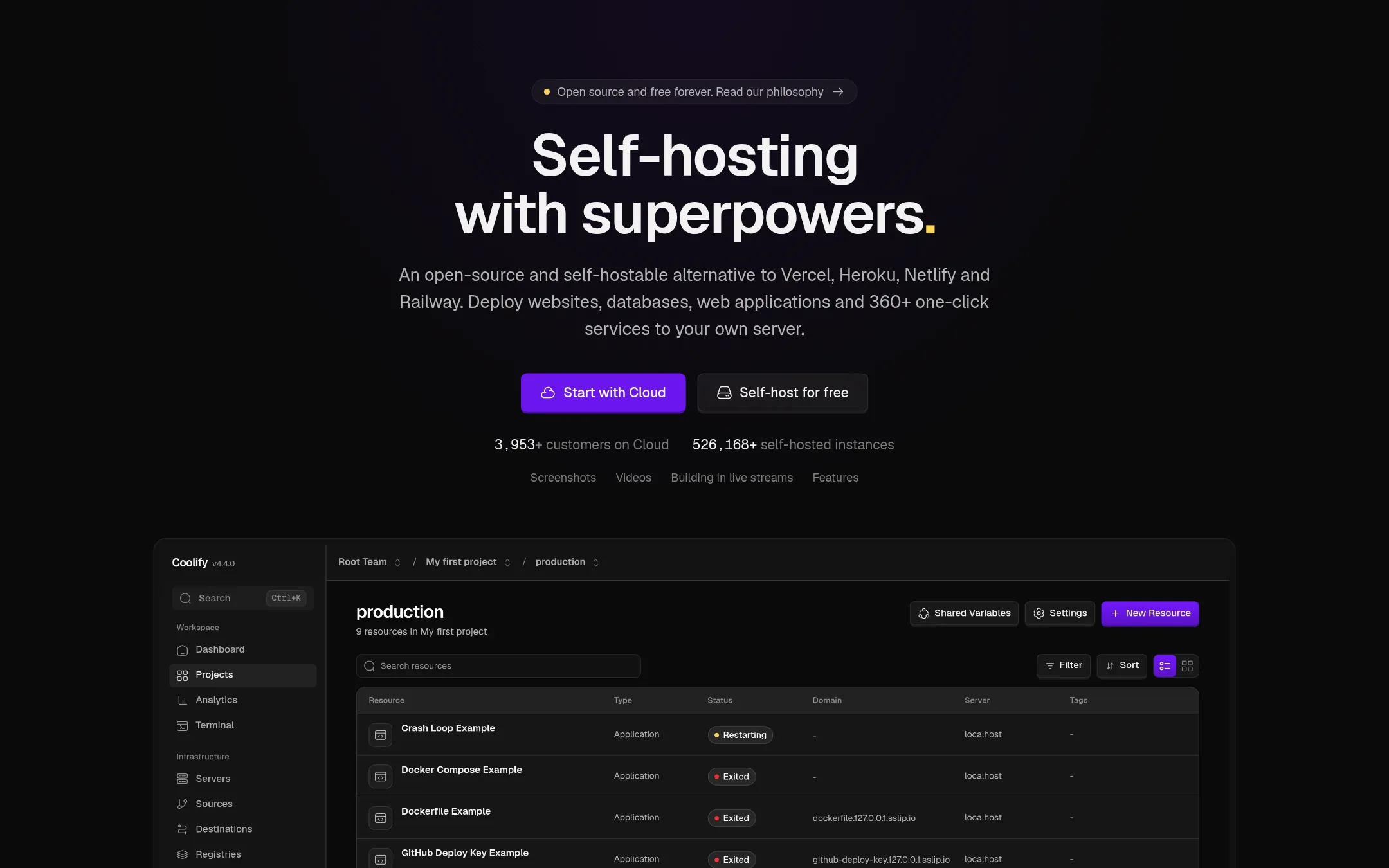
Coolify is an open-source, self-hostable platform that deploys apps, databases and one-click services to any server you connect over SSH, including a VPS, Raspberry Pi or cloud instance. Someone would pick it over KubeSail when they want to keep the self-hosting workflow but move to a tool that is still actively maintained and avoids a dependency on a shutting-down hosted service.
Where it is strong
- Deploys to any server you can reach over SSH, including Raspberry Pi, Hetzner, DigitalOcean and EC2.
- Includes one-click PostgreSQL, MySQL, MongoDB, Redis and other databases, with automatic S3 backups.
- Handles Let's Encrypt SSL certificates and renewals for custom domains automatically.
Where it falls short
- Coolify is a Docker-based platform, so it does not offer the Kubernetes-native model that KubeSail was built around.
- The self-hosted version leaves updates, backups and server management to you, while the Cloud plan's managed hosting is priced per server.
- Pricing:
- Self-hosted Coolify is free with all features, and the Cloud plan costs $5 per month for two servers plus $3 per month for each additional server.
- Switching from KubeSail:
- Moving from KubeSail is not covered by the facts available here, so check the Coolify documentation for migration steps.
See more comparisons in Security & Privacy alternatives.
FAQ
Questions about KubeSail alternatives
Why is KubeSail's service ending?
According to KubeSail's own farewell page, the team made the decision after six years to stop operating its hosted services. The site says the open-source code remains available and that the team no longer needs to be the intermediary for users' hosting.
What is the best free alternative to KubeSail?
CasaOS and Umbrel are both open source or free to use on hardware you own, aimed at home users. Coolify's self-hosted version is also free with all features, though you handle updates and server management yourself.
Which alternative is best for managing multiple Kubernetes clusters?
Rancher is built for running many clusters across datacenters, clouds and edge sites from one management layer. Portainer also manages Kubernetes clusters alongside Docker and Swarm from a single console, with centralized access control.
Which option works best for a Raspberry Pi or home server?
CasaOS runs on Raspberry Pi and x86 hardware and offers a large catalogue of Docker apps. Umbrel runs on a dedicated home device and installs apps in one click, and Coolify can also deploy to a Raspberry Pi over SSH.
How do the alternatives compare on pricing?
Coolify's Cloud plan costs $5 per month for two servers plus $3 per month for each additional server, and its self-hosted version is free. Portainer prices by node tier, and Rancher, Umbrel, Cloudron and CasaOS do not publish pricing on their sites, so you will need to request a quote or check directly.
Last updated November 15, 2026.