Lightdash alternatives
10 products compared · Updated October 15, 2026
The short answer
For teams already in the Microsoft ecosystem, Power BI offers deep integration and Copilot AI. Looker suits large Google Cloud organizations needing enterprise governance and embedded analytics. Cube.js is best for product teams that want to embed AI-native, governed analytics into their own apps with a semantic layer.
Your shortlist, at a glance
Read the comparisons ↓ MetabaseNot publishedTeams that want a fast, easy-to-use BI tool with AI assistance and don't need dbt's semantic layer integration.
- AApache SupersetNot publishedTeams that want a free, self-hosted BI tool with broad database support and don't need dbt integration.
 LookerNot publishedLarge organizations on Google Cloud that need governed BI, embedded analytics, and AI-assisted data exploration.
- TTableauSee websiteData visualization and analytics platform
 Microsoft Power BINot publishedOrganizations standardized on Microsoft 365 that want a governed BI platform with native Copilot integration.
 ModeNot publishedData teams that want to write SQL, R, or Python for deep analysis and then share results with business users through simple dashboards.
 RedashNot publishedTeams that need a lightweight, self-hosted SQL editor and dashboarding tool across many data sources.
 ThoughtSpotFrom $25/user/moLarge enterprises that need AI-powered, governed analytics with embedded intelligence across apps and workflows.
 HolisticsNot publishedData teams that want a code-first, Git-versioned semantic layer with AI-assisted self-service for business users and embedded analytics for their own product.
 Cube.jsFrom $0.60/hr computeProduct teams that want to embed governed, AI-native analytics into their own applications with multi-tenant support.
About Lightdash and its alternatives
Lightdash is an open-source, AI-first BI platform built for modern data teams. It connects to dbt, lets you define metrics once, and provides instant, trustworthy insights. Lightdash is known for its native dbt integration, unlimited users on paid plans, and a self-hosted open-source option.
When comparing alternatives, weigh pricing structure (per-seat vs. flat or usage-based), deployment options (self-hosted vs. cloud), and whether the tool integrates with your existing stack, especially dbt or a semantic layer. Also consider support levels, contract terms, and whether the product offers AI features or embedding capabilities that match your needs.
Explore the alternatives
- Not published
1.Metabase
Best for: Teams that want a fast, easy-to-use BI tool with AI assistance and don't need dbt's semantic layer integration.
- Pricing
- Not published
- Category
- Analytics & Data
Metabase is an open-source BI tool that lets you query and visualize data from your database or warehouse, with AI features on all plans. You'd choose it over Lightdash if you want a simpler, more general-purpose analytics tool that doesn't require a dbt setup and can be self-hosted or deployed on their cloud.
Where it is strong
- Open source with self-hosting option
- AI features on all plans
- Supports 20+ data sources
Where it falls short
- No native dbt integration
- Advanced embedding features only on Pro and Enterprise
- Pricing:
- Pricing is not published on the site.
- Switching from Lightdash:
- Moving from Lightdash means rebuilding dashboards and metrics without dbt's semantic layer, which may require manual setup of business logic.
- ANot published
2.Apache Superset
Best for: Teams that want a free, self-hosted BI tool with broad database support and don't need dbt integration.
- Pricing
- Not published
- Category
- Analytics & Data
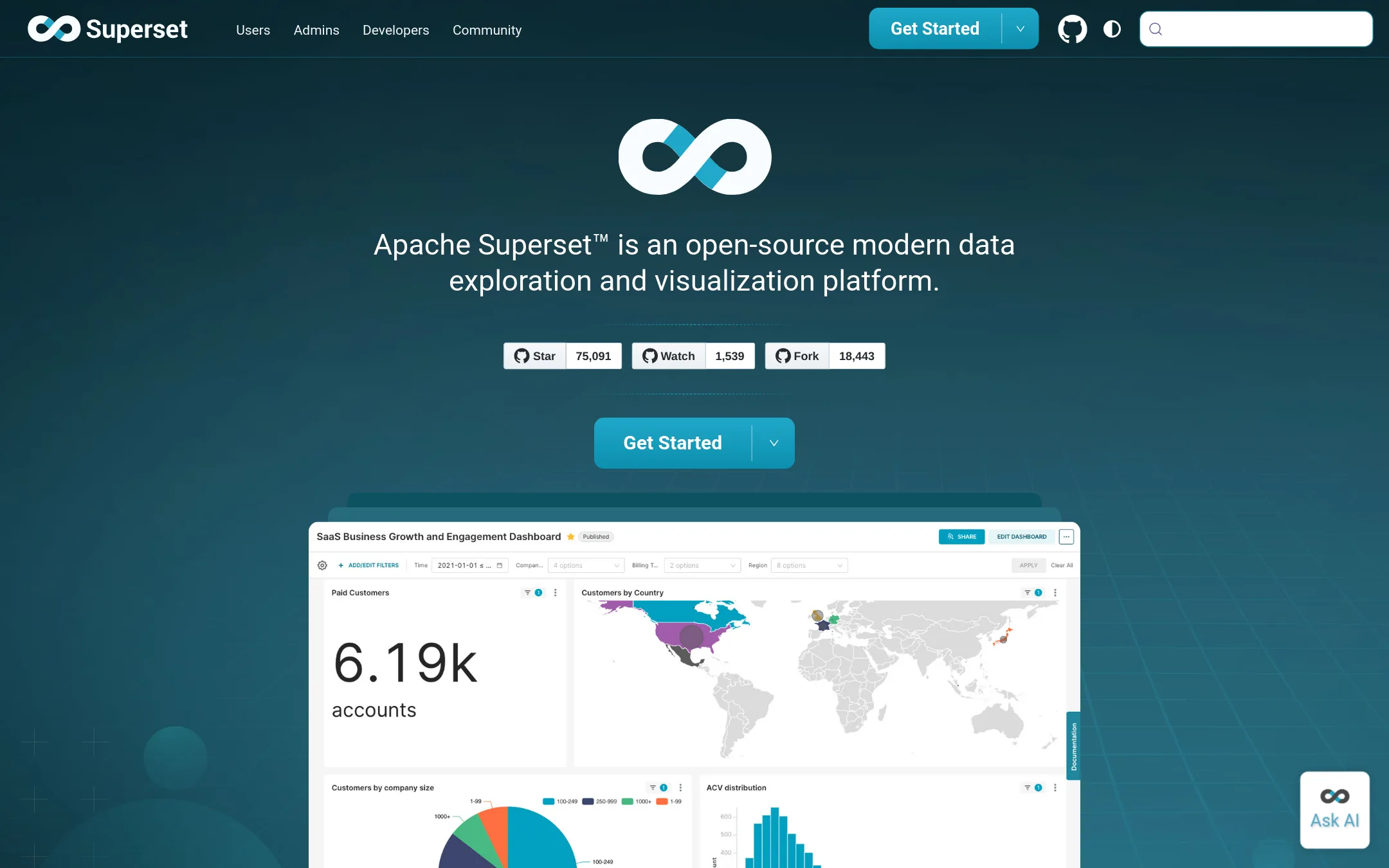
Apache Superset is an open-source BI platform for data exploration and visualization. Choose it instead of Lightdash if you want a self-hosted, database-agnostic tool without being tied to dbt or a semantic layer.
Where it is strong
- Open source and free to self-host
- Supports many databases
- Strong community and documentation
Where it falls short
- No native dbt integration or semantic layer
- Requires self-management of infrastructure and upgrades
- Pricing:
- Pricing is not published on the site.
- Switching from Lightdash:
- Moving from Lightdash means rebuilding dashboards and charts in Superset, and you'll lose the dbt-native metric definitions unless you recreate them manually.
- Not published
3.Looker
Best for: Large organizations on Google Cloud that need governed BI, embedded analytics, and AI-assisted data exploration.
- Pricing
- Not published
- Category
- Analytics & Data
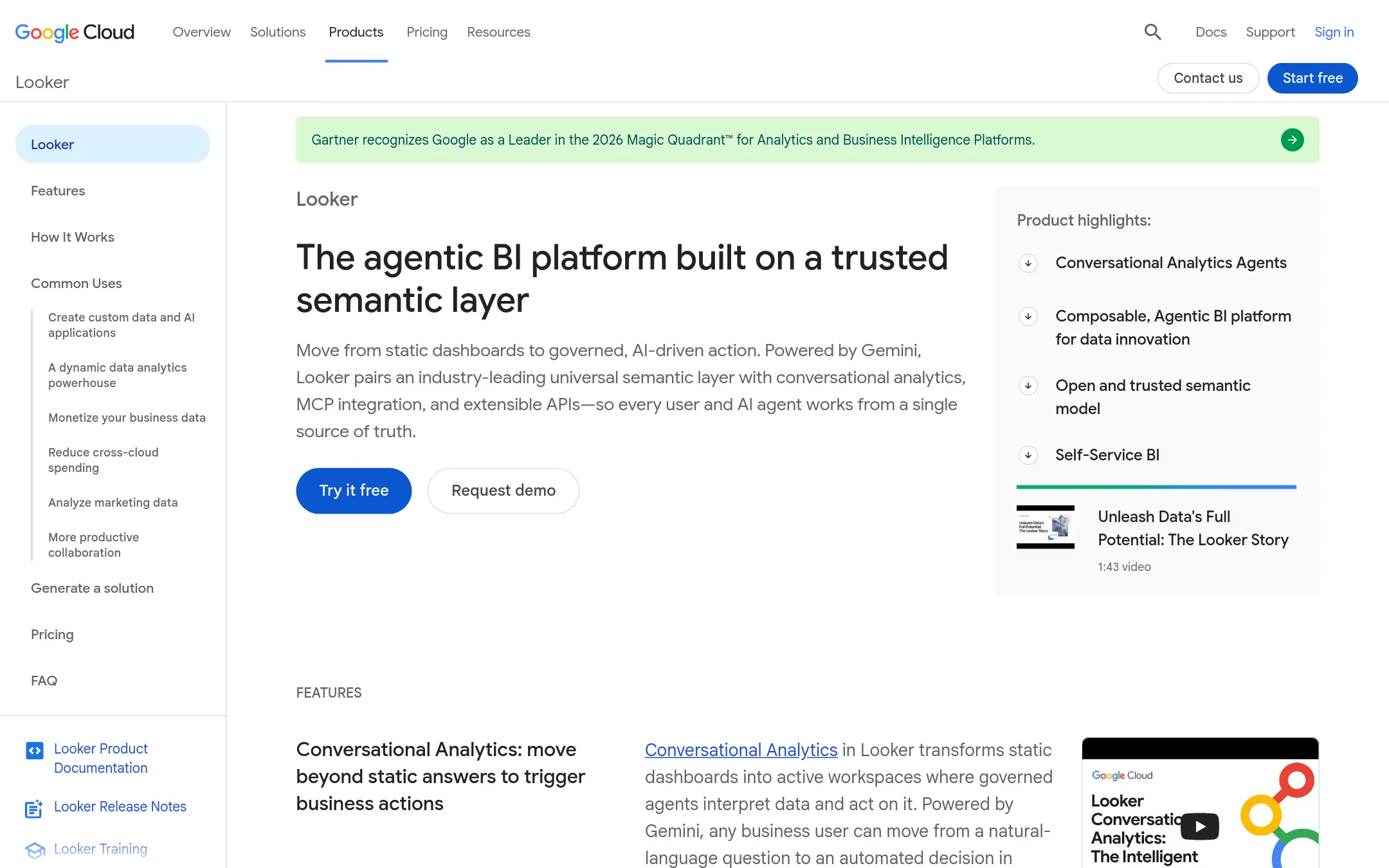
Looker is Google Cloud's enterprise BI platform with a semantic layer and Gemini-powered conversational agents. Choose it over Lightdash if you are already deep in the Google Cloud ecosystem and need enterprise-grade governance, embedded analytics, and AI-driven exploration.
Where it is strong
- Native integration with Google Cloud services like BigQuery.
- Gemini agents provide conversational analytics.
- Strong semantic layer for consistent metrics across the org.
Where it falls short
- Pricing is opaque and likely enterprise-only.
- Steeper learning curve and heavier setup than Lightdash.
- Pricing:
- Pricing is not published on the site.
- Switching from Lightdash:
- Moving from Lightdash to Looker means redefining your metrics in LookML and reworking dashboards, which takes time and training.
- TSee website
4.Tableau
Analytics & Data
Tableau excels at polished visual analytics and has added some AI features, yet it remains a closed-source, high-cost platform. Lightdash offers a free open-source alternative focused on developer workflows, dbt sync, and AI-driven dashboard creation from a single semantic layer.
- Not published
5.Microsoft Power BI
Best for: Organizations standardized on Microsoft 365 that want a governed BI platform with native Copilot integration.
- Pricing
- Not published
- Category
- Analytics & Data
Microsoft Power BI is a full-featured BI platform that integrates deeply with Microsoft 365 and Azure. Choose it instead of Lightdash if your team is already in the Microsoft ecosystem and needs a managed, enterprise-grade analytics tool with AI-assisted exploration.
Where it is strong
- Deep integration with Microsoft 365 and Azure services
- Copilot AI for natural-language data exploration
- Enterprise-grade governance and security features
Where it falls short
- No native dbt integration or semantic layer for metrics
- Per-user licensing can get expensive for large teams
- Pricing:
- Pricing is not published on the site.
- Not published
6.Mode
Best for: Data teams that want to write SQL, R, or Python for deep analysis and then share results with business users through simple dashboards.
- Pricing
- Not published
- Category
- Analytics & Data
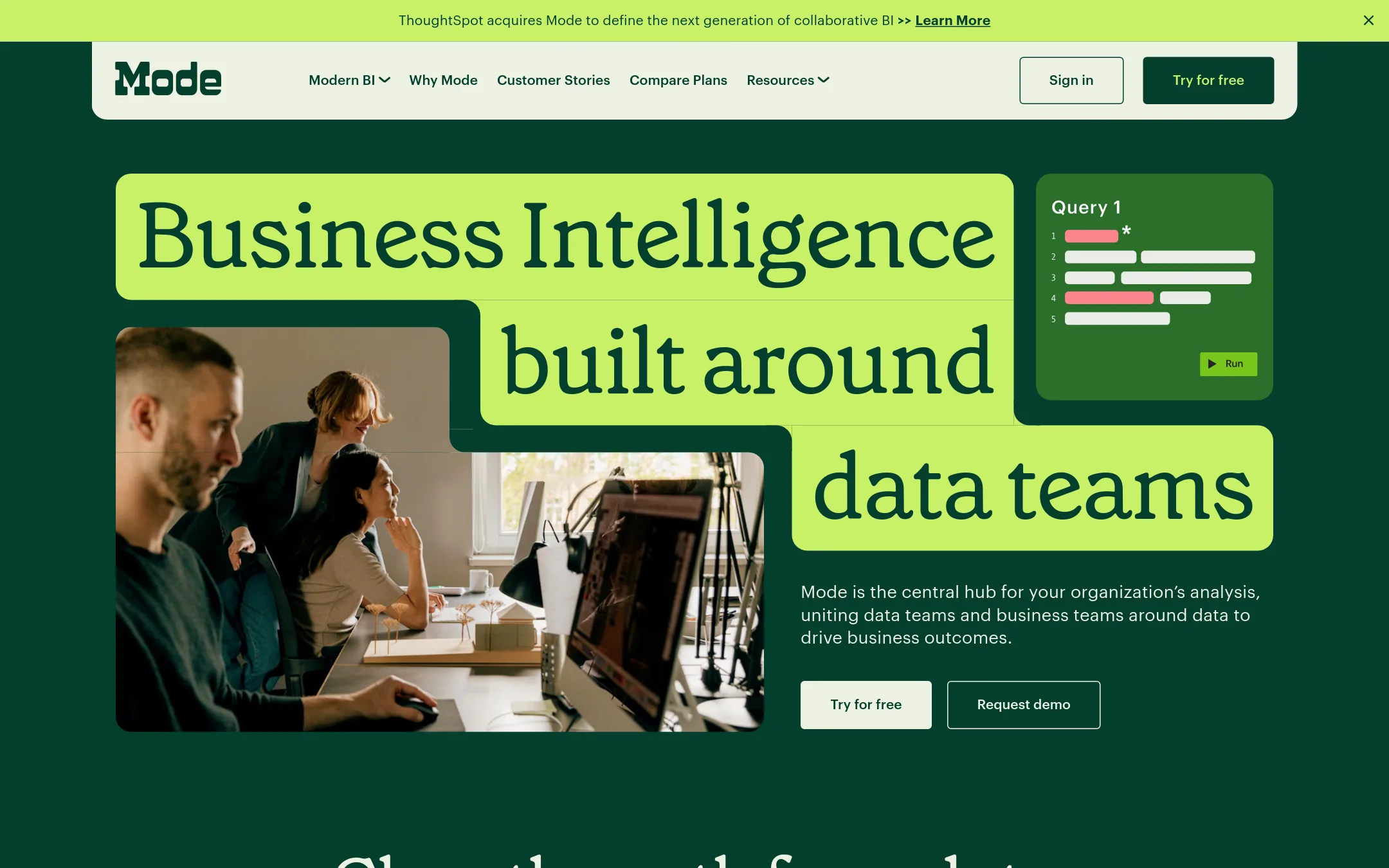
Mode is a collaborative analytics platform that puts SQL, R, and Python at the center, letting data teams do ad hoc analysis and build self-service reports in one place. Choose Mode over Lightdash if your team lives in code and needs flexible, notebook-style exploration rather than a dbt-defined metric layer.
Where it is strong
- Supports SQL, R, and Python in one workflow
- Fast setup, up and running in 30 minutes or less
- Combines ad hoc analysis with self-service reporting
Where it falls short
- No native dbt integration like Lightdash has
- Pricing details are not public, so budgeting is harder
- Pricing:
- Pricing is not published on the site.
- Switching from Lightdash:
- Moving from Lightdash means rebuilding your metric definitions and dashboards in Mode, since it doesn't use dbt's semantic layer.
- Not published
7.Redash
Best for: Teams that need a lightweight, self-hosted SQL editor and dashboarding tool across many data sources.
- Pricing
- Not published
- Category
- Analytics & Data
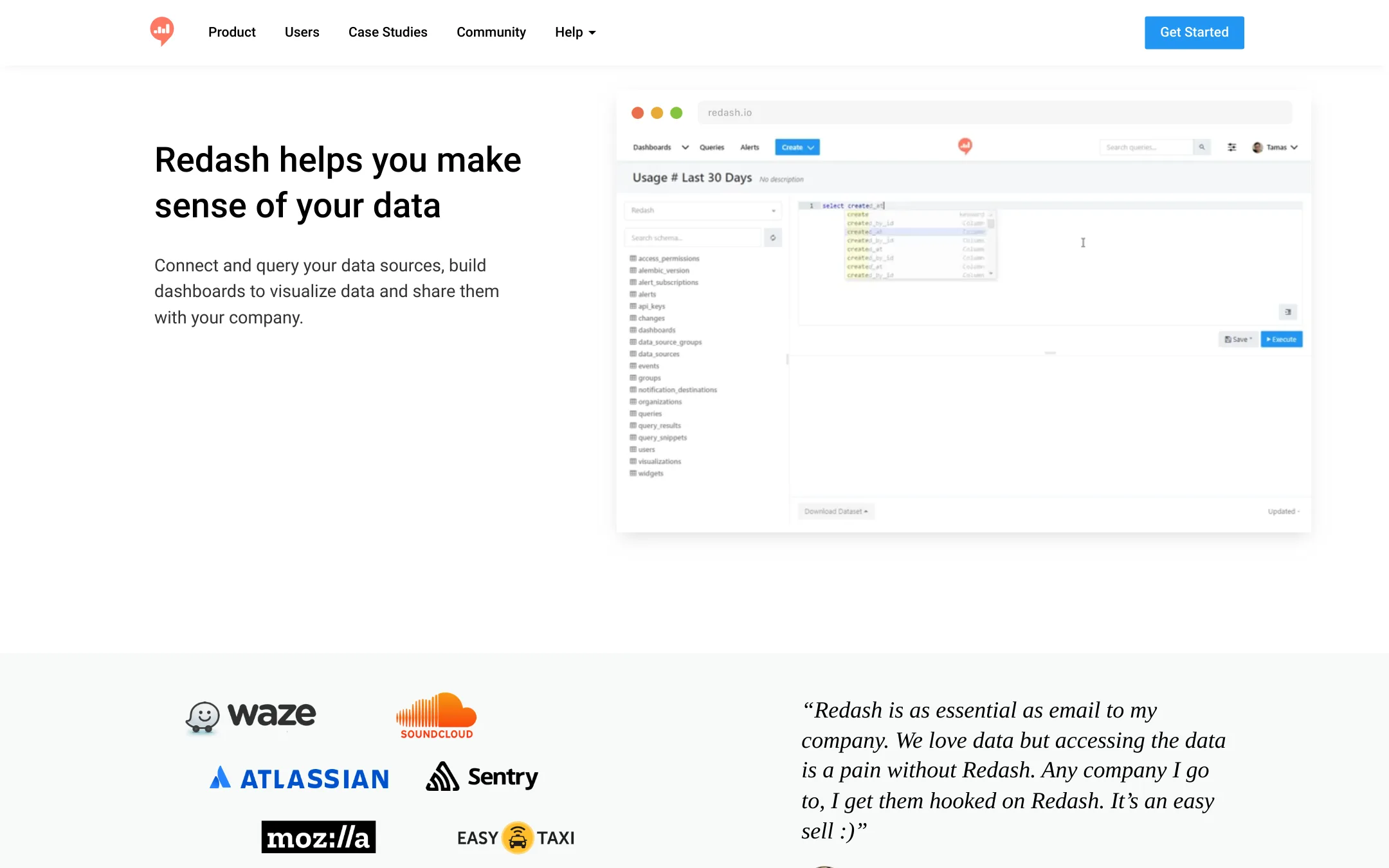
Redash is an open-source tool for writing SQL queries, building visualizations, and sharing dashboards. It connects to many data sources, including PostgreSQL, MySQL, Redshift, BigQuery, and MongoDB. Choose Redash if you want a simple, self-hosted query and dashboard tool without the dbt integration or metric layer that Lightdash offers.
Where it is strong
- Supports a wide range of data sources including SQL, NoSQL, and APIs.
- Open source with no lock-in and community contributions.
- Easy drag-and-drop dashboard building with scheduled refreshes.
Where it falls short
- No native dbt integration or semantic layer for consistent metrics.
- Self-hosting requires managing your own infrastructure and upgrades.
- Pricing:
- Pricing is not published on the site.
- Switching from Lightdash:
- Moving from Lightdash means giving up the dbt integration and metric definitions, and you will need to rebuild dashboards and queries manually in Redash.
- From $25/user/mo
8.ThoughtSpot
Best for: Large enterprises that need AI-powered, governed analytics with embedded intelligence across apps and workflows.
- Pricing
- From $25/user/mo
- Category
- Analytics & Data
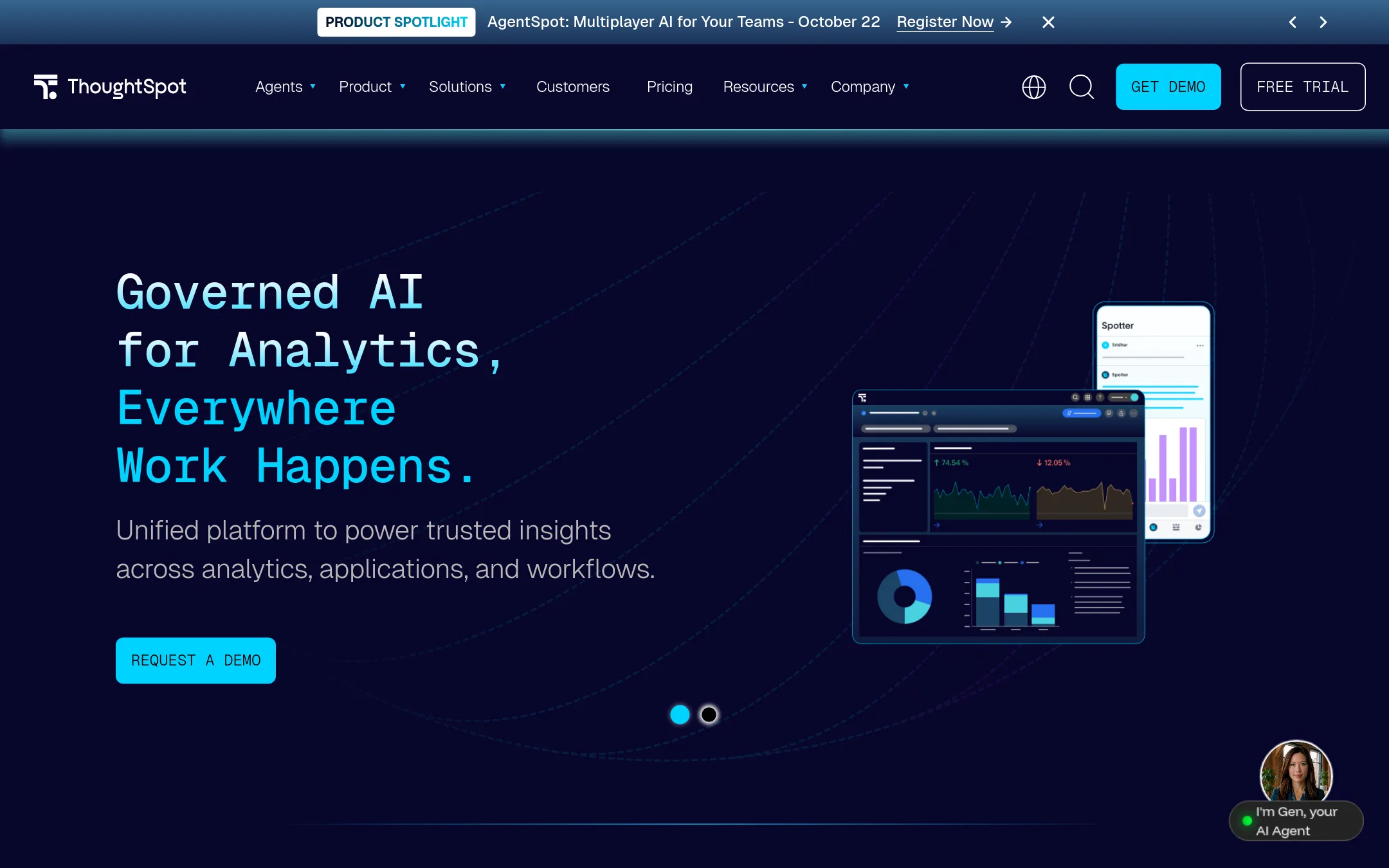
ThoughtSpot is an enterprise BI platform with AI agents that answer natural-language questions and surface anomalies. Choose it over Lightdash if you need governed, AI-driven analytics at scale with strong embedding capabilities and are willing to pay for a commercial product.
Where it is strong
- AI agents with unlimited LLM tokens on Pro plan
- Natural-language search and automated insights
- Embedding via API and SDK for product teams
Where it falls short
- Per-seat pricing can get expensive for large teams
- No open-source or self-hosted option like Lightdash
- Pricing:
- Essentials starts at $25 per user per month (billed annually) for 5–50 users, Pro is $50 per user per month (billed annually) for up to 1000 users, and Enterprise and Developer plans have custom pricing.
- Switching from Lightdash:
- Moving from Lightdash involves migrating dbt models and metric definitions to ThoughtSpot's semantic layer, which may require rework.
- Not published
9.Holistics
Best for: Data teams that want a code-first, Git-versioned semantic layer with AI-assisted self-service for business users and embedded analytics for their own product.
- Pricing
- Not published
- Category
- Analytics & Data
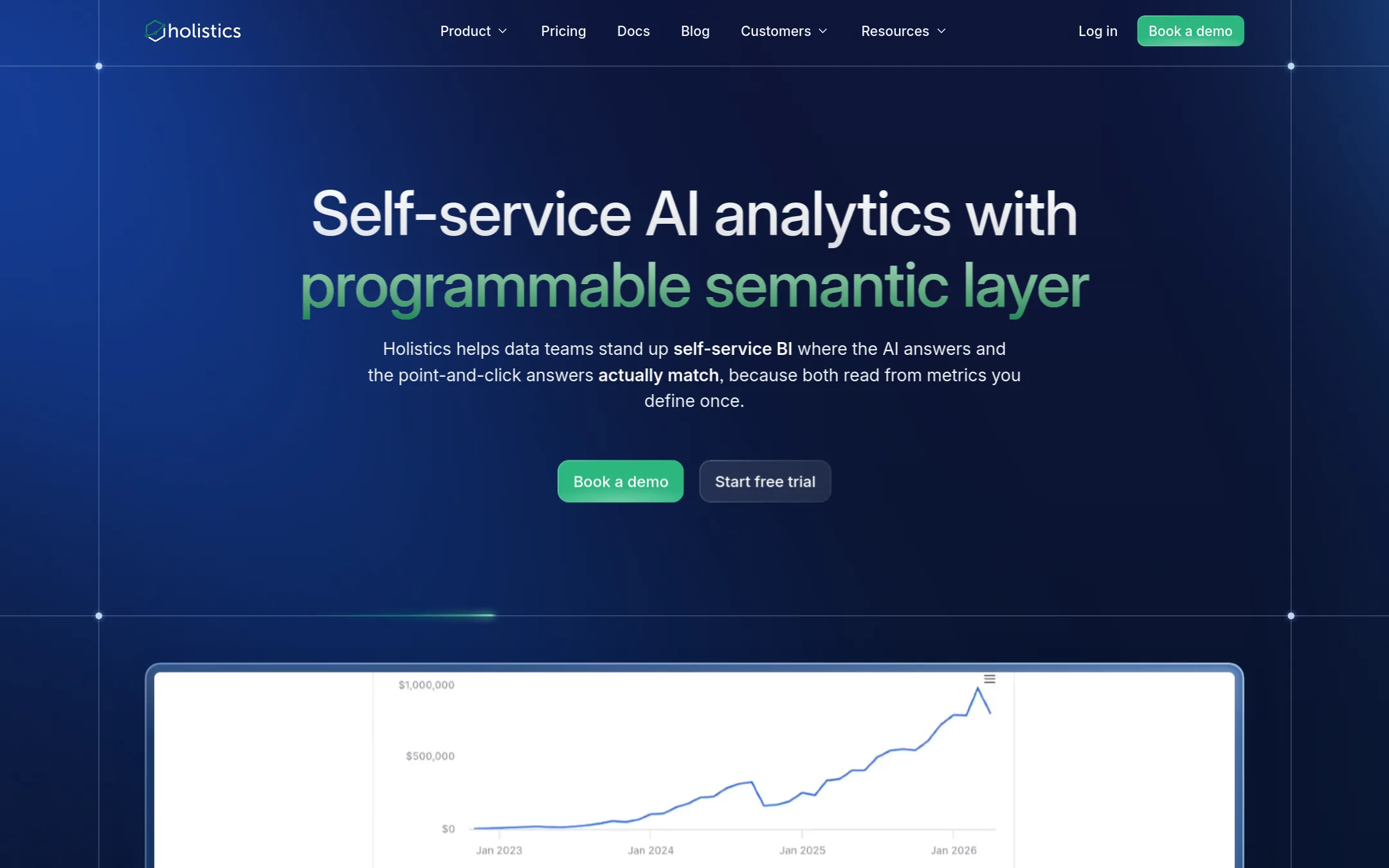
Holistics is a self-service BI platform with a programmable semantic layer where metrics are defined once as code and reused across dashboards, AI answers, and embedded analytics. Choose it over Lightdash if you want a Git-based, code-first workflow with AI that asks clarifying questions and a semantic layer that can be queried by external AI agents via MCP.
Where it is strong
- Define metrics once in a centralized semantic layer, and AI answers, dashboards, and explorations all pull from the same definitions.
- Everything is as code in AML, with Git version control, branch/review/deploy, and rollback.
- AI asks clarifying questions when a request is ambiguous, so answers match your dashboard numbers.
Where it falls short
- Pricing is not transparent, so you must contact sales for a quote.
- No self-hosted option mentioned, unlike Lightdash's open-source self-hosted tier.
- Pricing:
- Pricing is not published on the site.
- Switching from Lightdash:
- Moving from Lightdash means redefining your metrics and dashboards in Holistics' AML, but the Git-based workflow and semantic layer should feel familiar if you already use dbt.
- From $0.60/hr compute
10.Cube.js
Best for: Product teams that want to embed governed, AI-native analytics into their own applications with multi-tenant support.
- Pricing
- From $0.60/hr compute
- Category
- Analytics & Data
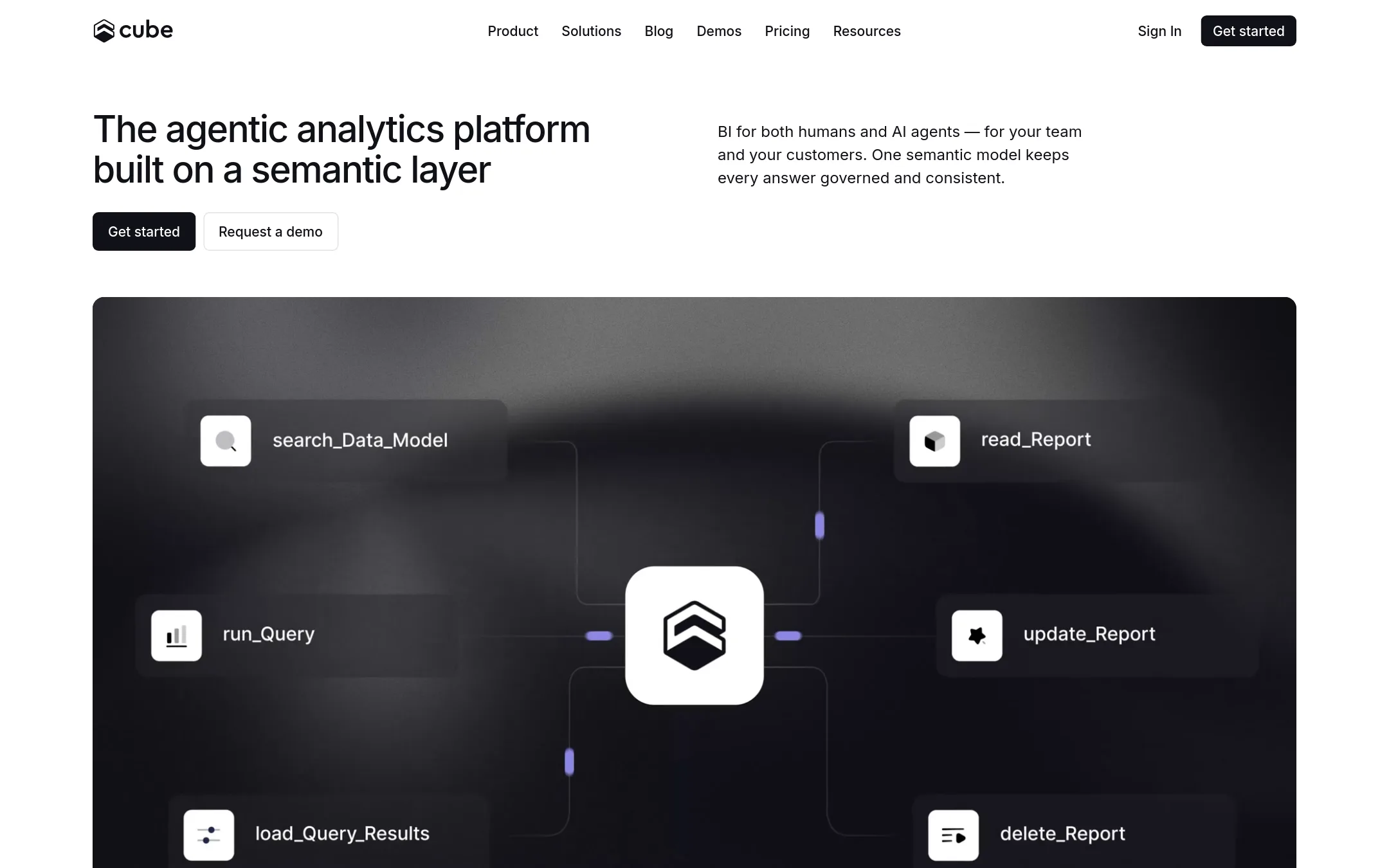
Cube.js is an agentic analytics platform built around a governed semantic layer, designed to serve both human analysts and AI agents through APIs and MCP. Choose it over Lightdash if you need to embed AI-powered analytics inside your product or want a semantic layer that keeps metric definitions consistent across every surface, including AI agents.
Where it is strong
- Semantic layer ensures consistent metric definitions across all surfaces, including AI agents
- Embedded analytics with iframes, React SDK, and Creator Mode for customer-facing dashboards
- MCP server and Analytics Chat API for building custom AI analytics experiences
Where it falls short
- Pricing is usage-based and can be complex to estimate for small teams
- Requires more setup and technical expertise compared to Lightdash's out-of-the-box BI
- Pricing:
- Free tier available. Starter and Premium plans have usage-based compute pricing starting at $0.60/hour for dedicated deployment, with additional API instances at $0.15/hour. Enterprise is custom quote.
- Switching from Lightdash:
- Moving from Lightdash involves redefining your metrics in Cube's semantic layer and rebuilding dashboards, though Cube supports dbt integration to ease the transition.
See more comparisons in Analytics & Data alternatives.
FAQ
Questions about Lightdash alternatives
Which alternative is best if I already use dbt?
Lightdash itself has native dbt integration, but among the alternatives, Holistics offers a code-first semantic layer that can be versioned in Git, similar to dbt. Cube.js also provides a governed semantic layer that can serve AI agents, though it requires more setup. If you want to keep a dbt workflow, Holistics is the closest fit.
Are there any free or open-source options?
Yes, Metabase, Apache Superset, and Redash are all open-source and can be self-hosted for free. They don't have native dbt integration or a semantic layer like Lightdash, but they support many data sources and are good for teams that want a simple, self-managed BI tool.
Which alternative has the most transparent pricing?
ThoughtSpot publishes pricing starting at $25 per user per month for Essentials and $50 per user per month for Pro, both billed annually. Cube.js offers a free tier and usage-based compute pricing starting at $0.60 per hour. Most other alternatives, including Power BI, Looker, and Metabase, do not publish pricing on their sites.
Can I embed analytics into my own product?
Yes, several alternatives support embedding. Cube.js offers iframes, React SDK, and Creator Mode for customer-facing dashboards. ThoughtSpot provides embedding via API and SDK. Lightdash offers embedding as an add-on, but among the alternatives, Cube.js is specifically designed for product teams that want to embed AI-powered analytics.
Which alternative is best for AI-driven analytics?
ThoughtSpot has AI agents that answer natural-language questions and surface anomalies, with unlimited LLM tokens on Pro. Power BI includes Copilot for natural-language exploration. Looker uses Gemini agents for conversational analytics. If you need AI that can be embedded and governed by a semantic layer, Cube.js is a strong choice.
Last updated October 15, 2026.