
Lightly alternatives
7 products compared · Updated November 7, 2026
The short answer
The three strongest alternatives to Lightly are Voxel51 FiftyOne, Encord and Roboflow. Voxel51 FiftyOne suits physical AI and computer vision teams with video, 3D or sensor data who need per-sample failure analysis and on-premise deployment. Encord suits enterprise physical AI and computer vision teams that must manage and annotate sensor, video and text data together at scale. Roboflow suits engineering and operations teams that need to take a vision model from labeled data to a deployed application on cameras or edge devices.
Your shortlist, at a glance
Read the comparisons ↓ LabelboxNot publishedEngineering and ML research teams that want background agents to handle recurring work such as flaky tests, dependency upgrades, eval reruns and experiment sweeps
 EncordNot publishedPhysical AI and enterprise computer vision teams that need to manage and annotate sensor, video and text data together at petabyte scale.
 Scale AINot publishedAI labs and large enterprises or government bodies that want managed data sourcing, expert annotation and evaluations delivered as a service
 V7 LabsCustom quotePrivate markets, insurance and real estate firms that need AI workflows for due diligence, underwriting and claims on document-heavy processes
- VVoxel51 FiftyOneFree tier. Team from qPhysical AI and computer vision teams with video, point cloud, or sensor data that need per-sample failure analysis and on-premise or air-gapped deployment
 RoboflowFrom $39/moEngineering and operations teams that need to take a vision model from labeled data to a deployed application on cameras or edge devices
 SuperAnnotateNot publishedEnterprises, frontier labs and AI startups that need expert annotators and multimodal evaluation data delivered alongside their platform.
About Lightly and its alternatives
Lightly is a computer vision data platform. Its site describes LightlyStudio, which curates, labels and evaluates data, and LightlyTrain, which pretrains and fine-tunes models. The site says it is known for finding the samples worth labeling through embedding-based sampling strategies such as diverse coverage, deduplication and outlier detection.
When comparing alternatives in this category, weigh the pricing structure first, since some vendors publish plans and others only offer quotes by sales conversation. Check regional availability and deployment options, such as cloud, on-premise or air-gapped, if your data is restricted. Look at integrations with your existing storage and training tools, the level of support and managed services on offer, and the contract terms, including minimum seats or usage commitments.
Explore the alternatives
- Not published
1.Labelbox
Best for: Engineering and ML research teams that want background agents to handle recurring work such as flaky tests, dependency upgrades, eval reruns and experiment sweeps
- Pricing
- Not published
- Category
- AI & Machine Learning
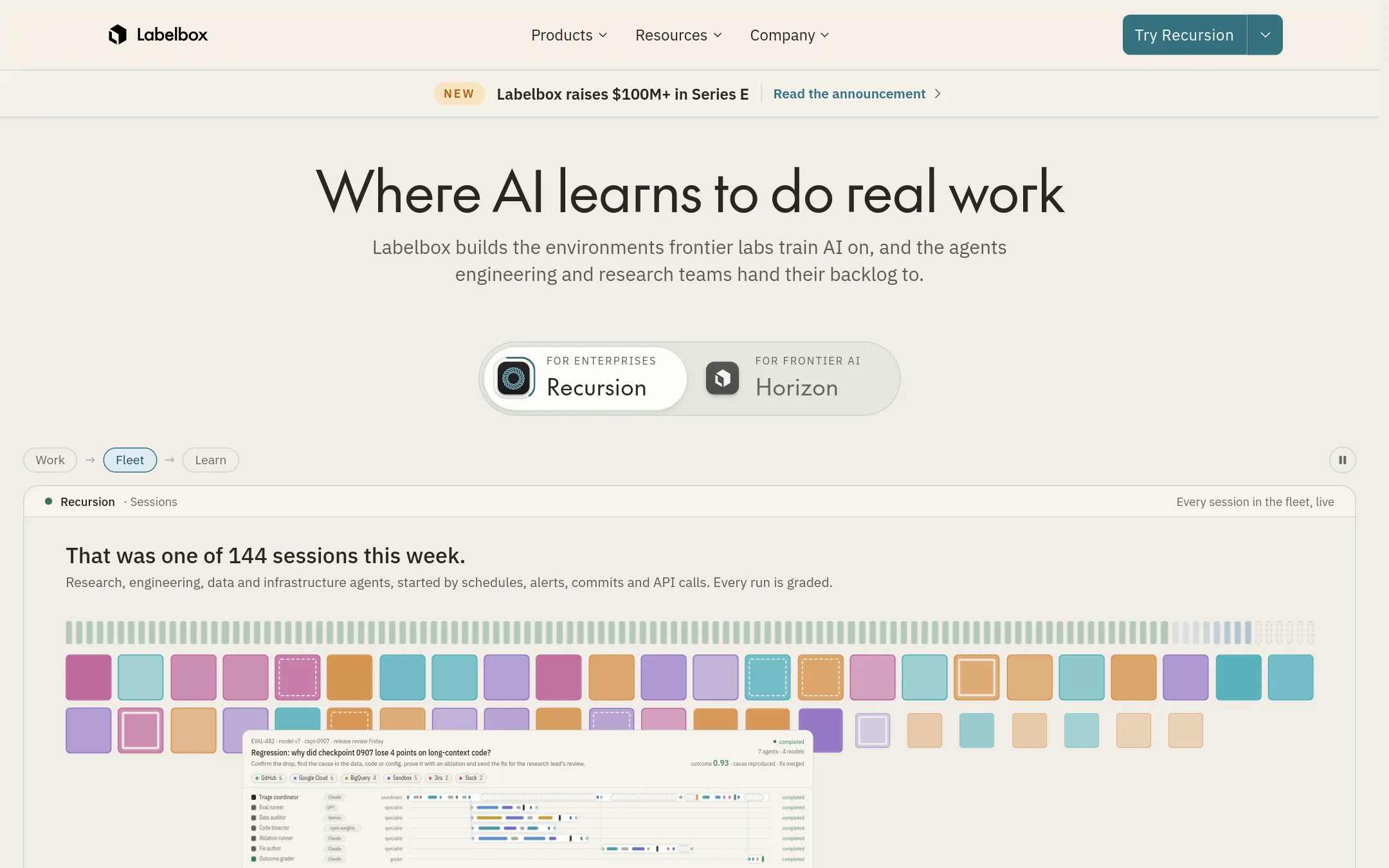
Labelbox builds environments and expert data for frontier AI labs, and its Recursion product runs background agents for engineering and research teams. Someone would pick it over Lightly when the need is recurring engineering, ML research or evals automation rather than curating and labeling computer vision datasets.
Where it is strong
- Agents start on triggers like CI failures, alerts, new checkpoints or schedules and work in the background
- Covers software engineering, reliability, security, ML research, evals, R&D and product work in one product
- Connects to tools such as GitHub, Jira, Slack, Databricks and Google BigQuery
Where it falls short
- Focused on general engineering and evals automation, not on computer vision data curation and labeling
- Lightly's embedding-based sampling, object-level labeling and per-sample evaluation for vision models are not part of what the page describe
- Pricing:
- Pricing is not published on the site.
- Not published
2.Encord
Best for: Physical AI and enterprise computer vision teams that need to manage and annotate sensor, video and text data together at petabyte scale.
- Pricing
- Not published
- Category
- AI & Machine Learning
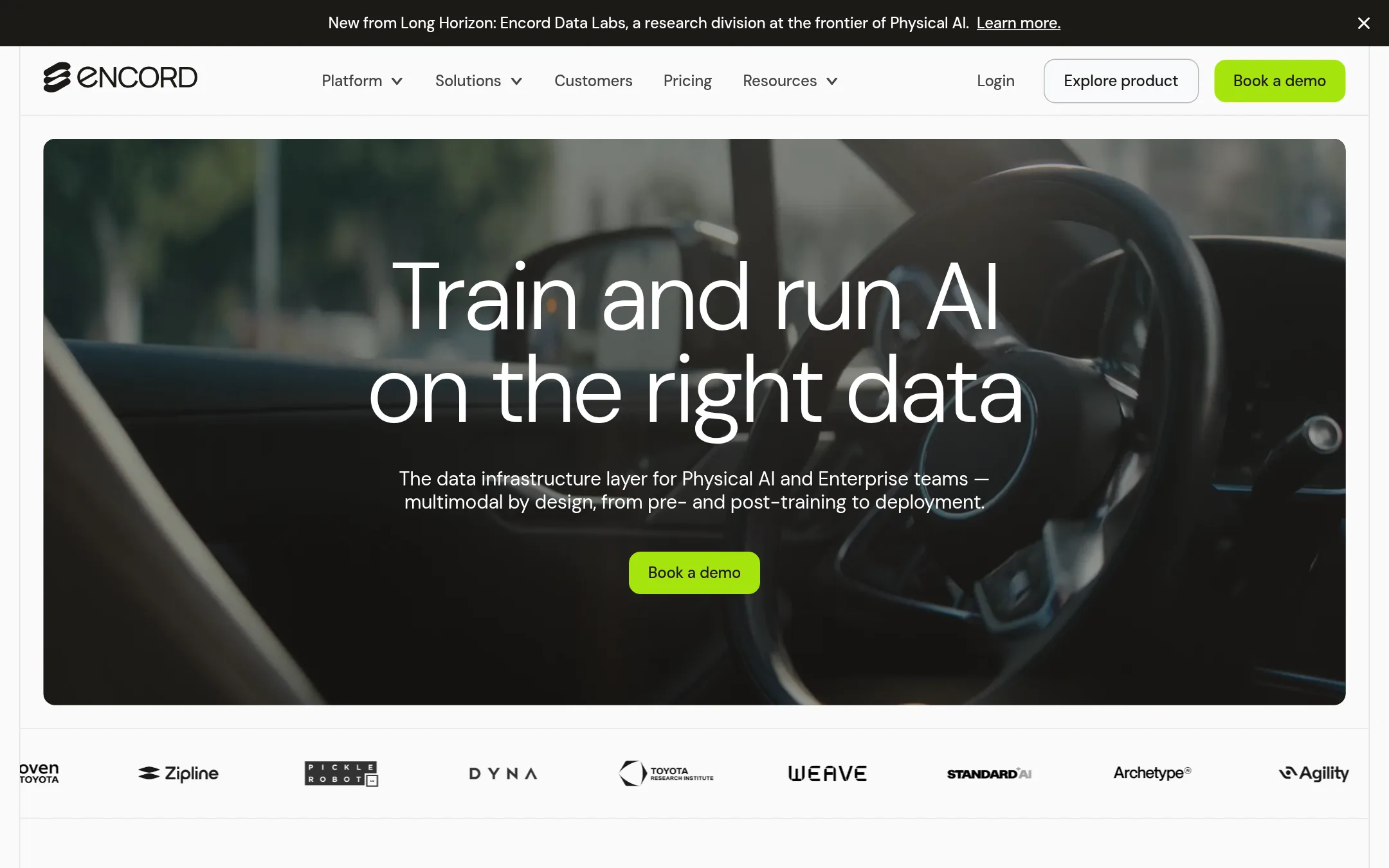
Encord is a multimodal data platform for physical AI that manages, curates, annotates and aligns data from sensor streams, video and text. Teams pick it over Lightly when they need that breadth across modalities and large-scale annotation workflows at enterprise level.
Where it is strong
- Covers sensor streams, video and text in one data layer, not only images.
- Lists large enterprise customers such as Woven by Toyota, AXA and UiPath.
- Offers managed annotation and QA services alongside the software.
Where it falls short
- The supplied page text does not show whether it includes a self-supervised pretraining product like LightlyTrain.
- Pricing is not shown on the site, so cost comparison needs a sales conversation.
- Pricing:
- Pricing is not published on the site.
- Not published
3.Scale AI
Best for: AI labs and large enterprises or government bodies that want managed data sourcing, expert annotation and evaluations delivered as a service
- Pricing
- Not published
- Category
- AI & Machine Learning
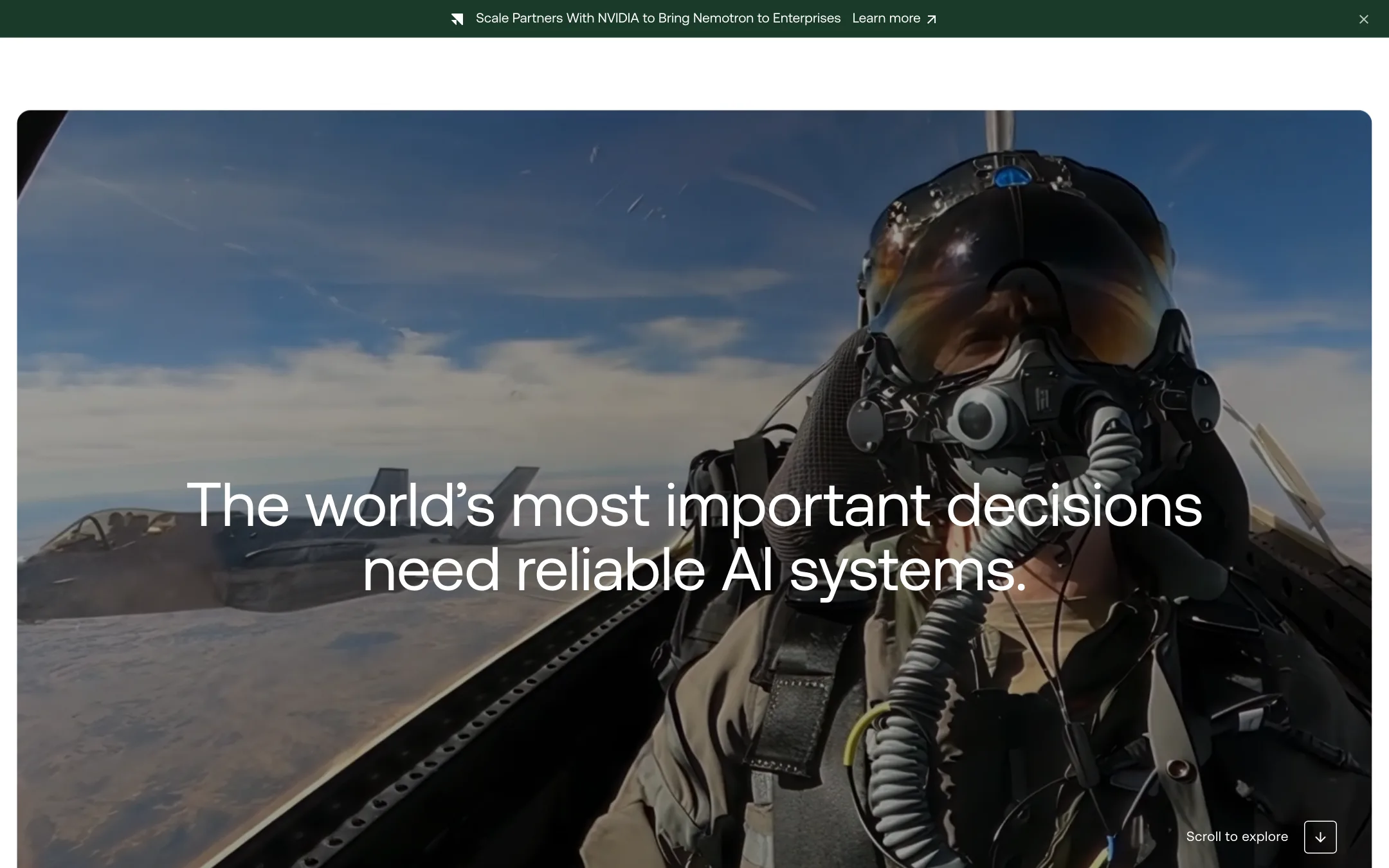
Scale AI is a data and evaluation company that works across the AI stack. It supplies training data, human-rated evals and benchmarks, and end-to-end AI applications for AI labs, governments and large enterprises. Someone would pick Scale over Lightly when they need outsourced data sourcing, expert annotation and managed delivery at frontier or enterprise scale, rather than a software platform their own team runs.
Where it is strong
- Managed data collection and expert annotators, so your team does not have to source data itself
- Human-in-the-loop evaluations and benchmarks for finding where a model fails
- Experience across many sectors, including robotics, healthcare and defense
Where it falls short
- Pricing is not published, so cost has to be established through a sales conversation
- It is a service-led offering, so it is less suited to a small team that wants to run curation and labeling itself
- Pricing:
- Pricing is not published on the site.
- Custom quote
4.V7 Labs
Best for: Private markets, insurance and real estate firms that need AI workflows for due diligence, underwriting and claims on document-heavy processes
- Pricing
- Custom quote
- Category
- AI & Machine Learning
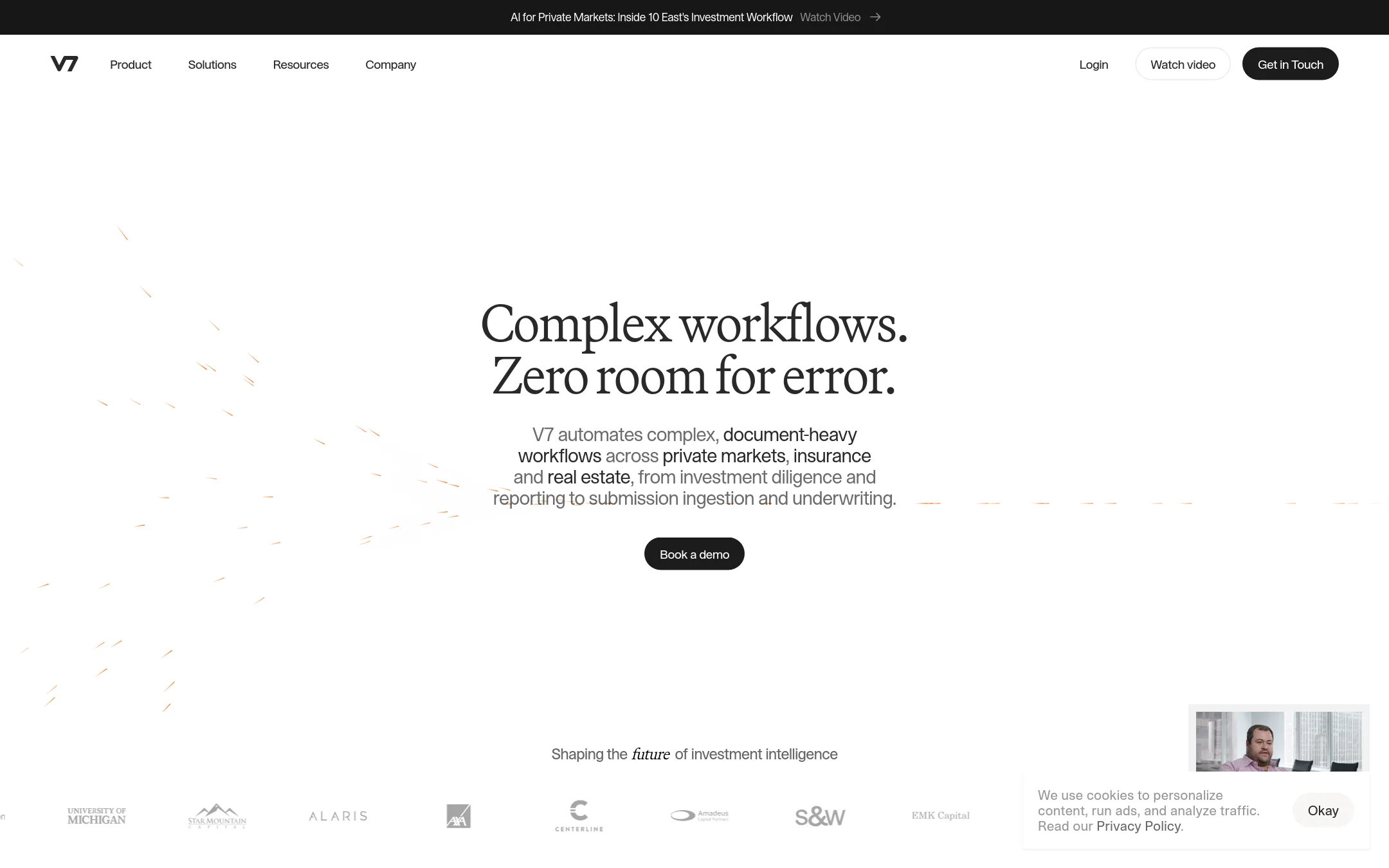
V7 Labs runs document-heavy business workflows for private markets, insurance and real estate, such as due diligence, underwriting and claims. Someone would pick it over Lightly when the job is reading and analysing deal documents or submissions, not curating image and video data for computer vision models.
Where it is strong
- Built for document-heavy work in private markets, insurance and real estate
- Offers a large library of pre-built agents for specific roles and tasks
- Every extracted figure is cited back to its source document
Where it falls short
- Focused on business document workflows, so it does not cover computer vision data curation or model training the way Lightly does
- No public price list, so budgeting needs a sales conversation
- Pricing:
- Pricing is not published on the site, and a custom annual quote is scoped in one call based on seats, workflows and pages processed.
- VFree tier. Team from q
5.Voxel51 FiftyOne
Best for: Physical AI and computer vision teams with video, point cloud, or sensor data that need per-sample failure analysis and on-premise or air-gapped deployment
- Pricing
- Free tier. Team from q
- Category
- Other
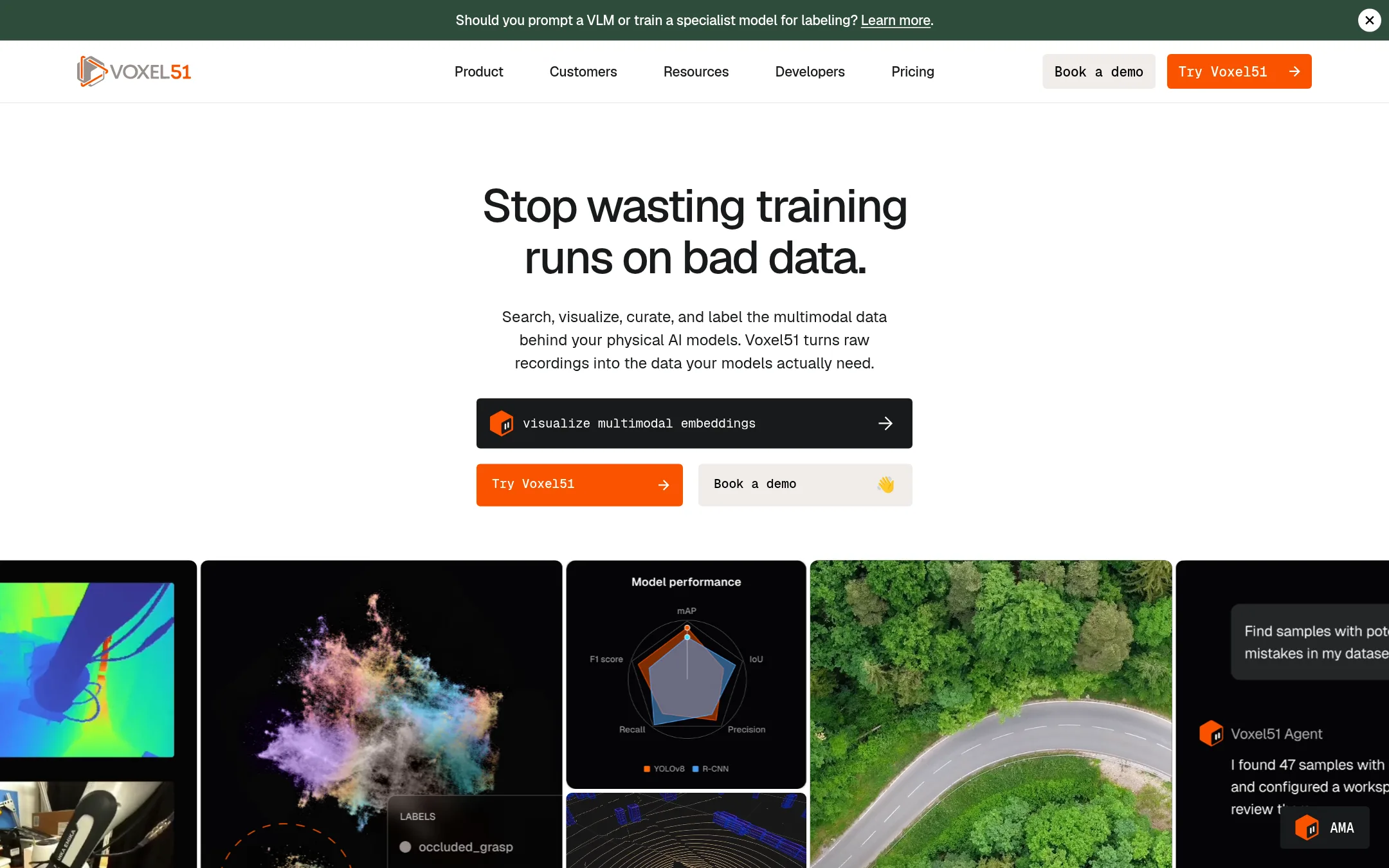
Voxel51 is a data-centric platform for finding where models fail on video, LiDAR, and other sensor data, then curating, labeling, and re-testing. Pick it over Lightly when your data is heavy on video, 3D, or sensor modalities, or when you need per-sample model evaluation and an agentic workflow layer alongside curation.
Where it is strong
- Supports video, 3D point clouds, DICOM, geospatial and MCAP sensor data alongside images.
- Sample-level model evaluation shows prediction against ground truth for each sample.
- Offers on-premise and air-gapped deployment for teams with strict data controls.
Where it falls short
- The free tier caps datasets at 10,000 samples and storage at 20GB, which is small for production work.
- Team and Enterprise prices are not published in the pricing text, so budgeting needs a sales conversation.
- Pricing:
- Voxel51 lists a Free tier with 3 datasets, 10,000 samples per dataset and 20GB of hosted storage, a Team plan starting at 8 user seats and 2,800 compute hours per month, and an Enterprise plan with on-premise or air-gapped options. Exact Team and Enterprise pr
- From $39/mo
6.Roboflow
Best for: Engineering and operations teams that need to take a vision model from labeled data to a deployed application on cameras or edge devices
- Pricing
- From $39/mo
- Category
- AI & Machine Learning
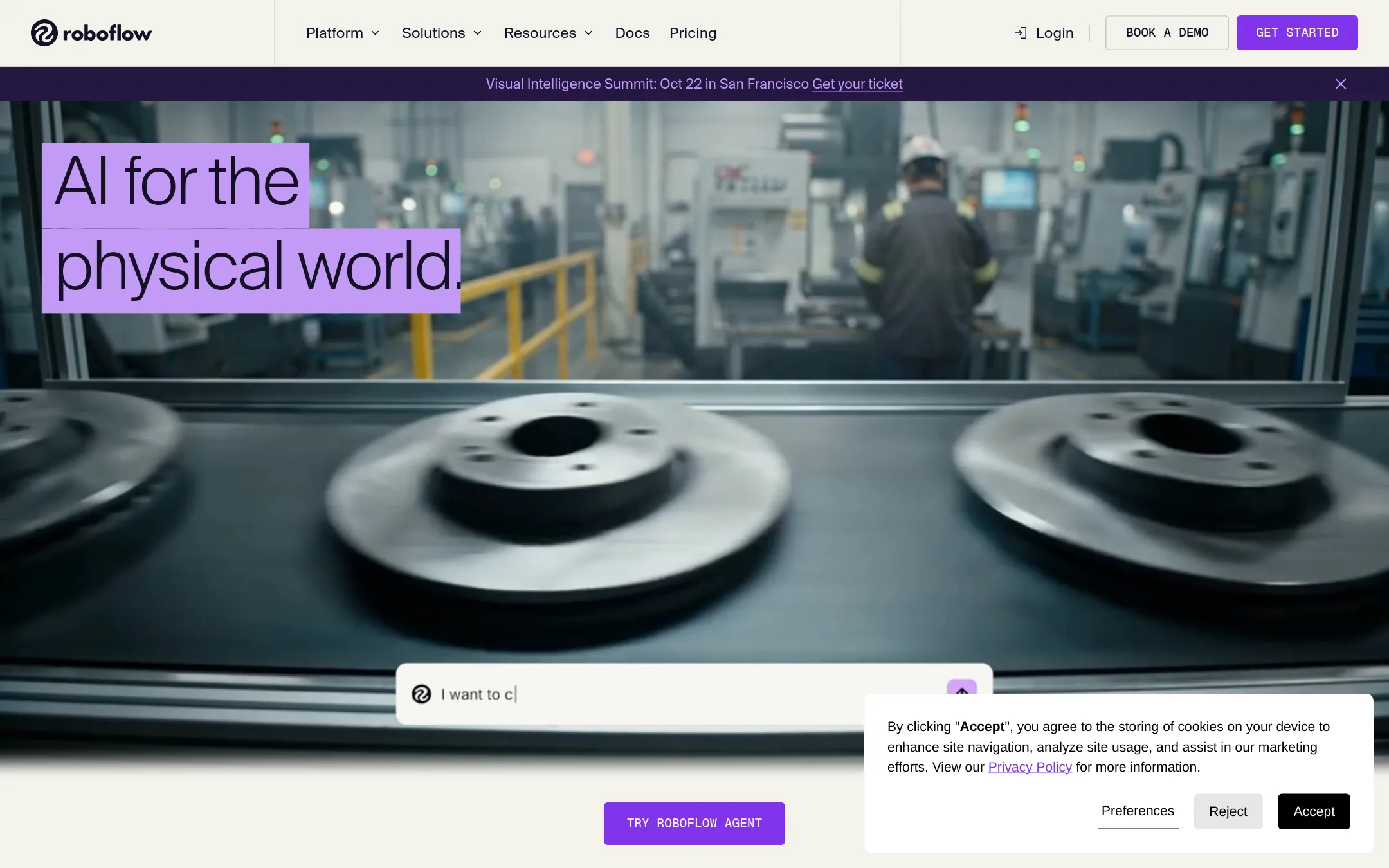
Roboflow is an end-to-end vision AI platform covering annotation, model training, workflows, and deployment to cloud, edge, or on-device hardware such as NVIDIA Jetson and Raspberry Pi. Choose it over Lightly when the goal is to get a vision application running in production, including edge inference and industrial integrations, rather than focusing mainly on curating and selecting data to label.
Where it is strong
- Covers the full path from annotation and training to deployment, including edge and on-device inference.
- Offers a free tier and open-source libraries such as supervision and inference that developers can use directly.
- Includes enterprise options such as on-premise installation, SSO-style role controls, and audit logs.
Where it falls short
- Pricing is credit-based, so costs grow with inference volume and are harder to predict than a flat seat fee.
- Its emphasis is on building and running vision applications, so data curation and sampling tools are less central than in Lightly.
- Pricing:
- Roboflow has a free tier with 10 credits a month, a Core plan at $39 per month, and custom-priced Enterprise plans, with cloud inference billed per image or per stream hour in credits.
- Not published
7.SuperAnnotate
Best for: Enterprises, frontier labs and AI startups that need expert annotators and multimodal evaluation data delivered alongside their platform.
- Pricing
- Not published
- Category
- AI & Machine Learning
SuperAnnotate is a data platform with expert annotation teams behind it. Teams pick it over Lightly when they need people to do the labeling and review, not just software to curate data. It covers text, image, video and audio, and has tooling for agent trajectories and evals.
Where it is strong
- Expert annotation teams and data collection services can be run inside the same platform.
- Covers text, image, video and audio, plus agentic and LLM evaluation workflows.
- Lists SOC 2 Type II and ISO 27001 certifications, with encryption end-to-end.
Where it falls short
- The focus is broader than computer vision, so teams with only image needs may find it heavier than Lightly.
- Lightly's embedding-based sample selection and in-app evaluation confusion matrix are not described on this site.
- Pricing:
- Pricing is not published on the site.
See more comparisons in AI & Machine Learning alternatives.
FAQ
Questions about Lightly alternatives
Which alternative is best if my data is mostly video or sensor data?
Voxel51 FiftyOne is built for finding model failures across video, LiDAR, point clouds and other sensor data, with per-sample evaluation. Its free tier caps datasets at 10,000 samples and storage at 20GB, so production use will likely need a paid plan, and Team and Enterprise prices are not published.
Which alternative should I choose if I want to deploy a model to edge devices?
Roboflow covers annotation, training and deployment to cloud, edge or on-device hardware such as NVIDIA Jetson and Raspberry Pi. It is priced in credits, with a free tier of 10 credits a month and a Core plan at $39 per month, so costs rise with inference volume.
Is there an alternative that handles both labeling and managed annotation workforces?
SuperAnnotate pairs its platform with expert annotation teams and data collection services, covering text, image, video and audio. Scale AI also offers managed data sourcing and expert annotation for large organisations. Neither publishes pricing, so cost needs a sales conversation.
Which options cover enterprise security and deployment requirements?
Encord manages multimodal physical AI data at petabyte scale and lists large enterprise customers. SuperAnnotate lists SOC 2 Type II and ISO 27001 certifications with end-to-end encryption. Voxel51 offers on-premise and air-gapped deployment for teams with strict data controls.
Are any of these alternatives aimed at non-vision use cases?
Yes. V7 Labs focuses on document-heavy workflows in private markets, insurance and real estate, such as due diligence and claims. Labelbox's Recursion product runs background agents for engineering and ML research tasks such as eval reruns. Neither is designed mainly for curating and labeling computer vision datasets.
Last updated November 7, 2026.