Lingo.dev alternatives
6 products compared · Updated November 12, 2026
The short answer
Lokalise suits product and marketing teams at larger companies that need a shared translation workflow with brand consistency across many markets. Phrase suits enterprise localization teams that manage human translators, vendors and several CMS or marketing platforms in one workflow. Smartling suits large enterprises in regulated industries that want managed translation programs with certified security.
Your shortlist, at a glance
Read the comparisons ↓- PPhraseCustom quoteEnterprise localization teams that manage human translators, vendors and multiple CMS or marketing platforms in one workflow
- LLokaliseNot publishedProduct and marketing teams at larger companies that need a shared translation workflow with brand consistency across many markets
- CCrowdinNot publishedProduct and marketing teams with mobile apps, games or large content libraries that need a managed translation workflow with vendors and integrations.
- SSmartlingNot publishedLarge enterprises in regulated industries like healthcare and finance that need managed translation programs with certified security
- TTransifexNot publishedProduct and localization teams that want one hosted hub for translators, reviewers and developers, with AI translation and human review in the same workflow.
- WWeblateNot publishedOpen source projects and privacy-minded teams that want to self-host their localization platform and keep translators tied to their repository.
About Lingo.dev and its alternatives
Lingo.dev is an open-source, AI-powered localization toolkit. According to its site, it is known for auditing translation quality against a team's own scorecard, checking meaning changes, glossary terms and brand voice, and running those checks from code, CLI, CI/CD, or MCP.
When comparing alternatives in this category, weigh the pricing structure first, since some vendors publish plans and others require a sales quote. Check which regions and data residency options are offered, which integrations connect to your existing repositories, CMSs and support tools, what support levels come with each tier, and what the contract terms are, including annual commitments and certifications your buyers may require.
Explore the alternatives
- PCustom quote
1.Phrase
Best for: Enterprise localization teams that manage human translators, vendors and multiple CMS or marketing platforms in one workflow
- Pricing
- Custom quote
- Category
- Other
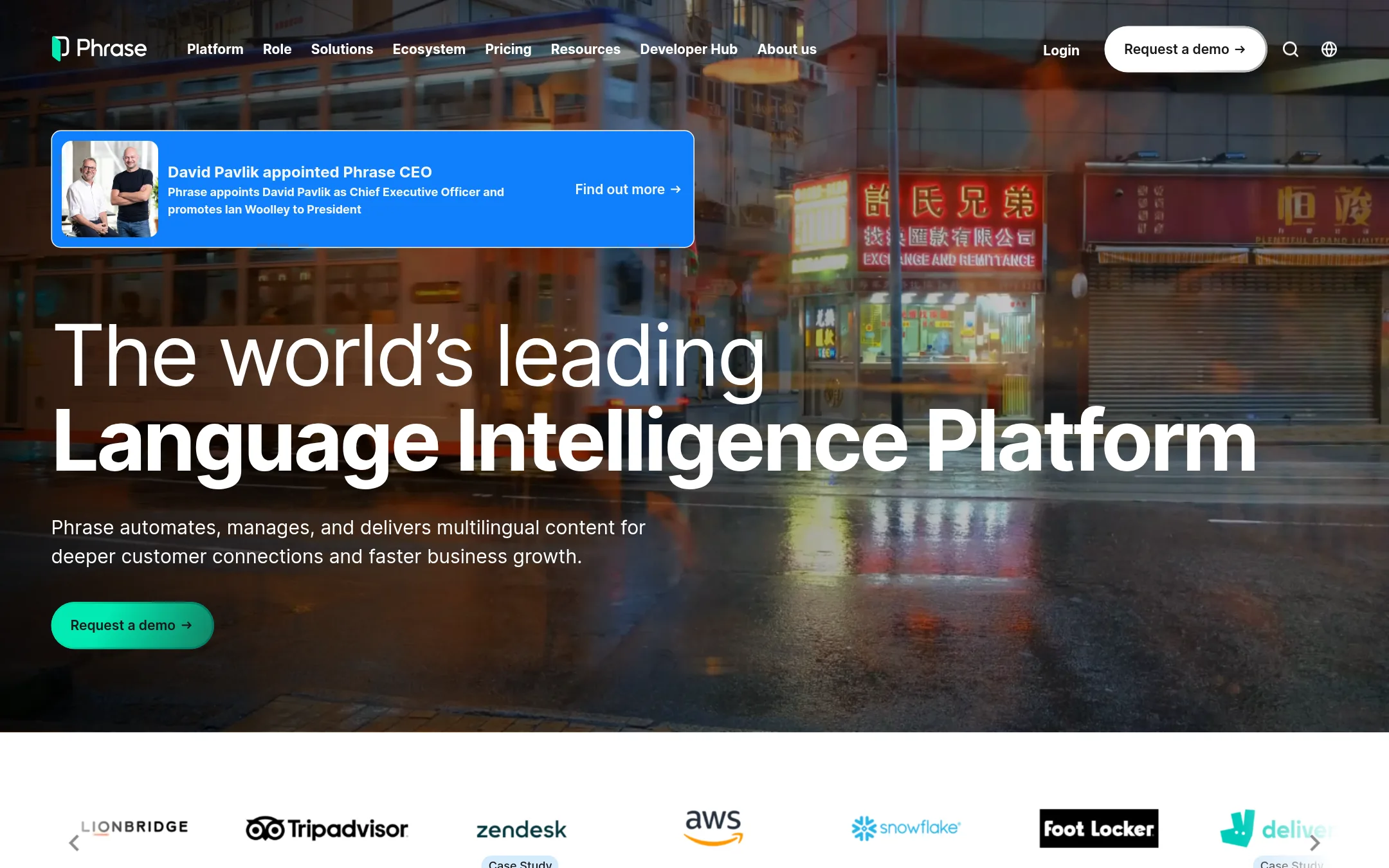
Phrase is an enterprise localization platform that runs translation workflows, translation memories, glossaries and AI machine translation in one system. Teams pick it over Lingo.dev when they need a full translation management system with mature CAT tools, a large catalogue of CMS and marketing integrations, and vendor management for human translators.
Where it is strong
- Covers translation memory, terminology, pre-translation and manual LQA in one TMS
- Large catalogue of integrations, including Contentful, Adobe Experience Manager, Sanity and Salesforce
- Dedicated onboarding, workflow reviews and 24/7 support on every plan
Where it falls short
- Its emphasis is on enterprise translation operations, so it is heavier than a developer-first i18n toolkit
- Several key capabilities such as SSO, Adobe Experience Manager and Contentful sit in higher tiers
- Pricing:
- Pricing is published in USD, EUR, GBP and CZK, with a Team plan, a Business plan at 150 Strings seats, and an Enterprise plan with custom capacity and a 14-day free trial.
- LNot published
2.Lokalise
Best for: Product and marketing teams at larger companies that need a shared translation workflow with brand consistency across many markets
- Pricing
- Not published
- Category
- Other
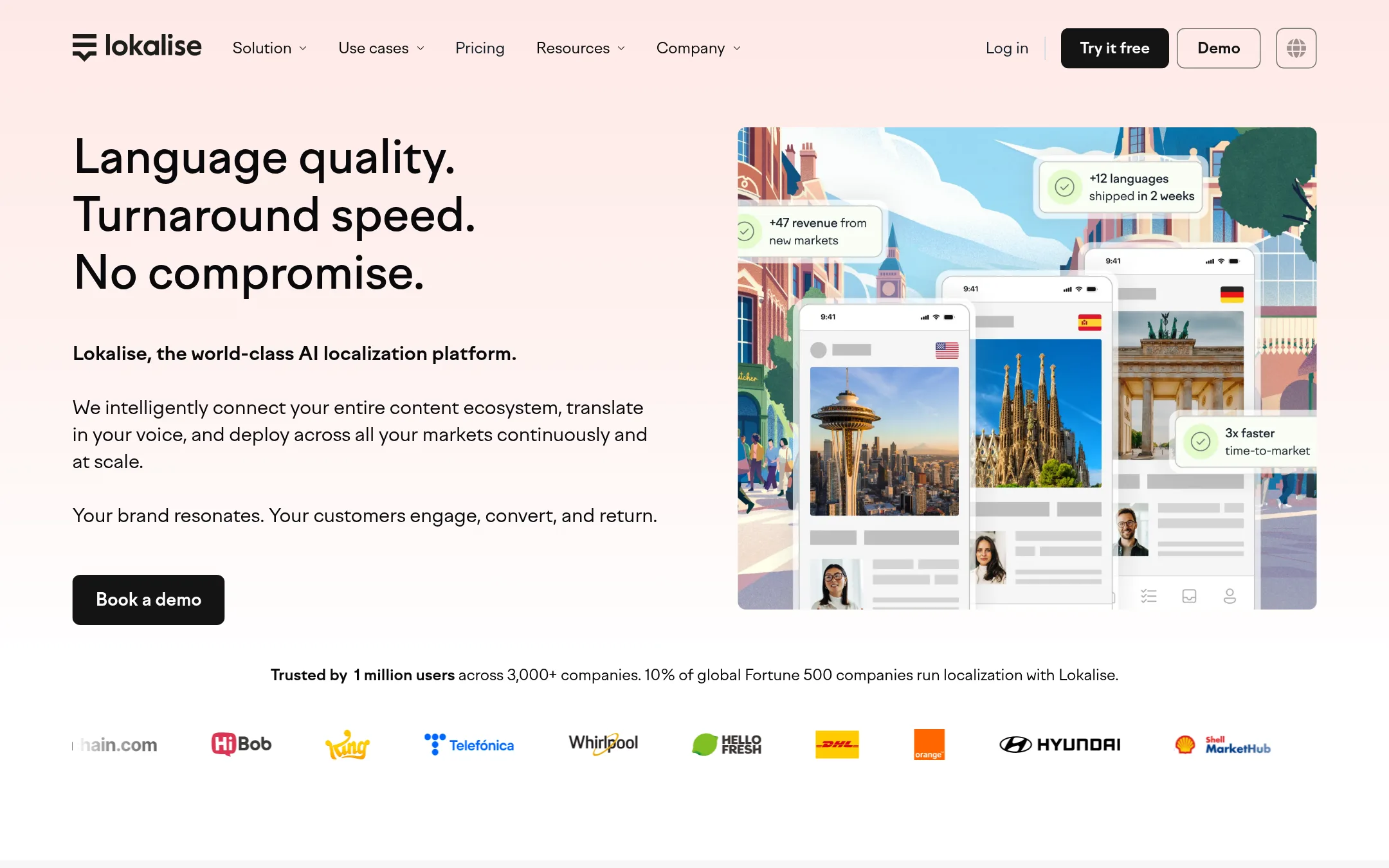
Lokalise is a localization platform for teams that want translation management, review, and release workflows in one system. It connects to developer tools, CMSs, and email platforms, and it applies approved terminology and brand voice to AI translations. Teams would pick it over Lingo.dev when the work is mostly about running translation production and approvals across marketing, product, and engineering, rather than auditing translation quality in code.
Where it is strong
- Connects to developer tools, CMSs, and email platforms, with 60+ integrations listed
- Applies approved terminology and tone of voice to AI translations
- Holds SOC 2 Type II, ISO 27001, and ISO 27017 certifications, with EU data hosting
Where it falls short
- Its quality checks are built around its own workflow, not a per-commit audit of translated strings
- Some enterprise features such as SAML SSO and detailed audit log export are listed as Enterprise-plan items
- Pricing:
- Pricing is not published on the site.
- CNot published
3.Crowdin
Best for: Product and marketing teams with mobile apps, games or large content libraries that need a managed translation workflow with vendors and integrations.
- Pricing
- Not published
- Category
- Other
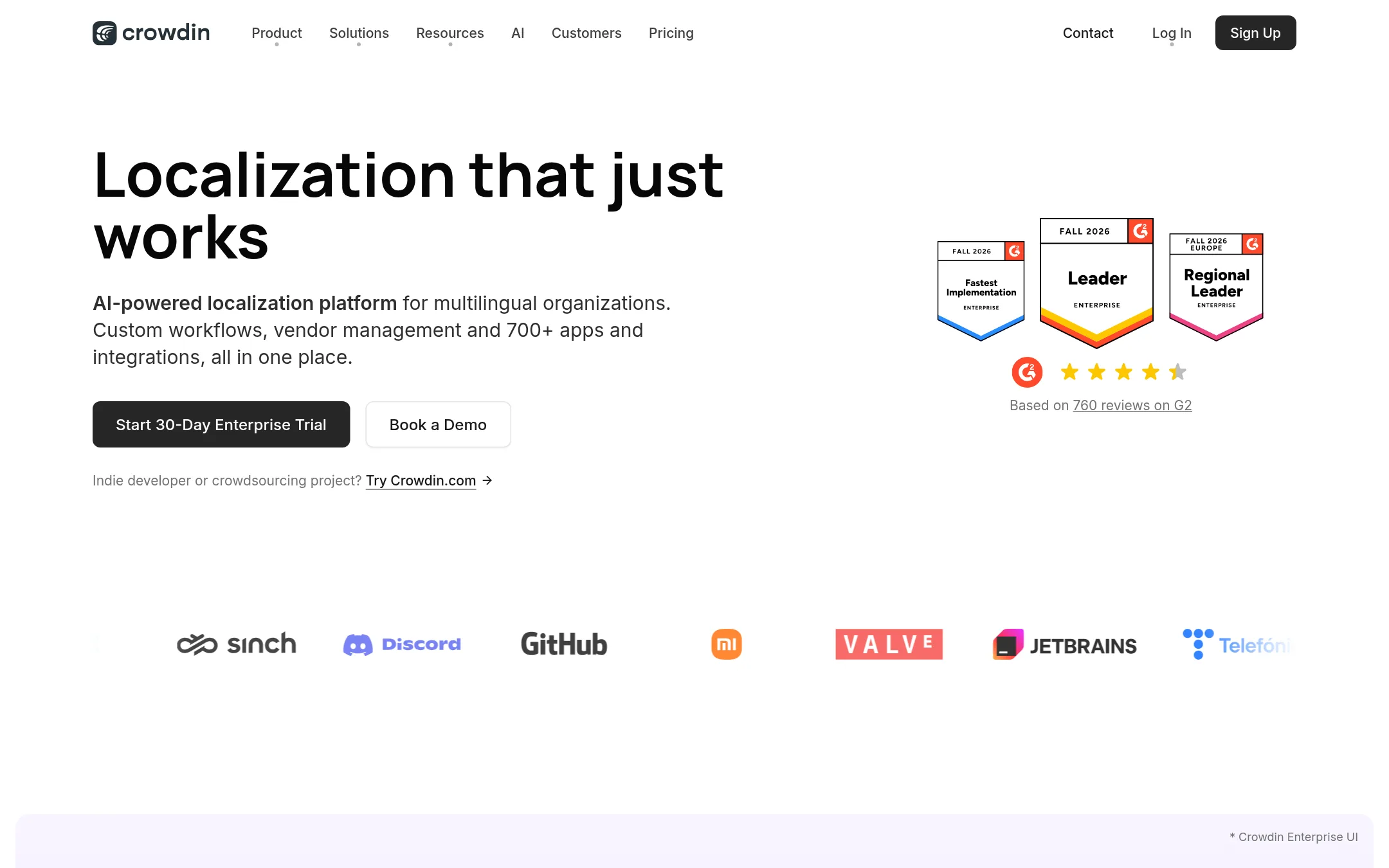
Crowdin is a localization and translation management platform that covers software, mobile, websites, games, marketing and documentation. Teams choose it over Lingo.dev when they need a mature workflow with vendor management, professional translation services, and 700+ integrations, especially for mobile app and game localization. Its pricing page also covers add-ons such as managed machine translation and professional services.
Where it is strong
- Built-in support for mobile, web, game and documentation content types
- Git, Figma, CMS and marketing tool integrations listed on the site
- Managed add-ons for professional translation and machine translation
Where it falls short
- Its platform focus is translation workflow management rather than the AI quality audit and LLM model routing that Lingo.dev centers on
- Pricing figures are not shown on the pricing page, so costs need a direct quote
- Pricing:
- Pricing is not published on the site.
- SNot published
4.Smartling
Best for: Large enterprises in regulated industries like healthcare and finance that need managed translation programs with certified security
- Pricing
- Not published
- Category
- Other
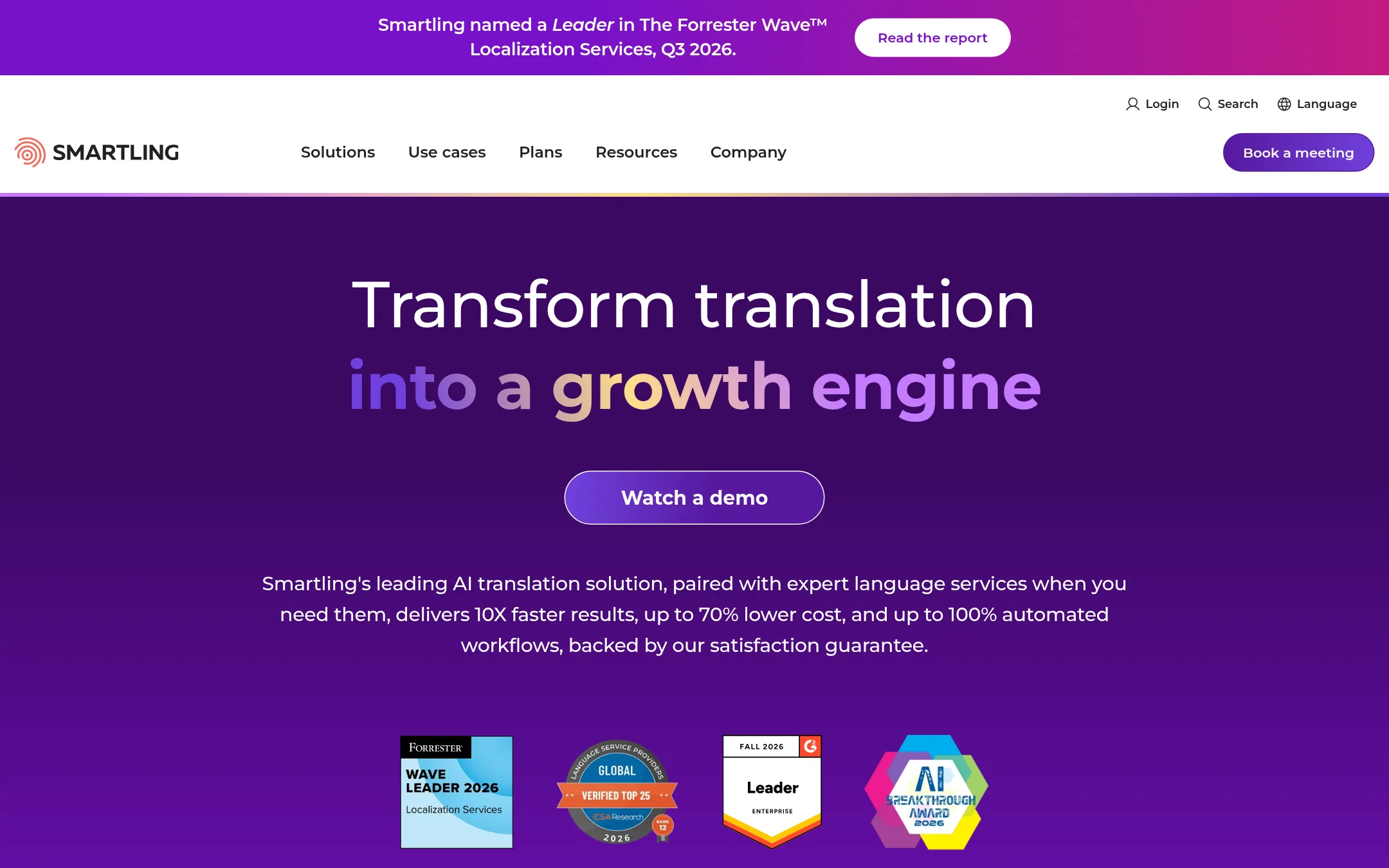
Smartling is an enterprise translation management platform that connects to CMSs, code repositories, marketing tools and support systems, and automates much of the translation workflow. Teams pick it over Lingo.dev when they need full translation operations, including managed linguist networks, professional services, and certifications like HITRUST, HIPAA and ISO 17100. Lingo.dev is built around AI quality auditing and developer-facing localization, so Smartling suits organizations that want people and process handled for them.
Where it is strong
- Over 50 pre-built integrations with CMSs, CRMs, marketing tools and code repositories
- Holds SOC 2 Type II, HITRUST, HIPAA, PCI DSS Level 1 and ISO 17100 certifications
- Includes managed services, professional services and access to a vetted network of linguists
Where it falls short
- Pricing is not published, so budgeting requires a sales conversation
- Smartling's services model means a heavier setup than a developer-first toolkit like Lingo.dev
- Pricing:
- Pricing is not published on the site. Plans are listed as Core and Enterprise tiers, with the Enterprise tier offering the full feature set and custom quotes.
- TNot published
5.Transifex
Best for: Product and localization teams that want one hosted hub for translators, reviewers and developers, with AI translation and human review in the same workflow.
- Pricing
- Not published
- Category
- Other
Transifex is a translation management platform for product, marketing, and localization teams. It covers continuous localization, translation QA, and CI/CD and CMS connectors, with AI translation and a quality index that routes lower-scoring translations to human reviewers. Teams would pick it over Lingo.dev if they want a full TMS with reviewer workflows, glossaries and a broad integration catalog rather than an open-source, code-first toolkit.
Where it is strong
- Large connector catalog, including GitHub, GitLab, Bitbucket, Jira, Contentful, Shopify and Figma
- Translation Quality Index scores each AI translation and routes weak ones to reviewers
- Covers translators, reviewers and developers in one shared workspace
Where it falls short
- Pricing is not published, so budgeting requires a sales conversation
- Its core is a hosted TMS rather than an open-source toolkit, so it suits teams less keen on self-hosting or code-level control
- Pricing:
- Pricing is not published on the site.
- WNot published
6.Weblate
Best for: Open source projects and privacy-minded teams that want to self-host their localization platform and keep translators tied to their repository.
- Pricing
- Not published
- Category
- Other
Weblate is an open source localization platform that connects to your code repository and keeps translators close to the development workflow. Teams pick it over Lingo.dev when they want to self-host, keep their content off a vendor's servers, or inspect and modify the software their localization depends on.
Where it is strong
- Free to use, inspect, modify, and share, with the option to self-host
- Connects directly to your repository and keeps translations flowing back to code
- Supports translation with or without AI and machine translation, with people choosing when results are accepted
Where it falls short
- Its homepage describes glossaries and quality checks but does not list the LLM benchmarking, scorecard auditing, or brand voice rules that L
- Hosted plans are described by string volume, and no prices are shown on the page
- Pricing:
- Pricing is not published on the site.
See more comparisons in Developer Tools alternatives.
FAQ
Questions about Lingo.dev alternatives
Which alternative is best for a team that mainly needs a managed translation workflow?
Lokalise and Transifex both offer a hosted workflow for translators, reviewers and developers in one place. Smartling goes further and includes managed services and a vetted network of linguists for teams that want people and process handled for them.
Which options publish their pricing?
Phrase publishes its pricing in several currencies, with a Team plan, a Business plan and a custom Enterprise plan. Lokalise, Crowdin, Smartling, Transifex and Weblate do not publish pricing on their sites, so costs need a direct quote.
Which alternative can be self-hosted?
Weblate is an open source localization platform that can be self-hosted, so content stays off a vendor's servers. Its hosted plans are described by string volume, and no prices are shown on the page.
Which alternatives hold enterprise security certifications?
Lokalise lists SOC 2 Type II, ISO 27001 and ISO 27017 certifications with EU data hosting. Smartling lists SOC 2 Type II, HITRUST, HIPAA, PCI DSS Level 1 and ISO 17100 certifications.
How does Lingo.dev differ from these alternatives?
According to its site, Lingo.dev centers on auditing translation quality with LLM benchmarking, scorecard-based checks and per-model cost reporting, all callable from code. Most of the alternatives listed here focus on running translation workflows and managing linguists, so the right choice depends on whether a team needs quality auditing in its development pipeline or a full translation operation.
Last updated November 12, 2026.