
Lumen Payments alternatives
6 products compared · Updated November 4, 2026
The short answer
Stripe is the strongest alternative for teams that need a global payments processor with flexible billing models and extensive integrations. Adyen suits large enterprises and marketplaces needing a single platform for global payments and embedded financial products. Chargebee is best for SaaS and AI companies scaling past $100k ARR that need a complete billing and revenue operations platform.
Your shortlist, at a glance
Read the comparisons ↓ StripeFrom 1.5% + 1.00 leiTeams that need a global payments processor with flexible billing models, in-person and online payments, and extensive third-party integrations.
 Paddle5% + 50¢ per transactiSaaS and digital product businesses selling globally that want to avoid managing sales tax, VAT, and payment compliance themselves.
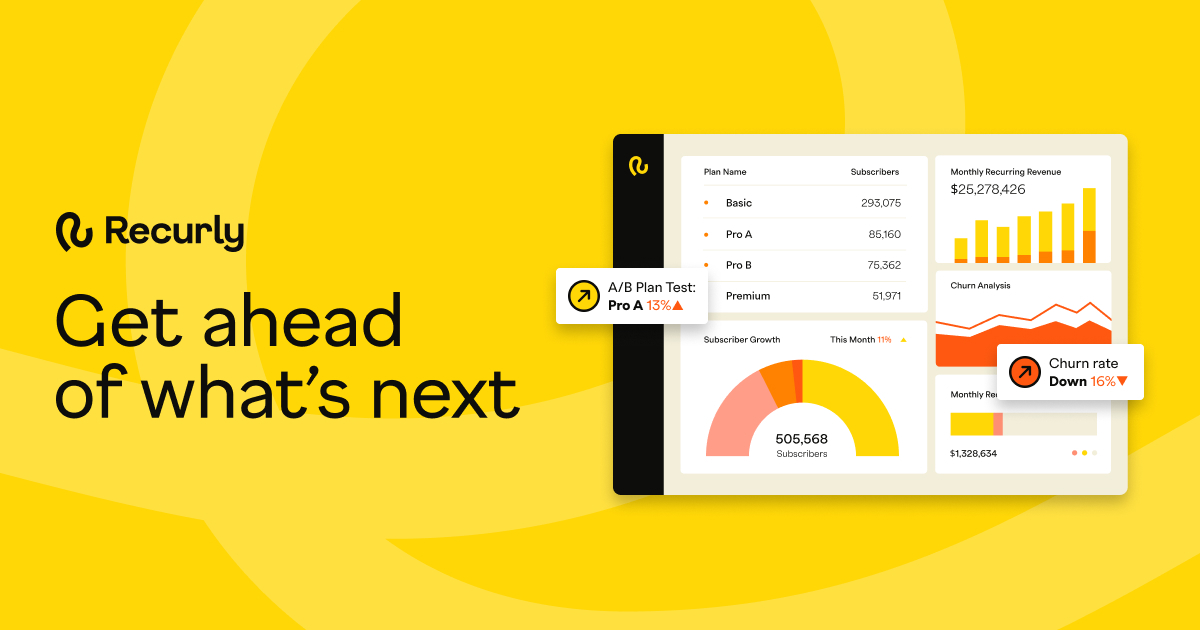 RecurlyFrom $249/mo + 0.9%Subscription businesses with high transaction volumes that need advanced retention tools and revenue recognition.
 ChargebeeNot publishedSaaS and AI companies scaling past $100k ARR that need a complete billing, invoicing, and revenue operations platform with global payment coverage.
 BraintreeNot publishedOnline businesses that need a global payment processor with PayPal, Venmo, and local payment methods out of the box.
 AdyenFrom 1% + €0.12Large enterprises and marketplaces that need a single platform for global payments, payouts, and embedded financial products.
About Lumen Payments and its alternatives
Lumen Payments is a developer-first billing layer that handles usage tracking, credit systems, and feature entitlements. It integrates with Stripe and other providers, and its site emphasizes fast setup, real-time usage tracking, and no state management on your side.
When comparing alternatives, weigh pricing structure (per-transaction vs. monthly fees), geographic coverage, built-in billing features like dunning or revenue recognition, integration depth, and support SLAs. Also consider whether you need a merchant of record to handle tax compliance or prefer to keep billing logic in-house.
Explore the alternatives
- From 1.5% + 1.00 lei
1.Stripe
Best for: Teams that need a global payments processor with flexible billing models, in-person and online payments, and extensive third-party integrations.

- Pricing
- From 1.5% + 1.00 lei
- Category
- Finance & Accounting
Stripe is a full payments platform for accepting payments, managing subscriptions, and handling money movement at global scale. Choose it over Lumen Payments when you need a mature, widely adopted processor with extensive documentation and integrations, rather than a lightweight billing layer focused on usage tracking and entitlements.
Where it is strong
- Processes payments in 135+ currencies and supports 100+ payment methods.
- Handles subscriptions, invoices, and complex billing models out of the box.
- Offers pre-built UI components and no-code tools for quick setup.
Where it falls short
- Pricing is per-transaction and can add up for high-volume businesses.
- No built-in usage tracking or entitlement checks like Lumen provides.
- Pricing:
- Standard pricing is 1.5% + 1.00 lei for standard European Economic Area cards, 2.5% + 1.00 lei for UK cards, with custom pricing available for larger volumes.
- Switching from Lumen Payments:
- Moving from Lumen Payments to Stripe means rebuilding your billing logic and integrating Stripe's APIs directly, since Lumen's usage tracking and entitlement features are not part of Stripe's core product.
- 5% + 50¢ per transacti
2.Paddle
Best for: SaaS and digital product businesses selling globally that want to avoid managing sales tax, VAT, and payment compliance themselves.

- Pricing
- 5% + 50¢ per transacti
- Category
- Finance & Accounting
Paddle acts as a merchant of record, handling payments, tax, and compliance across 300+ markets. Choose it if you want to offload global tax and regulatory burden entirely, rather than building billing logic yourself. It's a full revenue platform, not just a billing layer.
Where it is strong
- Merchant of record handles global tax and compliance for you
- All-inclusive pricing with no monthly fees or hidden costs
- Built-in fraud protection, chargebacks, and buyer support
Where it falls short
- Higher transaction fee than some alternatives (5% + 50¢)
- Less control over billing logic compared to a self-built system
- Pricing:
- Pay-as-you-go is 5% + 50¢ per Checkout transaction, with custom pricing for high-volume businesses.
- Switching from Lumen Payments:
- Moving from Lumen Payments means migrating your subscription data and integrating Paddle's checkout, but Paddle offers migration support to avoid putting subscribers at risk.
- From $249/mo + 0.9%
3.Recurly
Best for: Subscription businesses with high transaction volumes that need advanced retention tools and revenue recognition.
- Pricing
- From $249/mo + 0.9%
- Category
- Finance & Accounting
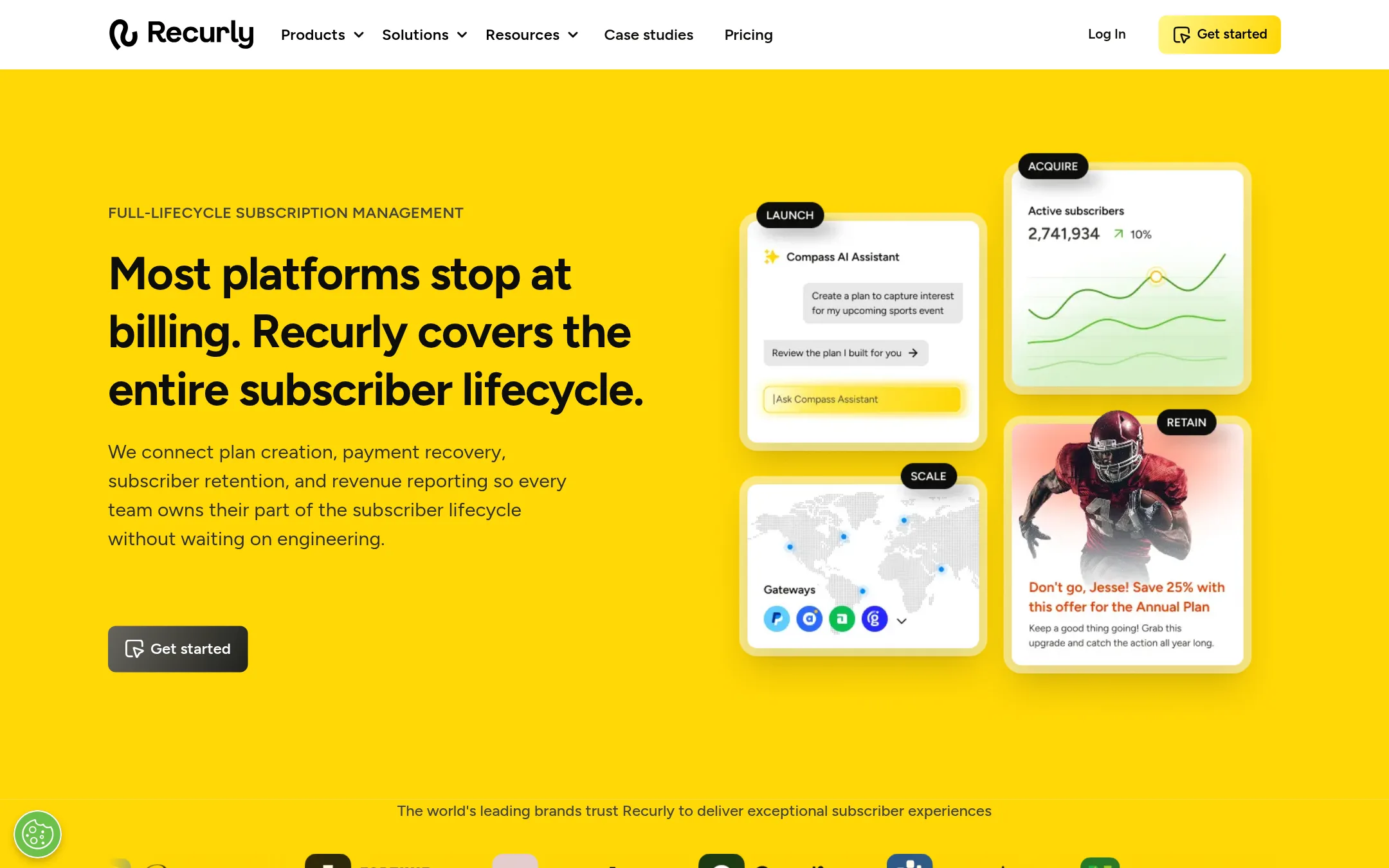
Recurly is a full-lifecycle subscription management platform that handles billing, payment recovery, and churn analytics for high-volume digital commerce. Choose it over Lumen Payments if you need enterprise-grade subscription billing with dunning, revenue recognition, and multi-gateway payment orchestration, rather than a developer-first billing component.
Where it is strong
- Full subscriber lifecycle management including dunning and churn prediction
- Payment orchestration across multiple gateways with real-time failover
- No-code plan setup and self-service subscriber management
Where it falls short
- Pricing is not transparent for enterprise plans. Requires contacting sales
- Heavier and more complex than Lumen's lightweight developer-focused approach
- Pricing:
- Starter plan is $249 per month plus 0.9% of billing volume. Engage starts at $1,600 per month billed annually. RevRec is $850 per month billed annually.
- Switching from Lumen Payments:
- Moving from Lumen Payments to Recurly involves rearchitecting your billing integration, as Recurly is a standalone platform rather than a component that embeds into your existing stack.
- Not published
4.Chargebee
Best for: SaaS and AI companies scaling past $100k ARR that need a complete billing, invoicing, and revenue operations platform with global payment coverage.
- Pricing
- Not published
- Category
- Finance & Accounting
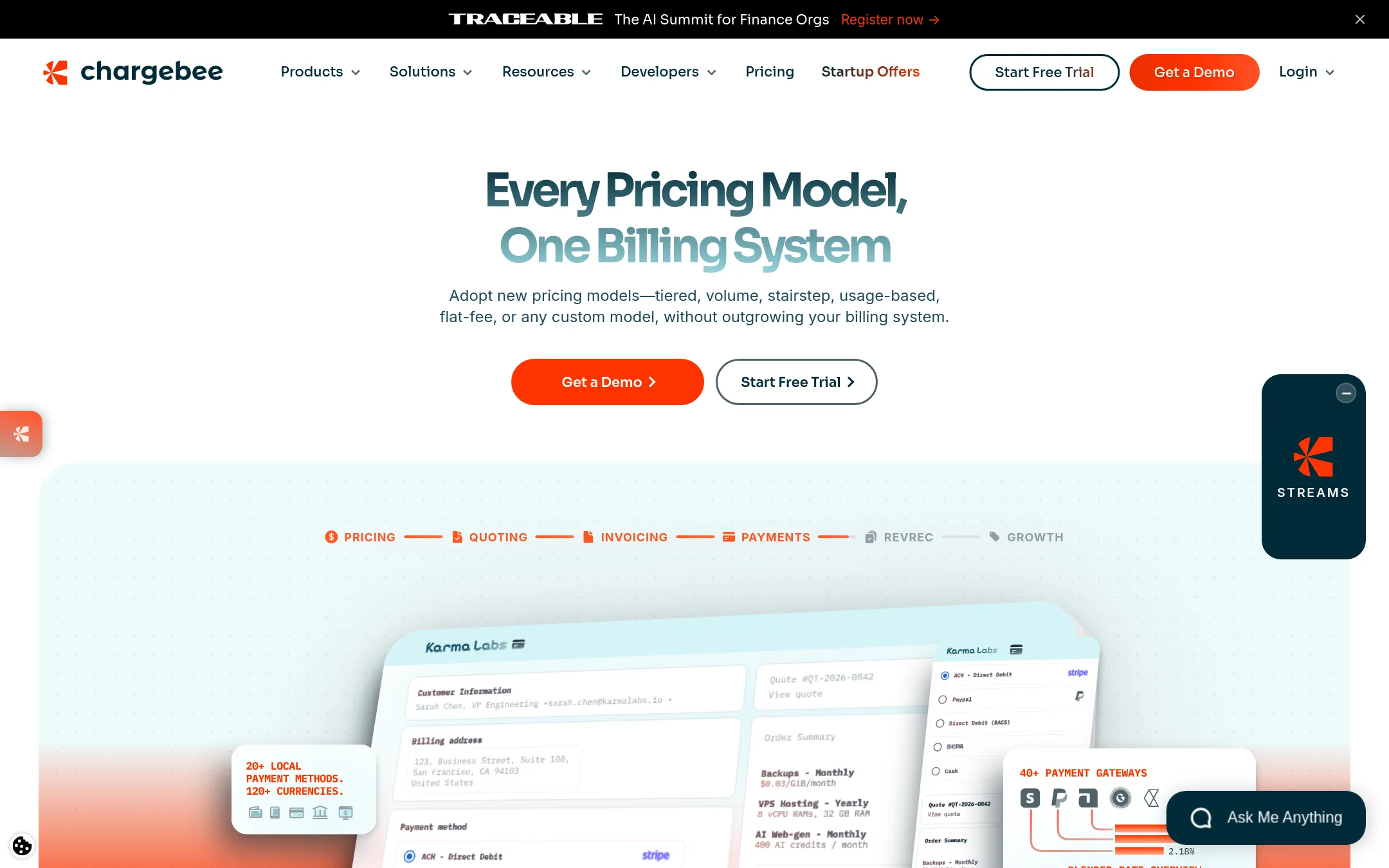
Chargebee is a full billing and revenue platform for SaaS and AI companies that need to handle complex pricing models, global payments, and revenue operations at scale. Choose it over Lumen Payments when you need enterprise-grade billing infrastructure with deep integrations, dunning, and revenue recognition, rather than a lightweight developer-first billing layer.
Where it is strong
- Supports every pricing model: subscription, usage-based, credits, and hybrid.
- Global payments: 40+ gateways, 50+ payment methods, 100+ currencies, 150+ countries.
- Built-in revenue recognition, dunning, and receivables for finance teams.
Where it falls short
- Pricing is not transparent. Requires contacting sales.
- Heavier and more complex than Lumen's developer-first setup, likely overkill for early-stage startups.
- Pricing:
- Pricing is not published on the site.
- Switching from Lumen Payments:
- Moving from Lumen Payments to Chargebee means migrating your subscription and usage data, re-integrating your billing logic, and adopting a more enterprise-oriented workflow.
- Not published
5.Braintree
Best for: Online businesses that need a global payment processor with PayPal, Venmo, and local payment methods out of the box.
- Pricing
- Not published
- Category
- Finance & Accounting
Braintree is a full payment processor for online businesses, handling cards, wallets, and local methods globally. Choose it over Lumen Payments if you need a direct merchant account and broad payment method coverage rather than a billing layer on top of Stripe.
Where it is strong
- Supports PayPal, Venmo, Apple Pay, Google Pay, and local methods
- Payouts to 200+ markets in 50+ currencies
- Level 1 PCI DSS compliant with sandbox for testing
Where it falls short
- Requires merchant account approval before going live
- No built-in usage tracking or entitlement management like Lumen
- Pricing:
- Pricing is not published on the site.
- From 1% + €0.12
6.Adyen
Best for: Large enterprises and marketplaces that need a single platform for global payments, payouts, and embedded financial products.

- Pricing
- From 1% + €0.12
- Category
- Finance & Accounting
Adyen is a full enterprise fintech platform for payments, data, and financial products, not a billing layer for SaaS features. Choose it when you need global payment processing, local payment methods, and embedded financial services at scale, and you're willing to handle billing logic yourself.
Where it is strong
- Global reach with 150+ currencies and 200+ local payment methods.
- Interchange++ pricing passes interchange fees directly to you for transparency.
- One API supports payments, payouts, and embedded financial products.
Where it falls short
- No built-in usage tracking or entitlement checks. You'd need to build billing logic separately.
- Pricing varies by industry and region, and some business models are not eligible.
- Pricing:
- Adyen charges per transaction with no setup or monthly fees. For physical goods it's 1% (min €0.12) and for digital goods 2% (min €0.12), with additional rates up to 3% for gaming, gambling, travel, and financial services.
- Switching from Lumen Payments:
- Moving from Lumen Payments to Adyen means replacing the billing and entitlement layer with your own subscription and usage logic, since Adyen focuses on payment processing rather than SaaS billing.
See more comparisons in E-commerce alternatives.
FAQ
Questions about Lumen Payments alternatives
What is the main difference between Lumen Payments and Stripe?
Lumen is a billing layer that adds usage tracking, credits, and feature gates on top of a payment processor like Stripe. Stripe is the underlying processor that handles actual money movement, subscriptions, and invoices. If you need entitlement checks and usage-based billing, Lumen provides that out of the box, while Stripe requires you to build it yourself.
Which alternative is best for a startup with under $100k ARR?
Stripe is a strong choice because it has a transparent per-transaction pricing model and extensive documentation, making it easy to start. Paddle is also viable if you want to offload tax compliance, but its 5% + 50¢ fee is higher. Chargebee may be overkill at that stage since its pricing is not transparent and it targets larger companies.
Do any of these alternatives handle sales tax and VAT automatically?
Paddle acts as a merchant of record and handles global tax and compliance across 300+ markets, so you don't have to manage sales tax or VAT yourself. Lumen includes global tax calculation and invoice generation, but it is not a merchant of record. Stripe and Adyen offer tax services but you remain responsible for compliance.
Which alternative is best for a marketplace with global payouts?
Adyen is built for large enterprises and marketplaces, supporting 150+ currencies and 200+ local payment methods, plus embedded financial products. Braintree also supports payouts to 200+ markets in 50+ currencies and includes PayPal and Venmo. Both require merchant account approval before going live.
Are there alternatives with transparent pricing?
Stripe publishes per-transaction rates, and Adyen lists per-transaction fees with no setup or monthly fees. Paddle has a clear pay-as-you-go rate of 5% + 50¢ per Checkout transaction. Recurly publishes its Starter plan at $249 per month plus 0.9% of billing volume, but enterprise plans require contacting sales. Chargebee and Braintree do not publish pricing.
Last updated November 4, 2026.