
Medplum alternatives
12 products compared · Updated November 3, 2026
The short answer
For most buyers, the strongest alternatives to Medplum are Epic for large hospitals needing a full EHR, HAPI FHIR for Java teams that want a self-hosted FHIR server, and Smile CDR for enterprises needing a production-grade FHIR platform with certifications. OpenMRS suits low-resource clinics that need a free, customizable EMR. Choose based on your organization's size, technical capacity, and need for managed services.
Your shortlist, at a glance
Read the comparisons ↓ Argo CDNot publishedPlatform teams running Kubernetes who want GitOps-based continuous delivery with a UI.
- HHAPI FHIRNot publishedJava-based engineering teams that want full control over a self-hosted FHIR server and are comfortable managing their own infrastructure.
- IInterSystems HealthShareNot publishedLarge healthcare organizations and health information exchanges that need enterprise-grade data aggregation, identity resolution, and interoperability across multiple systems.
- CCernerNot publishedLarge hospitals and health systems that need a traditional enterprise EHR with deep clinical workflow support.
 EpicNot publishedLarge hospitals and health systems that need a full EHR with deep clinical workflows and national scale.
- RRecordBookNot publishedSmall businesses and operators who need a simple, mobile-friendly database app and do not require healthcare compliance or FHIR support.
Microsoft Azure CycleCloudPay-as-you-goResearch teams and enterprises running high-performance computing workloads on Azure that need cluster management, not healthcare data.
 Amazon BusinessNot publishedOrganizations that need to manage purchasing of business supplies with approval controls and spend reporting, rather than healthcare data infrastructure.
- FFirely ServerSee websiteOther
- SSmile CDRNot publishedHealth systems, payers, and government programs that need a production-grade FHIR platform with validated digital quality measures and high throughput.
- OOpenMRSNot publishedPublic health programs and clinics in developing regions that need a free, community-supported EMR they can customize for local diseases and languages.
- OOnaFrom $199/moField teams and NGOs that need offline mobile surveys with GPS, photos, and real-time data visualization.
About Medplum and its alternatives
Medplum is an API-first, open-source electronic health record (EHR) platform built on FHIR standards. It is known for its developer-friendly approach, automation-ready workflows, and compliance certifications like SOC 2 and HITRUST, with pricing starting at $2,000 per month for production use.
When comparing alternatives, weigh pricing structure, since many vendors do not publish costs. Consider your region and hosting needs, as some tools are cloud-only or require self-hosting. Check integrations for labs, e-prescribing, and billing. Evaluate support options and contract terms, especially for enterprise agreements.
Explore the alternatives
- Not published
1.Argo CD
Best for: Platform teams running Kubernetes who want GitOps-based continuous delivery with a UI.
- Pricing
- Not published
- Category
- Developer Tools
Argo CD is an open source Kubernetes GitOps tool that automates application deployment from Git repositories. Choose it when you need declarative continuous delivery for Kubernetes and are not building a healthcare application.
Where it is strong
- Declarative GitOps keeps deployments reproducible and auditable.
- Fully-loaded UI for managing applications and clusters.
- Open source with a large community and corporate maintainers.
Where it falls short
- No healthcare-specific features like FHIR or compliance certifications.
- Requires Kubernetes expertise to operate effectively.
- Pricing:
- Pricing is not published on the site.
- HNot published
2.HAPI FHIR
Best for: Java-based engineering teams that want full control over a self-hosted FHIR server and are comfortable managing their own infrastructure.
- Pricing
- Not published
- Category
- Other
HAPI FHIR is an open-source Java library and clinical data repository that implements the FHIR standard. You would choose it instead of Medplum when you need a self-hosted, embeddable FHIR server and have the engineering capacity to build and operate your own healthcare application around it.
Where it is strong
- Open source under Apache 2.0 license, free to use.
- Complete implementation of FHIR in Java, with support for multiple FHIR versions.
- Active community and long history of 23 years of development.
Where it falls short
- No managed hosting or support plans, you run it yourself.
- Lacks built-in healthcare integrations like e-prescribing, labs, or billing that Medplum offers.
- Pricing:
- Pricing is not published on the site.
- Switching from Medplum:
- Moving from Medplum to HAPI FHIR means rebuilding your application's backend, since HAPI FHIR provides only the FHIR API and data repository, not the broader platform features.
- INot published
3.InterSystems HealthShare
Best for: Large healthcare organizations and health information exchanges that need enterprise-grade data aggregation, identity resolution, and interoperability across multiple systems.
- Pricing
- Not published
- Category
- Other
InterSystems HealthShare is a suite of healthcare data management and interoperability solutions built on the IRIS data platform. It is a good choice for large health systems, payers, and governments that need to aggregate patient data from many sources and support complex integration projects, rather than building on an open-source EHR platform like Medplum.
Where it is strong
- Strong FHIR and HL7 support for interoperability
- Includes EMPI for patient identity resolution
- Scalable data platform for mission-critical workloads
Where it falls short
- Pricing is not transparent. Likely enterprise-only
- More complex to deploy and manage than Medplum's hosted service
- Pricing:
- Pricing is not published on the site.
- Switching from Medplum:
- Moving from Medplum to InterSystems HealthShare would involve re-architecting your data layer and integration workflows, as HealthShare is a different platform with its own data model and tooling.
- CNot published
4.Cerner
Best for: Large hospitals and health systems that need a traditional enterprise EHR with deep clinical workflow support.

- Pricing
- Not published
- Category
- Healthcare
Cerner is a large enterprise EHR vendor that sells integrated clinical and financial systems to hospitals and health systems. You would choose it over Medplum if you need a full legacy EHR with decades of deployment history and are not looking for an open-source, API-first platform.
Where it is strong
- Mature EHR with broad clinical functionality
- Strong presence in large hospital settings
- Integrated revenue cycle and population health tools
Where it falls short
- Closed source and proprietary
- Not API-first or FHIR-native like Medplum
- Pricing:
- Pricing is not published on the site.
- Not published
5.Epic
Best for: Large hospitals and health systems that need a full EHR with deep clinical workflows and national scale.
- Pricing
- Not published
- Category
- Healthcare
Epic is a large, established EHR platform used by major health systems and hospitals. It is a full clinical system with deep workflows, not an API-first developer platform. Choose Epic if you are a large provider organization that needs a complete EHR with broad clinical functionality and national interoperability, not if you are a startup building custom healthcare apps on FHIR.
Where it is strong
- Deep clinical workflows used by major hospitals
- Strong patient portal (MyChart) and mobile apps
- Large network of connected providers and health systems
Where it falls short
- Closed, proprietary platform with limited API access for developers
- Implementation is long and costly, typically for enterprise organizations only
- Pricing:
- Pricing is not published on the site.
- RNot published
6.RecordBook
Best for: Small businesses and operators who need a simple, mobile-friendly database app and do not require healthcare compliance or FHIR support.
- Pricing
- Not published
- Category
- Productivity & Project Management
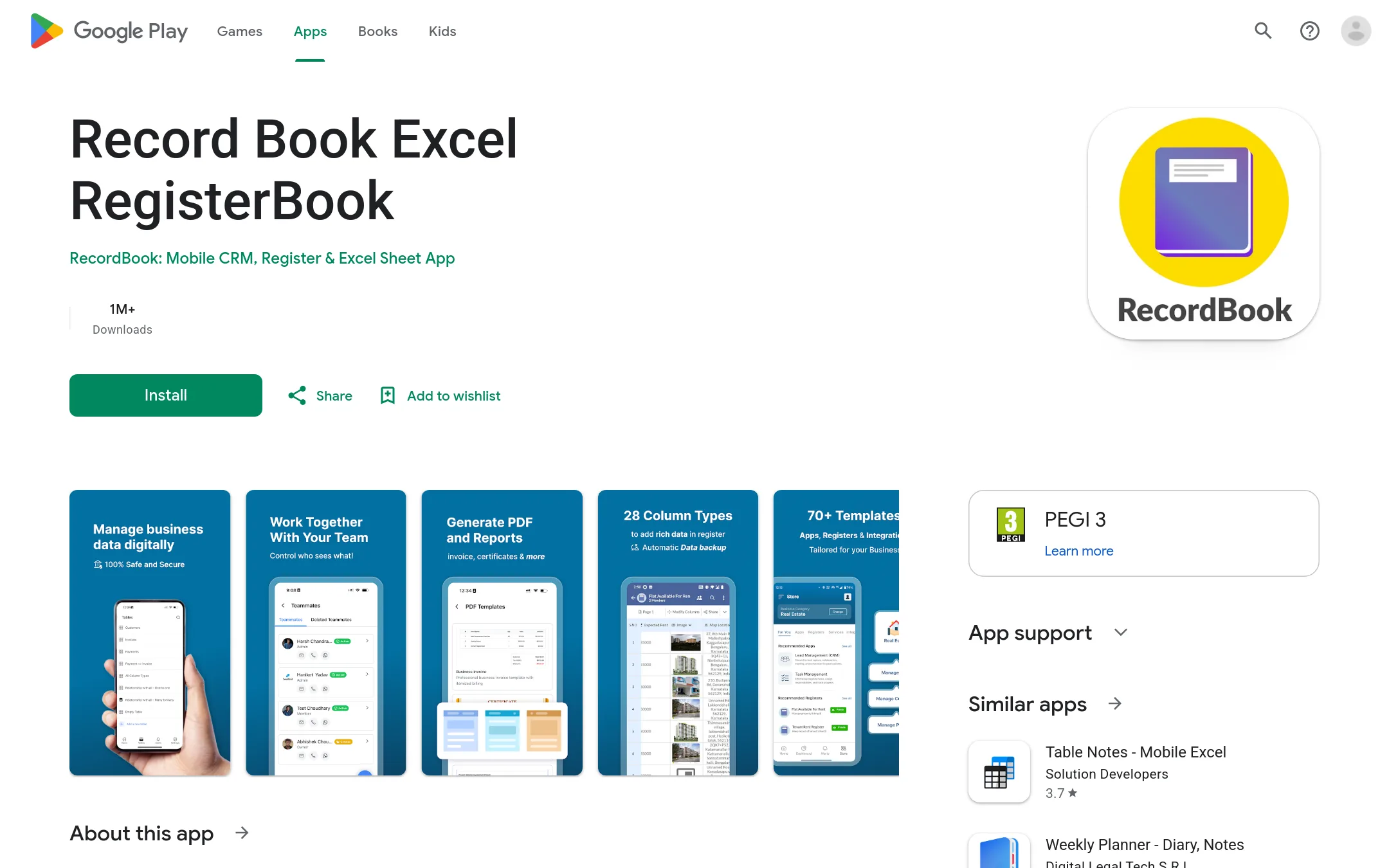
RecordBook is a mobile-first database app aimed at small businesses that need a simple way to organize records without building custom software. It is a lighter, more accessible alternative to Medplum, which is a full EHR platform for healthcare. Choose RecordBook if you are a non-healthcare SMB looking for a quick Airtable-like tool on Android.
Where it is strong
- Simple, mobile-first design for on-the-go record keeping.
- Positioned as an Airtable alternative for SMBs, suggesting ease of use.
- Available on Google Play, making it easy to install and try.
Where it falls short
- No pricing information is available, so cost is unclear.
- Lacks healthcare-specific features like FHIR, e-prescribing, and compliance certifications that Medplum offers.
- Pricing:
- Pricing is not published on the site.
- Pay-as-you-go
7.Microsoft Azure CycleCloud
Best for: Research teams and enterprises running high-performance computing workloads on Azure that need cluster management, not healthcare data.
- Pricing
- Pay-as-you-go
- Category
- Developer Tools
Azure CycleCloud is a general-purpose HPC orchestration tool for managing compute clusters in the cloud. You would choose it over Medplum if you need to run large-scale simulations or batch workloads, not healthcare applications. Medplum is specifically built for FHIR-based patient data and clinical workflows, so CycleCloud only makes sense if your project is unrelated to healthcare.
Where it is strong
- Integrates deeply with Azure services like VM, storage, and networking.
- Supports popular schedulers like Slurm and PBS for cluster orchestration.
- Scales clusters up and down based on workload demand.
Where it falls short
- No healthcare-specific features like FHIR or patient records.
- Requires significant HPC expertise to set up and manage.
- Pricing:
- In the United States, Azure pricing is consumption-based, so you pay only for the cloud resources you use, with no upfront cost.
- Not published
8.Amazon Business
Best for: Organizations that need to manage purchasing of business supplies with approval controls and spend reporting, rather than healthcare data infrastructure.

- Pricing
- Not published
- Category
- E-commerce
Amazon Business is a procurement platform for buying supplies and equipment, not a healthcare data platform. You would choose it instead of Medplum if your need is purchasing and spend management, not building or running clinical applications. It offers Amazon's catalog, approval workflows, and spend analytics.
Where it is strong
- Access to Amazon's vast product selection and bulk discounts
- Centralized approval workflows to control purchasing
- Spend analytics and reporting tools for budgeting
Where it falls short
- No healthcare data standards like FHIR or EHR capabilities
- Limited to procurement, not clinical or patient data management
- Pricing:
- Pricing is not published on the site.
- FSee website
9.Firely Server
Other
A commercial FHIR server with a strong focus on standards compliance and developer experience.
- SNot published
10.Smile CDR
Best for: Health systems, payers, and government programs that need a production-grade FHIR platform with validated digital quality measures and high throughput.
- Pricing
- Not published
- Category
- Other
Smile CDR is a FHIR-native platform for large healthcare organizations that need to unify data, compliance, and quality measurement on one foundation. It is a good choice when you need enterprise-grade scale, certifications, and deep standards involvement rather than an open-source EHR toolkit.
Where it is strong
- Maintains HAPI FHIR, the most widely deployed FHIR implementation
- First NCQA-validated digital quality measurement vendor with HITRUST, ISO, and SOC 2 certifications
- Handles 255,000 transactions per second with 99.99% uptime in production
Where it falls short
- No open-source option like Medplum's free tier
- Pricing is not transparent, likely requiring a sales conversation
- Pricing:
- Pricing is not published on the site.
- Switching from Medplum:
- Moving from Medplum means adopting a closed-source enterprise platform, so you would need to migrate your FHIR data and rework any custom automations you built with Medplum Bots.
- ONot published
11.OpenMRS
Best for: Public health programs and clinics in developing regions that need a free, community-supported EMR they can customize for local diseases and languages.
- Pricing
- Not published
- Category
- Other
OpenMRS is a free, open-source electronic medical record system built by a global community. It is a good choice for organizations in low-resource settings that need a highly customizable EMR without license fees and want to adapt it to local clinical workflows.
Where it is strong
- No license fees or vendor lock-in, with open source code.
- Adaptable to local needs, supporting many languages and clinical programs like HIV, TB, and malaria.
- Built on standards with REST and FHIR APIs for integration.
Where it falls short
- Requires significant technical expertise to deploy and maintain.
- Lacks the managed hosting and compliance certifications that Medplum offers.
- Pricing:
- Pricing is not published on the site. The pricing page contains placeholder pricing tables, not actual product pricing.
- Switching from Medplum:
- Moving from Medplum to OpenMRS means migrating your FHIR data to a different data model and rebuilding custom workflows, which requires substantial development effort.
- OFrom $199/mo
12.Ona
Best for: Field teams and NGOs that need offline mobile surveys with GPS, photos, and real-time data visualization.
- Pricing
- From $199/mo
- Category
- Other
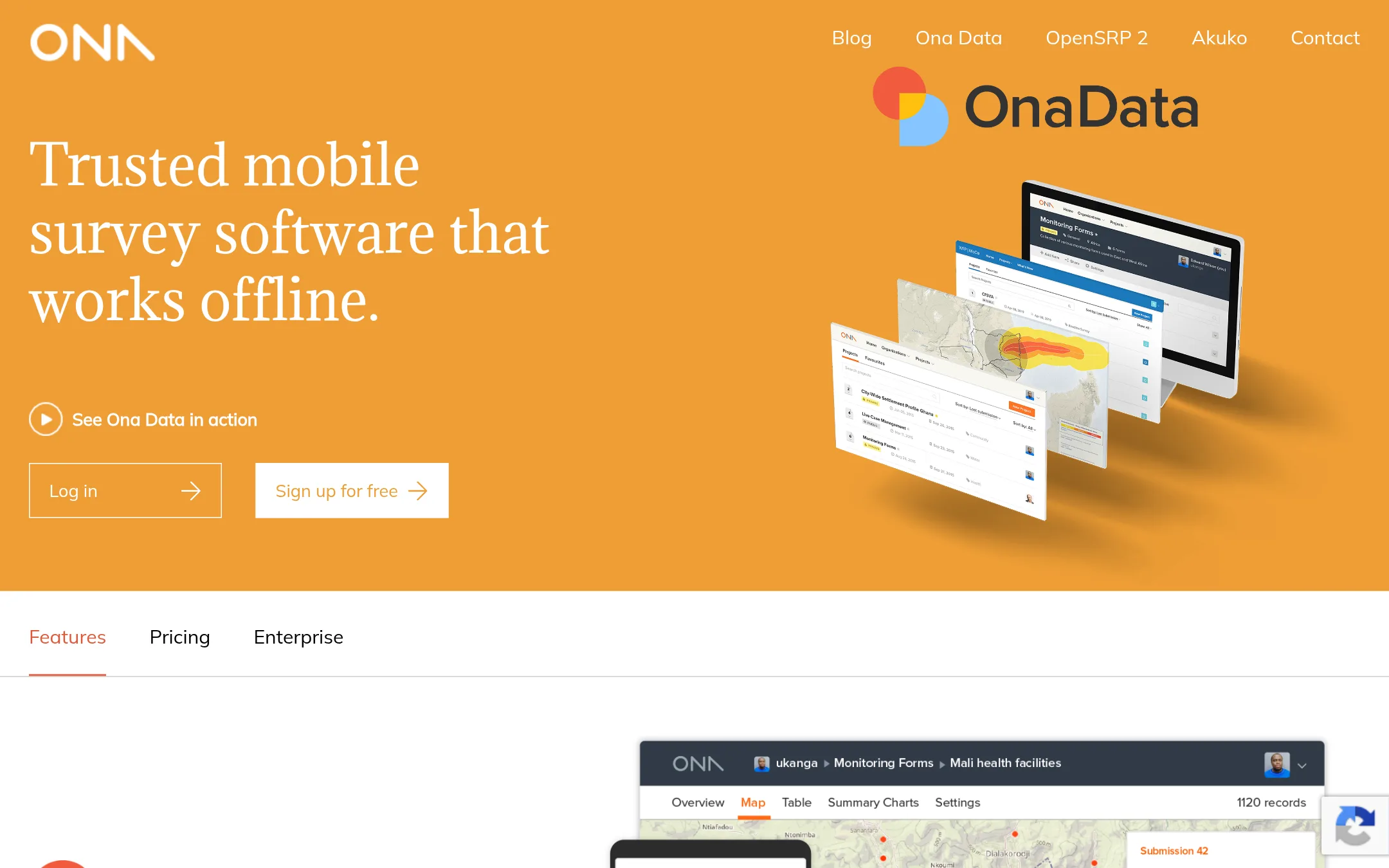
Ona is a mobile data collection and survey platform that works offline, aimed at NGOs, field teams, and organizations gathering data in remote areas. You would choose it over Medplum when your core need is offline-first forms, GPS, and real-time monitoring rather than FHIR-based healthcare records.
Where it is strong
- Offline data collection on smartphones and desktops with automatic upload when connected.
- Form authoring via XLSForm standard or online builder, supporting GPS, signatures, photos, and logic.
- Real-time maps, charts, and Excel dashboard reports for data analysis.
Where it falls short
- Not a healthcare-specific EHR, so no FHIR support or clinical workflows.
- Submissions capped at 30,000 on Pro plans, which may be limiting for large-scale projects.
- Pricing:
- Pricing starts at $0/month for Free, $199/month for Standard, and $299/month for Pro, with annual billing saving 20%.
- Switching from Medplum:
- Moving from Medplum to Ona would require rebuilding your data collection forms and workflows, as Ona does not support FHIR or healthcare-specific integrations.
See more comparisons in Healthcare alternatives.
FAQ
Questions about Medplum alternatives
What is the cheapest alternative to Medplum?
OpenMRS is free with no license fees, but you must deploy and maintain it yourself. HAPI FHIR is also open source and free to use, but requires your own infrastructure. Ona has a free tier, but it is not a healthcare EHR.
Which alternative is best for a large hospital?
Epic is the strongest choice for large hospitals because it offers deep clinical workflows and a large provider network. Cerner is also viable for traditional enterprise EHR needs. Both have unpublished pricing and are designed for enterprise-scale organizations.
Do any alternatives support FHIR natively?
Yes, HAPI FHIR and Smile CDR are FHIR-native platforms. InterSystems HealthShare also supports FHIR and HL7. Medplum itself is FHIR-native, so these are the closest matches for interoperability.
Are there alternatives with transparent pricing?
Ona publishes pricing starting at $0, $199, and $299 per month. Medplum publishes starting prices, but most other alternatives like Epic, Cerner, and Smile CDR do not. Azure CycleCloud is consumption-based, so costs vary by usage.
Which alternative is easiest to deploy for a small team?
RecordBook is a simple mobile app with no healthcare complexity, but it lacks FHIR. Ona is easy for field data collection with a free tier. For healthcare, OpenMRS requires technical expertise, while HAPI FHIR needs Java skills. Medplum's hosted plans are easier but start at $2,000 per month.
Last updated November 3, 2026.