Memrise alternatives
12 products compared · Updated October 30, 2026
The short answer
For language learners comparing alternatives to Memrise, the strongest options are Babbel for structured, expert-led courses with speech recognition, Pimsleur for audio-first learning on the go, and Mango Languages for conversation-based lessons with library access. Duolingo suits casual learners who want a free, gamified habit, while Anki is best for those who want full control over custom flashcards.
Your shortlist, at a glance
Read the comparisons ↓ DuolingoNot publishedCasual learners who want a free, game-like way to build a daily language learning habit.
 BabbelNot publishedLearners who want a guided, structured path to conversational fluency with lessons built by language experts.
 BusuuNot publishedLearners who want structured lessons plus real-world speaking practice with feedback from a community of native speakers.
Rosetta StoneNot publishedIndividuals and organizations that want a structured, immersive language program with speech recognition and tutoring options.
PimsleurNot publishedBusy adults who want to start speaking a new language quickly through audio lessons, especially while driving or multitasking.
 LingvistNot publishedLearners who want to build vocabulary quickly and efficiently with AI-driven personalization, especially those preparing for exams or professional use.
 ClozemasterNot publishedLanguage learners who want to drill vocabulary in context with a free, gamified app and don't need video-based pronunciation coaching.
 DropsNot publishedLearners who want quick, daily vocabulary drills with visual mnemonics and a game-like interface across 55+ languages.
 Membean$8-20/student/yrMiddle and high school ELA teachers who need differentiated vocabulary training with auto-graded quizzes and progress tracking.
 AnkiNot publishedLearners who want to build custom flashcard decks and control their own review schedule for any subject, not just languages.
 Mango LanguagesFrom $10/mo (annual)Libraries, schools, and organizations that want to offer a structured, conversation-first language program to many learners at once.
CleverDeckNot publishedSerious language learners on iPhone who want a focused, spaced-repetition vocabulary deck without gamification or social features.
About Memrise and its alternatives
Memrise is a language learning app for people with a specific reason to learn, trusted by 80 million learners. It offers specialized courses for goals like passing an exam, speaking confidently at work, or building relationships, using real native speaker videos and personalized practice to help you sound natural.
When comparing alternatives, weigh pricing structure (free tiers, subscription costs, annual vs monthly), language coverage, availability of native speaker content, speech recognition features, and whether the tool integrates with your existing study routine. Also consider contract terms like cancellation policies and whether you can get access through a library or school.
Explore the alternatives
- Not published
1.Duolingo
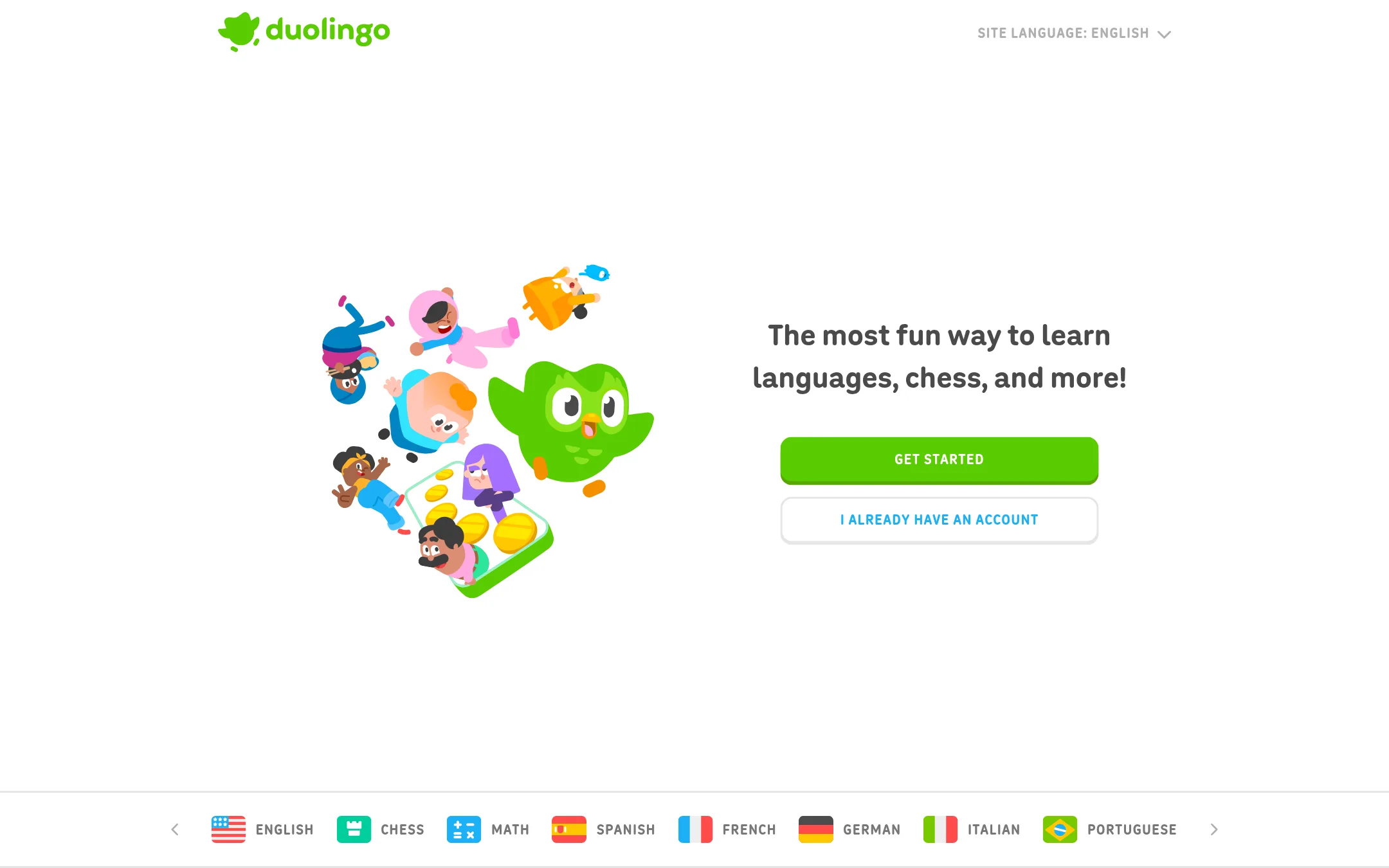
Best for: Casual learners who want a free, game-like way to build a daily language learning habit.
- Pricing
- Not published
- Category
- Education
Duolingo is a gamified language app that uses bite-sized lessons, points, and streaks to keep you motivated. Choose it over Memrise if you want a free, structured, and habit-forming approach to basic vocabulary and grammar, rather than Memrise's focus on real native videos and natural speech.
Where it is strong
- Free to use with ads
- Game-like streaks and rewards keep you coming back
- Lessons cover reading, writing, listening, and speaking
Where it falls short
- Less emphasis on real native speaker videos
- May feel repetitive for advanced learners
- Pricing:
- Pricing is not published on the site.
- Not published
2.Babbel
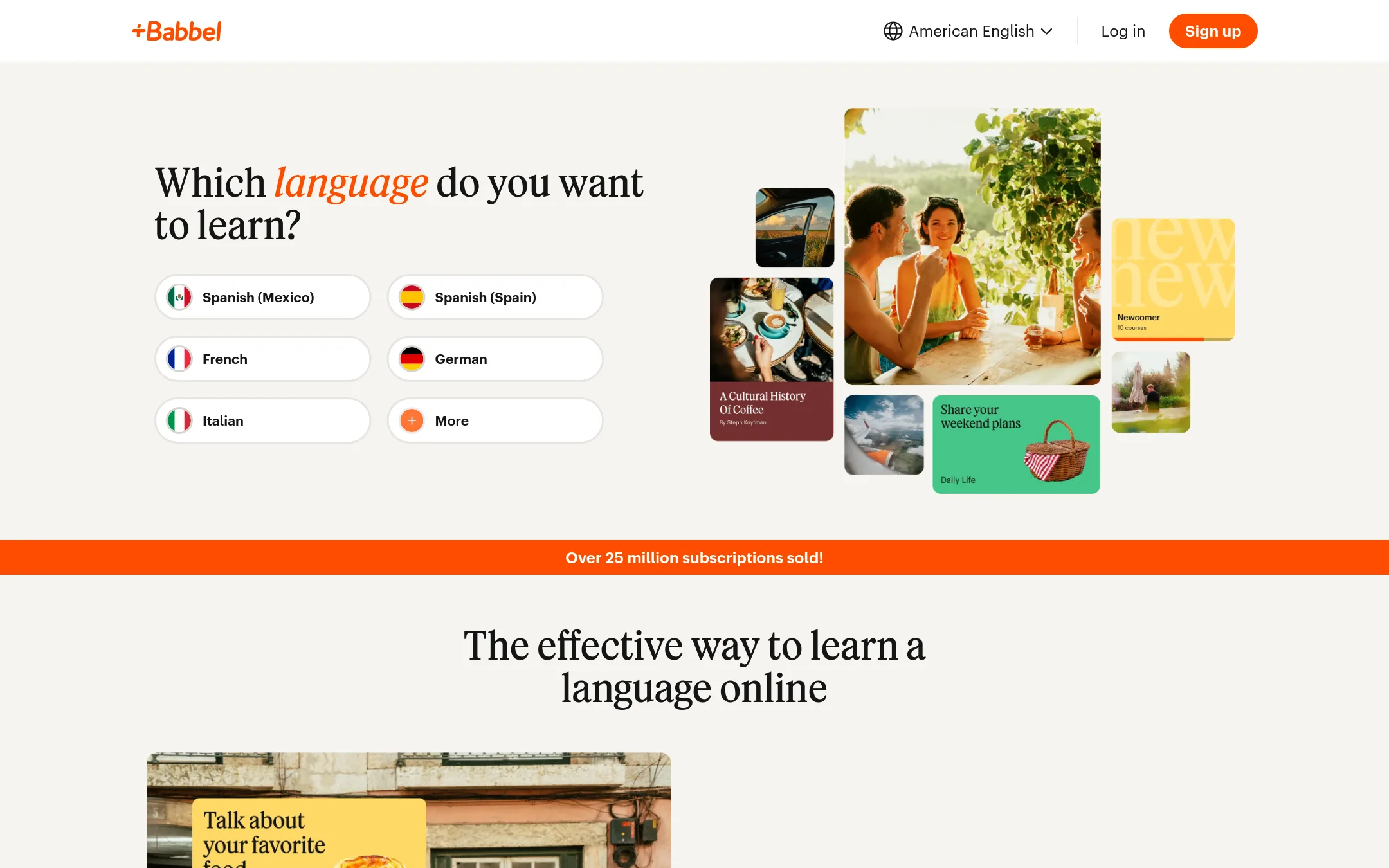
Best for: Learners who want a guided, structured path to conversational fluency with lessons built by language experts.
- Pricing
- Not published
- Category
- Education
Babbel offers structured, expert-designed courses with a focus on practical conversation skills and grammar. Choose it over Memrise if you prefer a more traditional, curriculum-based approach with clear progression and speech recognition feedback, rather than Memrise's native video clips and community-driven content.
Where it is strong
- Courses created by 200+ language experts
- Speech recognition for pronunciation practice
- Interactive dialogues for real-life scenarios
Where it falls short
- No native speaker video library like Memrise
- Limited language selection compared to Memrise's extensive list
- Pricing:
- Pricing is not published on the site.
- Not published
3.Busuu
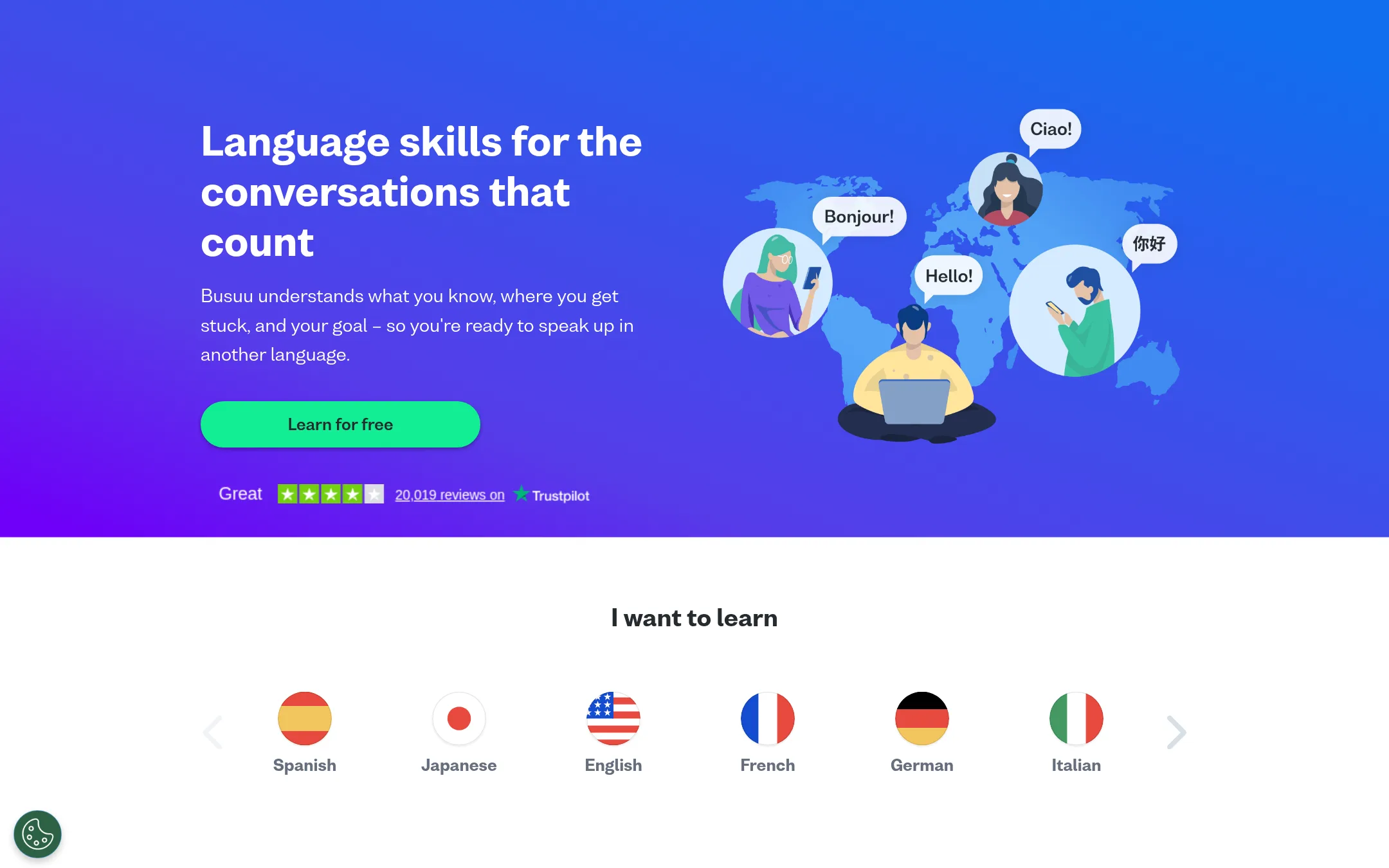
Best for: Learners who want structured lessons plus real-world speaking practice with feedback from a community of native speakers.
- Pricing
- Not published
- Category
- Education
Busuu is a language learning platform that combines structured courses with a global community for speaking practice and feedback. Choose it over Memrise if you want a more traditional course structure with human interaction and corrections from native speakers.
Where it is strong
- Global community for speaking practice and feedback
- Structured courses with clear progression
- Award-winning platform with 120 million learners
Where it falls short
- Pricing not transparent on the site
- Less focus on native video content compared to Memrise
- Pricing:
- Pricing is not published on the site.
- Not published
4.Rosetta Stone
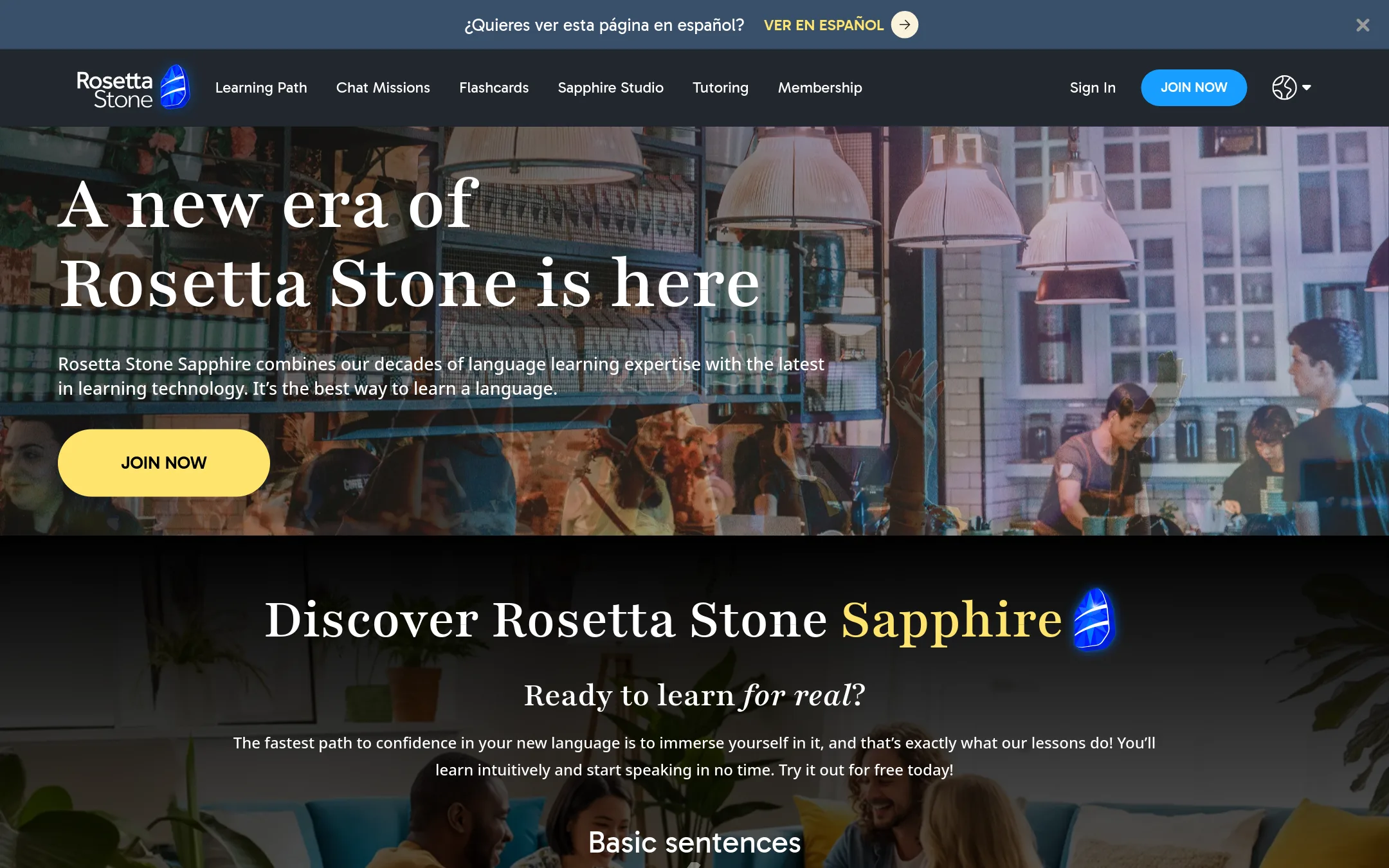
Best for: Individuals and organizations that want a structured, immersive language program with speech recognition and tutoring options.
- Pricing
- Not published
- Category
- Education
Rosetta Stone is a structured, immersive language learning platform that uses the Dynamic Immersion method and TruAccent speech feedback. Choose it if you prefer a guided, comprehensive curriculum over Memrise's native video clips and community courses.
Where it is strong
- Immersive Dynamic Immersion method
- TruAccent speech feedback for pronunciation
- Includes tutoring and Chat Missions for conversation practice
Where it falls short
- No native speaker video library like Memrise
- Pricing not transparent on the website
- Pricing:
- Pricing is not published on the site.
- Switching from Memrise:
- Moving from Memrise to Rosetta Stone means shifting from community-driven video content to a structured curriculum, which may feel less flexible but more guided.
- Not published
5.Pimsleur
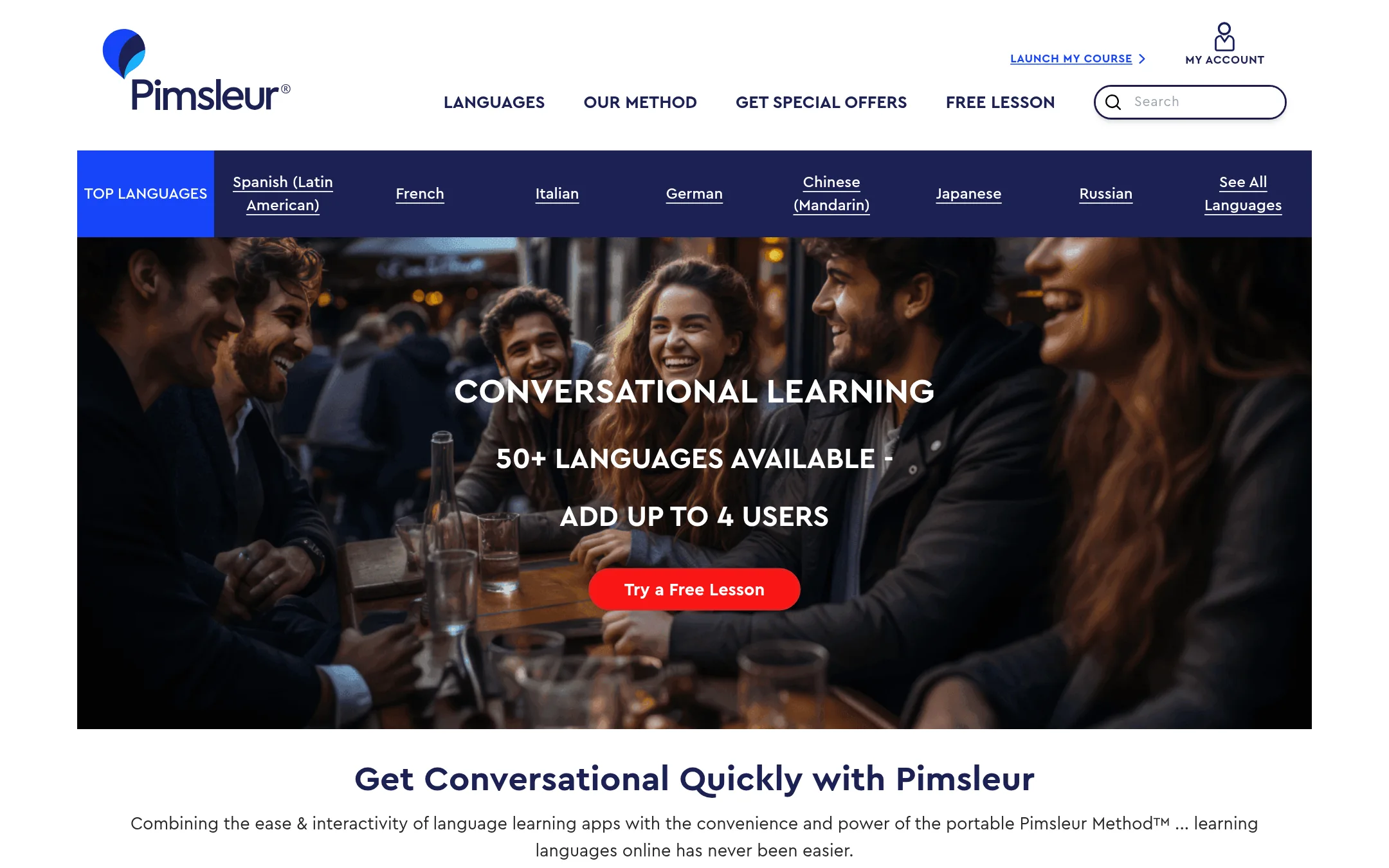
Best for: Busy adults who want to start speaking a new language quickly through audio lessons, especially while driving or multitasking.
- Pricing
- Not published
- Category
- Other
Pimsleur is an audio-first language learning program built around the Pimsleur Method, which uses spaced repetition and guided listening and speaking practice. Choose it over Memrise if you want a hands-free, conversational approach that fits into commutes or chores, rather than video-based vocabulary drills.
Where it is strong
- Audio lessons work hands-free with CarPlay and Android Auto
- 50+ languages available, including 15 versions of English
- Voice Coach AI gives real-time pronunciation feedback
Where it falls short
- No native speaker videos like Memrise, so you miss visual context
- Reading lessons are limited compared to Memrise's video-based approach
- Pricing:
- Pricing is not published on the site.
- Not published
6.Lingvist
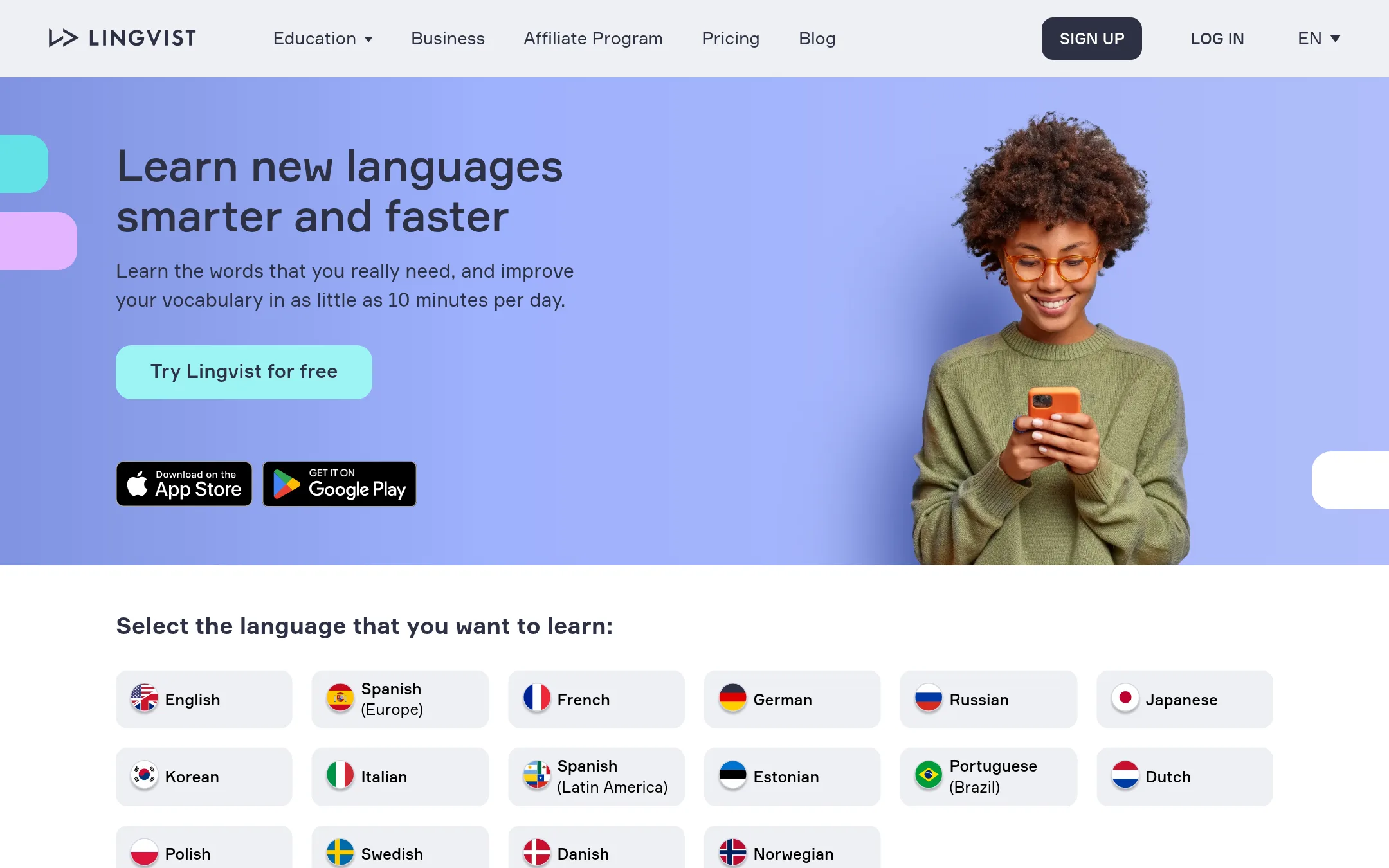
Best for: Learners who want to build vocabulary quickly and efficiently with AI-driven personalization, especially those preparing for exams or professional use.
- Pricing
- Not published
- Category
- Other
Lingvist uses AI and spaced repetition to teach high-frequency vocabulary efficiently, with courses for over 50 languages. Choose it over Memrise if you want a data-driven, vocabulary-first approach and don't need the native-speaker video content that Memrise emphasizes.
Where it is strong
- AI-powered adaptive learning tailors content to your level
- Focuses on high-frequency vocabulary for practical use
- Available on web and mobile with over 50 language courses
Where it falls short
- No native-speaker video content like Memrise's
- Pricing details not shown without signing up
- Pricing:
- Pricing is not published on the site.
- Not published
7.Clozemaster
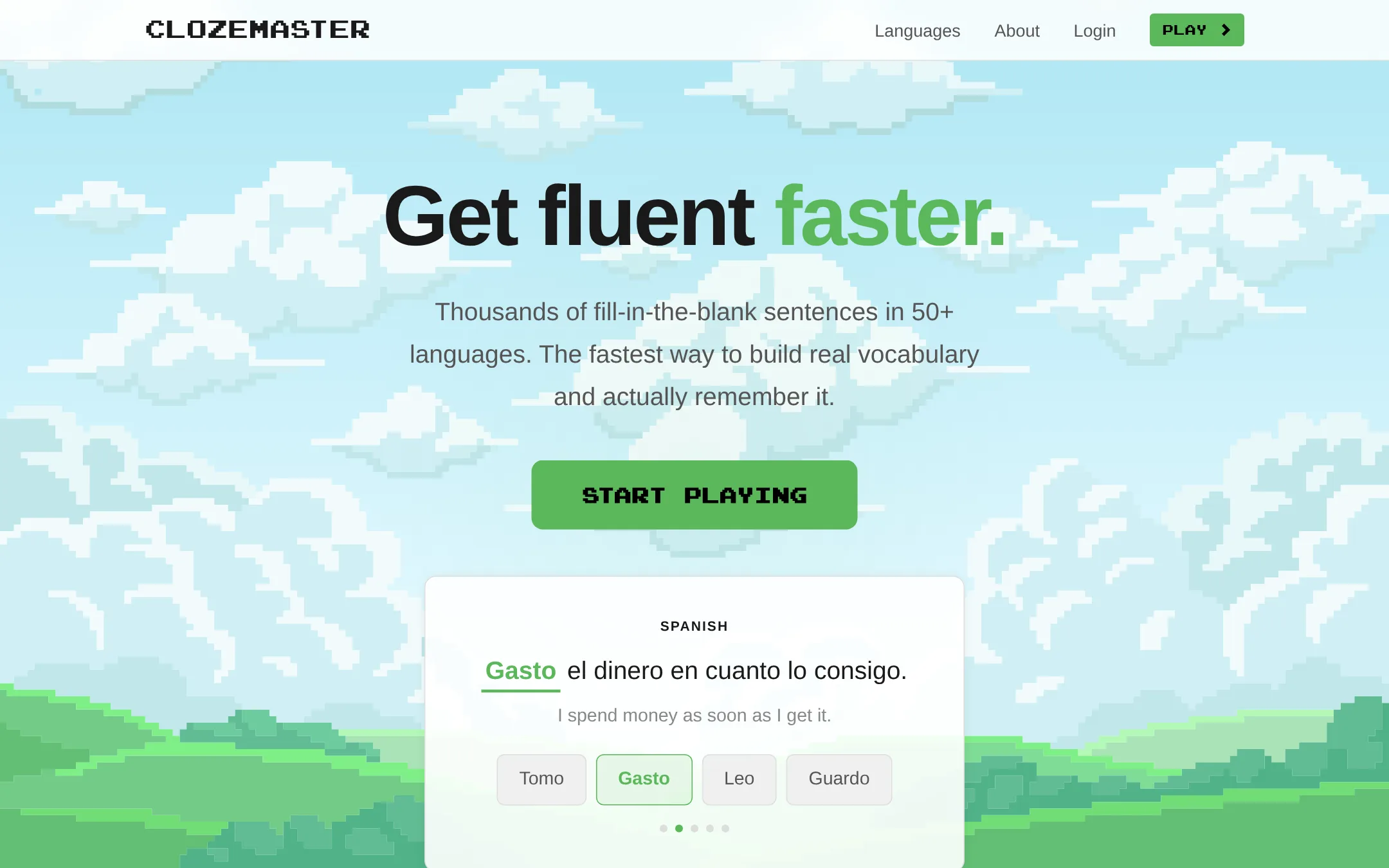
Best for: Language learners who want to drill vocabulary in context with a free, gamified app and don't need video-based pronunciation coaching.
- Pricing
- Not published
- Category
- Other
Clozemaster is a fill-in-the-blank sentence trainer that builds vocabulary through context and spaced repetition. Choose it over Memrise if you prefer learning words in real sentences rather than through native speaker videos and want a free, gamified approach across 50+ languages.
Where it is strong
- Free to play with no paywall for core features
- 50+ languages with 170+ language pairings
- Spaced repetition and word frequency tracking
Where it falls short
- No native speaker videos for pronunciation practice
- Limited to fill-in-the-blank exercises, less conversational
- Pricing:
- Pricing is not published on the site.
- Not published
8.Drops
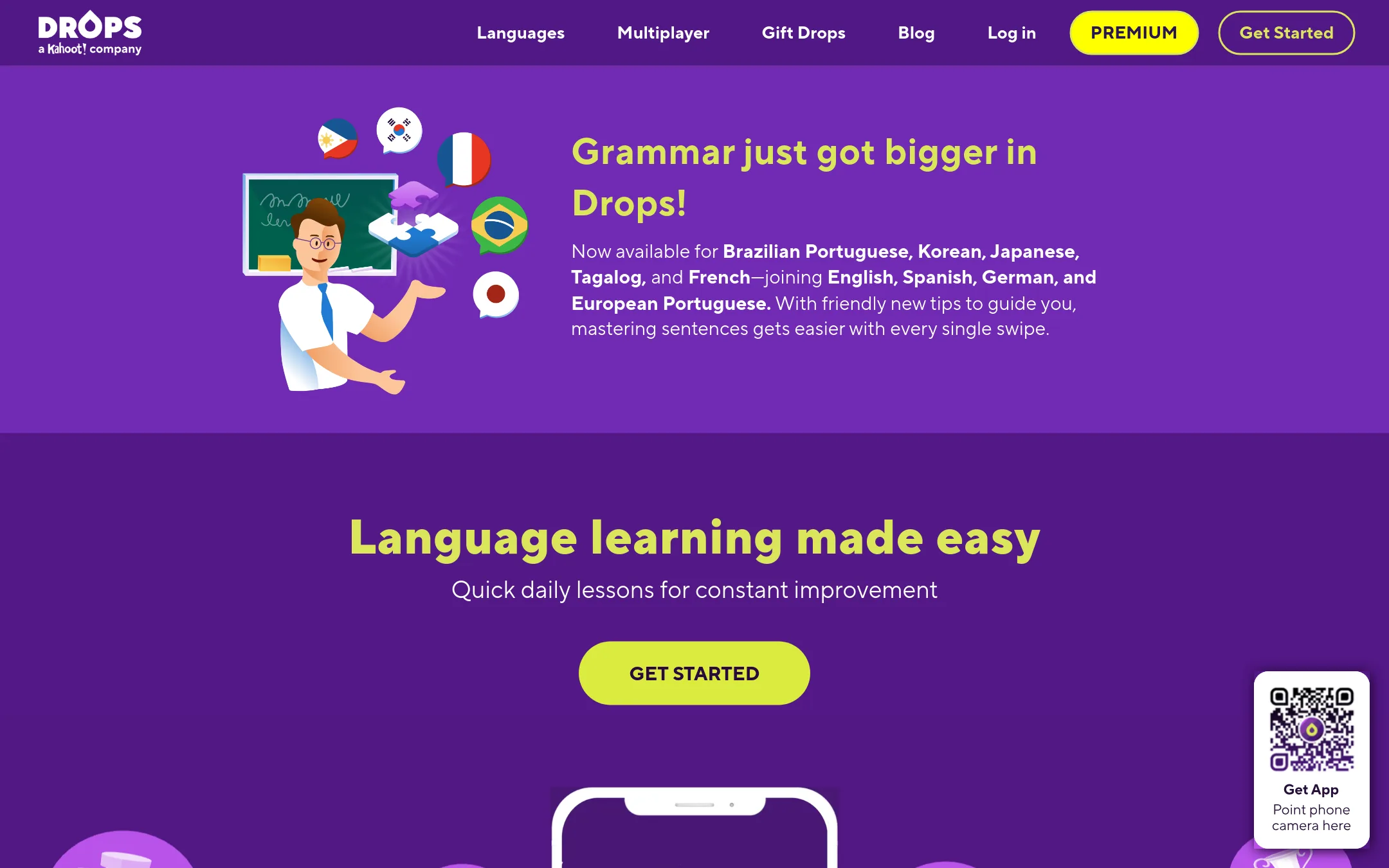
Best for: Learners who want quick, daily vocabulary drills with visual mnemonics and a game-like interface across 55+ languages.
- Pricing
- Not published
- Category
- Education
Drops is a vocabulary-focused app that teaches words and phrases through fast, visual games in 5-minute sessions. Choose it over Memrise if you want a gamified, low-commitment way to build vocabulary across many languages, rather than practicing conversation with native speaker videos.
Where it is strong
- 5-minute sessions fit into any schedule
- Visual mnemonics help word retention
- Supports 55+ languages, including less common ones
Where it falls short
- No native speaker videos or pronunciation practice
- Focus is on vocabulary, not grammar or conversation
- Pricing:
- Pricing is not published on the site.
- $8-20/student/yr
9.Membean
Best for: Middle and high school ELA teachers who need differentiated vocabulary training with auto-graded quizzes and progress tracking.
- Pricing
- $8-20/student/yr
- Category
- Other
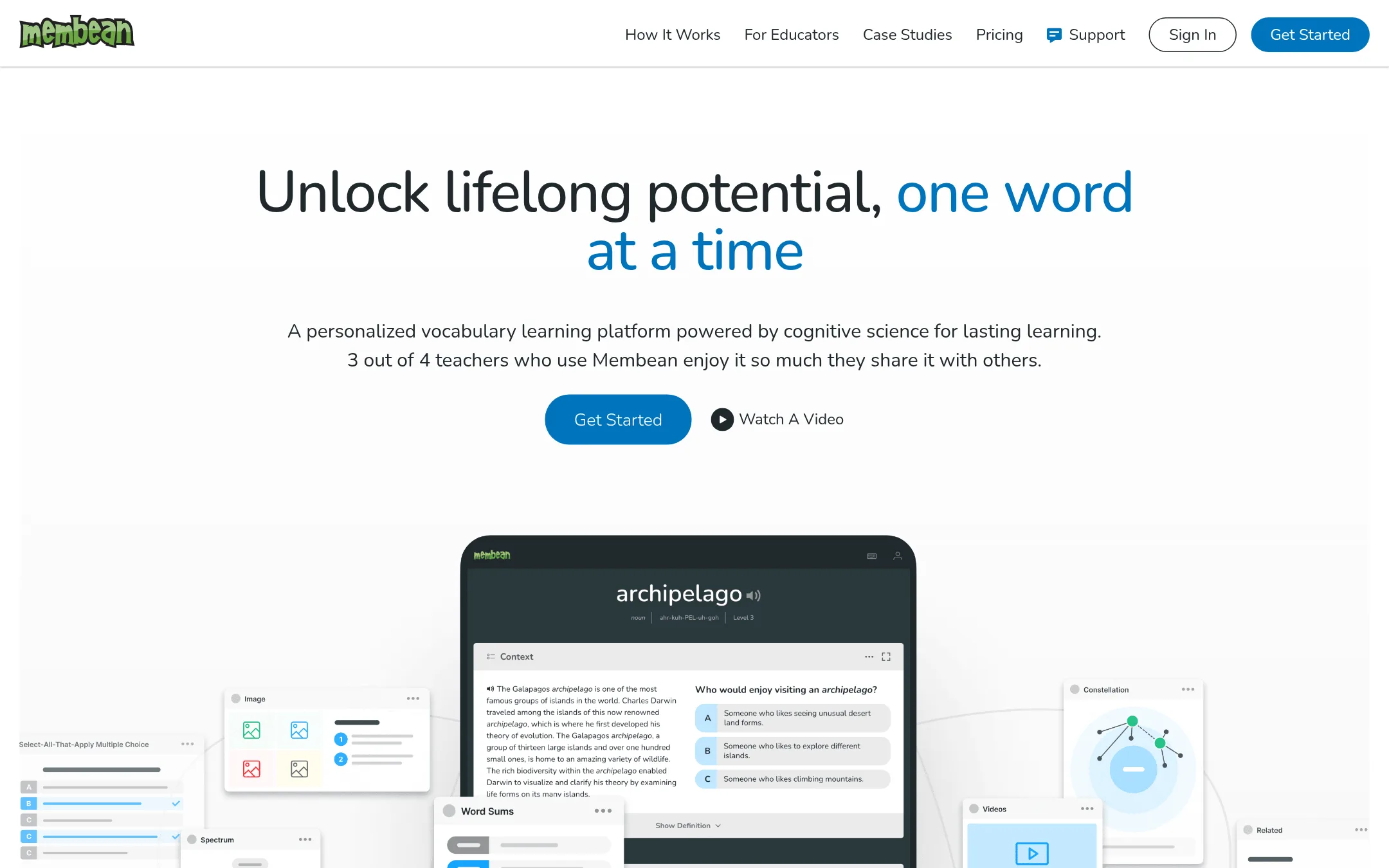
Membean is a vocabulary learning platform for schools, not a language app. It uses cognitive science to build long-term word retention for grades 6-12. Choose it over Memrise if you need structured vocabulary instruction with teacher dashboards and quizzes, not conversational language skills.
Where it is strong
- Personalizes word lists to each student's skill level
- Saves teachers up to 4 hours weekly with auto-graded quizzes
- Free 6-week pilot for schools
Where it falls short
- Requires at least 4th grade reading level, so not for early learners
- No language learning or speaking practice like Memrise
- Pricing:
- School pricing is tiered at $8-20 per student annually. Personal plans are $6/month for 12 months, $9/month for 6 months, $15/month for 3 months, or $29 for 1 month.
- Not published
10.Anki
Best for: Learners who want to build custom flashcard decks and control their own review schedule for any subject, not just languages.
- Pricing
- Not published
- Category
- Education
Anki is a spaced repetition flashcard app that helps you memorize anything long-term, including vocabulary, with full control over your decks and scheduling. Choose it over Memrise if you want a flexible, self-directed study tool rather than a structured language course with native videos.
Where it is strong
- Free to use on desktop and AnkiWeb
- Fully customizable decks and card types
- Spaced repetition algorithm optimizes long-term retention
Where it falls short
- Steep learning curve for new users
- No built-in native speaker videos or pronunciation practice
- Pricing:
- Pricing is not published on the site.
- From $10/mo (annual)
11.Mango Languages
Best for: Libraries, schools, and organizations that want to offer a structured, conversation-first language program to many learners at once.
- Pricing
- From $10/mo (annual)
- Category
- Other
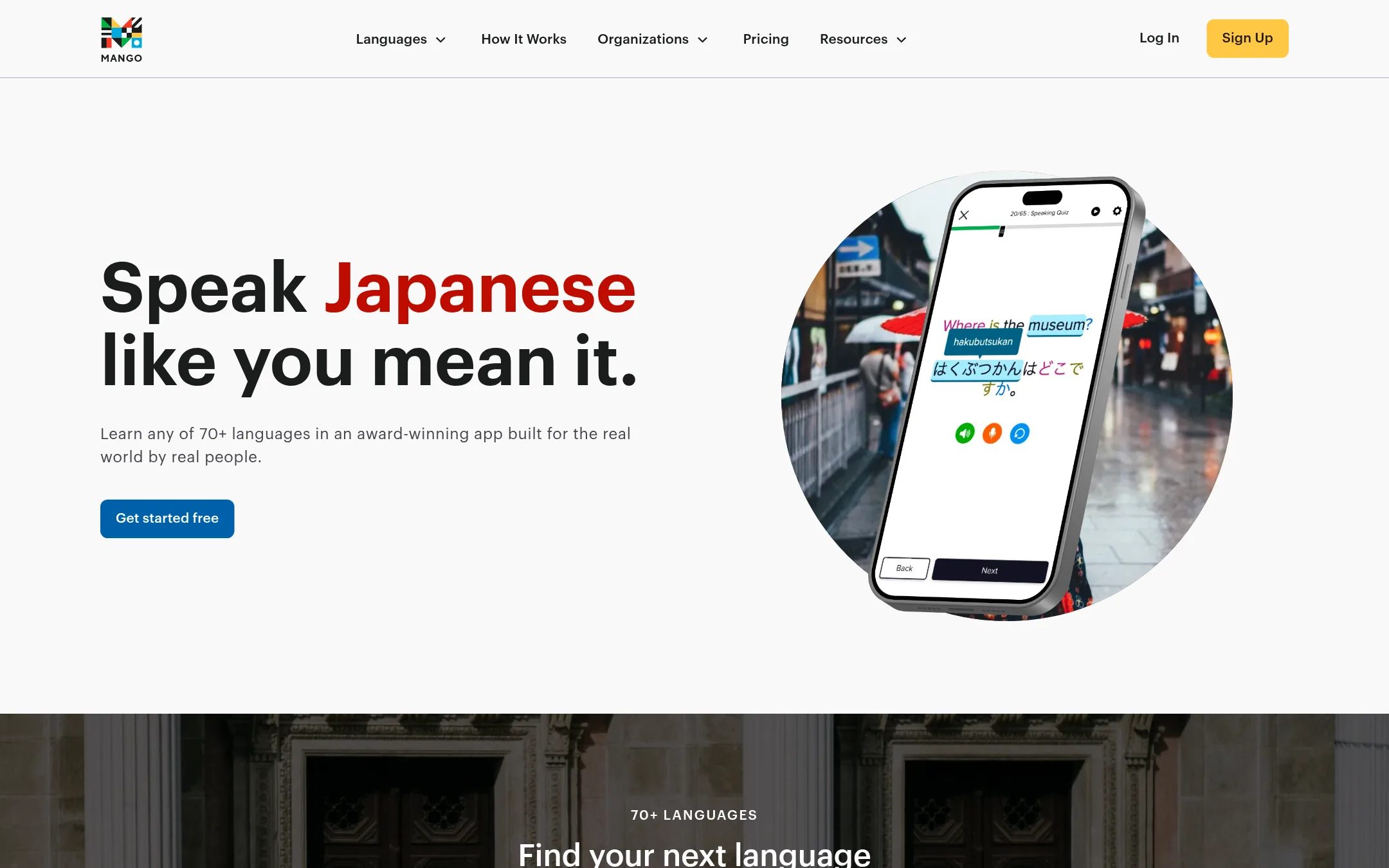
Mango Languages is a linguist-built app that teaches 70+ languages through full conversations, not isolated vocabulary drills. Choose it over Memrise if you want a more structured, class-like approach with cultural context and voice comparison, especially when you can get free access through a library or school.
Where it is strong
- Lessons are built around real conversations, not isolated drills
- Voice Comparison lets you hear and close the gap with native speakers
- One subscription covers all 70+ languages, including endangered ones
Where it falls short
- No free tier beyond a trial, unlike Memrise's free plan
- Less gamified than Memrise, which may not suit casual learners
- Pricing:
- Individual plan is $13.99/mo or $10/mo billed annually. Family plan is $19.99/mo or $12.50/mo billed annually. Organizations get custom pricing.
- Switching from Memrise:
- Switching from Memrise means adapting to a more structured, conversation-based method and likely paying a subscription unless your library already offers Mango for free.
- Not published
12.CleverDeck
Best for: Serious language learners on iPhone who want a focused, spaced-repetition vocabulary deck without gamification or social features.
- Pricing
- Not published
- Category
- Education
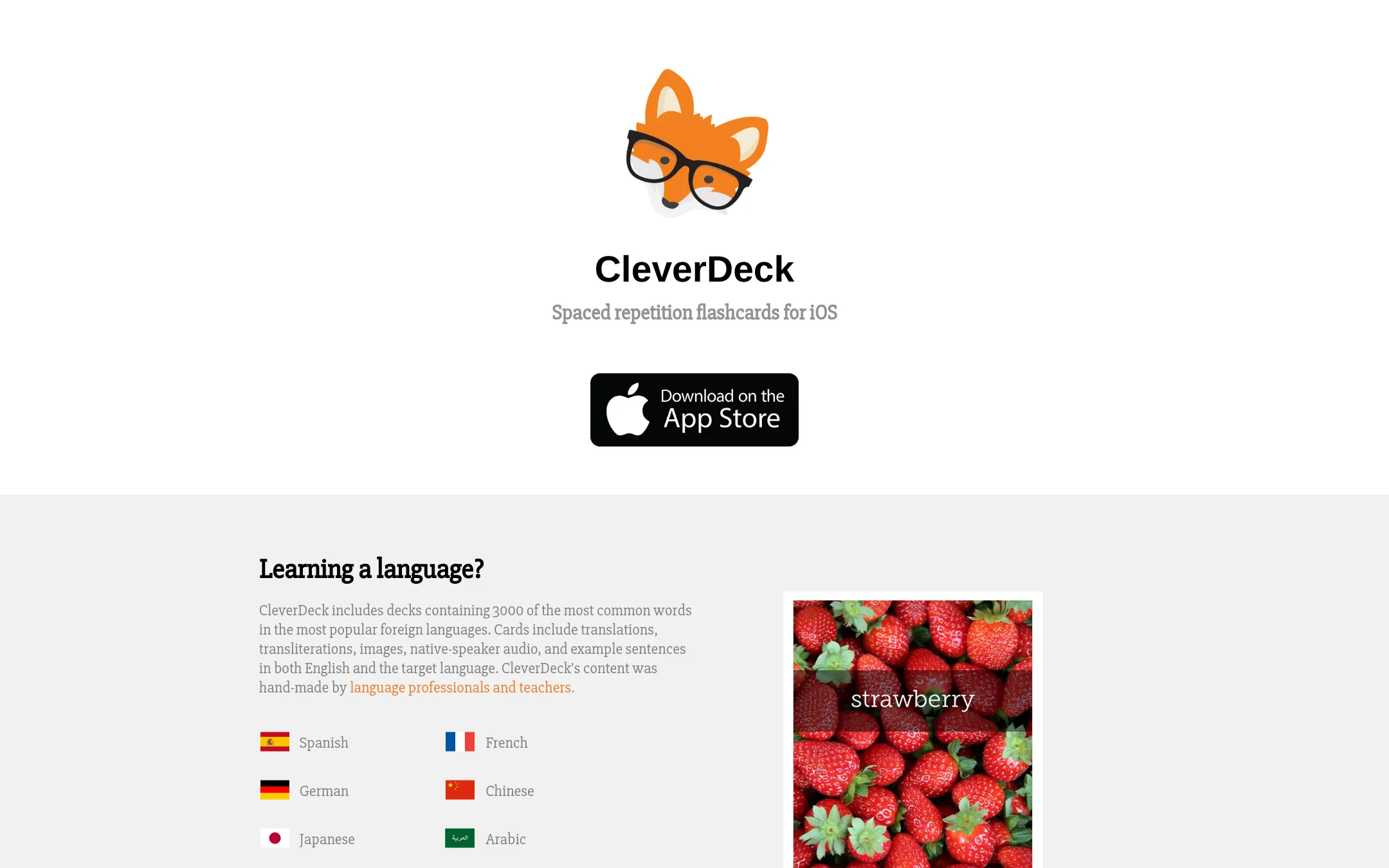
CleverDeck is an iOS flashcard app that uses spaced repetition to help you memorize the 3000 most common words in major languages. Choose it over Memrise if you want a no-frills, science-backed vocabulary drill with hand-made content by language professionals, rather than video-based conversation practice.
Where it is strong
- Hand-made decks by language professionals and teachers
- Includes native-speaker audio and example sentences
- Spaced repetition based on cognitive science
Where it falls short
- iOS only, no Android or web version
- No speaking practice or video content like Memrise
- Pricing:
- Pricing is not published on the site.
See more comparisons in Education alternatives.
FAQ
Questions about Memrise alternatives
What is the best free alternative to Memrise?
Duolingo is the strongest free option, offering a gamified, structured approach with ads. Clozemaster also provides free core features for vocabulary drilling in context. Both lack Memrise's native speaker videos, but they are solid for building a daily habit without cost.
Which alternative is best for learning to speak quickly?
Pimsleur is audio-first and designed for speaking from day one, with lessons that work hands-free. Babbel includes speech recognition and interactive dialogues for real-life scenarios. Busuu offers speaking practice with feedback from a community of native speakers.
Which alternative has the most languages?
Mango Languages covers 70+ languages, including endangered ones, with one subscription. Drops supports 55+ languages, and Pimsleur offers 50+ languages. Memrise itself lists over 100 languages, but many are community-created and may lack full courses.
Are there alternatives that work offline or hands-free?
Pimsleur is ideal for hands-free learning with CarPlay and Android Auto, and its audio lessons can be used while driving or multitasking. Anki can be used offline on desktop and mobile once decks are downloaded. Other apps like Duolingo require an internet connection for most features.
Which alternative is best for schools or organizations?
Mango Languages offers library and institutional access with custom pricing, making it a strong choice for organizations. Membean is specifically designed for schools, with teacher dashboards and auto-graded quizzes for vocabulary. Rosetta Stone also provides structured programs for individuals and organizations.
Last updated October 30, 2026.