
Mendeley alternatives
12 products compared · Updated October 31, 2026
The short answer
The strongest Mendeley alternatives are Zotero for researchers who want a free, open-source tool with unlimited collaboration, EndNote for teams and institutions needing advanced citation management and large-scale collaboration, and Paperpile for those who write in Google Docs and want unlimited PDF storage. Choose based on your workflow: Zotero for control and cost, EndNote for scale and institutional support, Paperpile for Google integration.
Your shortlist, at a glance
Read the comparisons ↓ZoteroNot publishedResearchers and students who want a free, open-source tool with unlimited group collaboration and support for over 9,000 citation styles.
- EEndNoteNot publishedResearch teams, universities, and organizations that need advanced citation management, collaboration at scale, and institutional support.
- PPaperpileNot publishedResearchers and students who write in Google Docs and want a clean, fast reference manager with unlimited PDF storage.
- RReadCube PapersNot publishedResearch-driven companies and teams that need shared libraries, dual-reviewer screening, and AI-powered literature analysis.
- JJabRefFree (open-source)Researchers and students who use BibTeX/LaTeX and want a free, open-source reference manager with no vendor lock-in.
- CCitaviNot publishedResearchers and students who want a reference manager that integrates with Microsoft Word and supports collaborative projects on their own server.
 Academia.eduNot publishedResearchers and academics who want to publish, share, and track the impact of their papers across a large scholarly network.
CurvenoteNot publishedScientific teams and societies that publish interactive articles or need to preserve provenance across documents, data, and code.
 ResearchGateSee websiteFind and share research with 25+ million scientists
 ZenodoNot publishedResearchers and projects that need a free, public archive for datasets, software, and other research outputs with DOI assignment.
AuthoreaNot publishedResearch teams that need a shared space to co-author papers and track revisions together.
 LabArchivesNot publishedResearch labs and academic teams that need a structured electronic lab notebook with inventory and sample tracking, not just a reference manager.
About Mendeley and its alternatives
Mendeley is a free reference manager with AI tools to organize, cite, and explore research. It lets you add PDFs, organize with collections and tags, and annotate, with 2GB of free storage and AI features like LeapSpace for uncovering patterns across references.
When comparing alternatives, weigh pricing structure (free tiers, annual billing, academic discounts), regional availability, integrations with Word, Google Docs, or LaTeX, support options, and contract terms like institutional licenses or on-premise hosting. Some tools are open-source with no vendor lock-in, while others require contacting sales for quotes.
Explore the alternatives
- Not published
1.Zotero
Best for: Researchers and students who want a free, open-source tool with unlimited group collaboration and support for over 9,000 citation styles.
- Pricing
- Not published
- Category
- Other
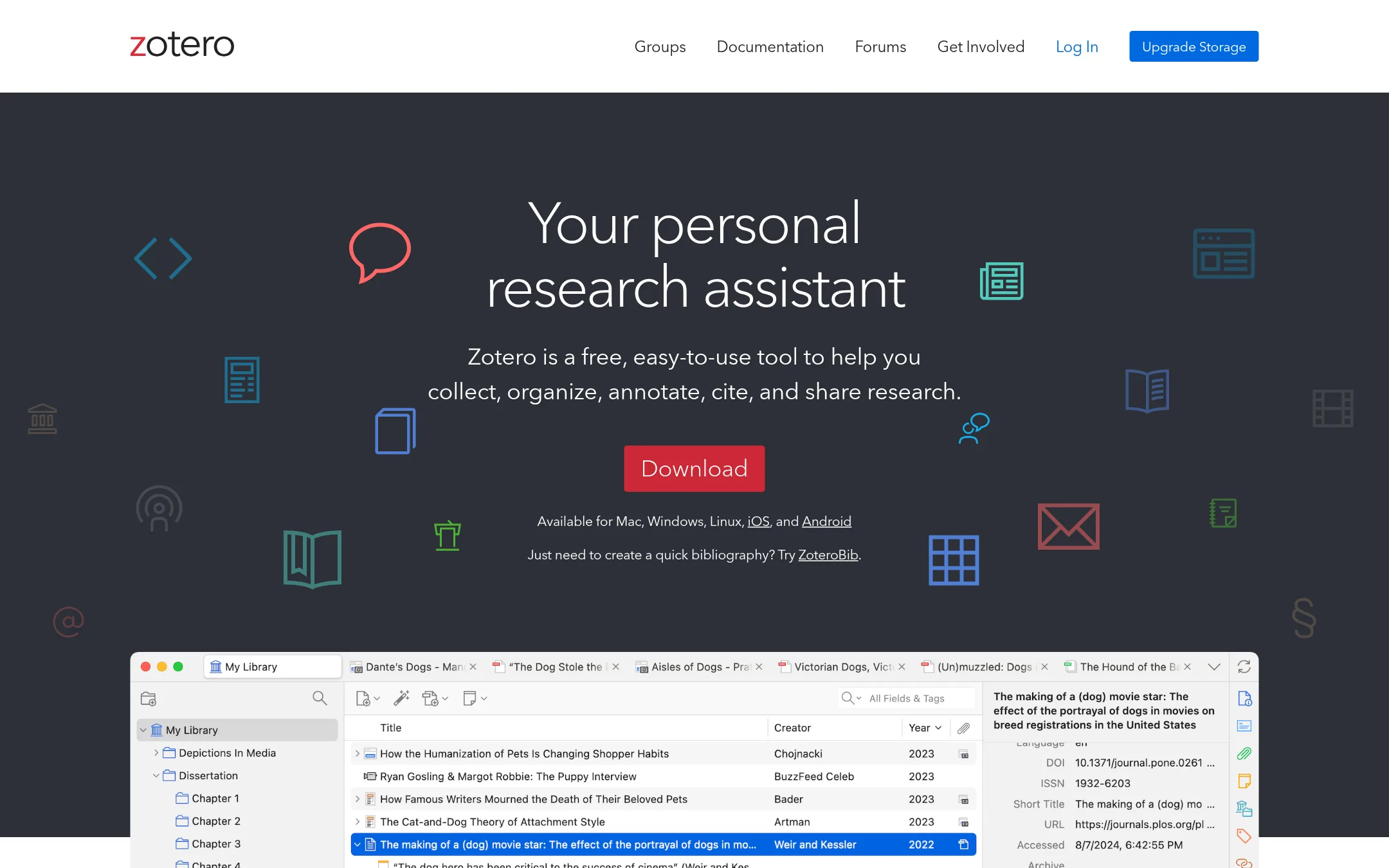
Zotero is a free, open-source reference manager that collects, organizes, annotates, and cites research from your browser. Choose it over Mendeley if you want full control of your data, no vendor lock-in, and unlimited collaborative sharing at no cost.
Where it is strong
- Free and open source, developed by a nonprofit
- Works with Word, LibreOffice, and Google Docs
- Unlimited shared libraries for collaboration
Where it falls short
- No built-in AI features like Mendeley's LeapSpace
- Syncing requires optional paid storage plans
- Pricing:
- Pricing is not published on the site.
- ENot published
2.EndNote
Best for: Research teams, universities, and organizations that need advanced citation management, collaboration at scale, and institutional support.
- Pricing
- Not published
- Category
- Other
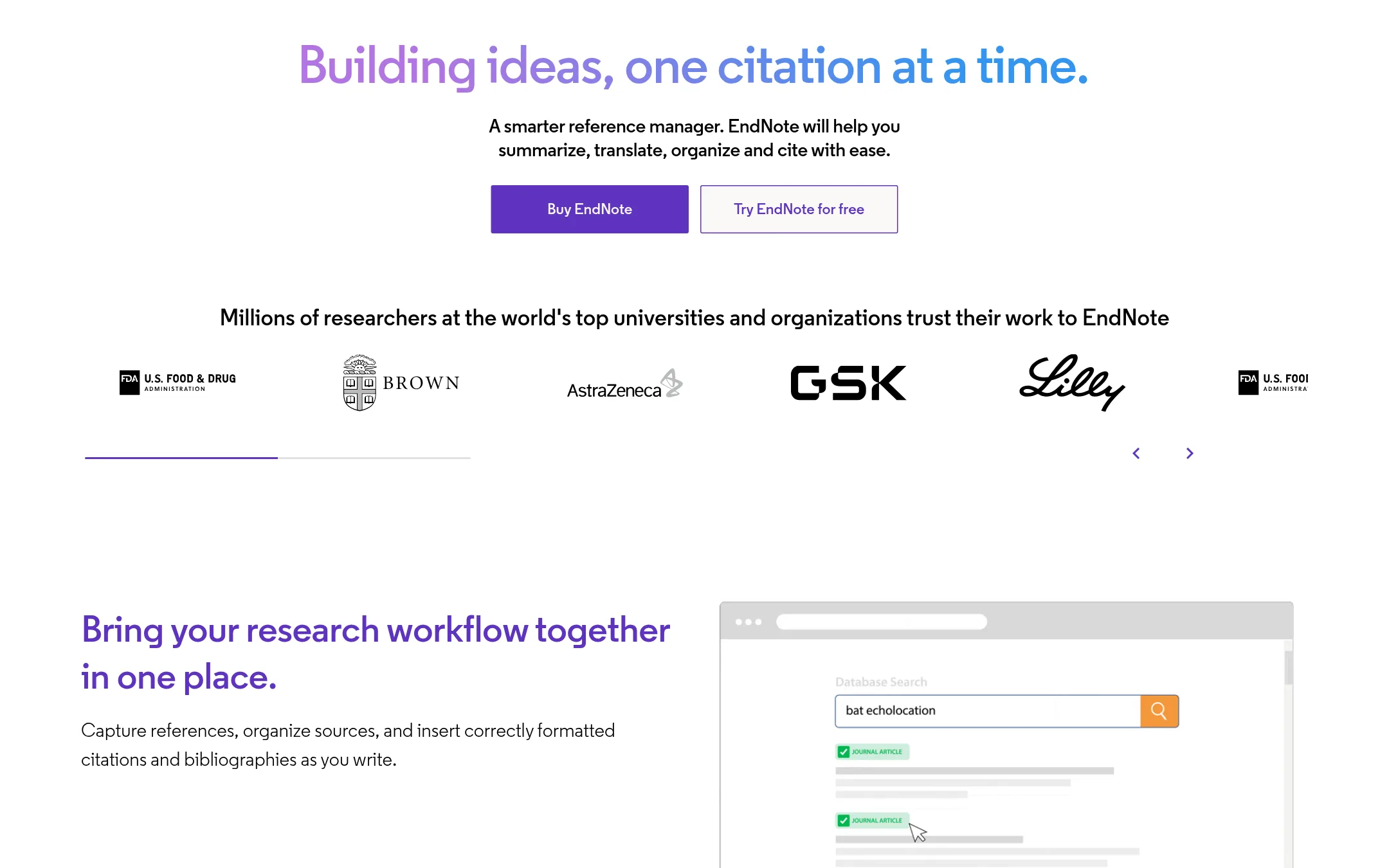
EndNote is a mature reference manager with deep integration into Microsoft Word and Google Docs, plus access to over 7,000 citation styles. Choose it over Mendeley if you need advanced citation formatting, team collaboration with up to 1,000 people, or institutional governance features for libraries and organizations.
Where it is strong
- Over 7,000 citation styles including APA, MLA, Chicago
- Share libraries with up to 1,000 people with permissions and activity logs
- AI-assisted search and PDF translation to break language barriers
Where it falls short
- Pricing is not transparent. Likely requires contacting sales for institutional quotes
- No free tier mentioned, unlike Mendeley's 2GB free storage
- Pricing:
- Pricing is not published on the site.
- PNot published
3.Paperpile
Best for: Researchers and students who write in Google Docs and want a clean, fast reference manager with unlimited PDF storage.
- Pricing
- Not published
- Category
- Other
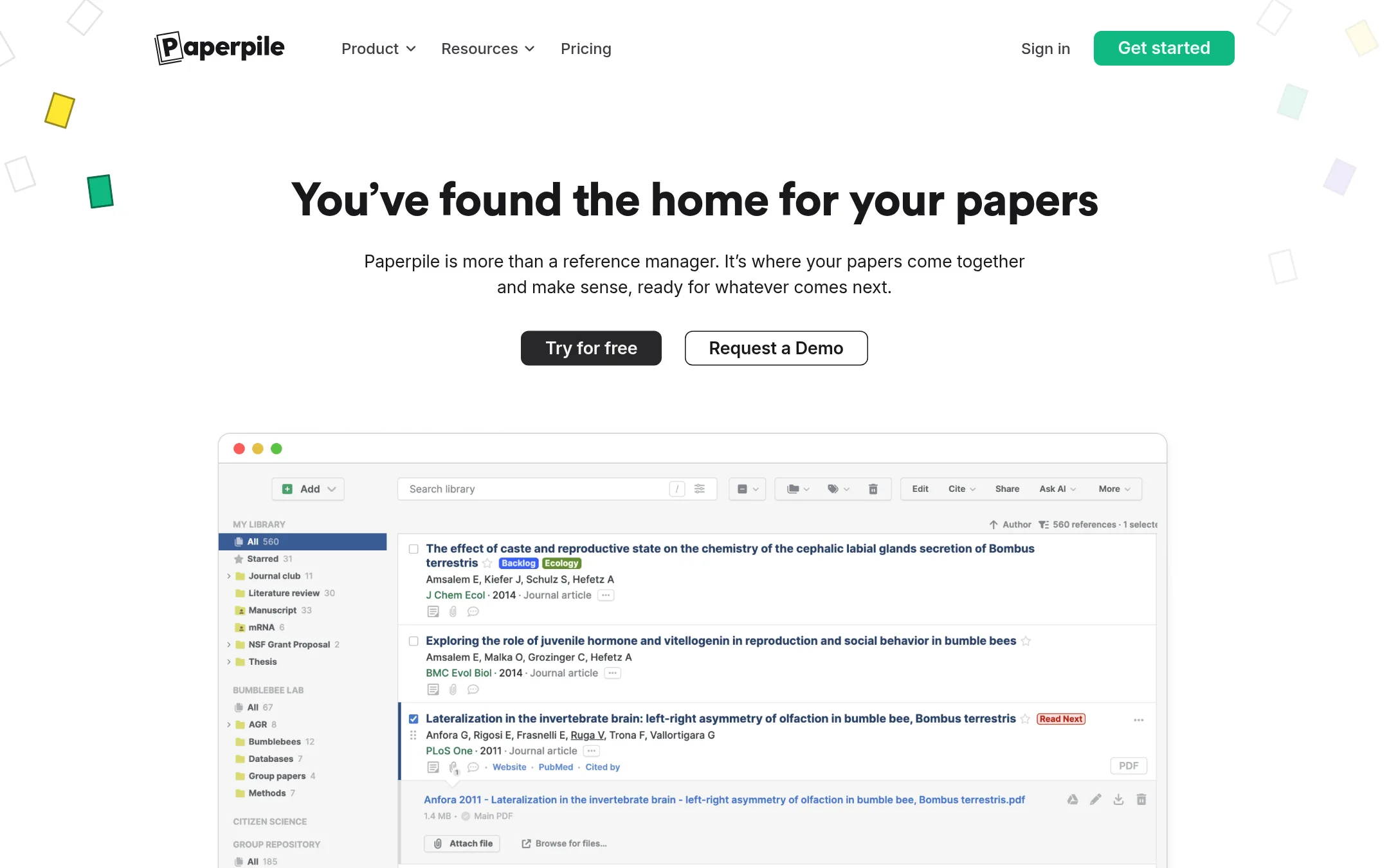
Paperpile is a reference manager built around Google Workspace, with a Chrome-first browser extension and deep Google Docs integration. Choose it over Mendeley if you live in Google Docs and Drive and want unlimited PDF storage with automatic metadata extraction.
Where it is strong
- Unlimited PDF storage on all paid plans
- Google Docs citation plugin with 10,000+ styles
- Automatic metadata extraction and duplicate detection
Where it falls short
- Sign-up and trial require Chrome. Safari and Firefox are still in beta
- No free tier mentioned. Only a 30-day trial
- Pricing:
- Pricing is not published on the site. Plans are billed annually and an academic discount of 50% is available for students, faculty, and eligible nonprofits.
- Switching from Mendeley:
- Moving from Mendeley involves importing your library via standard formats like BibTeX or RIS, then re-organizing folders and labels in Paperpile.
- RNot published
4.ReadCube Papers
Best for: Research-driven companies and teams that need shared libraries, dual-reviewer screening, and AI-powered literature analysis.
- Pricing
- Not published
- Category
- Other
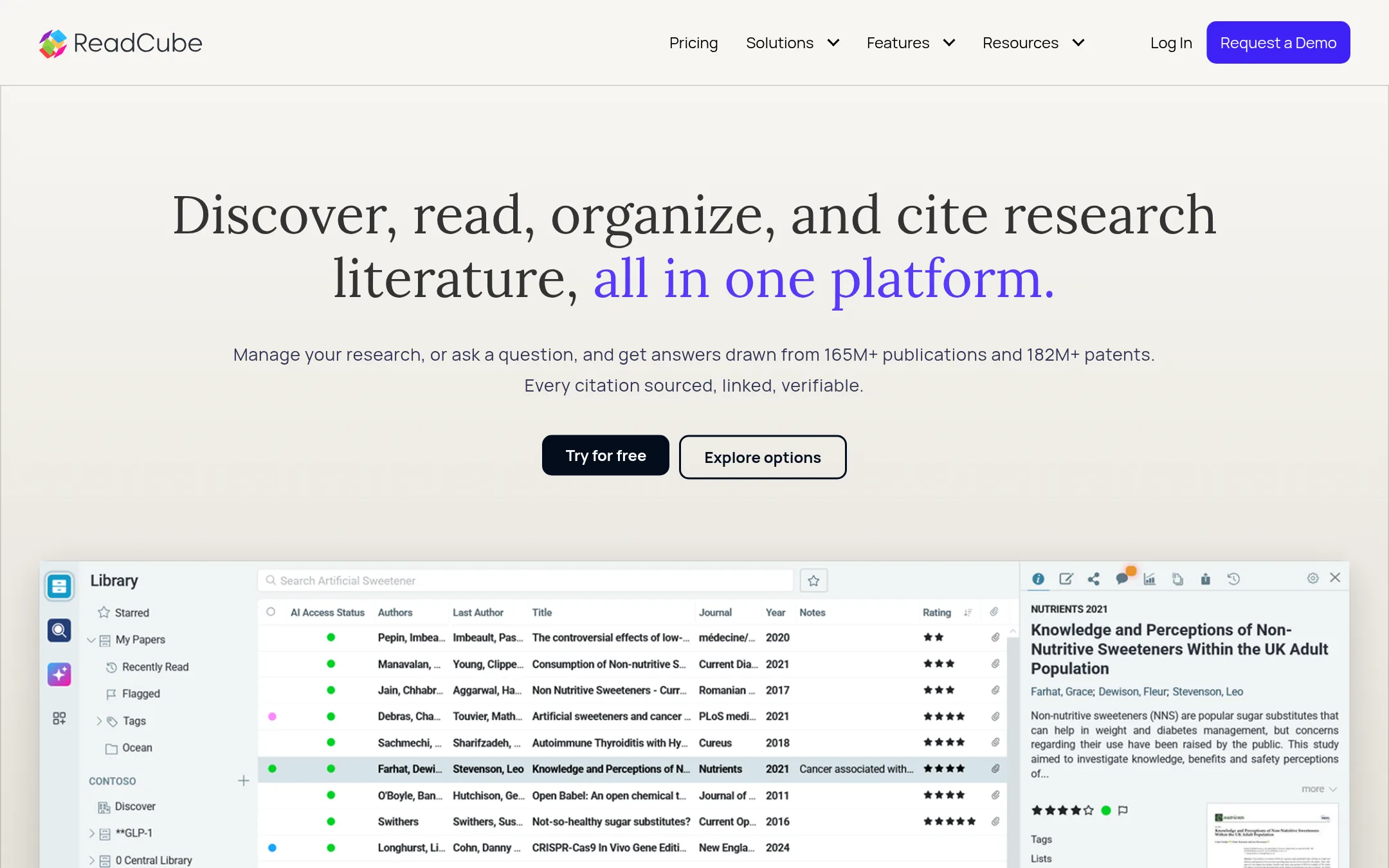
ReadCube Papers is a literature management platform for research teams that need shared libraries, systematic review workflows, and AI-assisted search. Choose it over Mendeley when you work in a company or group that requires collaborative screening, PRISMA reporting, and AI answers linked to sources.
Where it is strong
- Imports from Mendeley, EndNote, and Zotero with full metadata.
- AI chat with PDFs and libraries, with answers linked to exact passages.
- Systematic review features: dual-reviewer screening, PRISMA flow diagrams, and custom extraction forms.
Where it falls short
- Pricing is not transparent. Requires contacting sales for quotes.
- Some AI features have daily limits, and advanced AI is only in Enterprise.
- Pricing:
- Pricing is not published on the site. Plans are Essential, Plus, and Enterprise with a 30-day free trial for Plus.
- Switching from Mendeley:
- Moving from Mendeley is straightforward: ReadCube supports direct import from Mendeley, so you can bring your library over without manual re-entry.
- JFree (open-source)
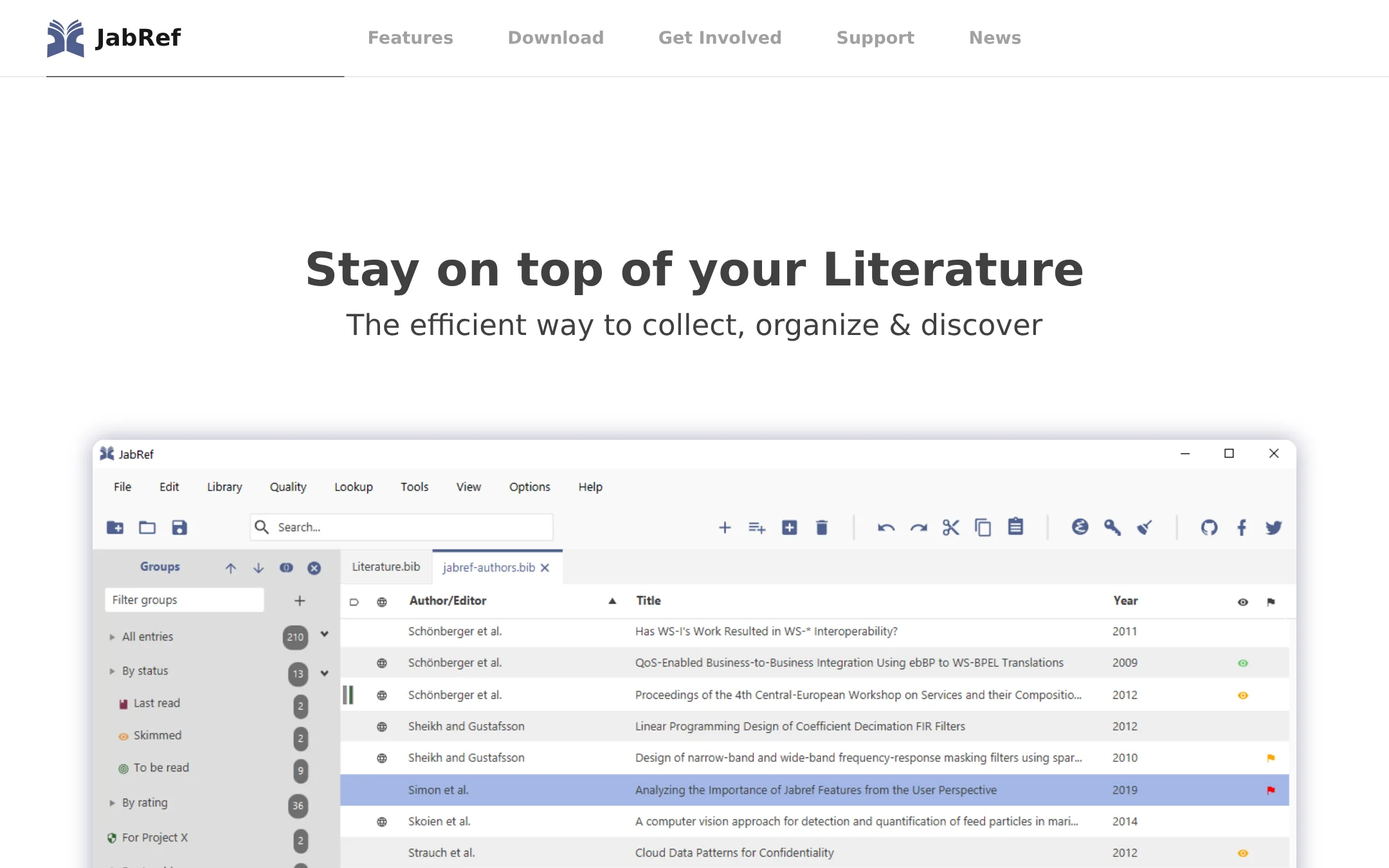
5.JabRef
Best for: Researchers and students who use BibTeX/LaTeX and want a free, open-source reference manager with no vendor lock-in.
- Pricing
- Free (open-source)
- Category
- Other
JabRef is a free, open-source reference manager that stores your library in a simple text-based BibTeX file, so you never get locked into a proprietary format. Choose it over Mendeley if you want full control of your data, prefer working with BibTeX, or want to avoid the cloud-based, AI-heavy workflow Mendeley pushes.
Where it is strong
- 100% free and open-source, with no paid tiers or storage limits
- Stores data in a plain-text BibTeX file, so your library is portable and version-controllable
- Active community of developers and volunteers. You can contribute features or translations
Where it falls short
- No built-in AI features like Mendeley's LeapSpace
- No official cloud sync. You manage your own file storage and backups
- Pricing:
- Pricing is not published on the site.
- Switching from Mendeley:
- Moving from Mendeley involves exporting your library to BibTeX format and importing it into JabRef, which may require cleaning up field mappings.
- CNot published
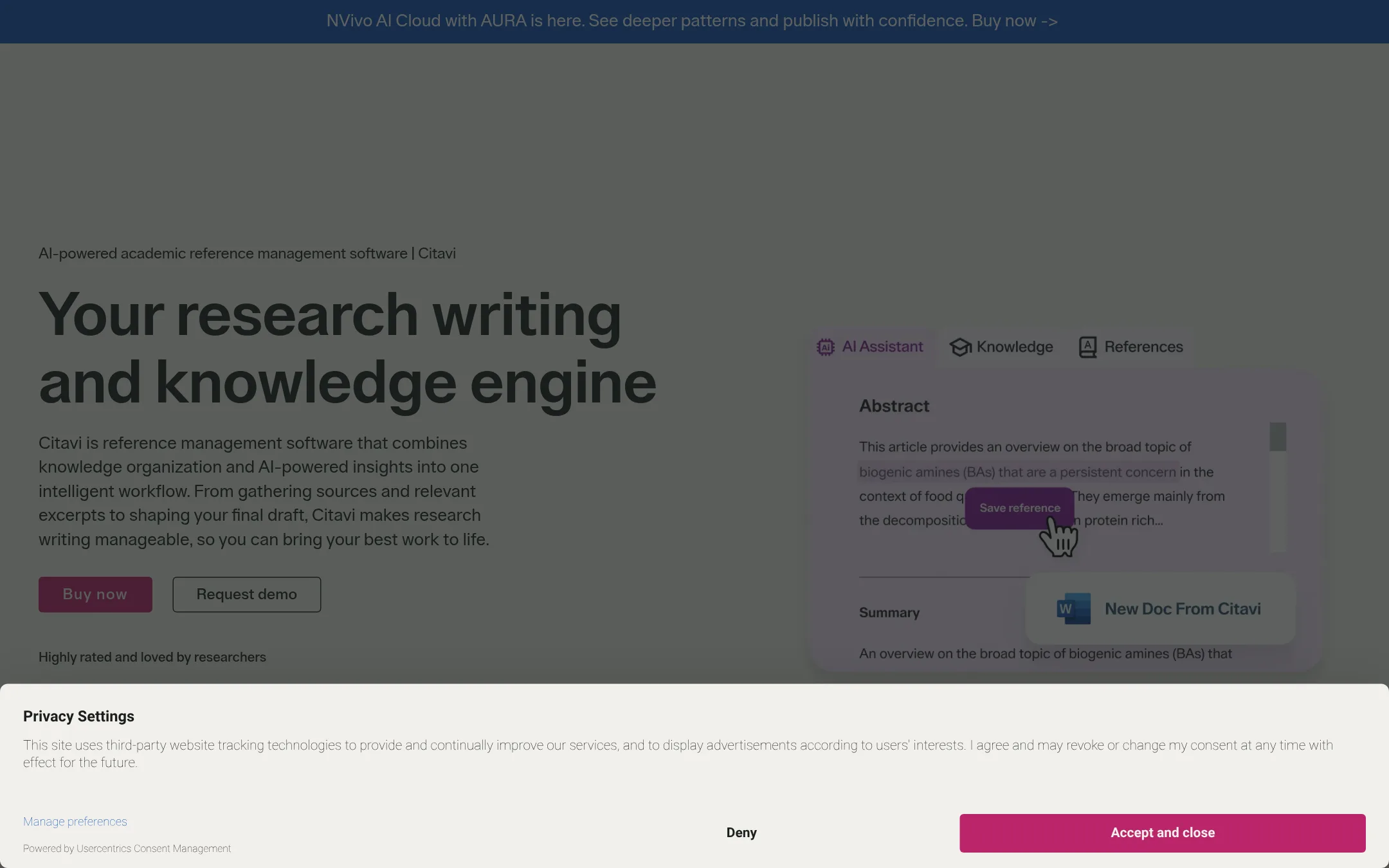
6.Citavi
Best for: Researchers and students who want a reference manager that integrates with Microsoft Word and supports collaborative projects on their own server.
- Pricing
- Not published
- Category
- Other
Citavi is a reference manager built for academic writing and knowledge organization, with features like task planning, PDF annotation, and AI summaries. Choose it over Mendeley if you need a structured workflow that turns quotations and ideas into an outline before you start writing, or if your institution already licenses it.
Where it is strong
- Offers over 11,000 citation styles and a Word add-in for direct citation insertion.
- Includes a task planner and knowledge organization features beyond simple reference storage.
- Supports on-premise collaboration via Citavi DBServer for teams that need data control.
Where it falls short
- Google Docs integration is limited to copy-paste, not a live add-in.
- Free trial is available, but full features require a paid license. No free tier mentioned.
- Pricing:
- Pricing is not published on the site.
- Not published
7.Academia.edu
Best for: Researchers and academics who want to publish, share, and track the impact of their papers across a large scholarly network.

- Pricing
- Not published
- Category
- Education
Academia.edu is a research sharing and discovery platform where you can publish papers, track citations and mentions, and find new research. Choose it over Mendeley if your main goal is to disseminate your work and grow your academic audience, not just manage references.
Where it is strong
- Publish and share papers with a large academic audience
- Track mentions, citations, and analytics for your work
- Search full text and citations across millions of papers
Where it falls short
- No reference management or citation library features like Mendeley
- Premium features are required for advanced search and analytics
- Pricing:
- Pricing is not published on the site.
- Not published
8.Curvenote
Best for: Scientific teams and societies that publish interactive articles or need to preserve provenance across documents, data, and code.
- Pricing
- Not published
- Category
- Communication & Collaboration
Curvenote is a publishing and collaboration platform for scientific teams that need to keep research connected to its underlying data, code, and decisions. Choose it over Mendeley if your work centers on producing interactive, reproducible documents or journals rather than managing a personal reference library.
Where it is strong
- Keeps knowledge connected to data, methods, and evidence
- Supports interactive articles with high-res imagery, code, and data
- Gives editorial control and no author fees for journal publishing
Where it falls short
- No reference management features like PDF annotation or citation tools
- Aimed at organizations, not individual researchers
- Pricing:
- Pricing is not published on the site.
- See website
9.ResearchGate
Education
Find and share research with 25+ million scientists
- Not published
10.Zenodo
Best for: Researchers and projects that need a free, public archive for datasets, software, and other research outputs with DOI assignment.
- Pricing
- Not published
- Category
- Other
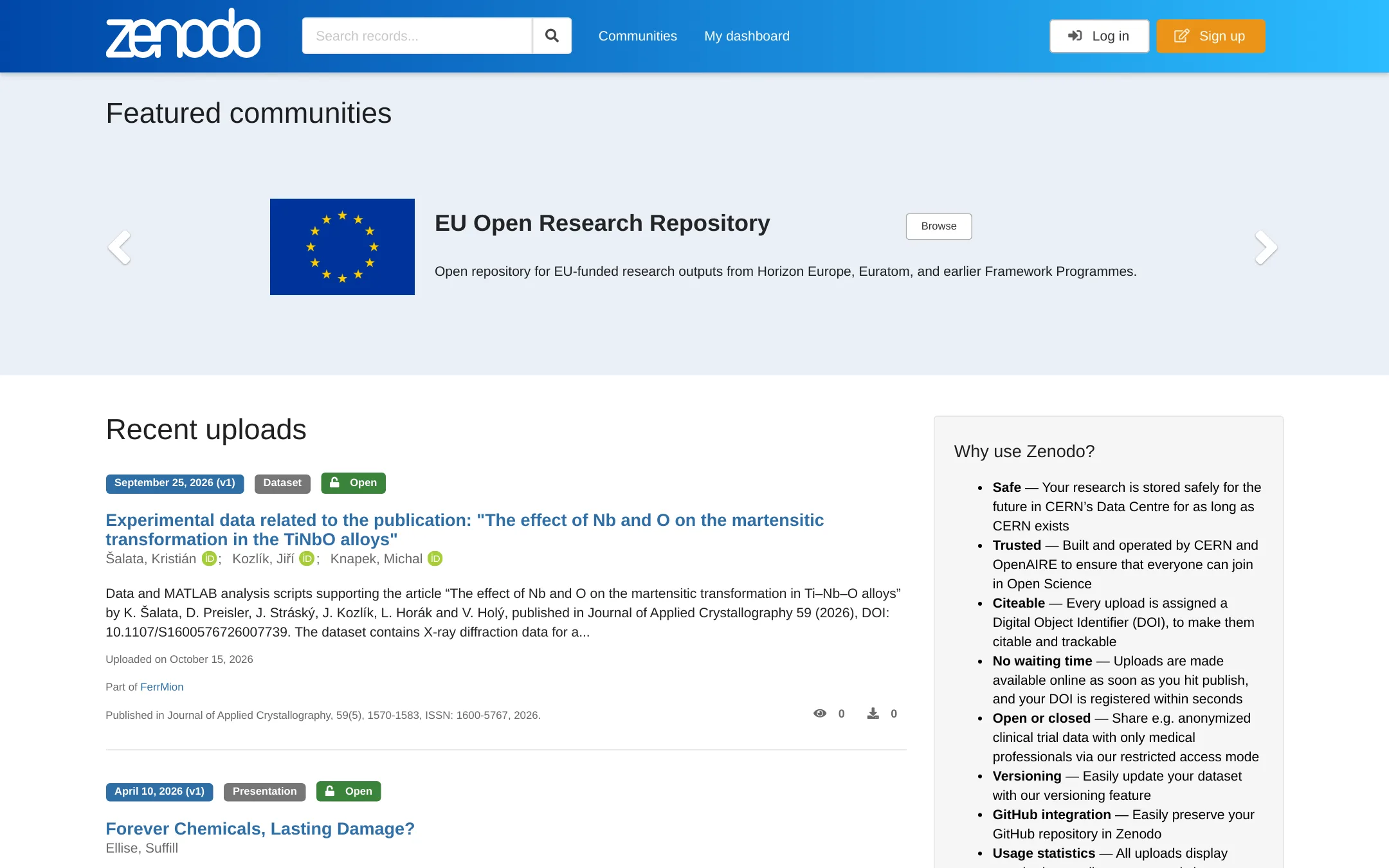
Zenodo is an open repository for sharing and archiving research outputs, including datasets and software, with a focus on EU-funded projects and community collections. Choose it over Mendeley when you need to publish and preserve research artifacts publicly, not just manage personal references and citations.
Where it is strong
- Free to use for researchers and projects
- Supports datasets, software, and publications
- Integrates with community collections and EU-funded initiatives
Where it falls short
- No built-in reference management or citation tools
- Public sharing may not suit private or confidential research
- Pricing:
- Pricing is not published on the site.
- Not published
11.Authorea
Best for: Research teams that need a shared space to co-author papers and track revisions together.
- Pricing
- Not published
- Category
- Education
Authorea is an online platform for collaborative documents, designed for teams that need to write and edit papers together in real time. You would choose it over Mendeley if your main need is joint authoring and version control rather than reference management and PDF annotation.
Where it is strong
- Real-time collaborative editing for multiple authors.
- Built-in version history to track changes.
- Web-based, so no desktop software required.
Where it falls short
- No reference management features like Mendeley's library and citation tools.
- Site is behind a security check, so details are hard to verify.
- Pricing:
- Pricing is not published on the site.
- Not published
12.LabArchives
Best for: Research labs and academic teams that need a structured electronic lab notebook with inventory and sample tracking, not just a reference manager.
- Pricing
- Not published
- Category
- Education
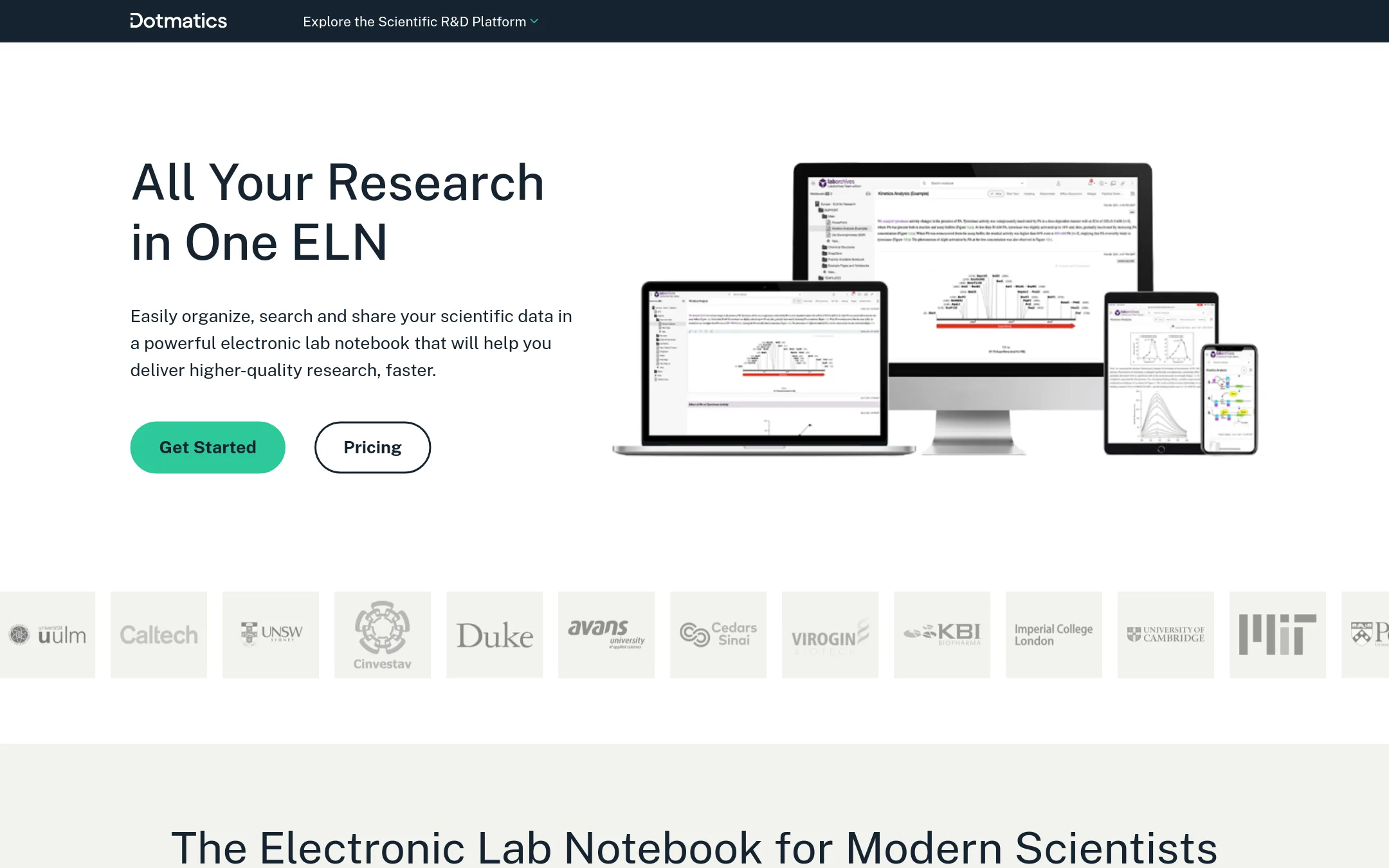
LabArchives is an electronic lab notebook (ELN) designed for recording and managing scientific research data, with features like inventory tracking and course management. You'd choose it over Mendeley if your work centers on lab experiments, sample management, and team collaboration on raw data, rather than just reference management and citation.
Where it is strong
- Free plan includes 2 owned notebooks and 1GB storage per user
- Inventory add-on lets you link reagents to experiments and auto-debit items
- Course management tools for education, priced at $25 per student per term
Where it falls short
- Free plan has a 25MB file limit, which may be restrictive for large datasets
- Advanced features like SAML SSO and API are only available on the custom Enterprise plan
- Pricing:
- Pricing is not published on the site.
- Switching from Mendeley:
- Moving from Mendeley involves shifting from a reference manager to a full ELN, so you'd need to set up notebook structures and migrate your research data, not just your citations.
See more comparisons in Education alternatives.
FAQ
Questions about Mendeley alternatives
Which Mendeley alternative is best for individual researchers on a budget?
Zotero is the strongest choice because it is free and open-source, with unlimited shared libraries and support for over 9,000 citation styles. It has no paid tiers, though optional paid storage is available for syncing. JabRef is also free and open-source, but it requires managing your own file storage and backups.
Can I import my existing Mendeley library into these alternatives?
ReadCube Papers explicitly supports importing from Mendeley with full metadata. Other tools like Zotero and EndNote typically offer import options, but the entries do not specify Mendeley import. Check each product's documentation for exact steps.
Which alternative has the best integration with Google Docs?
Paperpile is built around Google Workspace with a Chrome-first extension and deep Google Docs integration, including a citation plugin with 10,000+ styles. Zotero also works with Google Docs, but Paperpile is more specialized for that workflow. EndNote integrates with Word and Google Docs but is less focused on Google.
Are there any free alternatives with no storage limits?
Zotero is free and open-source with no storage limits for the software itself, but syncing requires optional paid storage. JabRef is 100% free with no paid tiers or storage limits, but you manage your own file storage. Mendeley offers 2GB free storage, which is limited.
Which alternative is best for collaborative research teams?
EndNote supports sharing libraries with up to 1,000 people with permissions and activity logs, making it ideal for large teams. Zotero offers unlimited shared libraries for collaboration at no cost. ReadCube Papers provides shared libraries and dual-reviewer screening for systematic reviews, but pricing requires contacting sales.
Last updated October 31, 2026.