Mercoa alternatives
5 products compared · Updated November 9, 2026
The short answer
The three strongest Mercoa alternatives are Tipalti, Routable and Bill.com. Tipalti suits mid-market or global finance teams paying many suppliers, creators or contractors across borders with AP controls across several entities. Routable suits finance teams sending high volumes of payouts to payees in many countries that need tax form collection and 1099 filing. Bill.com suits finance teams and accounting firms that want to run AP, AR and spend in one tool without building a payments product.
Your shortlist, at a glance
Read the comparisons ↓ TipaltiFrom $99/mo + feesFinance teams at mid-market or global companies that pay many suppliers, creators or contractors across borders and need AP controls across several entities.
- BBill.comPer user, plus feesFinance teams and accounting firms that want to run AP, AR and spend in one tool without building a payments product
- PPaystandNot publishedFinance teams at businesses running NetSuite or Sage Intacct that want to cut transaction fees on receivables and expenses.
 RoutableNot publishedFinance teams that send high volumes of payouts to vendors or payees in many countries and need tax form collection and 1099 filing
 ChargebeeNot publishedSaaS and AI companies that need subscription, usage-based or hybrid billing for their own customers
About Mercoa and its alternatives
Mercoa is an embedded B2B payments platform. According to its site, it provides BillPay, invoicing and payouts APIs that software companies can integrate so their own customers can pay invoices, send branded invoices and manage accounts payable and receivable inside the product. Its site highlights AI-driven invoice creation, payment reminders and virtual card disbursements.
When comparing alternatives, weigh how each tool is priced, since some publish plan prices and others only show tiers or require a demo. Check which regions and currencies you pay or collect in, which accounting systems and ERPs it connects to, what support and implementation involve, and what the contract terms are. The main question is whether you need payments embedded inside your own product or a tool your finance team runs directly.
Explore the alternatives
- From $99/mo + fees
1.Tipalti
Best for: Finance teams at mid-market or global companies that pay many suppliers, creators or contractors across borders and need AP controls across several entities.
- Pricing
- From $99/mo + fees
- Category
- Finance & Accounting
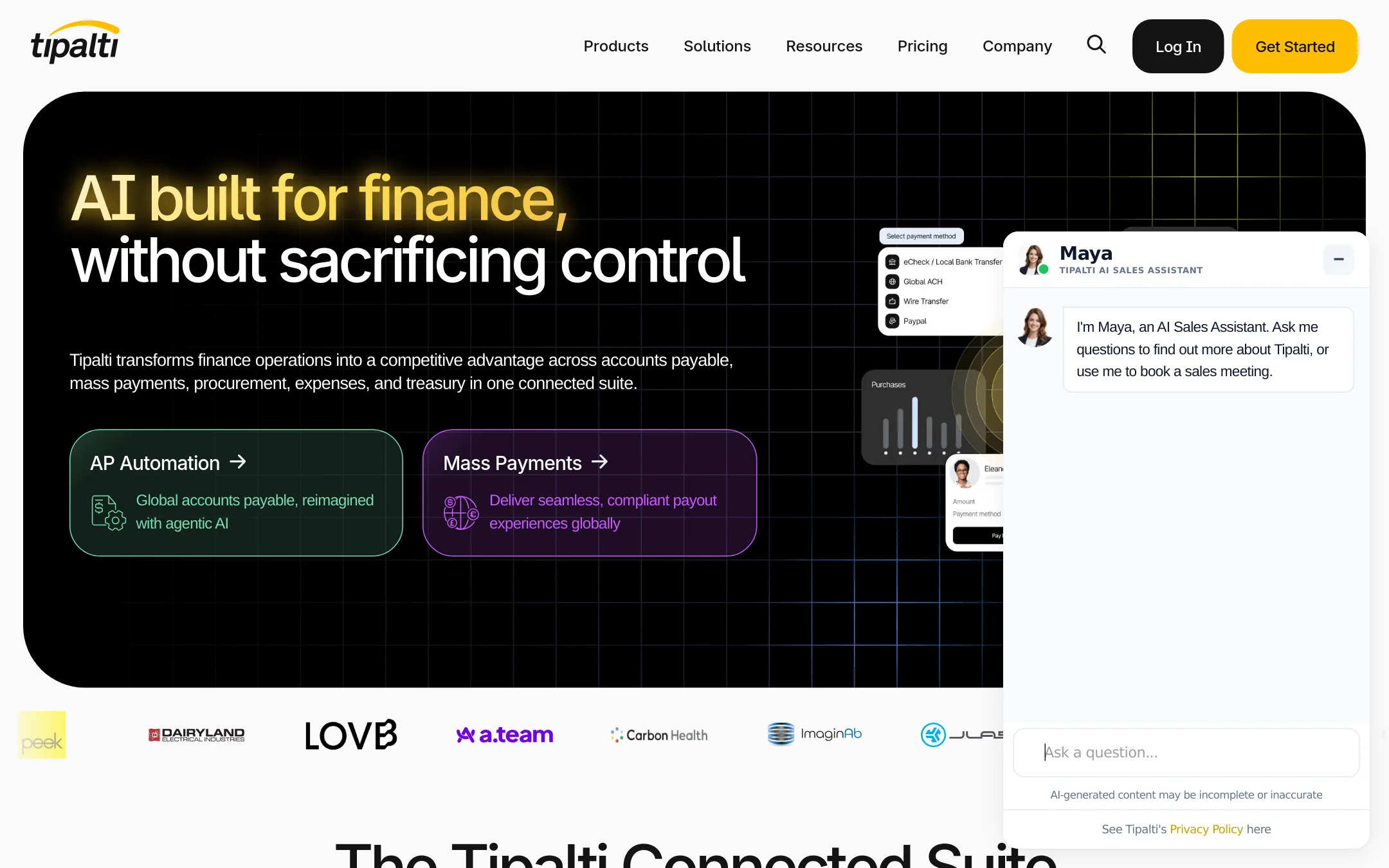
Tipalti is a finance automation suite covering accounts payable, mass payments, procurement, expenses and treasury in one connected platform. A team would pick it over Mercoa when the main job is paying large, spread-out payee networks across many countries, or when they need AP automation tied closely to an ERP and multi-entity accounting rather than embedded payments inside their own product.
Where it is strong
- Pays suppliers and payees in 200+ countries and territories in 120 currencies using 50+ payment methods.
- Native ERP integrations with NetSuite, Sage Intacct, QuickBooks, Microsoft Dynamics and SAP.
- Multi-entity accounting with entity-specific rules and centralized visibility across subsidiaries.
Where it falls short
- It is built to run a company's own finance operations, so it is not designed to be embedded as branded BillPay inside another software produ
- Costs can grow with transaction volume, and complex environments may need paid professional services for implementation.
- Pricing:
- Pricing is published on the site: Accounts Payable plans start at $99 per month with per-invoice and payment transaction fees, and Mass Payments starts at $249 with transaction pricing on top.
- BPer user, plus fees
2.Bill.com
Best for: Finance teams and accounting firms that want to run AP, AR and spend in one tool without building a payments product
- Pricing
- Per user, plus fees
- Category
- Other
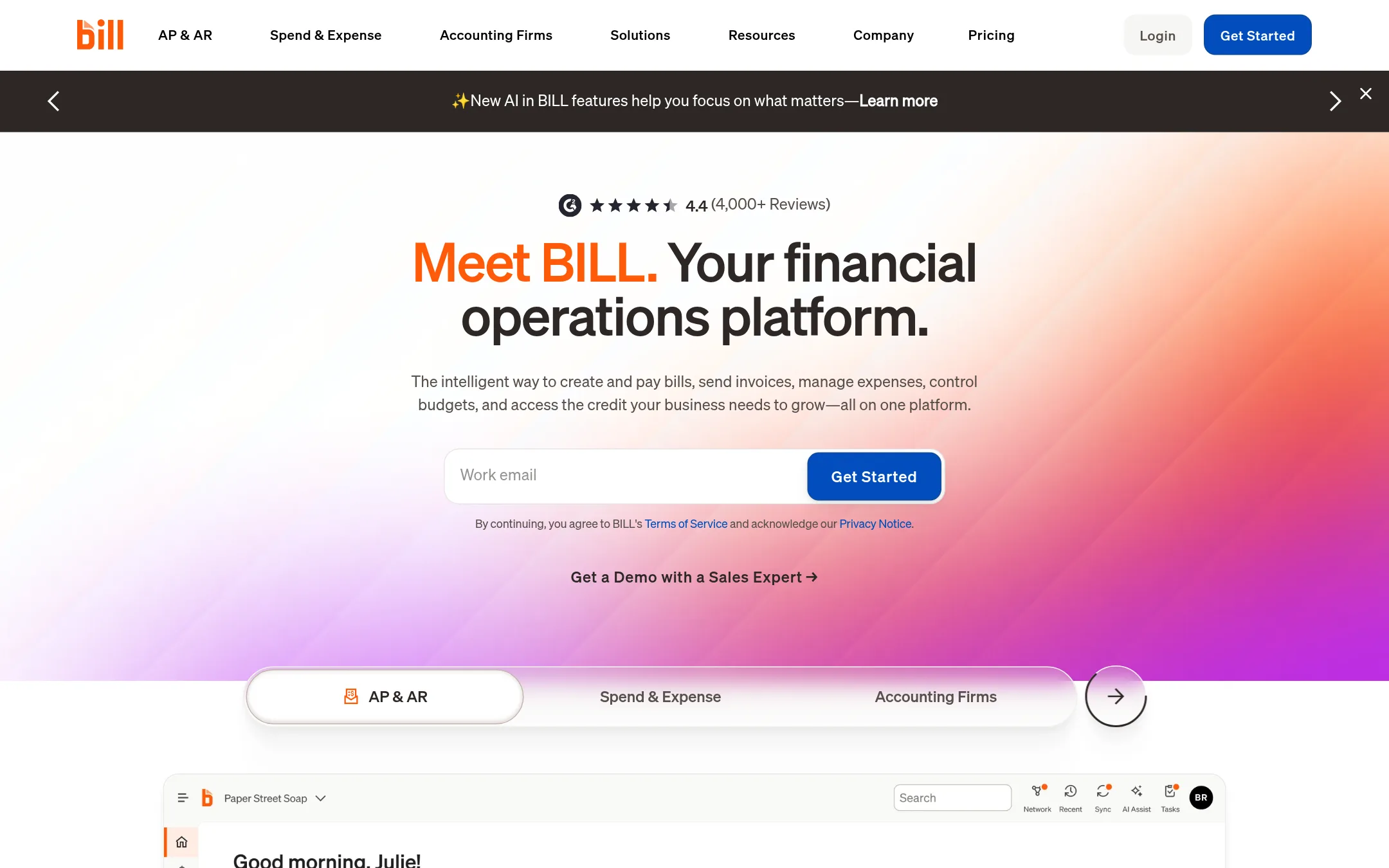
Bill.com is a financial operations platform for businesses and accounting firms. It covers accounts payable, accounts receivable, spend and expense management, and business credit on one login, with syncs to QuickBooks, NetSuite, Sage Intacct and other accounting tools. A team would pick it over Mercoa when the goal is to run its own finance operations, not to embed payments inside a product it sells to customers.
Where it is strong
- Spend & Expense is free from per-user software fees and includes corporate cards and credit lines from $1,000 to $5M, subject to approval.
- Native two-way sync with QuickBooks, NetSuite, Sage Intacct, Xero and Microsoft Dynamics, among others.
- Approval workflows, AI bill coding and vendor payment options including ACH, virtual card and check are included.
Where it falls short
- It is built for a business's own finance team, so it does not offer an embedded API or white-label experience for passing payments through t
- AP and AR are per-user priced and some payment types carry per-transaction fees, which makes total cost harder to predict.
- Pricing:
- Pricing is published per user per month on its plans, with Spend & Expense at $0 per user and AP and AR charged per user plus per-transaction fees for some payment types, though exact per-user amounts are not shown in the supplied text.
- PNot published
3.Paystand
Best for: Finance teams at businesses running NetSuite or Sage Intacct that want to cut transaction fees on receivables and expenses.
- Pricing
- Not published
- Category
- Other
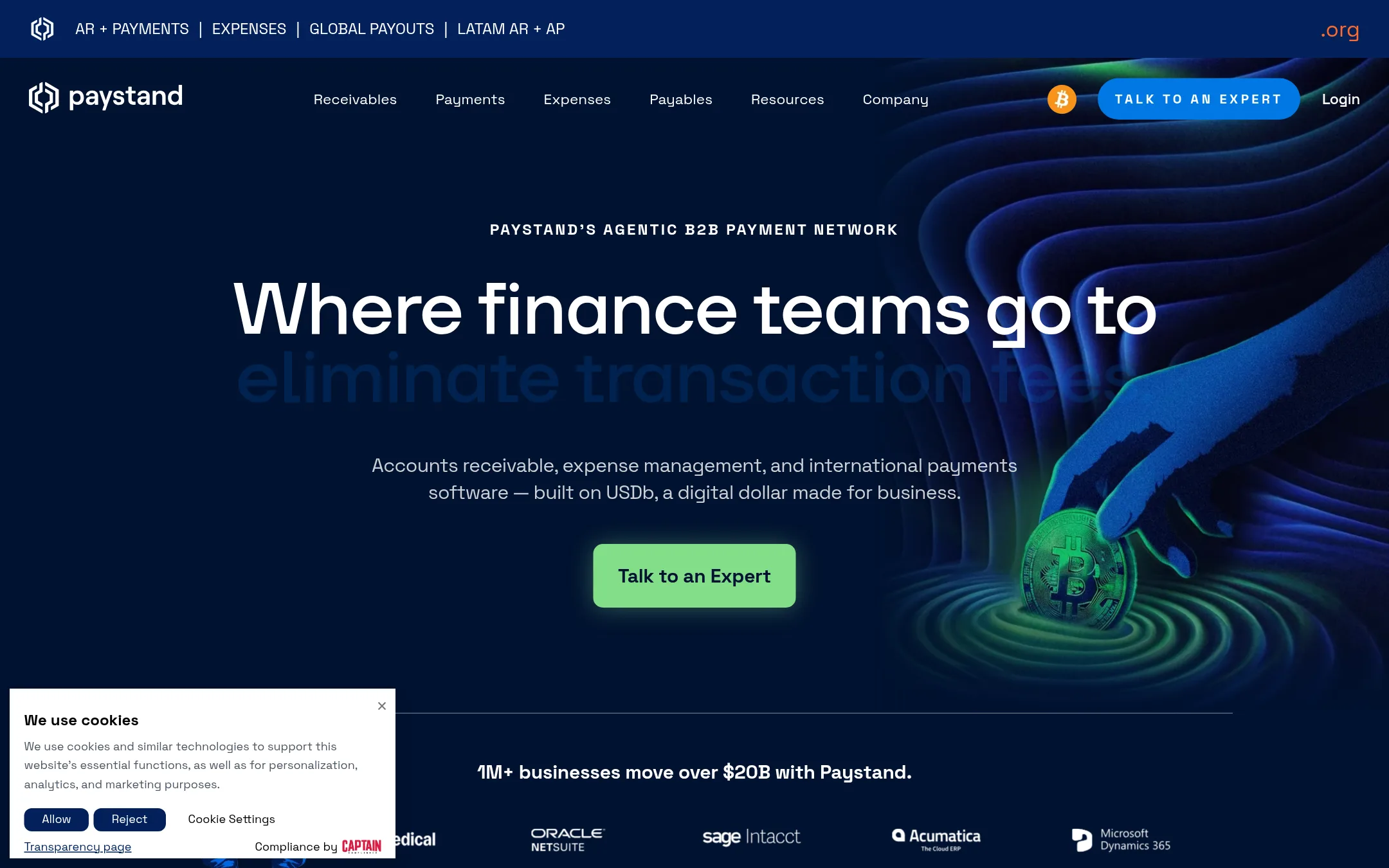
Paystand is a B2B payments network for accounts receivable, expense management and international payments. It is built on USDb, a digital dollar, and sells itself on zero transaction fees and native connections to NetSuite and Sage Intacct. Choose it over Mercoa when you are a finance team inside a business that already runs NetSuite or Sage Intacct and want to collect and pay without per-transaction fees, not when you are building payments into your own software product.
Where it is strong
- Zero transaction fees, according to the site
- Native to NetSuite and Sage Intacct
- AI agents for reporting, spend and collections
Where it falls short
- Built for in-house finance teams, not for embedding payments into a SaaS product the way Mercoa is
- Pricing is not published, so cost has to come from a demo
- Pricing:
- Pricing is not published on the site.
- Not published
4.Routable
Best for: Finance teams that send high volumes of payouts to vendors or payees in many countries and need tax form collection and 1099 filing
- Pricing
- Not published
- Category
- Finance & Accounting
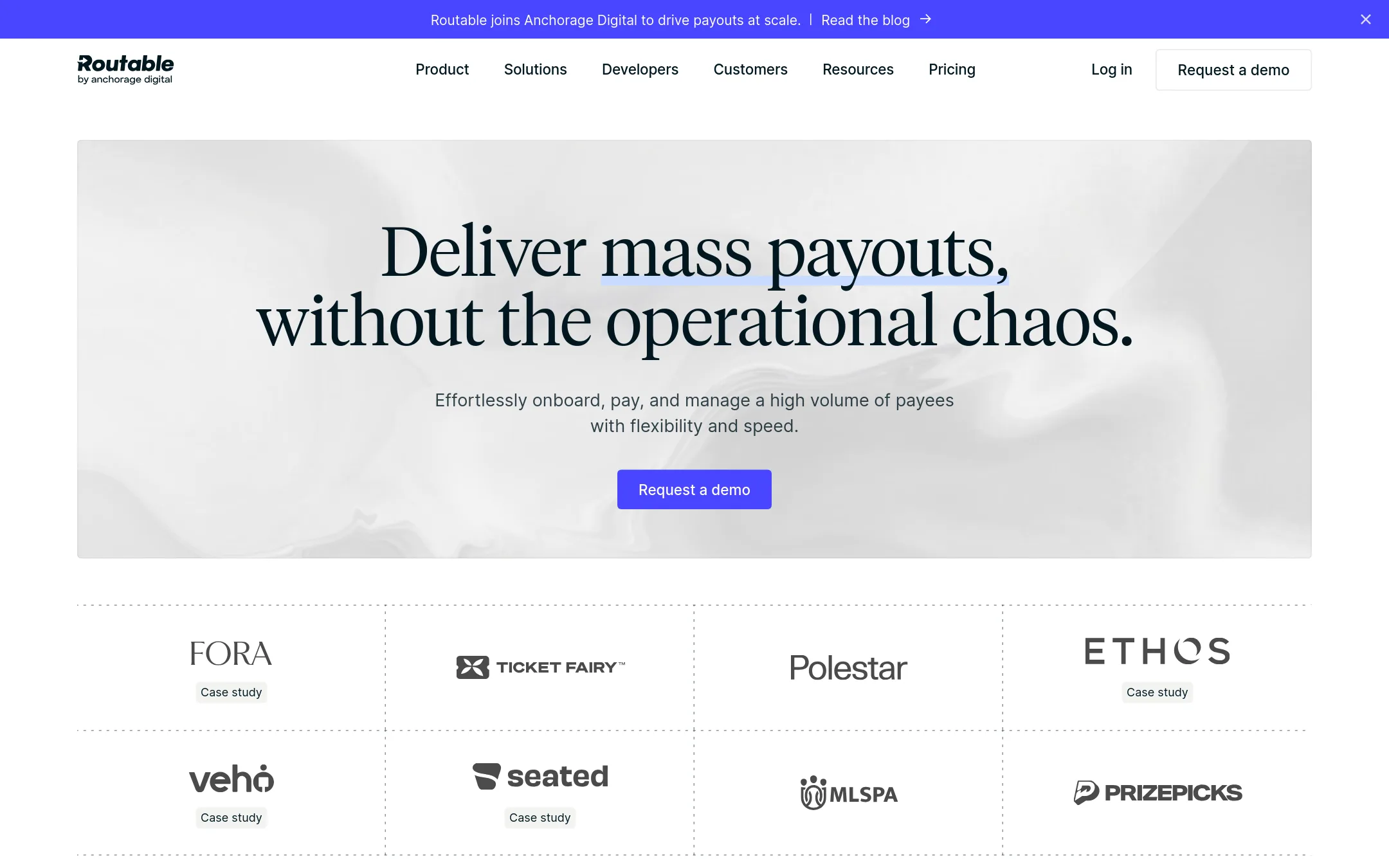
Routable handles large volumes of outgoing payments: mass payouts, vendor onboarding with tax forms, and AP automation. A company paying thousands of contractors, suppliers or creators across many countries would pick it over Mercoa, which is built mainly to embed BillPay and invoicing inside another software product.
Where it is strong
- Pays to 220+ countries and territories in 140+ currencies
- Bulk payments through a single CSV upload or the API
- Vendor onboarding with tax forms, TIN validation and 1099 filing
Where it falls short
- Its focus is on paying out rather than on embedding invoicing and payment links inside your own product
- Pricing tiers and add-ons are not listed with figures, so costs are hard to compare up front
- Pricing:
- Pricing is not published as specific figures on the site, only tiered plans named Core and Invoice Automation with add-ons.
- Not published
5.Chargebee
Best for: SaaS and AI companies that need subscription, usage-based or hybrid billing for their own customers
- Pricing
- Not published
- Category
- Finance & Accounting
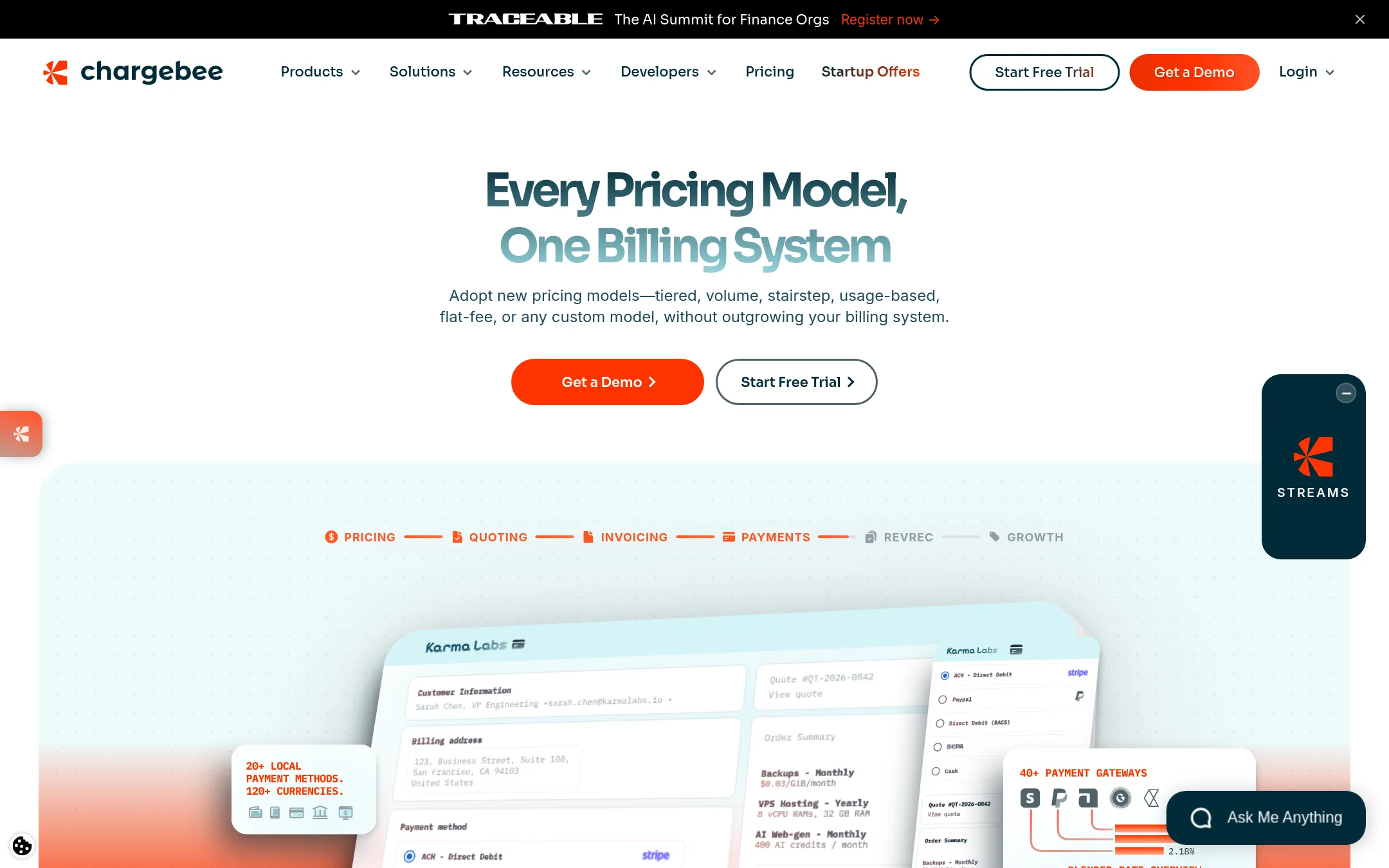
Chargebee is a billing and monetization platform for subscriptions, usage-based pricing and AI products, covering invoicing, payments, revenue recognition and collections. Someone would pick it over Mercoa when the core need is recurring or usage-based billing for their own customers, not paying bills or collecting invoices between businesses.
Where it is strong
- Covers subscriptions, usage-based, credit and prepaid billing models
- Connects to 40+ payment gateways and supports 100+ currencies
- Includes revenue recognition, tax handling and collections in the same platform
Where it falls short
- Built around billing your own customers, so it does not offer Mercoa's accounts payable workflows
- Has no embedded BillPay product for handing payment features to your own customers
- Pricing:
- Pricing is not published on the site.
See more comparisons in Finance & Accounting alternatives.
FAQ
Questions about Mercoa alternatives
What is the main difference between Mercoa and Tipalti?
Mercoa is built to be embedded as BillPay and invoicing inside another software product for that product's customers. Tipalti is built for a company's own finance team to run accounts payable, mass payments and treasury across many countries and entities. Tipalti also connects closely to ERPs such as NetSuite and SAP.
Which alternative is best for paying a large number of contractors across many countries?
Routable is the strongest fit for this. It pays to 220+ countries and territories in 140+ currencies, supports bulk payments through a CSV upload or API, and handles vendor onboarding with tax forms and 1099 filing. Tipalti is a close second if you also need multi-entity AP controls.
Can Bill.com be used to offer payments to my own customers?
Bill.com is built for a business's own finance operations, and the entry notes it does not offer an embedded API or white-label experience for passing payments through to your customers. It fits teams that want AP, AR and spend in one tool without building a payments product. Mercoa is the better match if embedding is the goal.
Is Paystand a good choice if I want to avoid transaction fees?
Paystand advertises zero transaction fees on its site and native connections to NetSuite and Sage Intacct, which suits finance teams already on those systems. Its pricing is not published, so you will need a demo to confirm total cost. It is designed for in-house teams rather than for embedding payments into a SaaS product.
Which alternatives publish clear pricing?
Tipalti publishes starting prices, with Accounts Payable plans from $99 per month and Mass Payments from $249, plus transaction fees. Bill.com prices per user per month, with its Spend & Expense product free of per-user fees. Routable, Chargebee and Paystand do not publish specific figures on their sites, so you will need to request a quote.
Last updated November 9, 2026.