Alternatives to Metabase — Open source analytics with AI-powered self-service BI and embedded dashboards.
Teams searching for Metabase alternatives often need open source or affordable BI tools that support natural language queries, self-service dashboards, and easy embedding without steep learning curves or high costs. Metabase stands out for its quick deployment, 20+ data source connections, and AI features like Metabot that let anyone explore data conversationally while maintaining permissions and a governed semantic layer. Alternatives may emphasize different strengths such as deeper enterprise integrations, advanced visualization libraries, or fully managed cloud experiences. When evaluating options, consider factors like self-hosting flexibility, AI governance controls, CSV uploads, usage analytics, and the ability to define reusable metrics that keep both human and AI answers consistent. The right choice depends on whether your priority is startup-friendly pricing, customer-facing embedded analytics, or scaling across massive data warehouses with strict compliance.
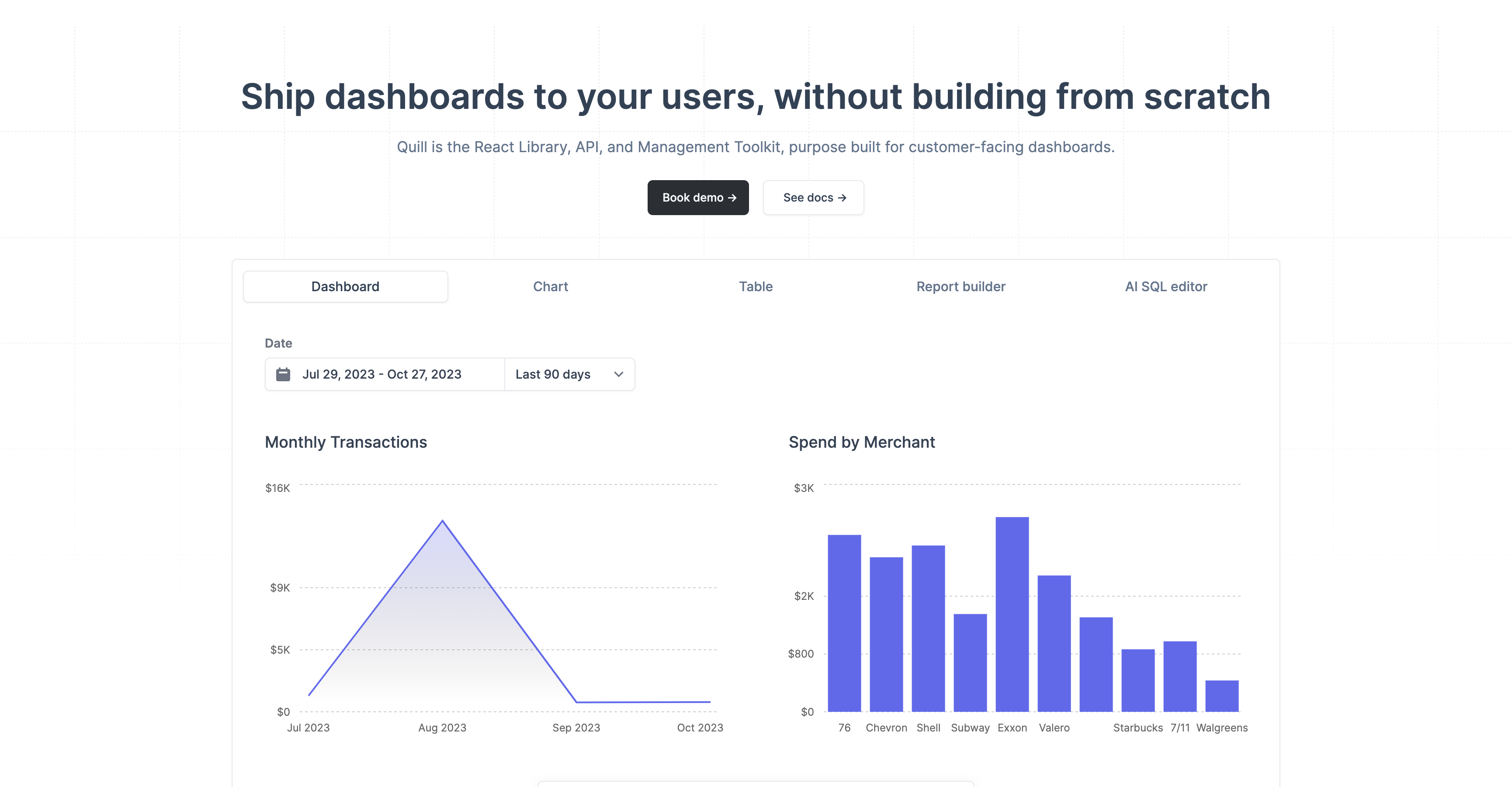
QuillMetabase is an open-source BI tool popular for internal dashboards that also offers embedding. Unlike Quill, it requires more setup to match your app's design system and typically pulls data into its own query engine. Quill's React components and zero-data-movement approach give SaaS teams tighter integration and stronger data-residency guarantees when reports must live inside the product experience.
Tableau's embedding capabilities are mature and feature-rich but usually involve higher licensing costs and data movement into Tableau's environment. Quill targets developers who want to stay inside their own React codebase and cloud, offering lower friction and no per-viewer fees for customer-facing dashboards.
Power BI Embedded lets Microsoft-centric teams add analytics to apps, yet it often requires Azure infrastructure and separate capacity planning. Quill provides a database-first, React-native alternative that runs entirely in your existing environment and avoids additional cloud dependencies for teams not already in the Microsoft ecosystem.
Retool provides a low-code builder for internal tools and some customer-facing apps. It excels at complex workflows but uses its own component system rather than native React. Quill is lighter for pure dashboard embedding, keeps all data in your cloud, and avoids forcing teams to adopt another UI framework when they already have a polished frontend.
Apache Superset is a powerful open-source visualization platform used by data teams for exploration. Embedding it requires significant custom work and infrastructure. Quill offers a simpler React integration path and a hosted portal for non-technical updates, making it faster for product teams that want customer reporting without managing another full analytics stack.
LookerLooker offers strong semantic modeling and embedding but is positioned at larger enterprises with correspondingly higher costs. Quill serves startups and mid-market SaaS companies that need quick React integration and full data control without committing to a heavyweight BI platform.
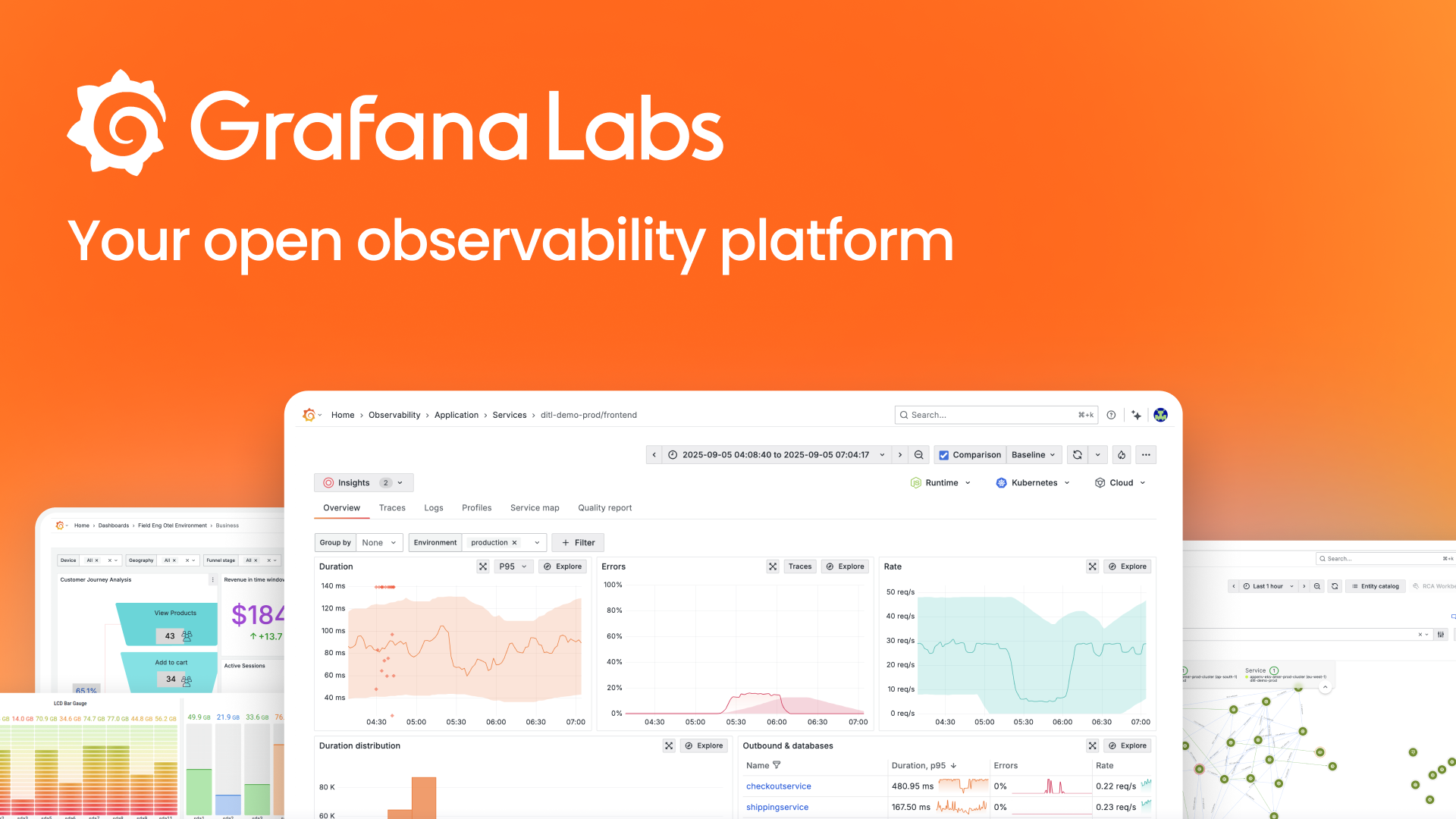
Grafana LabsGrafana is widely used for observability dashboards and supports embedding. Its strength lies in time-series data rather than general business reporting. Quill is purpose-built for SaaS customer reporting with multi-tenant controls and a React library that matches product UI, whereas Grafana is better suited for infrastructure metrics.
Cube.jsCube.js is a headless BI layer focused on data modeling and API access. It requires developers to build their own frontend on top. Quill adds the missing React components and portal so teams can ship polished dashboards faster without building the entire presentation layer themselves.