
Meteor alternatives
6 products compared · Updated November 13, 2026
The short answer
The three strongest alternatives to Meteor are Browser Use, Browserbase and Anchor Browser, each suited to a different buyer. Browser Use is an open-source browser agent project for engineering teams that want to build and host their own agents. Browserbase is hosted headless browser infrastructure for teams building agent workflows into their own product. Anchor Browser is a cloud Chromium environment for engineering teams that need many parallel browser sessions.
Your shortlist, at a glance
Read the comparisons ↓- PPerplexity AINot publishedResearchers and knowledge workers who need sourced answers to questions fast
 ChatGPTNot publishedFounders and operators who need a general AI assistant for writing, research, images, and code rather than browser automation
- TThe Browser Company DiaNot publishedIndividuals and teams who want an AI-assisted browser for everyday web work rather than automated browser agents
- BBrowserbaseFrom $0 (free tier)Engineering teams building browser agents into their own product that need hosted, scalable headless browsers
 Browser Use$0.02/browser-hourEngineering teams building their own browser agents that need stealth cloud browsers or on-prem deployment
- AAnchor BrowserNot publishedEngineering teams building browser automation into their own products that need many parallel browser sessions
About Meteor and its alternatives
Meteor builds browser agents, software that navigates, reads, and acts across the web. On its site it is known as an agentic browser for people and as structured views of the public web for institutions. Its news items cite a state of the art result of 96.5% on the WebVoyager benchmark and the launch of an agentic browser for macOS in August 2025.
When comparing alternatives in this category, weigh how each product is priced, since some charge per browser hour, per gigabyte of proxy traffic, or per API call, while others do not publish prices at all. Check regional availability and data residency, which matter for regulated or cross-border work. Look at integrations, support levels, and contract terms, and decide early whether you need a finished browser for staff or a developer tool to build agents on.
Explore the alternatives
- PNot published
1.Perplexity AI
Best for: Researchers and knowledge workers who need sourced answers to questions fast
- Pricing
- Not published
- Category
- Other
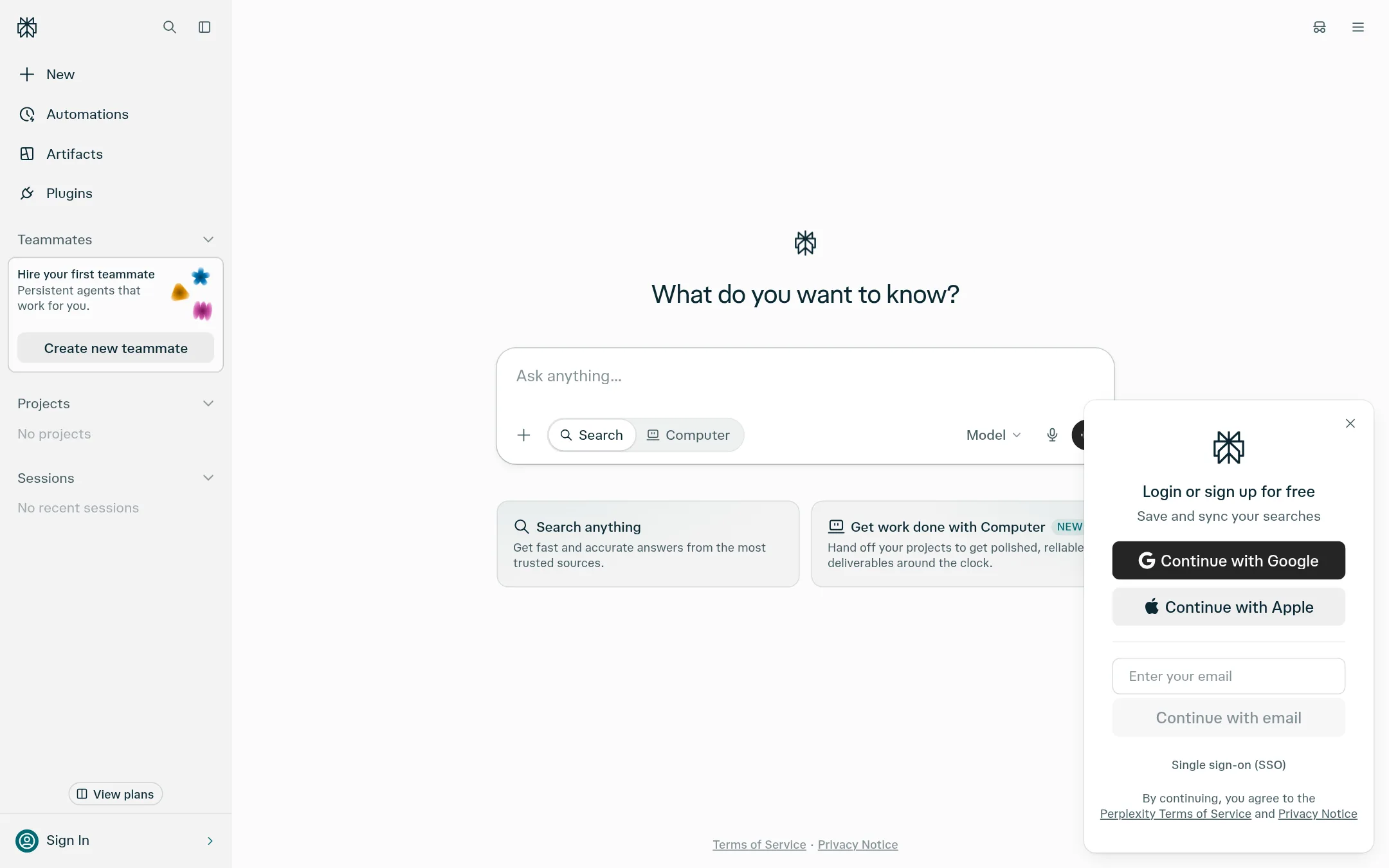
Perplexity is an AI answer engine. You ask a question and it returns a sourced, real-time answer, and it also offers Computer for handing off projects that need finished deliverables. Someone would pick it over Meteor when the main job is research and answers with citations rather than navigating and acting inside a browser.
Where it is strong
- Answers come with sources from the web
- Real-time search across any topic
- Sign-in with Google, Apple, or email
Where it falls short
- Built for answers and deliverables, not for acting in a browser the way Meteor does
- Pricing details are not published on the site
- Pricing:
- Pricing is not published on the site.
- Not published
2.ChatGPT
Best for: Founders and operators who need a general AI assistant for writing, research, images, and code rather than browser automation

- Pricing
- Not published
- Category
- AI & Machine Learning
ChatGPT is a general AI chatbot for answering questions, writing, creating images, uploading files, and coding in one place. A team would pick it over Meteor when the job is reasoning, drafting, or research rather than an agent that operates a browser across websites.
Where it is strong
- Covers writing, research, image creation, file uploads and coding in one chat
- Free to start, with an app available to download
- Saved chats give answers tailored to previous conversations when logged in
Where it falls short
- It does not act on websites for you the way Meteor's browser agents do
- Chats may be reviewed and used to improve AI models, which matters for sensitive company data
- Pricing:
- Pricing is not published in the page text supplied, so the figures could not be confirmed from the site.
- TNot published
3.The Browser Company Dia
Best for: Individuals and teams who want an AI-assisted browser for everyday web work rather than automated browser agents

- Pricing
- Not published
- Category
- Other
The Browser Company Dia is an AI-native browser, which puts it in the same product space as Meteor. The site could not be reached when this page was checked, so its features cannot be confirmed here. A founder might still consider it if they want an AI-assisted browser rather than a browser agent that runs tasks on the web.
Where it is strong
- Sits in the same AI-native browser category as Meteor
- Positioned as a general browser for daily use
- Worth evaluating if you mainly want AI help while you browse
Where it falls short
- The site could not be reached, so current features are unverified
- No published pricing to compare against Meteor
- Pricing:
- Pricing is not published on the site.
- BFrom $0 (free tier)
4.Browserbase
Best for: Engineering teams building browser agents into their own product that need hosted, scalable headless browsers
- Pricing
- From $0 (free tier)
- Category
- Other
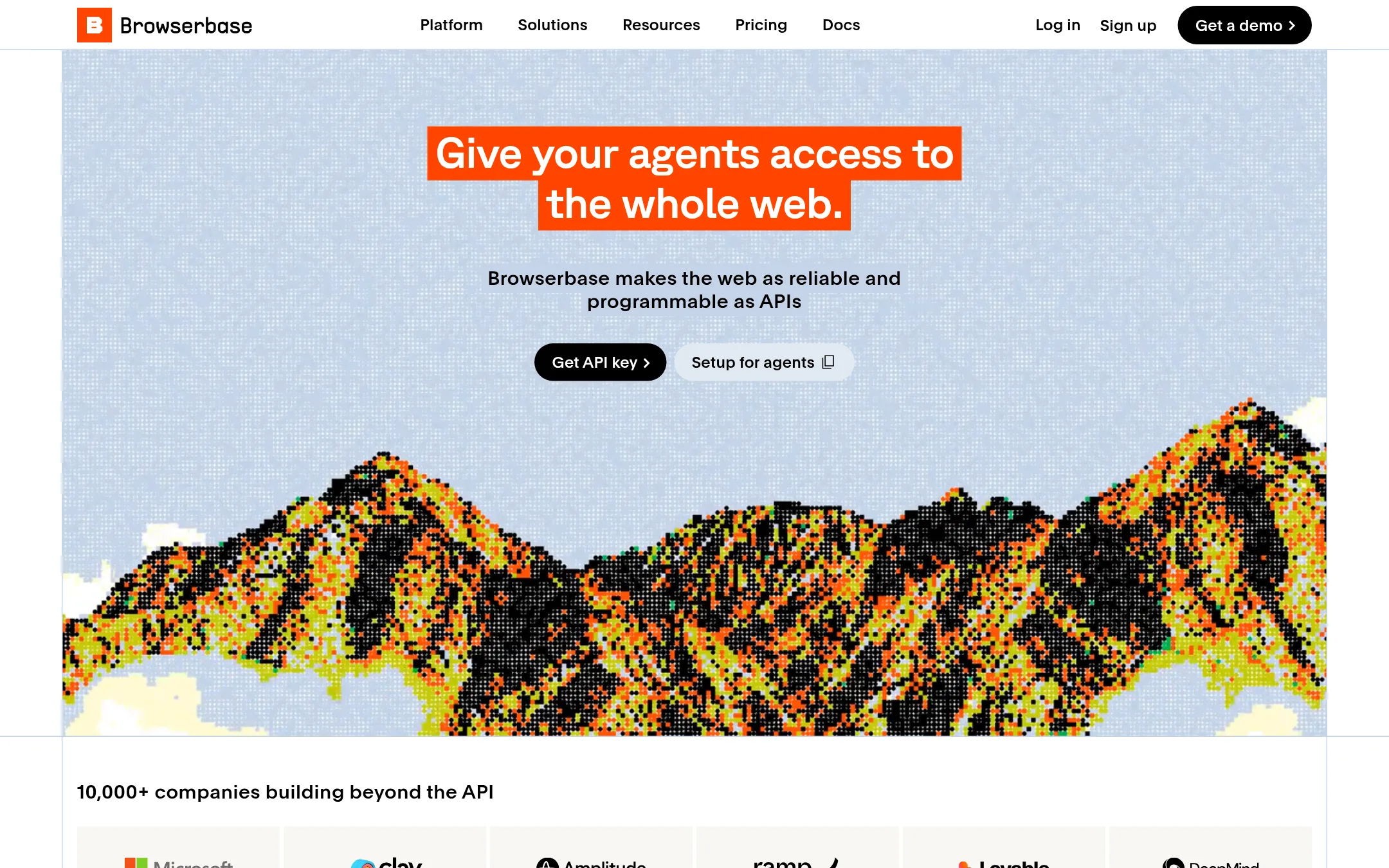
Browserbase is infrastructure for developers who want to give their own AI agents a real browser, a search API and a fetch API. It is a backend for building agents that log in, click through sites and pull data, not an end-user browser. Pick it over Meteor when your team is building agent workflows into its own product and needs programmable browser sessions rather than a browser for people to use.
Where it is strong
- Programmable browser sessions and Search and Fetch APIs in one platform
- Usage-based scaling with no hard caps on concurrency as you grow, per the pricing page
- Enterprise tier offers HIPAA BAA, DPA and SSO
Where it falls short
- Built for developers, so there is no end-user browser app to hand to staff
- Costs scale with browser hours and API calls, which needs monitoring for heavy workloads
- Pricing:
- The Start for Free plan includes 3 concurrent browsers, 1 browser hour and 1,000 Search and 1,000 Fetch calls, the Developer plan is $25 a month with 25 concurrent browsers and 100 browser hours at $0.12 per extra hour, and the Startup plan includes 100 concur
- Switching from Meteor:
- Moving from Meteor would mean rebuilding your browsing workflows as code against Browserbase's APIs rather than using a browser directly.
- $0.02/browser-hour
5.Browser Use
Best for: Engineering teams building their own browser agents that need stealth cloud browsers or on-prem deployment
- Pricing
- $0.02/browser-hour
- Category
- Developer Tools
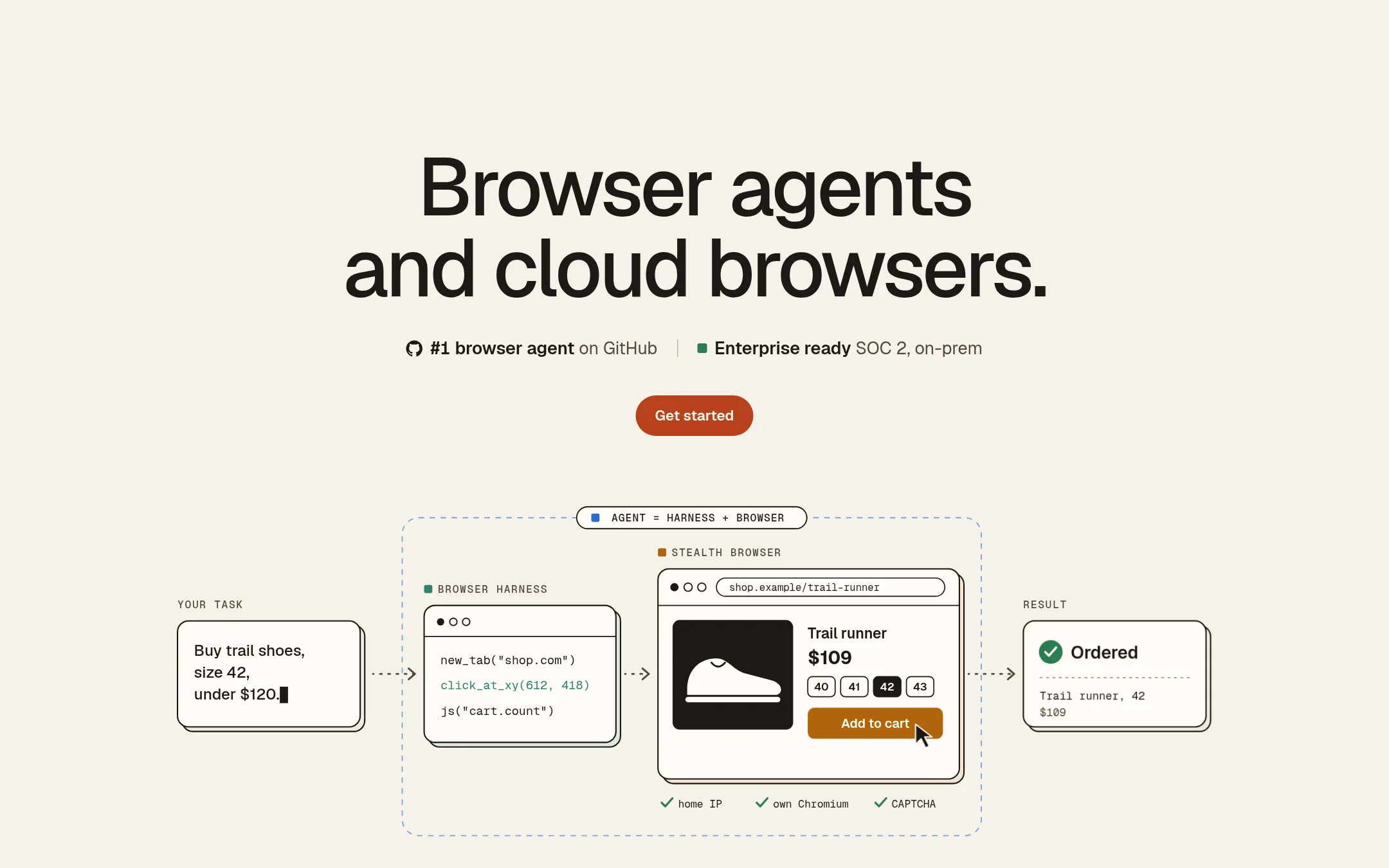
Browser Use is an open-source browser agent project, the most-starred one on GitHub, with MIT-licensed code. It also sells cloud browsers and an agent API, so teams can run web tasks either on their own machines or on managed infrastructure. Someone would pick it over Meteor when they want to build and host their own browser agents for scraping, bot-protected sites, or automated tasks rather than use a finished desktop browser.
Where it is strong
- Open-source under the MIT license, with the browser agent project on GitHub
- Cloud browsers and home-IP proxies are sold separately, so you pay for what you use
- Offers SOC 2 Type II, on-prem deployment, and EU data residency for enterprise buyers
Where it falls short
- Traffic costs can exceed browser costs, since home-IP proxies run $5 per GB
- It is a developer tool with an API and code, not a finished browser you can install and use day to day
- Pricing:
- Cloud browsers cost $0.02 per browser-hour, proxy traffic costs $5 per GB on home-IP proxies, and self-serve credits start at $5 with a $1 free signup credit that never expires.
- ANot published
6.Anchor Browser
Best for: Engineering teams building browser automation into their own products that need many parallel browser sessions
- Pricing
- Not published
- Category
- Other
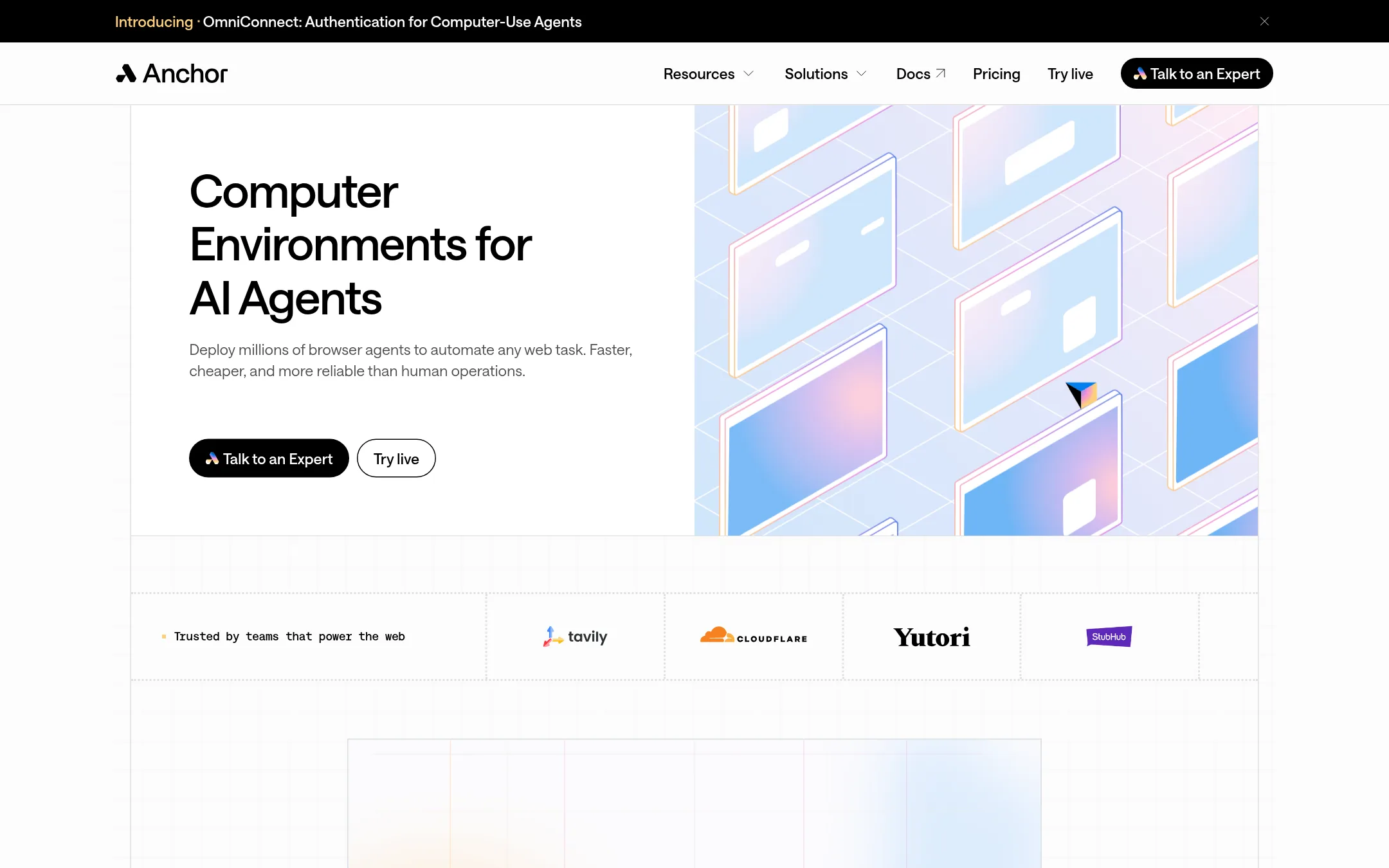
Anchor Browser is a cloud-hosted Chromium environment that lets AI agents work on websites the way a person would, including logins, forms and multi-step flows. A team would pick it over Meteor when it needs to run many browser sessions in parallel from its own backend, or wants to deploy in its own cloud or on-premise. Meteor is a desktop agentic browser for macOS, so the two solve different problems.
Where it is strong
- Scales to hundreds of concurrent browsers through its cloud infrastructure
- Offers SDK, MCP and integrations with other automation platforms
- Handles authenticated sessions and includes a built-in VPN
Where it falls short
- Built for developers and enterprises, so it is less suited to individual people browsing
- Enterprise deployment options such as custom regions, on-premise and BYO cloud are only available on the Enterprise plan
- Pricing:
- Pricing is not published on the site.
See more comparisons in Productivity & Project Management alternatives.
FAQ
Questions about Meteor alternatives
What is the closest alternative to Meteor for a team that wants to build its own browser agents?
Browser Use is an open-source browser agent project under the MIT license and the most-starred one on GitHub. It also sells cloud browsers and an agent API, so teams can run web tasks on their own machines or on managed infrastructure.
Which alternative is best if I need a general AI assistant rather than browser automation?
ChatGPT covers writing, research, image creation, file uploads, and coding in one chat, and it is free to start. It does not act on websites for you the way Meteor's browser agents do.
How do Browserbase and Anchor Browser differ?
Browserbase offers programmable browser sessions plus Search and Fetch APIs, with plans starting free and a Developer plan at $25 a month. Anchor Browser is a cloud Chromium environment built to run hundreds of concurrent sessions, with enterprise options such as on-premise and BYO cloud on its Enterprise plan.
Does any alternative publish pricing I can compare directly to Meteor?
Browser Use and Browserbase publish specific prices, such as $0.02 per browser-hour and $25 a month for Browserbase's Developer plan. Pricing is not published for Anchor Browser, Perplexity AI, or The Browser Company Dia on the sites reviewed, and Meteor's own pricing was not shown on the page supplied.
Is The Browser Company Dia a reliable option to consider?
Dia is an AI-native browser in the same product space as Meteor, but its site could not be reached when this page was checked, so its current features are unverified. Confirm its capabilities directly with the vendor before relying on it.
Last updated November 13, 2026.