
Metoro alternatives
7 products compared · Updated November 19, 2026
The short answer
The three strongest alternatives to Metoro are Datadog, Dynatrace, and Honeycomb. Datadog suits engineering organizations that want one monitoring vendor across cloud, applications, logs, security, and user experience. Dynatrace suits enterprises running mixed cloud and data center estates that want one platform for APM, logs, security, and AI operations under a single commitment. Honeycomb suits engineering teams that want an OpenTelemetry-native platform for exploring high-cardinality production data across distributed services.
Your shortlist, at a glance
Read the comparisons ↓ DatadogNot publishedEngineering organizations that want one monitoring vendor across cloud, applications, logs, security, and user experience.
 Grafana LabsFree tier, then usageTeams that want open-standard observability across many services and data sources, with AI assistance layered on top
 New Relic$0.40/GB over 100GBEngineering organizations that want one platform covering APM, browser, mobile, cloud and Kubernetes monitoring, with per-GB and per-user billing.
 DynatraceNot publishedEnterprises running mixed cloud and data center estates that want one platform for APM, logs, security and AI operations under a single commitment.
- GGroundcover$30/host/mo (Pro)Engineering teams that want full-stack observability with data kept inside their own cloud account
- CCoralogix$1.50 per unitEngineering and security teams that want all telemetry and SIEM data in their own cloud bucket, queried in place by people and agents
 HoneycombFrom $150/moEngineering teams that want an OpenTelemetry-native platform for exploring high-cardinality production data across distributed services, including AI and LLM workloads.
About Metoro and its alternatives
Metoro is a Kubernetes observability platform. According to its site, it collects logs, metrics, traces, profiling, Kubernetes events, and deployment context with eBPF through a single Helm install and no code changes. It is known for an AI SRE agent that detects issues, investigates alerts, verifies deployments, identifies root causes, and opens fix pull requests.
When comparing alternatives in this category, weigh the pricing structure first, since some vendors bill per host, per node, per gigabyte ingested, per event, or by unit, and each model scales differently with your workload. Check regional availability and integrations with your cloud and cluster setup, the depth of Kubernetes-specific support, and whether AI features are an autonomous remediation loop or a general assistant. Also review support levels and contract terms, including whether a platform-wide commitment is required.
Explore the alternatives
- Not published
1.Datadog
Best for: Engineering organizations that want one monitoring vendor across cloud, applications, logs, security, and user experience.
- Pricing
- Not published
- Category
- Analytics & Data
Datadog is a broad cloud monitoring platform covering infrastructure, APM, logs, security, and digital experience, with many products beyond Kubernetes. Teams pick it over Metoro when they need one vendor for monitoring across the whole stack, not just Kubernetes clusters, or when they already run Datadog agents and dashboards across many services.
Where it is strong
- Covers infrastructure, APM, logs, security, and digital experience in one platform
- Lists many integrations, including AWS, Azure, Google Cloud, and Kubernetes monitoring
- Includes AI investigation tooling through Bits AI and an MCP server
Where it falls short
- The product list is very large, so the setup and cost surface can be hard to scope
- Some products are listed as unavailable on the US-FED site
- Pricing:
- Pricing is not published on the site.
- Free tier, then usage
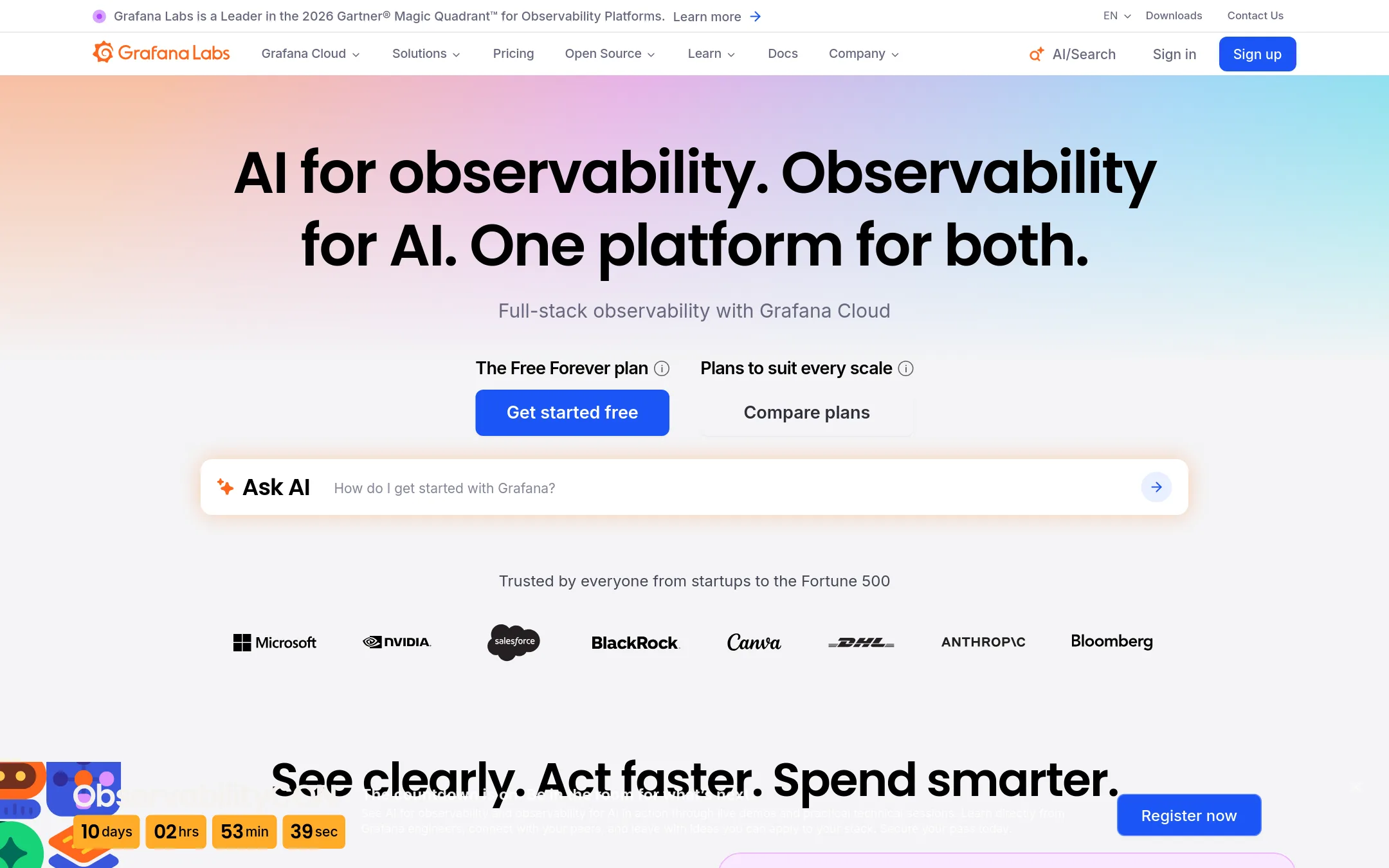
2.Grafana Labs
Best for: Teams that want open-standard observability across many services and data sources, with AI assistance layered on top
- Pricing
- Free tier, then usage
- Category
- Analytics & Data
Grafana Cloud is a full observability platform built on open standards like OpenTelemetry and Prometheus, covering metrics, logs, traces, profiles, and synthetic monitoring. Choose it over Metoro when you want a broad observability suite that plugs into tools you already run, rather than a Kubernetes-focused platform with an AI SRE agent that detects, investigates, and opens fix PRs.
Where it is strong
- Built on OpenTelemetry and Prometheus, so it avoids lock-in
- Covers metrics, logs, traces, profiles, frontend and database monitoring in one platform
- Adaptive Telemetry tools help cut data spend by dropping unused telemetry
Where it falls short
- Its AI assistant is a general helper and does not run an autonomous loop that opens fix PRs the way Metoro's agent does
- Kubernetes context comes from a broader setup rather than a single eBPF DaemonSet install, so more configuration is likely
- Pricing:
- Grafana Cloud has a free tier with usage limits, then usage-based pricing. For example, metrics are free up to 10k active series per month, and logs are free up to 50 GB ingested per month, with pay-as-you-go above those limits.
- $0.40/GB over 100GB
3.New Relic
Best for: Engineering organizations that want one platform covering APM, browser, mobile, cloud and Kubernetes monitoring, with per-GB and per-user billing.

- Pricing
- $0.40/GB over 100GB
- Category
- Analytics & Data
New Relic is a broad observability platform covering APM, infrastructure, logs, browser and mobile monitoring, and AI-driven incident tooling across many clouds. Teams pick it over Metoro when they need one tool for the whole stack, including front-end and business metrics, rather than a Kubernetes-focused observability and AI SRE product.
Where it is strong
- Covers APM, browser, mobile, cloud and Kubernetes monitoring in one platform.
- Free tier includes 100 GB of data ingest per month and one full platform user.
- Offers Enterprise options for FedRAMP Moderate and HIPAA eligibility with Data Plus.
Where it falls short
- Costs scale with data volume and user seats, so bills can climb with log-heavy workloads.
- Enterprise pricing requires contacting sales, so costs are not published at the top tier.
- Pricing:
- Pricing is set per GB of data ingested and per user, with 100 GB of ingest and one free full platform user on the free tier, then $0.40/GB beyond 100 GB on Standard and Pro, and $0.60/GB on Data Plus.
- Not published
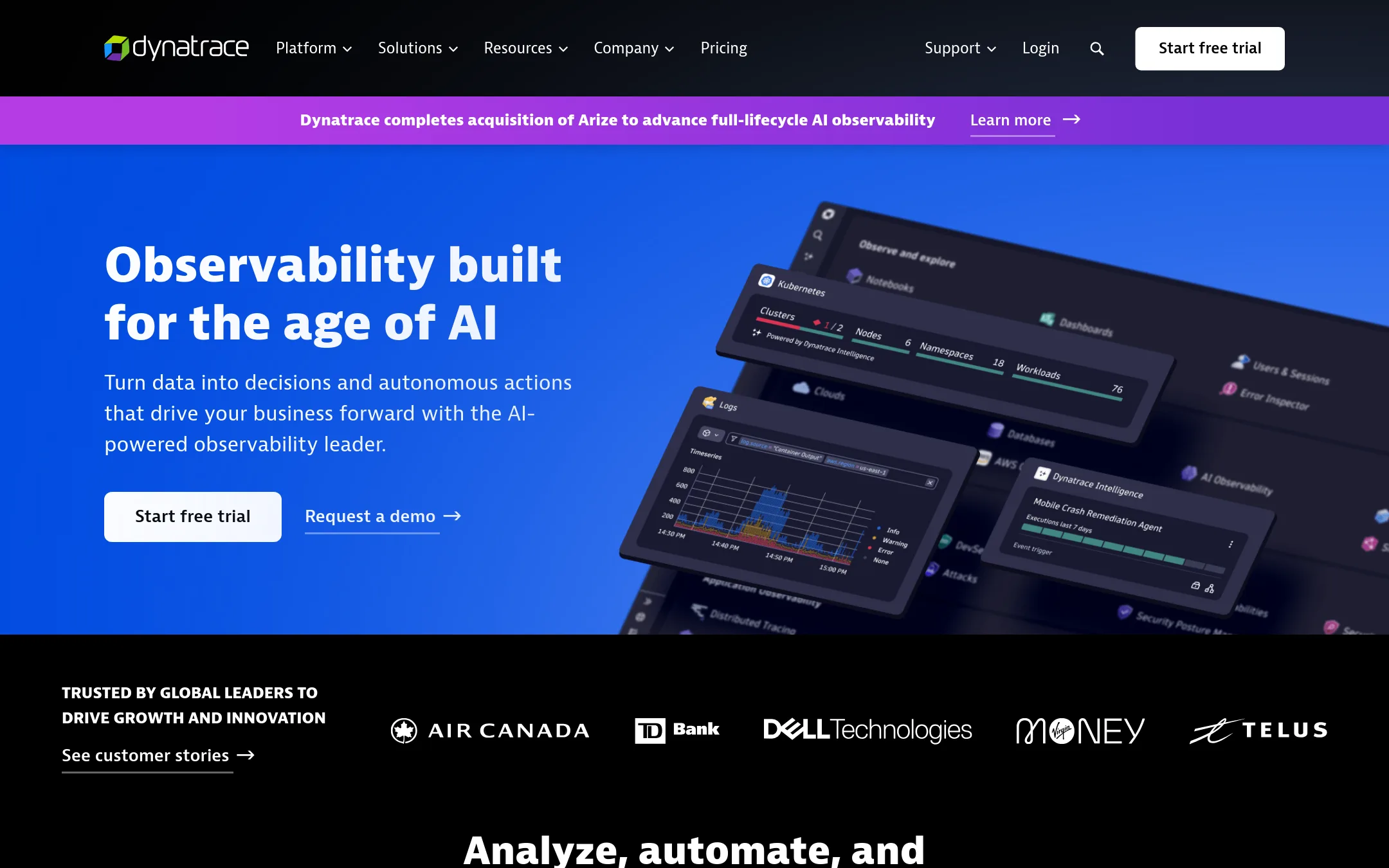
4.Dynatrace
Best for: Enterprises running mixed cloud and data center estates that want one platform for APM, logs, security and AI operations under a single commitment.
- Pricing
- Not published
- Category
- Analytics & Data
Dynatrace is a broad observability and security platform covering APM, infrastructure, logs, digital experience and application security across many technologies. Teams pick it over Metoro when they want one vendor for the whole estate, including non-Kubernetes workloads, business analytics and security, and when they can commit to a platform-level contract.
Where it is strong
- Covers application, infrastructure, logs, digital experience and security in one platform
- Named a Leader in the 2026 Gartner Magic Quadrant for Observability Platforms
- Free 15-day trial is offered on the site
Where it falls short
- Metoro's AI SRE agent that opens fix PRs has no clear equivalent in the Dynatrace material supplied
- Broad platform means a larger setup and a more complex commitment model than a single Helm install
- Pricing:
- Pricing is not published on the site.
- G$30/host/mo (Pro)
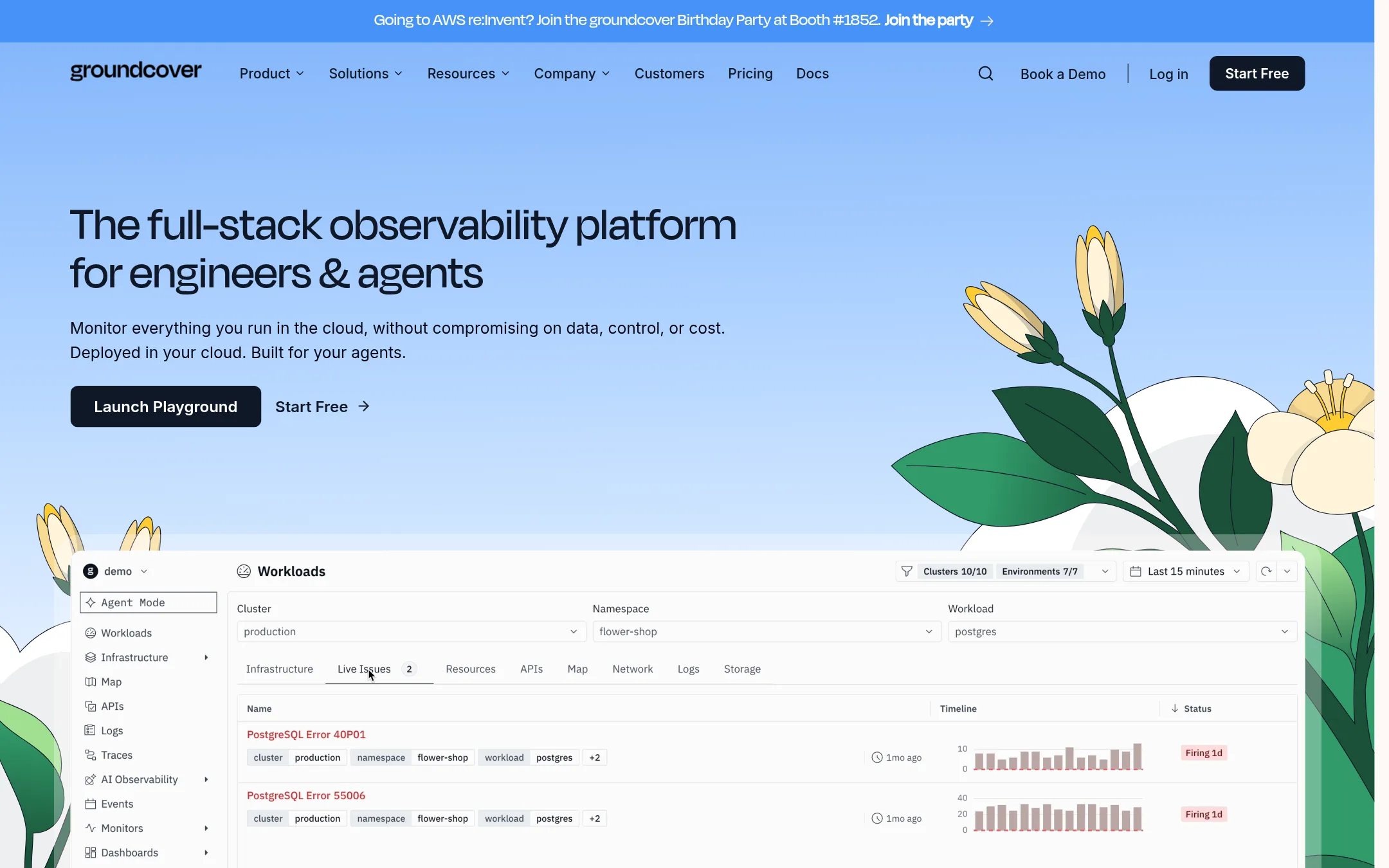
5.Groundcover
Best for: Engineering teams that want full-stack observability with data kept inside their own cloud account
- Pricing
- $30/host/mo (Pro)
- Category
- Other
Groundcover is a full-stack observability platform that covers logs, metrics, traces, events and entities through an eBPF sensor, with no code changes. It runs inside your own cloud account via BYOC, so telemetry stays in your VPC. Someone would pick it over Metoro if they want observability across the wider stack with data kept in their own cloud, and they care more about dashboards, database monitoring and user sessions than about an AI SRE that opens fix PRs.
Where it is strong
- Runs in your own VPC through BYOC, so telemetry never leaves your environment
- Covers logs, metrics, traces, events and entities, plus database monitoring and RUM
- Pricing is based on hosts rather than data volume, with a free tier
Where it falls short
- Its feature set centers on observability, not on autonomous root cause analysis with fix PRs as Metoro describes
- Free tier retention is only 12 hours, and standard retention is 30 days for logs and traces
- Pricing:
- Pricing is per host per month: Pro is $30 and Enterprise is $35 per host per month, with a free tier that keeps 12 hours of data retention.
- C$1.50 per unit
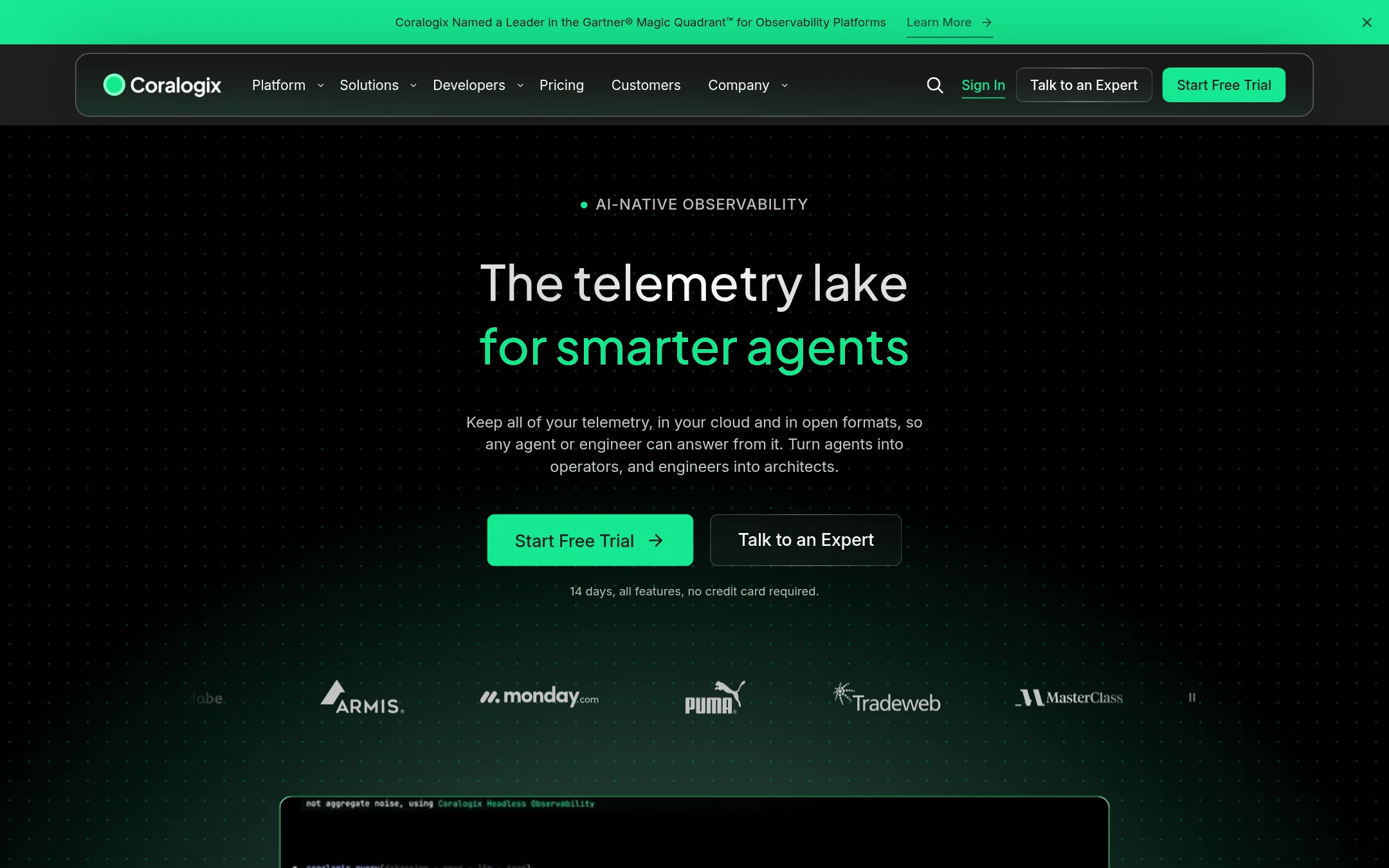
6.Coralogix
Best for: Engineering and security teams that want all telemetry and SIEM data in their own cloud bucket, queried in place by people and agents
- Pricing
- $1.50 per unit
- Category
- Other
Coralogix is an observability and SIEM platform that keeps logs, metrics, traces and security events in your own cloud storage, in open Parquet format, and queries them in place. Pick it over Metoro when you need one lake for every signal, including security data, and want to own the raw data outside the vendor. Metoro's eBPF collection and Kubernetes-focused AI SRE are its stronger case for teams centred on clusters.
Where it is strong
- Data stays in your own bucket as Parquet, readable without Coralogix
- Unlimited hosts and users on every account
- Covers logs, metrics, traces, APM, RUM, SIEM and LLM observability in one place
Where it falls short
- Unit-based pricing takes some planning to predict cost
- Kubernetes-native AI SRE features such as automated fix PRs are not described on the site
- Pricing:
- Pricing is priced in units, where 1 unit equals $1.50 of logs, metrics or traces across pipelines, with unlimited hosts and users on every plan.
- Switching from Metoro:
- Moving from Metoro would mean reinstrumenting collection, since Metoro's eBPF DaemonSet does not carry over to Coralogix's telemetry lake.
- From $150/mo
7.Honeycomb
Best for: Engineering teams that want an OpenTelemetry-native platform for exploring high-cardinality production data across distributed services, including AI and LLM workloads.
- Pricing
- From $150/mo
- Category
- Analytics & Data
Honeycomb is an observability platform built on high-cardinality event data, with distributed tracing, fast queries, SLOs and LLM observability. Teams choose it over Metoro when they want deep, query-driven debugging of their own production telemetry and their code is instrumented through OpenTelemetry, rather than a Kubernetes-focused collector with automated AI SRE investigation and fix PRs.
Where it is strong
- Unlimited custom fields and users on the published plans, so curiosity does not raise the bill
- BubbleUp and heatmaps help find the cause of an issue in production data quickly
- OpenTelemetry-native, which keeps you free from vendor lock-in
Where it falls short
- It does not offer the one-Helm-install eBPF collection and automated AI remediation that Metoro is built around
- Enterprise pricing requires a sales conversation, so exact costs are not published for large volumes
- Pricing:
- Pricing is published: Free up to 20M events per month, Pro starting at $150 per month for 50M events (up to 750M), and custom Enterprise plans.
- Switching from Metoro:
- Moving from Metoro would mean instrumenting services with OpenTelemetry, since Honeycomb relies on application telemetry rather than kernel-level eBPF capture.
See more comparisons in Developer Tools alternatives.
FAQ
Questions about Metoro alternatives
What does Metoro do?
According to its site, Metoro collects logs, metrics, traces, profiling, Kubernetes events, and deployment context from a cluster using eBPF. Its AI agents use that data to detect production issues, investigate alerts, verify deployments, and open fix pull requests. It installs with one Helm command and needs no code changes.
Which alternative is best if I want one vendor for my whole stack?
Datadog is built for that case. It covers infrastructure, APM, logs, security, and digital experience in one platform, with many integrations including AWS, Azure, Google Cloud, and Kubernetes monitoring. New Relic is another broad option, covering APM, browser, mobile, cloud, and Kubernetes monitoring.
Which alternative suits teams that want to control their own telemetry data?
Coralogix keeps logs, metrics, traces, and security events in your own cloud storage in open Parquet format and queries them in place. Groundcover runs inside your own cloud account through BYOC, so telemetry stays in your VPC. Honeycomb is OpenTelemetry-native, which the site says keeps you free from vendor lock-in.
How do the alternatives price compared with Metoro?
Metoro bills per Kubernetes node, with a free Hobby tier and a Scale tier that includes 100GB of ingestion per node per month. Honeycomb publishes a free tier up to 20M events per month and a Pro plan starting at $150 per month. New Relic charges per GB ingested and per user, and Groundcover charges per host, with Pro at $30 and Enterprise at $35 per host per month. Datadog and Dynatrace do not publish pricing on their sites, so you will need to request a quote.
Do any alternatives offer automated fixes like Metoro's fix PRs?
Based on the material supplied, Metoro's autonomous loop of detecting an issue, root causing it, and opening a fix PR has no clear equivalent in the listed alternatives. Datadog offers AI investigation tooling through Bits AI and an MCP server, and Grafana Cloud offers an AI assistant. Neither is described as opening fix pull requests on its own, so check directly with each vendor if that capability is a requirement.
Last updated November 19, 2026.