
Metriport alternatives
6 products compared · Updated November 8, 2026
The short answer
The three strongest Metriport alternatives are Redox, Health Gorilla, and Particle Health. Redox suits digital health vendors and health IT teams that need one API to exchange data with many EHRs, payers and HIEs. Health Gorilla suits EHR vendors, payers and value-based care teams in the US that must meet TEFCA or California DxF obligations. Particle Health suits digital health companies and payers that need ADT alerts, pharmacy fill data, or specialty datasets from a single API.
Your shortlist, at a glance
Read the comparisons ↓ RedoxFrom $15k/yearDigital health vendors and health IT teams that need one integration to exchange data with many EHRs, payers and clinical networks
Health GorillaNot publishedEHR vendors, payers and value-based care teams in the US that need to meet TEFCA or California DxF obligations
 1upHealthNot publishedHealth plans, both Medicare and Medicaid, that need CMS-0057 compliance and payer-to-payer data exchange
 Particle HealthNot publishedDigital health companies and payers that need ADT alerts, pharmacy fill data, or specialty-focused clinical datasets from a single API
- HHealth SamuraiNot publishedHealth plans and healthcare software teams that need to build FHIR-native products and want to self-host the data layer
- SSmile CDRNot publishedPayers and health systems that need FHIR-based data unification and NCQA-validated digital quality measurement across their own systems
About Metriport and its alternatives
Metriport is a healthcare data infrastructure platform. According to its site, it provides a single API that pulls longitudinal patient records from a large network of providers, normalizes them into FHIR, and adds AI summaries, suspected conditions and care gap insights. It also offers pre-built apps for major EHRs, a data warehouse, and referral and public health messaging. Its site describes an open-source foundation and reports figures such as 750,000+ providers connected.
When comparing alternatives in this category, look at how each product charges, since some publish tiered prices and others only share pricing in sales conversations. Check which regions and national networks it covers, and whether it connects to the payers, EHRs and HIEs you depend on. Consider integrations with your cloud and data stack, the level of support and compliance documentation offered, and the contract terms, including any minimums or volume-based fees.
Explore the alternatives
- From $15k/year
1.Redox
Best for: Digital health vendors and health IT teams that need one integration to exchange data with many EHRs, payers and clinical networks
- Pricing
- From $15k/year
- Category
- Healthcare
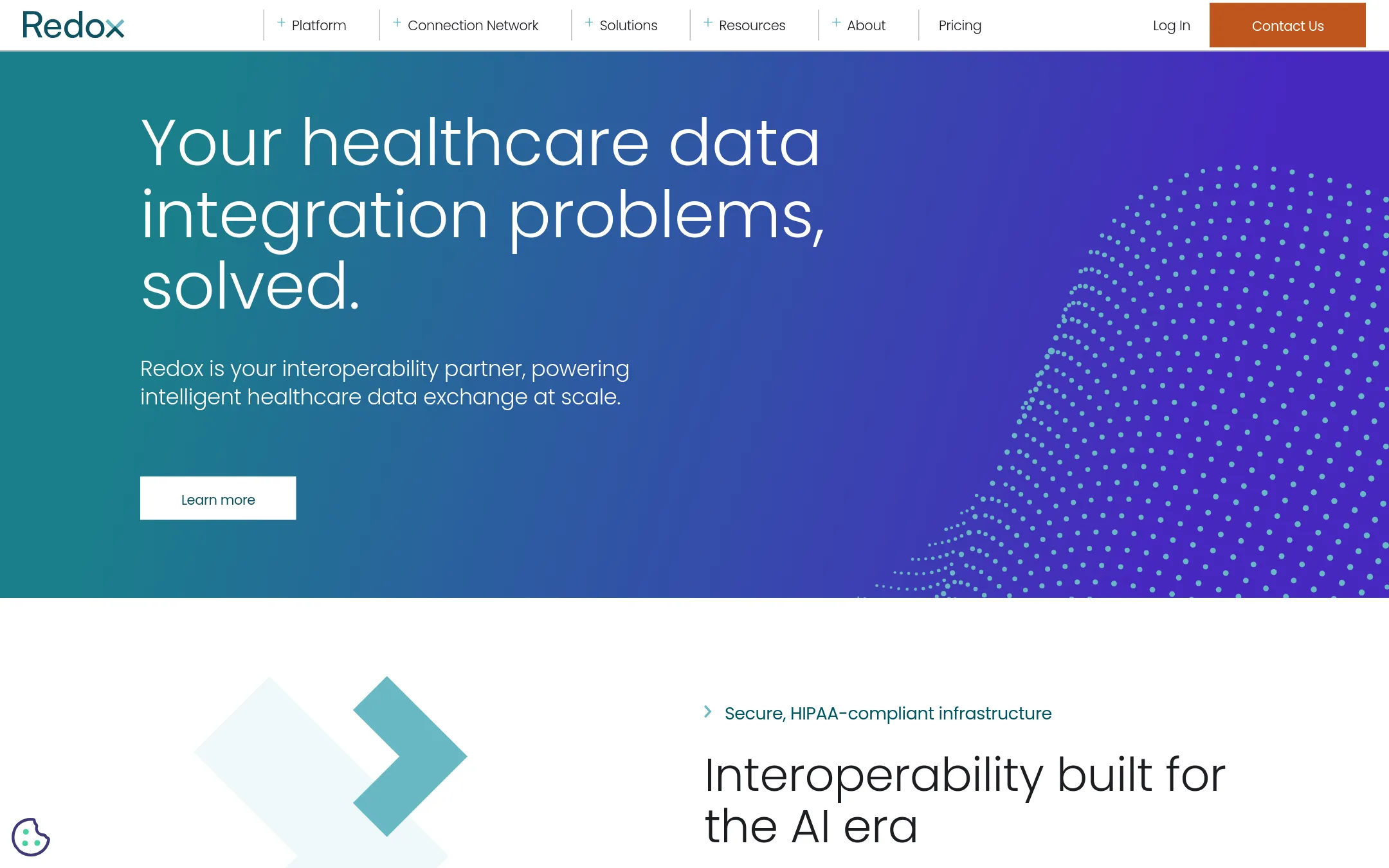
Redox is a healthcare data integration platform that connects once to providers, payers, EHRs, HIEs and digital health vendors, then exchanges data through a single standardized API. Teams pick it over Metriport when the main job is moving data between systems and into their own cloud (Azure, Google Cloud, AWS, Snowflake, Databricks), rather than building a normalized, patient-level FHIR record with AI summaries and care gap insights.
Where it is strong
- Single standardized API covering providers, payers, EHRs and HIEs
- Listed on Azure, Google Cloud and AWS marketplaces, with Databricks and Snowflake partnerships
- HITRUST certification on cloud hosting environments and SOC 2 Type 2 reports
Where it falls short
- Pricing has several layers, so total cost is harder to predict than a single rate
- Sandbox is limited to companies under 500 employees, and providers and payers must start at Core or higher
- Pricing:
- Redox lists a Sandbox tier from $15k per year for companies under 500 employees, a Core tier from $35k per year, and an Advanced tier on request, plus consumption and managed services fees that depend on volume and scope.
- Not published
2.Health Gorilla
Best for: EHR vendors, payers and value-based care teams in the US that need to meet TEFCA or California DxF obligations
- Pricing
- Not published
- Category
- Healthcare
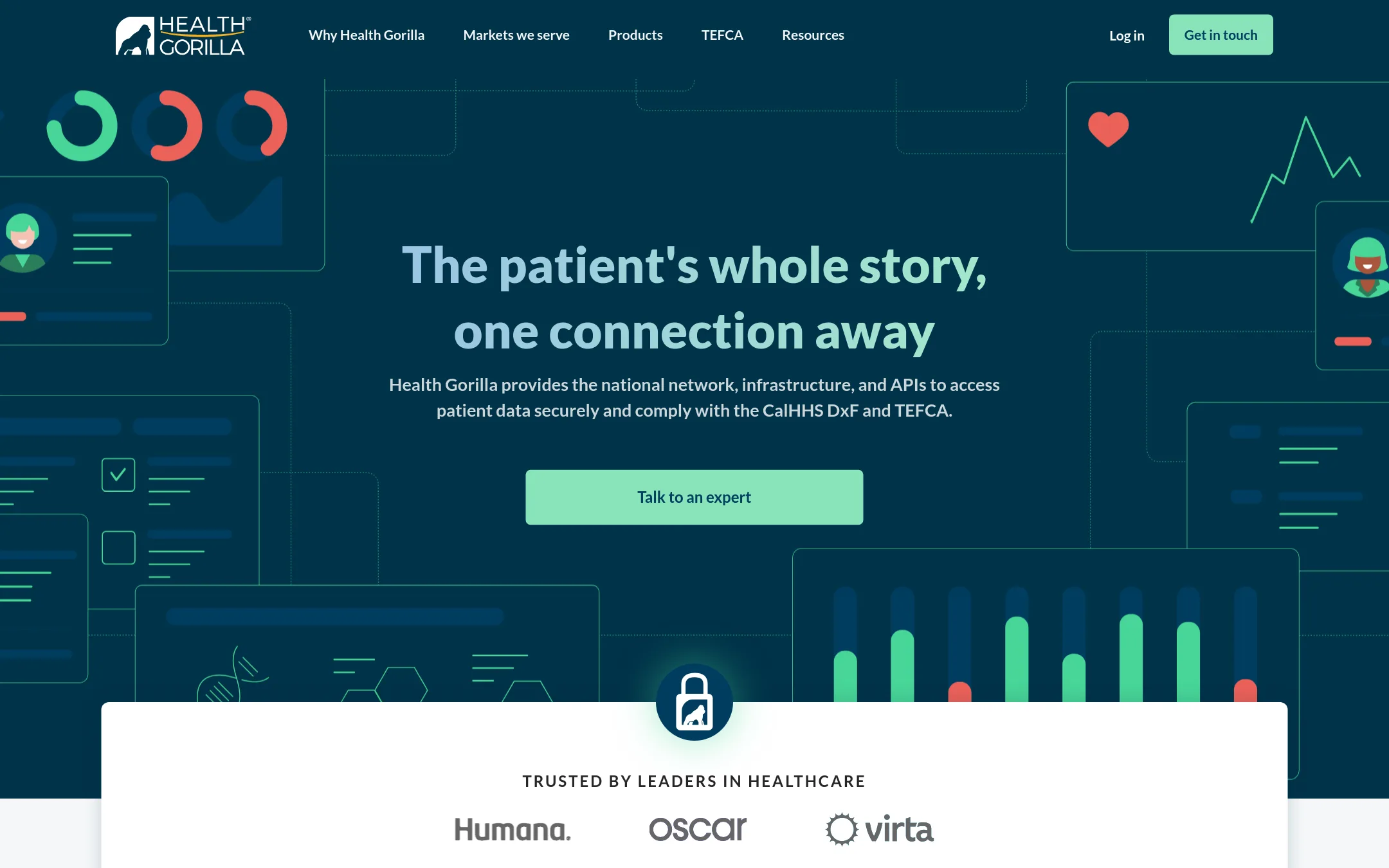
Health Gorilla is a national health data network and infrastructure provider. It operates as a dual-designated QHIN and QHIO, which means it works as a government-designated intermediary for TEFCA and California's Data Exchange Framework. Someone would pick it over Metriport when the priority is participating in those federal or California exchange frameworks, or when they want an operated pipeline that handles matching, de-duplication and reconciliation before the record reaches them.
Where it is strong
- Designated as a QHIN and QHIO, so it can act as an intermediary under TEFCA and California's DxF
- Handles patient matching, de-duplication and conflict reconciliation in its operated pipeline
- Offers Clinical Alerts that notify customers when patient events happen across network activity
Where it falls short
- Its public materials focus on US network participation and California, with no published international footprint
- Pricing is not published, so cost comparison requires a sales conversation
- Pricing:
- Pricing is not published on the site.
- Not published
3.1upHealth
Best for: Health plans, both Medicare and Medicaid, that need CMS-0057 compliance and payer-to-payer data exchange
- Pricing
- Not published
- Category
- Healthcare
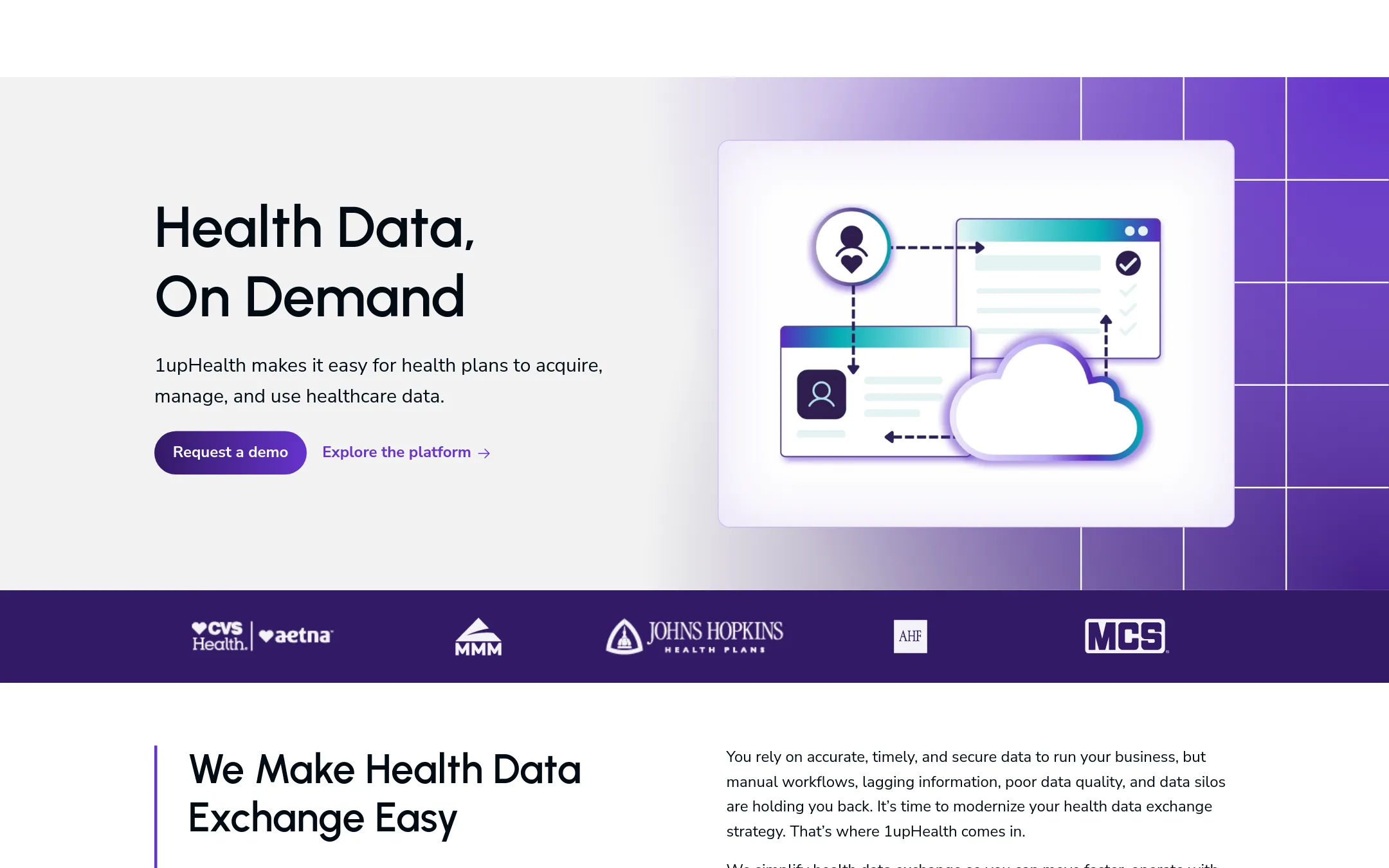
1upHealth is an interoperability platform built for health plans. It handles CMS-required APIs for prior authorization, payer-to-payer data exchange, provider and patient access, and provider directories, on a FHIR-first data layer. Choose it over Metriport when the buyer is a payer that needs CMS compliance and claims-linked clinical data, not a provider or startup building patient-facing care tools.
Where it is strong
- Covers CMS-0057 workflows such as electronic prior authorization and payer-to-payer exchange in one vendor
- Offers modular products that can run alone or together
- Provides a dedicated partner team with regulatory guidance and 24/7 support
Where it falls short
- Built around health plans, so providers and startups get less fit than Metriport's provider-side focus
- Public materials do not describe the AI summary or care gap features that Metriport highlights
- Pricing:
- Pricing is not published on the site.
- Not published
4.Particle Health
Best for: Digital health companies and payers that need ADT alerts, pharmacy fill data, or specialty-focused clinical datasets from a single API
- Pricing
- Not published
- Category
- Healthcare
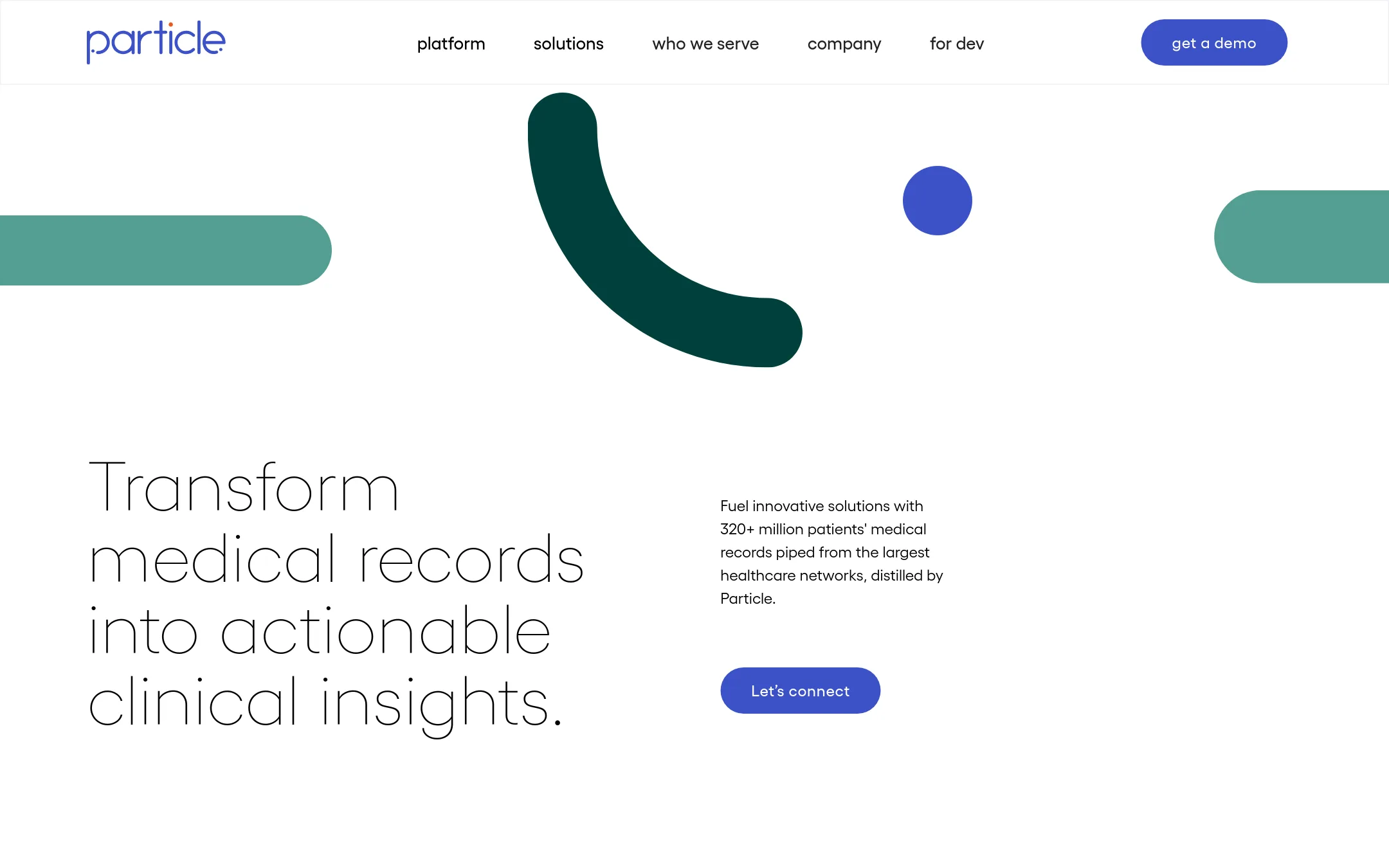
Particle Health connects to health records from healthcare networks and returns patient data through a single API, with pre-built products such as ADT feeds, pharmacy data, and specialty-focused datasets. Teams pick it over Metriport when they want ready-made clinical feeds like ADT notifications, prescription fill data, or specialty search rather than building on a general record layer.
Where it is strong
- Single API connects to a large national network of providers and records.
- Pre-built ADT feeds and pharmacy data for care coordination and digital pharmacy use cases.
- Ready-made specialty datasets, such as oncology and cardiology, reduce build time.
Where it falls short
- Metriport offers an open-source option, which Particle Health's site does not mention.
- Pricing and contract terms are not shown on the site, so cost comparison requires a sales conversation.
- Pricing:
- Pricing is not published on the site.
- HNot published
5.Health Samurai
Best for: Health plans and healthcare software teams that need to build FHIR-native products and want to self-host the data layer
- Pricing
- Not published
- Category
- Other
Health Samurai builds FHIR infrastructure around Aidbox, a FHIR server on PostgreSQL, plus modules for forms, e-prescribing, CMS-0057 payer APIs, terminology, master patient matching and HL7 v2 integration. Teams pick it over Metriport when they want to build their own clinical or payer product on a FHIR server they control, or when they need a specific module such as e-prescribing or CMS-0057 compliance, rather than a ready-made longitudinal record pulled from providers across the country.
Where it is strong
- Aidbox is a FHIR server on PostgreSQL that supports REST, GraphQL, SQL, Bulk Data and Subscriptions
- Dedicated modules cover CMS-0057 payer APIs, e-prescribing, forms and terminology services
- Deployment can be managed or self-hosted, so patient data can stay within your own infrastructure
Where it falls short
- The site does not describe a pre-built, nationwide network of provider connections like Metriport's
- Its strength is building and integrating on FHIR, so you assemble more of the product yourself
- Pricing:
- Pricing is not published on the site.
- SNot published
6.Smile CDR
Best for: Payers and health systems that need FHIR-based data unification and NCQA-validated digital quality measurement across their own systems
- Pricing
- Not published
- Category
- Other
Smile CDR is a FHIR-native platform that unifies fragmented healthcare data, with computable quality measures and compliance workflows on one shared foundation. Someone would pick it over Metriport when the main problem is internal interoperability and digital quality measurement across existing systems, rather than pulling in patient records from outside providers.
Where it is strong
- Maintains HAPI FHIR, a widely deployed open FHIR implementation
- Claims NCQA validation for digital quality measurement with under 1% variance
- Site lists HITRUST, ISO 27001, ISO 27018, and SOC 2 Type II certifications
Where it falls short
- Its public materials focus on payer and enterprise deployments, not startups
- Does not describe a single API for pulling longitudinal records from thousands of providers the way Metriport does
- Pricing:
- Pricing is not published on the site.
See more comparisons in Healthcare alternatives.
FAQ
Questions about Metriport alternatives
Which Metriport alternative is best for moving data between many systems?
Redox is built for this job. It offers a single standardized API that connects providers, payers, EHRs, HIEs and digital health vendors, and it lists marketplace availability on Azure, Google Cloud and AWS. Its pricing has several layers, so total cost is harder to predict than a single rate.
Which alternative fits health plans that need CMS compliance?
1upHealth is built around health plans. It covers CMS-required APIs for prior authorization, payer-to-payer data exchange, provider and patient access, and provider directories. Its public materials do not describe the AI summary or care gap features that Metriport highlights.
Which option works if we must participate in TEFCA or California's exchange framework?
Health Gorilla is designated as both a QHIN and a QHIO, so it can act as an intermediary under TEFCA and California's Data Exchange Framework. It also handles patient matching and de-duplication before records reach you. Its public materials focus on US and California participation, and pricing is not published.
Which alternative gives ready-made clinical feeds like ADT alerts?
Particle Health offers pre-built ADT feeds, pharmacy fill data and specialty datasets through a single API. These reduce build time for care coordination and digital pharmacy use cases. Its site does not mention an open-source option, which Metriport offers, and pricing is not shown.
How do I compare prices across these alternatives?
Only Redox publishes specific starting prices, including a Sandbox tier from $15k per year and a Core tier from $35k per year. Health Gorilla, Particle Health, Smile CDR and Health Samurai do not publish pricing on their sites, so you will need a sales conversation to compare costs. Ask each vendor about volume-based fees and contract minimums before deciding.
Last updated November 8, 2026.