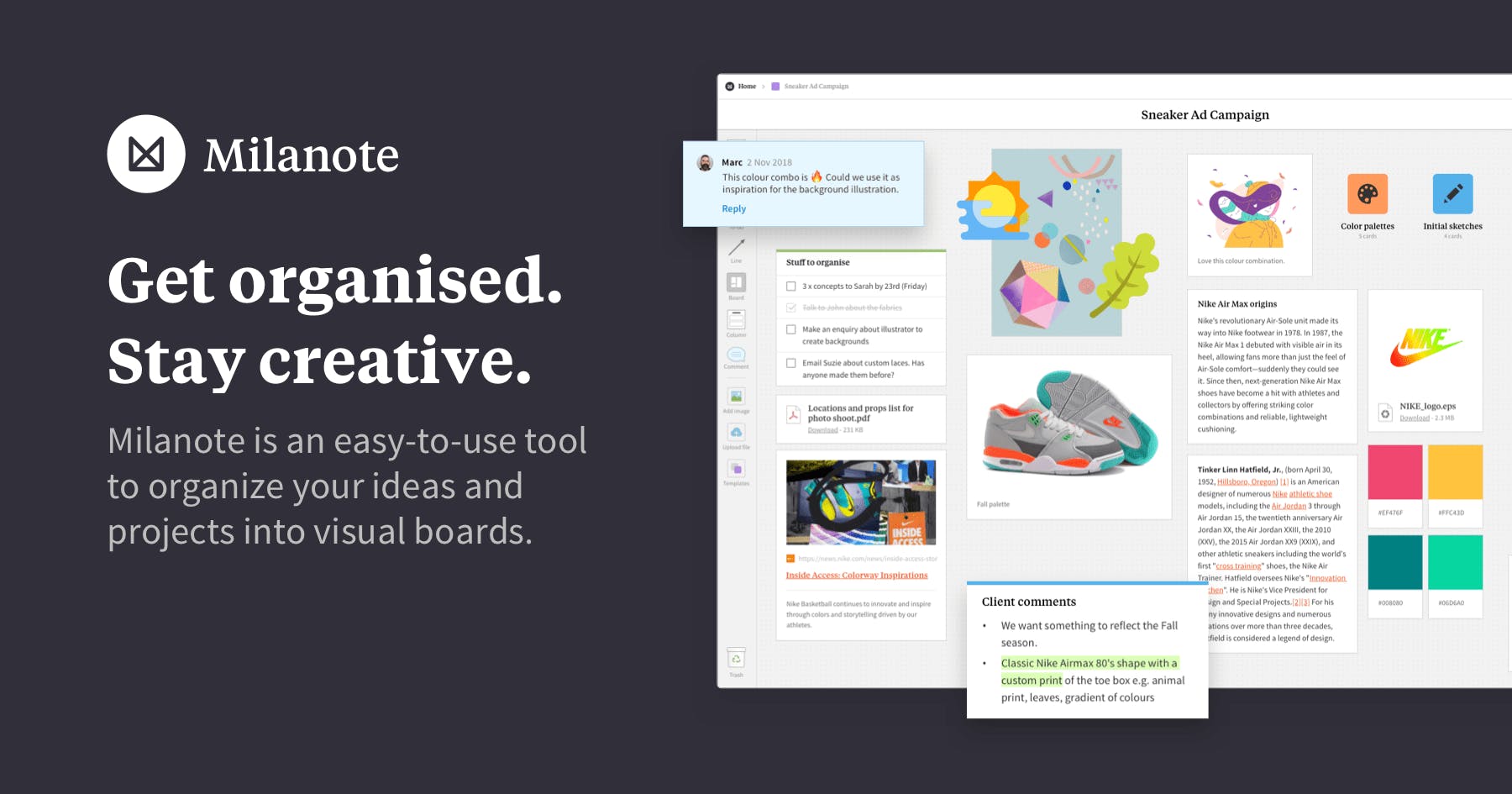
Milanote alternatives
8 products to explore · 2026
Your shortlist, at a glance.
Read the comparisons ↓| Product | Pricing | Explore |
|---|---|---|
 PadletPapyrus → Parchment → Paper → Padlet PadletPapyrus → Parchment → Paper → Padlet | See website | Compare |
 Canva WhiteboardsVisual collaboration and brainstorming made easy with Canva. Canva WhiteboardsVisual collaboration and brainstorming made easy with Canva. | See website | Compare |
 ConceptboardOnline whiteboard combining visual collaboration and task management in real time. ConceptboardOnline whiteboard combining visual collaboration and task management in real time. | See website | Compare |
 FigJamCollaborate with a digital whiteboard FigJamCollaborate with a digital whiteboard | See website | Compare |
 LucidsparkVirtual whiteboarding for team collaboration, ideation, and action. LucidsparkVirtual whiteboarding for team collaboration, ideation, and action. | See website | Compare |
 MiroAI-powered visual workspace for team collaboration and product innovation MiroAI-powered visual workspace for team collaboration and product innovation | See website | Compare |
| MMuralAI-powered visual workspace for team collaboration | See website | Compare |
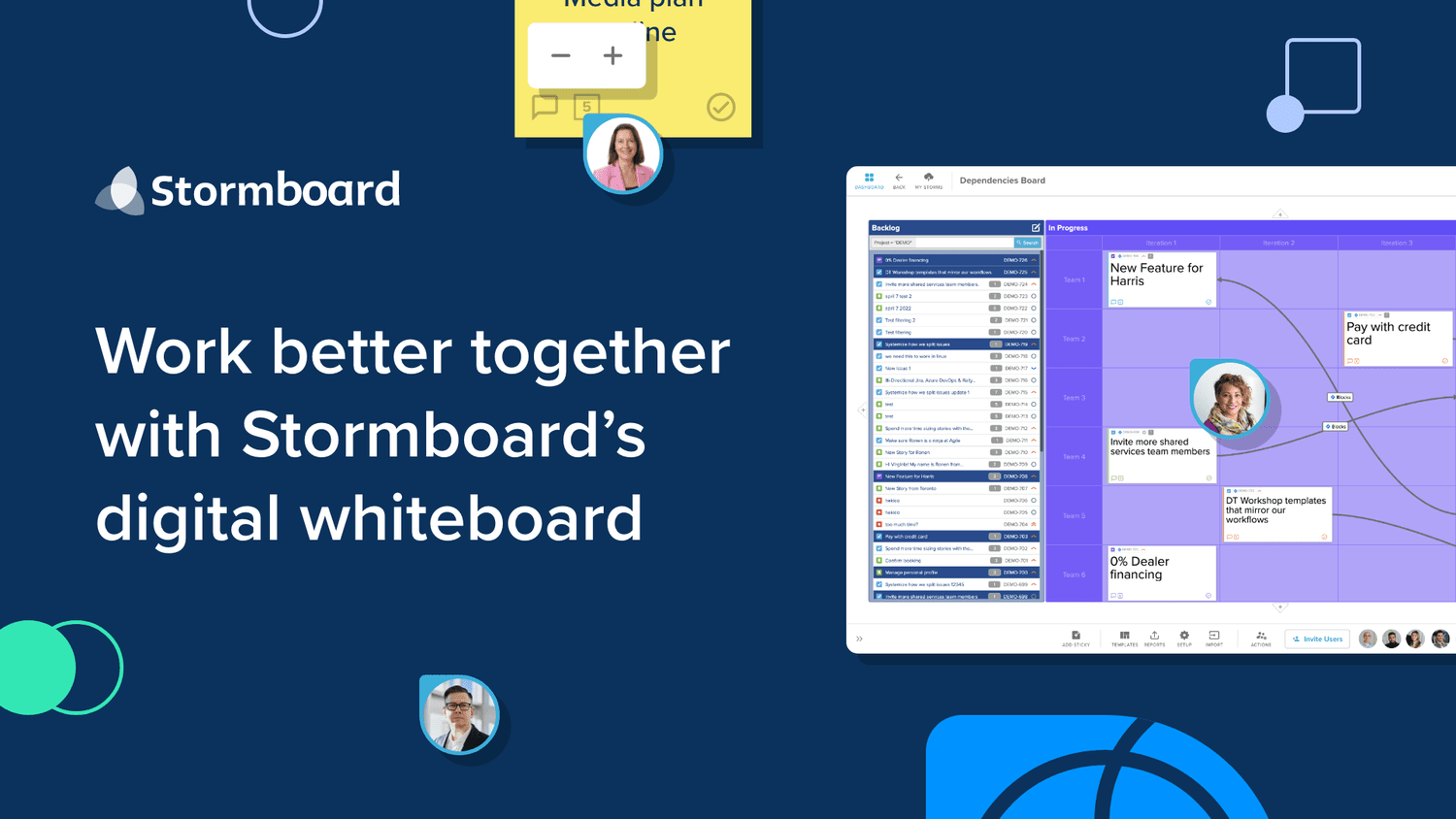 StormboardData-first Collaboration & Digital Whiteboard StormboardData-first Collaboration & Digital Whiteboard | See website | Compare |
Check each product’s website for current pricing and features. A verified badge indicates a verified listing, not a ranking.
About Milanote and its alternatives
People searching for Milanote alternatives are usually creative professionals who need a flexible visual workspace to collect inspiration, map out projects, and collaborate without rigid structures. Milanote stands out for its focus on creative workflows like moodboarding, storyboarding, and research gathering across filmmaking, design, writing, photography, and marketing. When evaluating replacements, users often look for tools that match Milanote's simple drag-and-drop boards, easy media embedding, and lightweight team sharing while possibly adding stronger databases, automation, or different pricing. The best Milanote alternatives balance visual organization with task management or note-taking depth, helping teams move from scattered ideas to structured plans. Choosing the right option depends on whether you prioritize pure visual moodboarding, deeper project tracking, or broader productivity features beyond creative work.
Explore the alternatives
1.Padlet
Productivity & Project ManagementPapyrus → Parchment → Paper → Padlet
2.Canva Whiteboards
Productivity & Project ManagementVisual collaboration and brainstorming made easy with Canva.
3.Conceptboard
Productivity & Project ManagementOnline whiteboard combining visual collaboration and task management in real time.
4.FigJam
Productivity & Project ManagementCollaborate with a digital whiteboard
5.Lucidspark
Productivity & Project ManagementVirtual whiteboarding for team collaboration, ideation, and action.
6.Miro
Productivity & Project ManagementAI-powered visual workspace for team collaboration and product innovation
- M
7.Mural
Productivity & Project ManagementAI-powered visual workspace for team collaboration
8.Stormboard
Productivity & Project ManagementData-first Collaboration & Digital Whiteboard
See more comparisons in Productivity & Project Management alternatives.
Questions about Milanote alternatives
What are the best Milanote alternatives for filmmakers creating storyboards?
Filmmakers often switch from Milanote when they need tighter integration with video timelines or shot lists. Strong alternatives include Miro for large collaborative storyboards and Notion for combining scripts with visual references in one workspace.
How does Milanote compare to Notion for creative project organization?
Milanote excels at quick visual moodboards and inspiration collection while Notion offers more powerful databases and templates. Many users choose Milanote for pure creative flow and Notion when they also need task tracking and documentation.
Is there a free Milanote alternative for designers building moodboards?
Pinterest and Canva provide free visual collection tools, though they lack Milanote's structured project boards and team commenting. Miro's free plan offers similar visual collaboration for small design teams.
Which Milanote alternative works best for marketing campaign planning?
Marketers looking beyond Milanote often pick Trello or Asana for campaign timelines combined with visual cards. These tools add stronger due dates and automation while keeping the board-style overview Milanote provides.
Can I replace Milanote with a tool that supports both notes and visual boards?
Evernote and OneNote handle notes well but offer weaker visual organization than Milanote. Miro and Notion better replicate Milanote's mix of notes, images, and flexible layouts for creative teams.
What Milanote alternative is ideal for interior designers organizing materials?
Interior designers frequently compare Milanote to Pinterest for material moodboards and to Airtable for tracking samples and vendors. Airtable adds database power while Pinterest stays closer to pure visual inspiration collection.