Moss alternatives
11 products compared · Updated November 4, 2026
The short answer
For founders and operators evaluating alternatives to Moss, the strongest options are Bear for AI-driven marketing automation, Notion for a general-purpose team workspace with AI assistance, and Coda for flexible doc-and-table collaboration. Bear suits small businesses automating content and outreach, Notion fits teams needing a shared knowledge base, and Coda is ideal for teams that want to build simple applications alongside documentation.
Your shortlist, at a glance
Read the comparisons ↓ NotionFree, $10/mo, $20/moTeams that want a single workspace for documentation, project management, and basic AI assistance, rather than a specialized semantic search layer.
 ObsidianFree. Sync $4/moIndividuals and teams who want a private, offline-first note app with plugins, linking, and optional encrypted sync.
 Roam ResearchNot publishedResearchers, writers, and knowledge workers who need to capture and interlink ideas in a flexible, non-hierarchical way.
LogseqNot publishedStudents, academics, writers, and project managers who want a local, markdown-based note-taking and task management tool.
 CodaFree. Pro $12/moTeams that want a flexible doc-and-table workspace for writeups, hubs, trackers, and simple applications, with AI assistance built in.
JiraNot publishedSoftware and IT teams that need flexible project tracking and agile workflows.
- TTiddlyWikiNot publishedIndividuals and small teams who want a portable, hackable wiki for personal notes and knowledge management without cloud dependencies.
- DDendronNot publishedDevelopers and technical teams who want a flexible, hierarchical note-taking and knowledge management system inside VS Code.
- BBearFrom $100/moSmall businesses that want to track AI prompts and automate blog generation and email outreach.
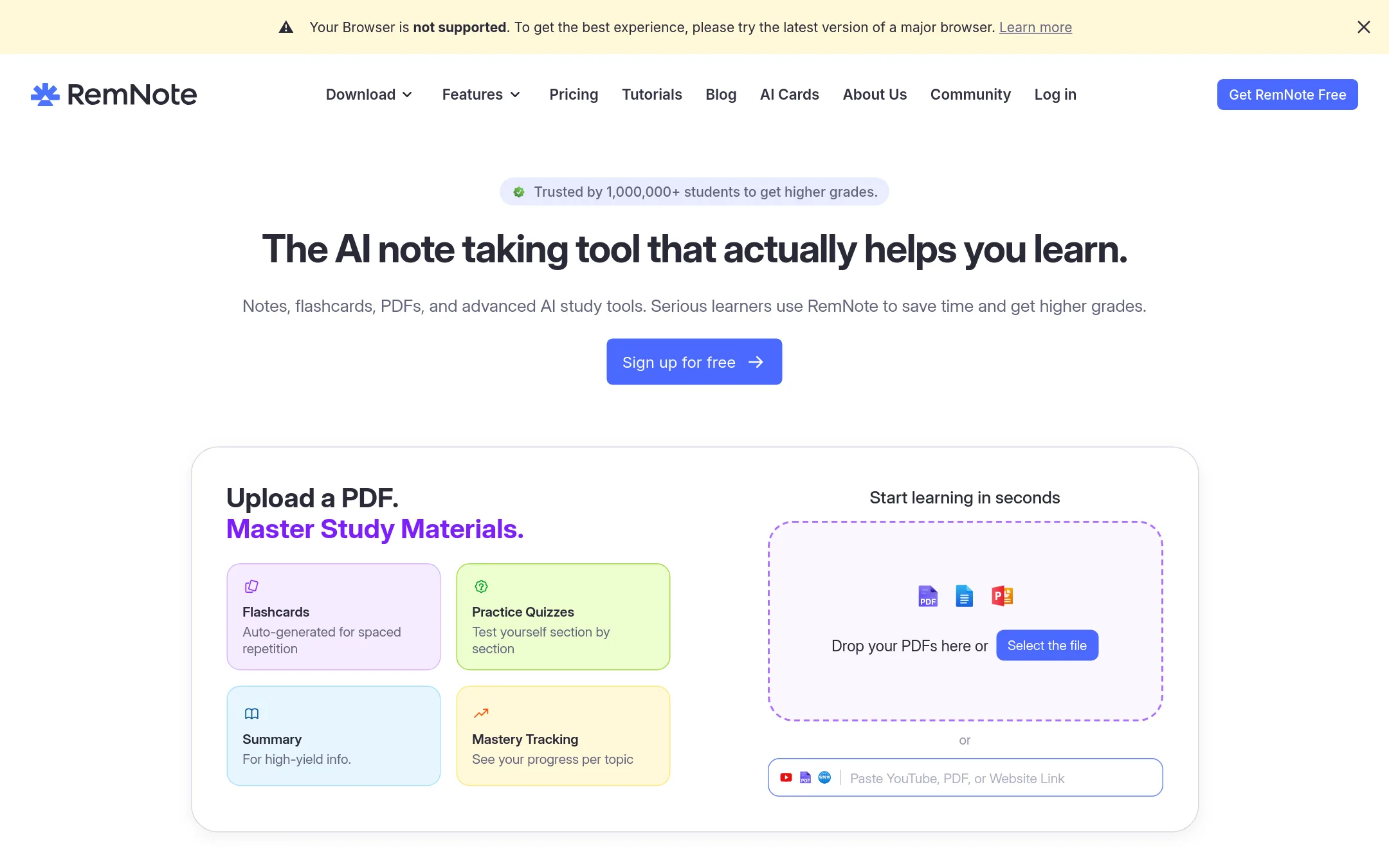
 RemNoteNot publishedStudents and lifelong learners who want AI-generated flashcards, quizzes, and summaries from their notes and PDFs.
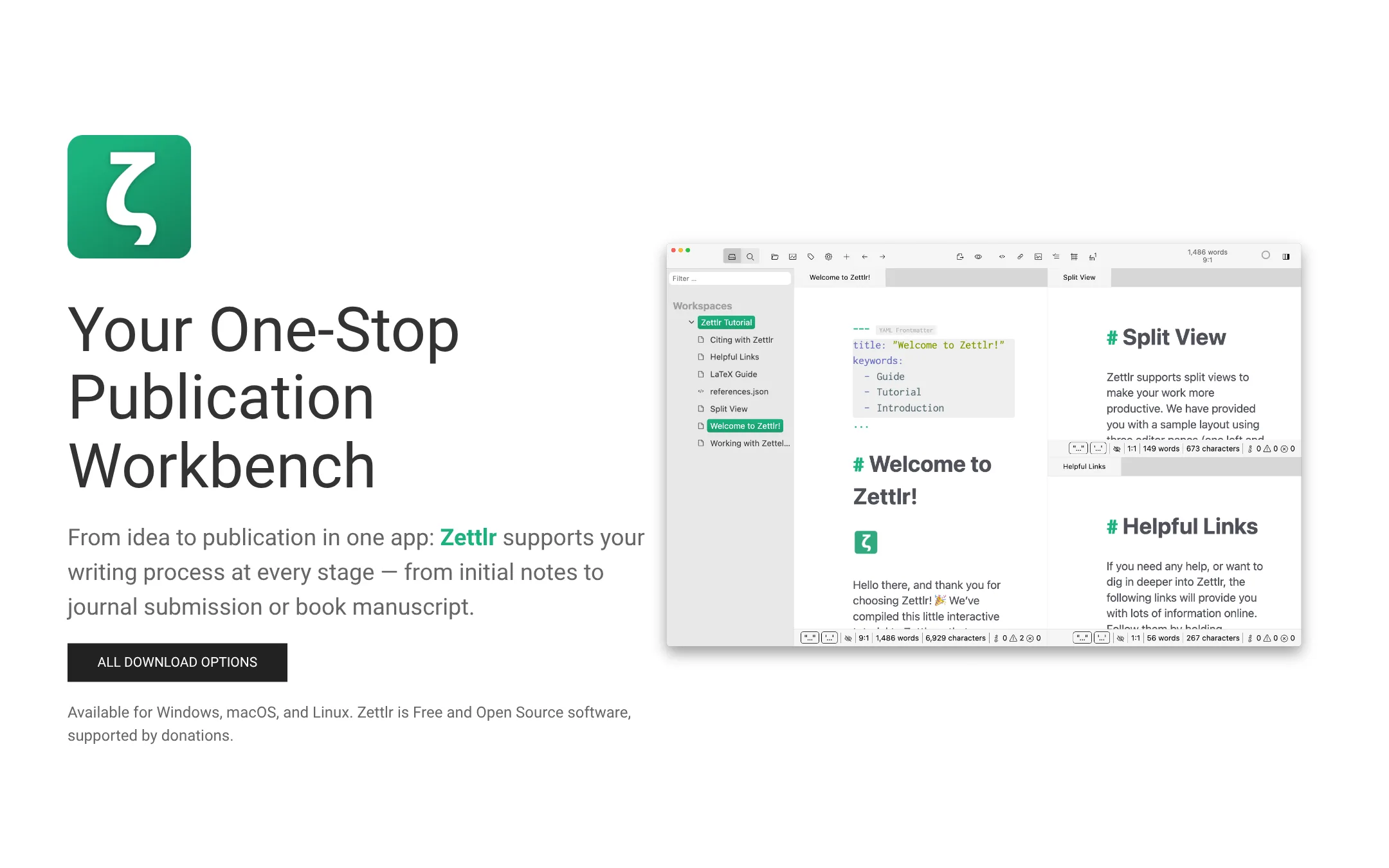
- ZZettlrFree (open source)Researchers and writers who want a local, privacy-first Markdown editor with citation support and one-click journal submission exports.
About Moss and its alternatives
Moss is a real-time semantic search engine for conversational AI, voice agents, and copilots. It is known for sub-10ms retrieval, running directly in the browser, edge, device, or cloud, and replacing vector databases entirely. Moss positions itself as the retrieval layer that eliminates latency bottlenecks in AI systems.
When comparing alternatives, weigh pricing structure, deployment regions, integrations with your existing stack, support options, and contract terms. Consider whether you need a specialized retrieval engine or a broader tool like a note app or workspace. Evaluate how each product handles data privacy, offline capabilities, and scaling for production workloads.
Explore the alternatives
- Free, $10/mo, $20/mo
1.Notion
Best for: Teams that want a single workspace for documentation, project management, and basic AI assistance, rather than a specialized semantic search layer.
- Pricing
- Free, $10/mo, $20/mo
- Category
- Productivity & Project Management
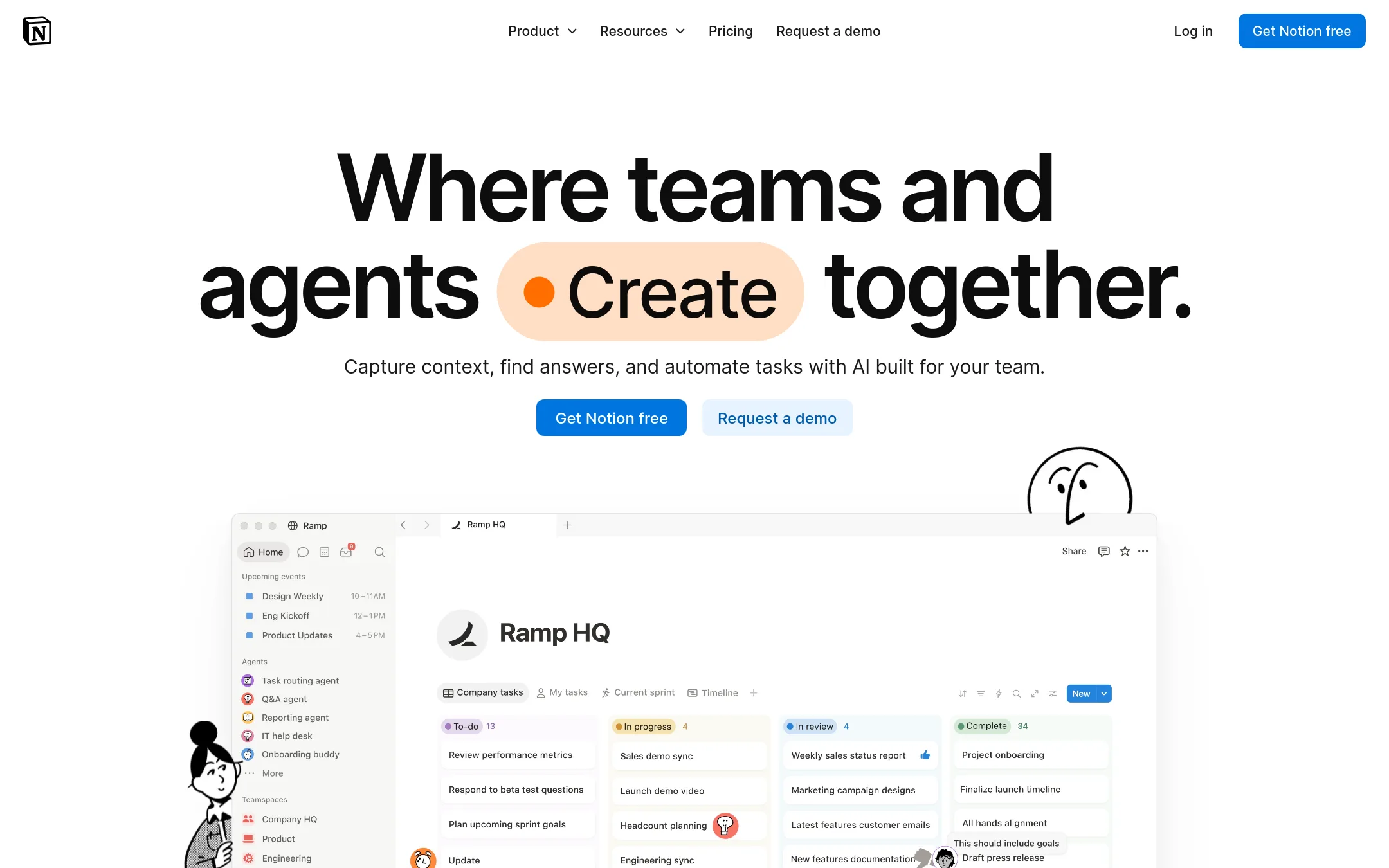
Notion is a general-purpose workspace for notes, docs, wikis, and project tracking, with AI features layered on top. Choose it instead of Moss when your team needs a shared knowledge base and collaboration hub, not a low-latency retrieval engine for voice agents.
Where it is strong
- Wide range of templates for docs, wikis, and projects.
- AI features are integrated into the workspace.
- Generous free plan for individuals.
Where it falls short
- Not designed for sub-10ms retrieval or on-device search.
- AI features require paid add-ons or higher tiers.
- Pricing:
- In the United States, the Free plan is $0/mo, Plus is $10/mo per user, Business is $20/mo per user, and Enterprise is custom. AI credits are $10 per 1,000.
- Free. Sync $4/mo
2.Obsidian
Best for: Individuals and teams who want a private, offline-first note app with plugins, linking, and optional encrypted sync.
- Pricing
- Free. Sync $4/mo
- Category
- Productivity & Project Management
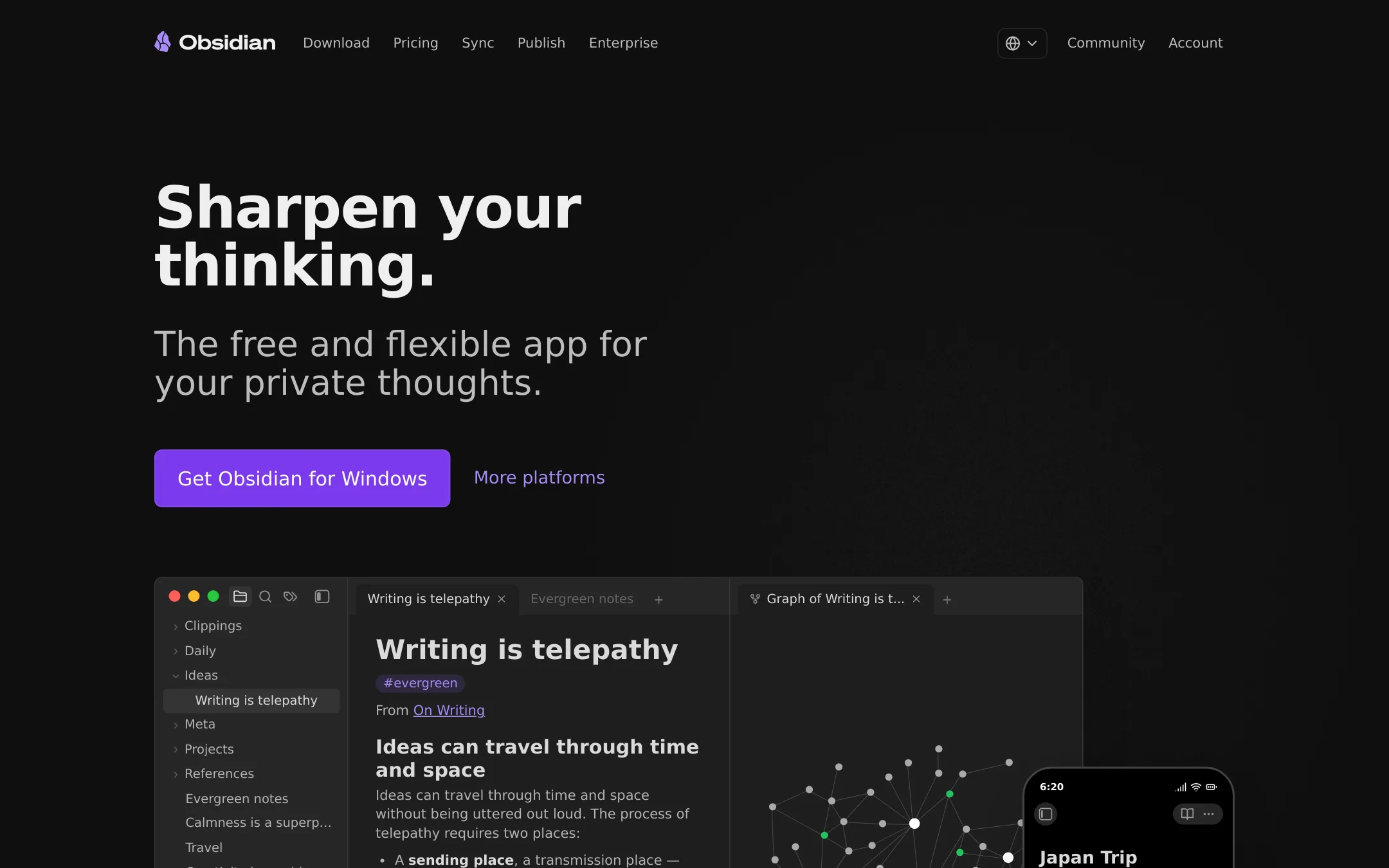
Obsidian is a local-first note-taking app that stores your notes as plain Markdown files on your device. You would choose it instead of Moss if you need a private, offline knowledge base for personal or team notes, not real-time semantic search for AI agents.
Where it is strong
- Stores notes locally in open Markdown files, so you own your data.
- Thousands of plugins and themes let you tailor the app to your workflow.
- Sync and Publish are optional, with end-to-end encryption on Sync.
Where it falls short
- No built-in real-time semantic search for AI agents. It's a note app, not a retrieval layer.
- Sync and Publish are paid add-ons, and collaboration features are limited compared to cloud-first tools.
- Pricing:
- Obsidian is free for personal use. Sync is $4 per user per month billed annually, or $5 billed monthly. Publish is $8 per site per month billed annually, or $10 billed monthly. Commercial licenses are $50 per user per year.
- Not published
3.Roam Research
Best for: Researchers, writers, and knowledge workers who need to capture and interlink ideas in a flexible, non-hierarchical way.
- Pricing
- Not published
- Category
- Productivity & Project Management
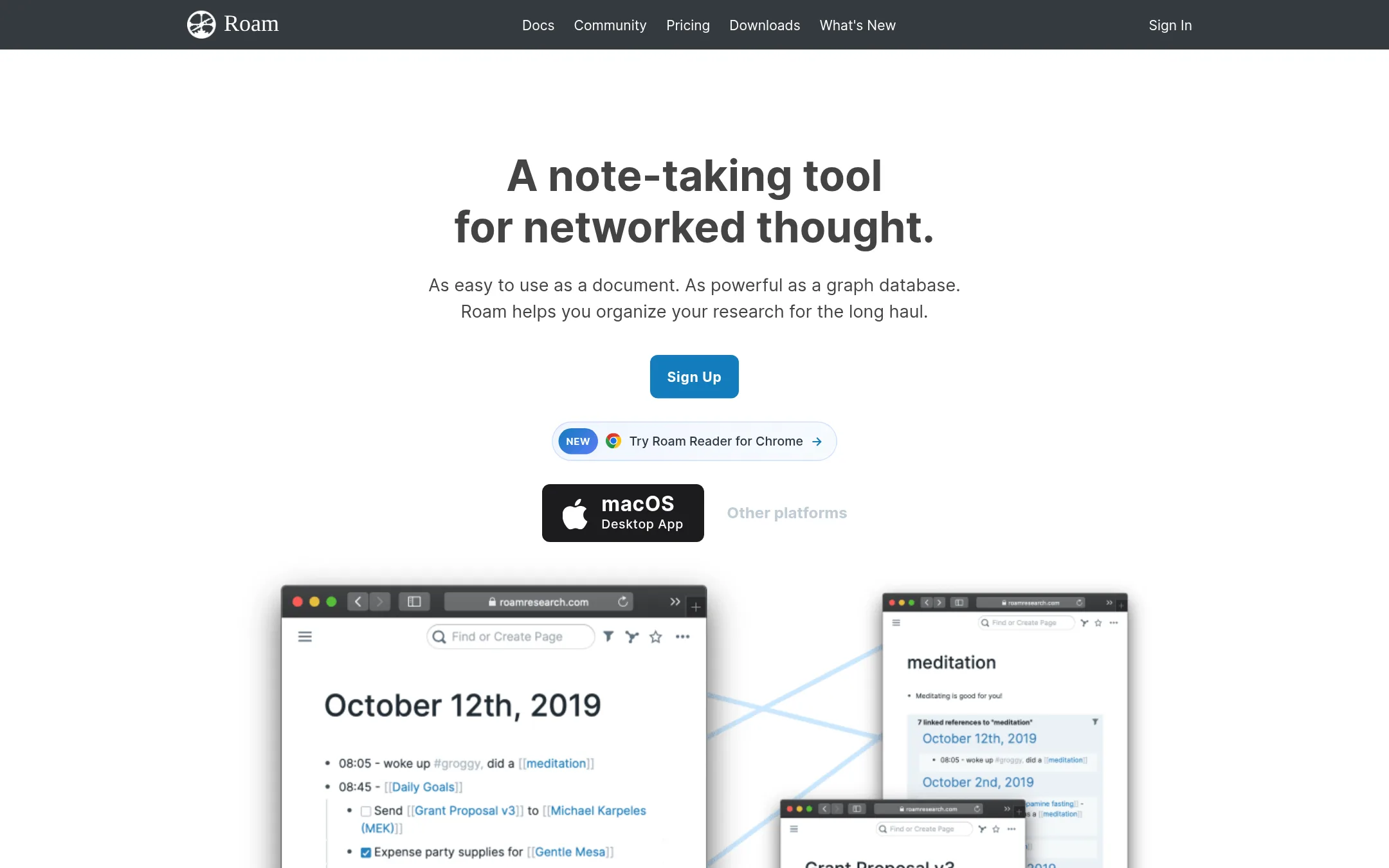
Roam Research is a note-taking tool for networked thought, designed to help you connect ideas through bi-directional links and a graph database. You would choose it over Moss if your work is about organizing and linking your own research, notes, and writing, not about powering real-time AI agents. Moss is for retrieval in AI systems. Roam is for personal knowledge management.
Where it is strong
- Bi-directional links make it easy to see how ideas connect.
- Daily notes encourage regular capture without setup.
- Graph view helps visualize relationships between topics.
Where it falls short
- No real-time semantic search for AI agents.
- Not designed for low-latency retrieval in conversational systems.
- Pricing:
- Pricing is not published on the site.
- Not published
4.Logseq
Best for: Students, academics, writers, and project managers who want a local, markdown-based note-taking and task management tool.
- Pricing
- Not published
- Category
- Productivity & Project Management
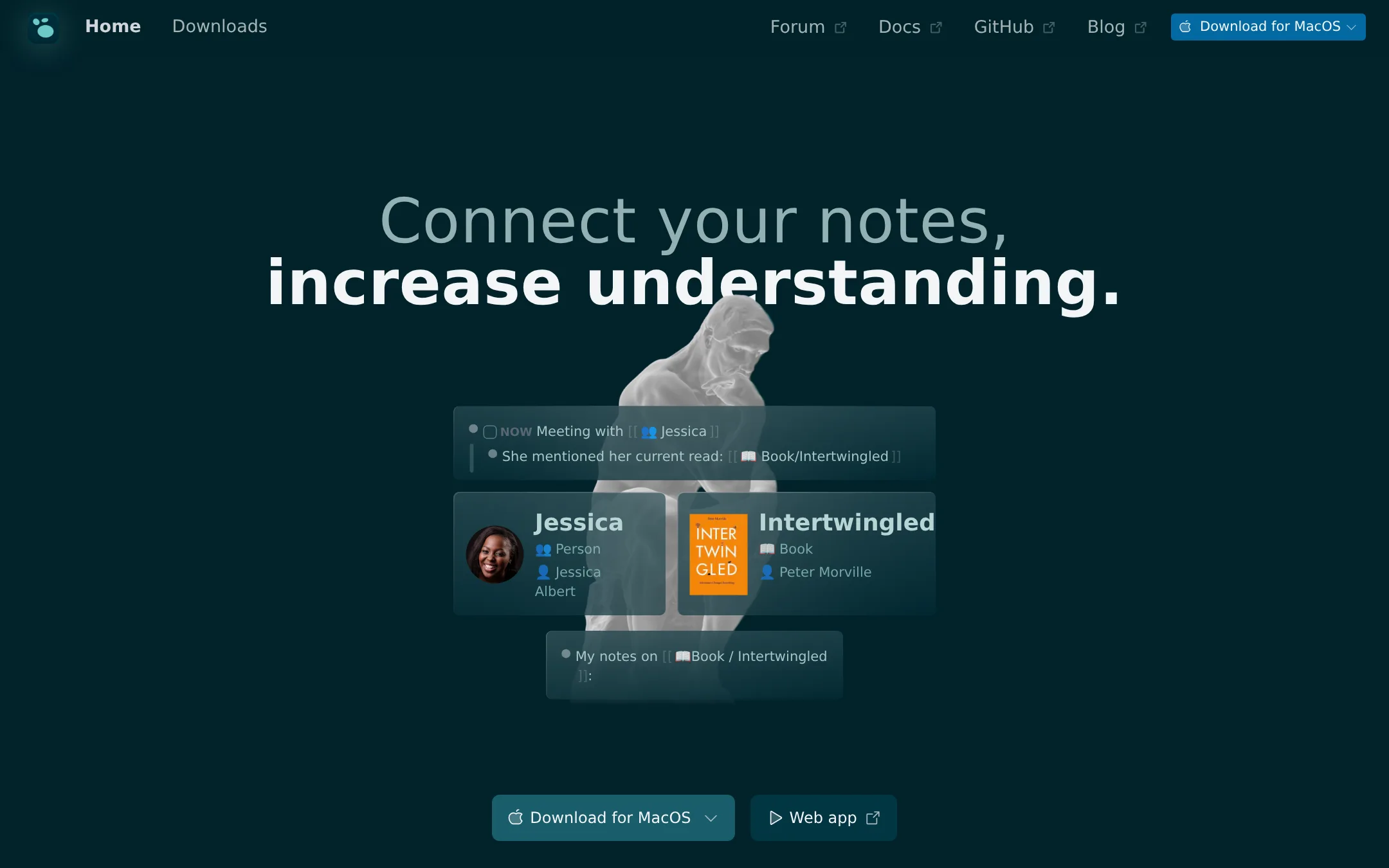
Logseq is a privacy-first, open-source knowledge base for organizing notes, tasks, and ideas. Choose it over Moss if you need a local-first tool for personal knowledge management, not a real-time semantic search engine for AI agents.
Where it is strong
- Open source and free for personal use.
- Data stored locally in markdown files.
- Strong community with 150+ plugins and 30+ themes.
Where it falls short
- No built-in real-time semantic search for AI agents.
- Sync is in beta and may require additional setup.
- Pricing:
- Pricing is not published on the site.
- Free. Pro $12/mo
5.Coda
Best for: Teams that want a flexible doc-and-table workspace for writeups, hubs, trackers, and simple applications, with AI assistance built in.
- Pricing
- Free. Pro $12/mo
- Category
- Productivity & Project Management
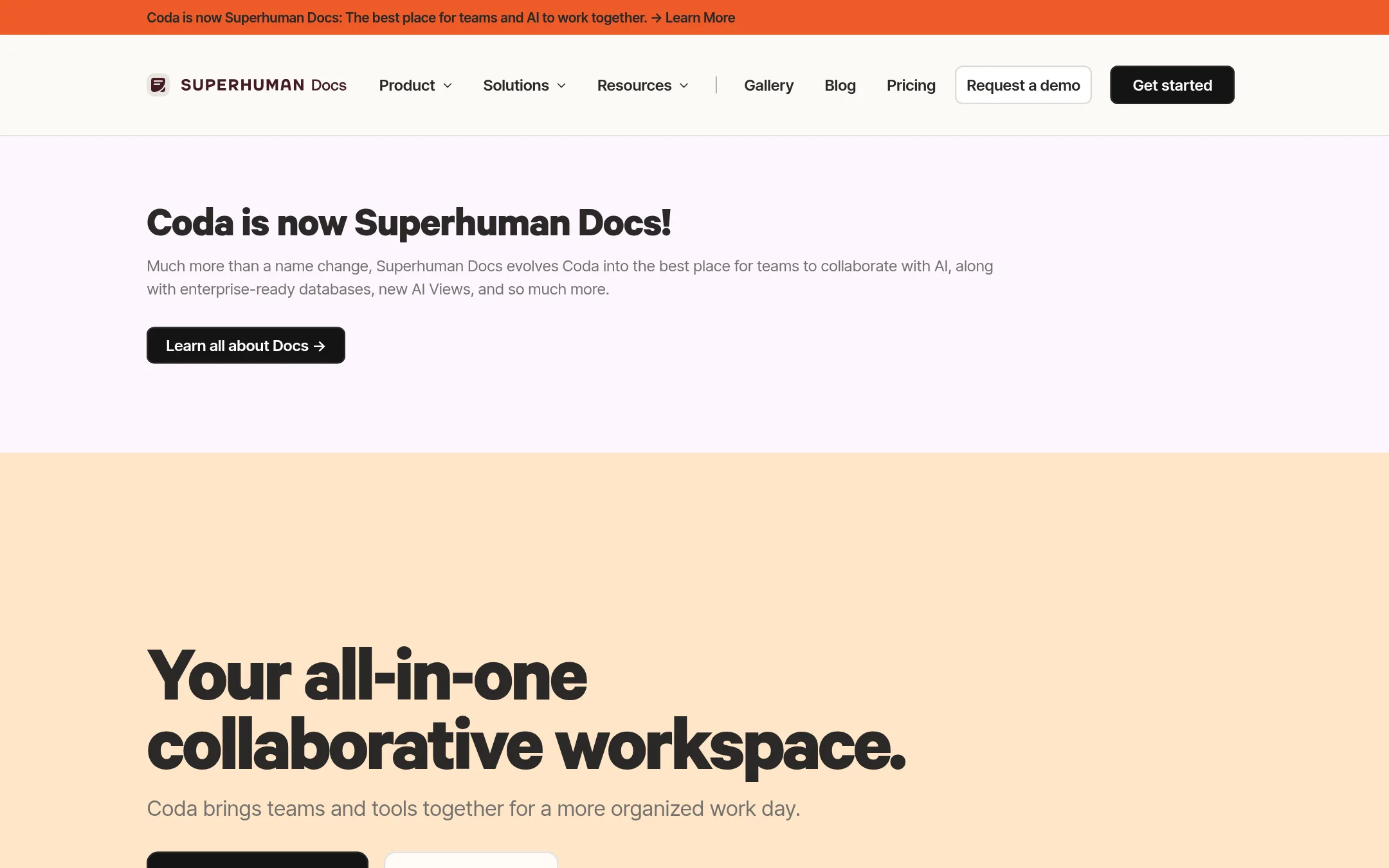
Coda is a collaborative workspace that combines docs, spreadsheets, and app-like functionality. You would choose it instead of Moss if you need a general-purpose tool for team documentation, project tracking, and workflow automation, not real-time semantic search for AI agents.
Where it is strong
- Combines docs, spreadsheets, and app building in one place.
- AI features help with writing, summarizing, and generating tables.
- Templates for product, sales, engineering, design, marketing, and HR teams.
Where it falls short
- Not built for real-time retrieval or voice AI use cases.
- Pricing page lists only Free and Pro. Higher tiers are not shown.
- Pricing:
- Free plan at $0. Pro at $12 USD per month when billed annually, or $15 when billed monthly.
- Not published
6.Jira
Best for: Software and IT teams that need flexible project tracking and agile workflows.
- Pricing
- Not published
- Category
- Productivity & Project Management
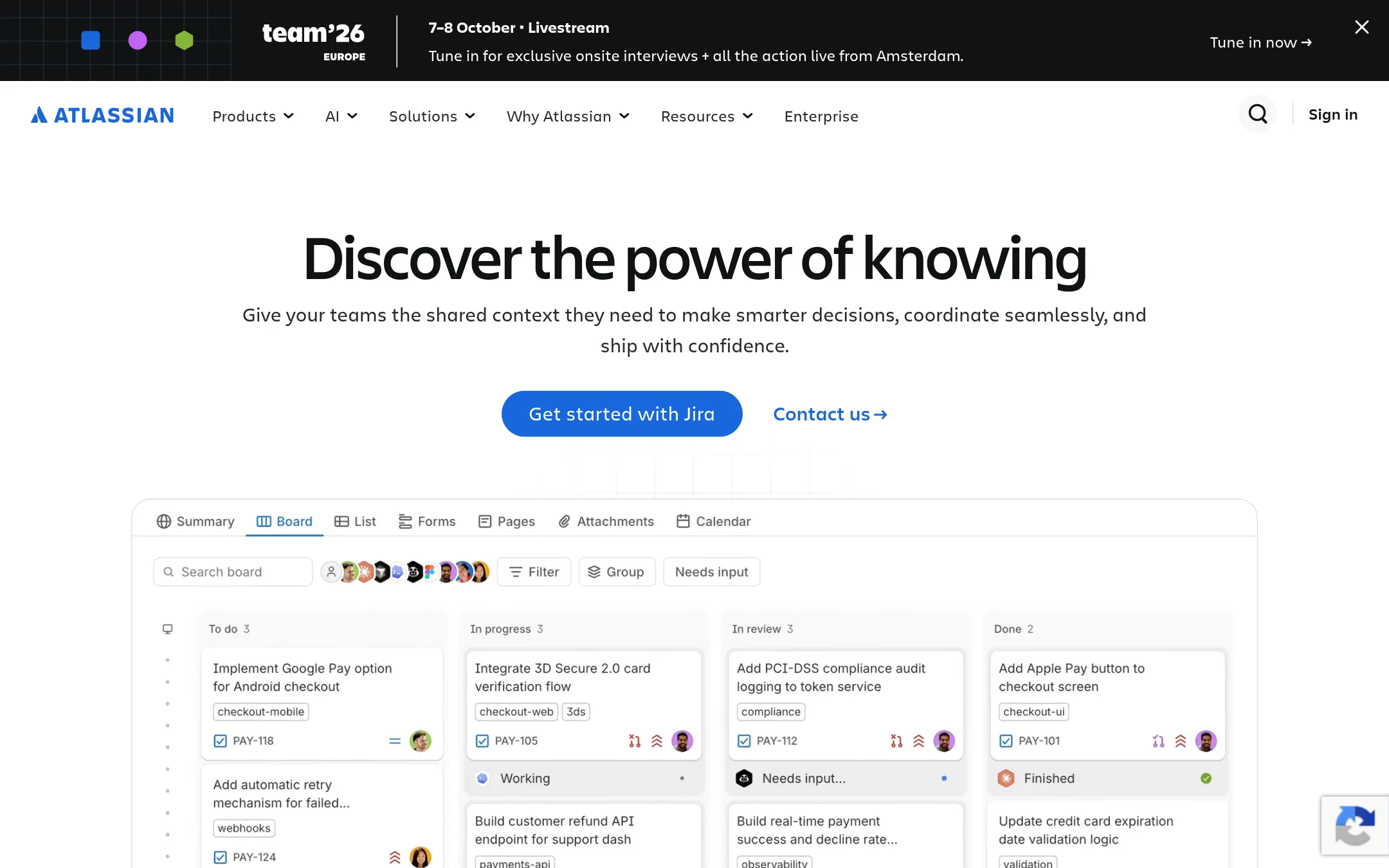
Jira is a project management tool for tracking tasks, bugs, and workflows. You would choose it instead of Moss if your team needs issue tracking and agile planning, not real-time semantic search for AI agents.
Where it is strong
- Flexible workflows for software, IT, and business teams.
- Widely used for agile development and issue tracking.
- Integrates with many Atlassian products.
Where it falls short
- Not designed for AI retrieval or real-time search.
- Requires setup and configuration for complex projects.
- Pricing:
- Pricing is not published on the site.
- TNot published
7.TiddlyWiki
Best for: Individuals and small teams who want a portable, hackable wiki for personal notes and knowledge management without cloud dependencies.
- Pricing
- Not published
- Category
- Other
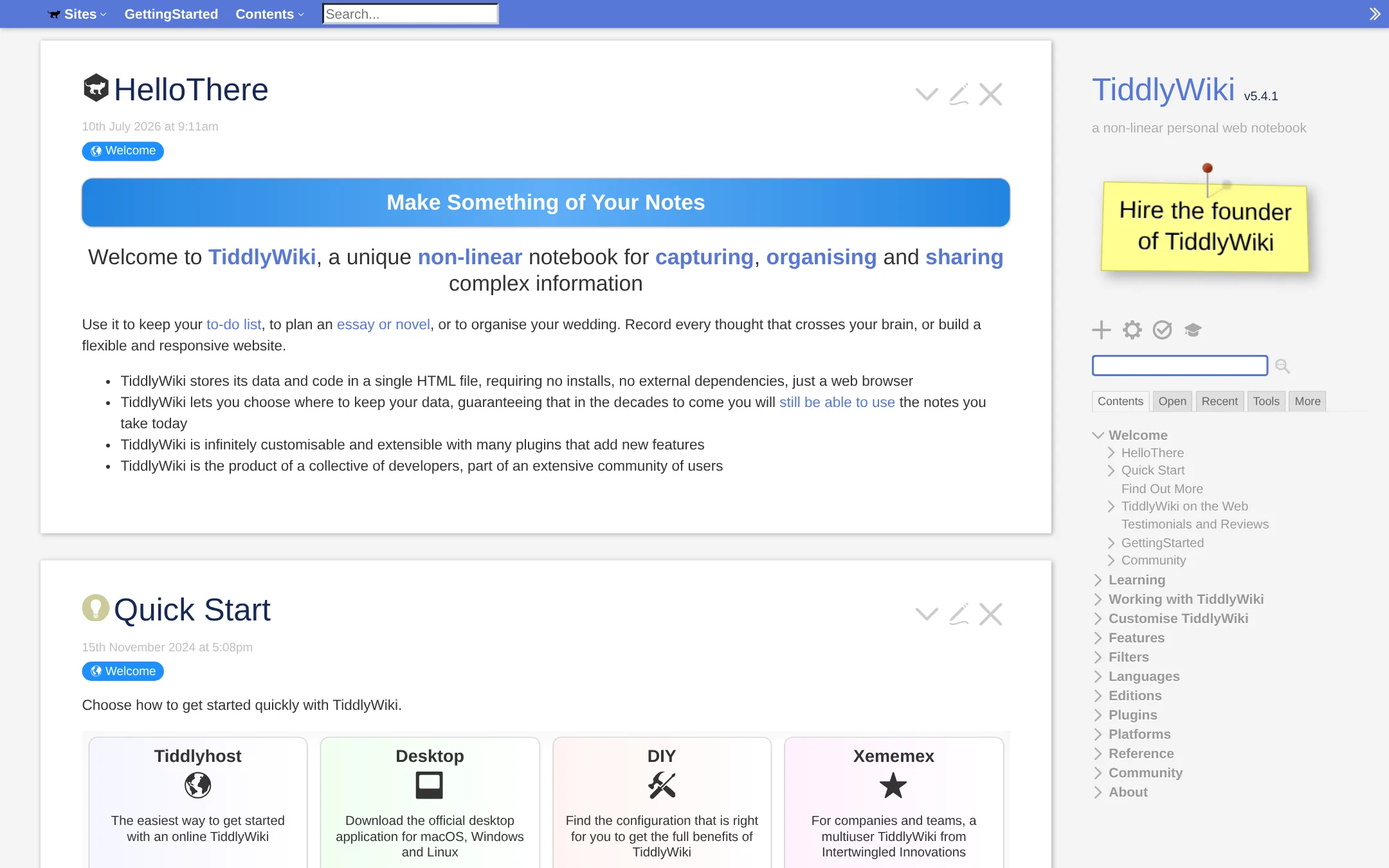
TiddlyWiki is a self-contained, non-linear personal notebook that stores everything in a single HTML file. Choose it over Moss when you need a lightweight, offline-first tool for organizing notes and knowledge, not for powering real-time AI retrieval.
Where it is strong
- Single-file portability: runs anywhere without a server
- Fully offline-capable with no external dependencies
- Open source and highly customizable via plugins and CSS
Where it falls short
- No built-in real-time semantic search or AI integration
- Not designed for high-concurrency or production AI workloads
- Pricing:
- Pricing is not published on the site.
- DNot published
8.Dendron
Best for: Developers and technical teams who want a flexible, hierarchical note-taking and knowledge management system inside VS Code.
- Pricing
- Not published
- Category
- Other
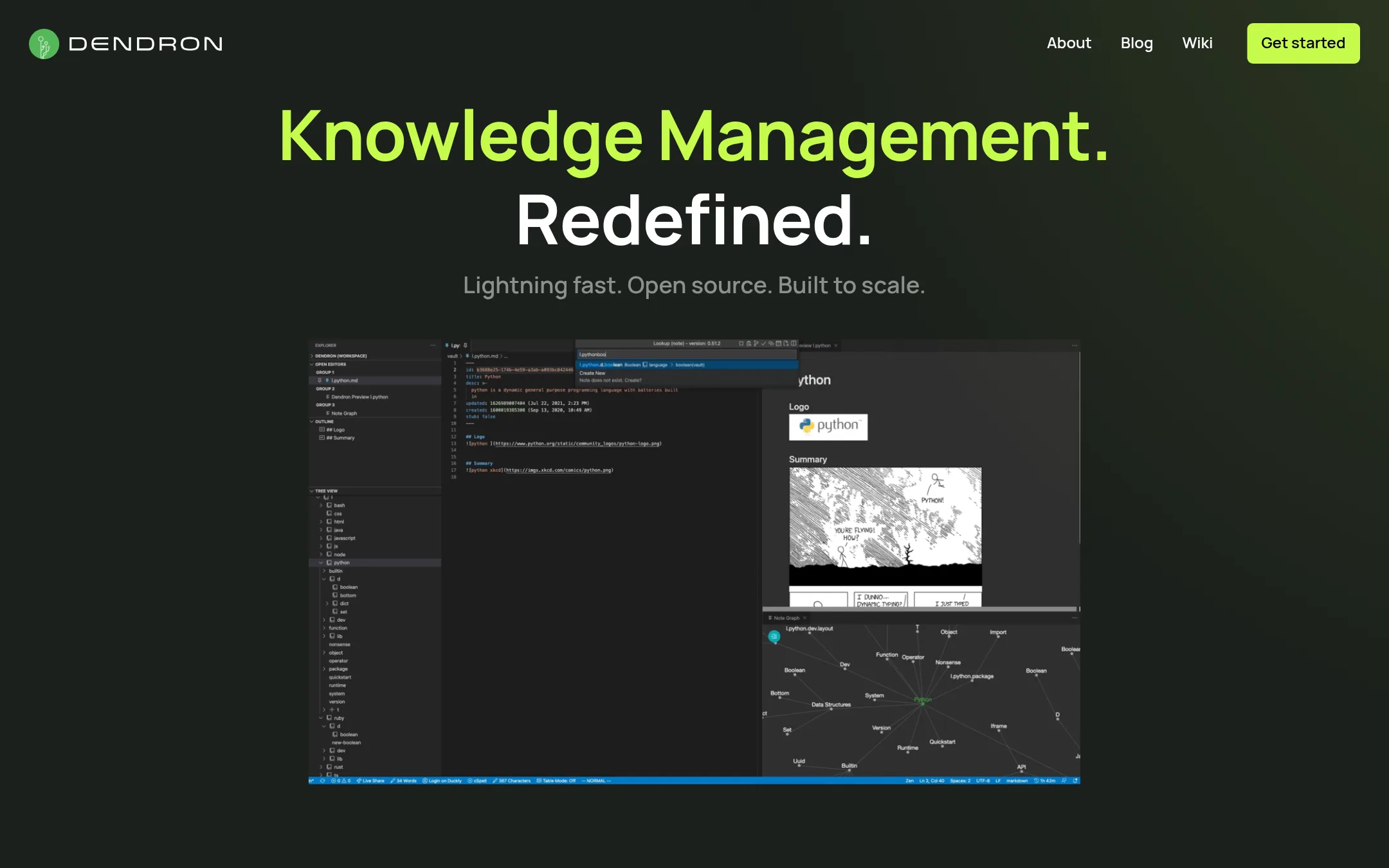
Dendron is an open-source, hierarchical note-taking tool that lives inside VS Code. It is for developers who want a structured knowledge base with schemas and templates, not a real-time semantic search engine for AI agents. Choose it when you need a personal or team knowledge management system, not a retrieval layer for conversational AI.
Where it is strong
- Open source and free to use.
- Hierarchical notes with schemas and templates.
- Runs inside VS Code, so it fits a developer workflow.
Where it falls short
- Not a semantic search engine. No real-time retrieval for AI agents.
- Requires VS Code and a learning curve for hierarchy setup.
- Pricing:
- Pricing is not published on the site.
- BFrom $100/mo
9.Bear
Best for: Small businesses that want to track AI prompts and automate blog generation and email outreach.
- Pricing
- From $100/mo
- Category
- Marketing & Sales
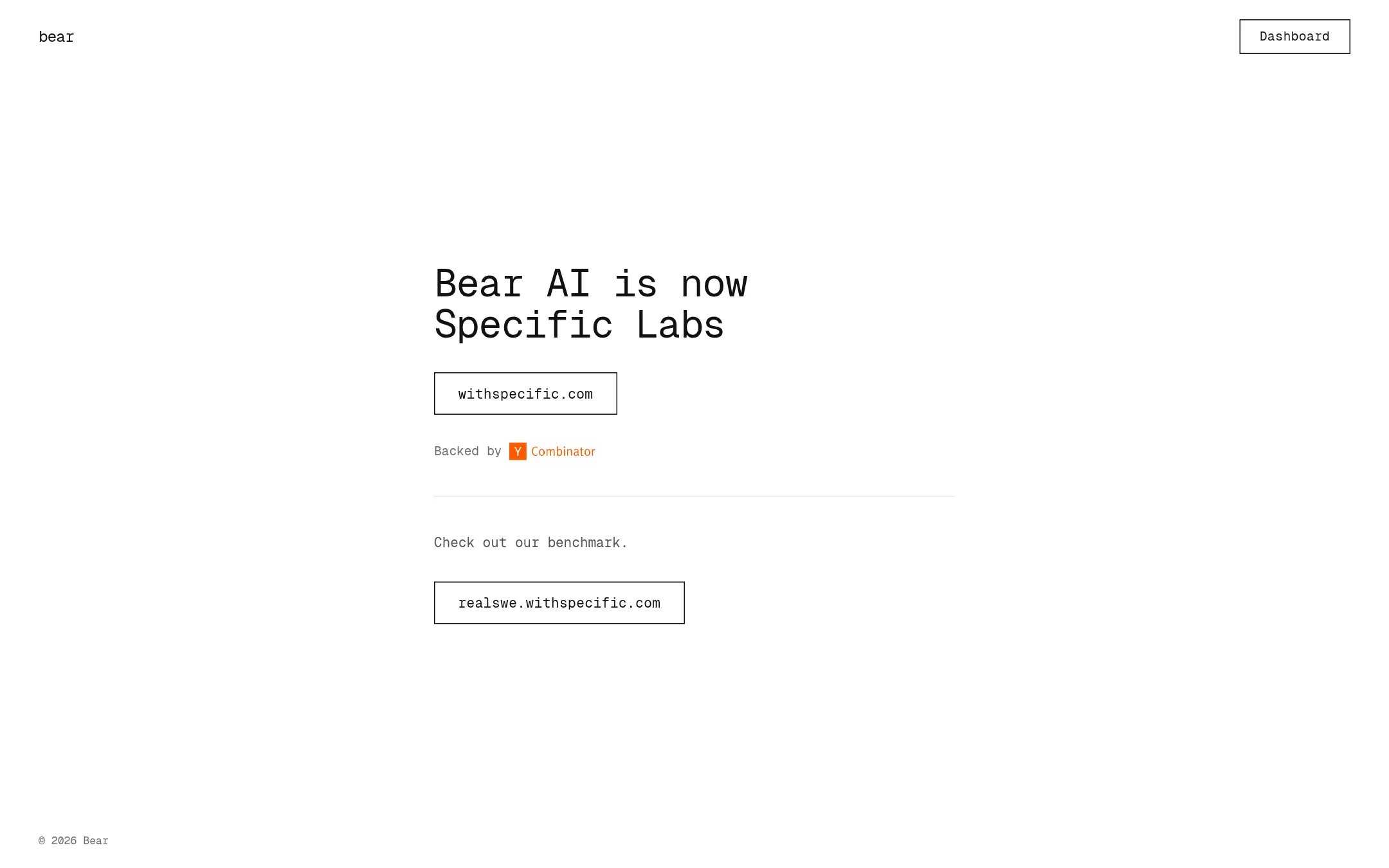
Bear is a marketing stack for AI agents, now operating as Specific Labs. It tracks prompts and generates content, which is a different job from Moss's real-time semantic search for conversational AI. Choose Bear if you need to manage AI-driven marketing workflows, not low-latency retrieval.
Where it is strong
- Tracks GPT-5 prompts and up to 30 prompts per month on Basic.
- Generates 2 blogs per month with the blog agent.
- Includes an email outreach workflow on Basic.
Where it falls short
- No pricing published for Enterprise, so costs are unclear for larger teams.
- The product has rebranded to Specific Labs, which may signal a shift in focus.
- Pricing:
- Basic is $100/mo, and Enterprise is custom-priced.
- Not published
10.RemNote
Best for: Students and lifelong learners who want AI-generated flashcards, quizzes, and summaries from their notes and PDFs.
- Pricing
- Not published
- Category
- Productivity & Project Management
RemNote is a note-taking and flashcard app with AI features for students. It combines notes, PDF annotation, and spaced repetition in one place. Choose it instead of Moss when you need to study and memorize material, not build real-time AI retrieval systems.
Where it is strong
- Combines notes, PDFs, and flashcards in one app
- AI generates flashcards and quizzes from your materials
- Works offline and syncs across devices
Where it falls short
- No real-time semantic search for AI agents
- Not designed for production AI systems or voice agents
- Pricing:
- Pricing is not published on the site.
- ZFree (open source)
11.Zettlr
Best for: Researchers and writers who want a local, privacy-first Markdown editor with citation support and one-click journal submission exports.
- Pricing
- Free (open source)
- Category
- Other
Zettlr is a free, open-source writing app for researchers, journalists, and writers who need to manage notes, citations, and exports in one place. You would choose it instead of Moss if your work is about producing documents and publications, not building real-time AI retrieval systems.
Where it is strong
- Free and open source, no forced cloud sync or telemetry
- First-class citation support for Zotero, JabRef, and Juris-M
- Exports to journal templates via Pandoc profiles
Where it falls short
- No real-time semantic search or AI retrieval capabilities
- Not designed for voice agents or copilots
- Pricing:
- Pricing is not published on the site.
See more comparisons in AI & Machine Learning alternatives.
FAQ
Questions about Moss alternatives
What is the main difference between Moss and these alternatives?
Moss is a specialized retrieval engine for AI agents, delivering sub-10ms semantic search. The alternatives listed are general-purpose tools like note-taking apps, project management, or marketing automation. They are not designed for real-time retrieval in conversational AI systems.
Which alternative is best for a small business automating marketing?
Bear is the strongest fit. It tracks AI prompts, generates blog posts, and automates email outreach. Basic costs $100 per month, and it includes up to 30 prompts and 2 blogs per month.
Are there any free options among the alternatives?
Yes. Notion has a free plan, Obsidian is free for personal use, and Logseq is open source and free. Coda also offers a free plan. These are suitable for individual use or small teams with basic needs.
Which alternative supports offline or local-first usage?
Obsidian stores notes locally in Markdown files and works offline. Logseq is also local-first and open source. TiddlyWiki runs entirely in a single HTML file and works offline. These are good for privacy-conscious users.
Do any of these alternatives integrate with AI features?
Notion and Coda have built-in AI features for writing and summarization. Bear integrates with GPT-5 for prompt tracking and content generation. However, none of them offer real-time semantic search for AI agents like Moss does.
Last updated November 4, 2026.