Netmaker alternatives
7 products compared · Updated November 17, 2026
The short answer
Netmaker's strongest alternatives are Firezone, Tailscale and Netbird. Firezone suits engineering and IT teams that need identity-based access policies and device posture checks for employees reaching internal apps and servers. Tailscale suits teams replacing a legacy VPN with managed, identity-driven access across remote staff, multi-cloud and Kubernetes. Netbird suits IT and engineering teams that want to replace a legacy VPN for remote users with built-in SSO, MFA and posture checks.
Your shortlist, at a glance
Read the comparisons ↓ Tailscale$8/user/mo. Free to 6Engineering and IT teams replacing a legacy VPN with identity-based access across remote staff, multi-cloud and Kubernetes
- ZZeroTier$2.00/device after 10Regulated defense, government and manufacturing teams that need post-quantum networking or air-gapped deployments
- NNetbird€6/mo per team, Free tIT and engineering teams that need to replace a legacy VPN for remote users with identity-based access and MFA
- TTwingateFrom $10/user/moGrowing teams that want to retire a legacy VPN and gate access by user identity and device posture, especially those using Okta, Entra ID or Google Workspace.
 Cloudflare Images$5 per 100k storedWebsites and apps that serve a lot of images to users and want them delivered from a CDN without managing their own image infrastructure
- HHeadscaleNot publishedSelf-hosters and small open-source teams that want to run their own Tailscale-compatible control server on a single tailnet
 FirezoneFrom $50/seat/yrEngineering and IT teams that need employees to reach internal servers and apps through identity-based access policies and device posture checks
About Netmaker and its alternatives
Netmaker is a platform for automated WireGuard networks aimed at distributed systems and Kubernetes. According to its site, it is known for setting up secure mesh networks quickly and for pricing that charges only for daily active connections rather than idle seats.
When comparing alternatives in this category, weigh the pricing structure first, since some products charge per user, some per device and some per active connection. Check which regions the service runs in, how well it integrates with your identity provider and existing tools, what support is included at each tier, and the contract terms, including whether a self-hosted option is available.
Explore the alternatives
- $8/user/mo. Free to 6
1.Tailscale
Best for: Engineering and IT teams replacing a legacy VPN with identity-based access across remote staff, multi-cloud and Kubernetes
- Pricing
- $8/user/mo. Free to 6
- Category
- Security & Privacy
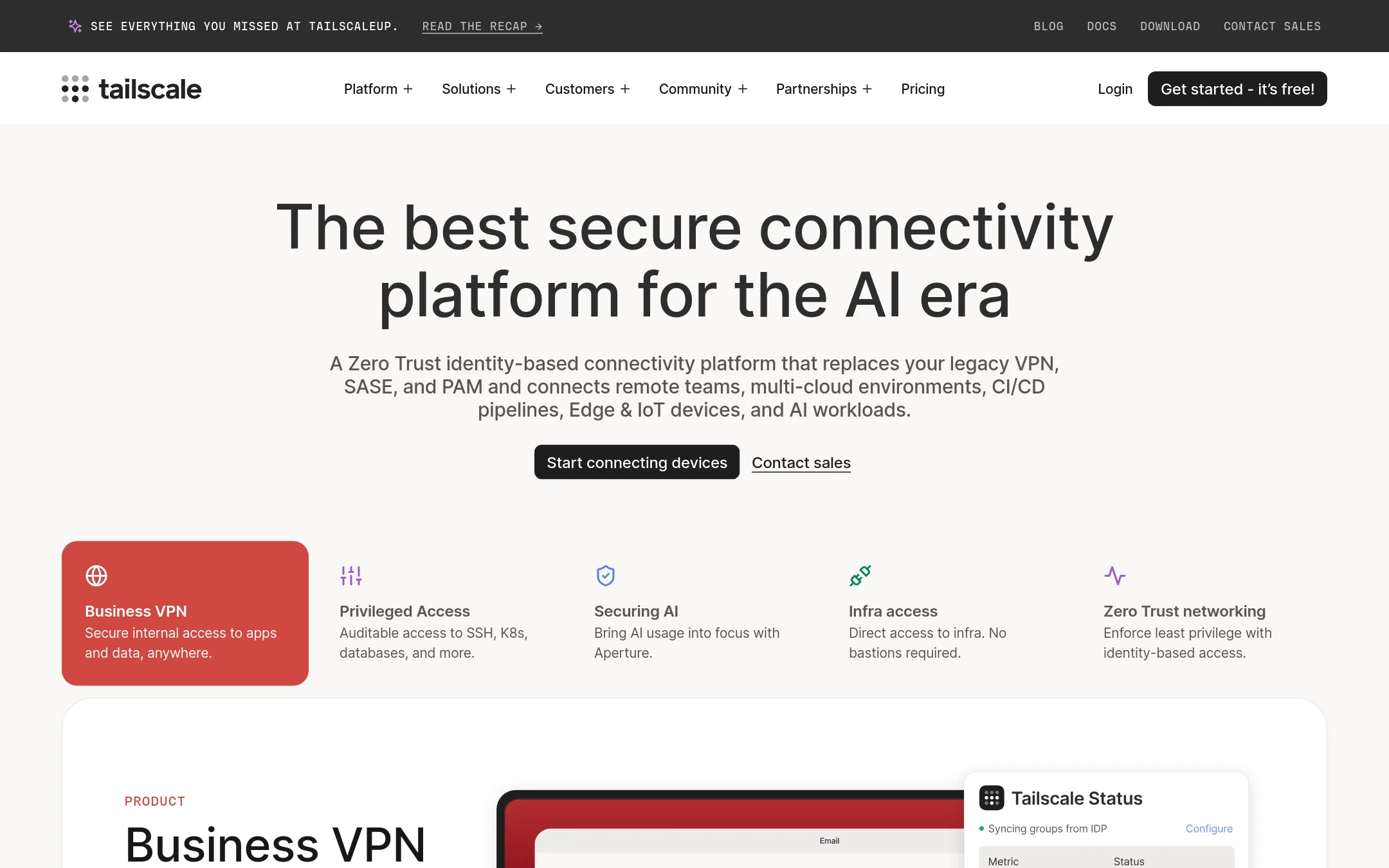
Tailscale is a Zero Trust connectivity platform that replaces a legacy VPN with identity-based access to devices, servers, Kubernetes clusters and SaaS tools. Teams pick it over Netmaker when they want managed, identity-driven access with SSO, SCIM and MDM or EDR integration, and do not want to run their own WireGuard control plane.
Where it is strong
- Identity-based access that works with SSO and SCIM for user and group management
- Deploys in minutes, and the site reports customers saving time on connectivity issues
- Covers Kubernetes access, Tailscale SSH and CI/CD runners in addition to general VPN use
Where it falls short
- Per-user pricing means cost rises with headcount, unlike Netmaker's charge for active connections
- Some advanced features such as log streaming and flow logs sit on the higher-priced tiers
- Pricing:
- Pricing is per user: the Personal plan is free for up to 6 users with unlimited devices, Standard is $8 per user per month, Premium is $18 per user per month, and Enterprise is custom.
- Z$2.00/device after 10
2.ZeroTier
Best for: Regulated defense, government and manufacturing teams that need post-quantum networking or air-gapped deployments
- Pricing
- $2.00/device after 10
- Category
- Other
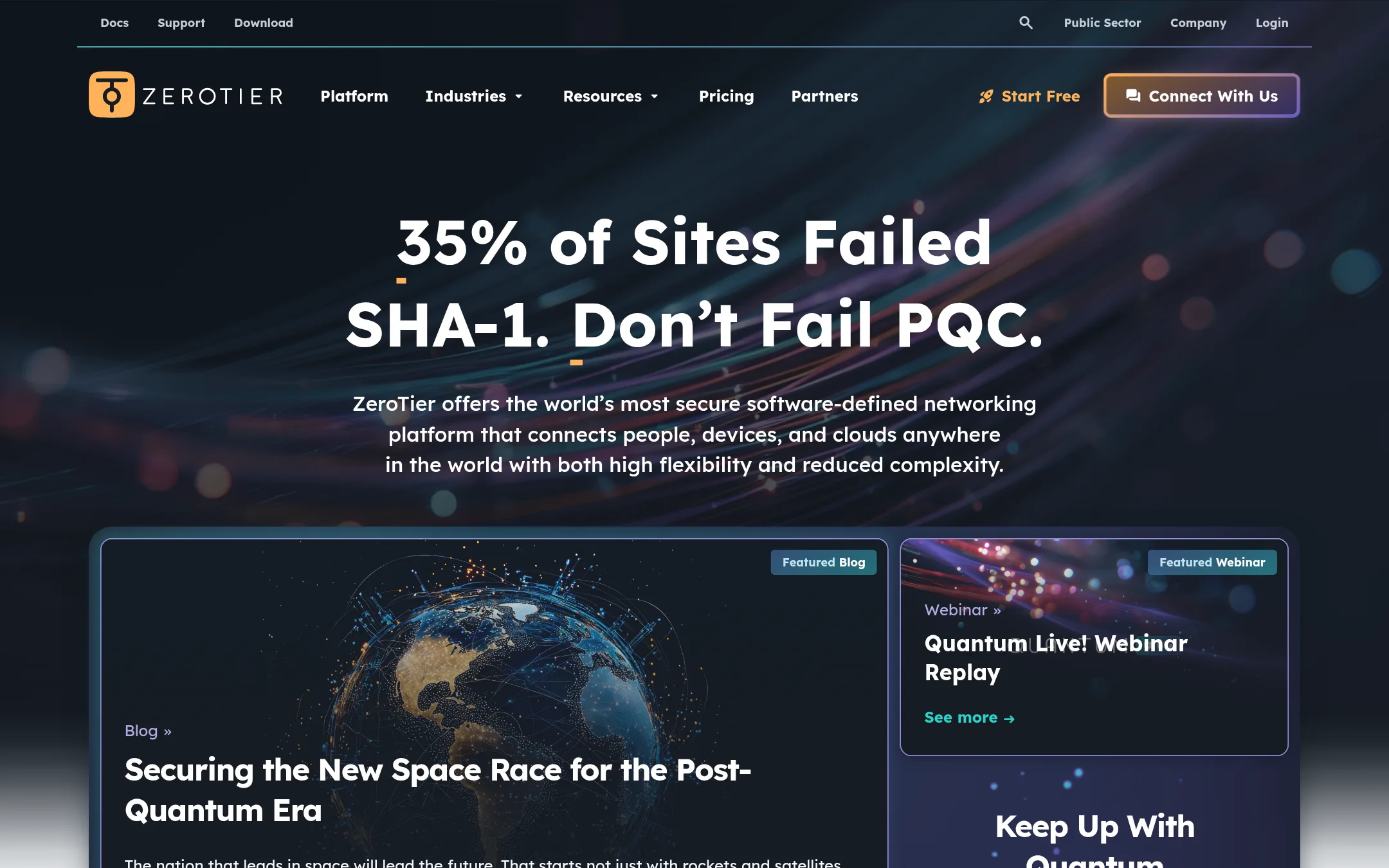
ZeroTier builds software-defined networks that connect people, devices and clouds, and it runs on the servers, routers and devices you already have, with no appliances to buy. It also offers a separate ZeroTier Quantum platform that implements post-quantum algorithms aligned with CNSA 2.0. Choose it over Netmaker when you need a mesh network with a commercial tier that includes API access and OIDC single sign-on, or when you need post-quantum networking for an air-gapped or regulated environment.
Where it is strong
- Runs on servers, routers and devices you already own, with no proprietary hardware.
- Offers a post-quantum platform using ML-KEM-1024 and ML-DSA-87, with self-hosted and air-gapped options.
- Endpoints authenticate peers and enforce policy locally, so there is no central box to fail.
Where it falls short
- Pricing is per device after a small included allotment, so cost grows with fleet size.
- Quantum is a separate platform with its own protocol and needs a sales conversation to start.
- Pricing:
- The Personal plan covers 10 devices for non-commercial use, Essential is $2.00 per device after 10 included devices, Scale is $1.80 per device after 100 included devices, Enterprise is custom, and Quantum is priced from $18 with the rest on request.
- N€6/mo per team, Free t
3.Netbird
Best for: IT and engineering teams that need to replace a legacy VPN for remote users with identity-based access and MFA
- Pricing
- €6/mo per team, Free t
- Category
- Other
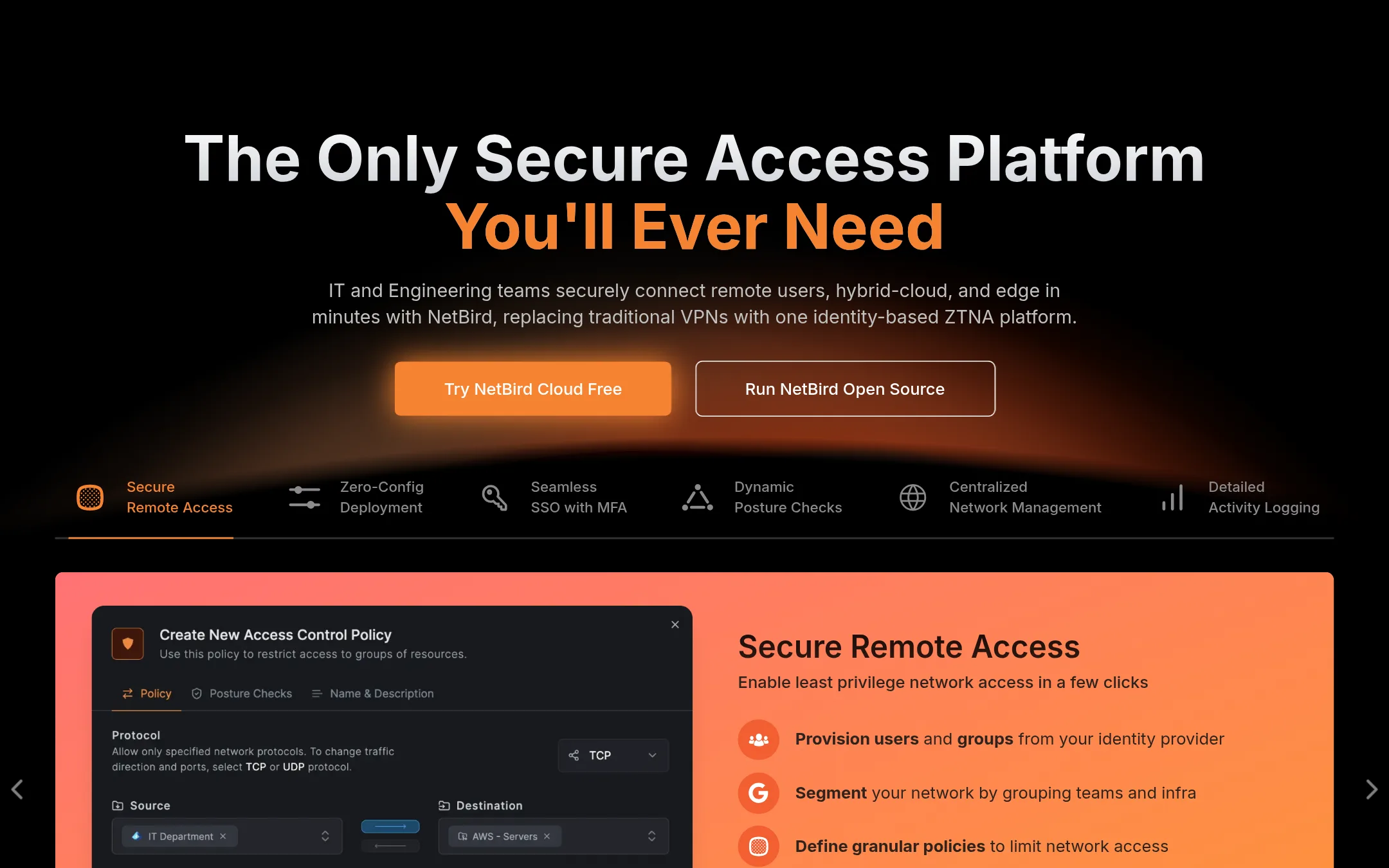
NetBird is a WireGuard-based overlay network that also bundles zero trust network access, with SSO, MFA and device posture checks in the same product. Choose it over Netmaker when your main need is replacing a legacy VPN for remote staff with per-user identity controls and posture checks, not building a mesh of machines and Kubernetes clusters. Its code is BSD-3 licensed and can be self-hosted.
Where it is strong
- Free tier covers up to 5 users and 100 machines
- Built-in SSO and MFA through Okta, Microsoft and Google, plus device posture checks
- Open source under BSD-3 and can be self-hosted
Where it falls short
- Device posture checks, MDM and EDR controls sit on the Business plan at €12 per month
- Pricing is listed in euros only on the page shown, with no regional breakdown
- Pricing:
- The free tier covers up to 5 users and 100 machines, the Team plan is €6 per month for unlimited users with 100 machines plus 10 per user, Business is €12 per month, and Enterprise is custom.
- TFrom $10/user/mo
4.Twingate
Best for: Growing teams that want to retire a legacy VPN and gate access by user identity and device posture, especially those using Okta, Entra ID or Google Workspace.
- Pricing
- From $10/user/mo
- Category
- Other
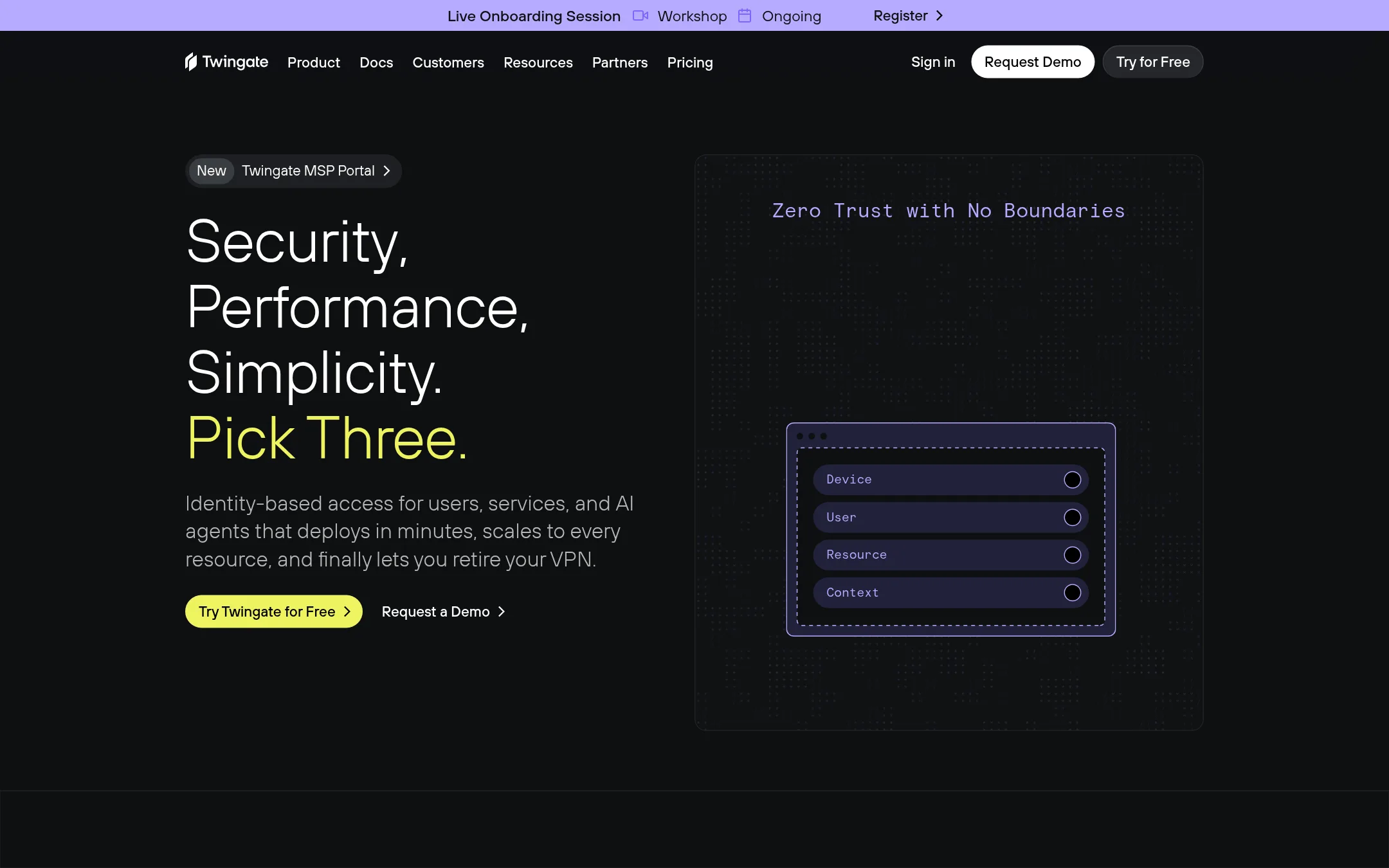
Twingate is a zero-trust network access product that replaces a legacy VPN with identity-based access to users, services and resources. Its pitch is direct-to-resource connectivity with no tunnels or bottlenecks, plus a policy engine for least-privilege access. A team would pick it over Netmaker if they want a managed, identity-driven way to retire their VPN for workforce access rather than building a WireGuard mesh they run themselves.
Where it is strong
- Direct-to-resource connections with no tunnels or bottlenecks, according to the site.
- Single policy engine with least-privilege and automated access controls.
- SSO and user provisioning through Okta, Entra ID and Google Workspace.
Where it falls short
- Its focus is identity-based access for people and services, so it is a different model from Netmaker's self-hosted WireGuard mesh networks.
- Business-tier features like user provisioning and device posture checks sit at the paid tiers, and some items are add-ons.
- Pricing:
- Twingate has a free Starter plan for up to 5 users, a Business plan at $10 per user per month, and a custom Enterprise plan, with Teams and Home plans also listed.
- $5 per 100k stored
5.Cloudflare Images
Best for: Websites and apps that serve a lot of images to users and want them delivered from a CDN without managing their own image infrastructure
- Pricing
- $5 per 100k stored
- Category
- Media & Entertainment
Cloudflare Images is a service that optimizes and delivers images from Cloudflare's global network, so pages load fast for visitors without you running an image pipeline. Someone would pick it over Netmaker only if their need is image delivery, not private networking, since Netmaker builds WireGuard mesh networks for connecting machines and Kubernetes clusters.
Where it is strong
- Delivers images from a global network with points of presence in 335+ cities
- Image storage and delivery are billed per use, with unique transformations priced separately
- Lets you run on the same platform that also handles DNS, DDoS protection and a CDN
Where it falls short
- It solves image delivery, not private networking, so it does not replace Netmaker for connecting machines
- Image-specific pricing sits alongside many other usage meters, which makes the total bill harder to predict
- Pricing:
- Pricing is not published for Cloudflare Images specifically in the material provided, though the plans page lists Free at $0, Pro at $20/mo billed annually or $25/mo billed monthly, and Business at $200/mo billed annually or $250/mo billed monthly, with image
- HNot published
6.Headscale
Best for: Self-hosters and small open-source teams that want to run their own Tailscale-compatible control server on a single tailnet
- Pricing
- Not published
- Category
- Other
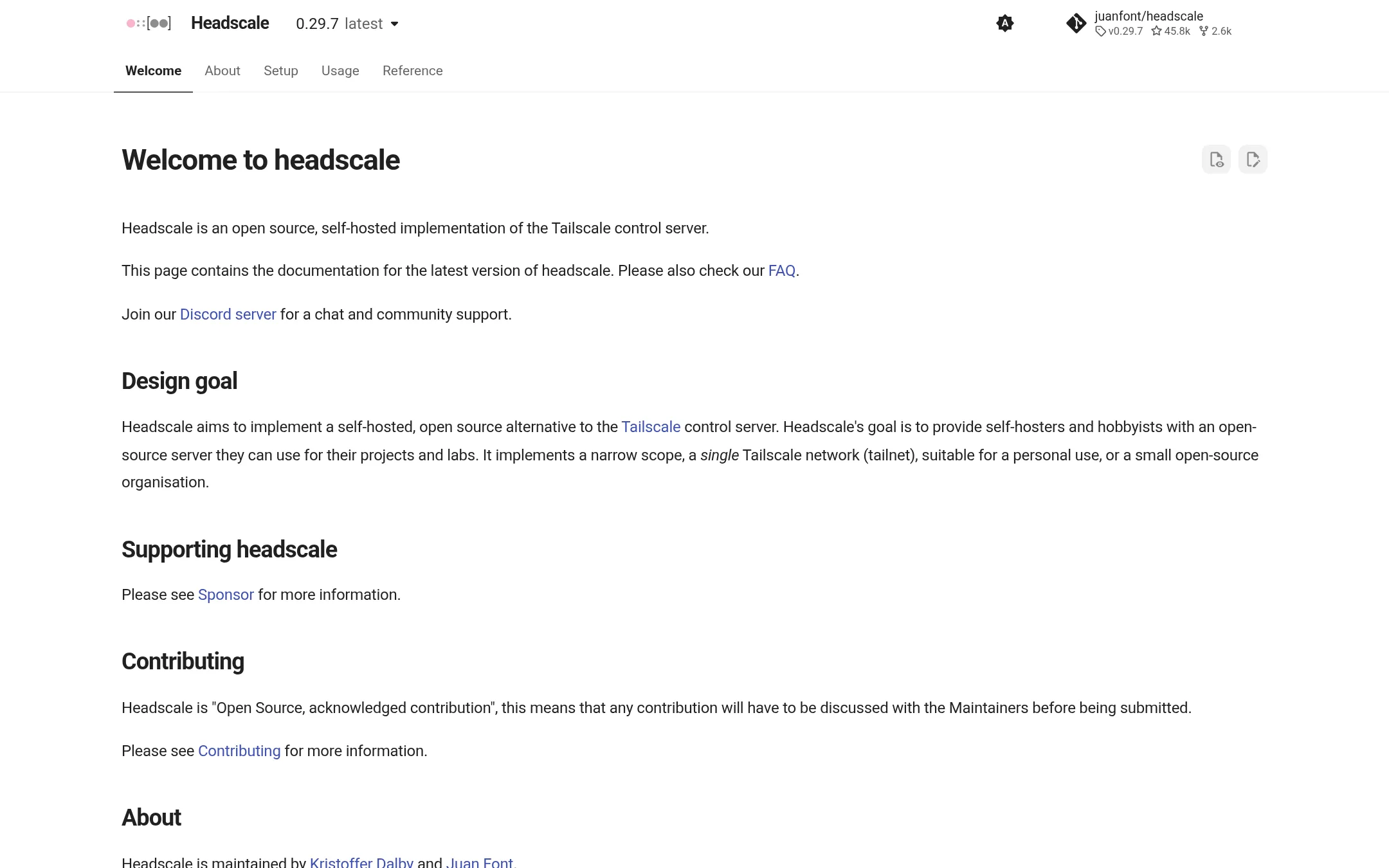
Headscale is an open source, self-hosted implementation of the Tailscale control server. It fits a team that wants Tailscale-style mesh networking but keeps the coordination server on its own infrastructure. It is aimed at self-hosters, hobbyists and small open-source organisations running a single tailnet.
Where it is strong
- Open source and self-hosted, so the control server stays on your own infrastructure
- Built as a drop-in implementation of the Tailscale control server
- Active Discord community and maintainers listed on the site for support
Where it falls short
- Scope is a single tailnet, suited to personal use or small organisations rather than large multi-tenant deployments
- Contributions must be discussed with the maintainers before they are submitted
- Pricing:
- Pricing is not published on the site.
- From $50/seat/yr
7.Firezone
Best for: Engineering and IT teams that need employees to reach internal servers and apps through identity-based access policies and device posture checks
- Pricing
- From $50/seat/yr
- Category
- Security & Privacy
Firezone is an open-source zero trust access platform built on WireGuard that replaces a VPN for teams. It ties access to your identity provider, syncs users and groups from Okta, Entra ID, or Google Workspace, and can check device posture before traffic passes. Choose it over Netmaker when you need per-user access policies and device checks for employees reaching internal apps and servers, rather than a mesh network for distributed systems or Kubernetes.
Where it is strong
- Access rules tie to users and groups synced from Okta, Entra ID, or Google Workspace.
- Gateways only make outbound connections, so no inbound firewall ports need opening.
- Free Starter plan covers up to 6 users with native clients on major platforms.
Where it falls short
- Per-seat pricing grows with headcount, while Netmaker bills on daily active connections.
- Device posture checks and directory sync sit on the $80 Business plan and above.
- Pricing:
- Firezone has a free Starter plan for up to 6 users, Team at $50 per seat per year billed annually, Business at $80 per seat per year, and custom Enterprise pricing.
- Switching from Netmaker:
- Firezone's own guide maps Netmaker-style concepts loosely, and moving over means running a Gateway beside your resources while the old network keeps working, then recreating access as Resources and Policies.
See more comparisons in Security & Privacy alternatives.
FAQ
Questions about Netmaker alternatives
What is the main difference between Netmaker and Firezone?
Netmaker builds WireGuard mesh networks that connect machines and Kubernetes clusters. Firezone is built to give employees identity-based access to internal servers and apps, with per-user policies and device posture checks. Teams that need people to reach internal resources often find Firezone the better fit.
Is there a free option if I want to try an alternative?
Several alternatives have free tiers. Firezone offers a free Starter plan for up to 6 users, Tailscale's Personal plan is free for up to 6 users, and Netbird's free tier covers up to 5 users and 100 machines. Netmaker itself offers a free self-hosted build.
How does Tailscale's pricing compare with Netmaker's?
Tailscale charges per user, with Standard at $8 per user per month and Premium at $18 per user per month. Netmaker bills only for daily active connections, so the two can cost very differently depending on headcount and how many machines are online.
Which alternative suits regulated or air-gapped environments?
ZeroTier suits regulated defense, government and manufacturing teams, and its separate Quantum platform implements post-quantum algorithms with self-hosted and air-gapped options. Netbird's code is BSD-3 licensed and can be self-hosted, which also helps teams that need control over where their infrastructure runs.
Should I pick an alternative if I already run a legacy VPN?
If your main goal is retiring a legacy VPN for remote staff, Twingate, Tailscale and Netbird are built for that use case with identity-based access and SSO. Netmaker is more suited to connecting machines and clusters than to replacing employee VPN access, so compare the access model before you decide.
Last updated November 17, 2026.