Nullstone alternatives
6 products compared · Updated November 3, 2026
The short answer
For teams that want a fully managed platform without running their own cloud infrastructure, Heroku and Render are the strongest alternatives, with Heroku suiting developers who want the fastest git-push deploys and Render suiting startups that need autoscaling and previews. Railway is the best choice for startups that want pay-per-use pricing and built-in monitoring. Fly.io is the strongest alternative for teams that need global reach and hardware-isolated VMs with per-second billing.
Your shortlist, at a glance
Read the comparisons ↓ Amazon BusinessNot publishedOrganizations that need to control and analyze business purchasing across many employees and locations.
- RRecordBookNot publishedSmall and medium businesses that want a lightweight, mobile-first database app for managing records and workflows without infrastructure concerns.
 HerokuFrom $25/moDevelopers and small teams who want the fastest path from git push to a running app without touching AWS or GCP.
 RailwayUsage-based, from $1/mStartups and developers who want a fast, managed deployment platform with pay-per-use pricing and built-in monitoring.
 RenderFree. From $7/moStartups and small teams that want to deploy web services, Postgres, and cron jobs quickly without managing cloud infrastructure.
 Fly.ioFrom $0.0030/hrTeams that want to deploy full-stack apps and agents on fast VMs with global reach and pay-as-you-go pricing.
About Nullstone and its alternatives
Nullstone is an internal developer platform that lets you deploy any app or architecture to your own AWS or GCP account. It is known for giving developers full transparency and control, with secrets stored in your own secrets manager, open-source infrastructure modules, and support for containers, serverless, static sites, and VMs.
When comparing alternatives, weigh the pricing structure (per-user, per-second, or usage-based), whether the platform runs on your own cloud or its own infrastructure, the integrations and add-ons available, the level of support (community, Slack, or SLA), and the contract terms such as free tiers or minimum commitments.
Explore the alternatives
- Not published
1.Amazon Business
Best for: Organizations that need to control and analyze business purchasing across many employees and locations.
- Pricing
- Not published
- Category
- E-commerce
Amazon Business is a procurement platform for buying supplies and equipment, not a deployment tool. Choose it instead of Nullstone when your team's main need is managing purchasing, approvals, and spend analytics rather than deploying cloud applications.
Where it is strong
- Wide product selection with quantity discounts
- Approval workflows and spend analytics
- Free account option available
Where it falls short
- Not a developer platform. No app deployment or cloud infrastructure management
- Pricing for business features is not transparently listed
- Pricing:
- Pricing is not published on the site.
- RNot published
2.RecordBook
Best for: Small and medium businesses that want a lightweight, mobile-first database app for managing records and workflows without infrastructure concerns.
- Pricing
- Not published
- Category
- Productivity & Project Management
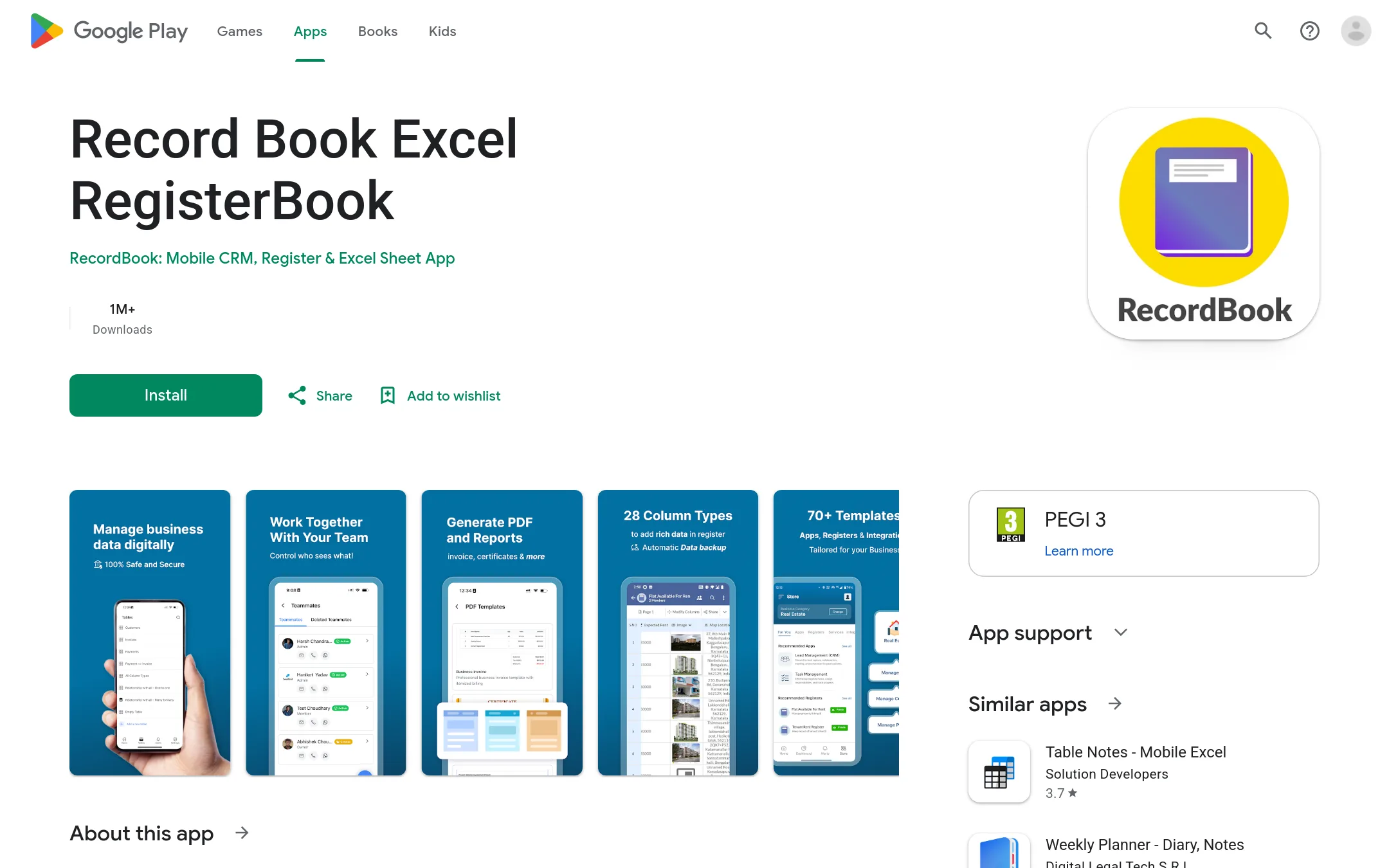
RecordBook is a mobile app that positions itself as an Airtable alternative for small and medium businesses. You would choose it instead of Nullstone if your team needs a simple, on-the-go tool for organizing data and workflows, not a cloud deployment platform.
Where it is strong
- Mobile-first design for managing data on the go
- Aimed at SMBs with simple setup
- No cloud infrastructure to manage
Where it falls short
- No deployment or cloud management features
- Limited to mobile platform (Android)
- Pricing:
- Pricing is not published on the site.
- From $25/mo
3.Heroku
Best for: Developers and small teams who want the fastest path from git push to a running app without touching AWS or GCP.
- Pricing
- From $25/mo
- Category
- Developer Tools
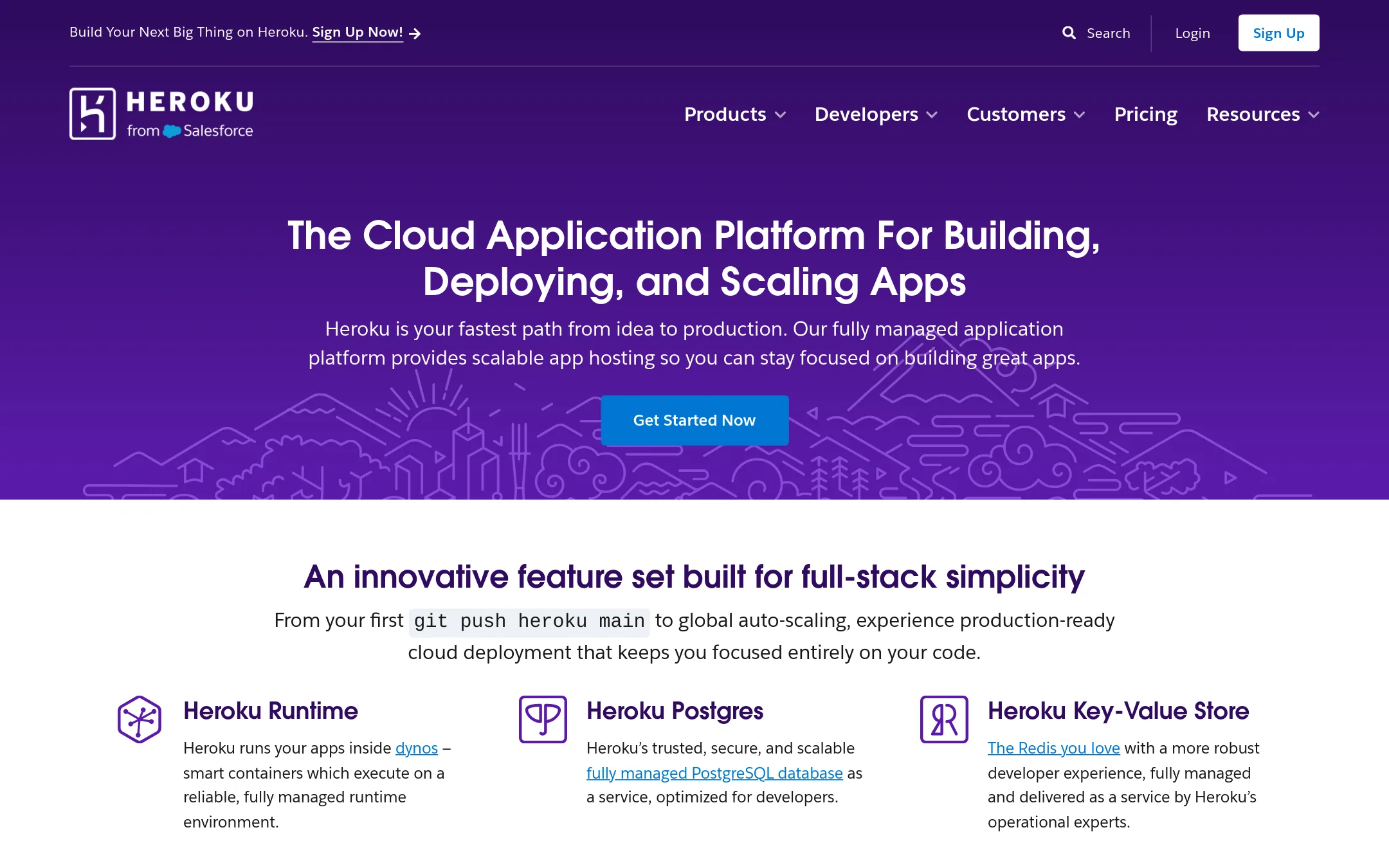
Heroku is a fully managed platform that runs your apps in dynos, with built-in Postgres, Redis, and add-ons. Choose it over Nullstone if you want to avoid managing cloud infrastructure entirely and prefer a simpler, more opinionated deployment workflow.
Where it is strong
- Fully managed platform: no cloud account or infrastructure to run.
- One-command deploys with git push and instant rollbacks.
- Rich ecosystem of add-ons and buildpacks for common services.
Where it falls short
- Less control over underlying infrastructure compared to Nullstone.
- Costs can grow quickly as you scale dynos and data services.
- Pricing:
- Dynos start at $25 per month for Standard-1X, with Eco and Basic tiers available at lower or no cost.
- Switching from Nullstone:
- Moving from Nullstone means re-platforming your app to Heroku's buildpack or Docker-based workflow, which may require adjusting your deployment scripts and environment configuration.
- Usage-based, from $1/m
4.Railway
Best for: Startups and developers who want a fast, managed deployment platform with pay-per-use pricing and built-in monitoring.
- Pricing
- Usage-based, from $1/m
- Category
- Developer Tools
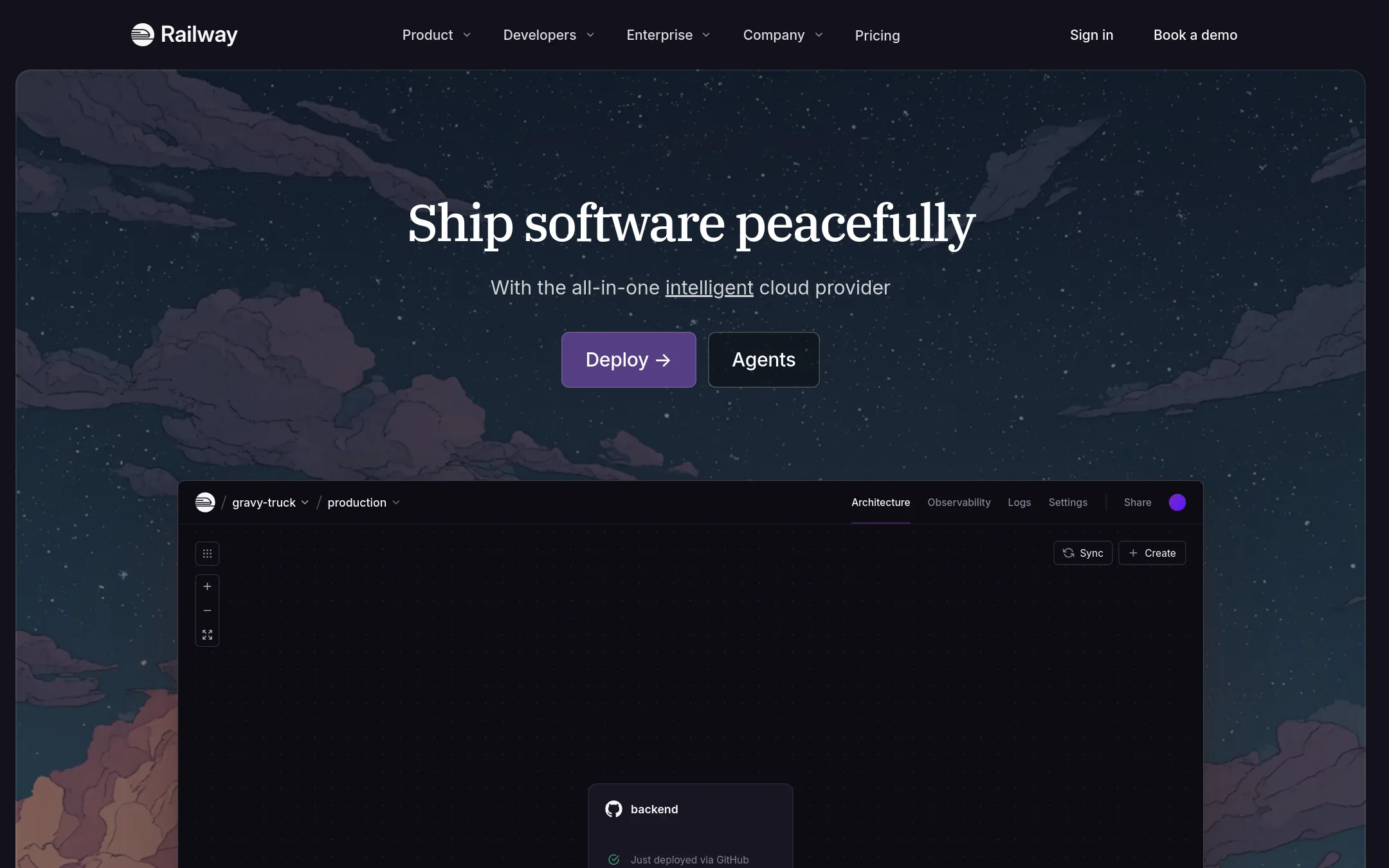
Railway is a managed cloud platform that deploys apps, databases, and more with automatic scaling and observability. Choose it over Nullstone if you want a fully managed service with usage-based pricing and don't need to bring your own cloud or infrastructure modules.
Where it is strong
- Pay only for what you use, billed by the second
- Automatic scaling and instant previews for every PR
- Built-in logs, metrics, and traces with no setup
Where it falls short
- No bring-your-own-cloud option on lower tiers
- Pricing can be unpredictable for high-traffic apps
- Pricing:
- Pricing is usage-based: $0.00000386 per GB/sec for memory, $0.00000772 per vCPU/sec for CPU, $0.05 per GB egress, and $0.015 per GB-month for object storage. Plans start with a 30-day free trial with $5 credits, then $1 per month for Hobby.
- Switching from Nullstone:
- Moving from Nullstone means migrating your deployments to Railway's managed platform, which may require reconfiguring your infrastructure and CI/CD.
- Free. From $7/mo
5.Render
Best for: Startups and small teams that want to deploy web services, Postgres, and cron jobs quickly without managing cloud infrastructure.
- Pricing
- Free. From $7/mo
- Category
- Other
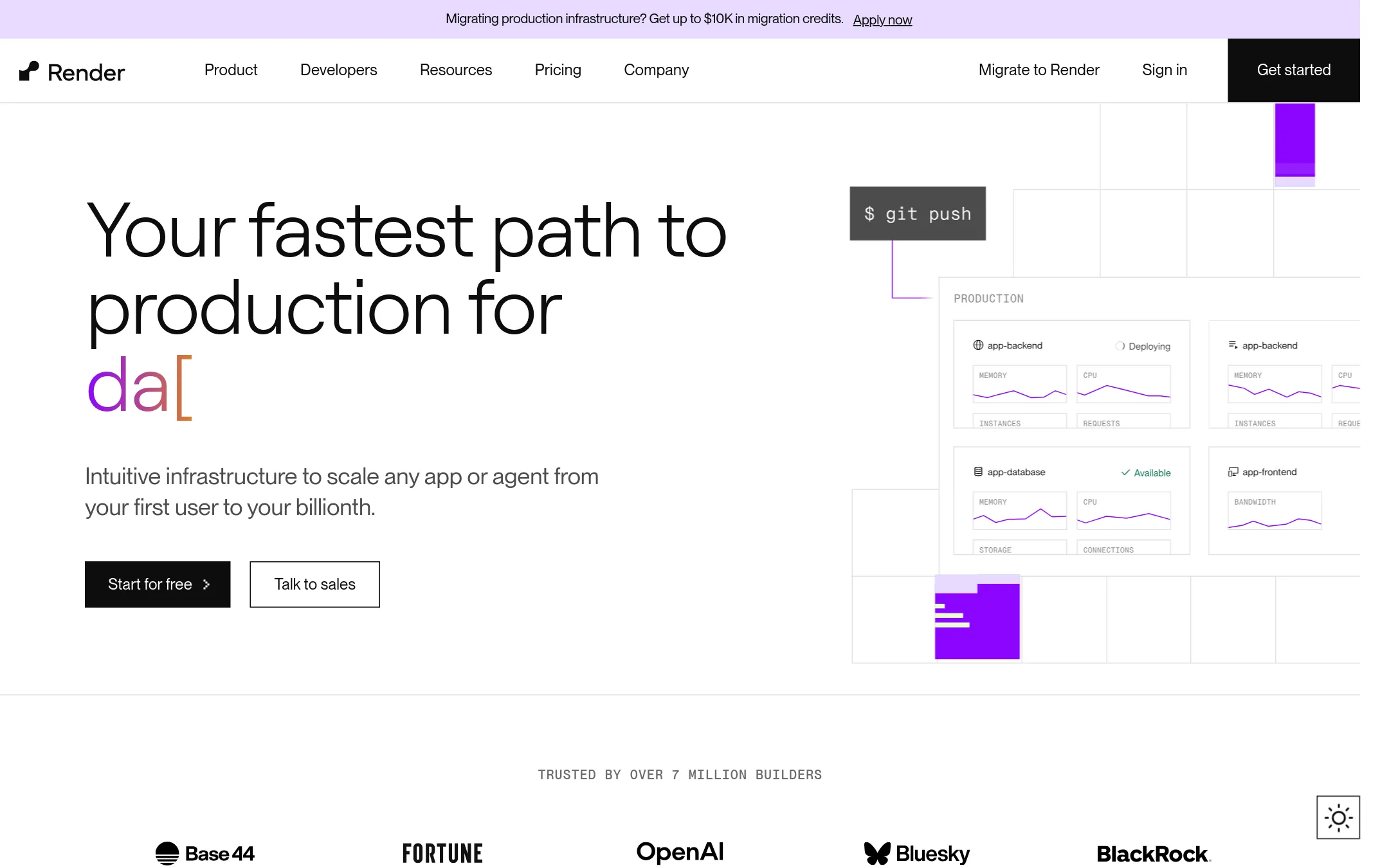
Render is a fully managed cloud platform that deploys apps, databases, cron jobs, and background workers from your repo with minimal setup. Choose it over Nullstone if you want zero-ops hosting with built-in autoscaling, previews, and monitoring, rather than running your own infrastructure on AWS or GCP.
Where it is strong
- Deploy web services, background workers, cron jobs, and Postgres from one platform
- Autoscaling handles traffic bursts up to 100x
- Full-stack previews for every pull request
Where it falls short
- Limited to Render's supported runtimes and services, not a general-purpose internal developer platform
- No bring-your-own Terraform or custom infra modules like Nullstone
- Pricing:
- Free tier includes 512 MB RAM and less than 1 CPU. Paid compute starts at $7/month for 0.5 CPU and 512 MB RAM, and $25/month for 1 CPU and 2 GB RAM.
- From $0.0030/hr
6.Fly.io
Best for: Teams that want to deploy full-stack apps and agents on fast VMs with global reach and pay-as-you-go pricing.
- Pricing
- From $0.0030/hr
- Category
- Developer Tools
Fly.io runs your app on hardware-isolated VMs close to your users, with per-second billing and built-in managed Postgres and Redis. Choose it over Nullstone when you want a simpler, more direct deployment platform without managing your own cloud infrastructure.
Where it is strong
- Hardware-isolated VMs boot in under a second
- Pay per second, with no minimums
- Managed Postgres and Redis included
Where it falls short
- Egress costs extra and vary by region
- No built-in secrets management or GitOps
- Pricing:
- Machines start at $0.0030/hour for shared-cpu-1x with 256MB RAM, and managed Postgres starts at $38/month.
See more comparisons in Developer Tools alternatives.
FAQ
Questions about Nullstone alternatives
Which alternative is the easiest to get started with?
Heroku is the easiest for developers who want to deploy with a simple git push, with no cloud account to manage. Render also offers a fast path from repo to live app with autoscaling and previews. Both have free tiers or low-cost entry points.
Which alternative is best for teams that want to use their own AWS or GCP account?
Nullstone itself is built for that, but among the alternatives, Fly.io lets you deploy to your own cloud with hardware-isolated VMs. Railway and Render do not offer bring-your-own-cloud on lower tiers, so they are less suitable if you need that control.
Which alternative has the most predictable pricing?
Heroku has fixed monthly dyno prices, starting at $25 for Standard-1X, which is predictable. Fly.io charges per second with no minimums, so costs scale with usage. Railway is usage-based and can be unpredictable for high-traffic apps.
Which alternative is best for startups with limited budgets?
Railway offers a 30-day free trial with $5 credits and a $1 per month Hobby plan, which is very low cost. Render has a free tier with 512 MB RAM, and Heroku has Eco and Basic tiers at lower or no cost. Fly.io's per-second billing with no minimums also helps keep costs low.
Which alternative provides the best support for managed databases?
Fly.io includes managed Postgres and Redis, and Heroku has built-in Postgres and Redis with add-ons. Render also offers managed Postgres. Railway supports databases but does not highlight them as a core feature in the same way.
Last updated November 3, 2026.