
o11 alternatives
6 products compared · Updated November 25, 2026
The short answer
The three strongest alternatives to o11 are Zapier, Composio and OpenRouter. Zapier suits operations and support teams that want to automate workflows across more than 10,000 business apps with admin controls and SSO. Composio suits teams that want AI assistants to act inside their own SaaS tools with per-action permissions and an audit trail. OpenRouter suits engineering teams that need one API key and one bill for 600+ AI models from 80+ providers.
Your shortlist, at a glance
Read the comparisons ↓- RRapidAPISee websiteOther
 ZapierFree + custom plansOperations and support teams that need to automate multi-app workflows with governance, admin controls and SSO
- CComposio$18/seat/mo + creditsTeams that want AI assistants to act in their own SaaS apps with per-action permissions and an audit trail
- SSmitheryNot publishedDevelopers building agents that need MCP connections to common SaaS tools such as Slack, GitHub and Notion
- PPortkeyNot publishedAI engineering teams at larger organizations that need to govern and observe their own LLM calls in production
- OOpenRouter5.5% credit fee + usagEngineering teams building AI apps that need access to many LLMs through one API key and one bill
About o11 and its alternatives
o11 describes itself as the OpenRouter for agentic commerce. According to its site, it gives teams one wallet, API and MCP server so AI agents can find, use and pay per call for paid APIs and services, with spending limits and approved tools set for each agent key.
When comparing alternatives in this category, weigh how each product prices its use, including whether you pay per call, per seat or through a plan, and whether credits or fees apply. Check which regions and providers are covered, which integrations are included, what support and admin controls come with each tier, and what the contract terms say about access, data handling and cancellation.
Explore the alternatives
- RSee website
1.RapidAPI
Other
A large marketplace where developers discover, connect to and pay for thousands of third-party APIs through one account.
- Free + custom plans
2.Zapier
Best for: Operations and support teams that need to automate multi-app workflows with governance, admin controls and SSO
- Pricing
- Free + custom plans
- Category
- Productivity & Project Management
Zapier connects apps and runs automated workflows, and its newer agent and MCP tools let AI agents act across more than 10,000 apps. A team would pick it over o11 when the goal is wiring existing business apps into repeatable workflows and governing them in one place, rather than giving agents a wallet to pay for paid APIs per call.
Where it is strong
- Connects to more than 10,000 apps through one platform
- Has admin controls, SSO, audit logs and SOC 2 Type II compliance
- Offers a free tier and free MCP tool calls for a limited time
Where it falls short
- Built around business app automation, not paying for third-party APIs per call with a shared wallet
- Advanced admin and observability features sit in the Enterprise tier, which is custom quoted
- Pricing:
- Pricing is published with a Free plan, a Professional plan, a Team plan, and a custom-quoted Enterprise plan, and tool calls through Zapier MCP are free through Jan. 5, 2027, but the exact per-plan price figures are not shown in the supplied text.
- C$18/seat/mo + credits
3.Composio
Best for: Teams that want AI assistants to act in their own SaaS apps with per-action permissions and an audit trail
- Pricing
- $18/seat/mo + credits
- Category
- Other
Composio gives AI assistants like Claude, ChatGPT and Cursor access to over 1,800 apps, with per-user accounts, per-action permissions and a log of every call. Pick it over o11 when the work is about acting inside your own SaaS tools, such as updating a CRM, reading email or posting to Slack, and you want a firewall that blocks risky actions and prompt injections.
Where it is strong
- Connects to over 1,800 apps, and works inside the AI assistant you already use
- Firewall lets you write plain-English policies and blocks risky calls and prompt injections
- Every action is recorded, and Enterprise adds SIEM streaming and BYOC deployment
Where it falls short
- Some tools run on paid third-party services billed in credits, so costs can rise beyond the monthly allowance
- Firewall, SSO and zero data retention are not included on the Free plan. Enterprise options are custom-quoted
- Pricing:
- The Free plan includes 10,000 tool calls per month for up to 3 members, and Standard costs $18 per seat per month with $18 in credits per seat.
- SNot published
4.Smithery
Best for: Developers building agents that need MCP connections to common SaaS tools such as Slack, GitHub and Notion
- Pricing
- Not published
- Category
- Other
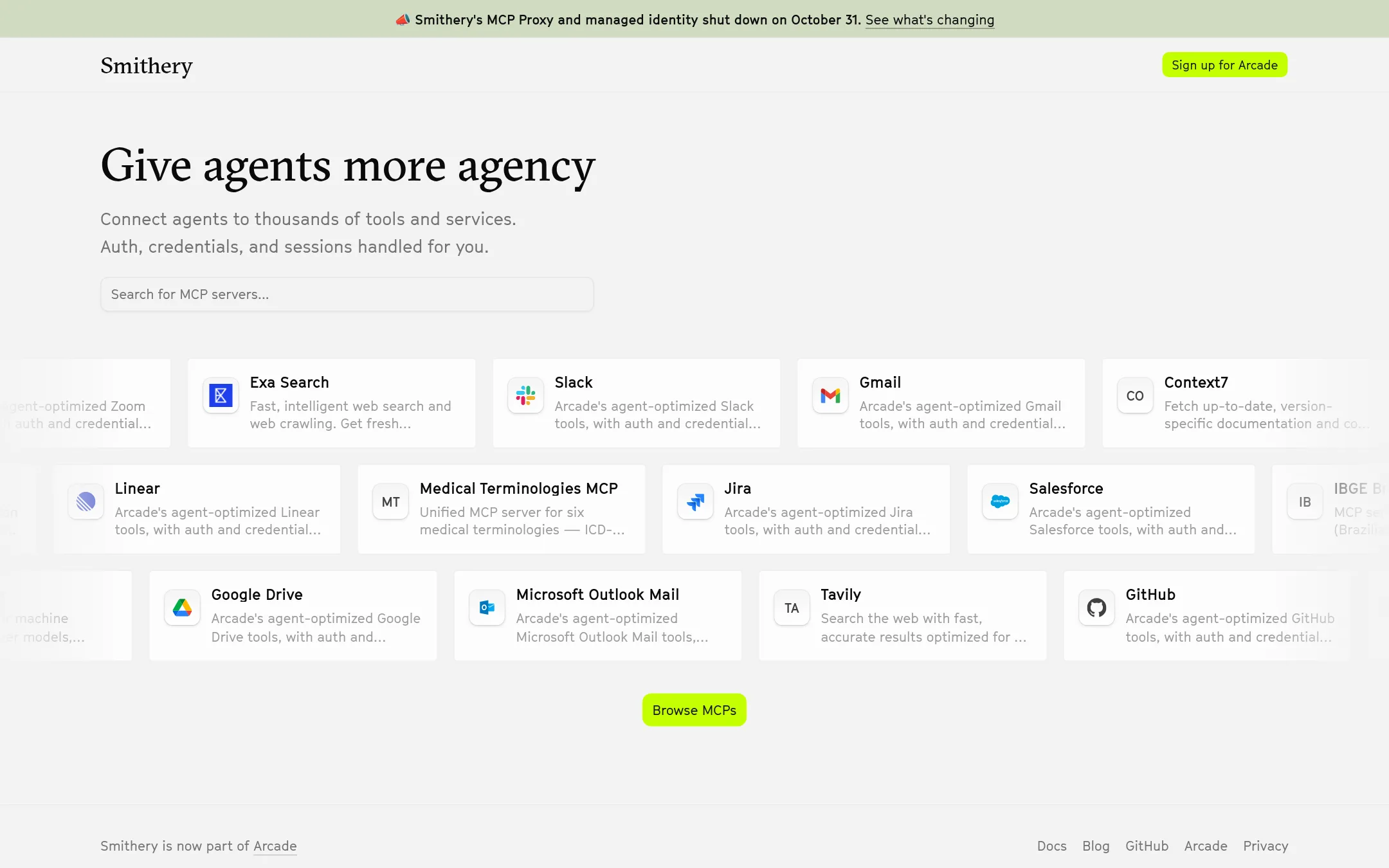
Smithery is a directory and hosting layer for MCP servers, the connectors that let AI agents reach outside tools and services. Its listings cover many services, including Slack, Gmail, GitHub, Notion, HubSpot and Stripe, with auth and sessions handled for the connected services. Someone would pick it over o11 when their main need is wiring an agent to specific MCP-compatible tools, not paying per call from a shared wallet.
Where it is strong
- Lists many MCP servers across productivity, dev and data tools
- Handles auth and sessions for several connected services
- Includes search and documentation servers such as Exa, Tavily and Context7
Where it falls short
- Its MCP Proxy and managed identity shut down on October 31, so some hosted features are going away
- Does not offer a shared wallet for paying per call, which o11 does
- Pricing:
- Pricing is not published on the site.
- Switching from o11:
- Smithery's proxy and managed identity are closing, so anyone moving from o11 should check which servers they rely on before adopting it.
- PNot published
5.Portkey
Best for: AI engineering teams at larger organizations that need to govern and observe their own LLM calls in production
- Pricing
- Not published
- Category
- Other
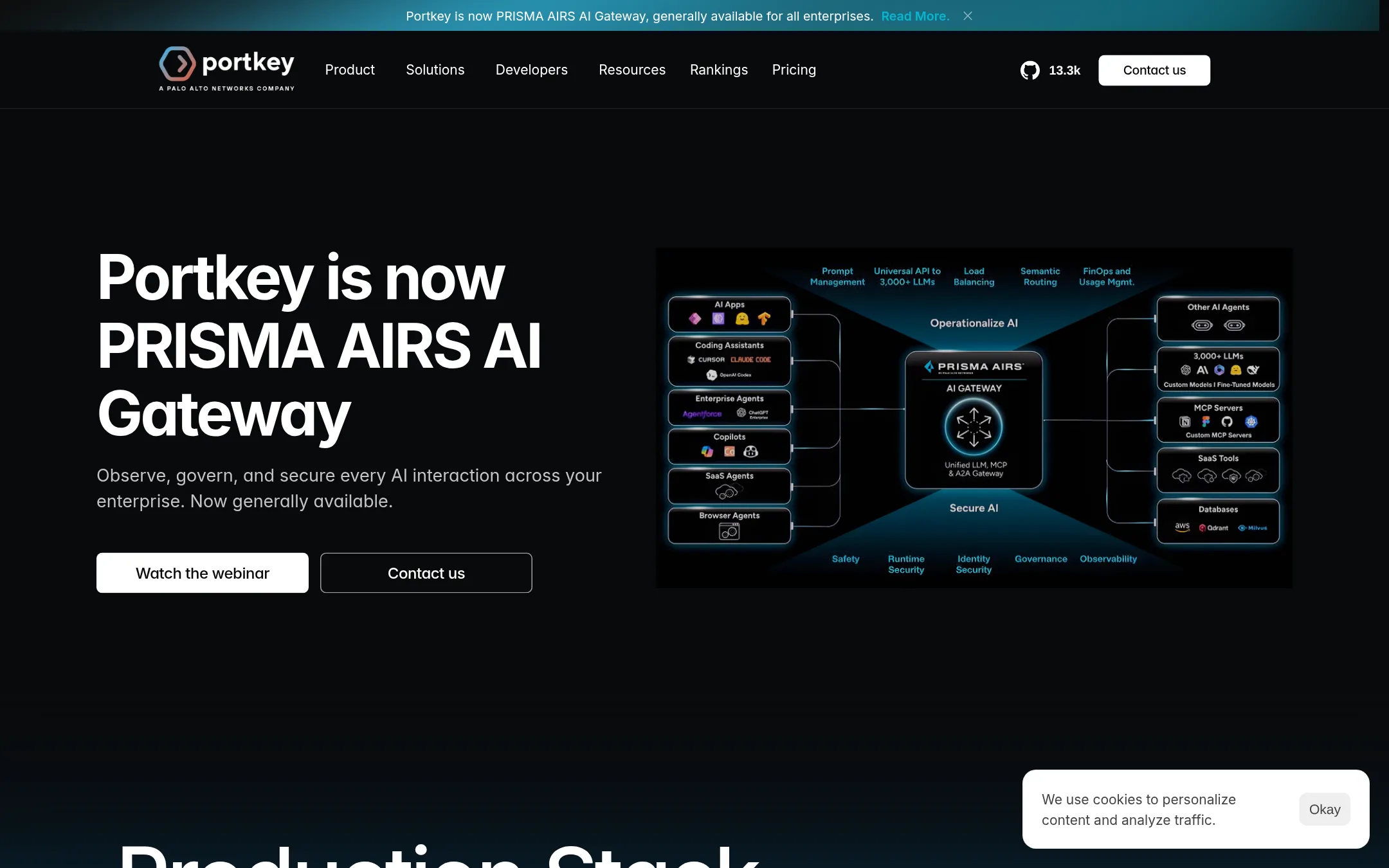
Portkey is a gateway and control plane for teams building generative AI apps. It routes calls across many model providers, and adds observability, guardrails, governance and prompt management in one place. A team would pick it over o11 when the goal is running and securing its own LLM traffic in production, rather than giving agents a wallet to buy access to paid tools and APIs.
Where it is strong
- Covers gateway, observability, guardrails and prompt management in one platform
- Real-time dashboard for monitoring LLM behavior and usage
- Positioned for enterprise governance, with AI Gateway generally available to enterprises
Where it falls short
- Focused on managing your own model calls, not on agents buying paid tools
- Pricing is not published, so cost comparison needs a sales conversation
- Pricing:
- Pricing is not published on the site.
- O5.5% credit fee + usag
6.OpenRouter
Best for: Engineering teams building AI apps that need access to many LLMs through one API key and one bill
- Pricing
- 5.5% credit fee + usag
- Category
- Other
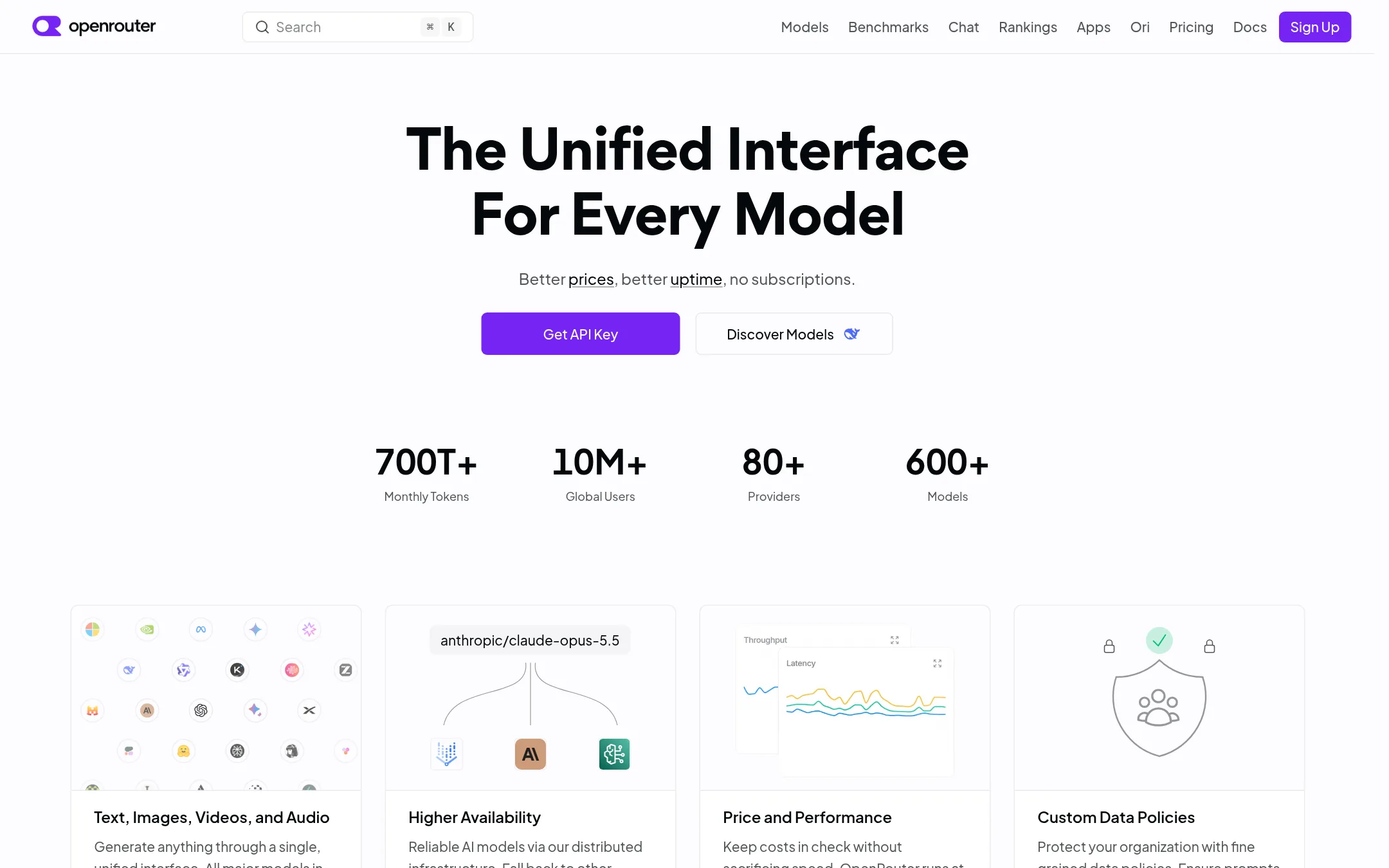
OpenRouter gives developers one API key and one bill for 600+ AI models from 80+ providers, with failover and spend controls. Pick it over o11 when your need is paying for language and media models from many providers rather than paying for a broad set of paid APIs and services that agents call.
Where it is strong
- One API key covers 600+ models from 80+ providers.
- Failover runs by default, so outages and rate limits are less of a problem.
- Team usage, models and spend show in one dashboard with budget alerts.
Where it falls short
- Focused on AI model inference, not on a wide catalog of paid APIs and services.
- Free tier is capped at 50 requests per day, and rate limits apply on the lower tiers.
- Pricing:
- Pricing is pay-as-you-go with a 5.5% fee on credit purchases on Standard and 8% on Business, a free tier with 25+ free models and 50 requests per day, and custom Enterprise terms.
See more comparisons in Productivity & Project Management alternatives.
FAQ
Questions about o11 alternatives
What is the closest alternative to o11 if I want agents to pay per call for paid APIs?
OpenRouter is the closest in spirit, since it gives one API key and one bill for many providers. Its focus is AI model inference across 600+ models, not a broad catalog of paid APIs and services, so it covers a narrower set of needs.
Which option is best if I need to automate workflows across many business apps?
Zapier suits this need. It connects to more than 10,000 apps and offers admin controls, SSO, audit logs and SOC 2 Type II compliance. Its advanced admin features sit in the custom-quoted Enterprise tier.
Can an AI assistant safely act inside my SaaS tools?
Composio is built for this. It connects to over 1,800 apps, lets you write plain-English firewall policies that block risky calls and prompt injections, and records every action. Some tools are billed in credits, so costs can rise beyond the monthly allowance.
Is there a free way to try these tools?
Zapier offers a free tier and free MCP tool calls through Jan. 5, 2027. OpenRouter has a free tier with 25+ free models and 50 requests per day, and Composio's Free plan includes 10,000 tool calls per month for up to 3 members.
How do I compare pricing across these alternatives?
Pricing structures differ. OpenRouter charges a fee on credit purchases, Composio charges per seat with credits, and Portkey does not publish its pricing, so it needs a sales conversation. Compare the cost per call or per seat that matches how your agents will actually use the tool.
Last updated November 25, 2026.