
Openlayer alternatives
8 products compared · Updated November 16, 2026
The short answer
Arize AI suits engineering teams that want agent tracing and evals, with an open-source option in Phoenix. Fiddler AI suits regulated enterprises that need inline guardrails on live agent traffic. Arthur AI suits security and governance teams that must find and control shadow AI agents across their environment.
Your shortlist, at a glance
Read the comparisons ↓- AArize AIFrom $0 / $50 per moAI-native engineering teams that need agent tracing and evals, and want to start with open-source tooling before paying for a managed platform.
- AArthur AINot publishedSecurity, audit, and governance teams at large enterprises that need to find and control shadow AI agents across their whole environment
- WWhyLabsNot publishedEngineering teams that want to self-host open source AI monitoring with whylogs or langkit and accept that no vendor support is offered.
- FFiddler AINot publishedEnterprise teams in regulated industries that need inline guardrails on live agent traffic and run both first-party and third-party agents.
- CCredo AINot publishedEnterprises in insurance, financial services, federal and healthcare that need an AI registry and policy packs for regulatory compliance
- HHolistic AINot publishedEnterprises whose first problem is discovering shadow AI and building a complete AI inventory before tackling testing
 GalileoNot publishedFintechs and banks that need core banking, card issuing or payment APIs
- PPatronus AINot publishedTeams building AI agents for real working environments that need help correcting judgment failures through custom training data and research
About Openlayer and its alternatives
Openlayer is an AI governance and observability platform for regulated enterprises. According to its site, it gives teams one place to test, monitor and govern every model, agent and AI system they run, with audit-ready evidence and mapping to frameworks such as the EU AI Act, NIST AI RMF and ISO 42001.
When comparing alternatives in this category, weigh pricing structure first, since some vendors publish plans and others only offer custom quotes. Then check regions and deployment options, such as on-premise or self-hosted choices, along with integrations with the model providers and tools you already use. Also look at support levels and contract terms, including uptime commitments and data retention.
Explore the alternatives
- AFrom $0 / $50 per mo
1.Arize AI
Best for: AI-native engineering teams that need agent tracing and evals, and want to start with open-source tooling before paying for a managed platform.
- Pricing
- From $0 / $50 per mo
- Category
- Other
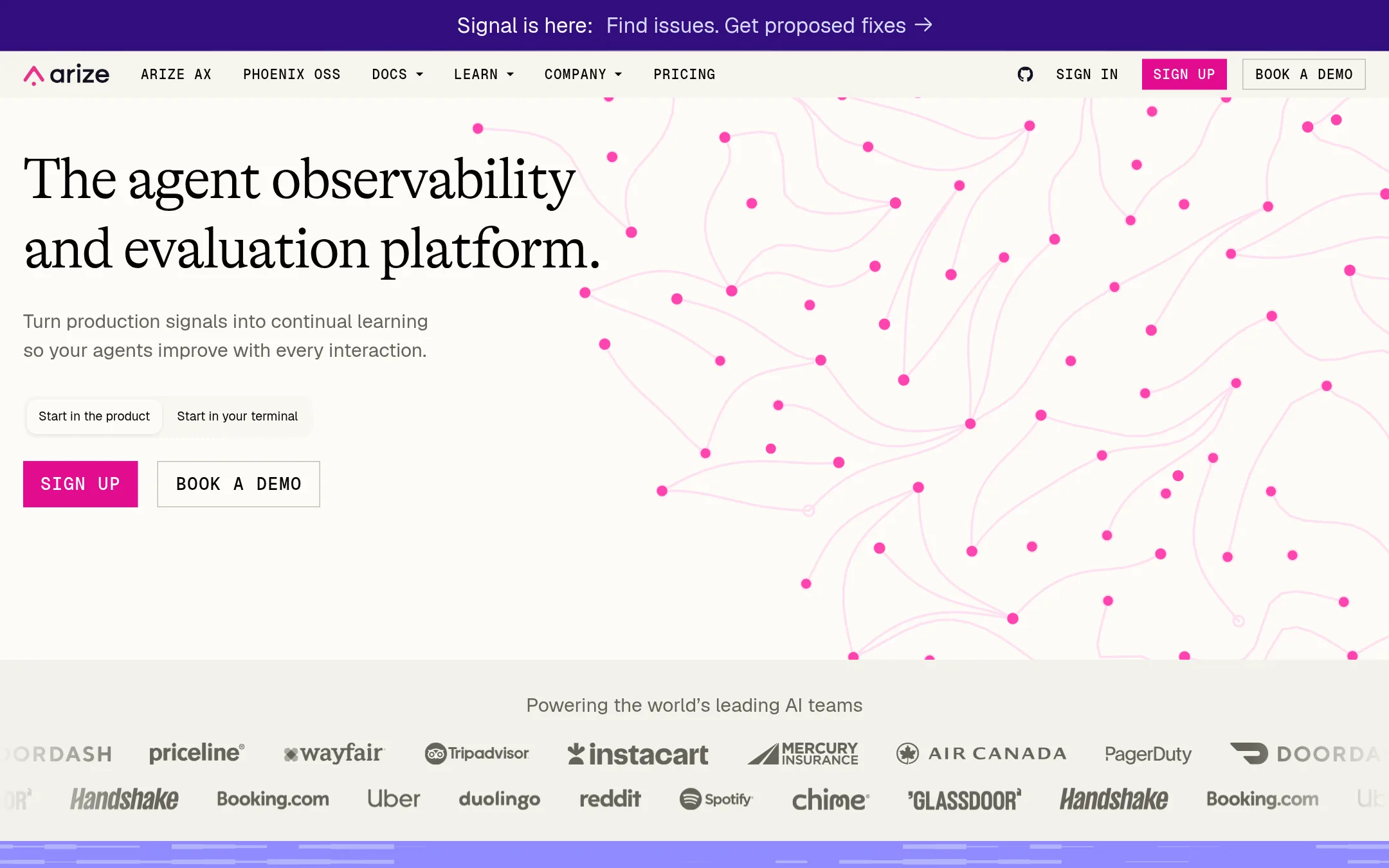
Arize AI is an agent observability and evaluation platform built on open standards. Its open-source Phoenix tool lets teams trace and evaluate AI apps locally, and Arize AX adds managed infrastructure, online evals and continual improvement workflows. Choose it over Openlayer when your main need is tracing and evaluating agents in production, and you want an open-source path you can run yourself.
Where it is strong
- Phoenix is open source and can run locally or self-hosted, so you keep control of your data
- Built on OpenInference and OpenTelemetry, so instrumentation is not tied to one proprietary trace format
- Free tier includes unlimited users and evals, which lowers the cost of trying it on real projects
Where it falls short
- The site does not describe a governance layer, policy enforcement or compliance framework mapping in the way Openlayer does
- Enterprise pricing and deployment details are only available through custom quotes
- Pricing:
- AX Free is $0 with 25k trace spans and 1 GB ingestion per month, AX Pro is $50 per month with 50k spans and 10 GB, and AX Enterprise is custom-quoted.
- ANot published
2.Arthur AI
Best for: Security, audit, and governance teams at large enterprises that need to find and control shadow AI agents across their whole environment
- Pricing
- Not published
- Category
- Other
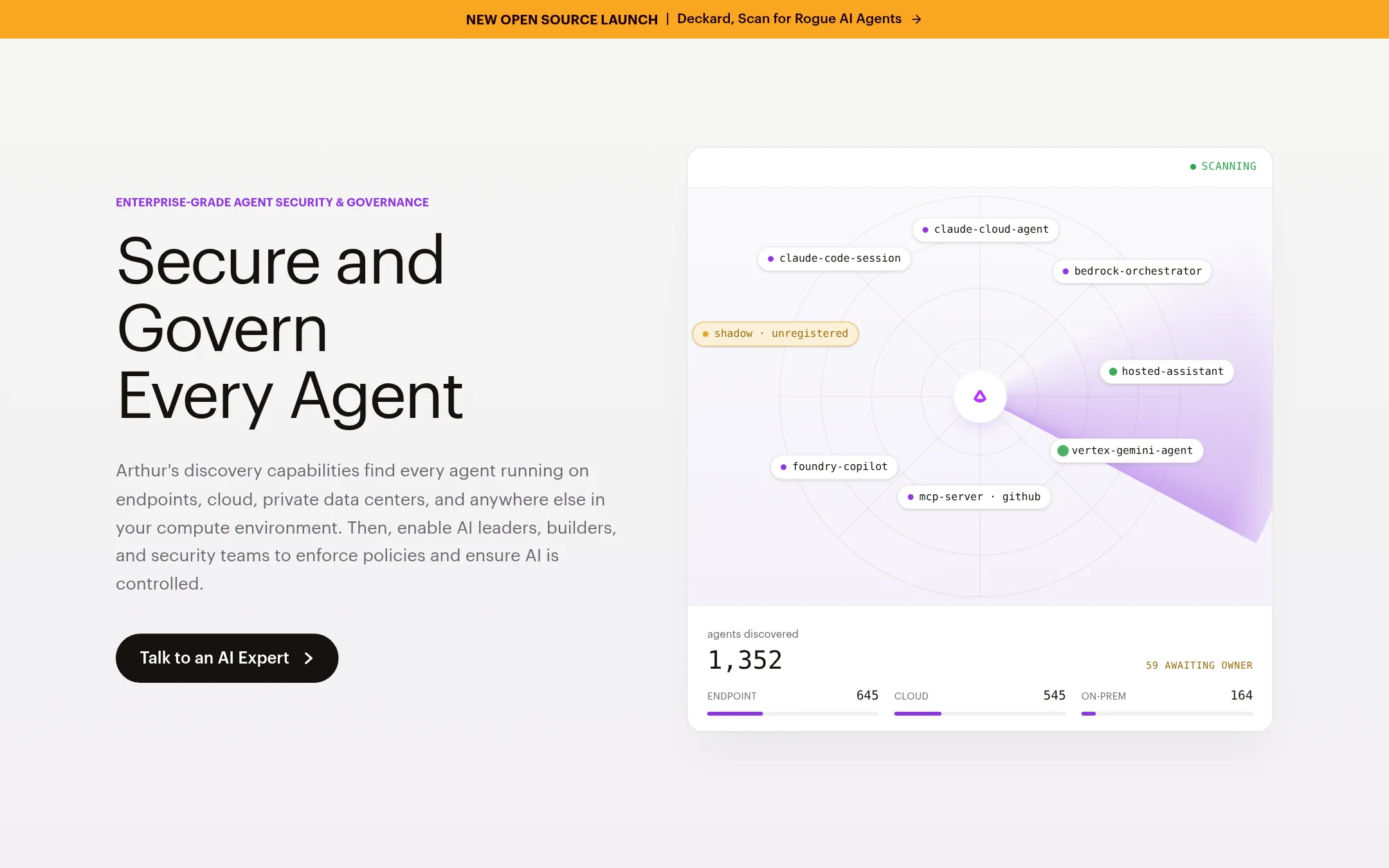
Arthur AI is a control plane for enterprise AI agents. It finds agents across endpoints, cloud, and private data centers, adds runtime guardrails and anomaly alerts, and keeps audit logs and lineage for governance teams. Someone would pick it over Openlayer if their main problem is discovering and securing agents the company already runs, especially with security and SOC teams involved, and if they want token cost rerouting to cheaper or internally hosted models.
Where it is strong
- Discovers agents on endpoints, cloud, and private data centers, including shadow agents
- Runtime guardrails and anomaly alerts that can stream findings to existing SOC tools
- Token and cost tracking by team and user, with automatic rerouting of simple requests to cheaper models
Where it falls short
- Free tier is limited to monitoring up to 4 use cases and 7 days of data retention
- Enterprise features such as dedicated VPC, SSO, and BAA are sold through custom contracts
- Pricing:
- Pricing is not published on the site for Enterprise, and the Free and Premium tiers list features but no price figures.
- WNot published
3.WhyLabs
Best for: Engineering teams that want to self-host open source AI monitoring with whylogs or langkit and accept that no vendor support is offered.
- Pricing
- Not published
- Category
- Other
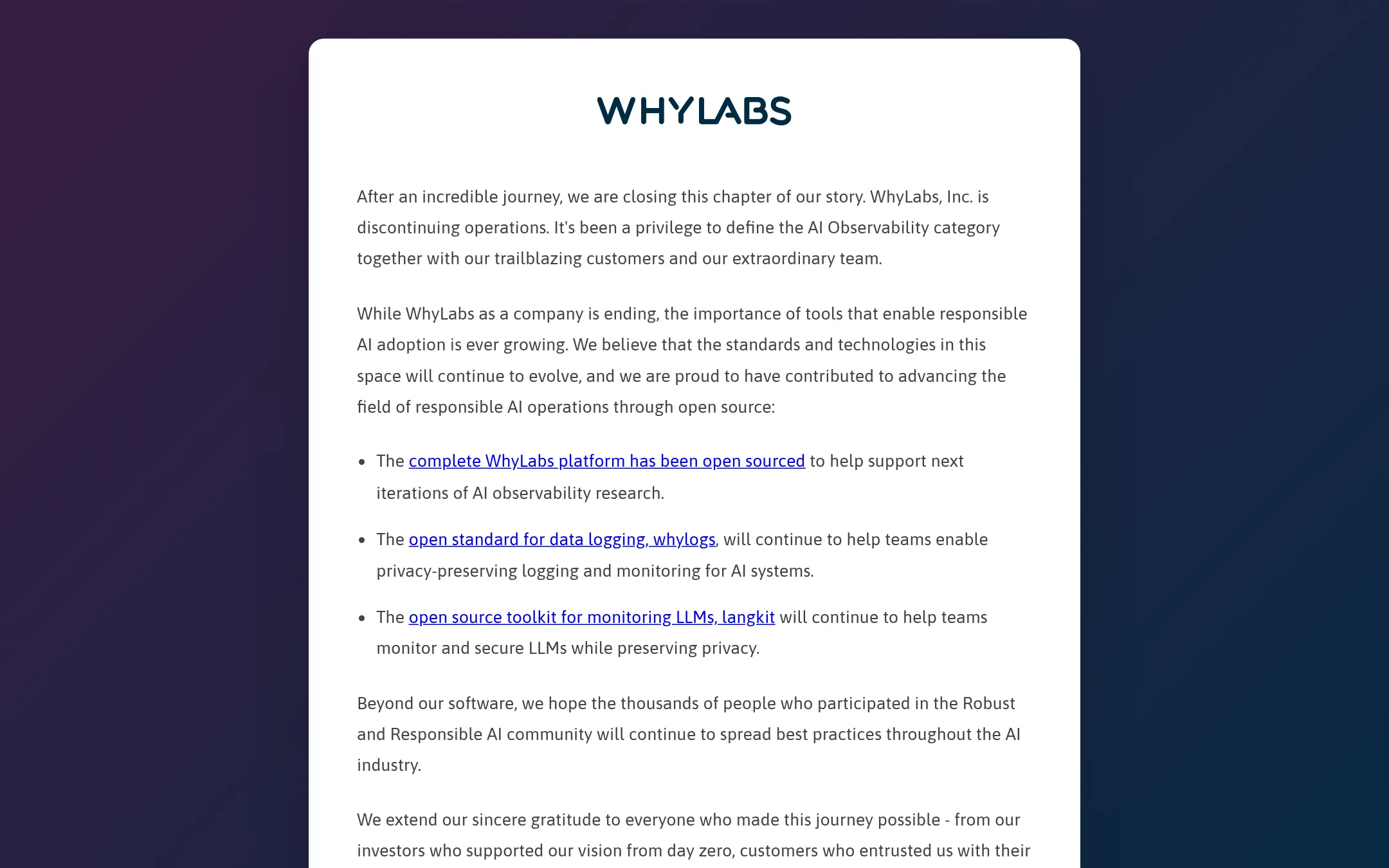
WhyLabs has announced it is discontinuing operations, so it is no longer a company you can buy from. Its platform has been open sourced, and the whylogs and langkit toolkits remain available for logging and monitoring models and LLMs. A team might look at it only if it wants to self-host open source observability tooling and can maintain it.
Where it is strong
- The full platform is open sourced.
- whylogs is a privacy-preserving logging standard for AI systems.
- langkit is an open source toolkit for monitoring and securing LLMs.
Where it falls short
- The company is shutting down, so there is no commercial vendor to contract with.
- There is no published pricing or hosted service to buy.
- Pricing:
- Pricing is not published on the site.
- FNot published
4.Fiddler AI
Best for: Enterprise teams in regulated industries that need inline guardrails on live agent traffic and run both first-party and third-party agents.
- Pricing
- Not published
- Category
- Other
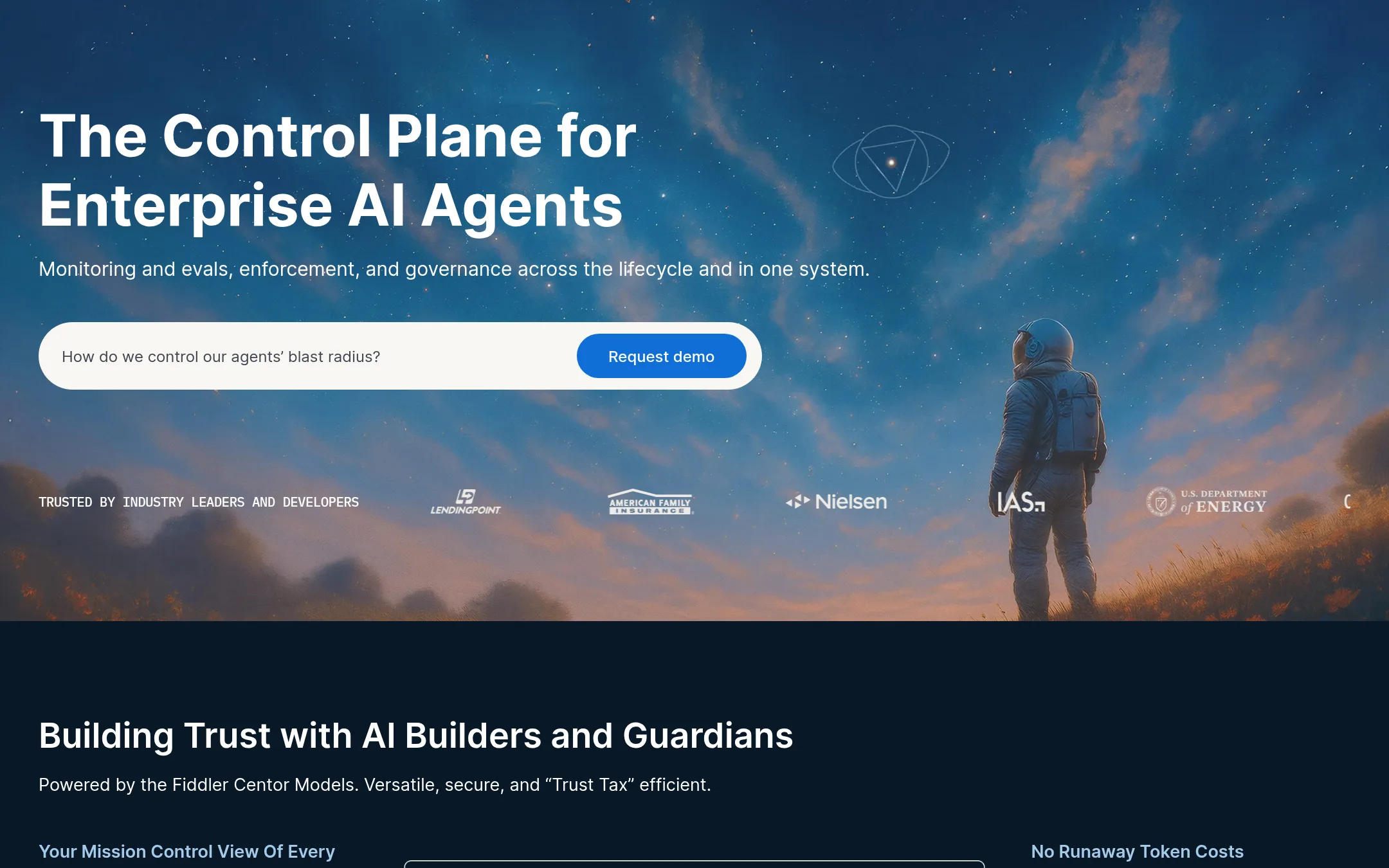
Fiddler AI is a control plane for enterprise AI agents, covering observability, evaluation, and policy enforcement. It stands out by enforcing guardrails inline on the request and response path, and by running evaluation models in your own environment. Pick it over Openlayer when you need real-time blocking of unsafe outputs at the gateway and want to avoid paying an external LLM provider for every evaluation.
Where it is strong
- Guardrails enforce policy inline, before a response reaches the user.
- Evaluation runs on models you host, so there is no per-evaluation external LLM fee.
- Works across multiple model providers and clouds, including AWS GovCloud deployments.
Where it falls short
- Pricing is not published, so budgeting requires a sales conversation.
- Its feature set centers on runtime enforcement and observability rather than the broader inventory and framework-mapping layers Openlayer em
- Pricing:
- Pricing is not published on the site.
- CNot published
5.Credo AI
Best for: Enterprises in insurance, financial services, federal and healthcare that need an AI registry and policy packs for regulatory compliance
- Pricing
- Not published
- Category
- Other
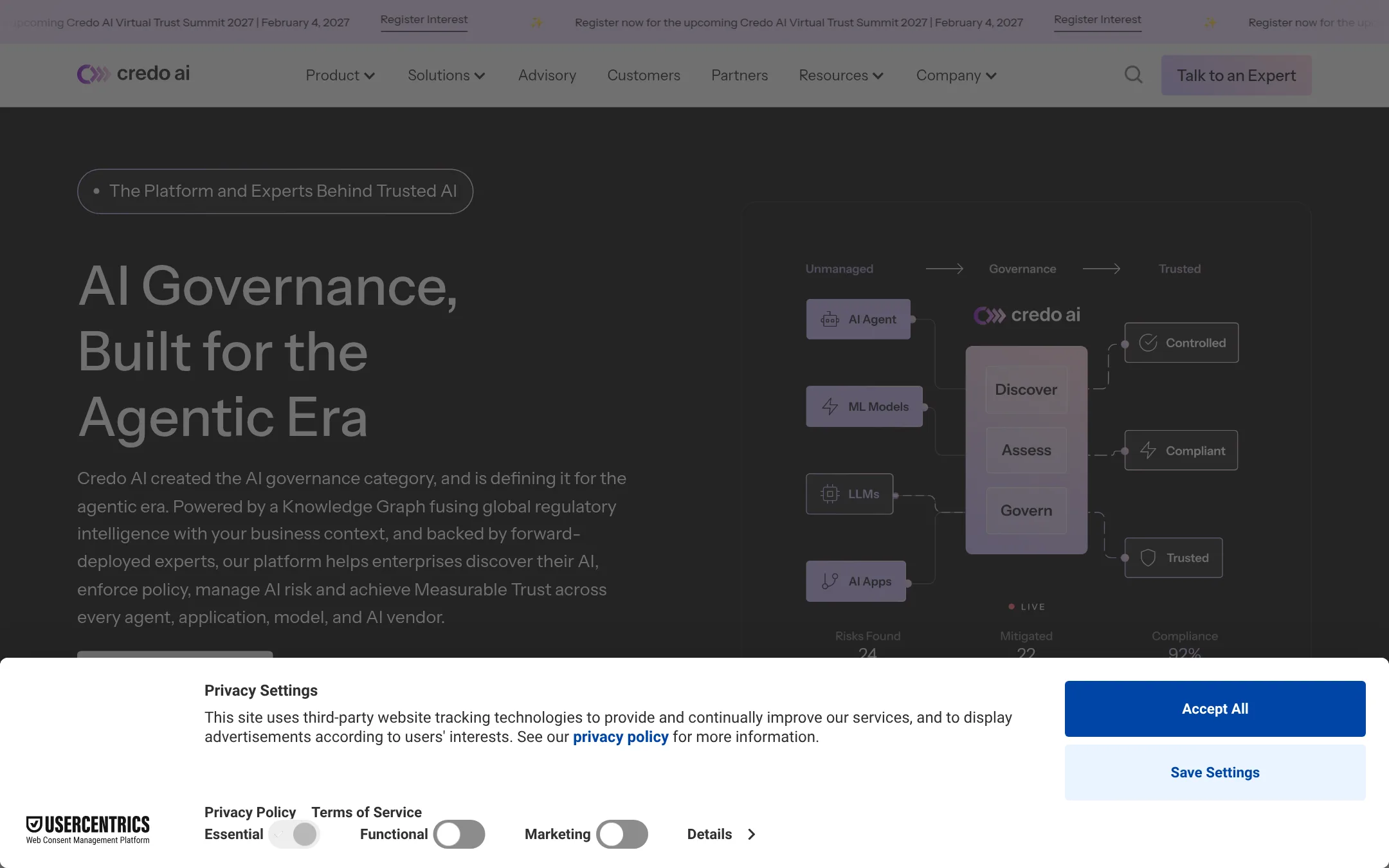
Credo AI is an AI governance platform that keeps a registry of agents, models, applications and vendors, runs risk assessments, and turns policy into code with pre-built packs for the EU AI Act, NIST AI RMF and ISO 42001. Its main pitch is governing agents as first-class entities, which the site says security tools and GRC tools do not do. Someone would pick it over Openlayer when the priority is registry, risk classification and policy-to-code workflows rather than testing and live monitoring.
Where it is strong
- Agent registry with agent cards and shadow AI detection
- Pre-built policy packs for EU AI Act, NIST AI RMF and ISO 42001
- Governance knowledge graph that adapts controls to business context and region
Where it falls short
- The site does not describe built-in testing suites or CI/CD test blocking the way Openlayer does
- Continuous monitoring depends on connecting to your existing observability tools
- Pricing:
- Pricing is not published on the site.
- HNot published
6.Holistic AI
Best for: Enterprises whose first problem is discovering shadow AI and building a complete AI inventory before tackling testing
- Pricing
- Not published
- Category
- Other
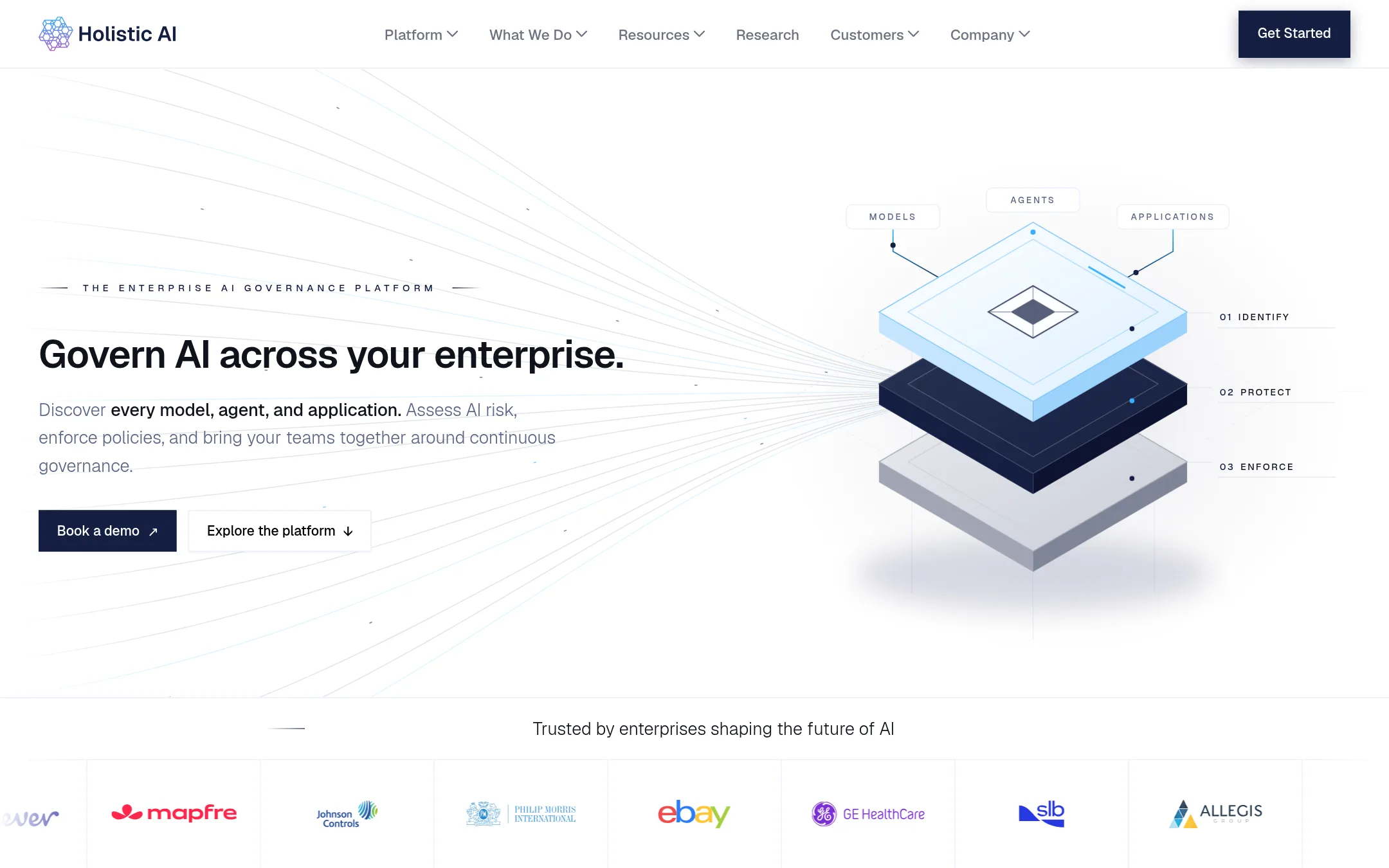
Holistic AI is an AI governance platform that discovers AI systems across cloud, code and SaaS, including shadow AI, and keeps a living inventory. It tests models, LLMs and agents for security, safety and bias, and turns policy into controls and audit-ready evidence. Teams would pick it over Openlayer when the main problem is finding and inventorying AI across the company, or when they want supervisory agents that watch and intervene on autonomous AI in real time.
Where it is strong
- Discovers AI systems across cloud, code and SaaS, including shadow AI
- Covers bias and security testing alongside policy enforcement
- Adds Guardian, Sentinel and Operative agents for oversight of autonomous AI
Where it falls short
- Pricing and plan details are not published, so cost comparison requires a sales conversation
- The site does not describe a free tier or trial, unlike Openlayer's Basic plan
- Pricing:
- Pricing is not published on the site.
- Not published
7.Galileo
Best for: Fintechs and banks that need core banking, card issuing or payment APIs
- Pricing
- Not published
- Category
- Finance & Accounting
Galileo is a financial technology platform from SoFi Tech Solutions that offers core banking, card issuing and payment processing through APIs. It is built for companies that want to offer banking or payments products rather than govern AI systems. Someone would pick it over Openlayer when the actual need is a banking or card infrastructure partner, not AI testing and monitoring.
Where it is strong
- Covers core banking, card issuing and payments in one platform
- Offered through APIs for building custom financial products
- Backed by SoFi's banking and fintech operations
Where it falls short
- Solves a different problem from Openlayer, with no AI testing, monitoring or governance
- Pricing and plan details are not published on the site
- Pricing:
- Pricing is not published on the site.
- PNot published
8.Patronus AI
Best for: Teams building AI agents for real working environments that need help correcting judgment failures through custom training data and research
- Pricing
- Not published
- Category
- Other
Patronus AI is a research lab that studies where AI models and agents fail, then builds training environments and data to correct those failures. Someone would choose it over Openlayer if the goal is improving agent judgment through training data and behavioral research, rather than running governance, monitoring and compliance across an organization's AI systems.
Where it is strong
- Focuses on why agents fail and how to correct that behavior
- Builds simulated working environments modeled on real domains
- Backed by fundamental research and domain experts
Where it falls short
- Does not offer the org-wide inventory, compliance mapping or policy enforcement that Openlayer covers
- No published pricing or plan details to compare against Openlayer's free tier
- Pricing:
- Pricing is not published on the site.
See more comparisons in AI & Machine Learning alternatives.
FAQ
Questions about Openlayer alternatives
Which alternative is best if I need open-source or self-hosted tooling?
Arize AI offers Phoenix, an open-source tool that can run locally or self-hosted, so you keep control of your data. WhyLabs has open sourced its platform, but the company is shutting down, so you would maintain it yourself without vendor support.
Which option enforces policy on live AI traffic before a response reaches users?
Fiddler AI enforces guardrails inline on the request and response path, and runs evaluation models in your own environment. Openlayer's own site also describes real-time blocking of prompt injection, PII leakage and off-policy outputs at the gateway.
Which alternatives help when I don't yet know what AI my company is running?
Arthur AI discovers agents across endpoints, cloud and private data centers, including shadow agents. Holistic AI discovers AI systems across cloud, code and SaaS and keeps a living inventory. Credo AI keeps a registry of agents, models and vendors and includes shadow AI detection.
Which tools focus on compliance frameworks rather than testing?
Credo AI offers pre-built policy packs for the EU AI Act, NIST AI RMF and ISO 42001, and turns policy into code. Holistic AI turns policy into controls and audit-ready evidence. Their site does not describe built-in testing suites in the way Openlayer does.
Do any of these publish pricing I can compare directly with Openlayer?
Arize AI publishes plan prices, with a free tier and a $50 per month Pro plan, and Openlayer's Basic plan is free to start. Most others, including Fiddler AI, Arthur AI, Credo AI and Holistic AI, do not publish pricing, so you will need a sales conversation to compare costs.
Last updated November 16, 2026.