
Opslane alternatives
5 products compared · Updated November 11, 2026
The short answer
The three strongest alternatives to Opslane are PagerDuty, Incident.io and Rootly. PagerDuty suits engineering and SRE teams that need on-call alerting and incident coordination for production systems. Incident.io suits teams that need on-call routing, incident coordination and customer status updates inside Slack or Microsoft Teams. Rootly suits teams that run on-call rotations and want paging, incident channels and post-incident reviews in Slack, Teams or Google Chat.
Your shortlist, at a glance
Read the comparisons ↓- PPagerDutyFrom $2,800/yearEngineering and SRE teams that need on-call alerting and incident coordination for production systems
- OOpsgenieNot publishedTeams already on Opsgenie for on-call alerting who need to move to Jira Service Management
- IIncident.ioFrom $15/user/moEngineering teams that already run production and need on-call routing, incident coordination and customer status updates.
 Rootly$20/user/mo + customEngineering teams that run on-call rotations and want paging, incident channels and post-incident reviews in Slack, Teams or Google Chat.
- FFireHydrantNot publishedEngineering teams that already have production incidents and need on-call, runbooks and post-incident retros in one tool.
About Opslane and its alternatives
Opslane is a developer tool that runs your app on every pull request against test versions of its services, including Stripe, Redis and Postgres. According to its site, it is known for finding bugs that code review and ordinary tests miss, such as a payment charged twice after a restart or a webhook skipped during a Redis hiccup.
When comparing alternatives, weigh what stage of the software lifecycle each tool covers. Many tools in this category handle incidents after something breaks in production, while Opslane works before a merge. Also compare pricing structure (per seat, per event, per review or quote-based), supported regions and integrations, the level of support on each plan, and contract terms such as enterprise SSO or self-hosting.
Explore the alternatives
- PFrom $2,800/year
1.PagerDuty
Best for: Engineering and SRE teams that need on-call alerting and incident coordination for production systems
- Pricing
- From $2,800/year
- Category
- Other
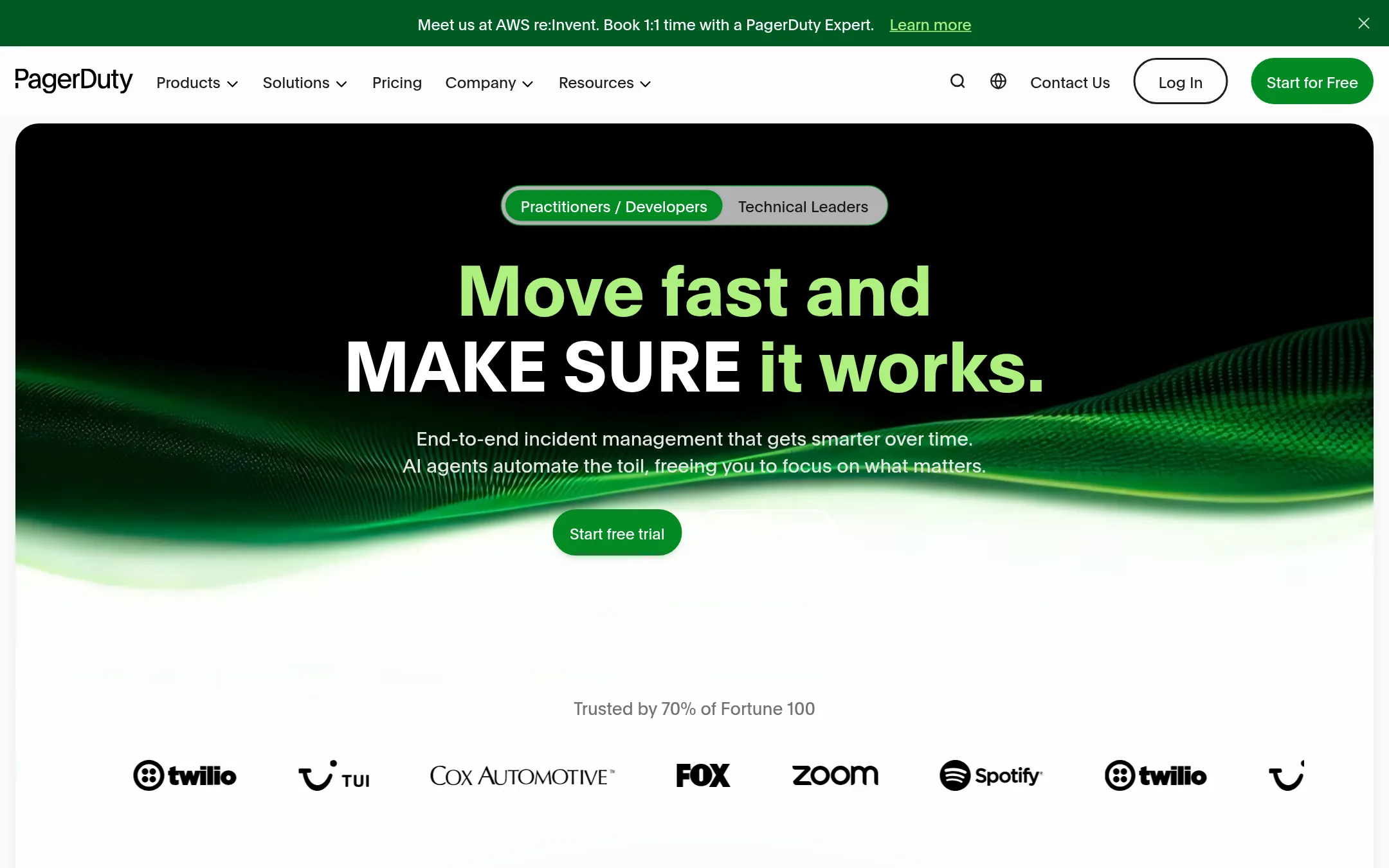
PagerDuty handles incident response after something breaks in production. It pages on-call engineers, runs incident workflows in Slack or Teams, and now uses AI agents to help investigate and fix. Pick it over Opslane when your problem is getting the right person alerted and coordinating the response to a live outage, not catching bugs before a PR merges.
Where it is strong
- Hundreds of integrations, and the team says it works with a wide range of existing tools
- Incident response runs from Slack, Microsoft Teams or the IDE
- Has a free tier for a single team trying on-call and incident response
Where it falls short
- It works on production incidents after they happen, so it does not run your app on each PR the way Opslane does
- Seat, event and AI Action limits apply to paid plans, and the top tier needs a sales conversation
- Pricing:
- Pricing is published, with plans from Starter at $2,800 a year and Essential at $12,000 a year, while Ultimate uses custom pricing. Each plan includes set amounts of seats, Signal Intelligence Events and AI Actions, and extra credit packs can be bought.
- ONot published
2.Opsgenie
Best for: Teams already on Opsgenie for on-call alerting who need to move to Jira Service Management
- Pricing
- Not published
- Category
- Other
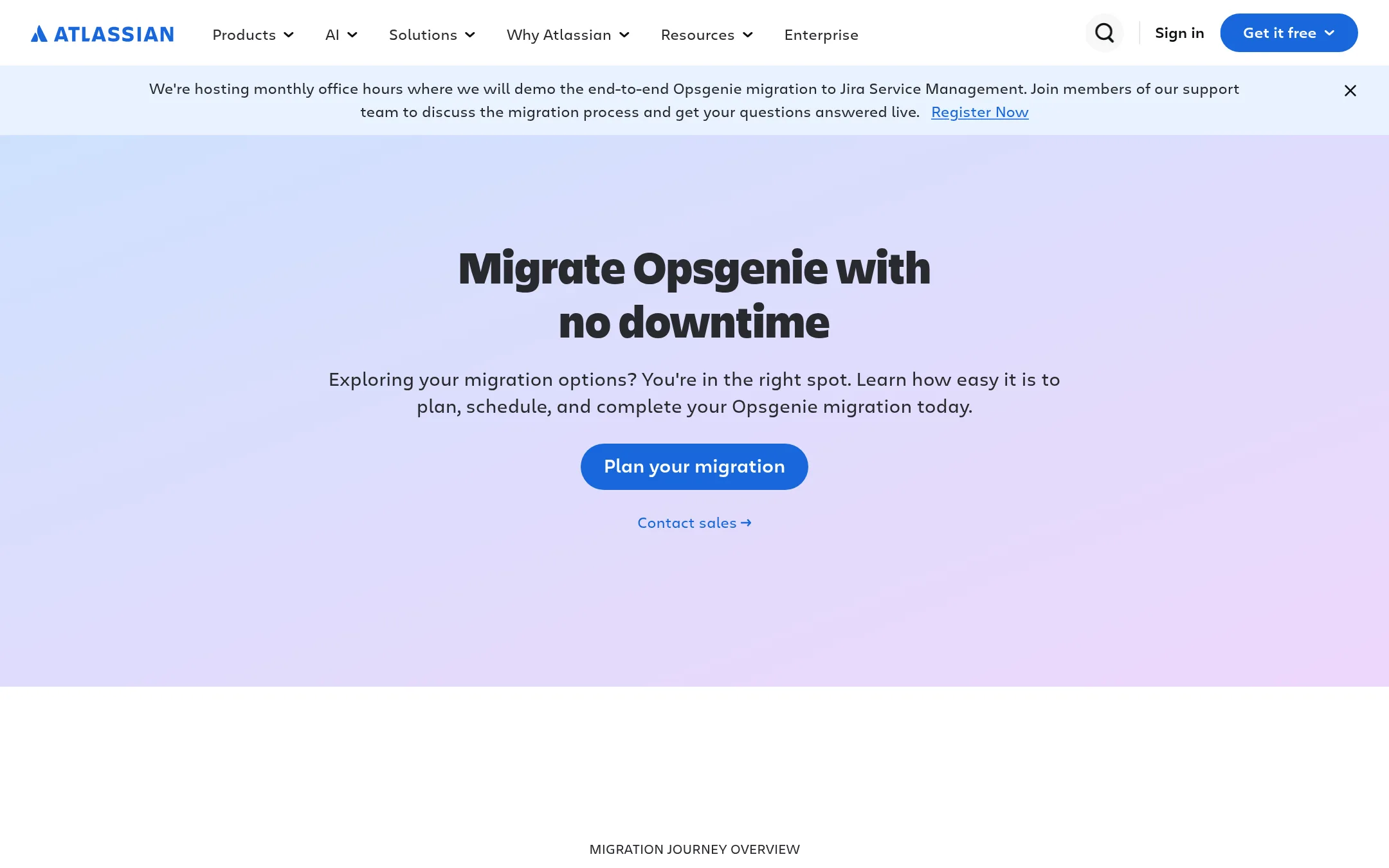
Opsgenie is an incident alerting and on-call tool that Atlassian is retiring in favour of Jira Service Management. Someone would pick it if they already run incident response on Opsgenie and need to migrate it. Opslane is different: it runs your app on each pull request against test copies of its services to catch bugs before merge, rather than alerting on incidents after they happen.
Where it is strong
- Built for incident alerting and on-call scheduling.
- Atlassian provides a migration path to Jira Service Management with no downtime.
- Works alongside existing Atlassian tools.
Where it falls short
- It does not run your app or test pull requests, so it cannot catch the bugs Opslane finds before merge.
- Atlassian is retiring it in favour of Jira Service Management.
- Pricing:
- Pricing is not published on the site.
- Switching from Opslane:
- Moving from Opslane to Opsgenie does not apply here, since the two tools solve different problems. A team leaving Opsgenie would be migrating to Jira Service Management, which the migration page describes.
- IFrom $15/user/mo
3.Incident.io
Best for: Engineering teams that already run production and need on-call routing, incident coordination and customer status updates.
- Pricing
- From $15/user/mo
- Category
- Other
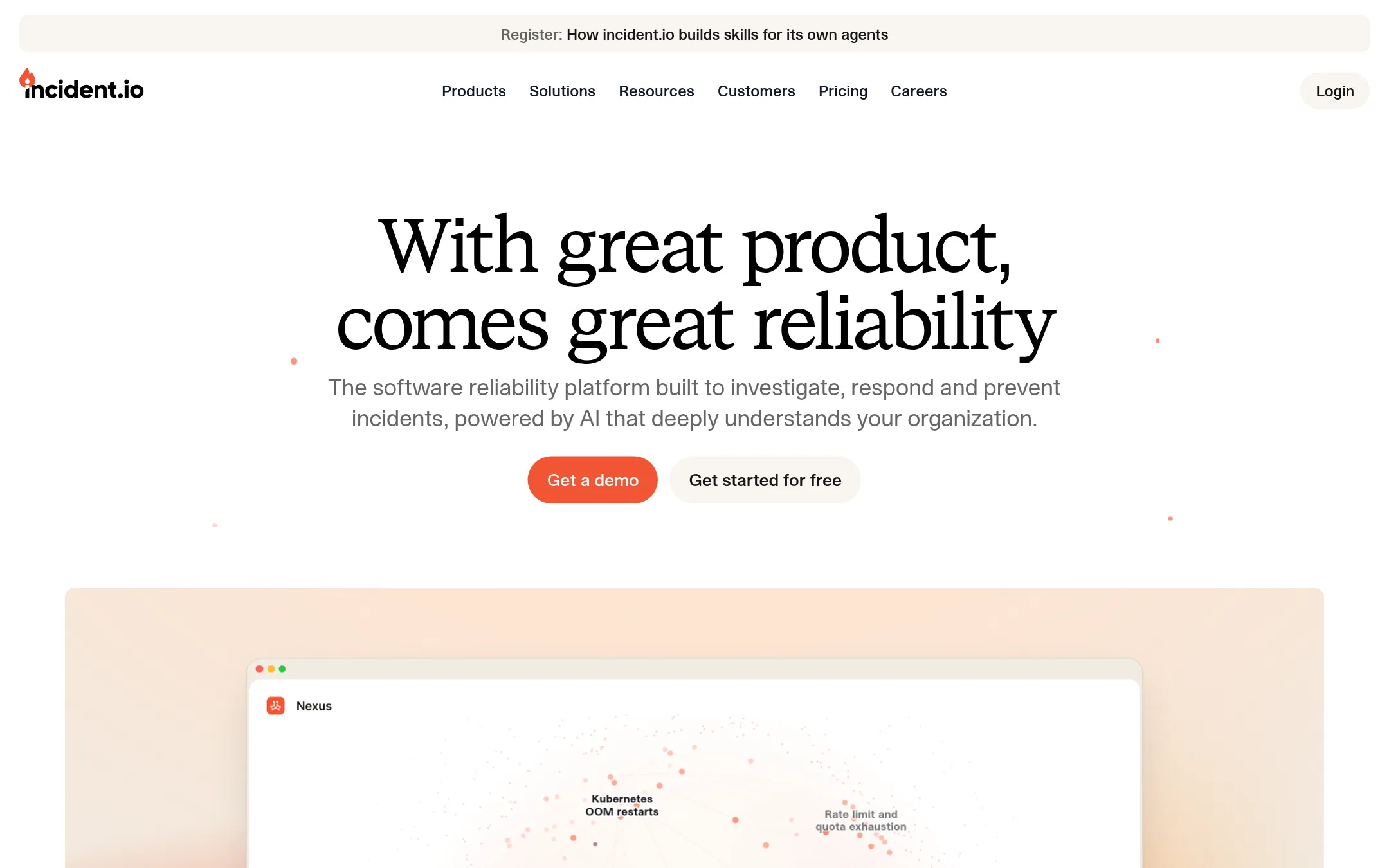
Incident.io is an incident management platform covering on-call alerting, incident response in Slack or Microsoft Teams, root cause analysis, and status pages. Someone would choose it over Opslane when the problem is what happens after a bug is live: paging the right person, coordinating the response, and telling customers. Opslane instead tests PRs before merge by running the app against test versions of its services.
Where it is strong
- Handles incident response inside Slack and Microsoft Teams.
- Covers on-call scheduling, alert routing and status pages in one product.
- Has a free Basic tier for small teams to start.
Where it falls short
- Works on live incidents and does not test pull requests before they merge, which is the gap Opslane fills.
- Pricing scales per user, so cost grows with team size.
- Pricing:
- Pricing is listed as Basic free forever, Team at $19 per user per month ($15 annually), and Pro at $25 per user per month, with on-call available as a $20 per user per month add-on and Enterprise on request.
- $20/user/mo + custom
4.Rootly
Best for: Engineering teams that run on-call rotations and want paging, incident channels and post-incident reviews in Slack, Teams or Google Chat.
- Pricing
- $20/user/mo + custom
- Category
- Productivity & Project Management
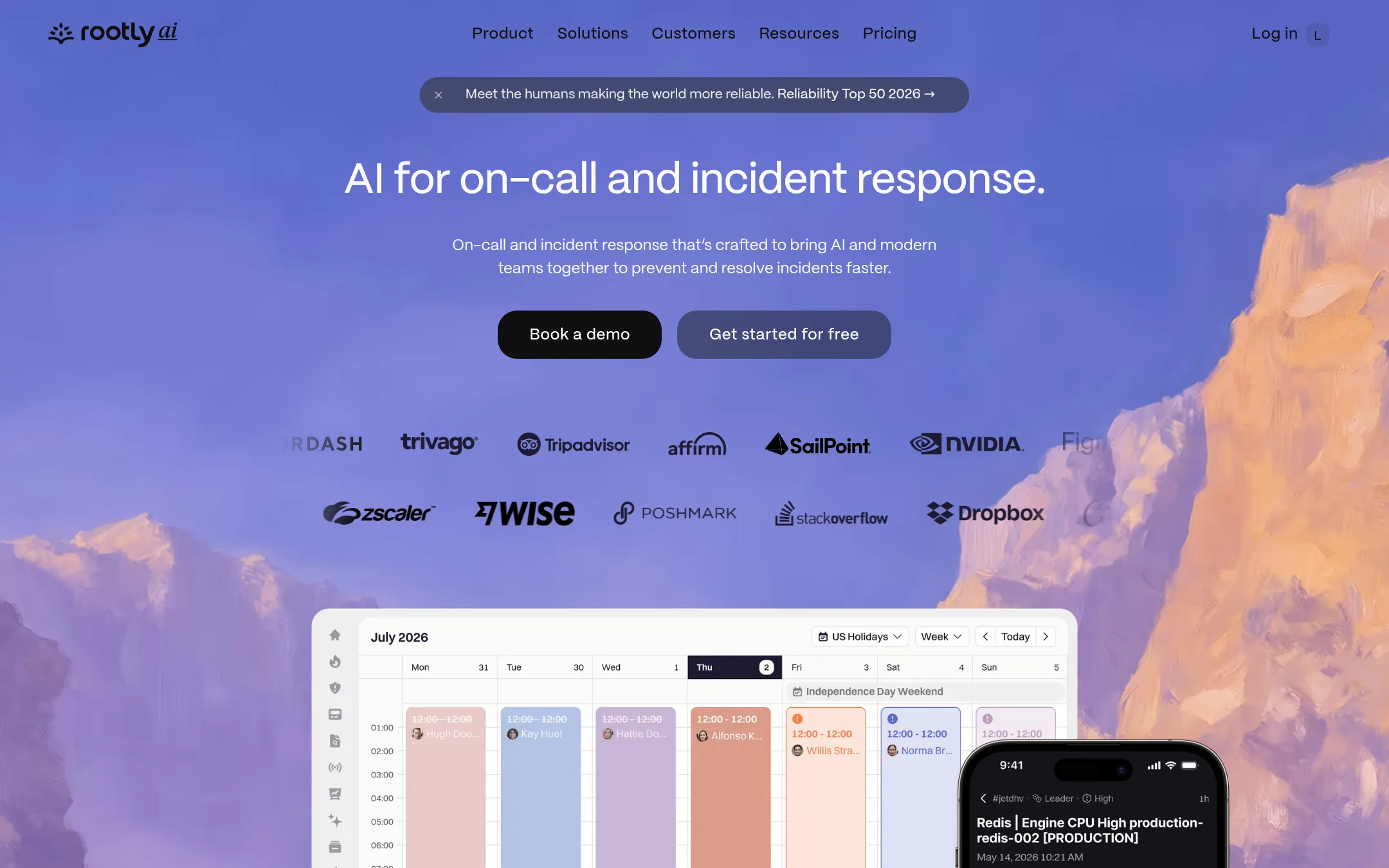
Rootly is an incident response and on-call platform. It handles alert routing, paging, schedules, Slack-based incident channels, retrospectives and an AI layer that suggests root causes. Choose it over Opslane when the problem is what happens after production breaks, such as who gets paged and how the incident is run and written up, rather than finding bugs before a PR merges.
Where it is strong
- Covers paging, schedules and escalation policies alongside incident channels in one tool
- Runs incident workflows natively in Slack, Google Chat and Microsoft Teams
- Includes retrospective templates and action item tracking with Jira sync
Where it falls short
- It does not run your application or test PRs against isolated copies of your services, so it cannot catch the pre-merge bugs Opslane targets
- AI SRE features, including autonomous agents and draft PRs, are sold separately and priced by quote
- Pricing:
- Incident Response and On-Call are each listed at $20 per user per month, AI SRE is quote-based, and Enterprise is custom.
- FNot published
5.FireHydrant
Best for: Engineering teams that already have production incidents and need on-call, runbooks and post-incident retros in one tool.
- Pricing
- Not published
- Category
- Other
FireHydrant is incident management: it handles alerting, on-call scheduling, runbooks, status pages and retrospectives once something is already breaking. Pick it when the problem is coordinating responders during an outage and learning from it afterward, not catching bugs before merge.
Where it is strong
- Covers alerting, on-call, runbooks, status pages and retros in one platform
- Slack and Teams support for running incidents where the team already works
- Enterprise plan adds SSO, SCIM, audit logs and SOC 2 compliance
Where it falls short
- Tests nothing before merge, so it does not find the bugs Opslane finds on PRs
- Pro lists 5 integrations and Enterprise pricing is only available by contacting sales
- Pricing:
- Pricing is not published on the site.
See more comparisons in Developer Tools alternatives.
FAQ
Questions about Opslane alternatives
What is Opslane's main difference from incident response tools?
Opslane runs your application on each pull request against test copies of the services it depends on, so it finds bugs before they merge. Tools like PagerDuty, Incident.io and Rootly work on live incidents after something has already broken in production.
Which alternative is best for on-call paging?
PagerDuty is listed for engineering and SRE teams that need on-call alerting and incident coordination for production systems. Rootly and Incident.io also include on-call scheduling and paging, with Incident.io offering a free Basic tier to start.
Is there a free option among these alternatives?
Incident.io has a Basic tier that is free forever, and PagerDuty has a free tier for a single team trying on-call and incident response. Opslane's first 10 reviews are free, after which its Pro plan includes 150 PR reviews a month.
Which alternatives support Slack or Microsoft Teams?
Rootly runs incident workflows in Slack, Google Chat and Microsoft Teams. Incident.io handles incident response inside Slack and Microsoft Teams, and PagerDuty runs incident response from Slack, Microsoft Teams or the IDE.
Do any of these alternatives test pull requests before merge?
None of the listed alternatives run your application or test pull requests before they merge, so none of them catch the pre-merge bugs Opslane targets. Opsgenie is being retired by Atlassian in favour of Jira Service Management, so teams already on it need to plan a migration.
Last updated November 11, 2026.