Osmosis alternatives
5 products compared · Updated November 12, 2026
The short answer
The three strongest alternatives to Osmosis are Scale AI, Snorkel AI and Labelbox. Scale AI suits large enterprises and government agencies that want one partner for data, evaluations and deployment. Snorkel AI suits frontier labs and AI teams that need expert-built datasets, rubrics and evaluation environments. Labelbox suits engineering, security and ML research teams that want agents to handle recurring jobs. Pricing for all three is not published on their sites.
Your shortlist, at a glance
Read the comparisons ↓ LabelboxNot publishedEngineering, security, and ML research teams that want agents to take over recurring jobs like flaky test fixes, dependency upgrades, and eval reruns.
 Scale AINot publishedLarge enterprises and government agencies that need an outside partner to find use cases, build AI systems and own the outcome.
- SSnorkel AINot publishedFrontier labs and AI teams that need expert-built datasets, rubrics and evaluation environments for agents in high-stakes domains.
 EncordNot publishedAI teams with large multimodal datasets, such as sensor streams and video, that need to annotate and curate data before training
- WWeights & BiasesNot publishedML and AI teams that run their own training jobs and want experiment tracking, dashboards and compliance-ready records
About Osmosis and its alternatives
Osmosis is a post-training platform for building task-specific models. Its site says it helps companies create models that beat foundation models at a fraction of the cost. It is known for reinforcement fine-tuning using techniques such as GRPO and DAPO, hands-on deployments where its team works with customers on reward functions and training, and continuous retraining that can refresh models as often as every hour.
When comparing alternatives in this category, weigh what each tool actually does. Some vendors sell data and evaluation, some sell agents, and some sell tracking for training you already run. Check pricing structure, which is unpublished for most of these vendors, along with the regions and integrations supported, the level of hands-on support, and the contract terms that come with an engagement.
Explore the alternatives
- Not published
1.Labelbox
Best for: Engineering, security, and ML research teams that want agents to take over recurring jobs like flaky test fixes, dependency upgrades, and eval reruns.
- Pricing
- Not published
- Category
- AI & Machine Learning
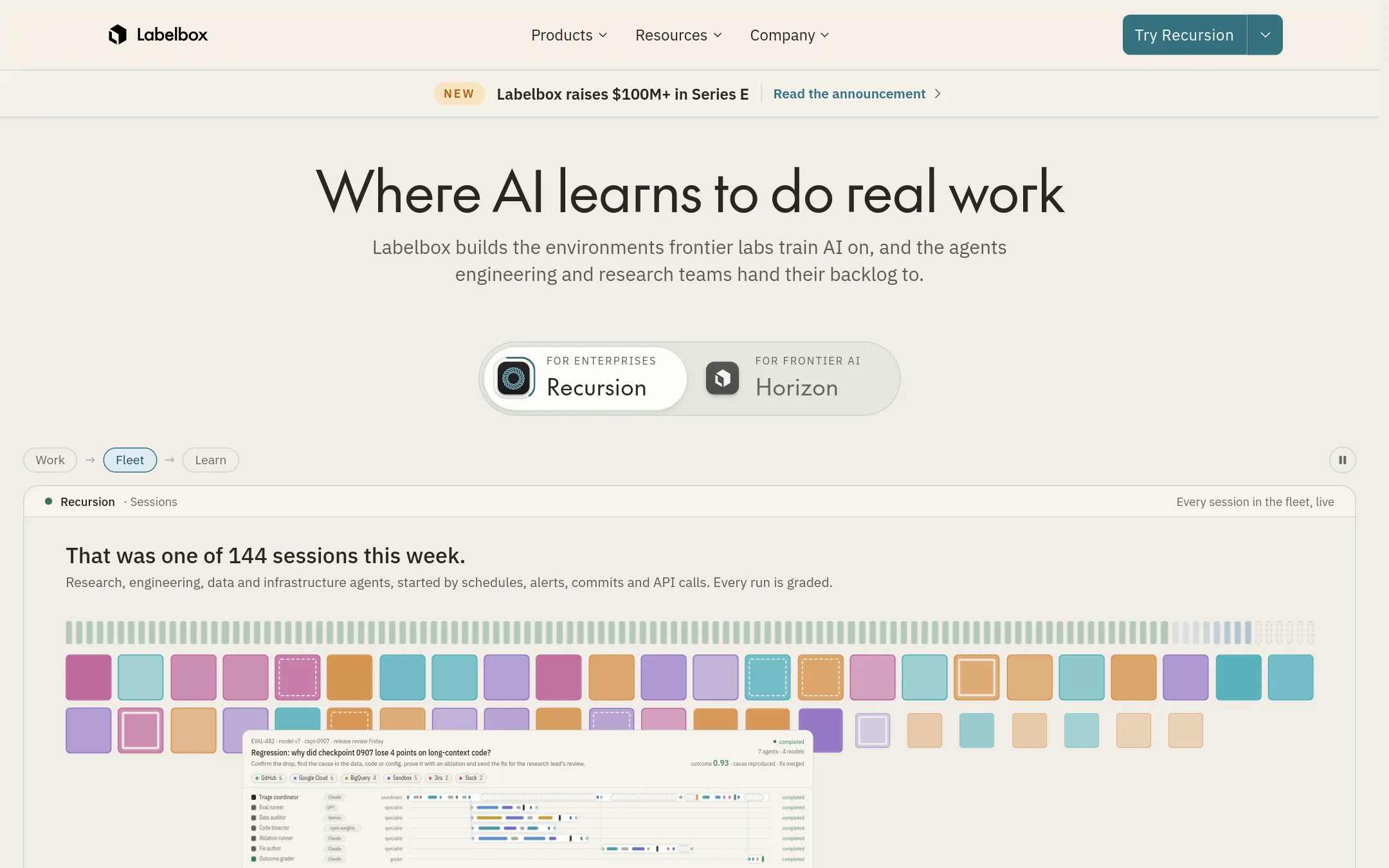
Labelbox builds the environments frontier labs train AI on, and it also runs background agents for engineering and research teams that start on events like a red build, an alert, or a schedule. Someone would pick Labelbox over Osmosis if the goal is agents that handle recurring engineering, security, or ML research work rather than training a task-specific model with reinforcement learning.
Where it is strong
- Agents start on their own from triggers like CI failures, alerts, new model releases, or schedules.
- Each agent delivers a concrete output, such as a pull request with tests or a benchmark table.
- Covers software engineering, reliability, security, ML research, evals, and R&D in one platform.
Where it falls short
- Its catalog centers on agents for existing workflows, so it does not offer Osmosis's focus on training a custom model with reinforcement lea
- Pricing and deployment terms are not published on the site.
- Pricing:
- Pricing is not published on the site.
- Not published
2.Scale AI
Best for: Large enterprises and government agencies that need an outside partner to find use cases, build AI systems and own the outcome.
- Pricing
- Not published
- Category
- AI & Machine Learning
Scale AI works across the AI stack, from sourcing and labeling the data that trains models to building and operating AI systems for enterprises and governments. Teams choose it over Osmosis when they want a partner that handles data, evaluations and deployment together, with humans kept in the loop. Osmosis focuses narrowly on reinforcement fine-tuning of task-specific models, so Scale fits better when the work is broader than training one model.
Where it is strong
- Covers data sourcing, evaluations and deployment in one vendor
- Runs private benchmarks and expert-level evaluations for model builders
- Has worked with large organizations across healthcare, energy, defense and media
Where it falls short
- Pricing is not published, so a quote is needed to compare costs
- Centered on enterprise and frontier-lab engagements rather than self-serve tooling
- Pricing:
- Pricing is not published on the site.
- SNot published
3.Snorkel AI
Best for: Frontier labs and AI teams that need expert-built datasets, rubrics and evaluation environments for agents in high-stakes domains.
- Pricing
- Not published
- Category
- Other
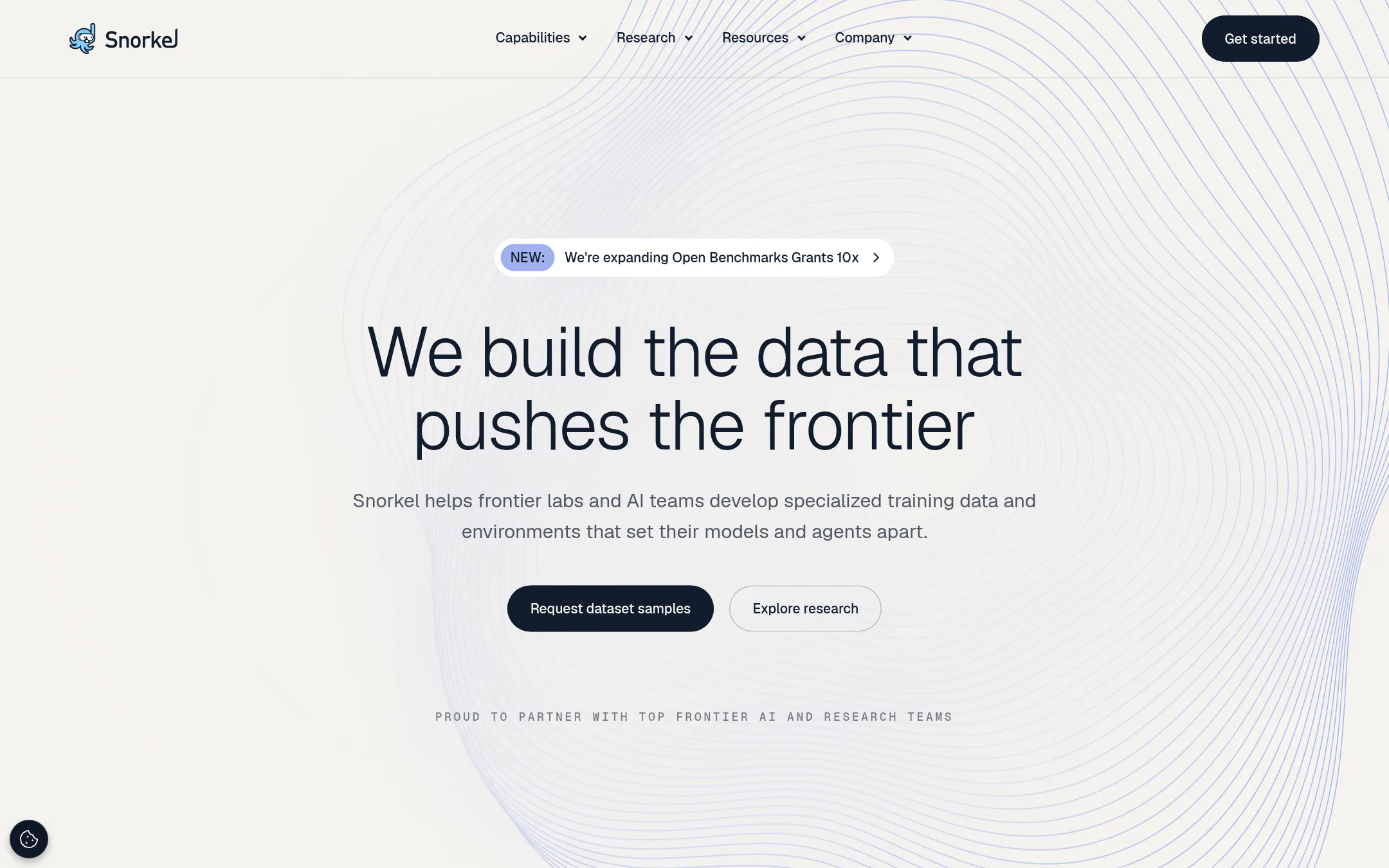
Snorkel AI builds training data, benchmarks and evaluation environments for frontier labs and AI teams. Someone would pick it over Osmosis when the bottleneck is expert-labeled data and rigorous evaluation rather than running reinforcement fine-tuning on their own model. Snorkel publishes a series of agent benchmarks across coding, finance, legal and manufacturing.
Where it is strong
- Builds custom datasets with expert demonstrations, preference labels and verifiable rubrics
- Publishes a range of public agent benchmarks, including coding, finance, legal and manufacturing
- Its benchmarks and data work are co-developed with academic teams and frontier labs
Where it falls short
- Its public focus is on data development and evaluation, not a self-serve platform for running reinforcement fine-tuning
- Its site does not describe a continuous retraining loop that refreshes models from live data
- Pricing:
- Pricing is not published on the site.
- Not published
4.Encord
Best for: AI teams with large multimodal datasets, such as sensor streams and video, that need to annotate and curate data before training
- Pricing
- Not published
- Category
- AI & Machine Learning
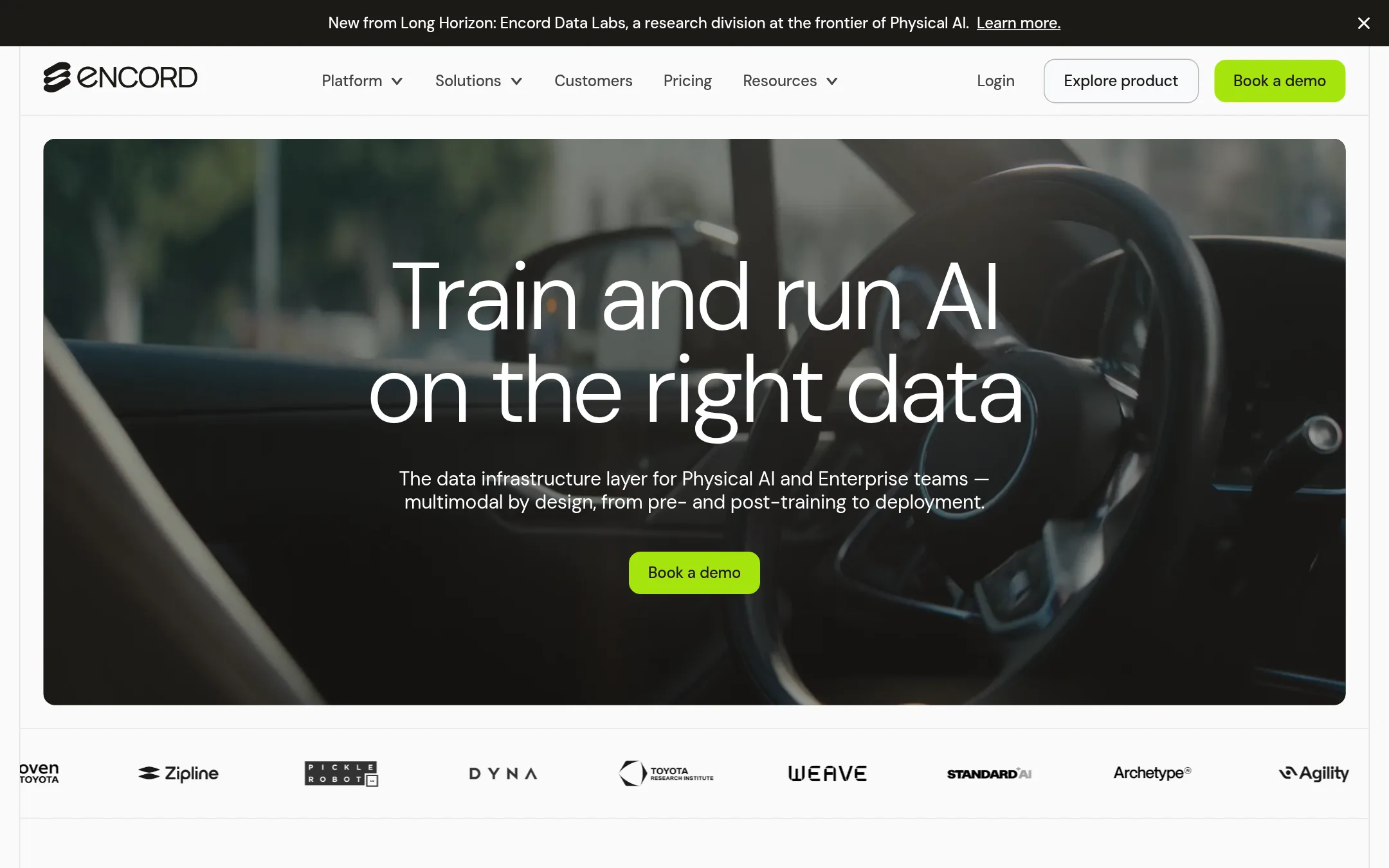
Encord is a data platform for building AI models. It handles the work of managing, curating, annotating and aligning large volumes of data, including sensor streams, video and text. Teams pick it over Osmosis when their main problem is the training data itself rather than fine-tuning a model, for example when they need to label and organize petabytes of multimodal data before any training happens.
Where it is strong
- Covers managing, curating, annotating and aligning data in one place
- Handles multimodal inputs, including sensor streams, video and text
- Lists 300+ AI teams as customers, including Woven by Toyota, AXA, UiPath and Zipline
Where it falls short
- It is a data layer, so it does not run reinforcement fine-tuning of models the way Osmosis does
- Pricing is not published, so cost comparison requires a sales conversation
- Pricing:
- Pricing is not published on the site.
- WNot published
5.Weights & Biases
Best for: ML and AI teams that run their own training jobs and want experiment tracking, dashboards and compliance-ready records
- Pricing
- Not published
- Category
- Other
Weights & Biases is a tracking and observability tool for ML experiments, training runs and AI applications. Teams pick it over Osmosis when they already have training code and want to monitor, compare and debug runs, not have someone hand-tune a model for them. Osmosis does the post-training work itself, while W&B gives you the records to see what your own training is doing.
Where it is strong
- Get started with one line of code, and the site shows the library being added to existing code.
- Certified under ISO 27001, ISO 27017 and ISO 27018, and compliant with SOC 2, HIPAA and GDPR.
- Free for academic research, and there is a mobile app for monitoring training runs.
Where it falls short
- It tracks and visualizes training but does not run reinforcement fine-tuning or write reward functions for you the way Osmosis does.
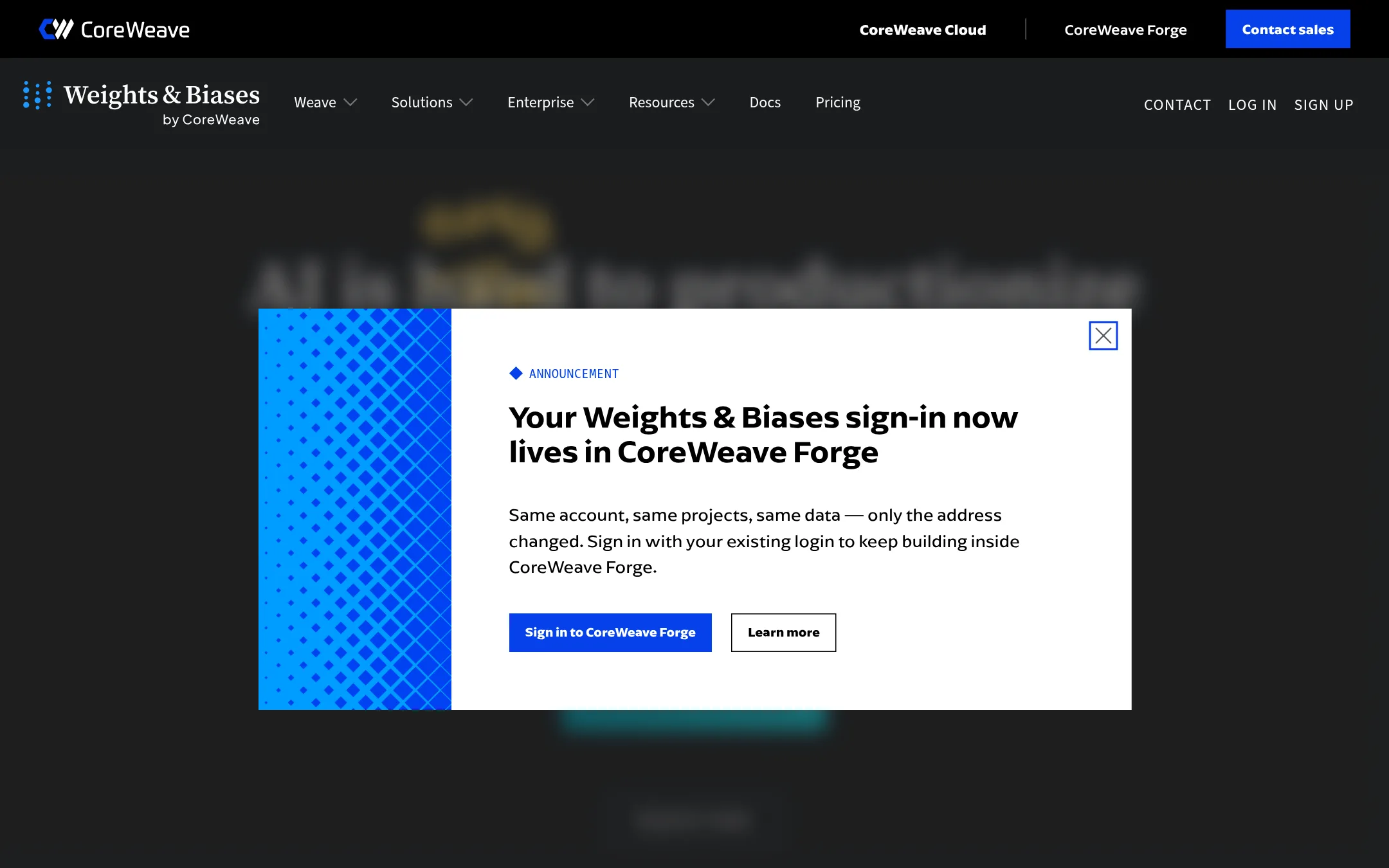
- The site now points to CoreWeave Forge for models, training and inference, so product direction and what is included may be changing.
- Pricing:
- Pricing is not published on the site.
See more comparisons in AI & Machine Learning alternatives.
FAQ
Questions about Osmosis alternatives
What is Osmosis known for?
According to its site, Osmosis is known for reinforcement fine-tuning, which lets engineers use techniques like GRPO and DAPO, including multi-turn tool training, without managing infrastructure. It also offers hands-on deployments and continuous retraining that can update models as often as every hour.
Which alternative is best for large enterprises?
Scale AI suits large enterprises and government agencies that need an outside partner to find use cases, build AI systems and own the outcome. It covers data sourcing, evaluations and deployment together, with humans kept in the loop. Its pricing is not published, so a quote is needed.
Which alternative helps with training data before any model training?
Encord is a data platform for managing, curating, annotating and aligning large volumes of data, including sensor streams, video and text. It suits teams whose main problem is labeling and organizing data rather than fine-tuning a model. It does not run reinforcement fine-tuning the way Osmosis does.
Can I use an alternative to track training runs I already run myself?
Weights & Biases is built for teams that run their own training jobs and want experiment tracking, dashboards and compliance-ready records. It does not run reinforcement fine-tuning or write reward functions for you. The site now points to CoreWeave Forge, so product direction may be changing.
Are the prices for these alternatives listed on their sites?
None of the alternatives covered here publish pricing on their sites, so cost comparison requires contacting each vendor. Pricing structure, contract terms and deployment terms should be confirmed during that sales conversation before you compare them against Osmosis.
Last updated November 12, 2026.