Oximy alternatives
6 products compared · Updated November 25, 2026
The short answer
The three strongest alternatives to Oximy are Nightfall AI, Harmonic Security and Lakera Guard. Nightfall AI suits security teams that need data loss prevention across SaaS, email, endpoints and AI agents. Harmonic Security suits mid-size and large companies that need AI usage visibility across many vendors and agent workflows. Lakera Guard suits engineering teams shipping LLM-powered products that need runtime protection against prompt injection and data leakage.
Your shortlist, at a glance
Read the comparisons ↓Microsoft Azure CycleCloudConsumption-basedEngineering and research teams that run HPC or batch compute workloads on Azure and need elastic cluster management.
- NNightfall AICustom quoteSecurity teams that need data loss prevention across SaaS, email and endpoints, plus AI agent controls, without writing detection rules first.
- HHarmonic SecurityNot publishedSecurity teams at mid-size and large companies that need AI usage visibility across many vendors and agent workflows, not just one device fleet.
- LLakera GuardNot publishedEngineering teams shipping LLM-powered products that need runtime protection against prompt injection and data leakage
- PProtect AINot publishedEnterprises already on Palo Alto Networks that want AI apps, agents and models governed inside one security platform
- PPrompt SecurityNot publishedSecurity teams that want a central AI gateway and research resources rather than on-device policy enforcement
About Oximy and its alternatives
Oximy is an AI governance and security product that runs on the device. According to its site, it checks AI requests, files and agent actions on Windows, Mac and Linux, then warns, redacts or blocks them according to a company's AI policy. Its site highlights its own model, Oxi-1, which reads the content behind each request, along with its policy engine and coding-agent controls.
When comparing alternatives in this category, weigh the pricing structure first, since some vendors publish per-device or per-user figures while others require a sales conversation. Check which regions and deployment options are supported, including on-device versus cloud or gateway enforcement. Look closely at integrations with the AI tools your staff use, support terms, and contract length.
Explore the alternatives
- Consumption-based
1.Microsoft Azure CycleCloud
Best for: Engineering and research teams that run HPC or batch compute workloads on Azure and need elastic cluster management.
- Pricing
- Consumption-based
- Category
- Developer Tools
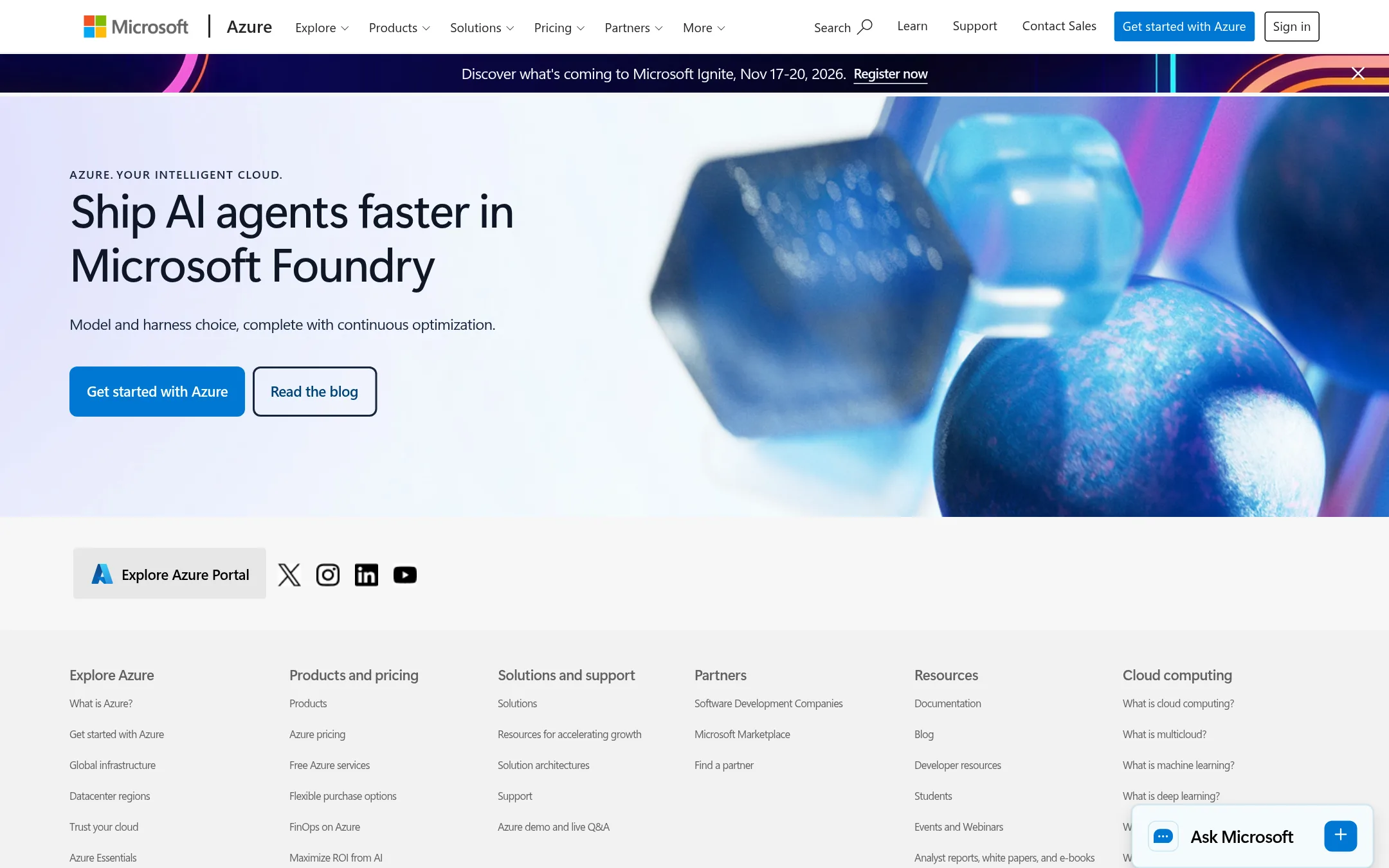
Azure CycleCloud is Microsoft's tool for building and managing HPC and batch compute clusters on Azure, with schedulers and autoscaling. It fits teams running large simulation or research workloads that need elastic cluster infrastructure. It does not address AI usage governance, so teams whose need is controlling employee AI use on their devices would look elsewhere.
Where it is strong
- Built for HPC cluster orchestration on Azure infrastructure.
- Consumption pricing means you pay only for the cloud resources you use.
- Reservations and savings plans lower cost for steady workloads.
Where it falls short
- Focused on compute cluster management, not AI policy or device-level governance.
- Pricing depends on the underlying Azure resources, so estimates require the pricing calculator.
- Pricing:
- In the United States, Azure pricing is consumption-based, with reservations and savings plans for steady usage, and CycleCloud-specific pricing was not captured in the supplied facts.
- NCustom quote
2.Nightfall AI
Best for: Security teams that need data loss prevention across SaaS, email and endpoints, plus AI agent controls, without writing detection rules first.
- Pricing
- Custom quote
- Category
- Other
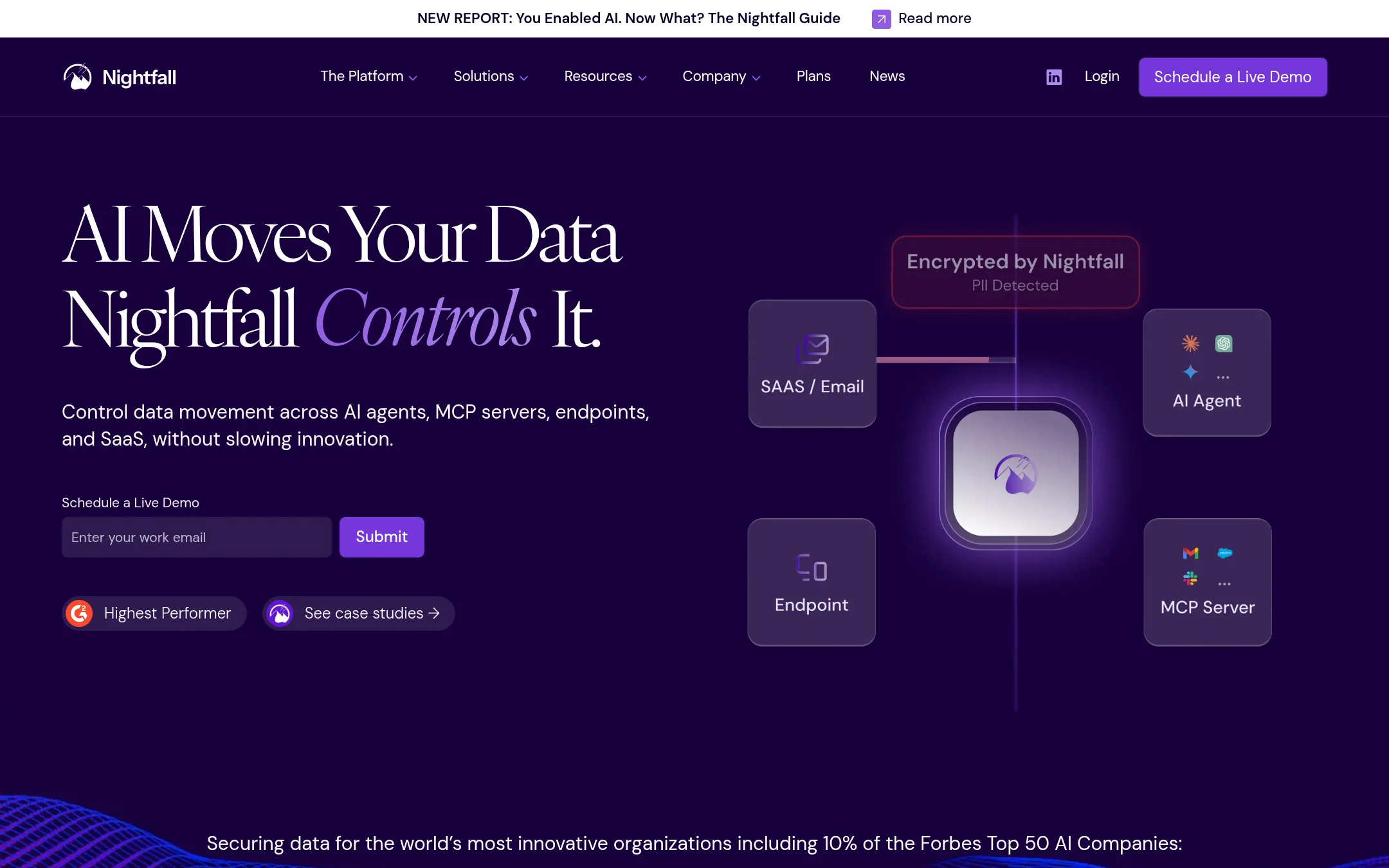
Nightfall AI is a data loss prevention platform that covers SaaS apps, endpoints, email and AI agents, including MCP servers and prompt injection. Someone would pick it over Oximy when the main problem is stopping data leaving through many channels, not governing AI use on the device. Its page leans on SaaS API coverage, data at rest discovery and lineage.
Where it is strong
- Covers SaaS, endpoints, email and AI agents in one platform.
- Includes MCP Gateway policy enforcement and prompt injection interception.
- Offers a free 7-day proof of value and pre-trained detectors that need no rule writing.
Where it falls short
- Pricing is not published as figures, so budgeting requires a sales conversation.
- Premier needs to be bought to get agent hooks for Cursor, Claude Code and VS Code, which adds cost for companies with only some agent users.
- Pricing:
- Pricing is per user per year across two editions, Foundation and Premier, with volume discounts and a quote from sales, but the page gives no specific dollar or euro figures.
- HNot published
3.Harmonic Security
Best for: Security teams at mid-size and large companies that need AI usage visibility across many vendors and agent workflows, not just one device fleet.
- Pricing
- Not published
- Category
- Other
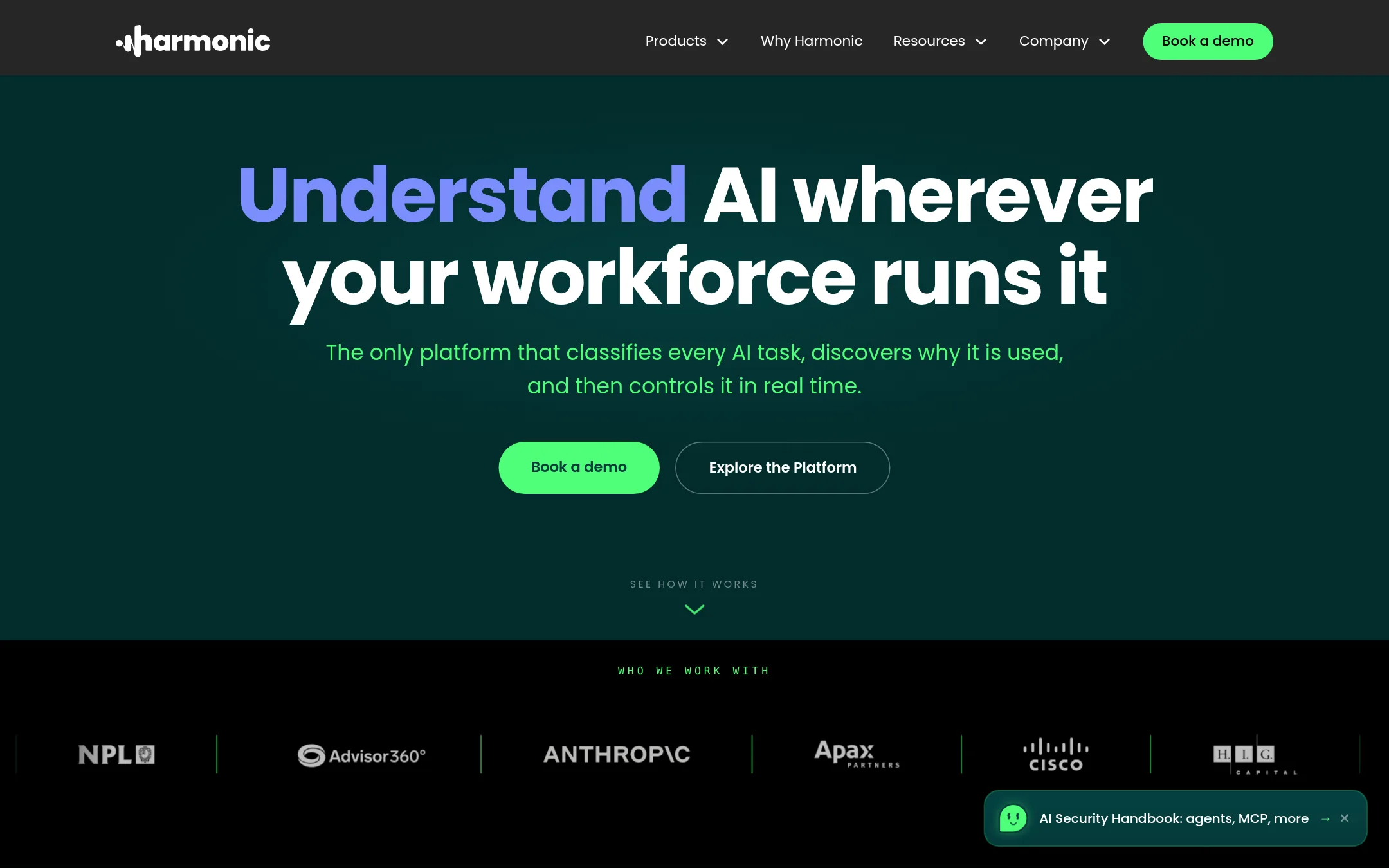
Harmonic Security watches how employees and agents use AI across apps, browsers, IDEs and agent tools, then classifies the work and applies warnings or blocks. Choose it over Oximy when your main concern is discovering and governing AI use across many vendors and agentic workflows, with an existing SASE or SIEM stack you want to complement.
Where it is strong
- Covers AI activity across 1,000+ applications, including desktop apps, IDEs and AI APIs.
- Classifies the business context of AI tasks, not just keyword patterns, which reduces false positives.
- Governs agent actions through an MCP gateway, including read, write and execute permissions.
Where it falls short
- Pricing is not published, so cost comparison needs a sales conversation.
- Its enforcement depends on the surface, with some tools limited to monitoring rather than inline blocking.
- Pricing:
- Pricing is not published on the site.
- LNot published
4.Lakera Guard
Best for: Engineering teams shipping LLM-powered products that need runtime protection against prompt injection and data leakage
- Pricing
- Not published
- Category
- Other
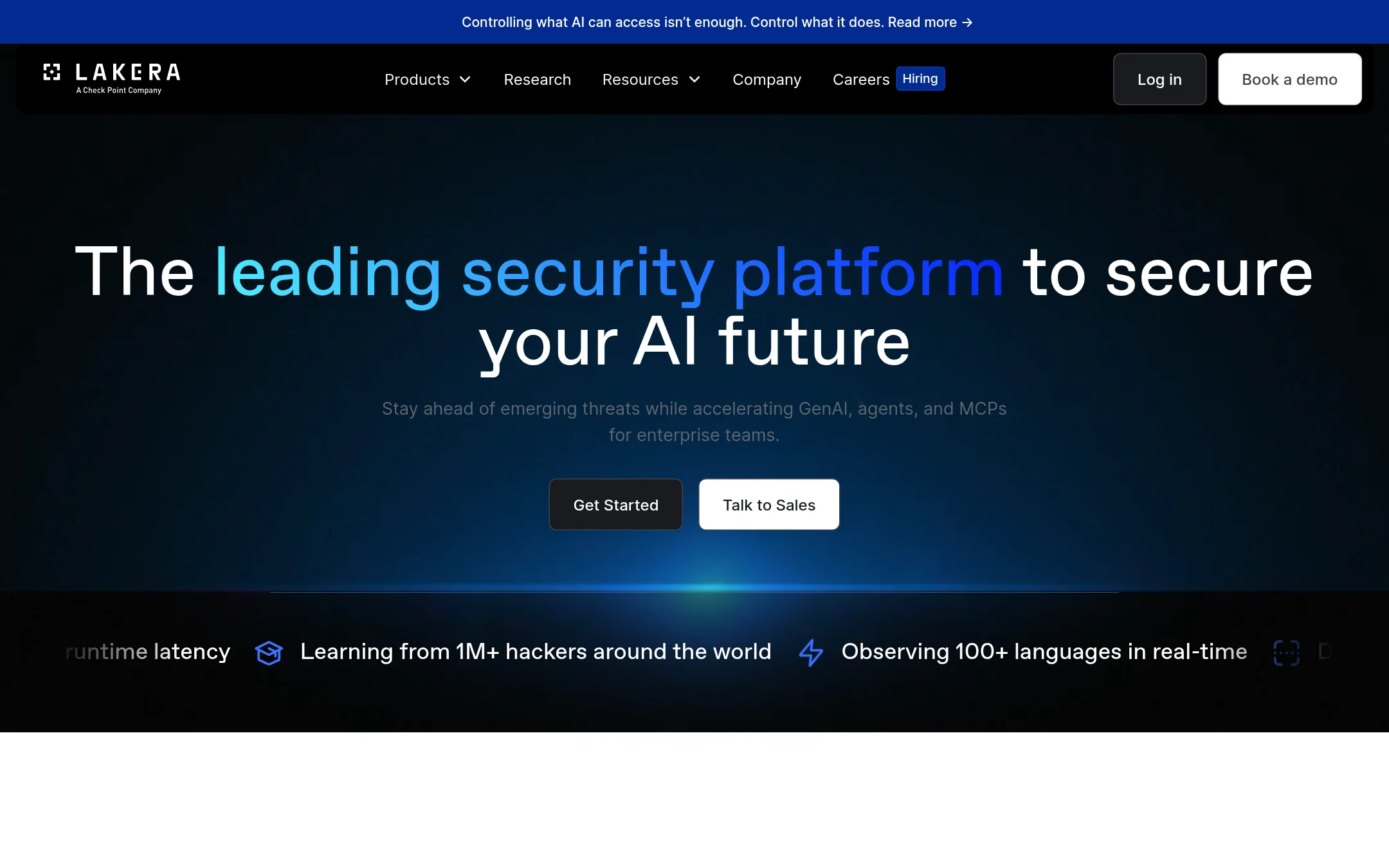
Lakera Guard is an AI security platform built around protecting GenAI applications at runtime, with prompt attack prevention, data leakage protection and AI red teaming. Teams usually choose it when their main concern is securing LLM-powered apps and agents from prompt injection, jailbreaks and data leakage inside their own products. Oximy works on the device, governing employee and coding-agent activity on Windows, Mac and Linux, so pick Lakera if your problem is protecting the applications you build.
Where it is strong
- Runtime protection for AI applications, including prompt attack prevention and data leakage protection
- Includes AI red teaming with direct and indirect attack simulations
- API-first, cloud-native deployment that fits into existing applications
Where it falls short
- Self-hosted deployments and EU/US data residency are listed for the Enterprise plan only
- Does not describe on-device checks of employee AI use on desktops the way Oximy does
- Pricing:
- Pricing is not published on the site.
- PNot published
5.Protect AI
Best for: Enterprises already on Palo Alto Networks that want AI apps, agents and models governed inside one security platform
- Pricing
- Not published
- Category
- Other
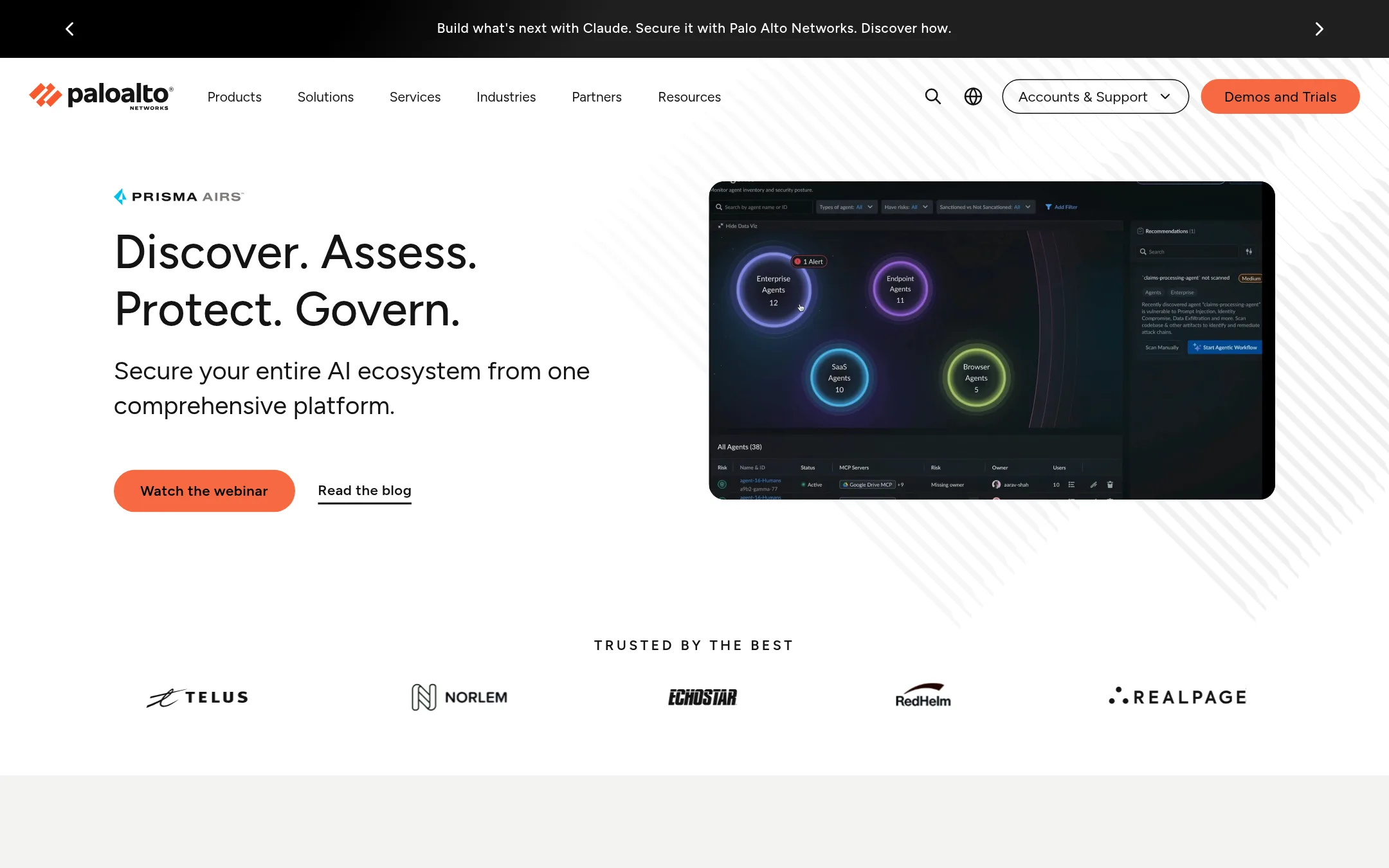
Prisma AIRS is Palo Alto Networks' AI security platform. It covers discovering, assessing, protecting and governing AI apps, agents and models, so it suits a company already running Palo Alto infrastructure that wants AI security managed alongside its wider security stack. Pick it over Oximy when the goal is platform-level AI security rather than on-device policy enforcement for employee AI use.
Where it is strong
- Covers discovery, assessment, protection and governance of AI apps, agents and models
- Sits within the Palo Alto Networks security platform, so it can fit an existing vendor relationship
- Positioned for securing the whole AI ecosystem, not only desktop AI usage
Where it falls short
- The site material supplied does not describe on-device checks on Windows, Mac or Linux the way Oximy does
- Pricing and self-serve trial access are not published, so evaluation takes a sales conversation
- Pricing:
- Pricing is not published on the site.
- PNot published
6.Prompt Security
Best for: Security teams that want a central AI gateway and research resources rather than on-device policy enforcement
- Pricing
- Not published
- Category
- Other
Prompt Security is an AI security platform that its site describes through a set of open-source tools and a resource hub for security teams. The homepage material supplied covers agentic AI risk, AI acceptable use policy and AI gateways, so it sits closer to advisory and monitoring than to on-device enforcement. Teams that want a gateway-style control point in front of AI traffic, or that are mainly looking for research and tooling, may choose it instead of Oximy.
Where it is strong
- Open-source tools such as ClawSec, OneClaw and ps-fuzz are available to try
- Publishes a regular stream of AI security research and guidance
- Covers agentic AI risk and AI acceptable use policy topics
Where it falls short
- The supplied material does not describe on-device checks, so it does not match Oximy's approach of running on the device
- No published pricing or free trial information
- Pricing:
- Pricing is not published on the site.
See more comparisons in AI & Machine Learning alternatives.
FAQ
Questions about Oximy alternatives
What does Oximy do that most alternatives do not?
According to its site, Oximy runs its checks on the device across Windows, Mac and Linux, and applies policy before an AI request or agent action goes through. Several alternatives focus on gateways, cloud applications or data loss prevention rather than on-device enforcement. Check each entry's description to see which approach fits your setup.
Which alternative is best for protecting AI applications we build ourselves?
Lakera Guard is the entry built for this case. It is described as runtime protection for GenAI applications, covering prompt attack prevention, data leakage protection and AI red teaming. Its pricing is not published on the site, so you will need to request a quote.
Which alternative should a company pick if it wants data loss prevention across many channels?
Nightfall AI fits this need, covering SaaS apps, endpoints, email and AI agents in one platform. It offers a free 7-day proof of value. Pricing is per user per year across two editions, but the page gives no specific figures, so a sales conversation is needed to budget.
Which alternative is strongest for visibility into AI usage across many tools?
Harmonic Security is described as covering AI activity across more than 1,000 applications, including desktop apps, IDEs and AI APIs. It classifies the business context of AI tasks and governs agent actions through an MCP gateway. Its pricing is not published, so cost comparison requires a sales conversation.
Is pricing available for these alternatives?
Pricing is not published for most of these products. Nightfall AI lists per-user annual pricing without specific figures, and Azure CycleCloud follows consumption-based Azure pricing. Expect to contact sales for a quote on the others before you can compare costs directly with Oximy's published per-device pricing.
Last updated November 25, 2026.