
Payload CMS alternatives
11 products compared · Updated October 31, 2026
The short answer
For most teams, Strapi offers the easiest visual content modeling with a large plugin ecosystem. Sanity is the strongest choice if you want a fully managed, AI-ready platform with real-time collaboration. Directus is best if you need to keep your existing SQL database and want a no-code admin interface.
Your shortlist, at a glance
Read the comparisons ↓ StrapiFrom $35/moTeams that want a visual content modeling interface and a large community plugin hub, with the option to self-host or use Strapi Cloud.
 SanityFrom $15/seat/moTeams that need a hosted, AI-ready content platform with structured data, real-time editing, and enterprise-scale workflows.
 ContentfulSee websiteContent that scales. Experiences that convert.
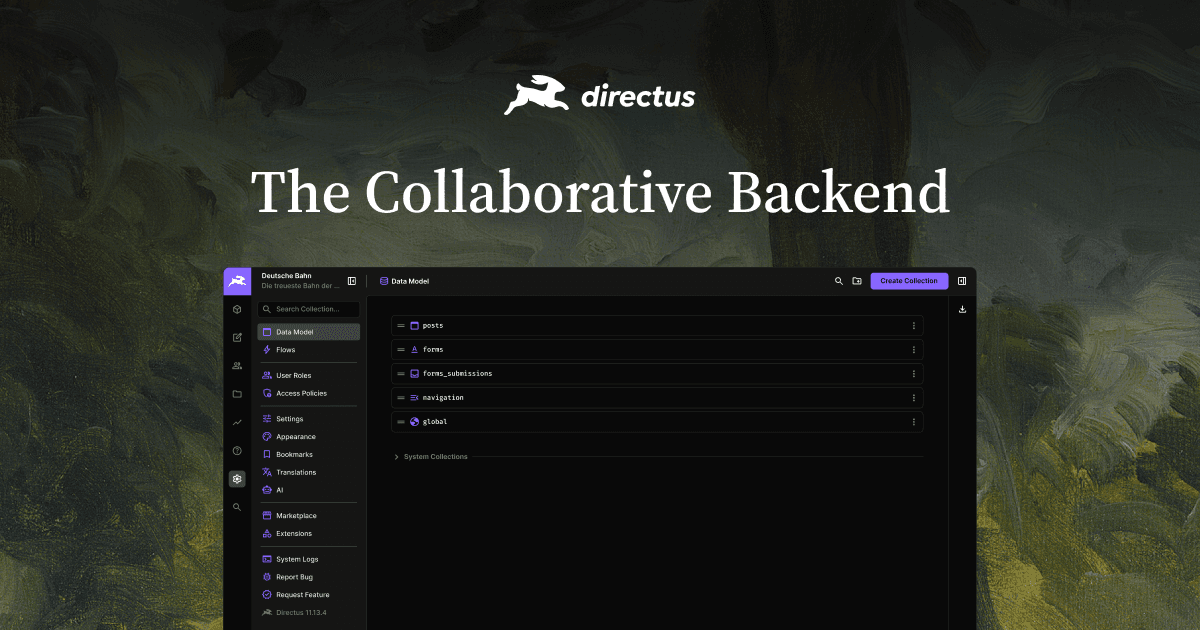 DirectusFrom $89/moTeams that want a collaborative backend over an existing database with a no-code interface and AI integrations
 KeystoneNot publishedNode.js developers who want a schema-defined GraphQL backend with an admin UI and are comfortable with TypeScript and Prisma migrations.
 GhostFrom $9/moIndependent publishers, newsletter creators, and media businesses that want a turnkey platform for content, subscriptions, and email.
 CockpitNot publishedPublic sector organizations, agencies, and teams that need self-hosted content management with strict privacy requirements
WebinyFree tier, custom quotLarge organizations and enterprises that need a self-hosted, multi-tenant CMS with built-in governance and AI-programmable workflows.
 refineSee websiteOpen-source Retool for enterprise
 ApostropheFree + paid tiersJavaScript teams building marketing sites or multitenant platforms who want true in-context editing for non-technical editors.
 AppsmithSee websiteOpen-source low-code platform to build custom apps 10X faster with JS control and Git workflows.
About Payload CMS and its alternatives
Payload CMS is an open-source headless CMS and application framework built on Next.js. It is known for its code-first approach, letting developers define schemas in TypeScript and get a full backend with an admin panel, while still giving marketers a friendly editing experience.
When comparing alternatives, weigh pricing structure (per seat, per project, or usage-based), hosting options (self-hosted vs. cloud), integrations, support levels, and contract terms. Some tools are fully managed, others require you to run your own infrastructure. Consider whether you need multi-tenancy, governance features, or AI capabilities built in.
Explore the alternatives
- From $35/mo
1.Strapi
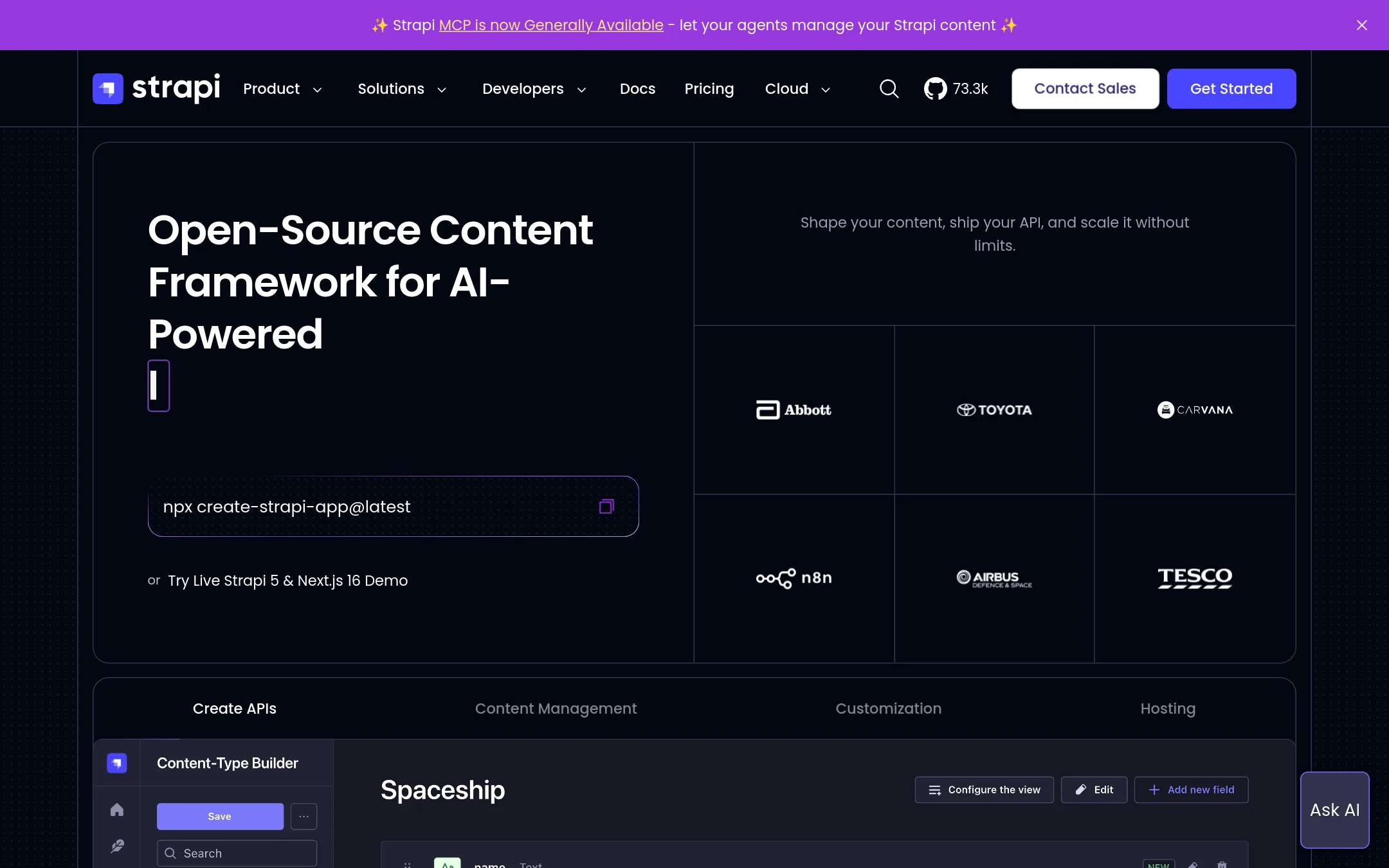
Best for: Teams that want a visual content modeling interface and a large community plugin hub, with the option to self-host or use Strapi Cloud.
- Pricing
- From $35/mo
- Category
- Developer Tools
Strapi is an open-source headless CMS that turns your content model into REST and GraphQL APIs quickly. Choose it when you want a no-code content type builder and a mature plugin ecosystem, rather than Payload's code-first schema definition.
Where it is strong
- Visual Content Type Builder for quick model setup
- MIT-licensed, self-hostable with full data control
- REST and GraphQL APIs generated automatically
Where it falls short
- Cloud plans have API request and storage limits
- Advanced features like audit logs and SSO are enterprise-only
- Pricing:
- Cloud plans start at $35 per project per month for Starter, $90 for Pro, and $450 for Business. Prices exclude local taxes.
- Switching from Payload CMS:
- Moving from Payload CMS means rebuilding your content schema in Strapi's builder and reworking custom logic, since Strapi uses a different architecture and admin panel.
- From $15/seat/mo
2.Sanity
Best for: Teams that need a hosted, AI-ready content platform with structured data, real-time editing, and enterprise-scale workflows.
- Pricing
- From $15/seat/mo
- Category
- Developer Tools
Sanity is a hosted content operating system that stores content as structured JSON and exposes it through APIs, with a customizable React-based Studio for editing. You would choose it over Payload CMS when you want a fully managed, multi-tenant content platform with built-in AI automation and real-time collaboration, without running your own backend.
Where it is strong
- Hosted and fully managed, so no infrastructure to run.
- Real-time collaboration and visual editing built in.
- AI content agent and automation features included on all plans.
Where it falls short
- Pricing scales per seat and usage, which can get costly.
- Less code-first control than Payload. Schema lives in Studio config, not as database constraints.
- Pricing:
- Free plan for up to 20 seats. Growth plan at $15 per seat per month. Enterprise custom pricing. Add-ons like dedicated support at $799/month and extra datasets at $999/month.
- Switching from Payload CMS:
- Moving from Payload means redefining your content schema in Sanity Studio and migrating data to their hosted database, plus adapting to GROQ or GraphQL queries.
- See website
3.Contentful
E-commerce
Headless CMS with robust content modeling and API-first design, widely used for similar projects.
- From $89/mo
4.Directus
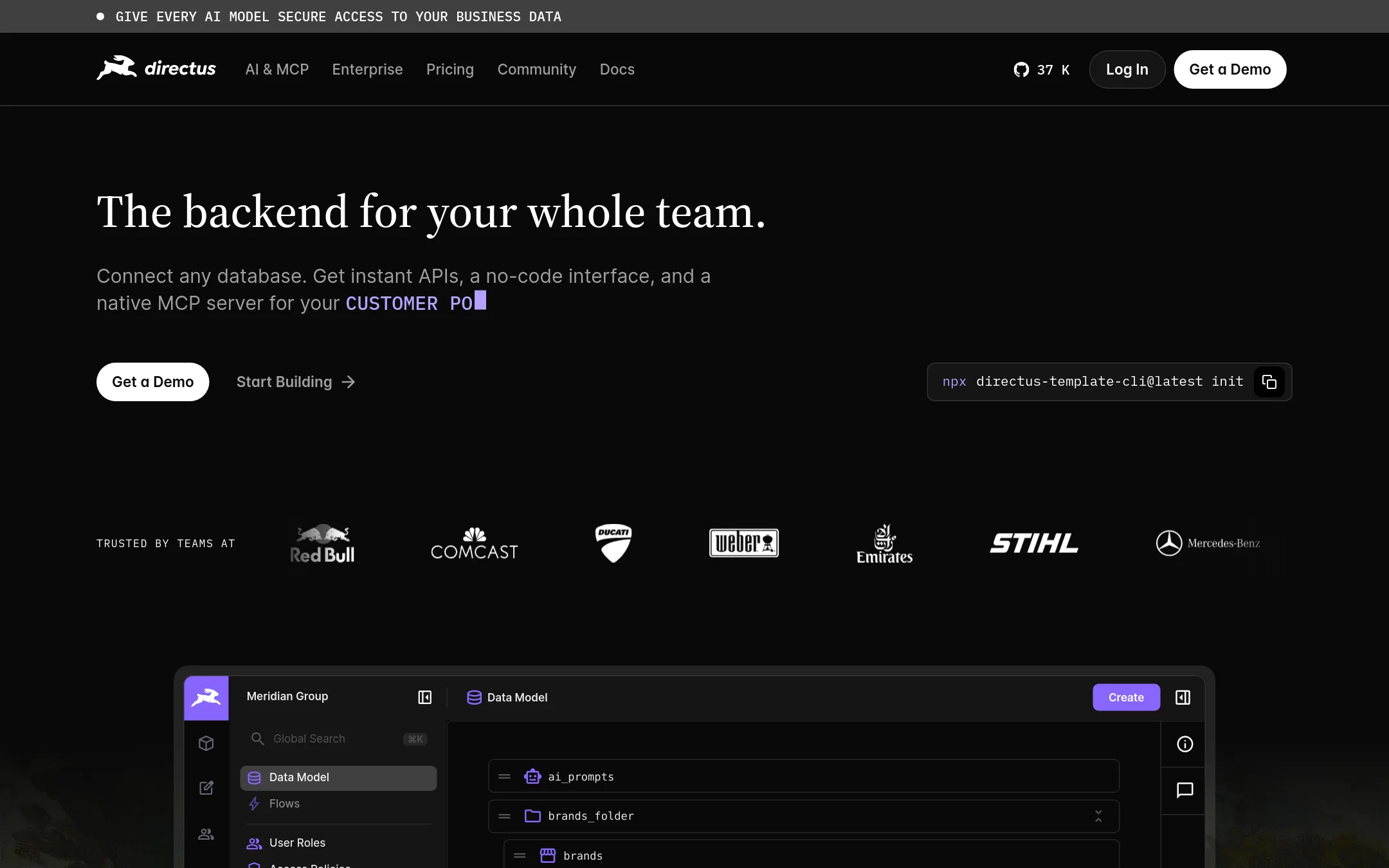
Best for: Teams that want a collaborative backend over an existing database with a no-code interface and AI integrations
- Pricing
- From $89/mo
- Category
- Developer Tools
Directus is a self-hostable headless CMS that connects directly to your existing SQL database and auto-generates REST and GraphQL APIs. Choose it over Payload CMS if you want to keep your current database schema and need a no-code admin interface for non-developers, plus an MCP server for AI tools.
Where it is strong
- Connects to any existing SQL database without changing schema
- Generates REST and GraphQL APIs automatically
- Includes a native MCP server for AI models like Claude and ChatGPT
Where it falls short
- SSO only on Team plan or higher, not on Core
- Core plan has hard limits of 3 seats and 25 collections
- Pricing:
- Core is $89/mo billed yearly or $99 monthly, Team is $588/mo billed yearly or $698 monthly, Enterprise is custom. Self-hosting is free on all plans.
- Not published
5.Keystone
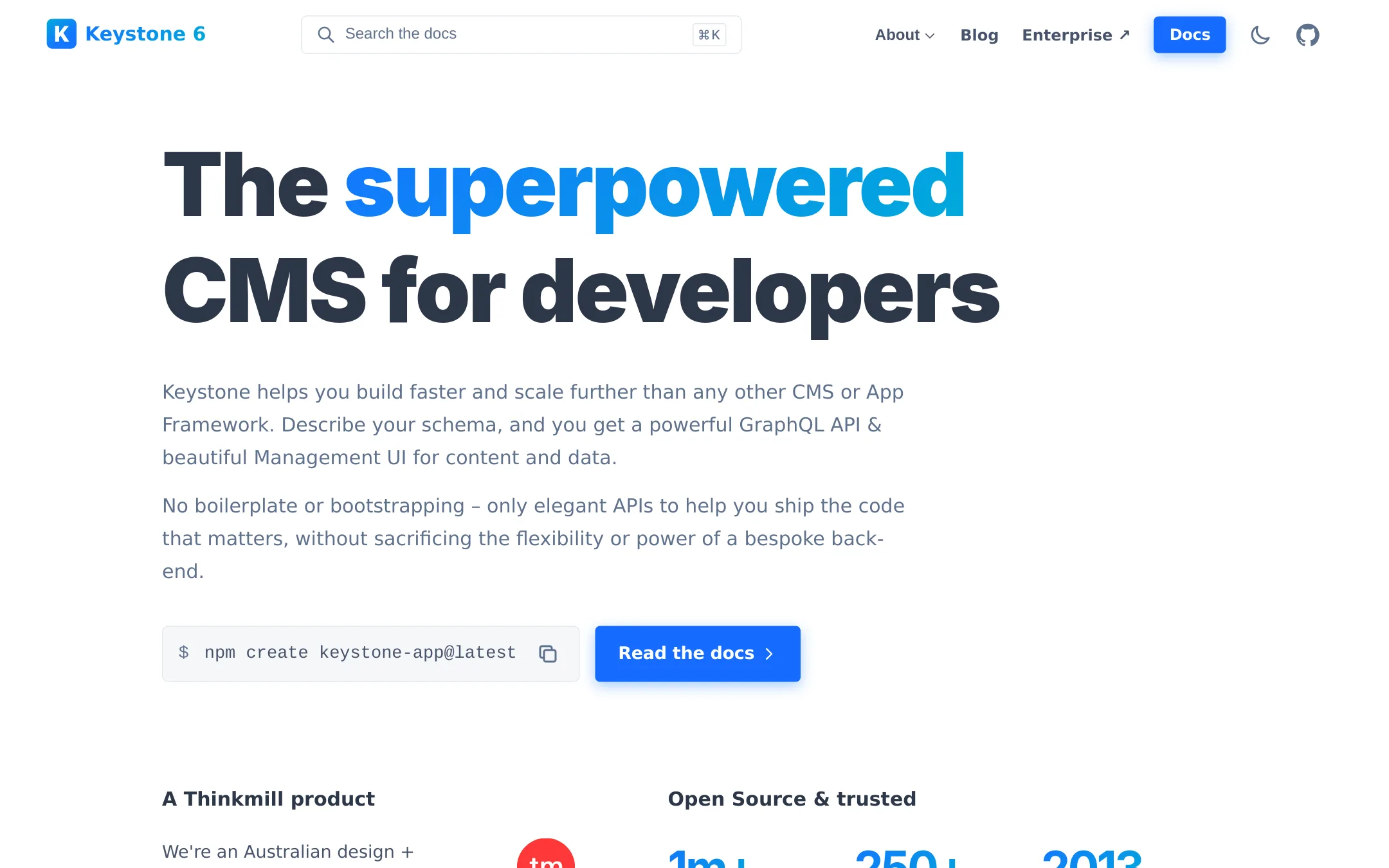
Best for: Node.js developers who want a schema-defined GraphQL backend with an admin UI and are comfortable with TypeScript and Prisma migrations.
- Pricing
- Not published
- Category
- Developer Tools
Keystone is an open-source Node.js headless CMS that gives you a GraphQL API and an admin UI from a schema you define in code. Choose it over Payload CMS if you want a GraphQL-first backend with automatic database migrations via Prisma and a strong focus on TypeScript, especially if you're building for multiple frontends or need fine-grained access control.
Where it is strong
- GraphQL API with built-in access control, session management, and filtering
- Automatic database migrations with Prisma
- Open source with 1m+ npm installs and 250+ contributors
Where it falls short
- No pricing page, so cost for enterprise support is unclear
- Admin UI is less customizable than Payload's React-based admin panel
- Pricing:
- Pricing is not published on the site.
- From $9/mo
6.Ghost
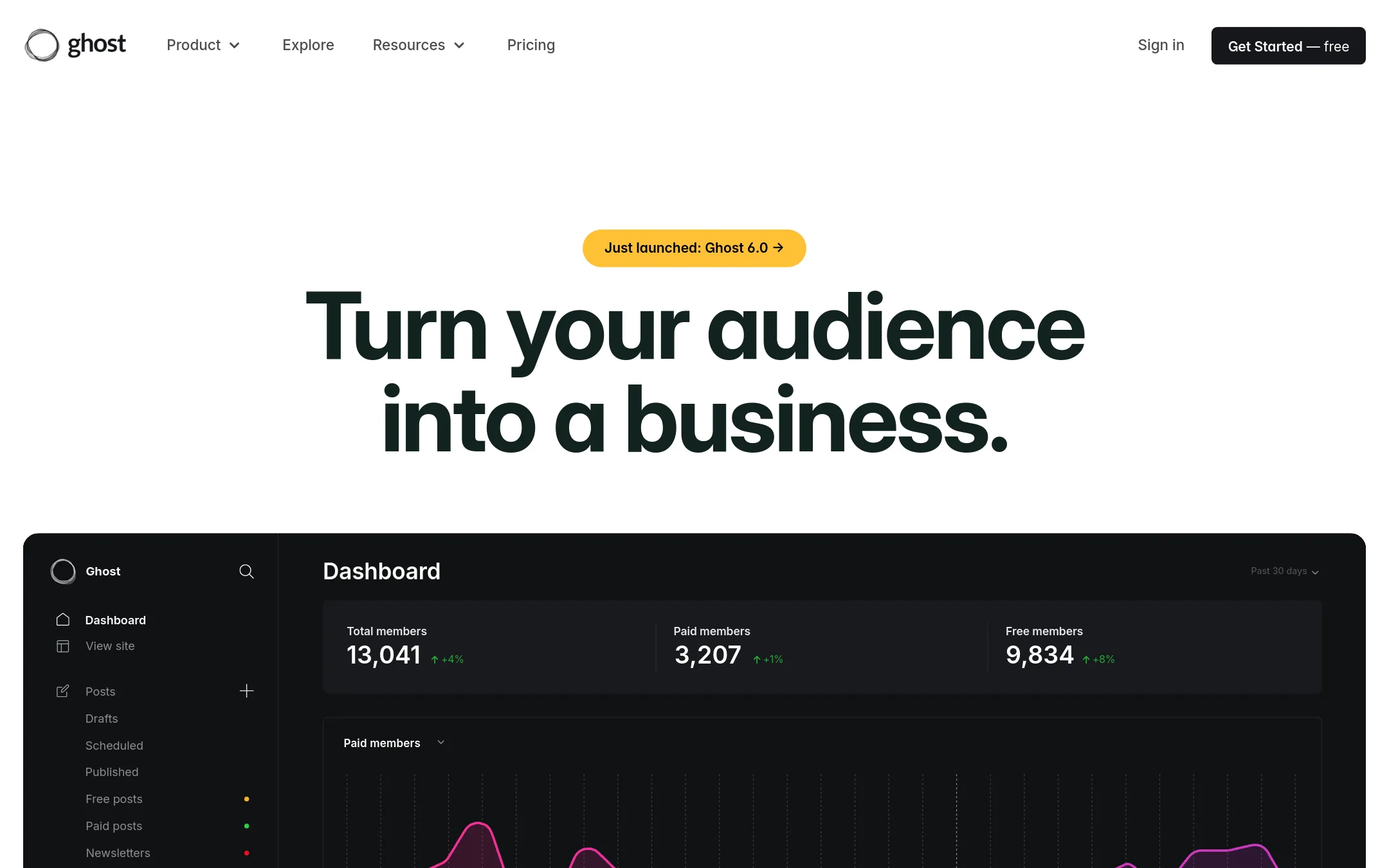
Best for: Independent publishers, newsletter creators, and media businesses that want a turnkey platform for content, subscriptions, and email.
- Pricing
- From $9/mo
- Category
- Media & Entertainment
Ghost is a publishing platform with built-in newsletters, memberships, and paid subscriptions. Choose it over Payload CMS when your primary need is to run a content business with email distribution and monetization, not to build a custom application around a headless CMS.
Where it is strong
- Built-in email newsletters and paid memberships with no transaction fees.
- Native analytics and member management to understand your audience.
- Open source and self-hostable, with a hosted option that handles infrastructure.
Where it falls short
- Less flexible for building custom data models or complex applications compared to Payload CMS.
- Starter plan limits you to 1,000 members and no custom themes.
- Pricing:
- Starter is $9/month (billed yearly), Publisher is $25/month, Business is $199/month, and Custom plans are available with unlimited members and a 99.9% uptime SLA.
- Not published
7.Cockpit
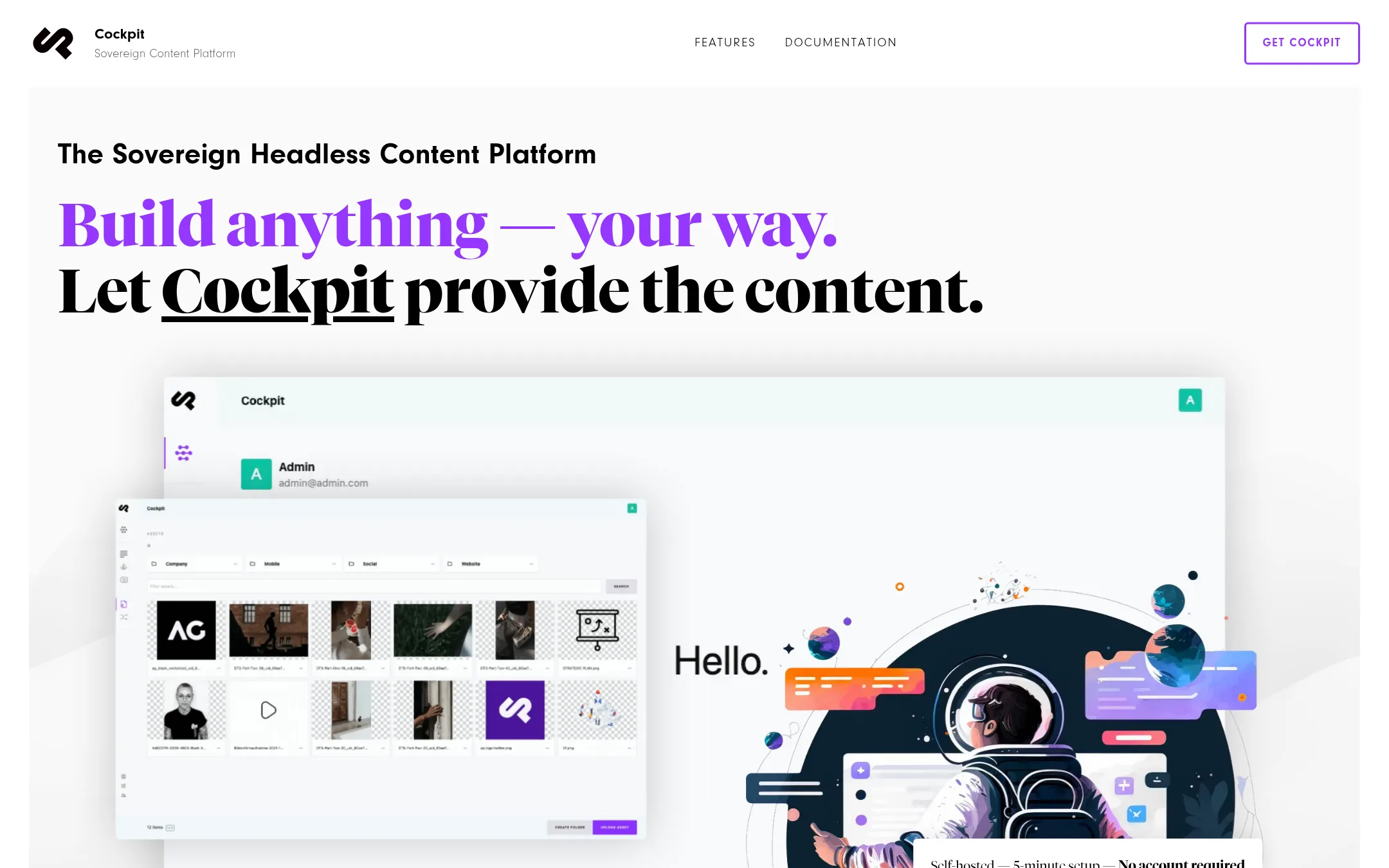
Best for: Public sector organizations, agencies, and teams that need self-hosted content management with strict privacy requirements
- Pricing
- Not published
- Category
- Developer Tools
Cockpit is a self-hosted, open-source content platform with an API-first approach. Choose it over Payload CMS when you need full data sovereignty, GDPR compliance, and a lightweight backend without vendor lock-in.
Where it is strong
- Self-hosted for complete data control and GDPR compliance
- MIT-licensed core, free to inspect and modify
- API-first design works with any tech stack
Where it falls short
- No pricing details on the site, making cost evaluation harder
- Less feature-rich than Payload for complex app-building needs
- Pricing:
- Pricing is not published on the site.
- Free tier, custom quot
8.Webiny
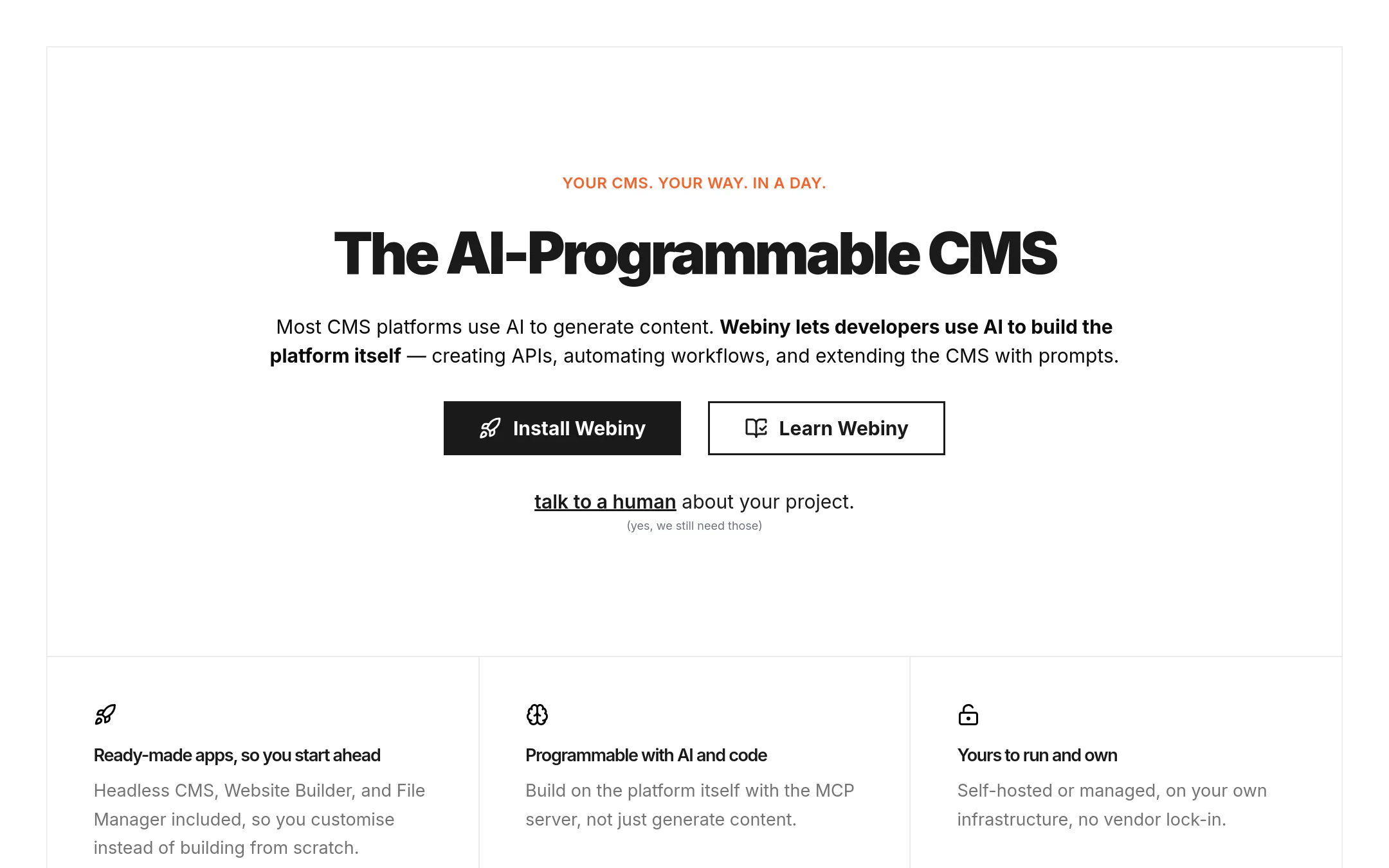
Best for: Large organizations and enterprises that need a self-hosted, multi-tenant CMS with built-in governance and AI-programmable workflows.
- Pricing
- Free tier, custom quot
- Category
- Developer Tools
Webiny is an open-source, self-hosted headless CMS built for enterprise scale, with ready-made apps like a Website Builder and File Manager. You would choose it over Payload CMS if you need multi-tenancy, governance features like audit logs and SSO, and a serverless architecture that handles high traffic without managing servers.
Where it is strong
- Multi-tenant by design, so you can run many brands from one instance
- Governance built in: versioning, audit logs, permissions, and workflows
- Serverless architecture that scales without server management
Where it falls short
- Pricing for Business and Enterprise plans is not published, so you must contact sales
- Community plan lacks role-based access control, multi-tenancy, and publishing workflows
- Pricing:
- Pricing is not published on the site. The page shows a free Community plan and Business/Enterprise plans with custom pricing.
- Switching from Payload CMS:
- Moving from Payload CMS involves migrating your content models and API endpoints to Webiny's code-defined schema, and re-implementing any custom admin UI in Webiny's React-based interface.
- See website
9.refine
Developer Tools
Open-source Retool for enterprise
- Free + paid tiers
10.Apostrophe
Best for: JavaScript teams building marketing sites or multitenant platforms who want true in-context editing for non-technical editors.
- Pricing
- Free + paid tiers
- Category
- Developer Tools
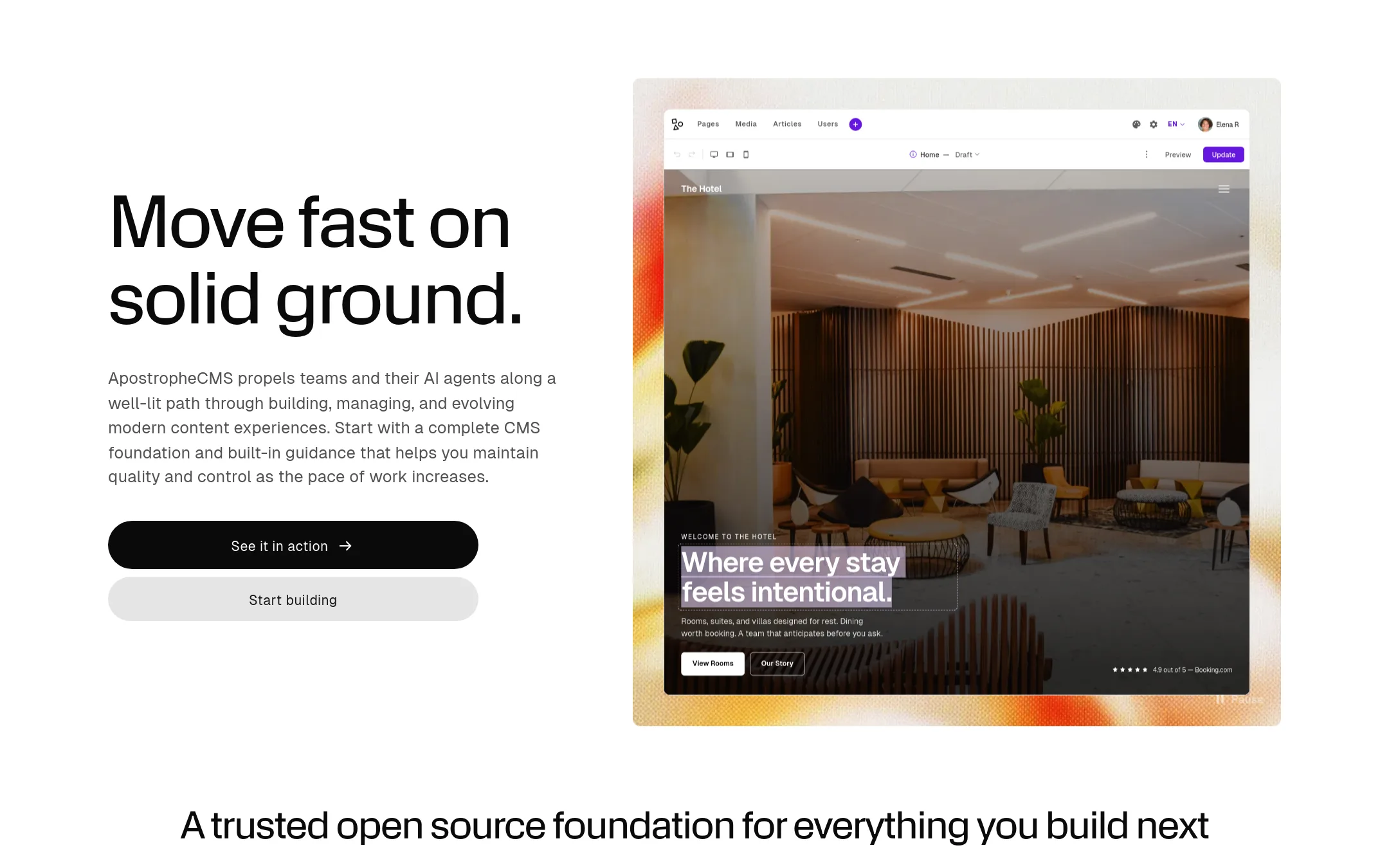
ApostropheCMS is an open-source headless CMS with in-context visual editing, built for JavaScript teams. Choose it over Payload CMS when your editors need to work directly on the live page and you want a CMS that pairs well with Astro or other frontend stacks.
Where it is strong
- True in-context editing on the live page, not a separate dashboard
- Official Astro integration for static site performance
- Assembly tier for multitenant, white-label site delivery
Where it falls short
- Advanced permissions and AI features are only in paid Pro tier
- Assembly multitenant architecture requires a separate license
- Pricing:
- Community edition is free and open source. Pro adds advanced features with a per-user fee after 5 users. Assembly includes 5 client sites and costs $99/mo for additional sites.
- Switching from Payload CMS:
- Moving from Payload CMS means rebuilding your content schema and admin UI in Apostrophe's code-first model, and adapting your frontend to its in-context editing approach.
- See website
11.Appsmith
Developer Tools
Open-source low-code platform to build custom apps 10X faster with JS control and Git workflows.
See more comparisons in Developer Tools alternatives.
FAQ
Questions about Payload CMS alternatives
Which alternative is easiest for non-developers to use?
Directus provides a no-code admin interface that connects to your existing SQL database, so non-developers can manage content without touching code. Sanity also offers a visual editing Studio with real-time collaboration. Strapi's visual Content Type Builder is another option for teams that want a graphical way to define content models.
What are the main pricing differences between these alternatives?
Strapi starts at $35 per project per month for cloud plans. Sanity charges $15 per seat per month on its Growth plan. Directus costs $89 per month for Core (billed yearly). Ghost starts at $9 per month for its Starter plan. Webiny, Keystone, and Cockpit do not publish pricing, so you must contact sales.
Can I self-host any of these CMS platforms?
Yes. Strapi, Directus, Keystone, Apostrophe, and Cockpit are all self-hostable and open source. Ghost is also open source and self-hostable. Webiny is self-hosted by design. Sanity is hosted and fully managed, so you do not run your own infrastructure.
Which option is best for an enterprise with strict governance needs?
Webiny is built for enterprise scale with multi-tenancy, audit logs, and SSO built in. Sanity offers enterprise-grade workflows and AI automation. Directus includes SSO on its Team plan and above. Strapi reserves advanced features like audit logs and SSO for its enterprise tier.
Do any of these CMS platforms have built-in AI features?
Sanity includes an AI content agent and automation features on all plans. Directus has a native MCP server for AI models like Claude and ChatGPT. Apostrophe offers AI features in its paid Pro tier. Webiny mentions AI-programmable workflows, but details are not published.
Last updated October 31, 2026.